Author: mxmadmin

  • The Anchor: Rajan Narayan on 5 reasons why ‘Digital’ isn’t the only way forward

    By Rajan Narayan


    1. Data says so

    Yes, digital advertising is growing rapidly at 28 per cent but then its base is small at Rs7.7 bn and surprisingly despite print and TV being more than 13 times the size of digital advertising, both are clipping at 14 per cent growth rates with Radio matching digital advertising in size and growth. The traditional media will still account for more than 75 per cent of the industry in 2015. (Source: The PWC report on India Entertainment and Media 2011)


    2. TV and print still reaches out to many more people than digital

    TV/Print/Radio reach 57/20/18 per cent of India’s total population. Internet is at just 3 per cent. Even in urban India penetration for TV/P/R/I is loaded against digital at 82/36/22/9 per cent. (Source IRS 2011 Q4)


    3. Every medium plays a unique role that is irreplaceable

    Try reading from a laptop on your hammock, or keep your family glued for 3 hours around your tablet. And we won’t discuss what to read in the loo here. Got the picture? Our habits are so deeply entrenched within us that changing it would mean re-ordering the entire process. Much easier to stick to the habit. Digital is creating new habits but not at the cost of others. Digital is very personal: It’s you and your pc/tablet/laptop/phone connected to the world. By that very reason the sender is made physically lonely. On the other hand, a theatre or your TV is media that bring the world to you and your dear ones to share simultaneously. Here your happiness is multiplied by the shared joy of your close ones. A sensation digital can never replicate.


    4. People consume digital differently from other media

    The big plus about digital is its interactivity. It’s the place where you put out your ideas and share things. But where do you get the stuff in the first place? From other media! The songs you like you first hear over the radio, the films you watch on the big screen, the game and contest you follow on TV. You then download or share this on the digital platform. So there are these two roles of media: one that gives you the information and another where you put out what you like. Put in which will remain largely traditional and put out media which is and will largely be digital.


    5. The idea of the brand is what people connect with; the medium is created to serve this end

    The start of the American War of Independence was spread to hundreds of thousands of people in the course of one single night. The medium? Word of mouth. The medium had nothing to do with the speed at which the message spread. It was the message itself that was galvanizing enough to get people to ride and walk hundreds of kilometres to spread it. The message was Liberty. WOM is still what sells iphones and ipads in a single night!  Never confuse the medium for the message. ‘Let’s do a viral!’ is the wrong way to begin digital activity. Choose digital if it is the most cost efficient or most penetrating of media among your consumers. Keep in mind that no medium can help a weak message.


    These views have a current context and a three-year horizon. It is possible that Digital in India may follow the West and completely overtake traditional media. It is also possible that like Retail inIndia, it may never take off beyond a limited scope. Or India may yet surprise us by evolving an entire new method of consuming media unlike anything the World has seen. Wait for the magic to unfold.


    Rajan Narayan is President, Quadrant Communications


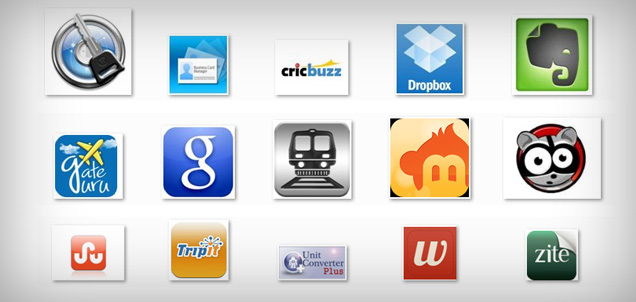
  • It’s an appsolutely ‘appy world!


    By Insiyah Rangwala


    With the smartphone getting near-ubiquitous, there are several thousands of apps floating around. But along with some splendid ones out there, there are also several which are, well, no great shakes.


    We bring you this report, after several hours spent on using them, surveying power users and then doing this final shortlist of 15 apps that should make you appy!


    ZITE:

    Zite is a personalized magazine which automatically learns what you like and gets smarter the more you use it. It gives you everything from articles, videos and blogs and helps you discover a whole variety of things that line up with you interests. It’s a smart magazine for your smart phone. It changes the way you discover and enjoy new content. It’s a free App


    On Android

    On iOs


    SEESMIC:

    Seesmic lets you manage multiple social network accounts. It lets you organize your search lists and trends the way you want to on a customizable dashboard. It helps you to share photos on all platforms as well as save links for reading later. All this in just one free App.


    On Android

    On iOs


    1PASSWORD:

    1password is an identity manager. It securely stores all your important information and can automatically log you into multiple ID’s. With 1password you don’t need to remember the several different usernames and password or even website address. It even saves credit card or membership information. You can jot down private notes as well. It has a two layer defense system with an unlock code and a master password. It can also be used to back up all your data. It’s a paid App.


    On Android

    On iOs


    DROPBOX:

    Dropbox helps you get to everything that is most important to you when you are on the go. You can access all your documents, photos and videos that are on your computer or on your phone. Data uploaded on Dropbox can also be accessed on your computer and you can share directly via text or email from Dropbox which has a very easy to use and understand interface. It’s a free App

    On Android

    On iOs


    EVERNOTE:

    Evernote helps you save ideas, thoughts, things you see or like immediately and with ease. There are times when we have an idea of which we don’t make a note and then forget. All our small thoughts brought together can help us make huge changes in our professional as well as personal life. Now with Evernote You can find them on any device that you use. This free App helps you stay organized and also improves your productivity.

    On Android

    On iOs


    MUMBAI LOCAL:

    Mumbai is the hub for business professionals, even those who don’t work out of Mumbai. But Mumbai roads are a traveler’s worst nightmare making Railways the fastest mode of transport. Mumbai Local is an easy and free app which gives you concise details on train timings, fares, routes and anything else you need to know, making it very simple to travel in Mumbai locals.

    On Android

    On iOs


    CONVERTER PLUS:

    Converter plus is a unit converter with an extensive list covering 167 world currencies which are refreshed every 6 hours to keep you up-to-date. Staying globally informed has become a part of the job and now this easy and free App makes your job easier. It also coverts areas, weight, energy, force, length, mass power, pressure, speed, temperature and volume.

    On Android

    On iOs


    CRICKBUZZ:

    Everybody in India loves cricket and it is almost considered a religion by most. Crickbuzz is a free and easy to use app which keeps you up-to-date with real time score updates and ball to ball commentary. With our heavy packed schedules, we cannot always ensure that we can go and watch a match live or on TV but this App ensures that you know all the action happening on the field.

    On Android

    On iOs


    GATEGURU:

    If you hate getting to the airport on time and then wasting that precious time when your flight gets delayed, Gateguru is a real time updated and free App which helps you know your flight status, the real-time airport security, wait lines and also helps you carry out a quick search for the amenities at your disposal at whichever airport you might be.

    On Android

    On iOs


    GOOGLE SEARCH:

    With Google search you can avoid going through the browser on your phone to access all that you want. This free App also retains your previous searches and highlights what you might want to find on your web page.

    On Android

    On iOs


    STUMBLE UPON:

    The Web has opened up a whole new area to gain information. We don’t always find the time to make the most use of it and gain new information the way we would like to. Stumble upon is a free App which helps you discover new and interesting things across the web and easily share them. Start exploring today.

    On Android

    On iOs


    TRIPIT:

    Isn’t it a hassle managing your travels when you not only have to worry about the meeting that you need to go to, but you also have to take care of your travel details. Tripit takes all your trip details and automatically creates a helpful itinerary which can be accessed whenever you need it. This free App also helps you share your travels plans with family and colleagues.

    On Android

    On iOs


    WEAVE

    Weave helps you organize, track and manage your expenses for your business, hobbies and anything else. It helps you organize your projects, based on what is important. This free App also helps you track and share projects  and the order of their importance. It records what you spend in any currency you choose. It also helps you coordinate these expenses with people you work with.

    On iOs


    BUSINESS-CARD-MANAGER:

    After every event and every meeting there is always a pile of new business cards. Business –card-manager, a paid App, helps you click a picture on your phone camera, scans it and saves all the information on your phone directly. So you can avoid the hassle of sorting through each card manually and feeding in the details.

    On iOs


    MUMBO MESSENGER:

    Mumbo Messenger is a fun and free App for sharing what you really think. You won’t get hit with SMS charges while sharing and commenting with this app. Setup groups for your family, neighbors, co-workers, classmates. Post interesting content from Mumbo to your existing social networks.

    On Android

    On iOs


  • Digital independents & traditional ad agencies need each other: Vikas Tandon

    By Shruti Pushkarna


    It appears to be business as usual for Vikas Tandon, founder and managing director of Mumbai-based digital marketing and web development agency Indigo Consulting. On Monday, its acquisition by the Publicis Groupe was formally announced. Indigo will retain its name and operate as a separate unit within the Leo Burnett Group in India. Mr  Tandon will continue as the unit’s Managing Director and report into Mr Arvind Sharma, Chairman of Indian Subcontinent for Leo Burnett. Mr  Tandon is a postgraduate in Business Management from IIM Ahmedabad and has over 18 years’ experience in interactive media, sales and marketing. Prior to starting Indigo Consulting, he had set up and led Mudra Interactive.


    At Mudra Interactive, he founded the agency’s digital marketing practice. Indigo Consulting employs a team of over 150 people and provides digital and mobile marketing services to clients like HUL, Asian Paints, HDFC Bank, Kolkata Knight Riders, Abu Dhabi Commercial Bank, Thomas Cook, South Australia Tourism Commission and Cathay Pacific.


    A music buff, Mr Tandon counts playing guitar, distance running, travelling, and gadgets among his passions… he has even performed at industry gigs!

    Soon after the acquisition was announced, Vikas Tandon shared with MxMIndia his reasons for selling out to Publicis and his plans for the future… music included.


    Indigo was cruising… why then did you sell out?

    I prefer to think of it as shifting gears in our journey towards offering future-ready marketing communication services to our clients, and creating a larger platform for our team to operate on. If selling stake is what it took to ensure Indigo Consulting, which includes the team and myself, goes from strength to strength as an agency of the future, so be it.


    Will you still have a stake in the company?

    I’m afraid I am not at liberty to discuss details of the transaction, but suffice to say, I will continue to be the MD of Indigo Consulting and remain committed to the continued growth and prosperity of the company I have nurtured over the last 12 years.


    Is it impossible for independents like you to survive in a world of biggies?

    Actually it was not about survival at all. In fact, to my best knowledge we are among the best performing independent agencies in the country with a track record of year on year growth and profitability consistently over every one of the 12 years. And all our client relationships have been direct, without involvement of any agencies. I have every reason to believe that survival would not have been an issue even going forward. However, we also recognize that the consumer and the marketing industry is changing very rapidly. So when the opportunity came to put two complimentary powerhouses together which could potentially result in something neither of us could achieve on our own within a reasonably short span of time, we took it.


    At the Creative Abby recently, it was an Ogilvy that won a Grand Prix in digital… Smaller, specialised agencies didn’t fare as well. Right?

    Yes, and I would say it only strengthens my conviction that together with Leo Burnett we will be able to do much better than we have been doing on our own.


    Do you see others like you also getting gobbled up?

    I do believe that there is tremendous complementarity of skills in independent digital agencies and traditional advertising agencies, and in many ways they both need each other. However, transactions of this kind depend on a lot of other factors, not the least of which is the chemistry between the people, and the promoters’ own aspirations and appetite for such a transition.


    In future: tech driving creativity or the converse?

    Creativity is, without a second thought, the fountainhead of everything, right from existence itself. It just takes different forms and shapes. Tech is increasingly driving our lives, and creativity certainly draws inspiration from various facets of our lives, including tech, but if you ask me what is the force that pushes mankind forward, it has to be creativity.


    More time to music…since there’s lesser stress now?

    Given that we took this decision to become part of Leo Burnett to further our growth, work is only going to become exciting and perhaps harder. However, I always have and will continue to try and make more and more time for music.


  • Shahs to drop Anchor’s oral care portfolio; Emami close to buying toothpaste brand

    By Kala Vijayraghavan & Sagar Malviya


    Mumbai-based consumer products Anchor Healthcare has had several rounds of discussions with the Kolkata-headquartered Emami to sell its oral care business, top officials close to the development said.


    Kotak Mahindra, the investment banker to the deal had also approached other personal care companies such as Godrej, Dabur and Marico for a potential transaction, added the officials.


    However, interest in Anchor’s only other brand outside of oral care, Dyna soap, was lacklustre, with buyers more interested in Anchor White toothpaste, Anchor Gel as well as a toothpowder and toothbrushes. When contacted, Atul Shah, promoter of Anchor, denied any sale plans. However, a senior executive at a domestic investment bank confirmed that the company has been sounding off various buyers.


    In early 2011, Business Standard had reported that the Shahs had plans to sell the entire consumer products business, lock, stock and Dyna. However, a banker privy to the proceedings pointed out that valuations of the business may have deterred the promoter family from selling in single transaction.


    The Shahs are expecting over Rs1,000 crore for the consumer business, added the banker. The company is estimated to have closed the year ended March 2012 with sales of Rs450-500 crore, said a research analyst covering the fast-moving consumer goods sector.


    Emami, for its part, has created a war-chest to fund acquisitions. In 2010, the board of the cosmetics and toiletries marketer had approved plans to raise long-term resources up to Rs2,000 crore through the issue of securities as well as to double the borrowing limit to Rs3,000 crore primarily to fund potential buys.


    In 2008, Emami had acquired Zandu Pharmaceuticals, but subsequently hasn’t had much luck with buyout attempts. Last year it lost out to Reckitt Benckiser in the race to buy Paras’ personal care business that includes brands such as Livon, Borosoft and SetWet. Early this year, Reckitt sold some of Paras’ personal brands to Marico in a deal that Emami too was keen on.


    “Emami will continue to explore avenues for inorganic growth, but we do not wish to comment on any speculations,” said NH Bhansali, CEO, finance, strategy & business development, Emami.


    In 1997, Anchor challenged multinational giants like Colgate and Hindustan Unilever by finding a unique proposition in a tough-to-differentiate category by launching a ‘vegetarian’ toothpaste. In the initial years, Anchor managed to grab a market share of close to 10 per cent in a highly-competitive market.


    In 2007, the Anchor group had sold an 80 per cent stake in the business of electricals to Japan’s Matsushita Electric Works – owners of the National and Panasonic brands – for Rs2,000 crore. Personal care became the family’s focus area. Soon after the sale of Anchor Electricals, the group bought Forhans, one of the country’s oldest toothpaste brands, from John Oak Remedies. However, the Shahs didn’t make much headway with Forhans, which does not figure amongst Anchor Healthcare’s brands on its website.


    Source: The Economic Times

    Copyright © 2012, Bennett, Coleman & Co. Ltd. All Rights Reserved


  • Info explosion has made India smarter: ‘New Realities 3.0’ study

    By Robin Thomas

    The Interpublic  Group (IPG), one of the world’s premier advertising and marketing services companies, has come out with its global ‘New Realities 3.0’ study that provides a unique window into how the Indian consumer is coping with information overload. The study provides insights on the decision-making process of the consumer in today’s era of information explosion. The study also aims to answer the unanswered queries of marketers on whether the information explosion has made consumers smarter or confused, the role of social media in a making consumers more informed, the role of brand advocates and much more.


    The study covered five countries namely, India, China, Brazil, America (US) and Germany. The India leg of the interview was conducted by Draftfcb Ulka’s independent consulting agency, Cogito Consulting. Over 600 online interviews were conducted in each of the five countries between October 26 and November 10, 2011. Some of the findings from the ‘New Realities 3.0’ study reveal that most Indian consumers feel they have grown smarter with the available product information, which is higher than the other countries. Further, the study notes that consumers in India rated a reasonable 7.3/10 when asked whether the available product information made them feel smarter compared to China that showed a rating of just 3.9/10, the US at 6.8/10, Brazil at 6.4/10 and Germany reporting 7.0/10.


    Interestingly, despite consumers in India claiming to feel smarter and not confused or frustrated with the product information available to them, they do not trust the information they see on brands, especially from the manufacturers end. Further, 32 per cent of Indian consumers say they do not trust most of the information they see on brands, whereas 31 per cent say they do not trust information from manufacturers or providers.


    The trust deficit that brands have among Indian consumers is higher than the other four countries, for instance only 11 per cent of Germans say they do not trust any information from brands whereas 22 per cent say they do not trust information from manufacturers or providers. Even Chinese consumers seem to trust information from brands and manufactures as compared to the Indian consumers. 19 per cent of Chinese say they do not trust information from brands whereas 24 per cent Chinese do not trust information from manufacturers or providers. 16 per cent of those interviewed in the US say they do not trust information from brands whereas 15 per cent do not trust information from manufacturers.


    Another interesting finding is that with the exception of Germany, the remaining four countries interviewed – India, China, Brazil and United States have said that product learning is a source of joy and fulfillment. 54 per cent of Indians have said that they enjoy researching the information for buying decision whereas 52 per cent of them say they find the information on brands fulfilling.


    Terry D. Peigh

    The findings have also revealed that most Indians learn product information to build an expertise about a certain product and brand as well as because it helps them stand out in their social circle. 53 per cent of Indians said that the reason they stay informed about certain products is because ‘people value me and my knowledge about certain products’, whereas 52 per cent of them said it helps them enhance their self-esteem.


    In addition to these, the study also revealed that consumers in India and China are most likely to turn into brand advocates and become a media channel and that in India, Brazil and China, especially, social networking sites are a good source for word of mouth information on brand experience.


    As vague and unique as it sounds, MxM India’s Robin Thomas got Mr Terry D. Peigh, Managing Director and Senior Vice President, IPG to relay more outcomes from the study, the role of social networking sites in decision-making capabilities and much more.


    New Realities… is an online study across multiple countries, including India. What is the sample size that was chosen for this study? Who are the respondents i.e. the TG for this study?

    We interviewed 600 people in each country i.e. in India, China, Brazil, United States and Germany. Out of the 600 people sampled, one-third were Gen X, one-third were Gen Y and one-third were boomers. 50 per cent of those polled were men and 50 per cent women.


    What was the key objective of the study? What, according to you, are the learnings for the Indian market, as well as the global market?

    The key objective was to better understand how the consumer has changed because of the new media. We came across the idea years ago as we noticed that the number of information sources available to consumers today has grown exponentially. So we found out if people were confused, frustrated, overwhelmed, and how are consumers viewing the overall experience of absorbing product information and using that information.


    We learnt that consumers have evolved over the years and hence they are not confused or frustrated with the information explosion. Consumers have not only learnt to easily filter or absorb the information but, they have also learnt how to manoeuvre their way through all the multiple choices of product information available to them.


    We have also learnt that surprising number of consumers, especially from India, are now very open, willing and eager to learn about product information as they find a lot of joy and satisfaction in learning about product information. In fact, our research also shows that people in India are most likely to really enjoy research and product information.


    One of the reasons why many in India are willing or open to product information is because they find it of social value as it allows them to have an expertise in certain products. We have also learnt that consumers are aggressively willing to become advocates of brand. Our research also shows that they are now interested in continuing to learn about a product even after they have purchased a product as they want to learn more about the product and advance their knowledge about that product.


    What this reveals is that communication should not stop at the time of sale and that marketers must continue to talk to their consumers even after they have purchased the product. As a result marketers may convert their consumers to brand advocates.


    The study reveals that Information explosion in India has led consumers to become smarter and helped them beat the system – much higher than what the other countries have reported. What are some of the factors that influence the consumer’s decision-making process around a product?

    We see a dominant role of family and friends in a consumers’ decision-making process. Although social media is still small, its role as a channel is growing, but too often social networking sites are limited to ‘likes’ or number of friends which is wrong. It’s too easy to get someone to push the like button or accept a friend request, even though they may really not like the brand or want to be their friend. A research from Australia finds that less than one per cent of friends are actively engaged and want to be truly engaged to the brand. So we keep encouraging our clients to go beyond ‘friends’ or ‘likes’ on a social networking page but, instead seek true engagement.


    As India becomes more tech-savvy, do you anticipate further information explosion to come about that could lead to further increase or decline in consumers who are confused or frustrated with the information?

    We were, in fact, surprised that the confusion or frustration numbers were not higher. My projection, however, is that it (frustration and confusion) will not go up as consumers have learnt the role of technology very quickly. Technology is fast reaching to the lowest common denominator very quickly so, I think people are learning to process information very quickly.


    Will there be a Phase II of the ‘New Realities 3.0’ study?

    Yes. We will soon be out with the second phase of the study in another 18 or 20 months, which will help us understand more trends. In China, for instance, during Phase I and II we have seen dramatic changes in over 18 months. We found that the Chinese were much more inclined to use the internet for product research. In China, the internet was used primarily for entertainment purposes, now it’s used for product information.


    Not surprisingly, consumers in India do not trust brand information especially from the manufacturers. This is not so with other countries, particularly Germany, US and China. How would you explain this? What must brands / marketers in India do to build the trust deficit among their consumers?

    I believe it is because of the newness of the consumer culture in India. In the US, for instance, there has been a mass market of consumer culture for 100 years and the same in Western Europe. I think consumers need to develop trust for their products. Brands must not be afraid to enter into the world of social media and hearing negative comments about one’s brand. There is probably no quicker way to gain trust with the consumer than to actually legitimately and honestly respond to criticism and fix the problem. This, I believe, is one way for brands to gain trust of the consumers.


    With the exception of Germany all other countries seem to enjoy product learning. What makes the consumers in Germany not really enjoy product learning?

    Yes, German people usually do not associate joy from product information. The Germans usually get their joy from music and food


    How has social media changed consumers’ decision-making across the globe? What role do you see social networking sites play in the near future in India?

    The role of social networking sites as a tool for brand advocates will increase. One thing we have noticed in the western world is that the number of people visiting brand pages on social networking sites is on a decline in Europe. This is not the case in India. In the western world a lot of consumers say that they do not visit Facebook for brands, but for friends therefore, it will be interesting to see if it will be any different in the developing economies. Nevertheless brands like Coca-Cola have leveraged social media well by finding ways to reach out to the consumers by engaging in a good conversation and get them to participate in brand activities. Right now the data shows consumers are willing and eager to visit social media to learn about products or brands.


    Even though broadband penetration is still low in India as compared to the US, why are consumers in the US and Germany reluctant in using social media for product research?

    This may be because brands that first started using the social media didn’t do a good job in engaging the consumers. The consumers may have clicked ‘like’ or may have become friends but, the brand may not have received anything else. Brands must, therefore, learn to go beyond the ‘likes’ and adding of friends to adding value in a consumer’s life as the consumer is not accessing social networking sites for brands but for something else. Therefore, in order to leverage the social media, brands need to operate in a different way. Increasingly, many brands are beginning to use social media effectively to engage with their consumers.


    How do you plan to reach the brands or marketers with the study? What can brands or marketers expect from the study?

    This study is important for clients because it is consumer based, is fresh, is in-depth, is broad, it looks at many different segments by product category, by demographic and it is the consumer telling us what he or she is thinking about.

     

  • Anil Thakraney: Singhvi’s colourful CD

    By Anil Thakraney


    Ok, so the TV studios are yet again buzzing with excited chats on how to censor the social media. The same issues are being gassed upon. Law, freedom of expression, ethics, morality, blah blah. The trigger this time is that horny CD of Congressman Abhishek Manu Singhvi in action, which has gone viral on the net. Singhvi, of course, says the CD is fabricated, but then that’s what they all claim when naughty folks are caught with their pants down.


    I watched the video (carefully, hehe) and here are my observations on it, as well as on the television chats.


    The English television anchors appear very keen that Singhvi is quickly proved innocent and is re-instated as the Congress spokesman. They aren’t saying so directly, but their arguments and concern for the man is easy to see. This is what happens when you bond with the politicians… you get attached to them. And this sends objectivity for a toss. TV journos based inDelhisimply HAVE to find a way to remain detached and dispassionate.


    Yes, a ‘sting operation’ conducted by a disgruntled driver cannot be trusted. Therefore, all speculative discussions on the mass media must immediately end. And we must wait till the forensics guys give us their verdict. This is the fair thing to do.


    However, let’s get one thing clear: The chatter on the social media will go on for a bit, one cannot control it; there is no chance of the law finding a way to beat new technology. So instead of frothing over it, it’s best to let it be. Very soon the restless Twitterites will get bored of Singhvi, and will find a new bakra.


    Next, the CD itself. Because the audio isn’t clear, as a lay viewer, one cannot ascertain whether Singhvi compromised professionally with the lady lawyer. And if it’s later proved that he did not, and was simply having fun in his office, then the sex romp becomes his wife’s problem, not ours. In which case he should be left alone to sort out his domestic mess. And I say this despite the fact that the man works for a political party. Every individual has the right to his/her personal life. All the more reason the TV debates are being unwittingly unfair to him.


    On the other hand, if it gets established that the man compromised his powerful position, Singhvi ought to be sent to jail, no less. Only then must he become a topic of chat shows.


    On a lighter note, I have to say Singhvi finally found a way to entertain us. For years he’s been plugging his stained leaders on TV, and boring us to death with his desperately unconvincing arguments. So, a big thank you is in order.


    Lastly, wish the driver had done a stint with Tehelka before he decided to trap his boss. No, I have no issues with the poor quality of the video, that’s fine. But the camera angle is ridiculous, it conceals the significant parts. 🙂


    * * *


    PS: If you are an aspiring copywriter, here’s the link to a recruitment ad. I would vouch for The Creative MaterClass only because it’s run by an ex colleague, Ramesh Ramanathan. And I recall him to be quite a bright and sprightly chap. Though how one can teach creativity is beyond me. Guess I need some whiskeys (in small batches) to figure that.


    Link: http://www.creativemasterclass.com/?utm_source=bpb+subscribers+-+site&utm_ campaign=35e5ba6171-Test_Email_II9_10_2009&utm_medium=email

  • Subhas Warrier joins LIM as EVP-Head of South

    By A Correspondent


    For Subhas Warrier, Lintas Initiative Media (LIM) opens a new chapter in his 2 decade odd career spanning multiple regions and multiple markets. Starting off on an advertising career in Mumbai and then later in Bangalore and Chennai, with an in-between sojourn in SE Asia and Middle East, he joins LIM as an Executive Vice President.


    A creative person at heart Mr Warrier’s first love is copy-writing, which he dabbled in during his early days. Media was incidental but that is what made it for him so far.


    Prior to his most recent stint with Dentsu Media as their Mumbai Head, he has worked with JWT, Ogilvy, and MindShare followed by handling own business and a consultancy start up called Eye-2-Eye Media in Dubai


    A tough work out at the Tennis courts and, an occasional indulgence in Golf, keeps me agile, he says, besides being an off the beaten track traveler/trekker. “I am delighted to join Lintas Initiative Media. There is a great bunch of people here. Our clients here are very aggressive and are open to new ideas and are continuously looking to take more and more innovative initiatives in their marketing effort,” said Mr Warrier.


    Sudha Natrajan, CEO, welcomed Mr Warrier onboard, as part of grand plan to make LIM future proof: “A creative mind, bringing back magic to the media business, is what he will bring to the table. A senior council of experienced professionals with cutting edge expertise is what I have set out to build, and Raghav, who joined as the COO, 4 months back, was the first step in that direction. Subhas, who will report into him, will now strengthen the council.”


    Raghav Subramanian said: “The South has always been key for Lintas, and has contributed greatly to our overall growth and equity. We have a healthy roster of large clients with long relationships, and we needed someone with the maturity and depth of experience that Subhas brings to the table. We have very aggressive plans for the region for this year, and are already in the process of acquisition of some key new businesses.”


  • Sunny Leone bags her first endorsement deal!

    By A Correspondent


    Sunny Leone has bagged her first endorsement deal from an obscure handset maker Chaze Mobiles, for an undisclosed amount.


    The Canadian porn star who shot into limelight in reality television show Big Boss 5 signed the deal early this month, executives in the know told ET. Leone completed shooting for the upcoming television commercial in Bangkok last week.


    “This is my first TVC for any Indian brand and I am very charged up shooting for it. I am very excited to be associated with such a young and vibrant brand like Chaze. I chose to associate with the ‘Brand Chaze’ because I am really impressed by Chaze’s ideology of bringing out mobile technology for the masses and personally feel connected with their vision,” Leone said.


    Leone has also been signed for an upcoming Hindi film ‘Jism 2’ by film maker Mahesh Bhatt.


    Delhi-based Chaze Mobiles seems to be banking on Leone’s popularity to create a brand recall among consumers and create a toe-hold in the over-crowded Indian mobile handset market.


    Chaze will begin selling low-cost feature-rich phones in the Rs1,500 to Rs3,500 range through distribution network spread across Uttar Pradesh, J&K, West Bengal, Punjab, Haryana, Rajasthan, Gujrat, M.P, Maharashtra, Bihar, North East and Andhra Pradesh.


    Chaze’s mobile phones will sport features like dual-sim, touch and type, longer battery life, answering machine spy camera besides games and applications including the popular Angry Birds.


    The company’s chief executive officer Keshav Arora said that the company was planning to set up a mobile handset assembly unit in Himachal Pradesh with an investment of Rs 200 crore.


    Source: The Economic Times

    Copyright © 2012, Bennett, Coleman & Co. Ltd. All Rights Reserved


    Photograph: Fotocorp.com

  • Murdoch inquiry: the murky side of media highlighted

    By Ranjona Banerji


    The questioning of Rupert and James Murdoch in the Leveson inquiry into media ethics in the UK was undoubtedly the highlight of this news week. Both the BBC and CNN showed major portions of the inquiry live and it was fascinating to watch these two very powerful men being closely questioned on their closeness to British politicians as well as on the way they ran their business.


    James Murdoch followed the line he had had at the earlier Parliamentary inquiry after the phone-hacking scandal broke which led to the closure of The News of The World: he remembered nothing. This is, even though he had been the recipient of a chain of emails which explained what was going on. Murdoch the younger claimed he had not read any of the emails.


    Two days were devoted to Rupert Murdoch who seemed far sharper than he had been during the Parliamentary inquiry. However, he also claimed to remember nothing, in spite of there being sufficient documentary evidence to prove his various meetings with various British prime ministers. Murdoch claimed that politicians always wanted to meet editors and proprietors but that did not mean that he wielded any influence.


    However, by the end of the second day of questioning, Murdoch admitted that there had been a cover-up of the practice of phone-hacking in his newspapers, which went at least up to the editor and beyond. He apologised and called it a failure.


    The venerable and respected Harold Evans, the one editor of the Times who Murdoch sacked, was scathing in his criticism of Murdoch’s testimony and his supposed inability to remember anything significant at all, in his piece in the Guardian on Thursday.


    In the backdrop of this questioning were the revelations that a close aide of British culture secretary Jeremy Hunt had been leaking secret information to the Murdoch organisations about the BSkyB deal, which has since been scuttled. But with both sides of the political spectrum in Britain being in the pockets of the Murdochs, finger-pointing is going to be a little difficult. In Prime Minister David Cameron’s favour is the fact that he commissioned this judicial inquiry.


    The parallels with India are fascinating, if at the least because media tycoons here remain shady figures, lurking in the background, pulling strings and manipulating policies. Also, despicable as phone-hacking was, it is hard to remember the last time any newspaper really spent any effort on news-gathering. We, in India, follow the other Murdoch model – use PR agencies to get everything done.


    Needless to say, Indian TV was not much taken with the Murdoch case, although newspapers gave it the mandatory space on their international pages.


    * * *


    The one story which got almost no space in the Indian media, in spite of the verdict being shown live on the BBC and CNN on Thursday, competing with Murdoch, was the trial of Charles Taylor. The former Liberian president was charged with war crimes for his role in the brutal and bloody war for power in the neighbouring Sierra Leone. Although the film Blood Diamonds got considerable media attention in India, the man who was part of that horror story, was obviously not worthy of too much space. For example, The Times of India had nothing, the Hindustan Times, a brief and The Indian Express a story on the international pages.


    * * *


    Instead the Indian media had absolute hysterics about Sachin Tendulkar accepting a nomination to the Rajya Sabha. One would imagine this was the first time anyone had ever accepted a Rajya Sabha nomination (12 distinguished persons are appointed every term) for all the hot air expended on TV. Newspapers also saw this as headline news.


    So far of course no one knows whether Tendulkar will be a good, bad or indifferent Parliamentarian. Therefore, tedious before-the-fact discussions and camera-inspired rage are pointless. Much time was spent on why Tendulkar was joining politics. It occurred to no one that being nominated to the Rajya Sabha is not “joining politics”. That would be when Tendulkar fights an election. Many nominated members gone back to their distinguished lives after their terms finished.


    The only benefit of such discussions is that you see just how stupid some people are.


    * * *

    Sometimes I find myself in full agreement with Press Council chairman Markandey Katju that 90 per cent of Indians are fools. And most of those fools find their way to TV studios.


  • Narendra Nag on 5 reasons why no marketing campaign can do without social

    By Narendra Nag


    1. Your audience is online: 58 million Indians are on Facebook and half of them log in everyday. Younger people, usually the most attractive demographic for brands, spend more time on Facebook than they do reading the newspaper or watching TV.


    2. People don’t easily believe what brands tell them any longer – but they do trust what they hear/read about from real people. So, a blogger or someone of Twitter has more influence on purchase decisions than an ad on TV.


    3. Apple, mobile phones, health and wellness products/services, luxury brands and car/bike brands have it easy – people like to say nice things about them. For everybody else, pretty much the only time somebody mentions their washing machine or microwave is when it isn’t working. To combat all that negative sentiment, your marketing campaign needs to be social in nature – connecting with people over something they care about.


    4. Social stretches out each marketing rupee to the max. That event you’re doing at the mall, promote it on social and you’ll get a lot more people involved and engaged. That ad campaign on TV – don’t just show the ad on YouTube, create a social campaign that goes on a lot longer than the four weeks your ads on TV.


    5. If you’re not social, you’re dead. Brands no longer get to tell consumers what to make of them, audiences who’ve never bought the product are defining what a brand stands for. If you’re still thinking communication, your brand is dying a slow death. Start listening and participating in conversations to get a handle on what your brand truly means.


    Narendra Nag is Co-Lead, MSLGROUP India Social


  • Park AvenueWoman innovates retail format, modernizes collection

    By A Correspondent


    Park Avenue, on Thursday, announced the launch of the flagship store of its women’s range, Park Avenue Woman. Situated at Grand Galleria, Phoenix Mills, Lower Parel, Mumbai, the store is an epitome of fashion advisory, service and novel retail architecture.


    Inaugurated by Nawaz Singhania, renowned artist and fitness expert, the store offers innovative and stylish wardrobe solutions for women, across day, corporate, weekend and evening wear. The new contemporary store format has been designed to exude warmth and facilitate a superior shopping experience at par with international standards, providing customers with ample space to browse through the display, and easier access to specific apparel categories.


    Speaking on the occasion, Ms Nawaz Singhania said: “Park Avenue Woman has been especially close to my heart because I believe it epitomizes the perfect look for the discerning, upwardly mobile, working woman. It is a celebration of women who are confident, independent and know what they want from life. They look for clothes that reflect style blended with comfort to sail through the long hours and the multiple roles they play. Every PAW collection has been designed and crafted keeping the special and choicest needs and tastes of this working woman.”


    The store format has also been designed as an ode to this woman. It promises a signature shopping experience with novel architecture, trained personnel in fashion advisory, in-house finishing/alteration services and a wide range of fabrics, shades, tailoring, fitting, accessories and trial rooms.


    The store currently displays the Spring Summer 2012 collection form women, providing for relaxed comfort and yet appears chic and sensuous. There is a new collection available each month with alluring names such as Apollo, Jardiner, Tube and Edit.


    ThePark Avenuestore has been a very early entrant in organized retailing in the country. Its spread of offerings across the men and women’s categories make it a potential key category player in the years to come. Park Avenue’s reach across the length and breadth of India, including Tier 1 and Tier 2 locations has enabled it to tap a wide spectrum of consumers.Today, everyPark Avenueoutlet epitomizes the Raymond brand values of Trust, Excellence, Quality and Leadership.


    Launched in 1986, Park Avenue is India’s most admired formalwear brand. It offers stylish and innovative wardrobe solutions to gentlemen for all their dressing needs, be it Business, Evening, Leisure, Travel or Heritage Wear.


  • LinkedIn empowers mobile professionals with the new iPad application

    By A Correspondent


    LinkedIn, the professional network which has over 14 million users in India, on Thursday announced the launch of the LinkedIn application for iPad. Taking into account the new and specific ways that professionals are using their mobile devices, this application aims at helping professionals to be better prepared and empowered to make smarter business decisions wherever they may be working.


    “At LinkedIn, our focus continues to be on increasing the productivity of our members. We realize that today’s professional workforce is a mobile workforce. Hence, we constantly strive to provide them with simple solutions to achieve success and deliver a seamless LinkedIn experience everywhere,” said Hari V Krishnan, Country Manager, LinkedIn India.


    The mobile platform is the fastest growing consumer service at LinkedIn with 22 per cent of LinkedIn traffic coming from mobile devices. The LinkedIn iPad experience has been built and designed taking into account the unique and specific ways that professionals use their iPads.


    New features of the new LinkedIn iPad application include:

    • Calendar feature which gives an informative snapshot of anyone you have a meeting with and everything you need to know about them
    • News you can use which provides timely and relevant news surfaced by what your connections and industry peers are sharing and reading
    • Build your professional brand which connects and follows up with your professional peers and share your expertise


    The LinkedIn iPad application is free and available for members to download on their iPads from http://itunes.apple.com/in/app/linkedin/id288429040?mt=8


    Founded in 2003, LinkedIn has a diversified business model with revenues coming from member subscriptions, marketing solutions and hiring solutions. Headquartered inSilicon Valley, LinkedIn has offices across the globe.