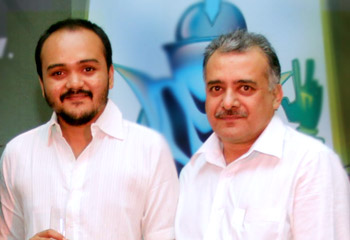
The next time you are on the beaches of Bali, don’t be surprised if you run into good ol’ media boss from India, Satyajit Sen. Havas Group Indonesia has announced his appointment as CEO of Havas Media CEO. Sen takes charge of a position left vacant after the exit of Anwesh Bose in November last year. His mandate is to accelerate Havas Media Indonesia’s journey of transformation and exponential growth with a focus on collaboration, new business and building and leading a team. He will report to Vishnu Mohan, Chairman & CEO Havas Group, SEA, India and North Asia. Sen’s appointment is effective immediately and he is based in Jakarta.
Sen joins Havas Indonesia from Samsung India where he led the media management function from 2014. Prior to the South Korean giant, Sen was CEO of Zenith Optimedia in India.
Commenting on the appointment, Mohan said: “Satyajit’s proven expertise in delivering value across the spectrum of media services encompassing digital, content and data coupled with extremely strong leadership skills will build on what we have already achieved in Indonesia, which has a strong portfolio of media clients like Indofood, Grab, and Godrej and take Havas Indonesia forward in its next phase of growth and expansion. His experience encompassing both brand and agency will be huge advantage in a critical market like Indonesia. I am delighted to welcome Satyajit to the Havas family and I am confident that he will propel Havas Indonesia in its next phase of evolution.”
Added Sen: “This is an interesting opportunity in changing and challenging times. Havas has been a pioneer in integration with its Village model of organisational structure and this multi-dimensional approach to marketing and advertising is exactly what clients are looking for. I am extremely excited to be a part of Havas Group’s futuristic agency model and looking forward to working with the team to start a new chapter for Havas Media in Indonesia.”
Bali, by the way, isn’t exactly close to Jakarta. It’s around 17 hours away by road given the 1154 km distance. That’s a little less than a couple of hours by air.
Madison Media has just announced the appointment of Rajul Kulshreshtha as Chief Executive Officer, Madison Media Plus. Kulshreshtha will look after the agency’s Delhi operations and will join from June 3, 2019.
Kulshreshtha is a seasoned media professional with 25+ years of experience across leadership roles in advertising, media and outdoor agencies, consulting, sales and entrepreneurship, across India, Indonesia and Singapore. His past assignments include Managing Director of Motivator India (part of GroupM), Managing Director of Kinetic, (GroupM’s Outdoor agency), General Manager, Team LG (GroupM, India), 11 years at Universal McCann, setting up the media practice for Zenith Optimedia in Indonesia and CNBC Asia as Sales Head based in Singapore. He has had 2 entrepreneurial stints, one of setting up Xposure, a media agency that handled clients like Gionee, Mobikwik, Cardekho, Shopclues, amongst many others; and a consultancy business, The Consilium.
Said Vikram Sakhuja, Partner & Group CEO Madison Media & OOH, “I am delighted to have a dynamic leader like Rajul join our team. Am confident that Rajul will be able to add tremendous value to both our clients and our team in Delhi.”
Added Kulshreshtha on his appointment: “I have always been an entrepreneur at heart and building businesses has been a passion. I will continue to pursue that passion here at Madison. Working with Sam, Vikram and the team is a great privilege and one that I will value and learn from. Having met the team here, I do believe that there is a lot that we can achieve together and add huge incremental value to our clients ”.
So what is an essentially account retention move doing as the lead story on MxMIndia today? Because one, it’s our biggest story of the day. And two, we are committed to tracking the media agency business beyond just news on movements. But, most importantly, it means a lot for Zenith (earlier called Zenith Optimedia)… it is Zenith’s biggest account in India, estimated to be in the region of Rs 650 crore annually.
India is #4 in the Top 10 contributors to global adspend growth 2017-2020. But that’s perhaps the only statistic that indicates ‘achche din’ for adspends. India, btw, is not in the Top 10 adspend markets. Neither in 2017, and not even in 2020. But that’s a headline you’ll possibly read elsewhere. Let’s examine the real thing.
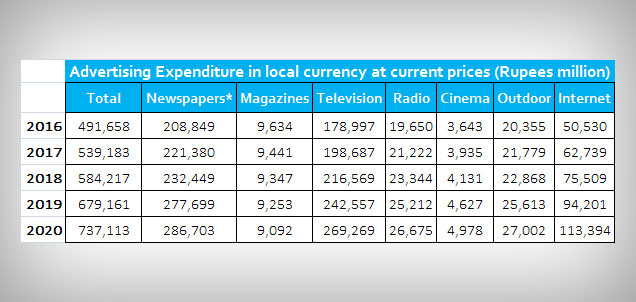
First, take a closer look at the table above. Total adspends, according to Zenith, were Rs 491,658 million in 2016, Rs 539,183mn in 2017 and the forecast for 2018 is 584,217mn. Since we are still in early December 2017, one presumes the 2017 number of 539,183 is an estimate. But given that number, the adspend growth is 9.7% as compared to the forecast of 11.2% made last year. The forecast for 2018 is 8.4%, even lower than the estimated growth for 2017.
Yes, you read it right. Zenith (eka Zenith Optimedia) believes that adspends will grow 8.4% next year in comparison to 9.7% this year. Remember, we are supposed to have seen the worst of the worst in 2017 given demonetisation last November and GST just ahead of the festive season. So why the not-so-achche din in 2018?
Here’s what a communique says: Year 2017 will close atRs 53,918 crore, registering a slightly slower pace of growth is on account of demonetisation introduced in November 2016. Total AdEx for India will climb up to Rs58,422 crore, growing  at 8.4% in 2018, led by television. Growth rate for television is pegged at 9% while newspapers will grow at 5%. Radio will grow at 10%, while cinema and out of home will grow at 5% respectively.
Tanmay Mohanty
Said Tanmay Mohanty, Group CEO, Zenith India: “Growing Internet penetration accelerated by operators such as Jiowill significantly enhance digital adspends in India and give access to previously untapped markets. India has seen some fluidity in overall ad-expenditure but remains one of the fastest growing advertising markets globally. With the dust settling down on demonetisation and GST, we expect a measured recovery on ad spends. Consumer confidence is definitely on the rise. In 2018, mobile handsets, FMCG, automobiles, BFSI, travel and tourism and political ads will drive up the pace on adspends.â€
Here’s more from the communique we received:
Amid growing debate as to whether brands are overspending on digital media, Zenith research has found that the effectiveness of internet advertising has now caught up with digital adspend.
Until 2015, brands struggled to make effective use of internet advertising, and their spend was not matched by the resulting ‘brand experience’(an accurate proxy of market share*). However, by 2016 internet advertising accounted for 34% of global ad budgets but produced 35% of brand experience.Internet advertising is now therefore working harder than advertising in other media.
For many years Zenith’s Advertising Expenditure Forecasts reports have consistently reported sizeable increases in the internet share of advertising budgets. The December 2017 edition of the report is published today. For the first time Zenith has been able to demonstrate the ROI of internet adspend, not just its scale. We used our proprietary Touchpoints ROI Tracker tool to compare internet adspend to internet brand experience over the past few years.
In 2014 advertisers spent 27% of their budgets on internet advertising, which produced only 21% of brand experience. By 2015, though, brands were using internet advertising more effectively: it accounted for 30% of both budgets and paid brand experience, before tipping over in 2016, when brand experience exceeded budget share.
We expect internet advertising’s share of global adspend to continue to rise, reaching 40% in 2018 and 44% in 2020. Its value will rise from US$203bn in 2017 to US$225bn in 2020. The share of advertising expenditure allocated to internet advertising varies widely across the world. In the most advanced markets (Sweden and the UK) it will account for more than 60% of total expenditure next year, and it will account for between 50% and 60% in another six (Australia, Canada, China, Denmark, Norway and Taiwan).
India is placed No 4 in the Top 10 contributors to global adspend growth 2017-2020.
India follows USA, China and Indonesia in that order. (See executive summary)
Between 2017 and 2020 we forecast global advertising expenditure to increase by US$72 billion in total. The US will contribute 27% of this extra ad expenditure and China will contribute 20%, followed by Indonesia, India, the UK and Japan, which will contribute 4% each.
Five of the ten largest contributors will be Rising Markets* (China, Indonesia, India, Brazil and Russia), and between them they will contribute 33% of new adspend over the next three years. Overall, we forecast Rising Markets to contribute 54% of additional ad expenditure between 2017 and 2020, and to increase their share of the global market from 37% to 39%.
In India, internet adspend will capture 11.6% of the market in 2017. India is therefore a leading digital market/keeping pace with global developments/has a lot of scope for growth in internet advertising. We forecast 20.4 % growth in internet advertising in India in 2018, compared to 8.4% growth for the market as a whole. By 2020, internet will account for 15.4% of total adspend in India.
The rise of the internet has had huge consequences for the other media, which are covered in detail in the executive summary.
Big platforms are capturing digital growth
The internet is driving the great majority of global growth in advertising – it will account for 94% of the growth in adspend between 2017 and 2020. And most of this will be captured by just five big platforms – Google and Facebook, plus the Chinese platforms Baidu, Alibaba and Tencent. Between them these five platforms increased their share of global internet adspend from 61% to 72% between 2014 and 2016, and captured 83% of the growth in internet adspend over that time. Baidu, Alibaba and Tencent accounted for 54% of the growth in internet adspend in China, while Google and Facebook accounted for 96% of the growth in internet adspend in the rest of the world. Between them Google and Facebook accounted for 76% of internet adspend outside China in 2016.
Big countries are adding most ad dollars
In dollar terms, most of the growth in global adspend is coming from a few big markets. We forecast that just two countries – the US and China – will contribute 47% of new ad dollars between 2017 and 2020. The five biggest markets – the US, China, Japan, the UK and Germany – will contribute 57%.
Big cities are driving global adspend growth
Big cities are driving global adspend by concentrating growth in productivity, innovation and trade. We have conducted a unique study that attributes adspend to individual cities by estimating the value of their inhabitants to local, national and international advertisers. We forecast that the top 10 cities alone will contribute 12% of all global adspend growth this year, and that the top 725 will contribute 60%.
We predict that between 2016 and 2019, adspend in the 10 biggest-contributing cities will grow by a total of US$7.5bn, representing 11% of growth over these years. These ten cities will be, in descending order: New York (where adspend will grow by US$1.4bn), Tokyo, Jakarta, Los Angeles, Shanghai, Houston, Dallas, Beijing, London and Chicago (which will grow by US$0.6bn).
Advertisers feel the pressure from digital transformation and polarisation of growth
Advertisers are feeling pressure from the rapid transformation of their businesses, exemplified by the rapid shift of marketing communications to online media in response to changing consumer behaviour, and the polarisation of growth to big platforms, big countries and big cities. At the end of November we conducted the third in our series of exclusive surveys about brand growth among key Zenith clients. On a scale from 0 to 100 – where 0 means everyone expects decline in 2018, 100 means everyone expects growth, and 50 means the average expectation is for no growth – the average response was 57, down from 67 this time last year. Food and drink brands have been the least affected, with a score of 66 this year, down just a point from 67 last year. Packaged goods, retail and telecom brands have all fallen to 50, expecting no growth, down from positive scores last year.
“We are seeing a battle played out in business, marketing and media between big players and small players,†said Vittorio Bonori, Zenith’s Global Brand President. “Growth is coming from big countries and big cities, and being captured by big platforms. Brands should focus on upstream strategy, data-informed UX planning and downstream automationâ€.
“Internet advertising is the biggest advertising medium in the world and the biggest driver of growth,†said Jonathan Barnard, Head of Forecasting and Director of Global Intelligence at Zenith. “Our unique research shows that brands are starting to use it effectively after struggling to adapt over the last few years.â€
*Brand experience is a combination of two factors: reach (how likely consumers are to encounter brand messages at eachtouchpoint) and influence (how likely each message is to consumer attitudes or behaviour). It covers all touchpoints across paid, owned and earned media, but because we were comparing it to advertising expenditure, here we measured only the brand experience of paid media.
Touch points ROI Tracker is Publicis Media’s brand contact measurement and planning tool, based on more than 950,000 consumer interviews since 2004.
The country is witnessing a wave of investment, positive sentiment and an increase in the sheer number of High Net Worth Individuals (HNWI). The luxury market in India has been growing at a CAGR of 25% over the last couple of years, says Publicis Media India CEO Anupriya Acharya. Â Adspends in India are said to be growing at 30% in the luxury sector.
Acharya spoke as Publicis Media agency Zenith’s new Luxury Advertising Expenditure Forecasts reports expenditure on luxury advertising will rise by 3.0% in 2016,up from 1.9% in 2015. This acceleration will be driven by recovery in Asia and Eastern Europe after a tough year in 2015. Luxury advertisers will spend a total of US$10.9bn across the Top 18 markets in 2016, up from US$10.6bn in 2015.
This is the second annual edition of the Luxury Advertising Expenditure Forecasts,which examines expenditure on luxury advertising in 18 key luxury markets. The 18 markets are China, Colombia, France, Germany, Hong Kong, Italy, Malaysia, Mexico, the Netherlands, Peru, Russia, Singapore, South Africa, South Korea, Spain, Taiwan, the United Kingdom and the United States of America. Yes, it doesn’t include India.
As with Zenith’s Advertising Expenditure Forecasts, this report provides historic expenditure figures and forecasts by medium. However, the study focuses specifically on luxury advertising, together with the sub-categories of luxury automotive, fragrances & beauty, fashion & accessories, and watches & jewellery.
The luxury advertising market slowed from 2.9% growth in 2014 to 1.9% growth in 2015 as advertisers reacted to slowdown in the BRIC markets as well as to local conflicts and terrorism. Adspend shrank by 1.4% in Asia and by a massive 20.3% in Eastern Europe (mainly the result of the oil crisis and rouble devaluation in Russia), but the global total was buoyed by strong growth in North America (3.6%) and Western Europe (4.7%).
Specifically on India, Acharya adds: “Currently, it is estimated to be in the region of $14.7 bn and estimated to soon cross 18.3 $ bn. Fragrances, watches and jewellery are top sellers in the luxury market, followed by skincare, apparel and fine dining. Consumers today aspire for value, even if it means paying a premium for it.â€Â The Delhi NCR market accounts for the highest SEC A market, followed by Mumbai, Bengaluru and Chennai. Non-metro cities such as Ahmedabad and Chandigarh are also growing in terms of income and propensity to buy luxury goods.
Zenith forecasts Asia to return to 2.9% growth in 2016, while the decline in Eastern Europe slows to 2.8%. North America will stay strong, with 3.9% growth, but Western Europe will slip back to 1.7%. Overall ZO forecasts 3.0% growth in luxury adspend across our top 18 markets in 2016.
Luxury advertising is growing less rapidly than advertising as a whole. Notes the report: “Across our top 18 markets, luxury advertising grew by 2.9% in 2014, compared to 5.6% for advertising as a whole, and 1.9% in 2015 (compared to 4.1%). We forecast this underperformance to continue, with luxury advertising growing 3.0% in 2016 compared to 4.5% growth across all categories. “
The USA and China are driving growth in luxury advertising: Between 2015 and 2017, ZO forecasts luxury advertising to grow by US$705m. 82% of this growth will come from the US (US$347m) and China (US$228m). The US and China are the largest and second-largest luxury ad markets respectively, accounting for 45% and 21% of luxury adspend in 2015. Germany is third, followed by France and the UK. “We expect to see very little growth from France, which is suffering from persistent unemployment, low confidence and low economic growth,†the report adds. Zenith forecasts the UK to overtake France to become the fourth-largest luxury ad market this year.
Digital will be the largest luxury advertising medium in 2017: Digital advertising is by far the biggest contributor to the growth in luxury advertising, growing consistently at double-digit rates. ZO expects digital media adspend by luxury advertisers to increase by US$837m between 2015 and 2017. Over this period, television, radio and cinema will increase by a total of US$26m between them; outdoor will shrink by US$10m; and print will shrink by U$150m.
By 2017, print will account for 28.6% of total luxury adspend, down from 31.9% in 2015. TV’s market-share will also decline over the same period, from 32.7% in 2015 to 30.7% in 2017. Digital’s market-share will increase from 26.3% in 2015 to 32.1% in 2017, when it will overtake TV and print to become the single largest medium for luxury advertising.
Print rules for ‘high luxury’ advertisers: Despite its decline in marketshare, print remains particularly important to luxury advertisers, specifically those in the fashion and accessories and watches and jewellery sub-categories. In 2015, fashion and accessories advertisers spent 83% of their budgets in print, and watches and jewellery advertisers spent 60%. Print titles –especially glossy magazines – provide high-quality, immersive yet relaxed reading experiences, a particularly suitable environment for luxury advertisers wishing to showcase their brand values.
It’s now been made official. For the last few weeks (or was it months), it’s been known that leading online classifieds platform OLX has moved its non-digital media and content marketing mandate to Maxus India. Now it’s been made official.
The account win happens after a multi-agency pitch held late last year. It will be managed by the New Delhi team lead by Maxus managing partner Navin Khemka. As media AOR, Maxus will manage all traditional media outlets as well as content marketing for the brand. The digital business will continue to be with Zenith Optimedia, which managed the OLX account until recently.
Said Amarjit Singh Batra, CEO, OLX India on the move: “Changes in the technology and media domains, as well as the growth in the Internet business, not only offer new opportunities but also pose some interesting challenges. We feel that Maxus will be able to think strategically, and offer innovative business-led solutions for the same.†Commenting on the win Kartik Sharma, Managing Director- Maxus South Asia said, “Our vision is two-fold- to communicate their brand proposition through an effective media mix and creative strategies, and use those to accelerate business growth for the brand.â€
Navin Khemka, Managing Partner, Maxus added: “We are delighted to have OLX as a part of the Maxus Delhi team. Our experience and expertise in managing new age clients has helped provide them with an edge in the market place. We are confident about delivering ground breaking solutions for driving OLX’s business objective. We are looking at innovative and customized solutions to connect buyers and sellers in every small town and village in India.â€
Interestingly, Khemka moved to Maxus in July 2014 after spending over eight years at ZenithOptimedia (ZO) in July 2014 where again he managed the ZO business amongst several others.
Cairn India Limited, one of the world’s fastest growing upstream oil & gas company has appointed Leo Burnett as their agency on record for their branding communication requirements in India.
Cairn India is one of the largest independent oil and gas exploration and production companies in India. Through its affiliates, Cairn India has been operating for close to 20 years playing an active role in developing India’s oil and gas resources. The company is a global player that has been rated as the fastest-growing energy company in the world, as per 2012 & 2013 Platts Top 250 Global Energy Company Rankings.
Samir Gangahar, Executive Director, Leo Burnett, Delhi adds, “We feel privileged to be entrusted with the opportunity of playing a crucial role in the branding communication strategy of Cairn India. It further reinforces our belief in our guiding tenets of ‘Purposeful Brands’ whose message is delivered through ‘Integrated Solutions’. We along with our partners Indigo Consulting, MSLGROUP and Zenith Optimedia look forward to working with Cairn India to devise a programme that utilises all possible communication platforms available.”
At Leo Burnett, the integration drive is a strong and emphatic one given that stories happen across channels and are media-agnostic. Leo Burnett will craft and execute integrated campaigns for Cairn India.
The account was awarded in a pitch process that attracted some of the best-known and largest agencies in the country.
Havas Media Group has announced the appointment of Josh Gallagher as Regional Strategy Director.
In his new role, Josh will be responsible for driving offline and online strategy for the agency’s key clients including AXA, Emirates, LG Electronics and Shangri La Hotels. He will also lead the adoption of agency’s proprietary planning process Meaningful Connections Planning with an eye to delivering innovative solutions to new and existing clients. An integral part of his mandate is to propel the uptake of Havas Media Group’s Meaningful Brands research, a unique framework that analyses and tracks the connections brands have with our quality of life and well-being.
Josh joins the agency with ten years of experience working with international media and digital agencies in Australia. He was most recently with Zenith Optimedia Melbourne, where he worked as a Communications Strategist, driving strategy for Honda, Lion Nathan and Reckitt Benckiser. Prior to this, he spent seven years with Universal McCann Brisbane, where he worked as Client Services and Strategic Director. He has also had a stint at digital agency Kruse Digital.
Based out of Singapore, Josh will report into SK Biswas, Chief Strategy Officer at Havas Media Group, Asia Pacific.
Commenting on his appointment, Biswas said: “Josh is a very welcome addition to the regional strategy team. He has an unrelenting curiosity for uncovering consumer insights and is a champion of integration. He is one of those rare strategists, who have a hands on and practical experience of working on integrated strategies and expertise in both offline and digital communications planning processes.”
Nestle has hit a nerve with its latest “Share Your Goodness” campaign. This series of heartwarming ads has emotionally resonated with millions of people in India, as well as a larger set of the global population via social/online media.
If you haven’t seen the campaign yet, I’d encourage you to check it out. The first commercial is Adoption and the second Dabbawala.
I share this campaign because it’s a great example of next generation storytelling and its message has resonated with many, largely because the campaign leveraged a number of new media tricks – from online video with extended versions to smart search optimization and seeding its own hash tag #ShareYourGoodness to enable sharing and discovery.
But the campaign is a success for more reasons than just great storytelling and new media tricks. So why did this campaign succeed and what can we learn from it as global marketers? The lessons are surprisingly less about digital technology and more about analog humanity.
1. Storytelling is critical: Both executions, particularly Adoption, is a well-honed story – a story with humanity that leaves enough unsaid that the viewer brings their own experiences into the experience and therefore it becomes more engaging.
2. Human insights are key: The core insight is really about how food is central to human bonding and social experience. In both commercials, food serves as a bridge, a connection, an expression of love and understanding between siblings, husband and wife and just people.
3. Smart marketers own the category benefit: Food is an effective way to share our goodness. This is the underlying emotional benefit of food, besides its ability to sustain us physically. By linking Nestle to this underlying category benefit, Nestle looks bigger, more purposeful and more relevant to life than just being a food manufacturer.
4. Break The Mould: Somewhere a client or a series of clients made some bold calls. First, they decided to launch the campaign online. Second, they approved story lines where the brand is the hero without the product being the hero or appearing all over the story. Third, they approved scripts that took on out of the ordinary topics. And finally, they understood that we live in a connected world and had their agencies seed, enable and leverage sharing.
5. Recognize  and leverage the power of new media: Many marketers see digital and new media – even today in India and often around the world – as an after thought, an add-on or something one does to claim it is in the plan. The reality is that in places like India, which is the second largest market for Facebook with 100 million users (also Twitter’s and Linked In’s second largest market) and a highly mobile (soon in India 250 million smart phones), new media is as much media as old media and can allow for far more flexibility to create and distribute an idea. Why not start with the idea first and then determine the media rather than starting with the :30 or the print ad?
International appeal
The underlying insight of human goodness linked to sharing food, combined with the realization that the digital world allows one the room to tell a story which can then be shared and edited for other media, is so big that I believe this campaign has an appeal for international audiences, making it possible to leverage this effort across the globe.
In a connected world, the best ideas can come from everywhere and the Internet is global!
Marketers and agencies need to realize that some of the old arts (storytelling, insights, understanding category benefits) and pure client and agency guts are very critical. So is the ability to seamlessly leverage old and new media in ways that get people not only to be viewers, but be part of the media distribution plan.
Rishad Tobaccowala is a senior thoughleader in digital media and advertising. He works with the Publicis Groupe and is chair for Digitas, LBi, Razorfish for Publicis Groupe.
Cheil Worldwide SW Asia announced the appointment of Vivek Ballabh as Associate Vice President – Digital Media. Ballabh will be leading the agency’s efforts in digital media planning and strategy for all clients. He will be reporting to Rajesh Bhatia, Senior VP & Head Digital, Cheil Worldwide SW Asia.
Ballabh is an accomplished digital media professional with over 12 years of experience and a proven track record of planning and executing numerous integrated digital campaigns that have worked to the advantage of driving client businesses. Known for his out-of-the-box thinking, he is a strong believer in capturing consumer minds through effective deployment of new media strategies.
Hari Krishnan
Hari Krishnan, COO, Cheil Worldwide, SW Asia said, “Vivek is an accomplished digital media specialist and will add muscle to our strategic firepower in Digital.  His joining enhances our talent pool and will enable us to broaden our scope and augment our offering to a larger market.”
“We are delighted to have Vivek on board. With his knowledge and experience I believe, he will be an invaluable asset to Cheil India’s Interactive team,” said Rajesh Bhatia, Senior VP & Head Digital, Cheil Worldwide, SW Asia.
Ballabh joins from Razorfish [Publicis] where he was Sr. VP Digital Media. Prior to this he was with Solutions | Digitas [Publicis], where he set up the entire Digital Media practice and was responsible for  both operations and P&L. Previously he was with Webchutney as Head of Media Planning, where he led the HP business and was instrumental in launching successful campaigns for PSG. His work on the launch of a new range of notebooks by HP was awarded with a Bronze at Zenith Optimedia’s ROI Excellence Awards in 2008.
Ballabh is an alumnus of The Institute of Public Enterprise (IPE), Hyderabad, from where he obtained his MBA and a Graduate in Science from Osmania University, Hyderabad.
Every Thursday, MxM will take you beyond our regular news and look at the people in the business of media and marketing. So on the first Thursday of every month, we will have a section titled ‘RELATIVE VALUES’ featuring siblings, parents-children, cousins etc who may be working in the same or allied sectors of media, advertising and marketing.
This Thursday, Sanjoy and Samyak Chakrabarty talk about life’s teachings. A child’s first and greatest teachers are none other than his/her parents. And since yesterday was Teachers’ Day, we spoke to a father-son duo to understand how one has been able to shape each others lives.
By Meghna Sharma
Samyak and Sanjoy Chakrabarty
Zenith Optimedia’s managing partner Sanjoy Chakrabarty is a well-known name in the media fraternity and his son Samyak Chakrabarty made headlines when he became Chief Youth Marketer at DDB Mudra Max and Managing Director at Electronic Youth Media Group at the tender age of 18.
Both belong to the media industry, though there is a difference between what they do, but when asked if his father influenced his choice about entering the same field, Samyak recalls, “I have learnt the ropes through my father and my first orientation into the media industry was through him since I would keenly follow the work he does and I even got a chance from a very young age to interact with his colleagues from whom I got to learn a lot as well. Also I got to learn that working in the media is more of a state of mind than just a mere mechanical profession.”
Over the years, their relationship has matured and now they are more like friends. “We share a good healthy relationship wherein we are open to listening to each other’s point of views and thoughts. And whenever he seeks views on his new personal ventures, we do chat. Otherwise no work-related discussion,” says Sanjoy.
However, Samyak does feel that it is his father’s goodwill in the industry which gave him a push initially. “It is only later that I started building my own contacts since I have always been taught that being self-sufficient is more sustainable and would help me command more respect.”
So, what is one big lesson he has learnt from his father? “It has to be that I and my approach to what I do must evolve with time along with always having a strong value proposition to offer so that I am able to maintain demand for me/my product in the constantly changing market,” says Samyak proudly.
And like any other father, Sanjoy too has big dreams for his son. “He has very strong leadership skills, is intelligent, a go-getter, and he has enterprise. He is going to be very successful very soon.”
Indian shooter Gagan Narang may have won a bronze at the London Olympics, but back home it has assured him of a golden opportunity with respect to brand endorsements. With this win, Narang, who was so far not in the spotlight for endorsements, joins the growing list of noncricket sports personalities whose value of endorsements have got a boost each time they clinched an Olympics medal.
After Abhinav Bindra brought home a gold medal in the 2008 Beijing Olympics, endorsement deals worth Rs1 crore are understood to have come his way almost immediately after the win. Given this precedent, Narang, who opened India’s account at the London Olympics on Monday, may well rake anywhere between Rs25 lakh and Rs50 lakh per endorsement , media industry experts told TOI. The endorsement fee of athletes in sports other than cricket is said to be in the Rs10-20 lakh range. So for a nation where cricket is a craze, endorsement values of Rs25-50 lakh for a sport like shooting is certainly laudable.
“After the medal win, Narang’s popularity in the brand world will shoot up 100 times. As of now, Narang has hardly been present in the brand world. This win will give him a push into the endorsement market,†said Navin Khemka, managing partner, Zenith Optimedia, a media agency.
India’s growing list of noncricket stars used in brand endorsements include boxer Vijender Singh, who won a bronze medal for India in 2008, and Rajyavardhan Singh Rathore, who won a silver medal in 2004 Athens Olympics.
“There is a lot more awareness , especially among youngsters and this will help sports like shooting with more endorsements,†said Melroy D’Souza , COO, Professional Management Group, a sports management company that handles Bindra’s brand endorsements.
Supratik Roy, director, Affinity Cinemedia, said: “Considering that shooting as a sport does not have as much mass appeal as cricket, the popularity of sportsmen like Narang will remain concentrated on premium and niche categories like luxury, lifestyle, banking services, computers and such others. If the number of wins from India is not too big, Narang has a shot at earning more brand value.â€
Narang’s newfound glory has already attracted Milagrow HumanTech which, in consultation with Narang, will launch a special edition of TabTop PCs and robots in his honour. While this is not strictly a brand endorsement, 5 per cent of the sales proceeds of the products will go to Narang as part of the special promotion, said Rajeev Karwal, founder & CEO, Milagrow Business & Knowledge Solutions.
Samsung, which is a global sponsor for the Olympics 2012, said the win will boost Narang’s image. “Narang is among our Samsung Olympic ‘Ratnas’ and we are sure a lot of brands will want to sign him up after the win,†a Samsung spokesperson said.




 I share this campaign because it’s a great example of next generation storytelling and its message has resonated with many, largely because the campaign leveraged a number of new media tricks – from online video with extended versions to smart search optimization and seeding its own hash tag #ShareYourGoodness to enable sharing and discovery.