Tag: Zee News

  • Anil Thakraney: Zee News’s coup

    By Anil Thakraney


    There are two distinct points of view on whether Zee News did the right thing with their one-on-one interview with the Delhi rape victim’s friend, who accompanied her on the bus. The Delhi cops are naturally pissed off and have threatened legal action against the channel. That’s because the cops came out quite pathetically in the said interview.


    Some media folks believe that Zee should not have carried this story. One, because the case is sub-judice and the friend’s (he’s the key witness) testimony in public may affect the trial. Two, they believe it wasn’t morally correct to exploit an injured victim for TRPs and make him relive the tragedy all over again, that too just a few weeks after it happened. While there might be a point in this line of thinking, I smell something burning out here. Because this was a journalistic coup for the channel.


    I am fully with the rest of the journalists who believe that Zee did the right thing. Even if the case is in court, the janata has every right to hear the man’s version. Because he had lived that very unfortunate situation, he knows better than anyone else on what exactly transpired that night. And what he said is pretty alarming. It was not just the criminals who did the rape victim wrong, the hangers-on who stood and did nothing and the cops who took their sweet time to react are also party to the girl’s death. These issues have to be exposed and discussed in public, because only then will real change happen. It won’t happen just by punishing the culprits.


    I also liked the way the anchor handled the interview. It was professional and to the point, minus the hysteria (unusual for a Hindi news channel). And the anchor very rightly kept away from the rape itself. In fact, the victim wasn’t discussed much, and this we must appreciate. All in all, full marks to Zee News. This was a much needed effort after the channel’s senior personnel had been accused of trading news for money on another story.


    And Zee News should ignore the nay-sayers. Every single media brand in this nation would have killed for this interview.


    ***


    PS: I am a little confused on why the media chose to keep the rape victim’s identity a secret long after she had passed away. This not only doesn’t make sense, it’s unfair to Pratibha Murthy, Nayana Pujari, Jyotikumari Choudhary and many others. And if you are wondering who these girls are, then that saddens me. It is the loss of public memory that one finds most depressing.


  • Manish Tewari is new I&B minister

    By A Correspondent


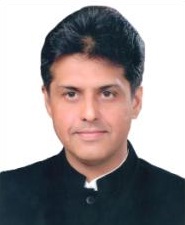
    Manish Tewari

    It’s a well-deserved reward for a loyal Congress soldier. Lok Sabha member from Punjab, 45-year-old Manish Tewari, was appointed minister to head the vital Information and Broadcasting Ministry yesterday. Although ranked Minister of State, Mr Tewari gets independent charge.

    He still needs to get the handover notes from predecessor and senior party colleague Ambika Soni, but he’s got some quick decisions to take on the digitization issue. Although his first response to the waiting media was that he would speak to all stakeholders as well as with Ms Soni, unless the High Court in Mumbai intervenes, he will need to take some quick decisions.

    On the issue of curbs, Mr Tewari said “self-regulation is the best regulation”.

    The relationship of the UPA-2 government and the media has been rocky with the government at the receiving end for its conduct. There have also been charges against the media for crossing its line and last week, Congress MP Naveen Jindal went public with allegations against editors of Zee News.

    Earlier, Ms Soni resigned as the I&B minister in order to work for the party in the run-up to the 2014 general elections. While it’s not an uncommon practice for senior ministers to quit to mobilize the party machinery ahead of a general election, the decision was untimely as it came less than a week from when the most critical and gamechanging action of the government for the broadcast sector was to happen on November 1.

    See:

    Manish Tewari Lok Sabha member profile: http://mib.nic.in/ShowContentOne.aspx?id=1&Section=7

    Manish Tewari profile: http://manishtewari.info/Work_Profile.html


    Photograph: I&B ministry website

  • Alok Agrawal replaces Barun Das as Zee News chief

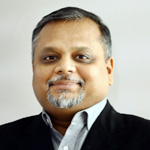
    Alok Agrawal
    Alok Agrawal

    By A Correspondent


    Zee News Limited (ZNL) has announced that its CEO Barun Das has decided  to move on after a successful 5-year stint, and is being replaced by Alok Agrawal.


    Punit Goenka, Managing Director, Zee News Limited said, “Over the last five years Barun has contributed immensely to the growth of Zee News and taken the company to greater heights. We wish him the best for his future endeavour.”


    Speaking on Mr Agrawal’s appointment, Mr Goenka said, “We welcome Alok into the Zee News family. His rich experience in the media domain will help us take Zee News to the next level of growth.”


    Prior to joining Zee News Limited, Mr Agrawal worked with Cheil as Chief Operating Officer.


  • Zee News, Amar Ujala win EC awards for voter awareness

    By A Correspondent


    The Election Commission of India has selected Zee News for the National Media Award on Voter Education for its outstanding campaign towards creating voters’ awareness in the Assembly elections (January-March) 2012, especially in Uttar Pradesh and Uttarakhand. The Hindi daily Amar Ujala has also been selected for a Special Award for its remarkable contribution towards voter education and awareness in the aforementioned elections, says a release from the Press Information Bureau.


    This follows the decision taken by the commission and announced during a media convention in January this year at ECI that the media house with the best campaign on voter education and awareness would be awarded.


    The award will be presented during the 3rd National Voters’ Day on 25th January 2013 at New Delhi.


    The commission has now decided to constitute separate awards for electronic and print media for all the forthcoming elections.


  • Loss of plurality is worrying: Paranjoy Guha Thakurta

    Paranjoy Guha Thakurta

    By Paranjoy Guha Thakurta


    This sort of an acquisition is part of a growing trend of ‘corporatization’ of the media where big business houses such as the Aditya Birla Group and the Reliance Industries group are investing into existing media groups. Through this process of consolidation, they are also bailing out these groups.


    The Raghav Behl-led Network 18 and Ramoji Rao-led Eenadu are now part of one big conglomerate because Reliance Industries Ltd (RIL) has bailed out both by pumping in a huge amount of money. On paper, it appears as if they are still separate corporate entities, which they are, as per the laws of the land. But the kind of associations they have struck gives an impression that they are now going to work like a conglomerate. Now this is exactly what has happened in the case of Mr Aroon Pourie who heads the India Today group which is also going to be one major conglomerate. So what we are seeing, in that sense, is the ‘cartelization’ of the media. There are cartels being formed, there are oligopolies being formed.


    The recession in the west has led to shrinking of advertising expenditures for the media in India and across the world especially after 2008, and this has had a direct impact on the fortunes of media organizations. So this process of consolidation has got expedited. What this means is that the media in India is going to become less plural, it’s going to be dominated by relatively fewer groups. What you are really seeing is, large corporate groups exercising greater dominance on the media. Now there are two implications.


    Also read:

    AV Birla group buys 27.5% in India Today group


    Birla may use personal money for buy, Mail Today may now launch editions in Mumbai, other metros


    Why media purists needn’t worry about Kumar Mangalam Birla’s 27.5 % in Living Media

    One is, of course, you are finding telecom companies (Mr Aditya Birla also happens to be the head of Idea and Mr Mukesh Ambani’s RIL is a major player in the broadband wireless access space), which are providing you communications, are also now playing an important role in companies that produce content. So the content providers and content distributors are coming together. This, in my opinion, is going to result in a loss of heterogeneity, resulting in a loss of plurality. In a sense, the oligopolies that are going to be formed will also impact the listeners of content, the viewers of content, or the readers of content. The content they get will be less heterogeneous.


    The other part of the story is that these companies are also big advertisers. Therefore, the clout of the advertiser will go up. As I said, the telecom service providers are now becoming important stakeholders in companies that are producing content. So the distributors of content are becoming stakeholders in the producers of content. Similarly what you also see at another level, the companies which are big advertisers are also now becoming the owners of the media. So in my opinion, these trends towards ‘cartelization’, or the formation of these giant corporate conglomerates is not going to lead to greater plurality as far as the consumers of content are concerned.


    The numbers of TV channels and newspapers and websites often give you a very deceptive kind of a picture and the capital is a classic example of that.Delhiis the only city in the world with 16 English language daily newspapers. This gives you a misleading picture, that readers of English dailies inDelhihave a huge choice. But the fact of the matter is that two newspapers, The Times of India and Hindustan Times would account for well over three-fourths of the total market of all English daily newspapers. And if you add to that Economic Times, then these three publications put together would account for more than 80 per cent of the total circulation of all English newspapers in India. So, in terms of numbers it looks good, but if you look at the structure of the market, you see few dominant players.


    In India, unlike in other countries of the world, like US, UK or Australia, there are no cross-media restrictions. In other countries, there are both vertical as well as horizontal restrictions. Vertical restrictions mean that the content producer and the content distributor are different companies/groups. In India, the same guys who are producing content are also distributing the content. You have the DMK controlling the distribution channel and also producing the television channel; you have Zee News producing news and also controlling Dish TV. There are clear conflicts of interest that arise if your distributor and the provider are the same. That’s only one part of the story.


    The other is what is called horizontal cross media restrictions. That means, the same company dominates all forms of the media, like print, radio, TV, in the same geographical area. In our country we don’t have any legal restrictions on cross media holdings. As far as the media is concerned, the group concept or the conglomerate concept does not operate in our country. So you have Bennett Coleman Ltd which brings out various print publications, and then you have Times Global Broadcasting which brings out the television content. These two companies happen to be controlled by the same set of people. But because the legal restrictions that exist in India apply to individual entities and not to conglomerates, effectively you have no cross-media restriction.


    Speaking of editorial content, editors will not publish or broadcast anything that would go against the interest of the corporate that controls; these would become subtle forms of censorship and control. For instance, Living Media which includes, Aaj Tak, India Today, Headlines Today and Mail Today, these publications or these broadcasters are unlikely to publish anything negative that could affect the business interests of the Aditya Birla Group. So that could be an eminent danger, that degrees of freedom that editors and content providers would enjoy, would get curtailed not just because of the pattern of ownership but also because the owners of major conglomerates are also major advertisers.


    Even if on paper, the editors have the autonomy and independence to publish what they like, there could be subtle forms of censorship wherein editors would feel constrained or would think twice before publishing any story that could in any way go against the interest of the promoters of the company that control these media conglomerates.


    I am optimistic about the future of media in India but I am also concerned about the fact there is loss of heterogeneity, loss of choices to the consumer.


    (As told to Shruti Pushkarna)


    Paranjoy Guha Thakurta is a senior journalist, editor and broadcaster based in New Delhi.


  • @FF12: NBSA chief suggests independent regulation for media

    By A Correspondent


    In 1950, Jawaharlal Nehru said that freedom of speech should be granted to good and bad editors, but they should use it in national interest for he believed that if it is left to the government to decide, the good editors will be jailed and the only the chamchas will survive. This was the opening Justice JS Varma, former chief justice, Supreme Court and  News Broadcasters Standards Association (NBSA) Chairperson used for his keynote address for the session ‘Freedom of Media: Significance of self regulation’.


    Justice Varma said that freedom of speech is precious and we have to preserve it. The way to do so is self regulation as the media is mature enough to know to do it themselves and ward off the danger of state regulation.


    He said that it is not media’s right but rather an obligation to keep the people informed so that they can participate in government decision making process. It is the media’s duty to ensure transparency to ensure accountability.


    Justice Varma emphasised that the media should not give the government a chance to step in and hold it accountable. He said that the media (which reports) and judiciary (which decides) are the two strongest pillars of our democracy and they shouldn’t use their strength (power) to harm anyone, lest their power be curtailed due to lack of their accountability.


    Moving on, Justice Varma criticised the media, especially the broadcast media’s tendency for breaking news. He said that the key tenets of journalism should be kept in mind while reporting ‘breaking news’- is it true, fair and in public interest. He said that objectivity and due diligence must be applied while covering news. He cautioned the media, which has tremendous reach, to be cautious in its reporting as the effect of the news it flashes is instantaneous. He closed his address by saying “The more potential for damage, the more is the accountability you have”.


    The moderator, Barun Das, Zee News CEO and Vice President, News Broadcasters Association (NBA) spoke about how the media can’t be regulated as it is an essential pillar of democracy. He opined that free media can be good or bad but media which is not free can never be good.


    Mr Das said that regulation is a process of evolution. The media needs to introspect and understand where it stands.


    He outlined the dilemmas faced by the media while trying balance the content and the bottomline where news is trivialised for gaining eyeballs. The broadcast media especially is constantly grappling with trying to strike a balance between what the audience ‘would like to see’ and what they “should see”.


    The stage was then thrown open for the panel discussion. Each of the panellist was given time to speak and answer questions by the moderator.


    The discussion was opened by KVL Narayan Rao, executive vice chair person NDTV and President, NBA.


    Mr Rao said that there is no question of compromise on the fact that that media is free and that is the way it should be in a democracy. He said thatIndiais the largest free news market with a reach of 500 million households (news TV reaching nearly 115 million households).


    He said that in the early 2000s, after the private players were allowed in, they got together to set up the NBA to set up a code of programming and ethics which will regulate their broadcasting. He emphasised that it was important to have an independent and respected authority to keep a vigil on what is happening in the industry. He was proud of the fact that they telecast a scroll reminding the viewers that they have a forum to go to if they have any complaints.


    He also spoke about the NBSA which has been an advisory to the media with regards to improvement in news coverage and takes up issues suo moto if the media is found lacking.


    When questioned by Mr Das about balance or conflict on interest between news and business, Mr Rao was emphatic that there should be a “Chinese wall separating news and commercial interests”. He opined that news is to inform, educate and entertain the public independent of government and advertisers. He allowed that some compromise may take place but said that with digitisation, more cost can be spent on content and hence the scenario will change.


    Next to take the mike was Nitin Desai, Former under Secretary General, United Nations and member NBSA.


    Mr Desai started by saying that he disliked the term self regulation and “independent regulation would be a more appropriate term”. He said that emphasis should be given to developing the independent regulation in such a way that it is credible in the eyes of the media, the people and the view makers.


    His main concern was about the emergence of new media and challenges presented to regulate it.  He reiterated the need for due diligence to be given to fair and unbiased reporting, rights of an individual to privacy and avoiding trial by media.


    He said that he had already noticed a change in the fact that the mindset of the editors and the non-media members on the NBSA was converging due to the internalising the sense of responsibility.


    When questioned about the trivialisation of content, Mr Desai said that it was being done as the measurements showed that the audience preferred it. He said that there was a need for a different measuring system for news channels. He also opined that news channel have to stop behaving like money making operations and take responsibility to cover news that “people should know”.


    Phillip Turner, Chief of Bureau, CNN International, South Asia said thatIndiahad a long tradition of journalism but we tended to forget it. He emphasised that focus should be on stories that have a relevance to the rest of the world and maintaining the integrity of the media. He agreed with Mr Desai that the new media is presenting a challenge for regulation but he was of the opinion that everything would work out if the media stuck to the basic tenets of journalism – fair, relevant, responsible and accurate reporting.


    When asked about the need for a NBA-like worldwide authority, he wasn’t sure that such a platform could work globally.


    Kiran Karnik, member NBSA and former president of NASSCOM spoke about the challenges of new media. He said that today, when the news is available instantly as reported by citizen journalists and through the new media, it is the responsibility of the media to separate what is true and what is not. He also opined that news media today has shifted from reporting news to making news. He cautioned them to use the power they have responsibly by maintaining their standards and not infringing on the rights of the people.


    When questioned on the challenges thrown up by the new media, he agreed that technology is not amenable to censorship and also the consumer is becoming the creator and consumer. But he emphasised that there should be zero tolerance for unverified news and the news media as the aggregators of news should use their own censors.


    Mr Das wrapped up the session by stating that now is the time to convert challenges into opportunities and inclusive growth through media is the way forward.