Tag: Zee Melt 2015

  • Clients want media at the front-end…


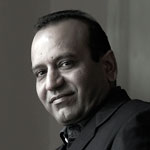
    Pele Cortizo-Burgess, Global Director, Integrated Planning at leading media agency MEC isn’t from a typical media agency background. He was last at Grey North America as Chief Strategy Officer. Excerpts from an interview with Pradyuman Maheshwari when he was in Mumbai for Zee Melt 2015.


    With the kind of background you have, what are you doing in a media agency? Apart from the fact that both your last agency and the current one are WPP-owned?

    [I’m] still learning, growing, getting sharper, because there’s a level of creativity, media that I think a lot of clients and makers, if you will, people who are responsible for the advertising product… there’s a lot of creativity within media that they’ve not been exposed to.


    Before you came in to a media agency, you must’ve come in with certain expectations. Obviously, media agencies have changed dramatically from the last few years…

    I wouldn’t know because I’ve only been in one media agency, and it’s this one.


    What was the perception?

    The perception has been almost disposable. It is in the last 10 minutes of the meeting that the media guy stands up and gives a presentation, which is such a shame especially when you look at the resources, discipline and talent media companies have. It’s almost irresponsible to save that to the very end of a creative presentation, versus if you start the approach of understanding the opportunity, challenge, problem on the client’s behalf with inputs from media, I think that the idea actually ends up being more exciting.


    Would you say the clients expect a lot more from media agencies today than before?

    I think clients are incredibly open to media companies being [engaged in] more than just buying and planning. So I think what’s happening now is clients are recognising the value of media being at the front-end of the approach, versus the back-end.


    Are creative agencies okay with it?

    Yes, they are smart. There are agencies that are for this, but, I think that it’s not a hundred per cent. There are advertising agencies that, unfortunately, still look at media as a discipline that’s [revolves] around execution, versus looking at media as an essential ingredient in a creative process, to create an idea. And when that happens, it’s only to the positive benefit of the client.


    I’m not very sure what the scene is internationally, but in India, media agencies have always suffered from the fact that they’re unable to hire talent – especially at junior levels – because they don’t have the money, thanks to what they earn. Is that a problem elsewhere in the world?

    Not many people have enjoyed my saying this, but if I reflect on my own career, some people ended up doing media because they couldn’t become an account planner or couldn’t make it in the creative department.


    Like if I can’t become a doctor, I turn a dentist.

    There was always that stigma which led to a lot of people not choosing to go into media. Given the changes that are happening right now, when I look at the talent that’s coming in — mostly outside India in the markets that I’m more engaged with — it’s about retaining that talent, not just retaining them on the possibility that they’ll go to another advertising agency, but to Facebook, Google or Twitter. Today, there are so many different environments that are calling out for amazing talent. Media is one that deserves that amazing talent.


    Increasingly, media agencies are becoming full-service, because in digital they do creative and they also do buying and planning. This is happening in India too. Your views.

    I’ve heard a lot of people talk about it as a prediction. I myself don’t see that as a way of embracing or creating the most amazing ideas for a client. Because it’s fragmented. I’ve been asked if, in future, I see all disciplines coming together, and my response is that they may not all come together under one roof, but if you’re my client, [I have a] responsibility to connect all those different inputs to ensure that you have an idea that is as dynamic as the world that we’re about to unleash it into. Does that mean that I see media agencies becoming full-service? We’re not built that way at the moment. What we’re building ourselves is for transitioning that discipline from just being the backend more towards being an essential component…


    Could there be a conflict between media agencies and creative agencies, given the larger growing of those roles?

    I think there will always be conflict around territories, humans being humans, organisations being organisations. A lot of the companies that have started to create a discipline [do it to] create a holistic point of the view for the client. When you talk about better understanding a customer’s journey, you can’t do that without better understanding his/her behaviour and engagement with media. When that happens, a lot of people will say, may be there’s conflict. That happens because we’ve traditionally kept media separate — in terms of involvement in the creative process — which I think is a shame.


    For clients it’s a win-win because they’re getting ideas from everywhere…

    Yes, but be careful about ideas coming from everywhere. Despite what people say, every idea may be a good idea, but there are also a couple of bad ones. And I think bombarding a client with ideas from everywhere isn’t a role that partners need to play. I think partners need to engage in creating the most dynamic, most engaging, most relevant idea and then implementing that accordingly. Yes, it’s a win situation for the client, knowing that the idea put in front of him/her has been holistic in its creation.


    MEC, for instance, has this unit for Colgate. For large clients, composite units have been built.

    I can’t answer that question in too much detail other than to give you a general point of view. When that is being built, it’s being built in pure dedication to that client.


    How familiar are you with the Indian scenario in terms of the work that’s being done?

    Not as familiar as I should be, or would like to be. This is my third trip to India. When I think about the practice of media here, what’s exciting for me is it’s almost a proof point of the shift away from paid/owned/earned, to starting with owned first, when you look at media. It’s exciting. There’s still tons for me to learn from here, and to share, hopefully.


    First appeared in dna of brands dated July 6, 2015
     

  • #ZeeMelt15: Future-gazing, unlimited!

    By Dyanne Coelho


    Creativity had an unbridled run at Zee Melt 2015. The two-day festival of creativity brought stalwarts from the fields of advertising, media and marketing — both from across India and the world — together on one platform to share thoughts, insights and plans for the future. A host of seminars, conferences, workshops and exhibitions were put together for some 1,300-odd participants and visitors. The event was organised by Kyoorius, a not-for-profit company, in partnership with Zee Entertainment, GroupM and D&AD.


    A conference, held on Day One, saw speakers from all over the world like Chris Sanderson of Future Laboratory, Daniele Fiandaca of Creative Social, Christian Behrendt of Razorfish, Bo Hellberg of Brave and HeyHuman, and many others, drawing attention to the significance of innovation, creativity, uncluttering advertising and zooming out from the ‘billboard trend’. Fiandaca, for instance, pointed out the wonders that erupt when varied talent. even from the finance HR and other teams are included in the creative process. “When margins are being pulled, innovation is the only way forward,” he said.


    “What would you do if you could do magic?” Andy Jaspers of Maxus asked at a seminar he shared with his colleague, Unny Radhakrishnan, head of digital for South Asia. Think big, imagine the impossible, and then make it possible he pointed out. “The best people are not the ones with the most knowledge, but the ones who can solve the problem,” Jaspers added. Both speakers stressed the importance of merging creativity with the use of technology. They have to go hand-in-hand, they said. “While a picture says a thousand words, a prototype is worth a thousand meetings,” Jaspers joked.


    The consumer of the future was much talked about in the seminar entitled ‘Kinetic Future Citizens’. Consumers’ needs, wants, interests and overall behaviour was discussed in depth by an array of speakers, including Sid Talwar of Lightbox, Simon Gosling of Happy Finish, Satya Raghavan of Youtube and others.


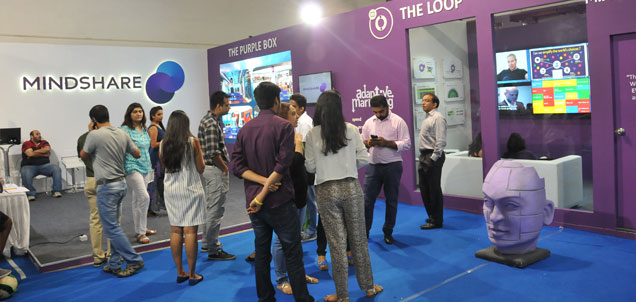
    Delegates at the festival thronged in large numbers to the activities at GroupM’s showcase space. The Loop Room and the Purple Box, which explained innovative ways to understand consumer behaviour and patterns, was a crowded space. Participants were taken through the various technologies that the company works with, including Moribus, the Behavioral Economics Lab by Maxus, global work by Mediacom and MECFresh by MEC Global. Happy Finish’s showcase displayed the latest in augmented and virtual reality. A particular favorite among visitors was the Smash it!, a cricket virtual reality experience.


    The IAA Debate on the issue of whether the mobile is likely to become the primary screen for news and entertainment in the next three to four years, brought Day One to a close on a dramatic note as speakers Vikram Sakhuja and Raghav Bahl sparred with Arnab Goswami and Rajiv Lochan on whether mobile phone usage is increasingly on the rise in India. Goswami and Lochan were of the view that a period of three to four years is the equivalent of a split-second for this to be a reality, as mobile internet in India – especially the 3G network — is still a luxury enjoyed by a few since fast downloads and buffering videos are difficult.


    The Zee Mindspace conference was the highlight of Day Two. Adam Ostrow of Mashable set the ball rolling with an informative take on digital culture. Other speakers included Joshua Black of GroupM, Parminder Singh of Twitter, Sir Martin Sorrell of WPP plc, among others.


    The Indian media is constantly evolving to keep up with changing times. While technology is transforming the way content is being delivered to the audience, measurement systems seem to be lagging. The Think BARC India seminar brought together Jose Manuel Olivera of MarkData, Bruno Chetaille of Mediametrie, Erica Boyd of Nielsen Asia Pacific and William McKenna of William McKenna & Associates to talk about life beyond the traditional measurement methods.


    The art of great storytelling through advertising and film was delved into in the seminar entitled Making the Cut – Ad Learnings, with speakers that included award-winning filmmakers Vinil Mathew of Breathless Films, Ayappa KM of Early Man Film and Vishwesh Krishnamoorthy or Corcoise Films. “Don’t tell a director how to do his job, just like you don’t tell a plumber how to fix a tap,” Krishnamoorthy explained, while talking about how agencies are sometimes put under great pressure by clients. The trio, in an interactive session, discussed the technicalities of writing, shooting, editing and budgeting as well, in order to create an ad that will engage the end-consumer and also keep the client happy.


    Girish Raj of OML took participants behind the scenes of the making of the NH7 Weekender year after year in the session. The ‘Behind the Seen’ seminar concentrated on digital entertainment and experiential marketing. Other speakers included Rajesh Thomas and Vidya Sharma of RocketscienceLab, Shubhradeep Guha of SapientNitro and Saket Saurabh and Ankit Vengurlekar of #fame.


    The two-day event concluded with the much-awaited Kyoorius Digital and Advertising Awards night where 48 (+2) Blue Elephants and one Black Elephant were given out.


  • Day 1: Melting pot of creativity


    By Dyanne Coelho


    It was meant to be a melting pot of talent, which indeed it was. The first edition of Zee Melt 2015 saw some 1338 registered delegates in attendance on Day One with speakers hailing from diverse backgrounds and continents.


    The two-day festival of creativity in advertising and marketing organised by not-for-profit firm Kyoorius in partnership with Zee Entertainment, GroupM and D&AD, opened in Mumbai with a mix of events.


    HT Osmosis, the anchor event for the day – hosted by Campaign India Managing Editor Gokul Krishnamoorthy, and Suresh Venkat – saw speakers from creative agencies across the globe shedding light on innovation, creativity, uncluttering advertising and zooming out from the billboard trend. It began with a presentation by Chris Sanderson, co-founder of The Future Laboratory, followed by Daniele Fiandaca of Creative Social talking about the several advantages of breaking out of the clutter and innovating. Christian Behrendt of Razorfish followed with atake on why we should shift from ‘award-winning’ to ‘world-changing’ creativity. Bo Hellberg of Brave and HeyHumanspoke about the possibility that human creativity will soon be replaced by artificial intellect aka machines that dish out creative ideas and storylines. The sessions continued with talks by Jason Harrison of Gain Theory, Huib van Bockel of The Social Brand, Dylan Berg of 72andSunny, Daniel Hirschmann of Hirsch & Mann, Hugh MacLeod of Gapingvoid and Takahiro Hosoda and  Kazuaki Hashida  of Hakuhodo.


    Concurrently, a seminar entitled Kinetic Future Citizens was focusedon understanding the consumers of the future; their interests, needs, wants and behaviour. Speakers including Lightbox’s Sid Talwar, YouTube India’s Satya Raghavan, Digital data strategist Subhendu Mukherjee, Facebook’s Fergus O’Hare and Happy Finish’s Simon Gosling talked about how brands can connect and entertain their audiences.


    A series of workshops were conducted through the day. These hands-on sessions with experts include interactivity with AR/VR, photography, branding and technology.


    GroupM’s showcase space was a crowded spot at Melt.  Participants were given guided tours of Mindshare’s The Loop Room and The Purple Box, Moribus; the Behavioral Economics Lab by Maxus, global work by Mediacom and MECFresh by MEC Global.Happy Finish’s showcase displayed the latest in augmented and virtual reality. A particular favorite among visitors was the Smash it! Cricket VR experience.


    The recurring themes and topics that emerged from the talks and workshops through the day was innovation and breaking the rules in advertising and the concept of smart data to understand your end consumer and attend to their specific needs. Some speakers also talked about the importance of engaging directly with the consumer through on-field advertising and marketing campaigns rather than mere print or television advertisements. “You have to make sure you’re touching people and you have a relationship with them. Print won’t go away, but it is no longer the primary medium,” said Daniele Fiandaca of Creative Social.


    Another recurring theme was the need for agencies and brands to explore ways in which advertising and technology can help improve the lives of those with fewer resources. Sessions such as the 90% talks with Anu Sridharan of NextDrop, Upasana Makati of White Print and Angad Daryani showed how social entrepreneurs can make a difference to the lives of ‘the other 90 percent’. Unny Radhakrishnan and Alex Jaspers of Maxus delved deep into the topic of creativity plus technology to solve problems. Both have to go hand in hand they emphasized. “Sometimes the solution may not be mere advertising, but to combine advertising with electronics, architecture, engineering and biotechnology as well,” said Jaspers.


    One of the most untapped areas in advertising is mobile, and delegates were able to find some answers about how to unlock the potential of mobile marketing and experiences with Tomi Ahonen, Fergus O’Hare from Facebook, and others.


    Talking about the common fight between digital versus other forms of media, Prasanth Kumar, CEO, Mindshare South Asia said: “The approach shouldn’t be between digital and/or television or print, rather in advertising and marketing the content is important. The key is to pass on the message effectively and engage with the audience irrespective of the medium. The idea is to get all media together.”


    Day One concluded with a debated organised by the India chapter of the International Advertising Association IAA Debates battling out on the issue of whether the mobile is likely to become the primary screen for news and entertainment in the next three to four years. Vikram Sakhuja and Raghav Bahl spoke for the motion and Arnab Goswami and Rajiv Lochan were against the motion. While the team for the motion argued that an increasing number of people are using mobile phones each day, the team against retorted saying that three to four years is too short for this to be a reality as mobile internet especially 3G networks is still a luxury enjoyed by a few and buffering videos are a downer. The team against the motion were declared winners of the debate.


    Said Rajesh Kejriwal, Founder CEO of Kyoorius, said, “We were delighted and encouraged to see delegates participate so actively in sessions at MELT. Day One went off brilliant. What was particularly heartening to note was when people told me that they profited from attending the proceedings.”


    Day Two of the event will see a continuation of the conference and culminate with the Kyoorius Awards with over 1500 members of the fraternity in attendance.


  • Kyoorius announces partner events at Melt 2015

    By A Correspondent


    As MELT 2015 approaches, the two-day festival is shaping up with a packed schedule of events including conferences, seminars, workshops, showcases, exhibitions and installations catering to a variety of audiences and disciplines.


    Rajesh Kejriwal

    Rajesh Kejriwal, Founder CEO, Kyoorius said, “With MELT 2015, we’re pioneering an exciting new model where our partners co-curate content with us. Together, we have created opportunities to learn and interact in myriad ways, always keeping our partners’ brand goals and vision in mind. MELT 2015 is a chance for them to showcase what they do best.”


    The HT Osmosis Conference on 21st May offers insights into advertising as it exists today and a glimpse into what it could be in the future. Speakers include Chris Sanderson (Future Laboratory), Daniele Fiandaca (Creative Social), Bo Hellberg (Brave and HeyHuman) and Hugh Macleod (Gaping Void).


    GroupM is a knowledge partner at Zee Melt 2015. Besides powering the event with international speakers, workshops and seminars, GroupM agencies are also showcasing new technology in advertising at ‘FutureReady’ in the Hall of Knowledge. Participants of MELT can expect to see the Loop Room by Mindshare, Moribus- the Behavioral Economics Lab by Maxus, great global work by Mediacom and MECFresh by MEC Global.


    Industry stalwarts will battle out the question of whether mobile has taken over TV as the default screen for viewers, at the IAA Debate on 21st May.


    Kinetic Future Citizens on 21st May, is a series of seminars that looks at how brands can connect, entertain and understand consumers of the future.


    ZEE MindSpace on 22nd May, promises to be a stimulating and eye-opening conference for industry leaders to discuss, debate and reflect on issues and challenges facing the industry. Speakers include Sir Martin Sorrell (WPP), Tom Goodwin (Havas Media), Adam Ostrow (Mashable) and Joshua Black (GroupM).


    YouTube takes over the Hall of Vision at Nehru Centre with a series of presentations hosted by YouTube India’s Satya Raghavan along with a select group of YouTube Creators will go in-depth into developing a successful YouTube strategy for brands and creators. Delegates can sign up for a one-on-one consultation with a YouTube expert on how to develop compelling online content.


    Metalworks by Maxus helps brands explore the next frontier with creative technology in a series of talks and workshops on both days, designed to help companies generate and execute those really ‘out-there’ ideas.


    Madhouse India presents a Madhouse Mobile Masterclass with renowned mobile marketing consultant Tomi Ahonen. This invite-only workshop for brand managers explores mobile-first branding.


    Experienced D&AD Trainers Bo Hellberg of Brave and HeyHuman, and Alex Lampe of A+B Studio will conduct hands-on workshops on branding and idea generation.


    Hyper Island Master Class Speaker Daniele Fiandaca will lead two workshops discussing the most disruptive trends in digital and the challenges that the changing nature of work holds for modern creatives.


    iStock  & Happy Finish have collaborated to create bespoke workshops at MELT 2015. Delegates can learn how to bring a powerful campaign to life with the right imaging tools.


    The Other Bookstore will display its extensive collection of design and advertising books and publications.


    Augmented reality is one of the hottest technology trends at the moment. Happy Finish’s Global Chairman Stuart Waplington will take delegates behind the lens to create stunning 360-degree visual experiences on screen. A host of augmented and virtual reality tools will also be on display at Nehru Centre during the festival.