Tag: Zafar Rais

  • Bisleri appoints Dino Morea for Vedica

    By Our Staff


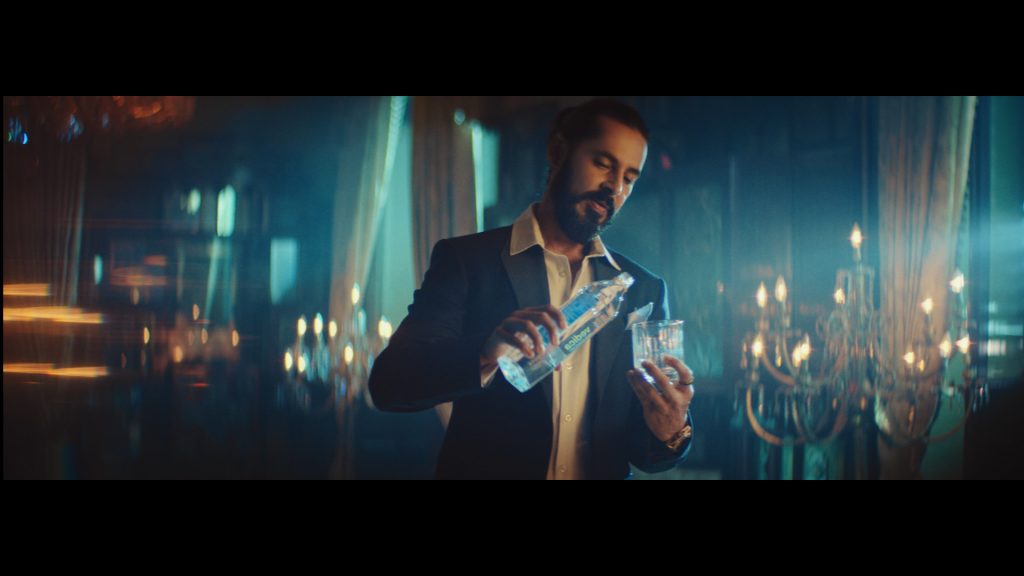
    Bisleri brand Vedica has announced the appointment of actor Dino Morea as its brand ambassador.


    Said Jayanti Chauhan, Director, Bisleri International Pvt. Ltd.: “Launching Vedica Himalayan Spring Water in a glass bottle has been one of my goals over the past decade. I am glad to have found a team, with whom I have a wonderful dynamic to create and launch this piece of art… We discussed on what the Vedica man would embody and therefore decided on associating with Mr. Dino Morea as I do believe he is someone who is truly #FullOfAltitude. I am extremely excited for the campaign which will help Vedica achieve new heights.”


    Added Zafar Rais, CEO, MindShift Interactive: “Our inspiration for the campaign has been the beauty of the Vedica glass bottle. From it, we derived an omnichannel marketing strategy that was opulent. We shortlisted Mr. Dino Morea as the ideal Vedica Man and conceptualized an ad film that brought out the essence of a life #FullOfAltitude with Vedica.”


  • MindShift Interactive wins social and digital mandate of Phoenix Marketcity Kurla, Mumbai

    By A Correspondent


    MindShift Interactive has won the social and digital mandate of Phoenix Marketcity, Kurla. The account was won following a multi-agency pitch. The mandate for MindShift Interactive is to manage the brand’s social media, influencer marketing, and media planning across all platforms.


    Commenting on the occasion, Zafar Rais, CEO, MindShift Interactive Private Limited said, “We are delighted to have Phoenix Marketcity join us as we collectively work towards making it a destination for luxury events and experiences, leveraging social media. Our digital insights show the power of digital on the luxury market and we intend on leveraging the same to grow the brand further.”


    Added Rajendra Kalkar, President (West), Phoenix Mills Limited: “What impressed us was MindShift’s ability to think out of the box, their distinctive approach and most importantly, their understanding of the retail and lifestyle space, which convinced us to partner with them.”


  • So what was the Budget like for M&E?


    A cross-section of captains of media and entertainment companies tell us how they found Budget 2015

     

    Punit Goenka, MD & CEO, Zee Entertainment

    This is indeed a futuristic and growth-oriented Super Budget presented by Finance Minister Arun Jaitley. It has addressed both the overall tax concerns, and portrayed a positive picture for the investor. It is a Budget to remember for the common man as well, since it has addressed all key aspects, like housing, jobs and education. Congratulations to Jaitley for wonderfully addressing the nation’s concerns through the Budget, and for setting some key goals for 2022

     

    Tarun Katial, CEO, Reliance Broadcast Network

    The Budget is positive, realistic and progressive in nature. Overall, it seems to be well thought of, with a holistic approach, and some key announcements for the services industry. The proposed reduction in corporate tax over the next four years is encouraging, as it will result in higher investments, growth and more jobs. The move to increase the service tax, however, will put smaller advertisers under pressure, and hamper advertising spends. The move on CSR is good, and radio can be used effectively as a catalyst for social transformation in initiatives like Swachh Bharat, since it reaches even the remotest of the corners [of the country] where no other medium can. This will be especially true with Phase III and deeper reach in radio.


    Sudhanshu Vats, Chairman, CII M&E committee & Group CEO, Viacom18 Media

    Two words sum up the essence of Budget 2015: Balance and clarity. Finance Minister Arun Jaitley walked the tightrope by staying away from Big Bang announcements that might have strained the fiscal position, while taking substantial steps on matters of tax, social security and public investment (especially in infrastructure). On the reduction in corporate tax rates to 25%, the four-year implementation roadmap is a welcome addition. This is the clarity the corporate sector needs so far as tax policy is concerned. While personal income tax slabs remain unchanged, higher exemptions are targeted towards savings and would add to retirement income in taxpayers’ wallets. These ‘wallets’ too, will have a different connotation given the FM’s vision for a cashless society. The reduction in withholding tax rates (to 10%) on royalty and FTS payments to non-residents has finally been granted. The increase in service tax is probably to bring the rate closer to the rates expected under the GST regime. In that context, the step is the proverbial bitter pill for our industry.

     

    Smita Jha, leader, Entertainment & Media Practice, PwC India

    The Budget has many references to the entertainment and media industry though there are no large announcements. The GDP growth target of an expected 8-8.5% will provide fillip to growth in the advertising industry. Clarity in the GST timetable is also significant, as entertainment tax being subsumed into GST will not only help bring uniformity in taxes across states, but also bring transparency in box office collections. There are many small reliefs provided to the industry, like exemption of the film exhibition industry from service tax thereby removing the possibility of dual taxation with the entertainment tax. Reduction in customs duty on import of digital cameras and accessories used for film production, will also help curtail production costs. The removal of certain entertainment activities from the negative list may, prima facie, seem unfavourable, but this will bring uniformity in taxation and thus be beneficial to the industry in the long-term.


    Zafar Rais, CEO, MindShift Interactive

    The new government’s maiden budget proposes to levy service tax for online and mobile advertising, which we believe will adversely affect the industry’s growth. It reflects differentiated treatment, as traditional print media remains unaffected with respect to the tax purview but the new, digital media that is actually driving innovation, will have to bear the brunt. Currently, India’s exponential mobile penetration and app consumption patterns are driving the growth of the mobile advertising industry, and this tax could hamper the innovation efforts of the entire ecosystem comprising mobile development startups, advertisers and publishers. We would have preferred a more future-focused policy regarding this particular aspect.

     

    Sumit Jain, Co-Founder & CEO, CommonFloor.com

    The move to allot Rs 1,000 crore to tech start-ups is only a reiteration of the government’s intent and purpose. The corpus, as such, is not substantial and we can only hope that there will be a fast and efficient disbursement of this fund. Jaitley also referred to a more liberal system of raising global capital and the ease of doing business, which are encouraging and would eventually create employment opportunities in the country.
     

  • MindShift’s campaign for HomeShop 18 draws good response

    Mind Shift Interactive has completed a comprehensive and impactful digital and social media campaign for Home Shop18’s 360 degree brand campaign “Shopping Makes Me Happy.” The campaign which explores humor via jokes and memes garnered 100 million impressions in less than a month. The campaign was implemented with a digital marketing mix of social media -Facebook, YouTube and Twitter and an interactive microsite- www.shoppingmakesmehappy.com. The customers were also engaged through HomeShop18’s email subscribers their TV, web and mobile application.


    Zafar Rais, CEO of MindShift Interactive, expresses, “Consumers are increasingly making all their decisions through the digital medium, and hence, introducing the mascots through this route was an important part of the launch. With an interactive website launching the TVC and social media and mobile being used like never before, we’ve created a seamless connect between traditional and digital media to take it forward and create buzz, resulting in a MindShift within the advertising space. Being the first to use WhatsApp messaging without being invasive created an innovation within mobile marketing that was very well received.”


    Speaking about the campaign, Vikrant Khanna, CMO, HomeShop18 said, “We are delighted with the response that we have received from HomeShop18’s ‘Shopping Makes Me Happy’ campaign. The blend of traditional and digital media, ensured reaching out to each of our customer segments. The TVC, assured mass reach and digital engagement guaranteed content for all. Using the loveable and clutter breaking cats across digital through a specialized micro site, WhatsApp, memes and engaging contests has ensured success in the form of business impact and buzz for our brand.”


  • MindShift launches gaming app for Homeshop18

    By A Correspondent


    MindShift Interactive, digital research and marketing firm has launched Land of Luck, a gaming application for Homeshop18.com, to engage consumers online. The four-level game that ranges over a span of 45 days allows fans and participants to explore various lucky charms through their journey, shop through Homeshop18’s offerings within the game and win exciting prizes, leading onto winning the luckiest person prize too with an international holiday of the players choice.


    Users could participate through the Land of Luck microsite or use the Facebook application. The score in the first level, spread over 26 days converted into time that allows users to Shop in the second level, ‘Mall of Luck’. Users were given 11 lists comprising of various products that they need to shop from the Mall in a given time and then select the same products from HomeShop18, sharing their favourite brands. This level of over 15 days enabled winners to win an iPad or Samsung Galaxy S3, thus, resulting in an increase in visits onto the website as well. The third phase allowed users to put their names in the lucky jackpot which was an entry point for the international holiday phase. The fourth and final level was a four-day activity where users answered ‘What made them the Biggest & Luckiest Fan’. The answer with the maximum Votes won an International Holiday.


    A filler by Network18 allowed users to win exciting prizes by guessing the number of logos that have featured in the Network18 TVC that plays during the game. Through this game, Homeshop18 has managed to maintain a balanced brand connect, whilst also making the game highly viral and addictive.


    Zafar Rais

    Said Piyush Bhargav, Vice President – Product and Marketing, HomeShop18.com: “Social Media is an extremely challenging medium in terms of achieving new numbers since the audience is quite selective. The only way to engage a picky audience is to offer something new and refreshing, every time. It’s this reason that led us to design an engaging game play – Land of Luck – which could stir a two-way communication rather than a run-of-the-mill gaming experience.” Said Zafar Rais, Founder & CEO of MindShift Interactive: “Innovation in marketing and its techniques is what makes or breaks a brand. On insights gained about consumer purchase trends, we built Land Of Luck, taking a shoppers belief in luck further and giving him an addictive platform to test his luck at all levels. In Social Media, we need to constantly evolve and that’s exactly what we continue to do.”


  • Sigh! What makes Gangnam Style and Kolaveri Di such a rage?

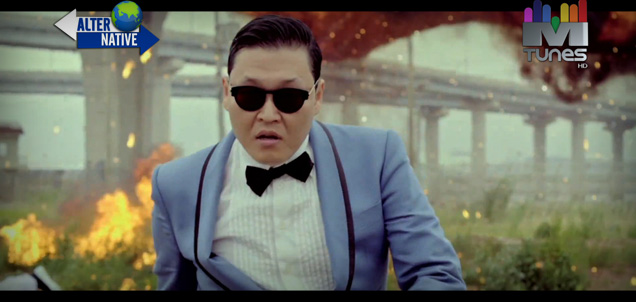
    Photograph courtesy: Music channel M-Tunes which had premiered Psy’s Gangnam Style earlier this month


    By Tuhina Anand


    Who would have thought that a rather stocky looking guy mouthing Korean lines would have become a rage around the world? Gangnam Style by South Korean rapper Psy has become a viral hit just like Kolaveri Di which took the digital world by storm. Last, Gangnam Style had 474,915,766 views since being uploaded in July 2012 while Kolaveri Di has 62,798,000 views since it was uploaded in November 2011. The popularity of Gangnam surpasses that of Kolaveri, and it is digital that has played the key role in the video becoming such a rage. How is it that some videos catch the fancy and become such huge hits, whereas others just die out eventually? Dhanush’s Kolaveri Di was such a rage but his next video where he pays tribute to Sachin… errrrr what is it anyway… did not match up to the success of Kolaveri even though it is about a cricketing legend that the nation is crazy about.


    Rahul Nanda

    Rahul Nanda, COO at Webchutney, explained, “There is no science that can work out a formula for the success of a viral. I think it depends on the quality of content.” Giving a peek into creating a viral he pointed that one should stick to the basics and remember that content is always the king. He added, “Gangnam Style video doesn’t really feature a handsome hero but the dancing catches the eye. It is then essentially about providing that hook which could be humour or having an emotional connect which has the potential of catching viral and being shared by people. Also to keep in mind is that what catches peoples’ attention is usually something that is simple and easy to understand.”


    A Kolaveri Di could not have been such a hit had it just been an audio. The video which captures behind-the-scene moments while recording the song makes it extremely delightful to watch, it shows fun while making the song which many enjoy watching. Similarly, if Gangnam Style was just a song it would probably not be so popular, but the video element adds to the song thus making it extremely watchable and shareable.


    Rajiv Dingra

    Rajiv Dingra, CEO of WATConsult.com categorically puts that going viral and a hit depends on two factors- it should be unexpected and original. People would want to watch and share only if there is an element of surprise like in Gangnam Style the dance moves and in Kolaveri Di the lyrics. There has to be a surprise element, besides of course the content has to be original. He adds, “The content while being original should allow people to create their own versions thus giving people a sense of identification.” This definitely happened in the case of Kolaveri considering the various versions that came out and they too enjoy a decent number of views.


    Zafar Rais

    On the success of Kolaveri Di or Gangnam style, Zafar Rais, Founder and CEO, Mindshift Interactive, said, “Kolaveri Di owes 80 percent of its success to the entertaining content it brought along. That is the element most brands forget in wanting to create the next ‘viral’ concept. An agency does have the capability to use the right strategies in increasing visibility to help you reach out, but without an insightful approach towards the content apt for your consumers, you just won’t make it. Humour, music and emotions are the key riders of all viral marketing efforts. Likewise, for the Gangnam style of dancing. Additionally, originality and unexpectedness are the superpowers in the viral race. It’s time for simple ideas to take over big ideas, Beyond One Language: strengthening the concept that regional innovations with a mix of global touches, does add to the concept. If it’s funny, it got to be viral and youth connect: connecting with the youth via their daily experiences in their diction is the key.”


    One cannot overlook the role of professional players in making a viral gain epic proportion. Like in the case of Gangnam which has been around for 6-8 months but gained popularity only once Sony Music took over its distribution and splashed it across various networks to garner better mileage.


    Same was also the case with Kolaveri Di too which Sony Music and the agency Jack in the Box Worldwide worked on to devise its viral strategy.


    Carlton D’Silva

    Carlton D’Silva, Chief Creative Officer at Hungama Digital Media Entertainment also pointed that the ridiculous nature of the video is what has helped in making Gangnam popular. He said, “I have seen that humour though not the only factor but is an important driving factor when essaying out a viral campaign. It’s not necessary to just bank on humour to make inroads into the digital medium and reaching the consumers. However, humour works well on the internet medium.” He also cites the example of Johnnie Walker F1 campaign where they put videos of behind the scenes which has caught on well on viral and this doesn’t necessarily stick to taking the humorous approach.


    Arvind Nair, Business Head, Social Wavelength echoes the humour element that all the digital players have expressed. However, he added, “It has to do with creating content that cut across all type of people. However, there have been brands who have experienced great success on digital by taking the route of a cause. Aircel with Save the Tiger campaign has done it successfully and has sustained it for long thus becoming relatable with this cause and also a viral hit.”


    So it is clear that original with a surprise element does best for going viral. Humour is the best route but not the only route when brands want to go viral. Keep in mind though that it is always the content that rules.


  • Jaldi 5 with Zafar Rais: Likes mean nothing

    Zafar Rais

    01. Have the clients become more open to pushing boundaries when it comes to their social media strategy in the recent past?

    Absolutely! Clients have evolved and welcomed social media. They are keeping themselves adept with the latest campaigns and case studies by brands and their competitors and are keen to do bigger and better. It is, however, up to their agency to provide them with the right guidance and conviction to invest in mindshifting campaigns versus basic presence management on social media. It’s only when you go beyond the ordinary that you truly can optimize social media.


    02. Can you give an example of your recent work that is a perfect example of pushing boundaries in the digital domain?

    We recently had a campaign on Twitter for Reliance 3G to announce the association with Google Android. We started this campaign on a Monday norning when people usually Feel Blue because of the start of a long week ahead and got influencers across twitter to interact by using the Hashtag, #FeelingBlue. As the day went by, we got the same influencers and more across India to join in and use the Hashtag in a positive manner, denoting how #FeelingBlue is now a happy emotion. As the campaign progressed, we go not just India but the world using the hashtag in a positive manner.


    At the end of the campaign, the hashtag trended in every city in India, country-wide and worldwide until the next day. To add to it, the Reliance twitter handle trended too.


    What we tried to achieve out here was for users to have fun and interact on the platform, while subtly getting the message across. The fact that the twitter handle of the brand trended too was an indication that brand outreach was created too.


    While a lot of inhibitions was showcased prior to the campaign, needless to say, the Reliance 3G team and their partners were #FeelingBlue and excited after the campaign. This trend received 800 tweets in less than an hour. The contest held by twitter influencers for this campaign witnessed more than 4000+ entries. The campaign witnessed a total outreach of +8.1 Million (81,26, 612) Link to case study: http://www.slideshare.net/MindShiftInteractive/reliance-3g-feelingblue-case-study


    03. There is also the campaign for Chetan Bhagat’s book, how did it help in ‘What Young India Wants’ reaching such phenomenal numbers?

    We ran #18ThingsIWant campaign for Homeshop18.com in order to launch Chetan Bhagat’s new book, What Young India Wants. We decided to use twitter and get users to voice their demands. What followed was a gush of Indians who truly wanted to achieve something or get things sorted out in their Country. Right from abolishing corrupt politicians to getting high grades in school, the demands were aplenty.


    The end objective: trended for 2 days while also drawing connect between homeshop18 and lead to a drastic increase in sales for the book via homeshop18.com. The campaign trended in all the Cities, India and Worldwide and it started trending in less than 15 minutes of its launch. It had a cumulative reach of over 1.6 million, over 1.3 million mentions and over 3 Lakh RTs. Link to case study: http://www.slideshare.net/MindShiftInteractive/home-shop18-18thingsiwant-campaign-report


    Some other case studies that have become industry best practices are #ChappalMaaro , #KiehlsMumbai.


    04. What are the keys to assure that a campaign becomes a viral hit?

    1. Insights: Understand who your consumers and what they’re talking about. Create your campaign around that.

    2. Brand Next: Don’t start a campaign with the objective of getting brand awareness. You’re on social media so think engagement. Your requirement to ensure your brand gets leveraged will follow naturally.

    3. Innovate: Once you gain the right insights, evaluate the right trends your campaign will automatically start short listing as a new wave creator. Ensure a level of innovation and uniqueness by actually coming up with something that has never been done before.

    4. Market it: As a social media agency, your role is to optimize the campaign beyond just waiting for it to kick start. Create the buzz through your klout. A Kolaveri Di didn’t get viral automatically!


    05. If ‘likes’ don’t necessarily mean an active audience, why is it still so important for a client?

    Unfortunately, a lot of people “sell” social media and that’s when the wrong numbers become a priority for clients. Clients and Agencies need to understand that the number of Likes means nothing if your Engagement ratio is poor. It’s embarrassing for a brand with 1 Million fans to have only 1,000 people talking about it. Tap on Targeted Fans if you’re in for the long haul.


    (Interviewed by Tuhina Anand)


  • The Anchor: 5 tips for holding a successful Tweetup

    By Zafar Rais


    Twitter has emerged as a platform which enables targeted conversations with individuals who have a direct linkage to their brand or industry and have a high opinion within the platform amongst their followers. In order to leverage opportunities with Tweeps, marketers are constantly innovating, and one such activity that proves to be highly successful is the Tweetup.


    Increasingly, this has also given rise to influencer relationship management as an individual business unit within social media agencies.


    A Tweetup is a chance for like-minded individuals from Twitter to come together offline and interact on the basis of a chosen theme. It may act as a relaxed networking event organized by Tweeps or a new route towards launching a product and creating the right kind of buzz about it, through the right kind of people. Tweeps come together to use their collective wisdom and networks to create outreach and support during the event. A Tweetup is a great way for brands to showcase, sample and get feedback on their product or service.


    So how do you ensure a successful Tweetup?


    After organizing a bunch of Tweetups for brands such as Kiehl’s, Star Plus, BIG CBS Network, Karaoke World Championship, to name a few, these are a few of our learnings to ensure you don’t goof up your first one.


    #1 Invite the right kind of people and not just Tweeps with a high follower base. The right mix is what gets you the right engagements and the right outreach. Influencers on Twitter range as per certain topics they constantly speak of. Gain some insights on their tweeting patterns and invite the relevant ones only. Quality over quantity is key here.


    #2 Innovate by offering something different. Most brands adopt the same flow for every Tweetup. The key is to find something exciting or adopt a theme that excites them to attend it, as much as it excites you to organize something different.


    #3 Communicate via an invitation that lets Tweeps know about the highlights of your Tweetup, the hashtag to be used and the venue. Ensure you create subtle opportunities for them to know about your product but avoid a hardsell. Influencers are intelligent and will communicate with their followers according to what they deem fit.


    #4 Networking is key. Innovate by creating instances for your audiences to interact with other people, the brand and your designated hashtag. An effective session by a core speaker or industry expert gives the event a good start but after that, ensure that your influencer manager does his job of keeping them buzzing via fun games, live contests, performances and some alcohol too if the occasion demands.


    #5 Take home evangelists. While it’s great to get your hashtag trending or to increase curiosity about what the hashtag you’re using is all about, a brand must focus on the influencers they have invited, ensuring they go back home as brand evangelists and have built a valuable relationship with you. Your ability to achieve this is directly related to the experience you create for them.


    At the end of it, be warm, friendly and remember the key philosophy of social media – engage!


    Zafar Rais is Founder & CEO of Mindshift Interactive