
By Rahul Sachitanand
Just days before Dhoom: 3 was to hit the screen in November 2013, All India Bakchod (AIB), a satire start-up set up by Tanmay Bhat and Gursimran Khamba, approached the movie’s makers Yash Raj Films, or YRF, to make a parody of the film. They were almost instantly rebuffed. Despite the rejection, a quartet of them – Bhat, Khamba, Ashish Shakya and Rohan Joshi – went ahead with a parody, not of the film but of YRF, which has previously made movies such as Chak de India and Band Baaja Baaraat.
Their work was an instant hit online as thousands of viewers watched. Even YRF came around, despite the earlier reluctance. As the movie rocked the box office – it raked in over Rs 250 crore – the venerable studio house eventually admitted that the video did more good than harm. “Cool stuff, love the way they have taken our pants off,” YRF tweeted as the video gained momentum online.
Making Waves
For Mr Bhat and Co, the number of viewers they ratcheted up was small compared with the storm they raised with their first YouTube video, on sexual assault. In September 2013, AIB signed up with actress Kalki Koechlin and columnist and former VJ Juhi Pandey to reinforce the line that it is never the victim’s fault. An angry country (and indeed world) quickly latched on to this dark humour, with over a million people logging on to watch the video – today over 35 lakh have viewed it.
“You have clearly been misled by the notion that women are people too,” Koechlin says early in this video. “Because lets face it ladies…rape…it’s your fault.” “In India it is yet blasphemy to say something that is politically incorrect,” says Mr Bhat. “We got 75% of our views from outside India, we had media enquiries from 43 countries.”
AIB targeted politicians too. A two -and-a-half-minute spoof – on AAP leader Arvind Kejrival called Dharna Dance feat Yo Yo Kejru Singh – is the rage currently. The video has drawn over 12.45 lakh hits on YouTube. The man himself thought the video worked, posting a brief “nice video” and a link on his official Twitter feed. In a country which takes itself a tad too seriously, global acclaim had helped AIB shoot in to the spotlight.
Laughing Away to Glory
Fifteen kilometres to the north of AIB’s office in Santa Cruz, a suburb of Mumbai, Kapil Sharma has been sending ratings skyrocketing with his show Comedy Nights With Kapil (CNWK). It has been the top rated non-fiction show in 24 out of 34 weeks it has been on air, with a TVT rating of 7,322, according to TAM data.
TVTs or television viewership in thousands is an audience measurement system for TV shows, which recently replaced the older and more contentious television rating points (TRP) metric in use. The highest rated of these has been 11,785 TVT in week 4 of 2014 (a Salman Khan episode). As the ratings skyrocketed, Mr Sharma decreased the number of non-ticketed events such as annual general meetings (AGMs) he performs at. Today, Sharma charges Rs10-12 lakh a day for a show compared with Rs4-5 lakh when he started out. “There was a time when my funniest lines did not elicit a single guffaw and today people laugh just seeing my face,” says 40-year-old Mr Sharma.
Mr Sharma’s emergence has catalysed other comedy shows too on TV. For example, Suneil Grover, who played Mr Sharma’s sidekick Guthi, has since started his own show called Mad in India where he plays Chutki, a small-town female character.
Taking Comedy Seriously
Other forms such as So Sorry, India’s first politoons by Headlines Today, also take liberal satarical swings at India’s politicians. Comedy, it seems, is set to hit the mainstream. But it wasn’t always this way.
Vir Das’ entry into comedy was hardly indicative of his stature today. When he first ventured out as a comic in the US, over a decade ago, he tried and failed 14 times, he said in a recent media interview. Ironically, it was a burst of anger when his next attempt too flopped, and the inadvertent laughs that followed, that put him on the path to success. And, clearly he has found his calling.
Recently, in Delhi, a front row seat at his History of India VIRitten, cost Rs5,000 a pop – and the show was sold out. His company, Weirdass, works with some 50 comedians of all sorts. If his History shows are constantly sold out, another called Battle of Da Sexes, took even less time to turn a blockbuster. A comedy festival called Weirdass Pajama Festival attracted some 5,000 attendees in 2013 and its second edition will hit three cities later this year.
“Events around humour and comedy have now become a valid form of entertainment… a viable alternative to a movie or an evening at the night club,” says Mr Das.
Political Moves
In Kerala, satire has been an acceptable method to attack politicians – and they don’t seem to mind. Kerala has a different kind of attitude towards politics thanks to the quality of satire. Mimicry shows that target politicians have been a rage in the state for four decades.
Television enhances the popularity of these shows. Professional mimicry artistes have mastered the art of mimicking AK Antony, Oommen Chandy and the late K Karunakaran for instance. The daily lampooning of powerful political figures in the state on television also helps convey dissatisfaction with the system on a regular basis and most politicians try to be on the good side of their on-stage other.
The impact of these shows can be seen in the Malayali’s irreverence towards politicians when compared with people of the northern states. To be sure, comedy has flourished in the past in regional pockets. For decades, regional stand-up acts (Goundamani in Tamil, Sahabuddin Rathore in Gujarati and Bhagwat Mann in Punjabi) have been historically big draws, attracting loyal audiences.
Today, humour is finding pan-India appeal. As the ability to laugh not just at others but at oneself permeates Indian society – never mind economic slowdowns and salary freeze blues – people are finding newer ways to tickle your funny bone. These range from stand-up comedy to web comics to satire on television and online.
Regional Winners
As the laughs have rolled in, comedians have begun to show that this can be a big business. An assortment of people we spoke to in the industry agreed that the first year to 18 months in the industry was where you made it or fell through the gaps. A novice in English stand-up, for example, can expect to earn around Rs10,000-20,000 in the first year and as one gets more shows (and gets more confident with dialogue, delivery and content) earnings can increase exponentially. By the third year, standout comedians can expect to performing over a 100 shows annually.
In the TV industry, especially in Hindi, the emergence of Mr Sharma has queered the pitch. As he has monopolized audiences (he gets almost thrice the viewership of the next show), it has become harder for others to break through. However, advertisers such as Dabur and Eureka Forbes, who are new to this field, are benefitting from Kapil Sharma’s wild popularity. In regional languages, it is estimated that the rates paid to top comedians match those of their English-joke cracking peers.
Online Clicks
However, much of the attention today is being paid online and here’s where scale sells. According to comedians, you need to have a significant base of users and followers on social media to attract advertising or endorsements. For example, some like Ramesh Srivats and Krish Ashok remain resolute amateurs despite a throng of followers. Others such as Sahil Rizwan and The UnReal Times do get a small amount of advertising, but that has yet to turn them a profit.
Sahil Rizwan’s Vigil Idiot is a must read for movie fans eager for his withering takedowns of mainstream Bollywood. The bigger the budget of the film and the more laden with stars, the sharper the satire Vigil Idiot’s regulars expect. Rather than try to add another blog to a crowded space for movie views and reviews, Rizwan decided to use web comics – his sketches use ordinary looking stick figures to pack a mean punch. “There weren’t a lot of Indian webcomics out there a couple of years ago,” says Mr Rizwan, “and even fewer that covered Hindi movies. Bollywood was such an easy target. Everyone is frustrated by it. It had to work even if the content was half-decent.”
As everyone learnt to loosen up and look at the funny side of an over the top industry, Vigil Idiot’s popularity blossomed – it went from 10 hits a day to a 100 in a couple of months and quickly took off, with hits in the millions today.
Satire Sells
The UnReal Times was born on April 2011, when founders CS Krishna and Karthik Laxman, drained by months of mind-numbing work on a “Shadow Union Budget” under former finance minister Yashwant Sinha, wrote an article titled “Government mulls direct cash transfers by dropping money bags from the sky,” taking a dig at the government’s much-hyped direct cash transfer schemes.
Buoyed by the response, the founders booked the domain name theunrealtimes.com, created the first version of The Un-Real Times and began to publish one satirical article a day.
Today, the blog has grown. By doing parody pieces on everything from consulting to Bollywood and cricket, UnReal picked up a serious head of steam – aided by some pieces going viral on social media. “Traffic picked up from 2012 and growth has been exponential since,” says Mr Krishna. Despite this rapid growth for the likes of Vigil Idiot and UnReal, comedy has been slow to arrive on the main stage.
However, the spread of the internet and social media has provided a timely catalyst to speed up the growth of everything humour. “We can’t compete with the numbers thrown up by [Hindi comedians] Kapil Sharma and Raju Srivastav,” admits Kunal Rao, cofounder of East India Comedy, a provider of a variety of comedy, including stand-up acts, workshops and corporate events. “But the arrival of open mike nights and earlier Russell Peters’video[s] going viral have immensely helped the cause.” East India itself was a two-person stand-up act that has today expanded to around a dozen people and does much more – it writes comic lines for movie awards, sketch comedy and corporate events.
Today, more than ever before, veteran comics believe that humour in any shape and size is increasingly welcome. “People want a break from their stressed lives and the tensions of surviving in a tough economy with no job guarantee and bills to pay,” says veteran Gujarati funny man Jagadish Trivedi, who has two PhDs and is working on a third. “I can reach exponentially more people in a live comedy show than lecturing in a classroom,” he says.
In 2013, he did over 150 solo shows across the country – Gujaratis everywhere love a good laugh – and even went overseas for some shows. Already, he thinks 2014 will be busier as he charts out his calendar, with unceasing demand for his jokes. “There are at least 40 Gujarati comedians and all of them have their hands full,” says Mr Trivedi.
Yet to Laugh Loud
Today, humour comes in many forms. It is no longer a comic on stage making some much repeated attempt at slapstick or toilet humour. While Sharma’s show may be massively popular in the Hindi heartland, comics who can joke in regional languages are in demand like never before.
Given how simple it is to use comedy (it’s basically a boy or girl and a mike, one comedy firm’s founder says), AGMs, sales meets and other corporate events too are opting for a comic interlude to relax those in attendance. Outside of these events, English comedy is blooming; not just as simple stand-up acts we all know. Podcasts, videos, blogs and comics are all being used to tickle your funny bone.
Sociologists too think India is beginning to belatedly discover its funny bone, although the search process isn’t quite over yet. “As a society we take things too seriously,” says Shiv Visvanathan, a social scientist. “India and Indians are only now learning to laugh at themselves,” he says.
Comedy provides an outlet for audiences – especially those in highly charged urban centres – to let off some steam. Having seen some top-rated comedy online and on television, they also have a more finely tuned sense of humour today.
While self-deprecation has been the staple of comedians overseas for decades, this fine art is only being discovered now by Indians. “For something like comedy to thrive, we need to go back and discover our sense of pluralism – we need a celebration of difference,” adds Visvanathan. For example, politicians such as Narendra Modi are happy shooting barbs at everyone – but get touchy when even the remotest comic arrow is targeted at them.
In contrast, media covering the White House, the official residence of the American president, host an annual dinner where he makes jokes at the expense of the press corps and is made fun of too, in equal measure. “I look in the mirror and say, ‘I’m not the strapping young Muslim socialist that I used to be,” Obama joked in the 2013 event.
Step by Step
Some people argue that comedy in India has indeed regressed and not actually progressed in the past few years.
Shekhar Suman, whose show Movers and Shakers set off the comic trend, says India has only become more and not less serious as a country. While individuals like Sharma and Sunil Pal among others are talented, ambitious and hardworking, there is a dearth of the real stand-up comedian. “I think we have regressed in fact, today you can’t talk about Raavan forget Ram! I believe broadcasters have a list of petitions of someone or the other offended. Our classics like Jaane Bhi Do Yaaro’s success is based on the humour around Ramayana. We have not learnt to laugh at ourselves, or cannot take a joke today. In fact, we are much more intolerant,” says Mr Suman.
The audience doesn’t seem to mind. Besides a surge in demand from corporates for their annual sales meets, get-togethers and shareholder meetings, Kapil Sharma has also topped Ormax Media Research’s (OMR) last quarter study of “Characters India Loves”, a study broadcasters use extensively to understand character traits they should push in their existing shows. The cherry on the cake comes from advertisers who are willing to pay a 35% premium on rates to take ad spots.
Nandini Dias, COO of Lodestar, a media buying firm, spotted the promise of comedy shows on TV early and grabbed ad spots when they were relatively cheap. Advertisers and brands today will have to pay much more to advertise on shows such as CNWK. ” Today it [ad rates on comedy programming] compares with the top-rated fiction shows,” she says.
Looking for New Talent
Charlotte Ward, who helms the Comedy Store in India (and is the granddaughter of Ian, the club’s founder), says there are too few comedians in India for the market to expand. “There are may be 50 comedians in such a big country…that is ludicrous,” says Ward. While Comedy Store has been in India for three years (it split from its partner in India and the two are in court, even as the venue in Mumbai’s Palladium Mall has now been renamed Canvas Laugh Factory), the focus now is clearly on expanding numbers. “We can’t expect the audience to see the same faces indefinitely,” she says. “We want new talent not just in English, but Hindi, Marathi and Bengali.” While Comedy Store is going to multiple cities to propagate humour, it has also got international acts to India.
These factors haven’t slowed down those with funny lines or ideas built around humour. Twitter, for example, is full of parodies of everyone from RBI governor Raghuram Rajan to Manmohan Singh while others such as Bollywood Gandu prefer to take pot shots at everyone’s favourite target-Hindi movies. “I couldn’t understand why Bollywood churns out rubbish week after week and yet we worship these celebrities,” says the comedian behind Bollywood Gandu who did not want to reveal his real-world identity. “It was pure annoyance that comes with all the noise that Bollywood makes.” While he’s exchanged snarky tweets with many celebs, he credits Siddarth Mallya with the ability to give as good as he gets.
Others such as Mr Srivats are different; the founder of TenTenTen Consulting, a brand management firm in Bangalore, has accumulated a cult following for his deadpan one liners. “India is full of anti-book sentiments – Hindu fundamentalists, Muslim fundamentalists, IRCTC…,” he tweeted after Penguin withdrew and promised to destroy all copies of Wendy Doniger’s The Hindus.
Mr Srivats, an IIT and IIM grad, has been experimenting with one liners and humour since he was in college, but says he has no plans of making a full-time career in comedy. “I’ve been pursued to put out a book of my tweets, but if I do that I will definitely get stoned,” he deadpans.
Mr Srivats isn’t the only one who doesn’t have a full-time career in comedy, but yet has his share of diehard fans. Thirty-six-year-old Krish Ashok is a software engineer with one of India’s top IT companies in Chennai, but for many folks, especially those down south, he is a provider of an assortment of comic relief. He has put together 18-20 internet memes, runs a popular blog and even uses Sound Cloud to put together re-interpreted hymns – a Greek menu recited to the intonation of a popular Sanskrit hymn. He’s not new to comedy – he’s been writing and sketching comic skits since he was in school – and says the rapid spread of broadband has helped his initiatives.
Mr Ashok is skilled in other fields, too; he can sketch rage comics, put together a string quartet interpretation of the popular Bollywood number “Lungi Dance” and even wants to do something at the intersection of music and stand-up comedy. “It is hard to figure out if people generally are more accepting of more humour. But the amount of hate mail I receive has noticeably decreased,” he says.
On Expansion Spree
Vir Das, meanwhile, is going full steam ahead with his expansion plans. For example, History of India, which has had some 75 sold out shows is going on a world tour; Alien Chutney, his comic rock band, has an album and a tour in the works; and, he has signed up with well-known Bollywood director Nikhil Advani to produce full length movies. East India too is looking to expand its repertoire; it wants to experiment with different genres of comedy and also has ambitions to produce full-length movies.
In the mass market, Mr Sharma shows few signs of slowing, despite seeing his set burnt down and partner in crime defect to another channel. Mr Sharma is undaunted and is confident his show will continue to top the charts. “I think it’s the interactive portion which engages the common man and makes him feel part of the show and keeps him from boredom,” says Mr Sharma. “That interactiveness is a reason why I think SRK came back on the show.”
AIB, the show which began as podcasts, also has content in the form of videos (like the one starring Koechlin and Pandey) and live acts. Now it too thinks the time is ripe to expand – the founders want to do shows around live music and current affairs. Comedy in India is surely making itself comfortable in the spotlight.
(Additional reporting by Nandini Raghavendra and KP Narayana Kumar)
Source:The Economic Times
Copyright © 2014, Bennett, Coleman & Co. Ltd. All Rights Reserved
Licensed to republish
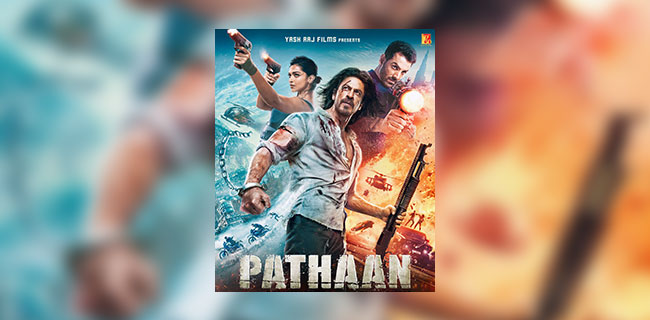
 Till about three weeks ago, there seemed imminent danger that Yash Raj Films’ Shah Rukh Khan starrer Pathaan, which released on Jan 25 this year, will have to face headwinds from several right wing affiliated groups. There were threats to disrupt the film’s release, over ‘issues’ that can best be described as manufactured. Our news channels did their job in blowing up these trivial issues (the orange dress objection is outrageously amusing), and it seemed that the film may struggle to get a proper release in some of the states.
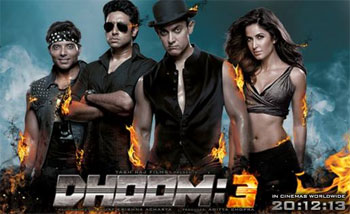 Dhoom 3 will mark possibly the most-ambitious licensing merchandise programme yet mounted on an Indian film as Yash Raj Films plans to bet big on the licensing market with the third instalment of the popular Dhoom series.