Tag: Xiaomi

  • Pankaj Tripathi supports Xiaomi smartphones

    By Our Staff


    Xiaomi India smartphone and smart TV brand, has roped in actor Pankaj Tripathi as the brand ambassador for its smartphone category. With focus on innovation, and user-centric design, Xiaomi has gained popularity among consumers.


    Welcoming the award-winning actor to the Xiaomi family, Anuj Sharma, Chief Marketing Officer, Xiaomi India said: ‘’We are thrilled to have Pankaj Tripathi as the newest member of the Xiaomi family. At Xiaomi, we have always been committed to delivering the best features at an honest price to empower our users with exceptional performance and lag-free usage. Pankaj Tripathi embodies the essence of our brand vision and his ability to strike a chord with the masses will help further cement our ambition of making technology accessible to all. We believe that Pankaj’s association with Xiaomi India will take our brand to new heights, and we are excited about this association.”


  • Xiaomi teams up with Anurag Kashyap and Vaani Kapoor for campaign

    By Our Staff


    Xiaomi smartphone brand has rolled out a new campaign #ScreenSahiTohSceneSahi that showcases the importance and impact of the Super AMOLED display on Redmi Note 11 Series. The campaign film released across social media platforms has been conceptualized by the ace director Anurag Kashyap and features renowned Bollywood actress Vaani Kapoor. The campaign video showcases the immersive viewing experience delivered by Redmi Note 11 Series Super AMOLED display.


    The campaign film has been created in collaboration with DDB Mudra with creatives by Sooraj R Pillai and Aditi Rao Saxena.


    A Xiaomi India spokesperson said:Display technology has taken center stage for smartphone users and continues to be one of the primary parameters in their purchase decisions. As India’s No. 1 smartphone and Smart TV brand, we take pride in the fact that we understand the user requirements. With the #ScreenSahiTohSceneSahi campaign, we want to educate our consumers on the benefits of superior display technology i.e. Super AMOLED display featured in the Redmi Note 11 series. We are excited to partner with master storyteller Mr. Anurag Kashyap and Bollywood actress Vaani Kapoor to narrate this with their new-age style of storytelling. We are optimistic that through this campaign we will be able to build a preference for a superior viewing experience with Redmi Note 11 series.”


    Commenting on this campaign, Sooraj R Pillai, Senior Creative Director, DDB Mudra said, “Content makers put their heart and soul into their craft. But, the way content is being consumed today has drastically changed. And that’s where we found an opportunity. The idea was just calling out a simple fact. That, when someone watches any content on a bad screen, they are not just doing a disservice to their own viewing experience. It’s also a disservice towards those who made them.”


  • Mi India launches ad for vacuum cleaner

    By Our Staff


    Xiaomi’s franchise store for mobile phones and ecosystem products, Mi India, has launched a campaign for its new vacuum cleaner, the Mi Robot Vacuum Mop-P. The campaign features stand-up comedian Biswa Kalyan Rath with the tagline ‘Mast Admi’ with a mast gadget!


    Said a communiqué:  The lockdowns across many cities has made a lot of families seek out gadgets that can help automate & reduce their workload at home. One of those gadgets that’s getting a lot of interest is the Robot vacuum cleaner which can autonomously clean homes with minimal assistance by the members of the household. our aim is to bring premium cutting edge technology for everyone, enabling consumers to enjoy a better life. While our mission is to make quality technology accessible, we also strive to communicate technology in a way that is interesting and easily understandable. With this campaign too, we are trying to address the questions that our fans and consumers might have regarding the Mi Robot Vacuum Mop-P.


  • Mi India launches TVC for Redmi Note 9 Pro Max

    By A Correspondent


    Said Sandeep KS, Associate Director, Redmi India Marketing: “Having used the Redmi Note series extensively, when I first held the Note 9 Pro Max, it instantly felt like a flagship. It looks good, feels brilliant, performs like a dream and has the hero-like quality our fans claimed. We instantly decided that the phone had to be the central character of the television commercial all while weaving with a compelling narrative around its features. The video sequence is set inside a Metro compartment which is symbolic of the microcosm of the ‘Note’ cult.”


    The commercial has been conceptualized and executed by Bengaluru-based agency Brave New world. Said Joono Simon, Chief Creative Officer of the agency: “The Redmi Note 9 Pro Max is a power packed device that believes it has the license to thrill. Creating a commercial that does justice to its superior camera and performance capabilities was always going to be a challenge. The task became even more arduous because of the pandemic and the global lockdown. Shooting a commercial of this kind in Ukraine with most of the crew stationed in location, the director in Tel Aviv, and the agency and client teams in Bangalore was pathbreaking in many ways a rewarding experience for the team with a lot of new learnings. The team at Xiaomi was all in for an out of the box bold approach as against the standard listing of features with very little life moments.”


  • Xiaomi launches Mi Music & Mi Video in India

    By A Correspondent


    Xiaomi India has announced the launch of Mi Music and Mi Video at Mi Pop Play, marking Xiaomi’s move into offering value-added internet services for local users. Mi Music is Xiaomi’s pre-installed music app which offers an integrated music streaming service along with the ability to store offline music. Mi Video is Xiaomi’s pre-installed video app which provides integrated video streaming across platforms.


    Said Manu Jain, Vice President, Xiaomi and Managing Director, Xiaomi India: “Xiaomi’s core belief lies in providing high-quality products with the best specs, at an honest pricing. We are able to do this because of our business model — we provide our  smartphones and other hardware at affordable pricing, aiming to monetize our MIUI Internet services in the long run. With the launch of these two apps Mi Music and Mi Video, we hope to serve millions of Xiaomi smartphone users with a better user experience through enhanced Internet services.”


    Neeraj Roy

    Speaking on the occasion, Neeraj Roy, Managing Director & CEO, Hungama Digital Media Entertainment Pvt. Ltd. Said: “We are delighted to launch Hungama Music on Mi Music. We are committed to delivering the best of content with unlimited playlists to the highly engaged Mi Fan community and with this launch we take our partnership with Xiaomi to the next level. In the coming months we will bring more exciting features including gamification and continue to build on the rich user experience.”


  • How nervous CMOs nail ad agencies to save their skin


    By Prabhakar Mundkur


    The General Motors diet became famous some years ago as an effective means of slimming down and losing weight, although why it was attributed to a car maker completely alluded me. I later discovered it was an eating plan indeed developed by the car company. In January 2018, Ford Motors announced it would go on a ‘fitness’ initiative that would include slashing spending of up to $14 billion in the next 5 years. Marketing they said would naturally come under the lens along with the current WPP relationship although nothing was confirmed.   Now comes the Ford Motors announcement of a call for an advertising review of a part of their business.  WPP has been a near lifelong partner for Ford Motors first with JWT, and later with GTB a dedicated unit for Ford which was set up to pledge loyalty and allegiance for the account.


    Unfortunately, putting the Ford account under review on the heels of the resignation of Sir Martin Sorrell could not have been more mistimed from WPP’s point of view.   But one wonders if this is a typical kneejerk reaction to the rising pressure on profitability at Ford.  Ford has been reporting underwhelming profits in the last year and the outlook for 2018 looks no better.


    The history of advertising is strewn with examples of clients putting the agency under review whenever there is a sneeze on the business front.  Although the problem might have nothing to do with communication, agencies have been the first to be hit, often unfairly by nervous CMOs trying to save their own skin.


    Ford is the third largest car maker in the world with a global market share of 6.5% after Toyota which is at No 1 with a 9.2% market share and Volkswagen at No 2 with a 7.2 % market share.  But except their Top 5 markets, which includes US, China, UK, Canada and Germany the brand might be under pressure more because of an inappropriate product mix country wise rather than any problem with their communication.


    Xiaomi, the Price Warrior

    Xiaomi overtaking leader Samsung in the last quarter of 2017 as India’s largest mobile might have taken even Samsung by surprise.  The brand now seems to be readying to be a world No 2 globally not a mean feat.


    But this begs the eternal question for marketers.  Are price warriors long term players or are they just destined to be the flavor of the year?  While Xiaomi has definitely disrupted the market the key question that comes to mind is whether Xiaomi is an affordable brand or is it a cheap brand?  And does it have anyother endearing quality in its arsenal beyond price.


    When one looks at their latest commercial with Katrina Kaif it seems to be a pure execution without a long-term brand building idea.


    We have seen many price warriors fail in the past.  A great example is Videocon which managed double digit leadership market shares in its initial phase, but now is a forgotten brand with a staggering debt.


    Unfortunately, after looking at their latest China commercial. I did not find it inspiring either.  So hopefully the brand takes notice that positioning and building brand values is as important as disrupting the market as a price warrior.


    IPL is full of Surrogate Advertising 

    One ex-industry professional with a long-term grudge against the advertising industry has pointed out an accusing finger at the industry’s self-regulatory body for the number of surrogate ads during the IPL.


    Unfortunately, the ball on this seem to lie squarely with the government.  Advertising for extensions of liquor brands is allowed under the Cable and TV Act 1995, and this comes directly under the jurisdiction of the I & B Ministry and the CBFC.


    Any way the accusations of the person in question may have been misplaced. Obviously, he has not done his homework before setting his pen to paper.


    Whither Abbys?

    Now that the Abby fever is over, it does seem that participation at the Abby’s declined severely this year.  Also,there were the usual complaints of not being able to get a drink or dinner without standing in a long queue even though the crowds were smaller this year.  One big disappointment seemed to be that the Master Jury members could not get their own agencies to participate. The award’s organisers seem to think that the reason for the lack of participation is the high cost of entry that is dissuading agencies. Some say that the organising members of the Abbys are the same year after year and new members are not welcomed, which may also be a constraint on the award show.  The flipside of this argument is that not many leaders are willing to come forward to offer their services to help the industry bodies.


    Bill Gates once said, “Your most unhappy customers are your greatest source of learning.” Obviously the trick here is to find out why the non-participating agencies are staying away from the Abbys.


    Unless of course the real reason is the over-inflated egos of the key industry leaders which might be the root of the problem. And there might be no real solution to that one.


  • Lowe Lintas bags mandate for Xiaomi

    By A Correspondent


    Xiaomi India has appointed Lowe Lintas Bangalore to handle the creative mandate for the brand. Xiaomi.


    Speaking on this new business win, Raj Gupta, CEO, Lowe Lintas commented: “It is a proud privilege for us at Lowe Lintas to be chosen by Xiaomi, a brand that has such a huge fan following. We will strive to reinforce this love and get more consumers to fall in love with Xiaomi”


    Added a Xiaomi spokesperson: “Xiaomi is the No 1 smartphone brand in India. And what has helped us reach there is the constant innovation that is at the core of the brand. In just under three years, Xiaomi has won immense love and innumerable fans in this country. We now aim to establish our vision of ‘Innovation for everyone’ firmly and bring relevance through our products to every Indian. In Lowe Lintas, with its irrefutable experience and expertise in building lasting brands, we have found a perfect partner for the task at hand.”


  • Madison Media bags Xiaomi mandate

    By A Correspondent


    Madison Media has bagged the Media AOR of smartphone major Xiaomi. According to sources the account is worth Rs 100 crore.


    Although there is no official confirmation on the development from either Madison or Xiaomi, it is learnt the Chinese smartphone major has signed on the dotted line.


    Chinese mobile manufacturers have been dominating the cellphone market in India and have also been significant spenders in the Indian media. While Oppo and Vivo have been very visible, Xiaomi is said to have made more tactical spends as it inches ahead to be the numero uno player. Samsung leads the sales rankings of smartphones in India, followed by Xiaomi and Vivo.

  • Hungama raises $25mn in funding round led by Xiaomi

    By A Correspondent


    Digital media entertainment company Hungama, has raised an investment of US$25mn, led by leading smartphone company Xiaomi, along with existing investors Intel Capital, Bessemer Venture Partners and ace financial investor and Indian billionaire, Rakesh Jhunjhunwala.


    With this round of funding, Hungama will expand the content library and further invest in world class technology on its mobile app platforms Hungama Music for music and Hungama Play for premium video including movies, television and original series. Hungama will soon add over 1500 hours of television content along with original content to its current Hungama Play offering of over 8000 movies in English and 12 Indian languages


    Speaking about the funding round, Neeraj Roy, Founder & CEO – Hungama Digital Media Entertainment said: “India is adding 8 MN new consumers to the Internet each month with 90% of digital consumption being driven by mobile. Young Indians love their music and movies and the mobile will be the most used screen for this generation. Content will drive the next phase of Digital India and we are delighted to partner with Xiaomi as we prepare to bring premium and original digital entertainment to a 100 million Indians before the end of this year.”


    Hugo Barra, Vice President, Xiaomi said: “We think of smartphones as a platform for us to deliver Internet services, and this includes content. We are investing in Hungama not only to start integrating content into our smartphones, but also to grow together with them and deepen our understanding of the content sector in India. We have carefully selected Hungama because of what they are doing in terms of aggregating large amounts of content and delivering an amazing user experience.”


    Rakesh Jhunjhunwala, Chairman, Hungama Digital Media Entertainment said: “I have been invested into Hungama for several years and participated in this new capital raise as I believe they have built an unique leadership position with the most compelling music and movie OTT service for South Asians globally that is ripe for growth as India will embrace broadband and 4G. We welcome Xiaomi as one of our partners.”


    Vishal Gupta, Managing Director, Bessemer Venture Partners, said “We are excited about the leadership position that Hungama has built as being the one stop OTT platform across music, videos and movies. We are delighted to have Xiaomi as our partners and will accelerate our growth and leadership.”


    Citi acted as exclusive financial advisor to Hungama on this transaction.


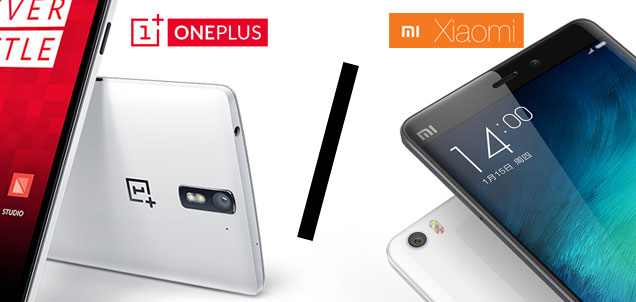
  • How OnePlus and Xiaomi are fighting the big brands


    By Ravi Balakrishnan


    Late last year, reports began to circulate about HTC and Sony exiting smartphones. Among other things, these old warhorse brands are apparently being worn down by aggressive China-based competitors, who offer a better product in a critical price segment: the sub-Rs 15,000 block. As smartphones plateau in China, India with growth at an estimated 40% year on year, is morphing into the ultimate battle ground.


    Brands are using every trick in the book: fighting for in store real estate, launching online only models, offline only models and throwing cash after celebrities of both the desi and foreign variety— see Hugh Jackman’s star turn for Micromax.


    And then there are players who seem more interested in setting the book of tricks ablaze. Here’s how OnePlus and Xiaomi (which claims to be growing at 45% every quarter) are fighting the big boys:


    They’ve made a virtue of a necessity

    Building a new mobile startup is hard. There’s inventory to be managed, supply chains to be set up, and of course retailers to be appeased. Irate mobile shop owners are known to put up notices warning customers that they buy a particular brand at their own risk, if not kept entirely happy. Being initially available only via flash sales on Flipkart (for Xiaomi) and by invitation only on Amazon (for OnePlus) helped these brands build buzz. But they also put a positive spin on having a limited number of gadgets to sell. Karan Sarin, head – marketing, OnePlus admits about the by invitation model, “It was more of a supply chain related decision.” According to him, it was an upgrade on flash sales pioneered by Xiaomi for its Mi3 phone, and piggybacked on by numerous other brands, since a sale where sites crash adds up to a bad consumer experience.


    They do advertise: just not the kind that people get bored by

    “Do we do marketing? Of course we do,” says Manu Jain, India head, Xiaomi India. “Do we do paid marketing? No,” he adds. The argument for both brands is remarkably similar: why pay to push your message, when there are legions of persuasive fans who do it for free? Also why use television when it’s possible to reach a relevant target audience organically via social media? According to Jain, “When you watch a TV ad and buy, you are paying not just for having seen the TV ad but also for the hundreds who watched it.” Xiaomi believes in passing those savings on to the customer which is how Jain claims it was able to offer a feature-loaded phone that would ordinarily cost upwards of Rs 35,000 at Rs 15,000. The pillars of marketing at OnePlus are community, online and experiential. Even the recent billboards, says Sarin is retail partner Amazon. com’s initiative. Anisha Motwani, marketing and digital strategist with the Max Group of companies points out, “Youngsters hardly look at ads these days. There’s no content for them on TV. These companies are doing a fabulous job of online marketing targeted at the segment they cater to.” Sarin believes, “Earlier, brands were built by size of marketing budgets or celebrity endorsements. With OnePlus we proved that wrong.”


    They appreciate the value of geek cred and know how to harness it

    OnePlus and Xiaomi had a common early adopter profile: young, tech savvy consumers. Sarin joyfully recounts having his brand name checked by a tech entrepreneur in an interview. With Xiaomi, customers who go the extra mile and show up for fan meets often turn out to be working in tech companies. These are people that obsess over the minutiae of spec sheets, pay close attention to (or write) reviews and who, often publicly, mock the sort of person who’d thoughtlessly splurge on an iPhone.


    OnePlus began life on a forum where the company sought feedback on the sort of features that ought to make the cut. The site attracted a sizeable Indian contingent. According to Sarin, this lot forced the company’s hand leading to an earlier than anticipated India launch for OnePlus. Having landed such a fanbase, the company had to think harder to keep them engaged. One of these events was a free 3D printing workshop, allowing users to create phone holders and cases. Held in Bangalore, OnePlus’s timeline is now full of fans asking when the show will roll around to their city.


    Such consumers are always looking to evangelise what they perceive to be underdog brands. A secondary set of consumers for Xiaomi are an older lot who rely on young friends or relatives for recommendations. Nifty little touches like OnePlus naming the OnePlus Two ‘the flagship killer’ helps fuel the David versus Goliath narrative.


    They understand consumer experience

    Phone consumers have a troubled history with updates. One of the last on Nokia’s Symbian actually disabled some of the features that the model had shipped with. But with Xiaomi, vital updates are drawn from fan suggestions. Posts that multiple people agree on or issues that crop up on its forums are given priority: for instance, clubbing messages from banks, etailers and such under Notifications leaving the main messaging segment dedicated to actual contacts. Or in India, offering a Copy OTP option for ecommerce transactions. Upgrades are cascaded across the line. Even to two and a half years old phones like the Mi3. None of this is accidental since according to Jain, “Why should we force customers to upgrade just because they want the latest OS? We will give it to them and make them advocates.” Realising Indian consumers value touch and feel, OnePlus broke its global template to have kiosks at malls. It also tied up with Ola allowing people to sample and later buy phones, with a guaranteed delivery in 15 minutes.


    It’s unlikely to be entirely smooth sailing, though. Xiaomi has already started a tie up with The Mobile Store and is being sold via Airtel, though Jain asserts it will continue to be an online first brand. As Anshul Gupta, research director at Gartner observes, “The market is so huge that if someone focuses only on online they will still get sales of over a million. But in a five year horizon, unless you are present in physical stores, growth opportunity will be limited even if the online space for argument’s sake accounts for 40% to 50% of purchases.” While it’s easy to start with, Karthik J, senior market analyst, client devices, IDC India believes, as the traction gains, vendors look to offline retail. Will the disruptions that have worked for these brands in an online driven model, be malleable enough for an offline world?


    Source:The Economic Times

    Copyright © 2016, Bennett, Coleman & Co. Ltd. All Rights Reserved

    Licensed to republish

     

  • Chini-Chini Buy-Buy


    By Mukta Lad


    Years ago, Monty Python wrote a song that went on to become one of their greatest hits. Irreverent, tongue-in-cheek and heavy on political incorrectness, it was called I Like Chinese.


    If you choose not to let the racist bits affect you (They only come up to your knees?!), the rest of the song glorifies China’s contribution to the world – “There’s Maoism, Taoism, I Ching and chess…” they listed. But then, if Monty Python had written this song today, they would’ve definitely added more to that list, like China-made smartphones, for instance.


    If you told Indian buyers five years ago that high-end ‘Made in China’ phones would vie for a significant share in the Indian smartphone market, they would thank you for the good laugh. For long, phones from across the border meant just one thing – cheap rip-offs of Apple and Samsung, with low build quality and poor design. Not too many people aspiring to own the real iPhone would be seen with ‘China maal’!


    The Indian smartphone market: Highlights

    – 84 per cent year-on-year growth in Q2 (Source: IDC)

    – 71 per cent usage of feature phones, possibility of migration to smartphones provides immense potential (Source: IDC)

    – Market shares in India:- Samsung: 29 per cent; Micromax: 18 per cent; Chinese phones: >5 per cent (Source: IDC and CyberMedia Research)


    Then, homegrown companies like Micromax and Karbonn saw an opportunity, importing phones from China and marketing them under their brand in India, a strategy that worked wonders for them.


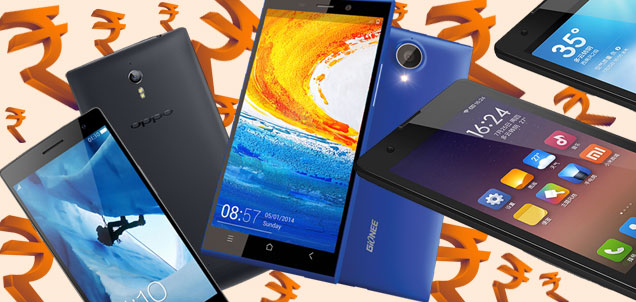
    Cut to 2014, to a time when China’s No 1 smartphone brand, Xiaomi, holds weekly sales for the Redmi 1s (while flash sales for the Mi3 are said to be back this festive season). Try not to blink, though;  it takes anything between 2.4 seconds to 5 seconds for Xiaomi’s phones to get sold out. Meanwhile, another Chinese brand, Gionee, has released a high-decibel campaign claiming a user upgrades to a Gionee every seven seconds.


    Not too far behind comes China-born OPPO Mobile, with 10 models ranging from the affordable to high-end. It even has Hrithik Roshan and Sonam Kapoor as brand ambassadors. As of August, these phones are estimated to have a market share of 5 per cent in the Indian smartphone segment.


    Not much compared to Samsung’s 29 per cent, but then again, six years ago, homegrown brand Micromax was just at 1 per cent, and is now perched at No 2 with a market share of 18 per cent in smartphones. With these numbers, it would seem naïve to write off China’s entry.


    So what is it about these phones that is helping Indians overcome their prejudices? Suman Srivastava, founder and innovation artist, Marketing Unplugged explains “Futurebrand, in its 2014 report, found that China ranks No 9 in the global list of the Best Country of Origin. Brands like Lenovo, Alibaba and maybe Xiaomi, are helping China improve,” he says.


    “Till about five years ago, Chinese companies sold cheap, poor quality phones in India. Despite being the manufacturing capital of the world, the bias against China-made phones obviously grew after one saw these products,” says Manu Kumar Jain, India head, Xiaomi. Arvind R Vohra, Gionee’s India head, adds, “It wasn’t long before Chinese brands realised they could enter the Indian market themselves, considering they had the manufacturing capability,” he says.


    But whether it’s Xiaomi, Gionee or OPPO, they all agree about three things – the power of a great product, innovation and competitive pricing. Forces strong enough to overcome any anti-Chinese sentiment. “The products themselves are the key to success,” says Tom Lu, CEO, OPPO Mobiles India. “Any user looking for a great device and an incredible experience will choose a product based on its features, specifications, looks and ROI.”


    Jain attributes Xiaomi’s success to the build quality, the chipset, the camera and the works. A phone is worth nothing if it doesn’t come with great hardware and software, he says. Affordability is and always has been the Indian buyers’ weakness. Here is where these brands believe they score over established names. “We are an aspirational brand, because of the way we price ourselves,” Vohra elaborates.


    “Our phones cost 10 per cent more than Indian-make phones in the same segment, but 40 per cent lesser than Samsung.” Jain believes that the Xiaomi Mi3, for instance, packs a punch at Rs 13,999. “We are selling a phone easily worth over Rs 40000 at such a low price. Buyers tend to forget their biases when they get value for money.”


    But how has the journey been for the Chinese-origin Lenovo, who forayed into smartphones recently? A brand known for PCs, laptops and tablets, it certainly didn’t have to introduce itself. But then, it couldn’t have been easy to get consumers to associate the name with smartphones, either.


    “We are a company with Chinese origins, but consider ourselves a global brand,” explains Lenovo’s Shailendra Katyal, director – home and small business (India & South Asia). “We have the advantage of a portfolio over price. It also helps that we aren’t an unknown, entry-level brand in the smartphone ecosystem.”


    Mr Katyal believes that consumers aren’t ignorant – they know that the origins of almost everything they purchase can be traced back to China. “Consumers now look for products that are of value to them.” Srivastava believes that cheap products never undermine strong brands, but only create a different market.


    For instance, Nokia did not lose out because of cheaper phones, but because of better technology from Samsung and Apple. Hence, Samsung won’t suffer as long as it keeps investing in both technology and brand. Established brands have another advantage – a nationwide distribution network.


    Brands like Xiaomi, for instance, retail exclusively on Flipkart, while OPPO Mobile is looking to build its offline retail network. But at the moment, the brand relies heavily on e-commerce portals. Most new companies cannot kick things off with a fully developed distribution system; it takes time, effort and huge spending power.


    For these companies, e-commerce portals are a boon. Customers today are open to buying electronics online, what with a cash-on-delivery option and portals like Flipkart and Amazon. Mr Jain has another good reason to embrace online retailing. “Tying up with distributors and retailers means having to hike the price of the product. We would rather save on that margin and pass it on to consumers.” That is also a reason Xiaomi chooses to have zero ad spends, depending only on word-of-mouth and organic social media for promotion.


    Mr Vohra surprisingly has a different point of view. “Online consumers add up to only 6 per cent of the consumer base. How does a brand reach the other 94 per cent without retailing offline? To me, exclusive online tie-ups are a lazy strategy.” He claims that there is close to zero brand recall in the interim period between sales. Srivastava sums this up neatly. “It is hardly surprising that e-commerce brands are willing to pay for valuable mobile desktop space. However, its value will fall as the space gets more crowded. Another method will then be needed to catch the eye of the consumer,” he says.


    Especially relevant considering Indians change their phones once every 1 to 1.5 years. Lu sees the potential in the consistent growth in the smartphone market, driven by enhanced consumer preference for smart devices and narrowing price differences.


    Meanwhile, Mr Vohra is eyeing the 70 per cent market that is yet to migrate from feature phones, as is everyone else, surely. Even if ‘may you live in interesting times’, is not as many believe an ancient Chinese curse or proverb, these are definitely interesting times for these brands to be living through. A chance to rewrite history and a level playing field where just about anyone can be king of the ring.


    How the giants are taking it

    Are the brands from across the border causing a dent in Samsung’s confidence and possibly in its market share? “Not at all,” says Rajiv Mishra, VP – media and spokesperson, Samsung India. “We are No 1 in India for a reason.” He owes the brand’s position at the top to the company’s India-specific focus on R&D, product development and a large consumer touchpoint network.” He admits to competition being great for the consumer, and provides Samsung an impetus to keep innovating.


    Nokia, too, seems unfazed by competition, with India being one of its top four markets for the Lumia series. Raghuvesh Sarup, director – marketing, Nokia India believes that Microsoft has the edge because of its consumer-centric approach with the Lumia.


    “We encourage people to do more and get more out of their devices. People spend on phones only because they want the experience of doing everything they need to in a single place.” End-to-end experiences are a Microsoft differentiator, Sarup believes, something that isn’t easy for the competition to accomplish with ease.


    Source:The Economic Times

    Copyright © 2014, Bennett, Coleman & Co. Ltd. All Rights Reserved

    Licensed to republish