ನಾಯಿ ಮನುಷ್ಯನ ಅತ್ಯಂತ ನಿಷ್ಠಾವಂತ ಮತ್ತು ಪ್ರಿಯ ಸ್ನೇಹಿತನಾಗಿದ್ದಾರೆ. ಅವರ ಬುದ್ಧಿಮತ್ತೆ, ಪ್ರೀತಿ ಮತ್ತು ನಿಷ್ಠಾವಂತತನದಿಂದಾಗಿ ಅವರು ವಿಶ್ವದಾದ್ಯಂತ ಜನಪ್ರಿಯರಾಗಿದ್ದಾರೆ. ನಾಯಿಗಳು ವಿವಿಧ ತಳಿಗಳು, ಆಕಾರಗಳು ಮತ್ತು ಬಣ್ಣಗಳಲ್ಲಿ ಲಭ್ಯವಿದ್ದು, ಪ್ರತಿ ತಳಿಗೂ ಅದರದೇ ಆದ ವಿಶೇಷತೆಗಳಿವೆ. ಕೆಲವು ನಾಯಿಗಳು ಅತಿಯಾದ ಚುರುಕು ಮತ್ತು ಆಟವಾಡುವುದನ್ನು ಇಷ್ಟಪಡುತ್ತವೆ, ಆದರೆ ಕೆಲವು ಶಾಂತ ಸ್ವಭಾವದವರಾಗಿರುತ್ತವೆ. ನಾಯಿಗಳು ತಮ್ಮ ಮಾಲಿಕರೊಂದಿಗೆ ಆಳವಾದ ಸಂಬಂಧ ಹೊಂದಿದ್ದು, ಅವರೊಂದಿಗೆ ಸಮಯವನ್ನು ಕಳೆಯಲು ಇಷ್ಟಪಡುತ್ತವೆ.
ನಾಯಿಗಳ ಆರೈಕೆಯಲ್ಲಿ ಅವರ ಆಹಾರ, ಆರೋಗ್ಯ ಮತ್ತು ಸ್ವಚ್ಛತೆಯ ಕುರಿತು ಗಮನ ನೀಡುವುದು ಬಹಳ ಮುಖ್ಯ. ನಿಯಮಿತವಾಗಿ ಪೌಷ್ಠಿಕ ಆಹಾರ ಮತ್ತು ತಾಜಾ ನೀರಿನ ವ್ಯವಸ್ಥೆ ಮಾಡುವುದು ಒಳ್ಳೆಯದು. ಅದರ ಜೊತೆಗೆ, ಪ್ರತಿದಿನವೂ ಅವರಿಗೆ ನಡಿಗೆ ಮಾಡುವುದರಿಂದ ಅವರ ಆರೋಗ್ಯ ಉತ್ತಮವಾಗಿರುತ್ತದೆ ಮತ್ತು ಅವರು ಮಾನಸಿಕವಾಗಿ ಸಕ್ರಿಯರಾಗುತ್ತಾರೆ. ನಾಯಿಗಳು ಅವರ ಶಕ್ತিশಾಲಿ ಸುವಾಸನೆಯಿಂದ ಕೂಡಿದ್ದಾರೆ, ಮತ್ತು ಅವರಿಗೆ ಹೊಸ ಜನರು, ಸ್ಥಳಗಳು, ಮತ್ತು ವಸ್ತುಗಳನ್ನು ಪರಿಚಯಿಸುವುದು ಕಡಿಮೆ ಸಮಯದಲ್ಲೇ ಸಾಧ್ಯವಿರುತ್ತದೆ.
They say red light helps you sleep better pic.twitter.com/XvVFnmcF9O
— Elon Musk (@elonmusk) November 7, 2024
ನಾಯಿಗಳಿಗೆ ಭದ್ರತೆ, ಆಟವಾಡುವುದು ಮತ್ತು ಇತರ ಕ್ಷೇತ್ರಗಳಲ್ಲಿ ತರಬೇತಿ ನೀಡಲಾಗುತ್ತದೆ, ಇದರಿಂದ ಅವರು ಮನುಷ್ಯರಿಗೆ ಬಹಳ ಸಹಾಯ ಮಾಡುತ್ತಾರೆ. ಮನೆಗೆ ಭದ್ರತೆ ಒದಗಿಸೋಣವೆಂಬುದರಿಂದ ಏಕಾಂತದಲ್ಲಿ ಸಹವಾಸ ನೀಡುವುದು, ಪ್ರತಿಯೊಂದು ಸಂದರ್ಭದಲ್ಲೂ ನಾಯಿಗಳು ಮನುಷ್ಯನ ವಿಶ್ವಾಸಾರ್ಹ ಸಂಗಾತಿಯಾಗಿ ಇರುತ್ತಾರೆ.
Elon Musk, the world’s richest man, has his fingers in many pies, none of them your standard Four and Twenty – space exploration, electric cars, AI and social media, among others.
He became a global leader in space exploration when NASA had virtually vacated the field, and his electric vehicle company Tesla, headquartered in the gas-guzzling United States, has by far the biggest market capitalisation of any car manufacturer in the world, yet he has few formal qualifications in either field.
Many see Musk as a 21st-century idiot savant. Others, watching him reduce an important social media platform – Twitter – to cyber-rubble, think of him simply as an idiot. Maybe both are true, or maybe other readings of his life are true. Aged 52, Musk certainly merits a good, searching biography.
Walter Isaacson seems well-credentialed for the task. He has written biographies of Henry Kissinger, Benjamin Franklin, Albert Einstein, Steve Jobs and Leonardo da Vinci that have won awards or become bestsellers, or both.
Isaacson began his working life as a journalist. He spent more than two decades at Time during the magazine’s heyday, rising to become editor in 1996. Since then, he has been chief executive of the CNN cable television network, headed the Aspen Institute (a longstanding non-profit think tank), become a professor of history at Tulane University, and done various jobs for both Republican and Democrat governments.
This year he was awarded the National Humanities Medal by US President Joe Biden.
Isaacson’s virtue as a biographer is his reporter’s ability to gather enormous amounts of material and quickly render it as a (generally) smooth and readable account of a life bursting with dramatic events. His project only began in 2021 and covers events up to Space X’s unsuccessful Starship rocket launch in April 2023.
Musk made himself available for numerous interviews. He gave Isaacson access to places and people at key moments, such as the purchase of Twitter (now known as X), and regularly emailed Isaacson at 3am with his thoughts – and thought bubbles.
Isaacson also interviewed 130 other people, and his labours have uncovered newsworthy information that has been widely reported – and, in one case, corrected – since the book’s publication.
For instance, Isaacson builds on earlier reporting by the Washington Post to reveal the extent to which Musk’s Starlink satellite network has been crucial to the Ukrainian military’s ability to fight Russia’s invasion, providing them with continued access to the internet on the battlefield after the Russians destroyed access to other internet services. He shows how Musk was persuaded by the Russians to temporarily cut off the Starlink access after he believed their entreaties that any further victories by Ukraine would provoke nuclear war.
The implications of these remarkable revelations have been examined by the ABC’s Matt Bevan in a recent episode of his If You’re Listening podcast. But even though Isaacson revealed this information, he does not pause to discuss it in any detail. That’s one of the shortcomings of this book.
Lord of the Flies on steroids
Perhaps seduced by Musk’s apparent candour or a publisher’s pressure to rush to print, Isaacson accepts his subject’s words without sufficient scepticism. For instance, Musk’s childhood experiences at a veldskool in 1970s South Africa read like Lord of the Flies on steroids. Bullying was the norm and children were encouraged to fight over meagre food rations. “Every few years, one of the kids would die,” writes Isaacson.
Really? Says who? Musk, apparently. No one from the school is listed in the source notes, to confirm or refute this account. Throughout the book, Musk comes off as a shameless self-dramatiser, but that doesn’t mean his biographer should succumb to it.
Isaacson is an adherent of the “grand man” school of history. He has written only one biography of a woman – the Nobel Prize-winning biochemist Jennifer Doudna. He is far less interested in, or comfortable with, the role structures and systems play in shaping events.
As Jill Lepore pointed out in the New Yorker, Isaacson also has “an executive’s affinity for the C-suite”, meaning he pays little attention to the people who work for Musk or the impact of his actions on their lives.
The core question driving the biography is: has Elon Musk had to be such an “asshole” (Isaacson’s term) to achieve what he has? Isaacson acknowledges it is much the same question he asked about Steve Jobs in his earlier biography of the Apple cofounder.
I lost count of the times the question, or a variation of it, was posed during the book’s 670 pages, but in classic Time-style both-sidesing, Isaacson keeps toggling between admonishing Musk for behaving like an “asshole” and admiring his ability to get results. He rarely if ever lifts his gaze beyond this binary, which means he ignores lessons learned from all those people, past and present, who have achieved things without treating people appallingly.
It also means achievements are seen solely through the prism of one person’s actions. In a perceptive article in Vox, Constance Grady reminds us that Musk’s determination to override safety concerns in Tesla factories has led to worker injury rates equivalent to those in a slaughterhouse.
Grady allows that Isaacson reports the increased injury rates, but notes his vagueness about exactly what kind of injuries occurred. Citing 2018 work by the Center for Investigative Reporting, she reveals Tesla workers were “sliced by machinery, crushed by forklifts, burned in electrical explosions, and sprayed with molten metal”.
She also notes Isaacson downplaying the company’s experience of COVID-19. Musk, a fervent libertarian allergic to any form of regulation, kept the factory running during the global pandemic. Isaacson says “the factory experienced no serious COVID outbreak”, but Grady reports there were 450 positive cases.
From Twitter to X
Musk has an immense work ethic and expects everyone working for him to share it. By relentlessly questioning all assumptions – “the laws of physics are unbreakable; everything else is a recommendation” – Musk and those working in his companies have indeed achieved a lot.
I am not really in any position to assess Musk’s contribution to space exploration, AI or car manufacturing. But I am willing to accept the evidence of Isaacson’s biography that they have been substantial – or, in the case of AI, promise to be.
I feel better able to assess Musk’s contribution to social media. Here, the evidence presented by Isaacson and many others is that Musk has damaged, perhaps irretrievably, Twitter – which he has renamed X, a letter of the alphabet to which he seems inordinately attached. Not only has he named one of his children X, he waves away the letter’s other connotations.
In 1999, Musk cofounded the online bank X.com. He soon learned there was another company aimed at revolutionising online transactions, PayPal, founded at around the same time by Peter Thiel, Max Levchin and Luke Nosek.
The companies merged in 2000, amid a classic Silicon Valley phallus-waving struggle over who had the idea first and who should take over whom. Levchin derided X.com as a “seedy site you would not talk about in polite company”. “If you want to take over the world’s financial system,” Musk rebutted, “then X is the better name.”
Musk lost the nomenclature war then, but realised his dream more than two decades later when he bought Twitter for US$44 billion and could call it whatever he liked.
Impulsive, determined, clueless
The picture of Musk that emerges in Isaacson’s book is of an impulsive, utterly determined person who is genuinely talented as a physicist and businessperson, and genuinely clueless when it comes to human relationships. He either doesn’t get people or doesn’t care about them – or, more likely, both.
He dotes on his children, especially X (I guess you need to do something to compensate for naming a child after a letter), yet he is capable of breathtaking callousness and rank sexism. He whispered in his first wife’s ear on their wedding night that he was the alpha male in the relationship.
In 2021, Musk’s third wife, Shivon Zilis, was pregnant with twins conceived with Musk by in-vitro fertilisation, and was in a hospital in Texas experiencing complications. At the same time, and in the same hospital, a woman serving as a surrogate for Musk and his ex-wife, Claire Boucher – better known as the Canadian-born musician Grimes – was also experiencing pregnancy complications.
Zilis and Boucher, not to mention the surrogate, did not know about the other’s pregnancy.
As Isaacson drolly comments elsewhere in the book:
Musk developed an aura that made him seem, at times, like an alien, as if his Mars mission were an aspiration to return home, and his desire to build humanoid robots were a quest for kinship.
Musk is on record saying humanity is in danger of not having enough smart people and it is his duty to populate the planet with as many of them as possible. To date, he has 11 children. If that notion sounds disturbingly like eugenics, it is not something Isaacson reflects on as he studiously documents Musk’s chaotic love life.
Nor does he delay his rat-a-tat-tat narration of every twist and turn in Musk’s dramatic life to question his subject’s burning desire to make humanity a “multi-planet civilisation” by colonising Mars. Musk is obsessed with this goal because he is worried about the prospect of our planet being destroyed by the accelerating consequences of climate change.
A laudable ambition, no doubt. But neither he nor his biographer stops to ask: if humanity fails so badly that it destroys this world, why would you think it could make life better on another, already inhospitable planet?
The surface of Mars. NASA/JPL, Public domain, via Wikimedia Commons
Startling achievements and childish petulance
It is easy and tempting to poke fun at Musk. Perhaps this is because his personality combines grandiose visions with arrested development, startling achievements with childish petulance. His idea of dieting is to get hold of the diabetes medication Ozempic – the dieter’s drug du jour – begin an intermittent fasting regime, then make his first meal of the day a bacon-and-cheese burger and sweet-potato fries topped with a cookie-dough ice-cream milkshake.
Or do you remember how Musk responded in 2018 to a mild rebuke of his frenetic desire to play the hero rescuing children trapped in a cave in Thailand with a purpose-built mini-craft? That’s right, by labelling one of the actual rescuers a “pedo guy”.
But it is dangerously easy. Social media plays an important role in modern society. Whatever its benefits, and they are many, the algorithms embedded in social media platforms – by their owners, let’s not forget – neatly sidestep nuance and reason in debate, turbo-charge conflict and emotion, and play a role in the spread of misinformation and disinformation.
Musk is now the owner of one such social media platform. But since buying Twitter last year, he has not been able to bend it to his will. His mistake – perhaps fatal, according to Isaacson – appears to be that he sees it as a technology company, something he understands, when it is really an “advertising medium based on human emotions and relationships”, something he does not understand.
Musk proclaims himself a free-speech advocate, but he has already displayed flagrant biases. He allowed Ye (formerly Kanye West) to tweet anti-Semitic remarks. He tweeted a florid conspiracy theory about the savage attack on Paul Pelosi, husband of the then speaker of the US House of Representatives, Nancy Pelosi. And he has asserted China’s repression of the Uyghurs was an issue that “had two sides” – perhaps because China was important to his car company, Tesla.
Musk has become obsessed by what he calls the “woke-mind virus”, which he believes is infecting social discourse. Whatever the excesses and blind spots of those on the progressive side of politics, Musk sees this virus almost everywhere.
A longtime devotee of comics and science fiction, he has increasingly given rein to his conspiratorial tendencies, as if he really thinks The Matrix trilogy was a documentary series. In one of his 3am tweets, Musk wrote: “My pronouns are Prosecute/Fauci”. As Isaacson trenchantly comments:
It made little sense, wasn’t funny, and managed, in just five words, to mock
transgender people, conjure up conspiracies about the 81-year-old public health
official Anthony Fauci, scare off more advertisers, and create a new handful of
enemies who would now never buy Tesla.
Nor does Musk’s belief in free speech extend to the social media postings of Twitter employees or their comments on internal Slack messaging. He trampled on the company’s internal culture of healthy dissent, peremptorily firing three dozen employees who had criticised the company.
His longstanding, largely successful mantra of getting things done cheaply and quickly, regardless of impediments, finally ran aground after he proposed cutting the company’s workforce by 75%.
Just before Christmas last year he decided it was imperative to move all the company’s servers from Sacramento to Oregon as a way of saving money. Remember how presidential aspirant Ron De Santis’ big live interview on X went horribly wrong earlier this year? That was because of problems with the servers, writes Isaacson.
More recently, the drastic cutting of the site’s moderators led to floods of misinformation following the attack on Israel by Hamas on October 7.
Musk has also begun to realise that advertising, which previously comprised 90% of Twitter’s revenue, is susceptible to public perceptions. It fell by more than half in the first six months of Musk’s ownership, according to Isaacson.
Geopolitical implications
As mentioned earlier, Musk has found himself playing a key role in a war with geopolitical implications.
Immediately before invading Ukraine in early 2022, Russia launched a malware attack that crippled the US satellite company providing internet service to Ukraine. Its deputy prime minister, Mykhailo Fedorov, reached out to Musk via Twitter, appealing for help.
Musk did, donating US$80 million worth of technology to Ukrainian forces, including Starlink’s solar and battery kits, which were able to defeat Russian efforts to jam them.
Musk’s intervention was widely praised, but in September 2022, when the Ukrainians planned to use Starlink to guide a drone attack on the Russian naval fleet at Sevastopol in Crimea, he refused to help. He had been listening to the Russian ambassador, who had reached out to him a few weeks before.
Russia had annexed Crimea in 2014 and the ambassador persuaded him not only of Russia’s inalienable right to Crimea, but of the prospect of nuclear war if the Ukrainians were allowed to try and retake it. He told Isaacson he had been studying foreign policy and military history: “Musk explained to me the details of Russian law and doctrine that decreed such a response.”
Has technology put an individual private citizen in such a position before?
Individual companies, such as the Krupp manufacturing company, notoriously played an important role in arming Nazi Germany. Individual media proprietors, such as Rupert Murdoch, have played a role in encouraging war, as when Murdoch’s media outlets overwhelmingly editorialised in favour of the United States invading Iraq in 2003.
The combination of new global communication technologies and decades of unwillingness by governments to find ways to regulate them adequately has now put one unelected citizen, as childishly impulsive as he is brilliant, in a rare position.
The question is not simply, is he equipped to make such decisions, but how and why has it come to this?
Matthew Ricketson, Professor of Communication, Deakin University. This article is republished from The Conversation under a Creative Commons license. Read the original article.
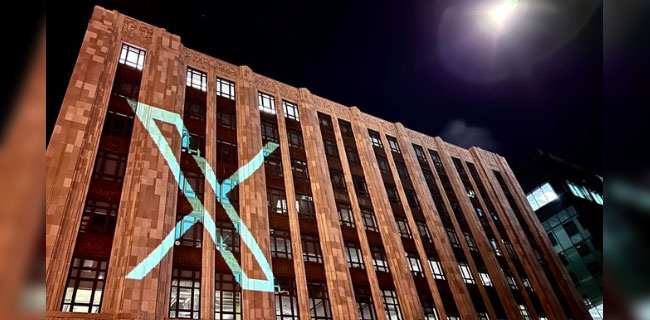
The X logo atop the company’s headquarters. From a tweet posted by CEO Linda Yaccarino
By Matthew Pittman
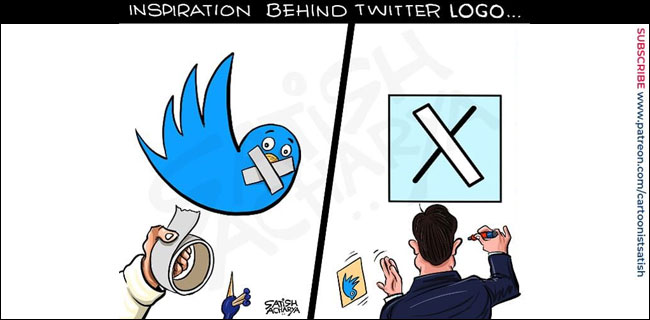
Twitter has swapped the fluffy bird that used to symbolise the social media platform for a spindly black X. Ditching the company’s well-known logo and changing its name to a letter often associated with danger, death and the unknown is only the latest user-aggravating step CEO Elon Musk has taken since he bought Twitter in October 2022 for US$44 billion.
But it’s the most visually jarring one.
The reaction has mainly been a mix of ambivalence, ridicule and scorn. For the most part, longtime Twitter users are unhappy at what they perceived as another unnecessary change that’s eroding their enthusiasm for the social media platform. It’s hard to find anybody praising the change so far, except perhaps some of Elon Musk’s most devoted fans. Twitter co-founder Jack Dorsey signaled that he was finding the uproar overblown.
I’m paying close attention to this corporate pivot because I’m a scholar of design who researches social media and brand campaigns. Logos and brand names change all the time and rarely cause this much commotion. But because these changes go deeper than most, I believe the risks of damage to the company are greater.
X’s clumsy design
X might strike you as a weird brand name, and the change may seem to have happened out of the blue, but Musk has long been smitten with the letter.
In 2000, the founders of PayPal ousted him as CEO for trying to change its name to “X,” his Tesla models are famously named S, 3, X and Y – which displayed together basically spell out the word “SEXY,” and one of his many children is named X on his birth certificate.
I would describe the new logo, submitted by a Twitter user, as a white-on-black, sans-serif X consisting of two strokes. It’s minimal and modern – and a stark departure from Twitter’s iconic blue-and-white bird. That shade of blue makes you feel calm and serene; black conveys sophistication and mystery.
And yet even people who know nothing about design are poking fun at the logo’s simplicity and unprofessional execution. To me, the logo looks suitable for a metaverse strip club or a dating app for robots.
Facebook’s Meta journey
Oddball branding is hardly unusual for a big tech company.
When Facebook rebranded itself as Meta in 2021, it was part of a comprehensive, strategic and long-term plan. The transformation signified the company’s aspiration to shift from a social media platform to an enterprise focused on the metaverse.
While the goal of a vibrant metaverse remains more theoretical than imminent, the rebranding still gave Meta some momentum as it now seeks to shift its focus to artificial intelligence.
Meta’s rebranding highlights the importance of staying relevant and embracing innovation. The company discerned the changing landscape and demonstrated a willingness to adapt in response to shifting consumer needs and preferences. When it realized the metaverse wasn’t materializing, the company focused elsewhere.
Perhaps that openness to trying new things explains why the rollout of Threads, Meta’s new competitor for the social media platform formerly known as Twitter, is apparently off to a strong start.
Tweet posted by Elon Musk. Also see: A pile of characters removed from a sign on the Twitter headquarters building seen in San Francisco on July 24, 2023. Photograph viewable at https://www.latimes.com/opinion/letters-to-the-editor/story/2023-07-30/twitter-x-elon-musk
From dunking to Dunkin’ and rebuilding Lego’s brand
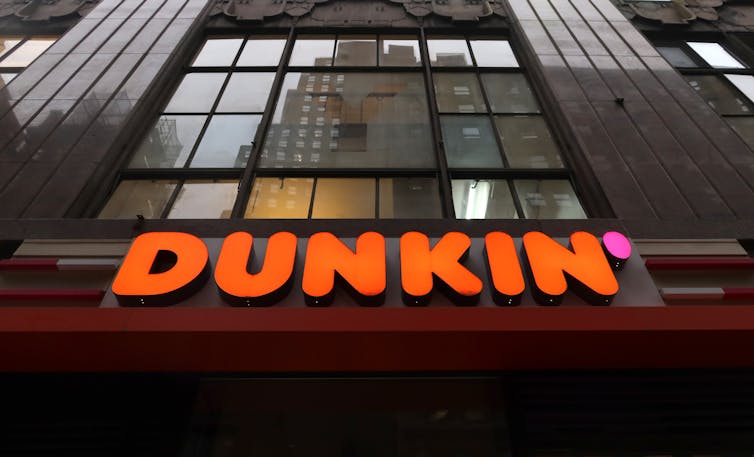
When Dunkin’ Donuts trimmed its name to Dunkin’ in 2018, the reception was mostly positive. Its customers seemed to get that the company wanted to move away from being closely associated with donuts – a high-calorie pastry with little nutritional value – and toward becoming a “beverage-led, on-the-go brand.”
That rebrand succeeded, and the company has also stuck with the slogan it adopted a dozen years earlier: “America runs on Dunkin’.”
Lego had another rebranding effort that business school students learn about as a model.
Lego was profitable, popular and beloved for the entire 20th century, but around 2003 its sales began to wane. Presumably, kids had too many other toys and digital devices to play with and simply didn’t have the time or patience to assemble small, colorful, plastic blocks anymore.
Undeterred, Lego conducted extensive market, ethnographic and psychological research to better understand how people in general, and children in particular, play with its wares. The company’s management realized that Lego products can be tied to just about anything.
Lego blocks are used both in original ways – kids make their own creations – and derivative ways, whether it’s recreating a pirate ship or a dinosaur seen in a beloved movie.
So the company began to partner with “Star Wars,” Nintendo, “Jurassic Park” and other brands to market special Lego sets. It also released a movie in 2014 that grossed nearly $500 million – boosting Lego sales and profits.
The Dunkin’ brand name and logo no longer includes the word ‘donuts.’ Gary Hershorn/Getty Images
BP rebrand crashed and burned; American Airlines had low altitude
Many corporate rebrands either don’t work or don’t do much to help their companies.
In 2000, BP changed its branding from British Petroleum to Beyond Petroleum.
Despite efforts to reposition itself as an environmentally responsible company, its actions revealed a contradictory truth. While BP reportedly invested over $100 million in the rebranding effort, it continued to spend billions more on oil exploration than renewable energy initiatives. BP abandoned the campaign a few years after its massive 2010 oil spill in the Gulf of Mexico.
After merging with US Airways in 2013, American Airlines rebranded away from its iconic 1968 logo, which had blue and red letters and an eagle between them symbolizing American power and ingenuity, to a sleek red-and-blue stripe with an abstract eagle beak separating the company’s colors.
The company called the new logo a “flight symbol.” Some design experts dubbed it a travesty.
Despite the contention, the company retained the new look.
Ultimate fate of X
I doubt the X rebrand will succeed – and not just because I dislike the new name and logo.
There are some challenging legal issues with naming a major company a letter of the alphabet. The letter X’s use as a brand is already banned in certain countries because of its prevalence in pornography branding.
And the rollout has been messy on the company’s own website. Musk reportedly swiped the @x handle from its original user without offering any compensation.
What’s more, many users had already left the platform because of technical glitches and increased hate speech; the switch to X could make them less likely to come back and won’t make others more eager to stick around.
In Musk’s quest to create what he says will become an app that “does everything,” I believe that his X rebrand took Twitter one more step toward being good for hardly anything.
Matthew Pittman is Assistant Professor of Advertising and Public Relations, University of Tennessee. This article is republished from The Conversation under a Creative Commons licence. Read the original article. The views by the writer are personal.
As you all perhaps know Twitter’s official mascot until a day ago, was a bird and the bird’s name is Larry. According to a tweet by co-founder Biz Stone, it is called Larry the Bird as a tribute to Larry Bird who played for the Boston Celtics.
I was caught unawares when my friends on a WhatsApp group of intellectuals told me that the Twitter logo had changed into an X. What? Why?
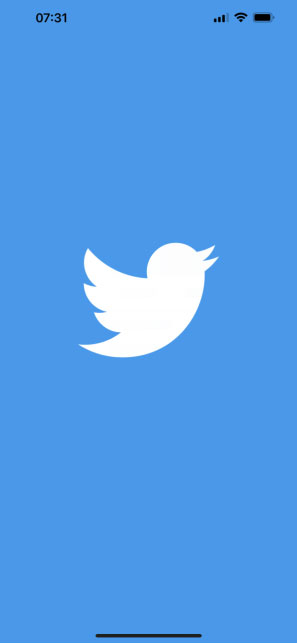
I hastily opened my Twitter app only to see the familiar bird on a patch of blue as the opening screen.
Wait a minute. For some time, I couldn’t see the X. Then a friend said he had opened it on his computer. I quickly rushed to my laptop and open Twitter. It took me some time to see a weak little X tucked away in the corner of my screen. And the language was the same. It said tweet.
I then rushed to the App Store to check what the logo on the download would reveal. Once again, I was welcomed by Larry, and that told me that the new X branding was far from complete.
I had never thought about it before but the logic of the previous branding fell into place. Twitter because that is the short high-pitched sound that birds make. That is why you tweet. So what was the logic for renaming it X?
Elon Musk elaborated: “Twitter was acquired by X Corp both to ensure freedom of speech and as an accelerant for X, the everything app. This is not simply a company renaming itself, but doing the same thing.
The Twitter name made sense when it was just 140-character messages going back and forth – like birds tweeting – but now you can post almost anything, including several hours of video.
In the months to come, we will add comprehensive communications and the ability to conduct your entire financial world. The Twitter name does not make sense in that context, so we must bid adieu to the bird.”
Yes, so I got it. You have long videos instead of 140 words. But you tweeted on Twitter. The logic was solid and unquestionable. My question to Elon is what do you do on X? You still tweet as indeed the image above seems to suggest. Something wrong here. Why am I still tweeting on X?
Now coming to the logo which was the weakest part of my computer screen when I opened Twitter. For a moment, I thought some highfalutin design company had probably charged Elon a few million dollars for a new logo and made a few quick bucks.
But here is the ultimate disappointment. It is simply the letter X from the Special Alphabets 4 font which you can buy on the internet for $29.99. Now that is cheapest logo I have ever come across for a major corporation.
Now I have no pretensions to being an expert typographer but after having spent more than 45 years in advertising I do think I can tell a bad logo from a good one.
But enough said. Farewell, Larry. Hello, X, whoever you are and whatever you want to be. Please introduce yourself!

 ನಾಯಿ ಮನುಷ್ಯನ ಅತ್ಯಂತ ನಿಷ್ಠಾವಂತ ಮತ್ತು ಪ್ರಿಯ ಸ್ನೇಹಿತನಾಗಿದ್ದಾರೆ. ಅವರ ಬುದ್ಧಿಮತ್ತೆ, ಪ್ರೀತಿ ಮತ್ತು ನಿಷ್ಠಾವಂತತನದಿಂದಾಗಿ ಅವರು ವಿಶ್ವದಾದ್ಯಂತ ಜನಪ್ರಿಯರಾಗಿದ್ದಾರೆ. ನಾಯಿಗಳು ವಿವಿಧ ತಳಿಗಳು, ಆಕಾರಗಳು ಮತ್ತು ಬಣ್ಣಗಳಲ್ಲಿ ಲಭ್ಯವಿದ್ದು, ಪ್ರತಿ ತಳಿಗೂ ಅದರದೇ ಆದ ವಿಶೇಷತೆಗಳಿವೆ. ಕೆಲವು ನಾಯಿಗಳು ಅತಿಯಾದ ಚುರುಕು ಮತ್ತು ಆಟವಾಡುವುದನ್ನು ಇಷ್ಟಪಡುತ್ತವೆ, ಆದರೆ ಕೆಲವು ಶಾಂತ ಸ್ವಭಾವದವರಾಗಿರುತ್ತವೆ. ನಾಯಿಗಳು ತಮ್ಮ ಮಾಲಿಕರೊಂದಿಗೆ ಆಳವಾದ ಸಂಬಂಧ ಹೊಂದಿದ್ದು, ಅವರೊಂದಿಗೆ ಸಮಯವನ್ನು ಕಳೆಯಲು ಇಷ್ಟಪಡುತ್ತವೆ.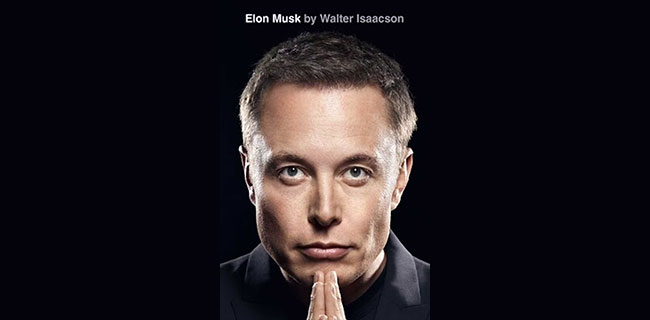



 By Prabhakar Mundkur
 I was caught unawares when my friends on a WhatsApp group of intellectuals told me that the Twitter logo had changed into an X. What? Why?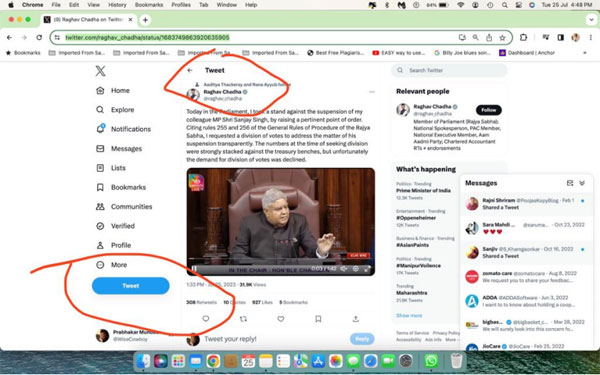
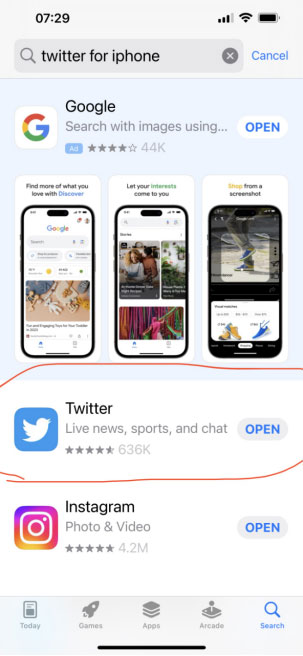 I then rushed to the App Store to check what the logo on the download would reveal. Once again, I was welcomed by Larry, and that told me that the new X branding was far from complete.