Tag: World Magazine Congress

  • No crisis for magazines in India: Chris Llewellyn

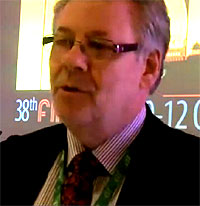
    Chris Llewellyn, President and CEO, FIPP, UK spoke to Akash Raha and Shruti Pushkarna of MxM India at the recently held World Magazine Congress. Mr Llewellyn spoke about the future of magazine, future events of FIPP and about the recently held World Magazine Congress in New Delhi, India.  Federation of the Periodical Press (FIPP) is a worldwide magazine media association, which represents companies and individuals involved in the creation, publishing, or distribution of quality content, in whatever form, by whatever channel, and in the most appropriate frequency, to defined audiences of interest.


    Q: FIPP has been taking up the interest of magazine publishers around the globe. What are the upcoming events that we can expect?

    FIPP exists to help its members construct better strategies and to build better media businesses. And the way they do that, is by finding what is happening around the world. So we come together at various meetings and events, share experiences and share knowledge, and go back better informed. I am really pleased to be able to confirm that next year September 19 to 21, Seoul Korea will be holding the third Asia Pacific Digital Magazine Media conference. And that will be specifically geared towards the Asian market and the hot topics of the time then; and we are talking digitally, so a year from now god knows what they’ll be, but they’ll be on the top of publishers mind. We will bring in some international speakers and we will engage with the Korean market which itself is incredibly digital. So that is an exciting new event next year. On top of that, we will be doing in early November, an American conference, out of Central America. In fact, I can even confirm that it is going to be in Costa Rica, which is a very attractive venue. And again that will be talking about the hot issues of the day, appropriate for the publishers of that territory.


    Q: How do you think the Indian magazine marketing is shaping up?

    The issue at the moment is that we have these two huge forces at play. One is this structural change that the digital revolution is forcing on our thinking and the second one is just the cycle of poor economy. You know, India, which is still booming, still ‘incredible India’, and yet people in India think there is a crisis. But it is not a crisis in India, believe me. This is just the cycle and this will turn around. How long, well, if I knew how long I will be a very rich man. But the truth is, it will change. At the same time, I think the publishers are responding magnificently to the digital changes and realizing that the strong magazine brands that have an emotional engagement with the audiences can be taken to different platforms and it just deepen the engagement. Don’t confuse content with how you deliver content. Content is an art and that content can be on magazines and it can be on any other format that we want it on. But it will still be the magazine publisher’s knowledge of his audience, which is the key, and that’s not going away.


    Q: How do you think digital will affect print?

    Hollywood films have never being bigger – huge blockbusters. Hollywood is making so much more money but not at the box office … their business model has changed. Today, Hollywood is built on the sales of popcorn, the sales of the food and drinks when you visit the cinema. It’s the full cinema experience, not the box office that entails profits. Similarly, in the magazine industry too, we will see a change in the business model, that’s certain. But the medium will still be there because of the strength of the medium. The emotional engagement of turning the pages, fresh magazines, just the way that we represent images is fantastic.  The women’s fashion sector needs glossy magazine too. So magazines are not going away, but the business models will change.


    Q: One can say that the World Magazine Congress has been immensely successful. What are the important points that have emerged from the conference?

    There is still a huge print industry and print is not at all dead. Innovation in print, as we have seen in several publications, is there, creativity is there and it will get more creative. And we have a bigger train set to play with now with all these new mediums and that’s exciting. So print is fine and we have a world of opportunity that is opening up. That is the big take away from the conference I feel.


    Q: What has been the feedback from the World Magazine Congress?

    You know, when we planned this conference two years ago, coming to India and quite a few people were saying ‘that could be interesting’. They clearly meant it in both ways… It could be interesting because it’s exciting and it could be interesting because it is quite a logistical challenge. I can’t tell you how difficult it is to get a visa to come to this country. My word, I am British and we left you bureaucracy which you have taken to another level (he jokes). However, the feedback I have got is really good. The opening reception just got the energy into everyone; The Bollywood dancing, the charisma of Shahrukh Khan. A lot of international people had never heard of him, they do now. I was told that the programmes were fantastic and there was lots of value to it. Many international visitors are extending their stay in India and are going to see a little more of this country. I am going to have the pleasure of seeing the Taj Mahal too. All in all, the congress in India has been absolutely wonderful.


    Watch Chris Llewellyn:

    On the magazine market
    [youtube width=”350″ height=”250″]http://www.youtube.com/watch?v=5rgYpWMJhjU[/youtube]


    Magazine business model might change, but the medium isn’t going anywhere
    [youtube width=”350″ height=”250″]http://www.youtube.com/watch?v=rCMEvZtioqc[/youtube]


    Takeaways from WMC 2011
    [youtube width=”350″ height=”250″]http://www.youtube.com/watch?v=Gtgers8eSAw[/youtube]
  • Engagement Study holds hope for magazines

    By Akash Raha

    With the World Magazine Congress round the corner, New Delhi is set to host magazine publishers, marketers and advertisers from all over the world.

    However, with news doing the rounds each year that the future of magazine is in doldrums (at least on print and paper), a lot of hopes are likely to be pinned on the Engagement Study conducted by Association of Indian Magazines (AIM), which is to be announced at the congress. The study aims to become a robust currency for advertisers.

    Media planners and buyers whom MxM India spoke to about the study feel that it will herald a change for the better.

    Premjeet Sodhi, President, The Collaborative, Lintas Media Group said, “Yes, the currently available syndicated research studies in India are not adequate to take fully informed decisions about selection of magazines from a media planning perspective. A lot of additional inputs are derived from proprietary research by agencies to be able to make prudent recommendations. Overall, there is a huge scope for enhancement of the syndicated data sources from the perspective of magazines. While, I am not aware of the research design of the Engagement Study, I am sure it will fill a critical void of information for magazines and will be a valued input for media planners and advertisers. I hope that going further the research does not stay at the ‘Category Level’ and does provide information at the ‘Individual Title Level’ else the applicability of the information will always be limited.”

    S Yesudas, Managing Director – Indian sub-continent, Vizeum India said, “Personally I was shocked to see the numbers of some of the magazines when the Registrar of Newspapers of India publicized the print order claim made by magazines on its website, presumably through an oversight, as it was subsequently withdrawn.  Coupled with this is the reality of IRS certifying a consistent southward trend.  There are too many titles fighting for the same share of the audience pie, unlike the newspapers, they themselves are currently feeling the pinch.  While the engagement study might help differentiate one against the other in the same area of operation in terms of affinity, it will not make any substantial changes in the current perceptions and judgments by media planners, from an overall industry perspective. At best it will result in the publication with the highest affinity, scoring over the others compared to the current judgment allocation where the one with the perceived audience retention possibility gets 80 percent and the rest 20 percent. With the engagement study it might become 90/10 or 100 in favor of the one with highest affinity.”

    With digital being the watchword for the future, this year’s theme of the magazine congress is ‘The 360° Opportunity’.

    Dinesh Vyas, Business Head, MEC India said, “If you look at the way the print medium has been faring of late, I wonder how much of a difference the Engagement Study is going to make. The situation has changed drastically over the years and today, digital is taking away massive part of the advertiser’s money. According to me, digital is a very engaging medium, perhaps more than print as a whole. Whether Engagement Study will make a difference or whether clients will buy into a medium which is already losing interest amongst consumers, only time will tell.”

    A few questions arise here: Will the media planners and buyers appropriate the study? Will they be able to trust a survey conducted by the very group on which the study is being conducted? The answers to these questions are close at hand.

    Also Read:

    http://www.mxmindia.com/2011/09/engagement-study-may-solve-magazines%E2%80%99-measurement-blues/

  • 3 days to World Magazine meet


    By Akash Raha

    The FIPP’s 38th World Magazine Congress is only three days away and is going to be held for the first time in India. Approximately 600 delegates from 50 countries (including India) will be attending this event. The conference will be held from 10-12 October, 2011 at New Delhi,and the biggest names of the media and advertising fraternity, from India and internationally, will be present at this event.

    Chris Llewellyn, President and CEO FIPP, UK, speaking on WMC India edition to MxM India said “The World Magazine Congress is FIPP’s most iconic event, gathering together the great and the good from our industry and is always special. Being held in India for the first ever time is a wonderful endorsement of how the market for magazine media is developing in this country and I’m looking forward to some great interaction between the local and international publishers. More generally, being able to understand how to balance the array of opportunities that new digital platforms bring together with the many strengths of the traditional magazine is the obsession of the magazine media world, and I’m sure that our New Delhi Congress will provide real insight and guidance as to what’s working, where, and why.”

    In a conversation with MxM India Mr Mitrajit Bhattacharya, General Secretary, AIM said, “We have a huge number of delegates coming in from all over the world; from the far-east, from Europe, from America. So I think, this is going to be one of the most successful World Magazine Congress in the last decade or so. India is the toast of the world for anything and there is a lot of interests for delegates to attend the WMC 2011.”

    When asked if business transactions can be expected in the WMC Mr Bhattacharya added, “I think there is a large amount of work which is happening in the digital space, and there is a lot of business which could be driven in that area in the World Magazine Congress with the magazine publishers of India. So there would be a definite angle of business in World Magazine Congress and I know that publishers are already full with the dates in their calendar with meetings with international delegates. There is a very nice appointment dairy that we have offered to every delegate and that is getting full for many publishers. So there will definitely be business transactions in the World Magazine Congress.”

    The World Magazine Congress will begin with the opening address by Mr Aroon Purie, Chairman of FIPP, and Chairman and Editor in Chief, India Today; Mr Chris Llewellyn, President and CEO, FIPP and Mr Jussi Pesonen, CEO, UPM. This will be followed by an interaction with Mr Shahrukh Khan, who will talk about ‘My Tryst with Magazines’.

    The next two days will be packed with speakers of renown from across the globe. The key note address on the second day will be given by Ms Ambika Soni, Minister of Information and Broadcasting, India.

    The Congress’ theme for this year is ‘The 360-degree Opportunity’. The congress will showcase various innovation and means to success in today’s dynamic market. The conference agenda contains some of the world’s biggest media names, giving their own personal insights. In addition, the 2011 Congress will incorporate a large commercial exhibition, providing the opportunity for delegates to learn about new products, developments and opportunities in a highly-charged business environment.

    India is an essential market as it has 73,000 magazines, including weeklies, fortnightlies and monthlies. The market is dominated by Hindi and regional publications. About 34 percent of the overall magazine industry publications are in Hindi, followed by English publications accounting for 13 percent of the total pie. The remaining 53 percent of the market comprises regional languages such as Marathi, Bengali, Tamil and Telugu.

    FIPP’s World Magazine Congress is by far the biggest magazine event that is organized across the globe which brings forth magazine publishers and business media providers from across the globe. The biennial Congress has taken place in many different locations over the years, including United Kingdom, London (2009), Beijing, China (2007), New York, USA (2005), Paris, France (2003), Rio de Janeiro, Brazil and Buenos Aires, Argentina (2001) and Hamburg, Germany (1999).


    For more information: www.fippindia11.com