Tag: WhatsApp

  • Day 2 @ Goafest: First Half Wrap-Up

    Day 2 of Goafest 2024 began began with a session hosted by the India chapter of IAA in collaboration with UNICEF. The theme was titled Gender-Sensitive Marketing: Navigating The New Consumer Landscape. Among the panellists were Chandni Shah, Chief Operating Officer of FCB Kinnect, Darshana Shah, Head of Marketing & Customer Experience at Aditya Birla Capital, Kailashnath Adhikari, Business Head of Sri Adhikari Brothers & Managing Director of GovernanceNow, Rajdeepak Das, Chief Creative Officer of Publicis Groupe South Asia & Chairman of Leo Burnett South Asia; and Ram Madhvani, Filmmaker, Producer, and Founder of Equinox Films and Ram Madhvani Films. Moderating the discussion was Kranti Gada, Founder of NeOwn.in.

    Post that, in a keynote address, Pulkit Trivedi, Managing Director of Snap Inc. India, revealed how Snapchat emerged as the preferred platform for young India. This was following by a session titled titled Media Agencies Panel – The Changing Expectations from a Media Client Leader, and the Challenges in Getting There, comprising prominent industry leaders. The panellists included Ajay Gupte, CEO, Wavemaker South Asia, Anita Kotwani, CEO – Media (South Asia) at Dentsu, Tanmay Mohanty, CEO of Publicis Media Services India and Vaishali Verma, CEO of Initiative India. Steering the discussion was Vikram Sakuja, Partner & Group CEO of Media & Out-of-Home at Madison Communications.

    The third knowledge seminar was titled, Trust or Bust: Thriving in the Digital World, with ASCI as partner. The panel of experts included were Amit Doshi, Chief Marketing Officer at Britannia, Falguni Vasavada, Professor at MICA and Digital Creator, Paras Sharma, Director of Global Partnerships at Meta and Sharan Hegde, Finance Content Creator and Co-founder and CEO of 1% Club. Manisha Kapoor, CEO & Secretary General of ASCI, moderated the session. We thought the session could be a tad longer.

    What followed was a fireside chat featuring Ankit Kapoor, Head of Marketing & International Business at Parle Agro, Mahesh Shetty, National Sales Head at Viacom18 and Navin Khemka, CEO – South Asia of Essence Mediacom. Conducting the conversation was anchor and marathoner Shibani Gharat.

    Day 2 also saw a series øf masterclasses. By WhatsApp on Agency Exclusive: Drive growth across the customer journey with WhatsApp, presented by Riddhika Sand. Then Ujaya Shakya, Founder and CEO of Outreach Nepal on Unlocking Market Potential: Open your eyes to Nepal. There was also the the D&AD masterclass presented by Lisa Evans and Paul Drake titled Unlocking Award Winning Ideas. Amazon miniTV also held a masterclass on Brand Integration with Vijay Iyer, Director, Amazon Ads India and Amogh Dusad, Head of Content, Amazon miniTV conducting the session. There was also a masterclass on Hall of Flame – The Olympics Masterclass presented by Chandan Roy.

  • Crackdown on WhatsApp University. MCA & Meta collaborate to curb AI-generated misinformation

    The Misinformation Combat Alliance (MCA) and Meta are working on launching a dedicated fact-checking helpline on WhatsApp in an effort to combat media generated using artificial intelligence which may deceive people on matters of public importance, commonly known as deepfakes, and help people connect with verified and credible information. The helpline will be available for the public to use in March 2024.

    Commenting on the partnership, Shivnath Thukral, Director, Public Policy India, Meta, “We recognise the concerns around AI-generated misinformation and believe combatting this requires concrete and cooperative measures across the industry. Our collaboration with MCA to launch a WhatsApp helpline dedicated to debunking deepfakes that can materially deceive people is consistent with our pledge under the Tech Accord to Combat Deceptive Use of AI in 2024 elections. As a company that has been at the cutting edge of AI development for more than a decade, we remain committed to work with industry stakeholders to introduce common technical standards for AI detection, transparency solutions and policies, along with empowering people on our platforms with resources and tools that make it simpler for them to identify content that has been generated using AI tools and curb the spread of misinformation.”

    Added Bharat Gupta, President, Misinformation Combat Alliance:  “The Deepfakes Analysis Unit (DAU) will serve as a critical and timely intervention to arrest the spread of AI-enabled disinformation among social media and internet users in India. Its formation highlights the collaboration and whole-of-society approach to foster a healthy information ecosystem that the MCA was set up for. The initiative will see IFCN signatory fact-checkers, journalists, civic tech professionals, research labs and forensic experts come together, with Meta’s support. We hope the DAU will become a trusted resource for the public to discern between real and AI generated media and we invite more stakeholders to be a part of the initiative.”

    MCA is a cross-industry alliance bringing companies, organisations, institutions, industry associations and entities together to collectively fight misinformation and its impact. Currently, MCA has 16 members including fact-checking organisations, media outlets, and civic tech and are inviting strategic partners to collaborate in this industry wide initiative to combat misinformation and create an enlightened and informed society.

    The concern of course is not just AI-generated misinformation. It’s when human intelligence is at play.

  • WhatsApp connects citizens with MCs

    By Our Staff


    Internet major Meta is tying up with civic authorities for accessing essential services, getting birth and death certificates, door-to-door garbage collection to registering complaints, citizen services across several states are now available via WhatsApp. These include Pune, Mumbai, Kolkata, Patna and a few others.


    Talking about WhatsApp’s effort support getting digital governance solutions closer to citizens across the country, Ravi Garg, Director Business Messaging, India – Meta said: “We are excited about working together with administrations across the country to help them empower and enable citizens with digital access to easy governance solutions on WhatsApp, in turn, making governance more inclusive. Citizens can now access services from right within their WhatsApp, at their own convenience, instead of visiting local offices or waiting in long queues. This technology-led citizen engagement is tremendously helping administrations improve their response time and we are delighted with the ease and convenience this brings to our users’ lives.”


  • WhatsApp launches campaign for online safety

    By Our Staff


    WhatsApp has launched an integrated safety campaign ‘Stay Safe with WhatsApp’ highlighting product features that empower users to take control of their online safety and ensure a safer messaging experience.


    The campaign focuses on educating users about WhatsApp’s in-built product features and safety tools that equip people with the necessary safeguards to help protect them from online scams, frauds and account compromising threats. The three month long campaign will highlight simple yet effective ways to enable WhatsApp safety features that come together to offer layers of protection to users as they spend more and more time online in their daily lives. The campaign also focuses on the importance of safeguarding your WhatsApp account to ensure you remain safe and protected at all times.


    Shivnath Thukral, Director, Public Policy India, Meta, said: “User safety is at the core of everything we do at WhatsApp which is why we’re launching our safety campaign “Stay Safe with WhatsApp,” in an effort to drive user-awareness around WhastApp’s safety tools and product features that can help keep users safe from online scams and frauds. Over the years we have added layers of security and protection with innovative features that empower users to take control of their online safety. This campaign is an important reminder for people on how they can safeguard themselves in today’s digital first world and aims to reinforce consumer habits that ensure key safety features on WhatsApp become second nature to users so that they can stay safe from messaging scams and to protect their friends and family.”


    Being an industry leader among end-to-end encrypted messaging services in preventing abuse and promoting online security, WhatsApp is focusing on communicating its core safety principles that can help keep users stay safe from online scams and frauds. Key safety features highlighted in the campaign include:


    Two-step verification to add an extra layer of security to your account: WhatsApp allows users to add an extra layer of security to their account by enabling the Two-Step Verification feature, which requires a six-digit PIN when resetting and verifying your WhatsApp account. This is helpful in case a SIM card gets stolen or if the phone is compromised.


    Block and report accounts that are suspicious: WhatsApp is a private and safe space for people to communicate with their loved ones and people who have your phone number. However, at times when users receive problematic messages from unknown numbers, some of which may include suspicious links, request access to personal information, among others WhatsApp provides a simple way for users to ‘block and report’ the account to WhatsApp. Blocked contacts or numbers will no longer be able to call you or send you messages.


    Privacy settings to control who sees your personal details: Users can control their personal details such as – Profile Photo, Last Seen, Online status, About, Status, and who sees it –  everyone, contacts only, select contacts, or no one. You can also control your online presence by selecting who can and can’t see when you’re online, for the times you want to keep your online presence private. Keeping your personal details visible to only your contacts can help safeguard your account against bad actors.


    Group privacy settings to ensure a safe messaging experience: WhatsApp’s privacy setting and group invite system allow users to decide who can add them to groups, increasing user privacy and preventing people from adding you to groups you don’t want to be a part of. If you find yourself in a group chat that’s not for you, you can choose to exit a group privately without having to notify everyone.


  • LinkedIn @ 20: Transforming the business networking giant


    By Theo Tzanidis


    When someone says social media, you probably don’t immediately think of LinkedIn. But there’s no denying that the business networking site has gone the distance: it is now 20 years since it was founded in Silicon Valley.


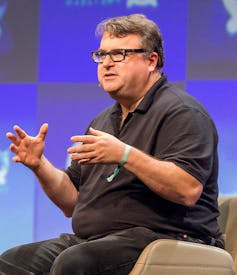
    It was the brainchild of Reid Hoffman, a US entrepreneur who worked on an early social media platform for Apple before launching one of his own in 1997. SocialNet was a dating and professional connections site, but folded two years later after failing to find a big enough userbase in those early days of the web.

    LinkedIn founder Reid Hoffman talking at a conferece
    LinkedIn founder Reid Hoffman. Photograph credit: Marco Verch, CC BY-SA


    Hoffman went on to become a senior manager at PayPal, and made a substantial amount of money when it was bought by eBay in 2002. This helped him to co-found LinkedIn on December 28 2002 with a team of former SocialNet colleagues, becoming its first chief executive and later executive chairman.


    This was a period when everyone was realising the importance of individual interconnection and peer-to-peer interactions. LinkedIn launched in May 2003, just ahead of Myspace and Facebook. But where they and others like Friendster went after the consumer market, Hoffman’s venture was always focused on business.


    How it grew

    LinkedIn was originally set up as a place where users could share their CVs and establish a network of people who could recommend them. It took a while for the service to find its feet via innovations like allowing users to upload their contacts books (2004), as well as jobs listings (2005) and public profiles (2006).

    LinkedIn went international in the late 2000s, opening an office first in the UK in 2008 and introducing Spanish and French language versions the same year. Jeff Weiner, formerly of Yahoo, took over as chief executive the following year as the company morphed into a proper business.

    It made money from premium features that enable users to do things like messaging outside their network, send promotional emails and access analytics. It also sells advertising space and packages to help recruiters attract talent.

    It floated on the stock market in 2011 with a valuation of US$9 billion. This helped to finance an acquisition spree that has gradually bolted new features onto the platform, such as posting articles (2015) and videos (2017).

    The company was acquired by Microsoft in 2016 for US$26 billion (£21 billion). With Hoffman joining the Seattle giant’s board the following year and Weiner still LinkedIn’s chief executive today, Microsoft has taken a relatively hands-off approach to ownership.


    Pandemic benefits

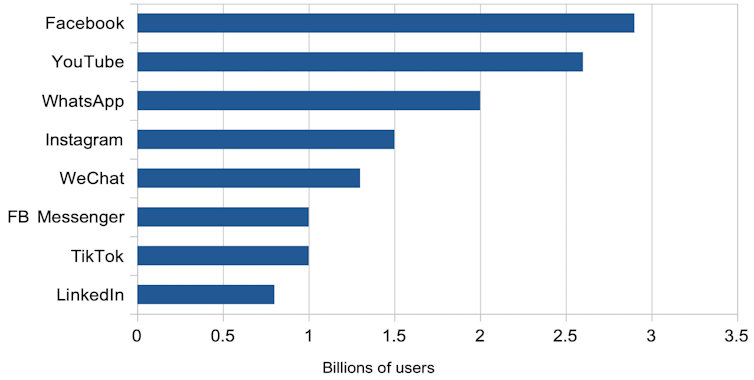
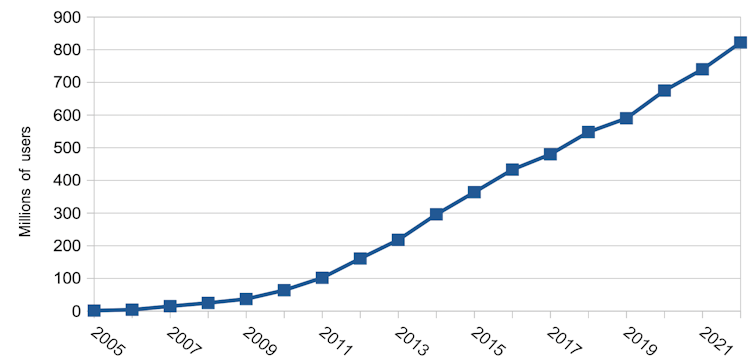
    Today LinkedIn is arguably the seventh largest social network after Facebook/Messenger, YouTube, WhatsApp, Instagram, Twitter and Tik Tok. In 2021 it had nearly 824 million users across 200 countries and territories, of which 6% (49 million) are premium subscribers, paying a minimum of US$29.99 a month.

    Not only does LinkedIn’s business focus attract an upmarket userbase, they are also youthful. The majority (59%) is made up of 25-34s, followed by 18-24s (20%) and 35-54s (18%). It generated revenues of over $10 billion in 2021.


    World’s biggest social networks

    Bar graph showing the largest social networks by user numbers
    All the data is monthly active users from January 2022, except LinkedIn, which just gives user numbers. Statista


    LinkedIn had a “good” pandemic, with conversations on the platform rising 43% and content-sharing almost 30%. It benefited from a shift in how people networked, related to findings from numerous studies that it’s the “weak links” in our professional networks who are the most important for gleaning critical information that leads us into jobs we genuinely desire.


    At a time when the usual barriers of time and space were less relevant and Zoom calls were ubiquitous, it became the perfect moment for reconnecting with these occasional contacts. Especially with so many people questioning their work situations, LinkedIn was the ideal place to see their posts and reach out to them.


    This meant that LinkedIn played a key role in the great resignation, particularly since like the platform, this movement was dominated by millennials. Users posting about changing or quitting jobs would attract large numbers of likes and comments, inspiring others to do likewise. The fact that so many people were connected on LinkedIn multiplied the effects, making it both the main catalyst and the main solution for employers.


    LinkedIn user growth over time

    Line graph showing growth in LinkedIn user numbers over time
    Various sources


    Meet the ‘work-fluencer’

    LinkedIn’s role as a lightning rod for work issues is also likely to determine how it develops, as a new category of social media influencer emerges – the “work-fluencer”. Companies are increasingly finding that employees’ LinkedIn profiles and postings can express the brand better than corporate accounts, allowing them to develop the corporate business network much more quickly and naturallyand naturally.

    When this is done well, employee posts are usually much more authentic than corporate PR. Rather than just curating articles on professional milestones and triumphs, people have become more open and honest about day-to-day work life.

    Over 13 million LinkedIn members have their profile set to “creator mode” to obtain higher exposure for their postings. Many use the hashtag #careertiktok to publish things like their wages and day-in-the-life vlogs about their professions, achieving over 1.5 billion views.

    This new “online watercooler” represents a change in the amount of information people reveal about their work on the internet. Workers are raising formerly taboo concerns like pay transparency, discrimination and professional undermining. Some professionals like lawyers, entrepreneurs and HR experts, have leveraged their posts into new content-marketing businesses and other profitable side hustles.

    Twenty years after LinkedIn was founded, this could enable the platform to enjoy the kind of trust and community growth that other social media networks would envy. Certainly it has challenges – fake accounts are an issue, for example. And LinkedIn inevitably attracts a lot of spam, which is probably one reason it doesn’t achieve the same amount of daily interactions as other social media.

    On the other hand, it benefits from not having a single direct competitor of scale. The nearest big ones would be Facebook Groups or Reddit, but LinkedIn’s purely corporate focus is always likely to be a plus against such players. At a time when traditional platforms like Facebook and Twitter are experiencing difficulties, LinkedIn has a real opportunity to continue succeeding as the one dedicated platform of its size.


    Theo Tzanidis is Senior Lecturer in Digital Marketing, University of the West of Scotland. This article is republished from The Conversation under a Creative Commons license. Read the original article.


  • Campaign by Payments on WhatsApp

    By Our Staff


    In order to create awareness and educate users on making safer online payments, WhatsApp has launched a user-safety campaign – titled ‘Scam Se Bacho’ via a ‘music video, conceptualised by BBDO India and directed by Shimit Amin.


    Talking about the music video, Manesh Mahatme, Director – Payments, WhatsApp India said: “While UPI continues to remain one of the safest, convenient and interoperable modes of making payments, India’s growing acceptance of online payments has also seen an increase in digital payment frauds. User safety is at the core of everything we do at WhatsApp and through this exciting and captivating music video, we want to educate and empower our users with all the information they need to safeguard themselves against any frauds while making digital payments. We hope that this initiative by WhatsApp will resonate with people and they can sing their way through safe and secure online payments.”


    Talking about the campaign, Avinash Pant, Director – Marketing at Meta India, added: “India’s growing acceptance of digital payments has also led to an increase in the need to make people aware on how to keep their payments safe. Through this campaign, which is built on several real world scenarios that people face in their everyday life, our endeavour is to educate and empower users with all the information they need to safeguard themselves against any frauds while making digital payments. This initiative reinforces Whatsapp’s commitment to the safety of our users while making payments as simple and convenient as sending a message.”


    Commenting on the creative treatment of the music video, Josy Paul, Chair and Chief Creative Officer, BBDO India, said: “Our primary goal with this music video was to spread awareness and engage the audience sensitively on this subject. We decided to create entertainment that educates, rather than advertising. Our goal of reworking a fun nostalgic song like ‘Dekh ke Chalo’ was to use the power of music to convey a strong message that’ll help people relate to the moments that we collectively face in our lives. The song triggers memory structures that allow the audience to receive the message more easily. We hope it will echo with people to be more aware the next time they face similar situations and feel empowered to stay safe while making online payments on WhatsApp.”


  • WhatsApp launches campaign for Safer Internet Day

    By Our Staff


    View this post on Instagram


    A post shared by Anmol Sachar (@anmolsachar)

    WhatsApp hjas announced the launch of a week-long #OnlineSafety campaign in partnership with Yuvaa. The campaign, #TakeCharge –started on ‘Safer Internet Day’ with a series of infotainment content on Yuvaa’s Instagram page with an aim to raise awareness about online safety, encouraging  people to understand the various safety tools and resources that can be used to stay in control online.


    Talking about the latest #TakeCharge user-safety campaign Abhijit Bose, Head of India, WhatsApp, said: “WhatsApp is an industry leader among private end-to-end encrypted messaging services in promoting online security. Besides continuously innovating on the product side to build safety features, WhatsApp also deploys dedicated teams of data scientists, analysts, security experts as well as AI & ML to keep users safe online 24x7x365. Additionally, it has been our continuous endeavor to raise awareness and education about user-safety. Our current Safer Internet week campaign is another such attempt to help users understand the importance of online safety and how they can #TakeCharge to navigate the internet safely.”


  • Delhi HC restrains WhatsApp on Dainik Bhaskar group epaper circulation

    By Our Staff


    The Delhi High Court has passed an ad interim exparte order directing WhatsApp LLC to block/ take down the groups that are circulating the epapers of the Dainik Bhaskar group, as per a communique received from the newspaper (happened on December 24). Other than WhatsApp LLC, the DoT, GoI and unknown administrators of the offending groups (identified by their mobile numbers) are also parties to the suit and notice has been issued to all defendants. DB Corp Ltd (Dainik Bhaskar) had earlier approached WhatsApp LLC through a legal notice with a request to block/ take down the offending groups as they were infringing the copyright and registered trademark(s) of the Dainik Bhaskar Group. WhatsApp LLC, however, in its response had declined the request seeking production of a court order.


    Recently, DB Corp Ltd (Dainik Bhaskar) approached the Delhi HC seeking directions to WhatsApp LLC to block/ take down certain groups operating on its instant messaging platform wherein the Group’s e-newspapers were being shared and circulated illegally and without authorisation. Users are neither permitted to download the epapers, nor are they permitted to share and circulate the same. Illegal and unauthorised sharing of E-Newspapers, across publications, has become rampant and is prejudicial to the interests of the publishers, notes the communique, adding: “Being aggrieved by such illegal and unauthorised sharing and circulation of its E-Newspapers, DB Corp Ltd (Dainik Bhaskar) considered it necessary to initiate legal action to protect its proprietary interests and, as aforesaid, has been granted an ad-interim ex-parte injunction in its favour.”


  • Controversial Facebook policy head Ankhi Das quits

    By A Correspondent


    Facebook India’s policy head Ankhi Das has resigned. She was at the centre of a controversy after a newspaper reported on Facebook’s alleged political biases.


    As a report in Times magazine’s website, Shivnath Thukral, former journalist and WhatsApp’s public policy director, has been asked to take over Das’s duties on an interim basis until a replacement can be found. This has not been confirmed or denied by Facebook or Thukral.


    According to a statement published on The Hindu website, Ajit Mohan, Vice President and Managing Director, Facebook India, has said, “Ankhi has decided to step down from her role in Facebook to pursue her interest in public service. Ankhi was one of our earliest employees in India and played an instrumental role in the growth of the company and its services over the last nine years. She has been a part of my leadership team over the last two years, a role in which she has made enormous contributions. We are grateful for her service and wish her the very best for the future.”


  • Traditional news, anyone?


    By Ranjona Banerji


    This is based purely on anecdotal evidence. I don’t even know if anyone has researched these patterns yet, since some of these changes have happened since the Covid-19 lockdowns.

     

    Newspapers have not been delivered uniformly across the country. So, there is a fall in circulation and therefore readership. (This has had another terrible effect on the employees.) Many newspapers, because of the fall in revenue, have retreated behind paywalls. Television has also been affected by revenue losses and have reduced staff. The coverage of the virus itself has not helped. So several TV channels appear to have cemented themselves even further into the mire of government and party propaganda.


    Social media however is booming, in the sense of public attention and engagement, not revenue. The reasons are obvious: nothing else to do, even as we are now in the partial lockdown and total confusion stage.


    If newspapers do not get delivered and then want you to pay online for access to the best articles, then most readers will stay away. If they have subscribed to the physical form of the newspaper, regardless of whether it is delivered or not, they are wary of paying twice for something. So those readers are lost.


    Most newspaper readers, especially in English, are older so the idea of paywalls is double anathema. Some banks, like ICICI, send PDF format newspapers to their customers. However downloading this massive file and then reading it is again somewhat troublesome.


    And what newspaper managements have evidently not factored in is the enormous amount of information, fake and real, that is circulated via Whatsapp for free. All day, people send each other a wide variety of information and thus, willy-nilly, you get a summary of what’s happening around the world. The use of Whatsapp amongst older generations in India is worthy of a study of its own.


    Then there’s TV subscription. I am sure TRAI meant well when they asked us to choose our own packages. But the end, the result was that many people realised the amount of rubbish that they had subscribed to. In the new system, you realise that even free-to-air channels just take up too much mind space. And this leads you to narrow your choices to what you believe in. Thus, the system allows or encourages you – perhaps not intentionally – to slip into your own ideological bubble.


    The climate has ensured that some “news” channels have got even screechier and more propagandist, pushing the government line far better than any government agency. The removal of the smorgasbord of options suggests that a vast number of TV viewers watch only those news presentations that they agree with. I hear from friends that even NDTV 24×7, always seen as balanced compared its rivals, has become more pro-government than before.


    Since the schedule for TV news remains the primetime screaming matches, that leaves reporters who work for these channels on the backfoot. They may do great work but that is lost in the abusive entertainment of the evening bouts. The fact that a retired army general can use choice Hindi abuses on Republic TV’s Hindi channel and people are just amused gives you a clue as to how much Indian society has changed. There was a time when Sushma Swaraj, as I&B minister, objected to Doordarshan newsreaders wearing sleeveless sari blouses! O tempora et cetera!


    As an aside, there is therefore a building ideological divide between those who read and those who only watch these TV “debates”. Without a range of news, people get even more set in their ways.


    And then, social media. I can spend the day on Twitter (and I have to confess, sometimes I have spent all day there) and find out what’s happening all over the world in “real time” as they say. I can watch bits of TV, read a selection of articles, interact with the writers themselves, and depending on who I follow, get specialist news. This makes all other forms of news almost redundant. I do read a couple of newspapers in the physical form. In my neck of the words, they only stopped for about a month.


    Webinars, podcasts, Youtube videos, the future is already with us. And there’s traditional media, stuck in the past.


    Ranjona Banerji is a senior journalist and commentator. She is also Consulting Editor, MxMIndia. Her views here are personal

  • Motilal Oswal launches ‘Phygital’

    By A Correspondent


    Given the stockmarket volatility and the need for sound advice while investing,

     

    Motilal Oswal Financial Services has launched a campaign promoting its ‘Phygital’ service that combines the speed and convenience of online investing with the research and customised advisory through an advisor available on call.


    As a full service broker, Motilal Oswal Financial Services differentiates itself by providing not just cutting edge digital trading through its habit sensitive separate Investor & Trader apps, it also provides an advisor on call to help understanding the research and advise across the whole suite of investing products. The advisor acts not just as a market expert decoding reams of information into actionable investing, he/she also acts as a sounding board and counsellor – especially important during volatile markets where emotions can get the better of anyone.


    Ramnik Chhabra

    “A value added experience is one where the service is configured around customers’ needs. Equity as an asset class has low penetration with new investors being added every day. This requires both rational analysis and emotional discipline to succeed. The combination of digital convenience with advisor analysis/counselling/insight that a PHYGITAL experience provides helps fulfil these needs”. To make the PHYGITAL proposition come alive, we have created a campaign across touch points on the benefits of the PHYGITAL investing experience.” said Mr. Ramnik Chhabra, Executive Director Marketing at Motilal Oswal Financial Service Ltd.


    The campaign has a distinct look and tagline to engage audience to experience the advantage of both worlds, Digital & Physical. The campaign touch points include digital and social media, email and WhatsApp messaging.


  • Facebook takes 9.9% of Jio Platforms (Reliance Jio’s holding co) at Rs 43,574cr

    By A Correspondent


    It’s been in the works for a while, and then there have been rumours to the effect that this is set to happen. And then the Covid-19 scare happened, and one didn’t know when it would actually happen. If at all.

    But in the wee hours of today (and April 21 in the United States), a statement came in from Facebook and Reliance Industries.

    First the Facebook note by David Fischer, Chief Revenue Officer, and Ajit Mohan, VP and Managing Director, India: “Today we are announcing a $5.7 billion, or INR 43,574 crore, investment in Jio Platforms Limited, part of Reliance Industries Limited, making Facebook its largest minority shareholder.

    “This investment underscores our commitment to India, and our excitement for the dramatic transformation that Jio has spurred in the country. In less than four years, Jio has brought more than 388 million people online, fueling the creation of innovative new enterprises and connecting people in new ways. We are committed to connecting more people in India together with Jio.

    “India is in the midst of one of the most dynamic social and economic transformations the world has ever seen, driven by the rapid adoption of digital technologies. In just the past five years, more than 560 million people in India have gained access to the internet.

    “Our goal is to enable new opportunities for businesses of all sizes, but especially for the more than 60 million small businesses across India. They account for the majority of jobs in the country, and form the heart and soul of rural and urban communities alike. In the face of the coronavirus, it is important that we both combat this global pandemic now, and lay the groundwork to help people and businesses in the years to come.

    “One focus of our collaboration with Jio will be creating new ways for people and businesses to operate more effectively in the growing digital economy. For instance, by bringing together JioMart, Jio’s small business initiative, with the power of WhatsApp, we can enable people to connect with businesses, shop and ultimately purchase products in a seamless mobile experience.

    “India is a special country for us. Over the years, Facebook has invested in India to connect people and help businesses launch and grow. WhatsApp is so ingrained in Indian life that it has become a commonly used verb across many Indian languages and dialects. Facebook brings together friends and families, but moreover, it’s one of the country’s biggest enablers of growth for small businesses. And Instagram has grown dramatically in India in recent years as the place where people follow their interests and passions.

    “We are excited about furthering our investment in India’s vibrant digital economy. Our efforts with Jio will be focused on opening new doors and fueling India’s economic growth and the prosperity of its people. We look forward to working with Jio, and to future collaborations in India to advance this vision.”


    And here goes the communique from Reliance:

    “Reliance Industries Limited (“Reliance Industries”), Jio Platforms Limited (“Jio Platforms”) and Facebook, Inc. (“Facebook”) today announced the signing of binding agreements for an investment of ₹ 43,574 crore by Facebook into Jio Platforms. This investment by Facebook values Jio Platforms at ₹ 4.62 lakh crore pre-money enterprise value ($65.95 billion, assuming a conversion rate of ₹ 70 to a US Dollar). Facebook’s investment will translate into a 9.99% equity stake in Jio Platforms on a fully diluted basis.

    “Jio Platforms, a wholly-owned subsidiary of Reliance Industries Limited, is a next-generation technology company building a Digital Society for India by bringing together Jio’s leading digital apps, digital ecosystems and India’s #1 high speed connectivity platform under one umbrella. Reliance Jio Infocomm Limited, which provides connectivity platform to over 388 million subscribers, will continue to be a wholly-owned subsidiary of Jio Platforms.

    “Jio’s vision is to enable a Digital India for 1.3 billion Indians and Indian businesses, especially small merchants, micro-businesses and farmers. Jio has brought transformational changes in the Indian digital services space and propelled India on the path towards becoming a global technology leader and among the leading digital economies in the world.

    “Jio has built a world-class digital platform powered by leading technologies such as Broadband connectivity, Smart Devices, Cloud and Edge Computing, Big Data Analytics, Artificial Intelligence, Internet of Things, Augmented and Mixed Reality and Blockchain.

    “Jio has created an ecosystem comprising network, devices, applications, content, service experiences and affordable tariffs for every Indian to experience the Jio Digital Life. During the current Covid-19 crisis, Jio’s platforms have been a dependable and inclusive Digital Lifeline for our Nation.

    “As one of the largest countries in the world, India is home to some of Facebook’s most thriving communities on WhatsApp, Facebook and Instagram. Over the years, Facebook has invested in India based on a strong belief in India’s entrepreneurial talent and opportunity, to help create meaningful impact for Indians and Indian businesses using their multiple platforms.

    “The partnership between Facebook and Jio is unprecedented in many ways. This is the largest investment for a minority stake by a technology company anywhere in the world and the largest FDI in the technology sector in India. The investment values Jio Platforms amongst the top 5 listed companies in India by market capitalization, within just three and a half years of launch of commercial services, validating Reliance Industries’ capability in incubating and building disruptive next-generation businesses, while delivering market defining shareholder value.

    “Our goal with this investment is to enable new opportunities for businesses of all sizes, but especially for small businesses across India and create new and exciting digital ecosystems that will empower, enrich and uplift the lives of all 1.3 billion Indians.

    “This partnership will accelerate India’s all-round development, fulfilling the needs of Indian people and the Indian economy. Our focus will be India’s 60 million micro, small and medium businesses, 120 million farmers, 30 million small merchants and millions of small and medium enterprises in the informal sector, in addition to empowering people seeking various digital services.

    “The partnership assumes special significance for India in the wake of the severe disruptions caused by the coronavirus pandemic in the Indian — and the global — economy. In the post- Covid era, comprehensive digitalisation will be an absolute necessity for revitalisation of the Indian economy. It is our common belief and commitment that no Indian should be deprived of the tremendous new opportunities, including opportunities for new employment and new businesses, in the process of India’s 360-degree digital transformation.

    “Concurrent with the investment, Jio Platforms, Reliance Retail Limited (“Reliance Retail”) and WhatsApp have also entered into a commercial partnership agreement to further accelerate Reliance Retail’s New Commerce business on the JioMart platform using WhatsApp and to support small businesses on WhatsApp. WhatsApp already plays an important role in helping people and businesses connect in India. Reliance Retail’s New Commerce platform, JioMart, is being built in partnership with millions of small merchants and kirana shops to empower them to better serve the needs of Indian consumers. The companies will work closely to ensure that consumers are able to access the nearest kiranas who can provide products and services to their homes by transacting seamlessly with JioMart using WhatsApp.

    “Commenting on the partnership with Facebook, Mr Mukesh Ambani, Chairman and Managing Director, Reliance Industries Ltd, said, “When Reliance launched Jio in 2016, we were driven by the dream of India’s Digital Sarvodaya– India’s Inclusive Digital Rise to improve the quality of life of every single Indian and to propel India as the world’s leading Digital Society. All of us at Reliance are therefore humbled by the opportunity to welcome Facebook as our long-term partner in continuing to grow and transform the digital ecosystem of India for the benefit of all Indians. The synergy between Jio and Facebook will help realise Prime Minister Shri Narendra Modi’s ‘Digital India’ Mission with its two ambitious goals — ‘Ease of Living’ and ‘Ease of Doing Business’ – for every single category of Indian people without exception. In the post-Corona era, I am confident of India’s economic recovery and resurgence in the shortest period of time. The partnership will surely make an important contribution to this transformation.”