Tag: Webchutney

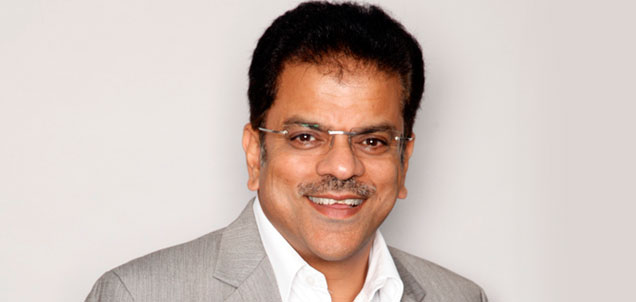
  • Upclose with Rohit Ohri, Dentsu India


    By Pradyuman Maheshwari


    After 21 years at JWT, Rohit Ohri moved to head Dentsu India in mid-2011. A scuba diving and golf enthusiast, Mr Ohri completed three years at Dentsu in August this year. From an all-Japanese client set, today over 70 percent of his clients are homegrown.


    With Taproot and WebChutney in the fold, Mr Ohri is now looking at more acquisitions – Public Relations consultancies, Activation companies and even regional agencies. Excerpts from a freewheeling conversation with Rohit Ohri:


    Over two decades at JWT – 21, to be precise and now three years at Dentsu. How was the transition and the journey been thus far?

    Three years have been enormous in terms of learning. For 21 years in JWT, I learnt at a particular tempo and pace. Being the largest advertising agency in India, there are systems and processes which kind of work on their own and you don’t really need to do much around them. When I joined Dentsu, the entire organisation had to be built. From IT to HR to the talent and client management systems, all that had to be put into place. While the previous management did a pretty good job in terms of launching Dentsu in India and getting clients, the fundaments were pretty weak. One of the big things we needed to do was to put these in place. It wasn’t just a quick-fix to get the organisation back on track, it was really about transformation. In the three years, we’ve grown significantly. In 2013-14 we’re the fastest growing Dentsu branded agency in any country anywhere in the world.


    When you joined, it was a depleted set of accounts…

    After the previous management and the top bosses moved out, there wasn’t any Indian leadership. There was an exodus of Indian clients and a lot of the Japanese clients weren’t really happy with the instability in the agency. There were challenges on every count. All the Dentsu-branded agencies were in the red. When I joined, I didn’t realise how big the mess was, but I knew it needed much fixing. Eight-nine months is a huge time for an agency to lose a lot of its momentum and its business.


    The fact that you have to build afresh must have also been an opportunity for you to set up an all-new organisation.

    Yes, we built the whole agency again ground-up; I dipped into my years of experience at JWT, into what was the University of Advertising, and I was fortunate enough to pick out the things that would work and leave things that wouldn’t.


    As you look back, would you say joining Dentsu was the right decision?

    The amazing thing is when the news broke on my joining Dentsu, many people called and said: ‘Are you nuts?!’


    Some of us in the media also thought the same.

    (laughs) They said I must be crazy. If I waited little longer, I’d be the head of JWT! Why quit? Today, the same people say this was an inspired move!


    21 years at JWT is not a short time. Clearly, the path to ahead was known to you. If it wouldn’t be JWT directly, a Contract, etc?

    Yes, but it wasn’t defined. It would’ve been a zig-zag road and gone up there eventually, but I don’t think we had great clarity behind that at that particular time.


    Many people have left JWT in their prime. Wonder why.

    It’s different strokes for different people. I felt whenever I needed growth, JWT was able to provide me the space. When I was in Kolkata from just being an account executive to heading all of account management, I said I needed another opportunity and I was moved to Delhi to head of Pepsi. That was a fantastic time. I absolutely loved the seven years I spent as head of Pepsi, we did some of the finest work Pepsi has ever done in this market. That was hugely satisfying! Then I headed the Delhi office which was another huge challenge and hugely exciting. We grew rapidly and Delhi became the largest office of any agency in India and one of the most profitable offices of JWT worldwide. It was very strong and when I quit, we were at the peak. To me, it’s very important in life to time your exits and entries.


    But at the fag end of your JWT stint, there were some dampners like a bit of Pepsi and Airtel going to Taproot, right?

    Not really. When you look at the time when I’d left, it was a Rs 112 crore revenue for JWT Delhi office only, larger than many agencies put together! That time it was the fourth largest advertising agency in India as an independent office. We were growing very rapidly. To my mind, one of the big reasons to move out was not the slowing down of JWT, but it was about the opportunity.


    Did they try to hold you back?

    Yes, of course. There were other options to go abroad and at that time I wasn’t so keen on moving out of India.


    You had some fantastic clients you were virtually married to at JWT. Didn’t you think of bringing them to Dentsu?

    Not at all. While I had relationships with many clients, to my mind the most important thing was that I didn’t want to run before we could walk. The agency had to be built first to a particular strength and capability before you could take on a big client. You can get a client but you can lose a client even faster. In all fairness, Dentsu at that time had pretty big clients. Toyota, Maruti Suzuki, Honda, Panasonic, Hitachi, Canon, we haven’t lost any. When I joined we just had the Japanese clients.


    So you consolidated and then the Taproot acquisition.

    Aggie (Agnello Dias) and I worked together in JWT and while I was in JWT, he started Taproot and we lost one project in Pepsi and a bit of the Airtel business to him. We were on two sides of the fence in many ways. There was fierce competition. It’s amazing to think that in one lifetime, there was this great partnership when we were together and then we were on opposite sides of the fence.


    The perception was that Dentsu is a Japanese agency only for Japanese clients and the creative ideology is completely middle-of-the-road! To change all of that you needed a flaming torch. That would be an agency like Taproot and quite honestly, Dentsu had not even heard of TapRoot. The Japanese took my word and we agreed this was a great idea. At that time, I think, Aggie was already talking to some holding companies and pretty close to signing on the LOI. Everyone said the Japanese will take so long! But if they have an agreement in the plan and they believe your strategy is correct, the implementation is absolutely fast! Within 10 days they had an offer on Aggie’s table saying this is what we’re looking at.


    It was a huge high for you, a personal victory of sorts. Would you say that has been your biggest high in the last 3 years?

    Yes, the Taproot acquisition was a huge high. Suddenly the industry perception about what Dentsu wanted to do in India actually changed. Fundamentally, apart from the fact that we’ve done well on a business front, changing perceptions is the hardest part in the business.


    Taproot has been reasonably independent in the Dentsu fold. Any plans to change the name.

    You’ll see some changes going forward. It’ll become a Dentsu company, the Taproot brand will stay.


    A Dentsu in the prefix or suffix?

    We’re working on the nomenclature. Taproot has a very unique culture and we didn’t want to destroy that. You’ve got something for a specific value. There were different stages in the post-merger process. In the first stage, we kept it completely separate. In this stage, we started working together. We have a Creative Council and all creative guys work with them on certain group creative initiatives. Part 2 is we’ve started pitching for clients together. Because we’re working together, we use Taproot’s creative ability and you use Dentsu’s integrated thinking.


    This has been working very successfully over the last two years. I’ll give you an example. We’ve got NourishCo, a Tata and Pepsi joint venture. We handle all their businesses together. We have AkzoNobel here, ITC in Bangalore and we did the Congress business together. It’s a win-win situation for both.


    What about your existing creative agencies?

    We have four creative agencies: Taproot, Dentsu Communications, Dentsu Creative Impact and Dentsu Marcom. It’s not such a huge number because Dentsu Communications is roughly the same size as Taproot. If you look at just Dentsu brands, they’ve also grown on their own. In the South, we won TVS, we have MRF in Chennai, HT here and then we have Max, the agency has won a large number of clients on it’s own. The big thing has been Honda. We’ve seen enormous growth in Honda Motorcycles. Dentsu Creative Impact and Dentsu Marcom are doing very well. All of them are growing. To achieve 65 per cent growth, every single piece of that business has to deliver. All the engines have been firing. The idea is that the acquisition adds to the overall Dentsu strategy which is interconnected. The entire group benefits then, from that relationship.


    How about Dentsu Media?

    Ever since Divya Gupta has come on, we’ve made fair progress, a lot of it has been a challenge for us. This year has been spectacular for Dentsu Media. They’ve done really well.


    How’s the WebChutney acquisition doing?

    When I look at my overall strategy, I see that four or five years down the line, there won’t be separate digital and creative agencies. There will be one agency. Keeping creative excellence in mind, I was looking for a digital agency that also excelled in creative work. That’s been my greatest satisfaction to see the quality of work that WebChutney has done…


    Is that also going to be integrated in the system like Taproot?

    A lot of it is already happening. One of the big initiatives we’re doing for next year is that the creative agency and the digital agency will sit collocated, so WebChutney move in with the Dentsu brand agency.


    And one keeps hearing about more acquisitions coming up, are they the route that you looking at?

    I don’t think acquisitions is the strategy that we are following but we are looking at full-service integrated offering for clients. Here, we have a creative agency with a media agency and a digital agency coming together and creating a whole set of services, so there are very clearly some holes still left to be filled.


    Like?

    Like PR and Activation.


    PR and Activation, and anything else?

    And, of course, digital is one space we are continuously looking at.


    Any more creative agencies?

    Well, we are not closed to that, that’s all I can tell you right now.


    You are already have a large presence in Delhi, Mumbai and Bangalore. Why another creative agency?

    May be for geographic expansion. We were not there in Kolkata.


    Is there any business there?

    There is a fair amount of business in Kolkata, Ahmedabad and Hyderabad. JWT’s Mindset acquisition in Hyderabad has been quite a successful acquisition for them. So the opportunities exist…


    Lastly, a few months back, there were rumours that you were quitting.

    Yeah, I heard those rumours myself, but I did clarify very quickly. There is no truth in them, but people keep talking. The interesting thing is that when I speak to my colleagues outside India, they are absolutely amazed that people in advertising agencies in India get so much of media coverage.


     

  • Dentsu Aegis Network Digital Council to raise digital communication standards

    By a correspondent


    Dentsu Aegis Network has announced the formation of Digital Council with CEO’s of iProspectCommunicate2, Isobar and Webchutney. The move aims to revolutionize digital communications in India.


    Dentsu Aegis Network has emerged as the fastest growing agency group in the digital arena in India, with 500 digital professionals across their three digital specialist companies, Isobar, Webchutney and iProspectCommunicate2, spread across five cities.


    Dentsu Aegis Network is a leading international group in India that has market leading tools, skill sets and technology in every aspect of the digital space. iProspect is a leader in Search & Performance, not only in India, but globally too. In India, iProspect acquired Communicate 2 to form iProspectCommunicate2. Isobar is a leading, full-service digital agency in India and part of the global Isobar Network. Webchutney is the most prominent and successful Digital agency in India.


    Commenting on the formation of the Dentsu Aegis Network Digital Council, Ashish Bhasin, Chairman & CEO South Asia, Dentsu Aegis Network, said “With Vivek Bhargava, MD – iProspectCommunicate2, Shamsuddin Jasani, MD – Isobar India and Sidharth Rao, CEO & Co-Founder – Webchutney, coming together on the Dentsu Aegis Network Digital Council, we have the country’s best digital leadership, with a proven track record, driving our digital vision. Dentsu Aegis Network has always been a leader in the digital space globally and now we have replicated the same success in India. With 500 digital specialists and the three leading Digital Specialist Companies in India as a part of our group, we are well ahead of the competition in providing world class, comprehensive digital services in India.”


    The Dentsu Aegis Network Digital Council believes that this is a game changing move for the digital agencies in India and will permanently change the digital landscape. The Council is committed to raising the Digital Communication standards in India.


  • Return of the good times for TV18 & Network18

    By A Correspondent


    It’s Q1 results announcement time. And although MxMIndia doesn’t do individual look-ins into the financial numbers presented quarter se quarter tak, this one deserves a special mention.


    For the q ending June 30, TV18 Broadcast Limited reported revenues for the television and motion pictures business (including IndiaCast) stood at Rs 396.2 crore. Ad revenues grew 6% year-on-year. Indicating the fruits of digitization and a well-orchestration distribution exercise, net distribution income grew 32% sequentially to Rs 34.9 crore this quarter, swinging from a loss of Rs 16 crore previously.


    And the real reason why the offices of TV18 were flooded with bubbly yesterday: the reported operating profit for the quarter stood at Rs 23.8 crore, up 57% over previous year. The company turned in a profit of Rs 5.9 crore after tax for the quarter as compared to a loss of Rs 23.5 crore in the previous year. Announcing the results, Raghav Bahl, Managing Director, Network18 said, “The macroeconomic environment continues to be challenging and growth prospects remain uncertain. Given this backdrop, our broadcasting operations turned in a steady performance aided by the roll out of digitization in 42 cities.”


    Commenting on the results for the quarter, B. Saikumar, Group CEO, said, “We continue to turn in steady operating profits from our television businesses. Motion pictures have seen losses this quarter and the management is confident of stemming them in the immediate term. While our news and infotainment businesses have seen distinct softness in advertising, our entertainment businesses led by Colors have performed well on this front. Net Distribution Revenues from IndiaCast are on a strong growth trajectory and we continue to be enthused by its growth potential. The industry is going through several important changes on both the advertising and distribution fronts. We believe that these changes are positive and will lead to a stronger industry structure. We remain confident of delivering a strong year ahead


    Meanwhile, Network18’s PAT for Q1FY14 stood at Rs 19 crores as compared to Q1FY13 loss of Rs 90 crore.  The digital content and eCommerce business grew to Rs 106.9 crores, registering a growth of 174%, over the corresponding quarter during the previous year (adjusted for the sale of Newswire18).


    Network18 inked an agreement with OCP Asia Ltd. to raise growth capital of USD 30 Million in HomeShop18. During the quarter, it sold its entire stake in a Capital18 portfolio company – Webchutney.


    Added Mr Bahl: “There were pockets of weaknesses in our portfolio and we are committed to improving segments that are not meeting expectations. We have a strong portfolio of media businesses and remain confident of unlocking their value for our stakeholdeRs ”


  • Dentsu buys 80% of Webchutney

    By A Correspondent


    Rohit Ohri, Executive Chairman, Dentsu India Group along with Webchutney co-founders Sidharth Rao (L) and Sudesh Samaria (R)

    The Dentsu India Group has announced that it has acquired an 80 percent stake in digital agency Webchutney. With around 200 employees across offices in Delhi, Mumbai and Bengaluru, Webchutney has been credited with developing award-winning and memorable digital experiences for some of the biggest brands in the country, many of them of global repute like Airtel, Unilever, MasterCard, Coca-Cola, Bacardi Martini, Budweiser, ITC, Marico, Madura Garments, Titan, Bajaj, Reliance Retail and Saint Gobain.


    The work done by the agency has been awarded at various domestic and international events over the years including Adfest, Goa Fest (Creative Abbys), Yahoo! Big Idea Chair Awards, Campaign India Digital Media Awards, IAMAI Indian Digital Awards, W3 Awards and Olive Crown Awards among other prominent recognitions.


    Founded by Sidharth Rao and Sudesh Samaria in 1999, Webchutney boasts an impressive client roster and some of the most recognized digital work over the last few years spanning web design, social media, mobile and experiential digital advertising. Rahul Nanda, President, Mobile Initiatives, joined the agency in 2005 as Partner and Chief Operating Officer. The agency will continue to operate independently under the management control of its current leadership.


    Sidharth Rao, Chief Executive Officer and Co-founder, Webchutney, commented, “In Dentsu and Rohit Ohri, we have found a partner who is willing to invest in and cultivate our passion to provide path breaking digital creative services to our clients. We are thrilled to be working with such a strong global leadership and are ready to enter a new phase of our growth. We could not have made it this far without the unfaltering support of our clients, our leadership teams and the talented bunch of team members. I am also personally grateful to Sarbvir Singh who has been my mentor for the last five years and his team at Capital18 for ensuring that we shared a wonderful journey together.”


    Sudesh Samaria, National Creative Director and Co-founder, Webchutney, said, “The Dentsu network is ‘future obsessed’ and that fits in perfectly with what we do here at Webchutney. We’re always trying to be ahead of the curve and we love people, ideas and technology that will help us and our clients get there faster. So in that sense both from a philosophy point of view as well as synergies across capabilities, we believe we’ve found the ideal growth partner in Dentsu.”


    Speaking on the new partnership, Rohit Ohri, Executive Chairman, Dentsu India Group, said, “Dentsu is the first global network that’s being built out in the post-digital era. We believe we’re building the network of the future. Our partnership with Webchutney is another step in that direction. We’re now going to be able to put world class digital solutions in the centre of our offering to our clients. I’m delighted to have Webchutney as a part of the Dentsu India Group.”


  • Dentsu in talks to buy out digital agency Webchutney

    By Ratna Bhushan


    Japanese advertising agency Dentsu is in advanced talks to buy out leading digital advertising agency and consulting firm Webchutney.


    This will be Dentsu’s first local acquisition in the digital agency space. Network18, which holds 70.06% stake in the Sidharth Rao-promoted Webchutney Studios, is looking to exit from the alliance, two officials with knowledge of the development said. The deal size is estimated at between Rs 40 crore and Rs 60 crore for Network18’s 70.06%, which values the agency at roughly Rs 90 crore on the higher side.


    “Dentsu is expected to buy out Network 18’s stake in Webchutney. The promoters of Webchutney will continue to hold their stakes,” one of the officials quoted earlier said.


    Rohit Ohri

    Rohit Ohri, Dentsu India group’s executive chairman said: “We are looking to scale up our digital capabilities in India. Obviously, acquisition is one of the options. We are currently discussing the various options and putting together our plan.” Officials close to the development say Webchutney, which was ranked the No 1 digital agency in the latest Brand Equity Agency Reckoner, is the front-runner in Dentsu’s quest for inorganic growth in this space.


    Network18 had invested in Webchutney through its investment arms, Capital18 Ltd and Capital18 Fincap, in 2007. The agency, which services firms like Airtel, Microsoft, Hindustan Unilever, Marico and Titan, posted a profit of Rs 6.35 crore in the financial year 2011-2012 on revenues of Rs 21.55 crore. Network18 owns 49.42% of the shareholding through Capital18, Mauritius and 20.64% through Capital18 Fincap.


    Webchutney’s Rao said: “It’s very early to talk about any new alliance… nothing has been finalised as we are evaluating many options.”


    Sarbvir Singh, Capital 18 MD, too neither denied nor confirmed if Network18 was exiting Webchutney. “In the normal course of business, at any given point in time, we are approached by several interested parties and we speak to them as appropriate. We have no other comment to offer at this point.”


    Webchutney was set up in 1999 by entrepreneurs Sidharth Rao and Sudesh Samaria. The agency’s area of work includes online advertising, website design, mobile marketing and social media. Its employee strength is about 200.


    In July, globally Dentsu had acquired British media buying group Aegis for $4.9 billion. Back home, too, the Japanese agency has been on the prowl. In August, it acquired majority stake in creative hotshop Taproot.


    Founded by ad men Agnello Dias and Santosh Padhi, Taproot has created clutter-breaking ads including PepsiCo’s ‘change the game’ and Airtel’s ‘jo tera hai wo mera hai’.


    Denstu also has an indirect alliance with mobile marketing agency ad2c, a collaboration between Japan’s D2 Communications and Singapore-based Affle, led in India by Madan Sanglikar. In mid-August Aegis had acquired D2 Communications, a digital marketing and search agency. Indirectly, this deal gave Dentsu access to the digital space.


    Dentsu’s clients include car maker Toyota and electronic firm Panasonic whilst Aegis services brands such as Adidas and Philips.


    Digital agencies are increasingly being wooed by traditional ones. Earlier this year, Publicis Groupe bought out digital and performance marketing firms Resultrix and Indigo Consulting in two back-to-back deals. And in mid-June this year, WPP Group bought out a majority stake in Hungama Digital Services through its agency JWT Singapore.


    Source:The Economic Times

    Copyright © 2012, Bennett, Coleman & Co. Ltd. All Rights Reserved


  • Growth in mind, Webchutney rejigs leadership

    By A Correspondent


    India’s leading digital marketing agency Webchutney has announced key movements within executive leadership across New Delhi and Mumbai. The move signifies a clear mandate to accelerate growth by forging stronger ties with partners and clients, while streamlining vertical units and fortifying operational efficiency.


    Ranked India’s number one digital agency in 2008, 2009 & 2011, Webchutney was co-founded in 1999 by Chief Executive Officer Sidharth Rao, and National Creative Director Sudesh Samaria in New Delhi. The agency has grown to over 200 people across New Delhi, Mumbai and Bangalore with a diverse client portfolio ranging from startups to Fortune 50 companies.


    Speaking on the reorganization, Sidharth Rao, CEO, Webchutney said: “The movements reflect our commitment to building internal strength through collaborative growth. The new, dynamic leadership has a proven track record with demonstrated results, valuable experience and seamless operational control achieved consistently. They are strategically positioned to lead the new wave of innovation at a crucial time in the evolution of digital experiences and engagement in India. This also gives us the opportunity to explore new business avenues and evaluate meaningful partnerships that will guide the future of our organization and the digital industry at large.”


    Rahul Nanda will don a new role as Partner and President – Mobile Initiatives from his previous role as Chief Operating Officer. The new autonomous division, with focus on product initiatives in the mobile and tablet space is actively building interactive apps and games capabilities. Mr Nanda’s strong credentials backed by 17 years of experience in the digital domain will provide clear direction in cracking the dynamic role agencies and marketers play in monetizing this platform.


    Nishi Kant is now Chief Operating Officer – West & South Region from Executive Creative Director at Webchutney.  His outstanding expertise in crafting award winning, interactive digital experiences along with winning digital mandates and building creative portfolios of prestigious Fortune 50 companies like Unilever, Proctor and Gamble among others has received tremendous recognition from national & international quarters.


    Saket Vaidya steps up as Chief Operating Officer – North Region from Vice President, Regional Operations. With close to 7 years of technology experience, in his new role, he will broaden the range of specialist services offered by the agency while driving and influencing next-generation digital marketing communication.


    Tarana Mehta is the new Chief Strategy Officer at Webchutney from Vice President – Strategy and Business Development. Armed with over 10 years of experience in the advertising /digital industry, she has a proven track record in business development, operational leadership and strategic consulting with a plethora of brands  including HSBC, L’Oreal, Evian, La Roche Posay, Coca-Cola, Kraft, Titan, Mastercard, Barclays & Marico across the Indian and North American market.


    Meghana Bhat will move up as Executive Creative Director from Creative Director at Webchutney. A copywriter by skill, & creative strategist by choice, she has helped brands understand and make optimum use of digital media to become more relevant and entertaining to their audience.


  • Can Facebook, the marketer’s online best friend ever become its ace salesman?

    By Delshad Irani & Ravi Balakrishnan


    In 2009, Facebook terminated the ‘Whopper Sacrifice’, Burger King’s social experiment cum marketing activation. Created by Crispin Porter Bogusky, the campaign’s premise was the more ties you sever the closer you get to your BK Whopper. The application as it turned out was a whopping success.


    Within a week 200,000 ‘friends’ were virtually burned out of existence from various lists. Facebook couldn’t handle the loss of those hard-earned friendships. Burger King, on the other hand, proved the point it set out to make – Americans sure do love their burgers. That same year, Swedish furniture giant Ikea spent practically nothing to create a campaign to promote its newest store.


    The agency Forsman & Bodenfors created a new Facebook account for the manager at the store in the city of Malmo and posted catalogue pictures of furnished rooms.


    Users could win furniture and other items in the photos if they beat their friends to the punch. All they needed to do was tag the pieces with their names first. Needless to say the prospect of first-to-tag-wins drove Facebookians crazy. The campaign was hassle-free, cheap and effective, just like the Scandinavian furniture it was advertising.


    Fast-forward to a few weeks ago. General Motors, the world’s fourth-largest advertiser and spender of $3.9 billion globally on advertising in 2010, haunted by questions related to effectiveness and ROI, pulled out its pretty penny, all $10 million of it, from Facebook’s paid-ad kitty just days before the social network’s stock went public.


    In addition to that sum, the automaker spends a reported $30 million on content creation for social media. These examples make Baccarat-crystal clear what we know already – you don’t have to pay big to make an impact via social media.


    In India, most marketers love talking about the worth of a campaign by the number of fans, or likes received on the most recent post. But even they are starting to ask a tricky question: what’s the real worth of their campaigns on Facebook? Worth more than a burger, eh?


    The site itself has been trying to tell advertisers that no longer will mere presence and innovative social media campaigns cut it. If they want scale, they’ll have to shell out the hard cash for offerings like “sponsored stories”, not to be confused with “sponsored ads”.


    For instance, products like Reach Generator guarantee that posts by a brand stand to be seen by 75 per cent of its fans every month or an estimated 50 per cent every week. Non users of the tool will have to settle for an average of only 16 per cent of fans viewing posts on a weekly basis. Not everyone’s buying though, believing that compelling content will win any day of the week.


    Anuradha Aggarwal, senior VP, brand communication and insights, Vodafone India said: “Since having high engagement scores is our goal, we focus on creating content on our Facebook page rather than on advertising. We focus on creating posts and apps to enable our 3.2 million fans to create conversations and experiences around the brand.”


    PepsiCo’s approach is to use a combination of both, posts/promotions on brand pages and display advertising. One of the cola maker’s prominent campaigns on the site was ‘Meet Messi in Miami’ where fans had to complete a series of tasks to win a chance to meet The Atomic Flea.


    During the 2011 ICC Cricket World Cup, Pepsi launched an online progamme as part of the ‘Change the Game’ campaign where fans could win a dream trip across the country for all India matches. The latter initiative was listed as one of the 19 best campaigns in the world by Facebook on their success stories blog, the only Indian effort to feature on the page.


    According to Homi Battiwalla, category director – colas, hydration and mango based beverages, PepsiCo India, it is too early to give a conclusive opinion on new advertising properties like sponsored stories and other offers. So the bottom line when it comes to the marketing on the social network is the game hasn’t quite changed. “The primary focus remains on organic content as we believe it results in better consumer connect,” said Mr Battiwalla.


    For automakers like Mahindra & Mahindra, Facebook is good for what it was born to do in the first place. Well, that and to spy on “old acquaintances”. According to Vivek Nayer, senior VP, marketing, automotive division, Mahindra & Mahindra: “Rather than looking at Facebook for advertising reach, we’ve leveraged it for what the platform is inherently good at; building communities. Today at 5 million, we are the largest automotive community on Facebook in India”


    In the case of Unilever, the company moved from almost accidentally stumbling on the power of the site – after noting a lot of action on its first Cornetto Luv Reels page long after the promotion was over – to it being a key pillar to the launch of Fruttare, its new range for the summer. Sapan Sharma, general manager – ice creams, Hindustan Unilever, said: “There’s an advertiser login where you get all the details. In the first 10 days of launch, 1.2 lakh fans signed up and there were 1.2 to 1.5 lakh conversations.”


    Arch-rival P&G is not lagging either. According to a company spokesperson: “In just less than two months, we have over 690,000 fans for our Thank You, Mom campaign. This makes it the largest, most engaged-with Thank You, Mom community globally.” For the launch of Olay’s premium skin care range, Olay Regenerist, a Facebook waiting list was created, with both fashion journalists and consumers signing up for an exclusive trial on the site; in less than three weeks, over 11,400 people had registered.


    But as the eight-year-old Facebook enters a new league as a listed company, it needs to, and rather urgently, scale its revenues to sync with its audience. Minute, often ineffective, right-rail ads aren’t exactly a juicy bone to dangle in front of existing and potential advertisers; thus the introduction of premium ads and better placement.


    According to Siddhart Rao, CEO of digital agency Webchutney, the sweet spot between organic and paid promotion is the one that will yield maximum benefit to brands looking to extract value from social media marketing platforms like Facebook. “One cannot work without the other,” he said.


    S Yesudas, managing director – Indian subcontinent, Vizeum, said: “I do not think all marketers know what to expect from the medium. The hurry to be on to the bandwagon gets them there. The fact that Facebook offers free advertising inventory for brands to test the medium gets overlooked. In my opinion, the medium can be successfully used to build relationships with the consumers.


    Targeting can be done based on profile information, relationship status, interest or based on certain words in profiles or status messages. But the truth is the brand communication will always compete with the updates, videos, etc from friends.”


    Indeed, it’s complicated; the relationship between advertisers and Facebook. Especially when one moves from the fluffy world of engagement to hard sales. Many retailers in the West like JC Penney, Gamestop and Gap pulled the shutters on their stores on Facebook this February.


    Chhaya Balachandran Aiyer – founder – MD, BC Web Wise said: “Ironically Wade

    Gerten, the founder of 8thBridge – the flower store that was responsible for the coinage of the term F-commerce as it was the first to open shop on Facebook for 1,800 Flowers – has admitted that sales never really materialised for their first or other F-outlets, adding that F-commerce deserved an F. Given the fact that F-commerce (Facebook commerce) has failed in the west for retailers, it appears that Facebook would be an engagement vehicle. Peer recommendation and product ratings are not integrated. Should it launch a brand intelligence tool which can be used by consumers – which exposes peer comments and recommendations that can be accessed by the FB community – then the ball game will change.”


    Venkat Mallik – president, Tribal DDB & Rapp India says Facebook’s ability to deliver sales impact has been a bit of a mixed bag: “There need to be more strong case studies demonstrating the sales or brand impact from the use of Facebook led engagement.”


    However while Facebook may not itself be a platform to sell it can impact sales according to some of its satisfied customers. Unilever’s Mr Sharma for instance believes there’s a definite co-relation between high levels of engagement and products sold.


    According to Carlton D’Silva, chief creative officer, Hungama Digital Media, “Opinions of family and friends matter when making purchase decisions decisions and Facebook activity will provide a lot of data to consumers, which can be leveraged in places where they make these decisions, causing a significant, if not direct impact on purchase behaviour.”


    “GM is slashing its advertising budgets by $ 2 billion, of this only $10 million or 0.5 per cent was on Facebook. They have also announced they won’t advertise on Super Bowl, either. Further, what should be noted is that GM has 8 million fans already. I am sure that they are going to continue with the engagement plans for acquired fans. It would be foolish to assume anything beyond, or assume Facebook has failed for GM, it would be just that advertising further is currently not the best bet in its media plan,” said Ms Aiyer


    The users of Facebook both on the agency and the marketer side each have their wishlist ready.


    “The analytics are available at a lag of 7 to 15 days; I’m sure it can come earlier. I’m sure there will be a time when we can talk to people from a specific city or market,” said Mr Sharma


    “They are hugely data rich. If in some way they get to using some of the data millions of people put in their hands on a minute to minute basis, sky will be the limit for them.This will surely come in with resistance from the users, unless they persuade them. They have to walk this path very carefully,” added Mr Yesudas.


    Most brands have a clear agenda from marketing spends on social media platforms like Facebook – greater outreach among target audiences through personalised interaction and engagement, leading to higher impact on conversions and sales.


    “It’s a perfectly reasonable expectation from a social communication platform with 900 million members,” said Mr Rao of Webchutney, “but whether brands invest enough thought, time, resources and action to engage audiences meaningfully is another question.” And one helluva question it is. Because for every whopper of a Scandinavian success story, there are at least a dozen marketing campaigns that have fallen flat on their face. So, ask not what you can do on Facebook but what Facebook can do for you.


    Source: The Economic Times
    Copyright © 2012, Bennett, Coleman & Co. Ltd. All Rights Reserved

  • Gruner + Jahr acquires Networkplay

    By A Correspondent


    Networkplay has announced that Gruner + Jahr, the publishing division of European media conglomerate Bertelsmann AG, has acquired a majority stake in the company.


    Networkplay is India’s digital ad network with presence on internet, mobile and DTH platforms.


    Networkplay was incubated in 2008 by Webchutney, India’s leading digital advertising agency and funded by Capital18, the venture capital arm of the Network18 group. Since inception, Networkplay has successfully executed its vision of creating a highly effective and scalable advertising solution across all digital platforms. Over the last 3.5 years, the company has grown at a rapid pace to reach an execution capability of over 4 Billion impressions per month across 500 publishers and 350 advertisers. Networkplay has emerged as the partner of choice for advertisers and publishers due to solid execution capabilities, innovative services and a top notch team. Networkplay has also brought global event franchises such as ad:tech and iMedia Summits to India, in partnership with dmg::events, a leading international events company that manages over 80 events in over 25 countries.


    Sidharth Rao, Founder & CEO of Webchutney, said, “Ram and his team have built an amazing business from an idea a few years ago. We are very proud and delighted to have believed in Networkplay’s vision from the first day. A partnership with a leading global company, Gruner + Jahr, will propel Networkplay on a stronger, higher growth path”


    Sarbvir Singh, Managing Director of Capital18, said, “Networkplay’s success has been driven by Ram’s inspirational leadership and the passion/commitment of his outstanding team. I wish G+J the very best in India and am sure that best days lie ahead for Networkplay. This transaction is an important milestone for Capital18 as we continue our journey of working with extraordinary entrepreneurs in the media and entertainment space.”


    Rammohan Sundaram, Founder and CEO of Networkplay, said, “This is an exciting phase in our journey and we are delighted to partner with a global company that shares our ambition and vision. We are privileged to be part of the Bertelsmann group with operations across the world. We believe this partnership is a testimony to our unique proposition, strong execution capabilities and the extraordinary team we have built over the last few years. This is a positive outcome for all our stakeholders, especially our customers as we now aim to enhance our innovative and execution capabilities in line with the world class standards and experience that Gruner + Jahr brings to this partnership. I would like to thank Sidharth and Sarbvir for having the confidence in us and helping us grow an idea to what Networkplay is today. They shared our enthusiasm and vision and have been great partners through this journey”.


    Gruner + Jahr is one of the world’s leading media groups and its Electronic Media Sales (EMS) division is a leader in the digital advertising space in Europe. G+J recently acquired the majority of MaXposure Media and this is their second strategic investment in India.


    Dr Torsten-Jörn Klein, Executive Board Member and President of Gruner + Jahr International, said, “The expansion of our activities in India is clearly in line with the strategic priorities of Gruner + Jahr. After the acquisition of MaXposure in the print space, G+J is now acquiring Networkplay, one of the fastest growing digital companies in India and follows its strategy to build a combined portfolio of print and digital media activities.”


    Kuldip Singh, CEO, Gruner + Jahr India will join the board at Networkplay. Kuldip Singh will also be the CFO of Networkplay and he added, “Networkplay was one of the several companies we were looking at when we decided to build our digital business in India. We zeroed in on NP simply because of the brilliant team along with the strategic vision that Ram had for the company thus far, also they have shown very attractive growth in revenues in such a short time of their existence. We are extremely thrilled to bring Networkplay under the G+J Group and I am confident that with our strategic vision this company will consolidate its leadership position going forward”.