Tag: visually impaired

  • Negotiating their way to compliance

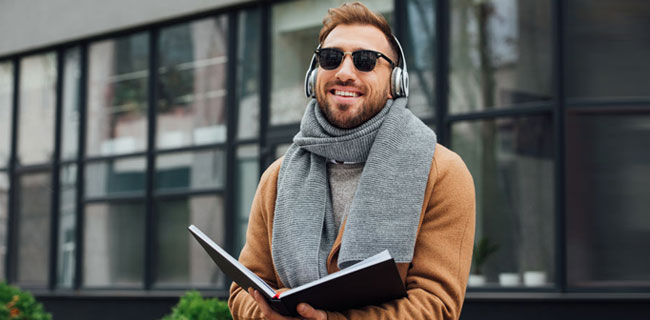
    An image of a visually impaired girl with an adult sitting in front of computer


    By Shruti Pushkarna


    Shruti PushkarnaIn my last piece, Building a Case for Access in an Exceedingly Digital World, visually impaired professional, Rahul Bajaj explained the basics of accessibility, how technology enables disabled people to function independently and how inaccessible products and services exclude them from the mainstream of things.


    The disabled community is one of the largest minorities, as 15% of the global population lives with some form of disability. They have similar needs, aspirations and interests. Their limitations simply change the way they access facilities. In an increasingly digital post-Covid world, food delivery, travel bookings, banking, health appointments, entertainment, et cetera can all happen easily online. But what about persons with disability? Are mobile apps and websites just a click away for them as well?

    Unfortunately, not.
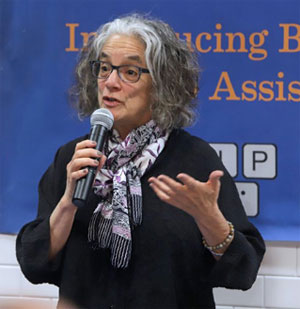
    Lainey Feingold
    Lainey Feingold

    Rahul Bajaj along with a couple of other legal experts who are also visually impaired, has started an initiative against inaccessible websites and mobile applications. Interestingly, in this battle for inclusion, the legal route is their last option. They are applying a method called ‘structured negotiation’, a concept popularised by an American Disability Rights lawyer, Lainey Feingold. An alternative to lawsuits, Lainey proposes a meaningful dialogue with the service provider, to get them to become accessible, explaining the issues and encouraging them to do something about it. The method assumes that inaccessibility is a fallout of ignorance rather than a deliberate attempt to exclude.

    In a candid conversation, Rahul shares certain issues with commonly used mobile and web platforms, accessibility guidelines and the need to advocate for equal rights.
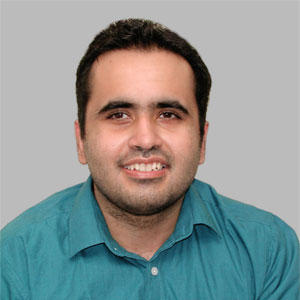
     

    Rahul BajajQuestion: What is this new initiative that you have taken up against inaccessible websites and apps?

    Answer: I realised there is massive inaccessibility for the disabled in the digital world we inhabit. From making payments, to ordering groceries, making medical appointments, everything is either out of reach or very difficult to do independently. And if these were in existence in the physical world, I might still understand that it requires a lot of retrofitting as old buildings were not designed with accessibility needs in mind. But it is very painful that in the digital world, where there is absolutely no reason for it to be inaccessible to anyone, there are so many barriers. Mission Accessibility seeks to constructively work with service providers of apps and websites to get them to become more accessible. And we try to do this through a variety of ways. One approach is to identify the users of a particular inaccessible platform, and share a template to get them to write to the service provider. That is a way of empowering individuals to advocate for themselves. Another approach is systemic in nature where the idea is to create a more conducive environment at the systemic level, to ensure that the service providers are made aware of their obligation. That can be done by involving the government or regulators like, SEBI, RBI, TRAI, under whose control the service providers fall in. Third approach is some sort of judicial intervention against service providers who aren’t complying. The basic idea is to change things.


    Question: You must have received several responses to your request, seeking details about people’s experiences of inaccessible apps and website?

    Answer: We sent out an email asking people for the names of such platforms that we should work on. The response was overwhelming, we got as many as 40 to 42 names. And we got a whole host of service providers, from food, to groceries to dating to academic writing and referencing, to medical appointments, everything. Some people said that this is something they’ve always wanted to do, to take on the issue of accessibility in a more systemic fashion.


    Question: Can you name some of the apps and websites that came up in the responses? I’m curious if there are any media websites in the list?

    Answer: There are, definitely. In terms of more generally what it includes, Dunzo for groceries, the common app people use for home delivery. Practo to meet doctors online. Hotstar, which is an OTT provider, and Rapido for booking cabs and bikes online. Dating apps like Bumble and Tinder. There are a lot of media apps that came up, including NDTV, Moneycontrol, Economic Times, Times of India, all of these have some or the other issue on their platform. For instance, the iOS NDTV app sends you a notification when there is breaking news or some major update. When you double tap that, or when you open that with VoiceOver on the iPhone, it doesn’t actually take you to the article. It takes me to a random advertisement on the app rather than to the actual article that I had opened up.

    Question: You mentioned that you access your daily dose of news on the YouTube programme put out by Faye D’souza. Are there any other examples of inaccessible news websites?

    Answer: One other that I really struggle with is New Indian Express. Whenever you open an article, it keeps telling you other things. And that must be because there is some sort of a visual, these are dynamic websites, where the content is constantly switching from one thing to the other. So, either it will be an ad or some flashing stories, which come in the way of smoothly reading the article from start to finish. Even with Moneycontrol, there is a similar problem. The screen reader jumps focus because people don’t design the website properly. Nobody’s saying that you do away with visually appealing elements. Because at the end of the day, that may be a strategic call. But at the same time, I’m sure there must be ways to retain those visual features and yet remain accessible to the disabled. People just don’t think about it because they don’t have accessibility experts in their midst. Also, they don’t anticipate disabled users visiting their platform.


    Question: Speaking of design, can you tell us about the W3C guidelines which are in place to ensure accessibility?

    Answer: The World Wide Web Consortium has what are called the Web Content Accessibility Guidelines or WCAG. And the latest version of that is called 2.1 AA. They actually prescribe in granular detail what norms you have to comply with in order for something to be accessible. So, if you want to know, what you must specifically do to make your platform disabled friendly, then that is really the tool that you need to use. Like having headings in place, making sure that buttons are clearly labeled, making sure that you don’t use CAPTCHA without either an audio or text substitute, or both ideally, for the deafblind also.


    Question: What are the legal remedies in terms of non-compliance? What does the law say on it?

    Answer: Under the 2016 Rights of Persons with Disabilities Act, there is an obligation to make your platform accessible, and all service providers were required to do this by June 2019. The deadline to do that has already expired. Now, the question arises, what do you do about it? Section 89 says that any breach of the Act shall be punished with a fine up to five lakh rupees. There is a possibility of financial penalty being imposed on those contravening the Act, so you would basically need to go to the Chief Commissioner for Persons with Disabilities in the first instance, or the State Commissioner. If that doesn’t work, then you go to a High court and to the Supreme Court.


    Question: OTT platforms are the trending thing now. We’ve seen with Covid and the lockdown, most of us were hooked to Netflix, Amazon Prime, Sony Liv, Voot or Hotstar. Are these OTT platforms accessible to a blind person? By the way, a lot of people think that blind people don’t watch films or TV. So why don’t you start by busting that myth…

    Answer: While it’s true that movies are primarily visually oriented, there are a couple of ways in which someone who’s blind can also have a really enjoyable experience while watching them. One is by listening to the audio components of it, the dialogue, the music, all the background noises. And the second, perhaps the more important aspect is audio description, which is where the OTT providers’ role comes into play. Audio description is basically where whatever is happening on the screen is being described by someone for the benefit of a blind person. Like Meg is a white woman who has brown hair and black eyes; we see her standing in her living room; or Meg drives in her car, and goes to the grocery store. And this is something Netflix has really pushed the frontiers on. A large majority of their content, and I hope it stays this way, is actually audio described, even in Hindi. Amazon Prime is also good, but it doesn’t have as much audio description. But the platform itself is definitely accessible. However, Hotstar is the most disappointing of the lot, the platform is inaccessible, what to speak of audio description. The app is designed in a very bad way, different controls are jumbled up. Buttons are unlabeled, you can’t really find things on your own. Many issues are there, but we are working with them. Actually, we sent them a legal notice and after that they began talking to us. They have in fact asked us to conduct a sensitization session for their engineers.


    Question: Let’s talk about the inaccessible content in terms of a sporting event on TV. Or national news coverage on Elections or Union Budget which is accompanied with a lot of graphics. How do these visual elements affect the visually impaired person’s TV watching experience?

    Answer: That is definitely a big issue. Sometimes the ad comes even before they have told you the score at the end of an over, and you can’t read the score on the screen. Same with other graphic content. The way to resolve that is to mainstream audio description. It benefits everyone because it will generate more employment. It will also generate more revenue because at the end of the day, you will tap into more users who are not seeing the platform/channel currently. I was interviewed on this Good News programme where the news team portrayed me in a very positive inspirational light. That doesn’t help me. This was part of the India Today network, if Aaj Tak gives me audio description or subtitles, that’s what will truly change something. To the folk in media I would say, bat for accessibility in whatever shape or form you can. Some people might say that this is a call to be taken up by people higher up in the organization. That’s not true. You can connect relevant people, your product design team, your engineers, your marketing people who run your website, and so on, with people with disabilities and open up that channel of communication. It’s not okay just to be outraged by this. See what you can actually do in your everyday life to make things a little better.


    Rahul Bajaj works as a Senior Resident Fellow with the Vidhi Centre for Legal Policy. A Rhodes scholar, he also worked with a Supreme Court judge before joining Vidhi.


  • Shruti Pushkarna: Invisible Disabilities: Missing from any Discourse on Disability

    Shruti PushkarnaBy Shruti Pushkarna


    Lately, I have found myself unwinding to reruns of old favourite TV shows (now easily available on OTT platforms). The extensive amount of work unleashed by the pandemic, both on the professional as well as home front, leaves me utterly exhausted. So I treat myself to a nightcap in the form of yesteryear soap operas.


    An episode of Boston Legal, (an American legal drama series which first aired in 2004) resonated with my current stance on challenging stereotypes and perceptions, specific to disability.


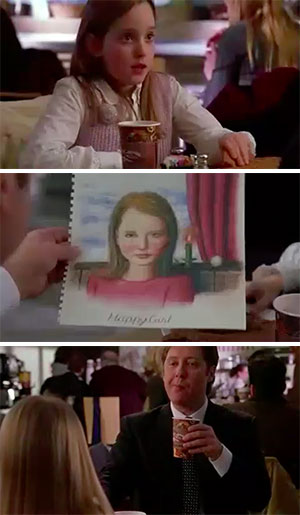
    Screengrabs from Boston Legal, Season 2, Episode 15 where the protagonist makes a case for a little girl who cannot smile after a car accident damaged her nerve

    In this particular episode from Season 2, the protagonist Alan Shore (James Spader) makes a case for a little girl who cannot smile after a nerve damage from a car accident. As she is mercilessly teased at the public school, Marrisa’s mother pulls her out, and decides to give her daughter a fresh start at a private institute.  Except the girl’s brilliance in academics and co-curricular activities is not enough to secure admission at a top-tier school. She is denied admission because she didn’t ‘smile’ at the Admissions Director.


    Like Marrisa, several people with invisible disabilities face rejection by family, friends, peers and society at large. Only because they seem incongruous with our limited definition of ‘normal’. In fact, they are worse off than the disabled people in wheelchairs, people with white canes or hearing aids, because their condition isn’t ‘obviously’ seen or recognised.


    Invisible disabilities are not immediately apparent but they are debilitating in their own ways. These include chronic illnesses like sleep disorders, diabetes, renal failure, autoimmune disorders, food allergies or gastro-intestinal disorders, epilepsy, haemophilia, developmental and learning impairments, fibromyalgia, psychiatric illnesses and so on.


    Although appearances may not indicate anything, people with invisible conditions live with symptoms such as continuous pain, fatigue, dizziness, loss of bladder control, brain fog, sudden vision disturbance, speech issues et cetera.


    The World Health Organisation estimates that globally almost a billion people live with some form of disability. And a United States report suggests that 74 per cent of persons with disabilities don’t use a wheelchair or any aid that makes their impairment visible. Both the United Nation Convention on the Rights of Persons with Disability (UNCRPD) and the Rights to Persons with Disabilities Act (RPWD) 2016 of India clarify that disability includes people with mental illness, epilepsy, intellectual impairment and other disabilities which may not be evident to a casual observer. And yet, they face discrimination.


    In a country like India, where disability is anyway stigmatised, persons with invisible conditions (are bound to) face various challenges while traveling, shopping, making hospital visits, in places of entertainment and interacting with people in general.


    To cite real life cases, two people suffering from Multiple Sclerosis and Sjogren’s syndrome respectively, had to compromise their career choices because the effects of their conditions hampered their professional output. Sjogren’s syndrome is an autoimmune disease in which your immune system attacks your own body parts. Symptoms like dry mouth and dry eyes make it hard to continue in a regular job. Rheumatoid Arthritis (RA) is another example of a chronic inflammatory disorder which leads to bone erosion and joint deformity. RA also attacks internal organs and its fatigue symptoms are more than just feeling tired.


    Now many persons with invisible disabilities learn to cope using medication, pain management or physical therapy, depending on their ailment. But the fact that their disabilities are judged or reduced or even entirely overlooked, causes them further mental and physical problems.


    It’s imperative that the media creates awareness about such conditions so our society becomes sensitive and empathetic towards this section of the population. Schools and offices should be expected to train teachers and staff as well as introduce policies to make reasonable accommodation for persons with invisible disabilities.


    Inclusion can happen when (physical and attitudinal) barriers are overcome. Anyone who wears eye glasses or contact lenses is not considered ‘disabled’ today. Of course that wasn’t true before spectacles were invented in the 13th century. Simple solutions can change the way we perceive people’s limitations.


    It’s about time we think solutions rather than imposing our expectations on people who struggle for most part of their lives trying to ‘fit in’. Acceptance cannot be conditional to a constricted imagination.


    The little girl in Boston Legal was inspired by René François Ghislain Magritte, a Belgian artist who was well-known for his work with surrealism and thought-provoking images. He often depicted ordinary objects like clouds, pipes, bowler hats in an unusual context and mislabelled them, to challenge observers’ preconditioned perceptions of reality. Marrisa defies the common idea of happiness denoted by a smile by drawing a self-portrait and writing ‘Happy Girl’ under it.


    Shruti Pushkarna is a former journalist (part of the founding team of MxMIndia) who has moved full-time to the social sector. She heads operations at the New Delhi-based Score Foundation where she works as Director-Programmes & Communications. Shruti writes for MxMIndia every other Thursday. Her views here are personal. She can be reached via Twitter at @shrutipushkarna


  • Shruti Pushkarna: What’s with the shallow news coverage on disability?

    Shruti PushkarnaBy Shruti Pushkarna


    Last week, two headlines on the digital platforms of leading dailies caught my attention. One read, “Two blind HSC students find writers at the 11th hour”. And the second stated, “HSC exams: Finding writers a real test for some”.


    Both these news stories highlight one of the most commonly faced problems by any blind student in India. Given their vision impairment, these students are dependent on ‘scribes’ to write their exams.


    But before I get into talking about the myriad challenges of finding and dealing with scribes, let’s look at the recent news coverage.


    While I was happy that the issue appeared on mainstream media, I was disappointed at the reportage. The stories lacked any indepth understanding of the issue. For an average reader who is absolutely unfamiliar with the issue, the news item merely touched upon how two visually impaired students in different parts of Mumbai were hassled hours before their examination. Though that’s a start for interest generation, the story ends with no detail or perspective on the matter.


    Result being, most readers wouldn’t have registered it. Those who did probably went away without processing the gravity of the problem facing blind students.


    So what exactly is the scribe problem faced by the blind community?


    A majority of visually impaired students in this country who appear for school, college or any competitive exams, rely on writers to volunteer for assistance or hope that the institutions/ authorities would arrange scribes for them.


    In the absence of either scenario working out, a lot of them end up paying for scribes, almost like buying themselves a chance to move upward in the educational or employment hierarchy.


    In fact there are agents and institutions that offer a variety of writers at different prices, depending on subject expertise. Like the millions of scams festering in the country, scribes (or the scribe mafia as I prefer to call them) are eroding the visually impaired students of their ability to learn or become independent.


    And what are the academic or the government authorities doing about it? Zilch. Absolutely nothing.


    The education bodies at both national and state level are expected to comply with the central government issued guidelines for visually impaired students to avail scribe facility for assistance, but the ground reality is far from it.


    Often state boards and examination authorities issue their own rules days before the exam, paying no heed to the policy set in place by the Ministry of Social Justice and Empowerment.


    The Rights of Persons with Disabilities Act 2016 mandates for ‘reasonable accommodation’, “to make suitable modifications in the curriculum and examination system to meet the needs of students with disabilities such as extra time for completion of examination paper, facility of scribe or amanuensis, exemption from second and third language courses”.


    Last year, a job aspirant in Barabanki, Uttar Pradesh lost out on the opportunity of employment because the examiner denied entry to his scribe just minutes before the exam. He had to wait a whole year to apply again. This is just one of the million accounts where students fail to appear or score less in their tests given the shoddy implementation of the law.


    The scribe problem isn’t new. It persists through the year, for various exams across all states in the country. And yet majority of the Indian population hasn’t a clue about it. It’s a whole different matter that today enough technology aids are available to make visually impaired students self-reliant when it comes to writing their exams. But that’s for another day, another column.


    How come the mainstream media hardly reports the issue in its entirety? Why doesn’t the media question the implementing agencies? Is it because persons with disabilities are not the ‘sensational’ vulnerable group that will garner eyeballs? Especially when it’s far easier to rake up a storm over some fake news floating around on social media.


    Shruti Pushkarna is a former journalist (part of the founding team of MxMIndia) who has now moved full-time to the social sector. She heads operations of the New Delhi-based Score Foundation where she works as Director-Programmes & Communications. She writes for MxMIndia every other Thursday. Her views here are personal. She can be reached via Twitter at @shrutipushkarna


  • Time to welcome Diversity in Radio?


    By Shruti Pushkarna


    Shruti PushkarnaAs you read this, commercial and state-owned radio stations all across the world are celebrating this day on air. Yes, it’s World Radio Day today.


    Surely a medium that has managed to stay relevant for over 120 years (since the first radio device was invented by Guglielmo Marconi in 1899) calls for celebration.


    With new technology and increasing penetration, the content development business is more dynamic than ever. Radio too has been experimenting with various avatars when it comes to programming models or expansion on digital platforms.


    But what hasn’t changed is its devoted listenership, which cuts across culture, age, ethnicity, gender, religion, economics and so on. I start my day with tuning in to my favourite station every morning as I drive to work. You can hear the radio blaring in the local chaiwallah’s shop (no reference to our dear PM here!). Cab drivers, hawkers, housewives, college students, senior citizens, all take in their daily diet of radio content.


    Another ardent group of listeners are millions of visually impaired citizens living in different nooks of our country. Did you know that 20% of the global blind population resides in India? That’s around 63 million people according to the World Health Organisation.


    And this large section of the population depends on radio for not just entertainment but information. Like several persons with disabilities, blind people are often treated as a burden by their families. Confined in the four walls of their homes, they remain isolated from the society. Deprived of education, they have little or no access to information.


    They find a friend in the RJ, solace in music and in that moment, the impairment ceases to be.  As part of my work, in an interaction with a parent, I learned that his 14-year-old blind boy who was absolutely tucked away from the outside world had no skills of communication or the ability to carry out any activities of daily living. But he could sing and dance because he listened to radio for most part of the day.


    In this cricket-loving nation, sighted fans may have moved on to mobile devices for live video streaming, but a visually impaired fan still tunes in to the good old radio commentary.


    Radio fascinates visually impaired people, because they can easily relate to it. There is no discrimination there, in terms of lack of access.


    The question is: are radio producers aware of this audience and their needs? Are they devising any content that is targeted towards the average visually impaired listener? There are a lot of social campaigns various stations undertake. They align with a cause, person or an organisation and garner support through their wide reach.


    I feel radio can contribute a great deal by initiating a campaign to sensitise people about the challenges faced by visually impaired people. Or let’s say how to offer help to a blind person you may encounter on a street, on the metro, in a bus or at an airport.


    Radio also has the potential to offer employment to blind people. India’s first visually impaired radio jockey K Srikanth started off his career with All India Radio and later worked with the BBC. There are private and non-profit institutions that offer courses in storytelling and radio jockeying. Among the section of blind people that has access to mainstream education and technology, there are many students who opt for media courses.


    Not long ago, I’d engaged with a graduate in mass communication from Bengaluru who wanted to become an RJ. He found no luck because he was blind. This young boy was well verse with technology, had acquired all skills of scripting, editing etc. He needed professional training like all newbies do, that’s all.


    This year the theme of World Radio Day is ‘Radio and Diversity’.  Perhaps a cue for the radio industry to promote inclusion and educate the society about ‘diverse’ needs of people who are just as equal citizens of India as you and I.


    Shruti Pushkarna is a former journalist (part of the founding team of MxMIndia) who has now moved full-time to the social sector. She heads operations of the New Delhi-based Score Foundation where she works as Director-Programmes & Communications. She writes for MxMIndia every other Thursday. Her views here are personal. She can be reached via Twitter at @shrutipushkarna

  • Disability: What Must Our Media Do


    By Shruti Pushkarna


    Shruti PushkarnaBefore I started writing this piece, I casually googled  ‘media and disability’. Interestingly, most results were pertaining to the role of the media, portrayal of disability, some academic papers on the subject and so on. Well, that’s typically what comes to mind when you throw these two words together at anyone.


    Having crossed over to the disability sector from journalism, I have witnessed several debates (both in official and informal settings) where disability experts, people with acquired disability, scholars and mediapersons battle with each other, presenting their views on the subject.


    Again, most debates are focused on ‘representation’. I find the premise of all such discussions fallacious. Our debates, writings, films, stories, all are from an ‘external’ standpoint. It’s always from ‘how I understand it’, or ‘how I perceive it’ or ‘what I have gathered from my research’. And that’s why any coverage or any engagement with disability in the media is at the surface level. Still.


    This is part of the reason why stories and accounts are either heroic or pitiful. What I see lacking is the ‘normalisation’ of the idea. We like to compartmentalise issues and people into boxes that are easier to handle. Look at them a certain way rather than making them a part of the overall landscape of things.


    In the process, someone else decides what is the issue, how does it impact a life and how it should be tackled. The understanding of it, once or twice removed.


    As a communications specialist, I recognise the influencing power of the media and the fraternity. Common notions of disability arise from our media exposure. The images and words that come to mind are ‘wheel chair’, ‘crippled’, ‘handicap’, ‘dependent’, ‘incapacitated’, ‘vegetable’ etc. Clearly, these are neither complete nor correct.


    Let’s try to break this down. ‘Disability’ is basically a condition that ‘limits’ a person. This condition could be mental or physical, it could be permanent or temporary. It could be a condition present from birth or acquired later in life. But it’s a ‘condition’. A person with disability is a person with certain limitations, but still a ‘person’. That’s what we often miss out on. We tend to focus on the disability so much that we seldom learn anything about the person. The person may be educated or a school dropout, interested in adventure sports or music, may be a foodie, or a movie buff.


    How often do you see a person with disability invited to a public forum to present views on anything other than disability issues? What about the regular issues that affect citizens of this country, like infrastructure, climate change, taxes, education, unemployment or inflation?  Do these not equally affect this section of society? Or are we assuming that disabled people don’t access any services, like you and I do.


    According to Census 2011, 2.2 per cent of India’s (then) 121 crore population is disabled. And these are government statistics, way less than the actual numbers. There is a legislation called the Rights of Persons with Disabilities Act (RPWD) 2016 that lists out 21 types of disabilities. The RPWD Act mandates equal access to all facilities and services to persons with disabilities. The Act is progressive in its view of shifting the focus from ‘reservations and entitlements’ to ‘empowerment and inclusion’.


    A policy can be enforced and implemented. But for it to become a ‘practice’, mindsets have to be altered. That’s what media can help with.


    Attitudes can often be more disabling rather than the actual barriers in access. I have worn spectacles since Class 2 or 3, I don’t even remember. My inability to see without glasses is also a ‘disability’. But spectacles can cover up for my impairment. Kids in my school use to single me out and poke fun at my thick glasses but with time, it changed. Slowly, with more people dependent on correctional lenses, it became ‘normal’ (it’s a full-blown market today!).


    It’s what we see and how much of it we see. If today in schools and workplaces, we start encountering persons with vision impairment, speech impairment, or any other disability, that will gradually become the new normal.


    Certain sectors like IT, hospitality and education have started employing persons with disabilities. Their limitations are easily addressed with small changes in the physical or digital environment. This has helped businesses understand the needs of the larger disabled population better. The media should also consider hiring them, so the ‘normalisation’ of disability can happen from within.


    This will change how people respond to ‘disability’. The element of shock or awe will slowly be replaced by a more pragmatic approach.


    Today, when I go to a movie theatre, I’m happy to see seats reserved for people in wheelchairs. But the access to the cinema still remains an issue. On several occasions, I have seen wheelchair-bound people being physically lifted by four staff members to get  them to a seat just so they can access mainstream entertainment.


    If it were easily ‘accessible’, more people in wheelchairs would be seen at the movies. Last year, I attended a special screening of the film ‘Sanju’ at PVR Cinemas in Delhi, for blind and visually impaired people. Wondering how blind people can see a movie? Well, they do. Often accompanied by sighted people who can help them follow the missing links in the absence of dialogues. Technology has reduced that dependence too. An app called XL Cinema, free to download on an Android phone, can enable a blind person to follow ‘audio description’ of the movie alongside the actual screening.


    There is the issue of access and then the issue of dignity. The industry needs to address both. And that will happen when we deal with them as ‘people’ and not as a mere ‘section with special needs’.


    According to Census 2011, there are around 104 million people aged 60 years or above. This group of people may also fall into the bracket of ‘people with special needs’. Similarly, with a sizeable percentage of disabilities caused by road accidents, India’s overall disabled population is constantly on the rise. We cannot ignore or outcast them.


    Often our imagination is curtailed because of their lack of participation in mainstream activities and spaces. Their absence leads to a confined view, further forcing them to live on the peripheries.


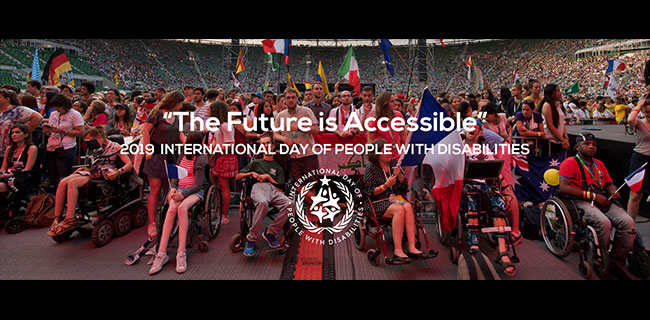
    This year, the theme of the International Day of Persons with Disabilities is to promote their participation in the development agenda. The UN-defined Agenda 2030 for Sustainable Development pledges on ‘leaving no one behind’. The media needs to look at ‘disability’ as a cross-cutting issue and promote inclusion in every sphere.


    Shruti Pushkarna is a former journalist (part of the founding team of MxMIndia). who has now moved full-time to the social sector. She heads operations of the New Delhi-based Score Foundation where she works as Director. Her views here are personal. She can be reached via Twitter at @shrutipushkarna