
Tag: VISCOMM

  • BTL Baatein: Yogesh Shinde, Wagh Bakri Tea… Powered by VISCOMM

    Yogesh Shinde is currently Vice President Marketing, Wagh Bakri Tea. An marketing and communications specialist, he was earlier associated with Saatchi & Saatchi, Mumbai, Triton Communications and R K Swamy BBDO. We present to you the ‘BTL Baatein’ of the week which is powered by VISCOMM with Anuka Roy engaging him him on Below The Line (BTL) advertising, the focus of the company and the balance between ATL (Above The Line) and BTL


    How important is BTL to your overall marketing plan?

    Now a days it really depends on how you treat your marketing mix. Today, we need to look at nothing but a 360-degree view in terms of how you reach your consumers, and of how you remind consumers of your presence and product offering.  BTL is quite important to our overall marketing plan although we use a mix of ATL and BTL activities as we are launching our tea lounges, it is important for us to create location awareness apart from our own offering to the Indian consumer. So it is an important element for us.
     

    Can you also specify the range of activities that you undertake as part of the below-the-line advertising and promotion?

    We have a very strong loyalty programme that has been on for the last many years and has given us good dividend. We have Wagh Bakri lounges and they are very unique and are a social place now. All our lounges are operated by the company its self and the lounge is very unique as, besides the numerous teas, we also serve snacks and savouries which enhance the overall experience. These Lounges also get us a lot of direct consumer feedback.


    Can you give a broad idea of your spends pie of ATL v/s BTL?

    Putting together, about 30-40 per cent of our spending is towards BTL.


    Do you prefer to do this through BTL agencies directly or via your existing creative/media agency?

    We use specialist agencies for BTLas these are activities-driven.


    In terms of generating results especially from consumers and in B2B, do you find BTL a more sureshot avenue than ATL?

    Both ATL and BTL have different and specific roles to play. The customers are exposed to a variety of mediums and the shift in brand can happen during any stage in the buying cycle. Therefore, we use both ATL and BTL together to ensure recall, awareness, affinity and experience. In case of our B2B business where all the classes are our audience, we use only BTL strategy.


    While sales and salience are good indicators of its success, what are the attributes you look at to measure the success of a BTL campaign?

    There is a lot of volume-value generation as a result of a BTL campaign. We are also able to track other variables like consumers engaged, consumers converted and referrals generated. We also connect our campaigns with digital and social media platforms to ensure that the consumers can connect back to us when they want.


    There are many organisations that often do new launches almost entirely on BTL aided with an outdoor and/or digital blitz? Your view on this. Given rising media costs, do you see BTL managing on its own, without ATL?

    ATL and BTL complement each other. ATL drives awareness and consideration while BTL takes up the task for conversations. I think for certain objectives and activities, you can survive only on BTL, but as a brand I don’t think one survives on any one particular activity. One won’t be able to get the desired results until the entire circle is completed. There is a different view for brands catering to fragmented markets. To reach the niche and premium segments, BTL works the best with least spillover and media wastages.

     

  • BTL Baatein: Amit Kumar Gope, CenturyPly… Powered by VISCOMM

    Amit Kumar Gope, is a postgraduate from Xavier Institute of Management, Bhubaneswar and has had a multi-faceted marketing career covering various industries.Having started with concept selling with timeshares in 1993, he has spent professional time with ABP, Airtel, Vodafone and Uninor. He moved in as the Group Marketing Head of CenturyPly in 2013.We present to you the ‘BTL Baatein’ of the week which is powered by VISCOMM with Anuka Roy speaking to him on Below The Line (BTL) advertising, the focus of the company and the balance between ATL (Above The Line) and BTL



    How important is BTL to your overall marketing plan?

    BTL forms a very important part of the marketing mix of CenturyPly. Channel and hence, channel visibilitybeing critical part of this category, BTL becomes critical. Also, trade and influencer meets form an integral part of the plan, making BTL that much more critical.


    Can you also specify the range of activities that you undertake as part of the below-the-line advertising and promotion?

    A. Out of Shop Visibility

    B. In Shop Visibility

    i. Posters / Danglers / Streamers

    ii. Shop – in – shop

    iii. Sample display

    iv. Promoters

    C. Trade meets

    D. Influencer meets

    E. POP / POS like stationery / T-shirts / pens etc.

    F. Roadshows


    Can you give a broad idea of your spends pie of ATL v/s BTL?

    I cannot share figures but ATL: 60% and BTL: 40%


    Do you prefer to do this through BTL agencies directly or via your existing creative/media agency?

    It depends on the activity. Mostly it is outsourced to BTL agencies in terms of execution. Communication and creatives are managed thru respective agencies


    In terms of generating results especially from consumers and in B2B, do you find BTL a more sureshot avenue than ATL?

    There are no definitive answers for that. ATL is a brand builder. So, even a B2B gets to know of the brand and its imagery from ATL. Direct contact is for sales, B2B usually is not subject to BTL advertising or marketing but pure sales contacts. Marketing cannot be, by definition, divided into water tight compartments. B2B for instance is exposed to a lot of digital marketing. Hence, one cannot quite fix “sureshot” solutions to conversion.


    While sales and salience are good indicators of its success, what are the attributes you look at to measure the success of a BTL campaign?

    It is nothing beyond that.


    There are many organisations that often do new launches almost entirely on BTL aided with an outdoor and/or digital blitz? Your view on this. Given rising media costs, do you see BTL managing on its own, without ATL?

    Yes, absolutely and very much. Market launches, product launches, engagement are purely BTL and / or BTL plus digital activities. Most leading or large brands keep doing large amounts of BTL activities that are exclusive and agnostic of their ATL campaigns.


  • BTL is big business


    By Anuka Roy


    The last time you visited a shopping mall, you would’ve noticed a huge soda can replica has been installed and a few people representing the soda brand are trying to convince you to taste the new drink and give your feedback. Or closer home, a small table of cookies has been laid out for you to taste outside the kirana shop because a popular biscuit brand has come up with an array of new and healthy range of cookies. Brands even organise games and contests in malls and other public places to connect with the consumers. These are few such examples of product promotions that happen these days.


    It is not just new or local or small brands which are taking such unconventional path to promote their products. Big brands are increasingly taking this route and spending more on marketing activities which have a direct connection with the consumer and the target audience. These activities are not restricted to food brands or FMCG companies, even the financial sector and automobile sectors have been investing in it for quite some time.


    “I think the bevy of experiential marketing have stood up on its own feet. It has a lot more to accomplish and go forward but we know that now it has set a stage that this industry in itself can be self-sustaining and can be called an industry. In the past it used to be that very few brands believed in engagement. They were more looking at reaching out to masses at an economical cost. But the shift is moving in to sustenance relationships with brands,” said Mandeep Malhotra, Founding Partner and CEO, The Social Street about the arrival of BTL or experiential marketing in present scenario.


    These on ground promotions and events are known as ‘brand activation’ in marketing lingo. They are unconventional advertising activities, called below the line (BTL) advertising, and in certain companies, have more stakes than popular advertising activities.


    “Normally, if I look at an FMCG company it would have 14-15% in BTL but for us it is critical. In our business, you do not have people who keep coming in to your stores just for browsing. They will come in if they have a need for furniture. And, as a brand we are not present in high footfall zones. So, you will not find Godrej Interio stores inside a mall. They are always kept independently outside.  The objective is to ensure that the people who have a need come in there,” says Bedraj Tripathy, AVP, Marketing, Godrej Interio ,  the furniture division of Godrej and Boyce, about the amount that is generally spent on BTL activities.


    On the other hand, for the newly launched Himalaya Wellness, the wellness division of the The Himalaya Drug Company, BTL is the only way to go. Speaking about the same, SudheerSrinivas, the Marketing Manager of the company who looks after the wellness division, says, “The importance of retailing for our wellness range is because of many reasons. First, people today can afford and second, they think about their health more than anything today. Third, people have stopped being reactive and started being proactive over their health issues. Earlier when we used to go to a doctor we would spend Rs 50 maximum but today it is minimum of three to four thousand rupees. People today want a solution for their basic health care needs which they can pick it up along with their monthly shopping and they would want to make it a part of their lifestyle. So, BTL is very important for wellness care products.”


    Speaking about the sectors which have adapted well or are trying to use BTL advertising to its full potential, Rajesh Grover, Managing Director, Viscomm presents a very interesting view. He says, “Experiential marketing is basically the present and the future. The main reason is that brand spends have decreased, a lot of brands are weary of spending on ATL activities because the future is very uncertain and economy is very uncertain. To connect directly with the consumer experiential is the best kind of platform. I would say across all sectors. There is no specific sector where experiential marketing works. It works wonderfully in the rural segment, FMCG, automobiles, in services, so it is across sectors according to me. The only thing is as we go forward since digital is also becoming a very important platform because of social media and all of that, an integration of experiential and digital is the way forward. Agencies or brand need to focus more on the integration of digital with experiential. Monies have to invest in the right strategies in that space.”


    So, what are the activities that are done under BTL? To promote the Tata Sampann low oil absorb besan campaign titled ‘Ab Khao Befiqr’,  the company tied up with top 104 Vadapav stalls in Mumbai. This popular snack is considered unhealthy by some due to amount of oil used for it. “With this activation we wanted to encourage consumers to eat their favourite snacks and indulge without guilt. Tata SampannBesanabsorbs lesser oil as compared to the ordinary Besanand the tie-up enabled the consumers to witness this for themselves. We reached out to around five lakh consumers with this activity,” said the Marketing Head of Tata Chemicals Ltd (Consumer Products Business), SagarBoke.


    According to Sevantika Bhandari, Senior VP and Head Marketing, DHFL, as a housing finance company they are always in touch with the consumer. “We interact with the consumer inside his house by the way of our advertising, through digital, television and radio. As soon as he steps out we interact with him on transit medium with hoarding, press and newspapers. When he walks towards a large shopping area or a congregation of people, we engage with him on the ground with our people available in some form or the other undertaking the BTL activity. We engage with him on his mobile. We engage with him at a point of sale of his home with large building projects. So, the idea which is true for all marketers and true for DHFL as well is to engage with the customer wherever he or she is.  We also map all our activities according to that journey,” she says.


    But whether companies take the conventional advertising method or they invest in BTL, at the end of the day everyone is concerned with the ROI (return on investment). “The cost of acquisition from a reach point in this business will always be very high. It would not be as economical as a television or a print but then you need to put a balance between just reaching out to a number and really converting that person in to a fan or a consumer of your own product. There are two different objectives which are being met here but CPT (Cost per thousand) will never be achieved as efficiently as it would be on television,” says Malhotra.


    “Consumer engagement and brand recall. These are the two most important things for us. There is always a debate between biggest or best – and I can firmly say that we want to be the best. We’re a vibrant and authentic brand, and it comes to life through our product, our communication and really through everything we do. There is certain positivity about us and BTL is the more effective tool to help us with consumer engagement and through this – recall,” says Chaitanya Rele, Vice President, Marketing, Havmor Ice Cream about measuring the success of a BTL campaign.


    Even though this kind of marketing is on the rise and in some cases the only way to move forward for certain brands, but can it survive on its own without any help from the mainstream marketing methods or above the line advertising (ATL). Most of the experts are of the opinion that for certain products it can yield good results but that would take time. For the time being, BTL does require a certain push from ATL to be successful.


  • BTL Baatein: Vandana Verma, Leo Burnett… Powered by VISCOMM

    Vandana Verma has worked with leading organisations in the two decades that she has worked in the marketing services sector. Teamwork Films, TIC Integrated Marketing Services, Big Live, Ogilvy & Mather where she headed North at Ogilvy Action Live, Mudra Max (VP and Country Head, Mudra Celsius) and since 2012 as with Leo Burnett where she is now Executive Vice President and Head of Experience. In this edition of BTL Baatein, Vandana Verma speaks on how experiential is the oxygen brands need to survive in the marketplace, and more…

    What is the importance of BTL in the world of advertising and promotions?

    Experiential is the oxygen brands need to survive in the marketplace. While mainstream advertising works as an announcement platform for most brands, experiential initiatives help brands cover the last mile and trigger purchase decisions.


    What would you say is that the importance marketers given to BTL activity in their overall marketing plan?

    Marketers today understand the need for Experiential. They do realise that experiential solutions is the only way to deliver communication that is targeted at a specific kind of audience. It gives marketers a chance to tailor their message in a more personalised way and establish a stronger connect with consumers.


    ROI measurement on traditional platforms is fraught with issues, but not in the case of Experiential. Tracking down campaign performance in an accurate manner is easier and less complicated in Experiential and that’s a huge plus. Marketers are increasingly becoming fans of Experiential. No wonder we are seeing so many agencies enter this space.


    In Experiential, one can gather feedback easily and take corrective actions immediately in case of any crisis.  Something mainstream advertising can never achieve.


    Are there certain types of marketers who have a greater affinity for BTL? (eg FMCG, durables, auto, etc)


    My answer would be NO. The average spends on experiential across brands is about 35-40%, which has risen from 15% three years ago. Activations are most commonly used for sales promotions, branding, launches, channel partner appeasement, channel expansion and lead generation. There are different objectives for different activities. These requirements would remain across categories of marketers.


    Typically what is the break-up of spends….ATL v/s BTL?


    35-40% BTL, balance ATL and Digital.


    Can you also specify the range of activities that you propose to undertake as part of the below-the-line advertising and promotion for your clients?


    Leo Burnett Experience is a specialist unit that offers holistic experiential solutions to clients including activation, events and exhibitions and rural marketing across metros and 5,000 small towns and cities. We function in an integrated manner by collaborating with a multi-disciplinary team of strategists and creators.


    In terms of generating results esp from consumers and in B2B, do you find BTL a more sureshot avenue than ATL?

    Strategy driven experiential solutions have always guaranteed results for our clients. Going forward we will explore new ways of solving business problems for our clients.


    While sales and salience are good indicators of its success, what are the attributes you/your clients look at to measure the success of a BTL campaign?


    ROI is an obvious measure and every client would use that as a measurement tool, but what clients also look at is the quality of engagement your idea brings to the table. Experiential also seamlessly enables integration across all other media. Most agencies struggle in this regard as they lack the skillsets and the capabilities to enable real integration. Integration of specialists to solve a single brand problem. That’s what makes us unique.


    There are many organisations who often do new launches almost entirely on BTL aided with an outdoor and/or digital blitz? Your view on this. Given rising media costs, do you see BTL managing on its own, without ATL?


    We are still at an early stage where clients do not truly understand the role of BTL in growing their business. Most still treat it as just one part of the media mix. However, we at Leo Burnett, are blessed with some clients like Bajaj Auto, Mc Donalds, ITC foods, Coke etc., whom we have partnered in their journey building where BTL plays a substantial role.


    I don’t think any major brand entirely depends experiential to achieve what it wants to in the marketplace. Integration is key.


    Do you have a view on BTL? Would you like to engage in a conversation on BTL marketing and promotions? Write to us at editor@mxmindia.com with BTL Baatein in the subject line


  • BTL Baatein: Sidharth Ghosh, pSLIVE,…. Powered by VISCOMM

    BTL is not a cost-effective solution for a brand always and at times the cost per contact is a bit higher. But it surely provides more scope for customisation/ innovation and ensures reach and optimum visibility.


    Sidharth Ghosh, a management graduate in marketing from MET, has over 15 years of experience in the functions of Experiential Marketing and also has keen interest in PR,  Branded Entertainment as well as Sports Marketing. He has played an important role in creating Planman Life, the events division at Planman Consulting. He established the branded entertainment and PR arm at Carat Fresh Integrated, now psLive. In this edition of BTL Baatein, Sidharth Ghosh, Vice President, pSLIVE of the Dentsu Aegis Network, speaks on how BTL compares with ATL and why.


    What is the importance of BTL in the world of advertising and promotions?

    BTL is an important aspect for any brand’s promotional campaign. BTL spends in India is growing and is an integral part of the advertising Industry. It involves promotional techniques which aim to reach consumers more directly and in an extremely controlled environment.


    What would you say is that the importance marketers given to BTL activity in their overall marketing plan?

    BTL platform gives marketers the opportunity to customize their messaging in a more personal manner. They also provide marketers valuable insights into their return on investment.


    Are there certain types of marketers who have a greater affinity for BTL? (eg FMCG, durables, auto, etc)

    It depends on the category and the product lifecycle. FMCG has a greater affinity for BTL compared to others but other categories are catching up fast. Luxury goods focus more on word of mouth and direct selling.


    Auto sector too is quite active in the BTL domain – be it new car launches or promotions. Increasingly, be it lifestyle, retail or education, more and more categories are using BTL to influence their TG.


    Typically what is the break-up of spends….ATL v/s BTL?

    Marketers are using BTL advertising and allocating increased budgets toward this segment to reach out to their consumers. Earlier the trend tallied around the 20:80 ratio for BTL and ATL but now the market dynamics are changing. There are brands that primarily focus on BTL for new brand launches whereas for others the mix could be 40:60. It purely depends on the marketing objective.


    Can you also specify the range of activities that you undertake as part of the below-the-line advertising and promotion for your clients?

    We at psLive aim to re-define the way brands are built through engaging experiences. We are a new age experiential agency and undertake both urban and rural activation as part of our activation business.


    For urban markets, we do product launches, lifestyle events, roadshows, mall promotions, trade engagement programmes, school/college contact programmes etc whereas for rural activation we undertake haat and mela activation, road shows, rural engagement activities etc. We have also started a specialised exhibition arm.


    In terms of generating results esp from consumers and in B2B, do you find BTL a more sureshot avenue than ATL?

    BTL has a more ROI-based approach and a lot of our brands have successfully achieved their desired marketing objective. Both the avenues surely complement each other.


    There are many organisations who often do new launches almost entirely on BTL aided with an outdoor and/or digital blitz? Your view on this. Given rising media costs, do you see BTL managing on its own, without ATL?

    Brands are now looking at more innovative and non-traditional way for launches and BTL provides the platform. In fact sports and entertainment are also emerging mediums for brand activation.


    BTL is not a cost-effective solution for a brand always and at times the cost per contact is a bit higher. But it surely provides more scope for customisation/ innovation and ensures reach and optimum visibility. Considering the current trend, BTL is only going to gain more momentum and the market will see interesting innovations.


  • BTL Baatein: Amit Arora, Trivitron Healthcare… Powered by VISCOMM

    Amit Arora is a postgraduate in the field of marketing from Punjabi University. He holds rich expertise and experience of over seven years in the healthcare industry with marketing as a prime domain. He is been associated with Trivitron Healthcare for more than a year. Prior to Trivitron, he was working with HealthFore Technologies (formerly Religare Technologies (Healthcare IT organization of Religare/Fortis Group) and Hindustan Times.


     

    As Senior Manager- Group Marketing & Corporate Communication, he heads brand & marketing activities and brand communication management (internal/ external) for Trivitron Healthcare and other group companies. Amit Arora speaks responds to Dyanne Coelhi for this edition of BTL Baatein


    What is the importance of BTL in the space of healthcare products?

    BTL is growing prominence in the marketing space as it is more customized and personal. Especially in the healthcare segment, BTL activities play a vital role to reach out to the right target audience. Healthcare is a personalized industry and each one’s requirement will differ. In order to reach out to individual audience and cater their specific needs BTL plays a prime role. BTL in healthcare also helps in sampling when the TG is niche, when budget is a concern and the brand wants to have a consumer connect. BTL has better ROI and physical display of healthcare products for better understanding and awareness.


    Are there any specific products or services for which BTL activations are used at Trivitron?

    Trivitron Healthcare is one of the largest Medical Technology Company of Indian Origin, offering 360 degrees products and solution with presence in Laboratory Products, Imaging/ Radiology Products, New Born Screening, Critical Care & ICU products, Operating Room, and Ophthalmology. For all our verticals we widely use BTL activities such as targeted healthcare conferences, events, CMEs etc. We at Trivitron participate/ organize more than 80+ domestic events & conferences and 10+ International events to showcase our products & solutions and reach out to the right audience.


    With 8 manufacturing facilities spread across Chennai, Mumbai, Pune and Helsinki in collaboration with international partners, we manufacture products across In–Vitro Diagnostics (IVD), New Born Screening, Patient Monitors, Imaging/ Radiology, Intensive Care and OT. We do many collaborative BTL activities with our channel partners across the globe for our manufacturing range of products.


    How important is BTL activity to your overall marketing plan?

    For us BTL is one of the prime pillars for product promotion activities. For our domestic as well as international market event participations, engagement activities, emails, brochures,  with healthcare fraternity is of major role. Our annual marketing plan is very well segregated and all activities are measured in return of investment (ROI).


    Can you give a broad idea of your spends pie of ATL v/s BTL?

    Considering BTL is our main focus, we allocate 60 percent of our marketing spends in BTL activities and remaining in Online and ATL activities. For us digital activities/ campaigning is more important than ATL. With internet taking a big spin for B2B and B2C segment, online looks more lucrative for today’s marketers. The power to reach the right audience, right geography, at a mass scale is making digital a clear return on investment platform. With the internet reaching increasing many fold, I am sure digital will take a major pie of our spending in coming years.


    Can you also specify the range of activities that you undertake as part of the below-the-line advertising and promotion?

    Under Below the line activities, we do majorly the healthcare event participations, focused group road shows in targeted cities, Product demonstration forums for healthcare fraternity, emails, brochures, awareness drives and collaborative activities with our channel partners for market penetration.


    Do you prefer to do this through BTL agencies directly or via your existing creative/media agency?

    We primarily do this through our existing agencies and sales and marketing teams in all our regions.


    In terms of generating results esp from consumers and in B2B, do you find BTL a more sureshot avenue than ATL?

    Since BTL is more targeted and specific, it is considered to derive better results and returns. However, online is the future and consumers are connected much more and have more information and choices at their fingertips today. The rise of such digital activities and resulting data is the stimulating factor for formulating strategies, thus affecting the business model and driving growth for players in the Indian market. On the other hand ATL advertising tries to reach out to the mass as consumer audience and not accurate in terms of ROI.


    While sales and salience are good indicators of its success, what are the attributes you look at to measure the success of a BTL campaign?

    For any of the BTL activities, the assessment begins with the right audience, cost to reach, cost to generate a lead for a business/ product and at the end cost per acquisition of a customer. But definitely, the first measure would be the right audience turn around & reach.


    There are many organizations who often do new launches almost entirely on BTL aided with an outdoor and/or digital blitz? Your view on this. Given rising media costs, do you see BTL managing on its own, without ATL?

    BTL with a digital blitz would be the right mix in coming days for new launches or rather for regular brand activities as well.


    It is not a question of mass media versus below-the-line. It is an era of mass media plus below-the-line.


  • Viscomm wins RMAI Award

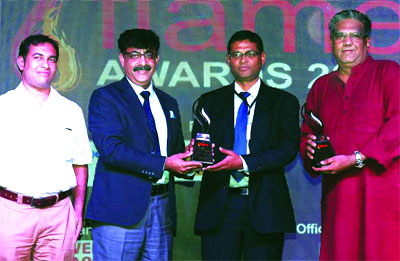
    RMAI FLAME Award being collected by Puneet Vidyarthi, GM & Head of Rural,JCB India Ltd (2nd from Right), Rajesh Grover, MD, VISCOMM (extreme right)

    By A Correspondent


    VISCOMM, a leading full-service BTL agency has bagged top honours at the Rural Marketing Association of India (RMAI) Awards held recently. At an event held amidst the big names in rural marketing, the marcom firm collected the award along with its client JCB India Limited for the initiative ‘Sunehra Kal’.


    The event was held at Hotel Taj Vivanta in New Delhi on March 20, 2015. The Flame Awards is recognised as the Oscars for the Indian Rural Marketing business.


    Rajesh Grover, Managing Director of VISCOMM, said, “We’ve been doing some interesting work over the last decade for JCB India Ltd. JCB allows us to experiment with innovative marketing solutions in the rural space. Sunehra Kal engages progressive farmers using the Krishi Vigyan Kendra (KVK) platform. It is delivered through a unique experiential learning game, with simulations of various real life situations, wherein the audience themselves analyse the outcomes of their decisions taken during the game.”


    Rajesh Grover
    Amit Gossain

    Said Amit Gossain, Executive Vice President – Sales, Marketing and Business Development, JCB India Ltd: “We are truly delighted that our partners VISCOMM who co-developed the ‘JCB Sunehra Kal’ programme with us have won the award for this one-of-a-kind initiative. This customer engagement initiative aims at instilling the idea of ‘Entrepreneurship for Livelihood’ among farmers. The overwhelming success of this programme and this award is a testament of the tireless efforts and hard work put in by both the teams to deliver this world-class experience to customers.”