Tag: Vijay Mallya

  • Can this man resurrect his businesses?


    By G Seetharaman


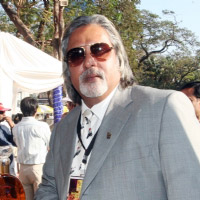
    You must be joking!” says a seasoned dealmaker, who had worked on a deal involving a United Breweries (UB) group company years ago, when asked if Vijay Mallya will be able to rebuild his empire. “What does he have now?” he asks.


    The question may not entirely be appropriate but is not without reason either, for the 57-year-old is probably in the stickiest situation of his life. His most ambitious dream, Kingfisher Airlines Ltd (KAL) – some say it has never been more than just a dream – now lies in tatters, having been grounded for nine months now.


    As if that was not turbulence enough, or perhaps to mitigate it, he has had to cede control of his flagship company United Spirits Ltd (USL), best known as the maker of McDowell’s whisky. The latest blow: Dr Mallya may no longer find himself calling the shots at his Rs 2,780-crore fertiliser company. He may have weathered many a storm in his roller-coaster of a career, but now has the unenviable task of once again convincing peers and public alike that he can deliver the goods as a businessman.


    Parting with a Giant

    When you Google “UB group”, the link to its website says “Dr Vijay Mallya’s UB Group is the World’s No. 3 Spirits Company”. But those words may soon change since USL is technically no longer “his” company. In the first week of July, the world’s largest spirits maker Diageo Plc, with a 25% stake in USL, became its biggest shareholder; the UB group’s stake reduced from 28% before the announcement of the deal in November to just a shade over 11%.


    While as per the agreement, Diageo was to acquire 53.4% in USL for over Rs 11,000 crore, it has managed to buy less than half of that for about Rs 5,200 crore, thanks to a poor response to Diageo’s open offer to USL shareholders. The tepid reaction is a result of the offer price being lower than that in the market, and the British liquor maker’s inability to acquire 2.38% held in USL by USL Benefit Trust. The latter’s shares are pledged with USL’s lenders who have refused to release those shares for the transaction.


    When asked how Diageo plans to raise its stake further, its spokesperson says: “We are not targeting a specific level of ownership but we do want to control the strategic direction of the company. We have now achieved that.”


    USL, which controls about half the Indian spirits market of 250 million cases, owns 140 brands including Royal Challenge and Bagpiper whiskies, Honeybee brandy and Romanov vodka. According to London-based industry magazine Drinks International, McDowells No. 1 whisky was the eighth largest-selling spirits brand in 2012. USL has two more brands in the top 10.


    Group chief financial officer Ravi Nedungadi says United Breweries Holdings Ltd (UBHL), the group’s holding company, has used the proceeds of the sale to Diageo to pay off some debt, without specifying a number. UBHL held 13.6% in USL at the end of June and had debt of around Rs 3,000 crore in March.


    USL investors have welcomed the acquisition, with the stock price almost dou-bling since November to Rs 2,642. V Srinivasan, analyst with Angel Broking, says with this deal USL will focus more on premium brands and will see a rise in its operating margins which are in the region of 11-12%. “Since Diageo is an MNC, there will also be more transparency,” he notes.


    Deepak Roy, vice-chairman and chief executive of Allied Blenders & Distillers (ABD), maker of Officer’s Choice whisky, concurs. “The deal is good for the industry as a whole, where some players try to get the government to structure policies f avourable to them,” says Mr Roy, who worked with both USL and Diageo in the past.


    Dr Mallya was involved in a long tug of war with ABD chairman Kishore Chhabria over ownership of the Officer’s Choice brand which was settled out of court last year with ABD paying USL Rs 8 crore.


    Clipped Wings

    Just a month before the Diageo deal, staff unrest forced the grounding of KAL, which has never turned a profit since its founding in 2005. The airline’s licence was suspended in December and its headcount has fallen by three-fourths to 2,000 in just a year, according to a senior civil aviation ministry official. Its lenders in February decided to recall loans advanced to the airline which currently owes them about Rs 6,000 crore.


    Amber Dubey, head, aerospace and defence, KPMG India, says while the airline has to be credited with creating a great brand and a loyal band of passengers, especially corporate clients, its “reluctance to keep modifying its operating model in line with industry trends and customer preferences led to its ultimate demise”.


    Kingfisher bought Captain Gopinath’s Air Deccan, India’s first low-cost carrier in 2007, but four years later exited the lowcost segment, which includes IndiGo Airlines, SpiceJet, GoAir and Jet Konnect.


    Kingfisher’s lenders, led by State Bank of India, have so far got back about Rs 550 crore from the sale of shares of USL and Mangalore Chemicals & Fertilizers (MCF), and are now looking to take possession of two of the group’s properties in Mumbai and Goa, reportedly worth Rs 120 crore. “The KAL brand may not be worth anything since the airline is not operational. But we have corporate guarantees from Dr Mallya and UB Holdings,” says a senior official from one of the large banks in the 17-lender consortium.


    The airline had guarantees worth over Rs 14,830 crore, including Rs 5,900 crore from Dr Mallya, on its liabilities at the end of March 2012, as per its annual report for 2011-12. His plans to find an investor for the airline after India allowed 49% foreign direct investment in the sector earlier this year have not yet come to fruition.


    According to M Unni Krishnan, global strategy director, Brand Finance, there is still value to be unlocked in the KAL brand. Mr Nedungadi says there is a plan in place to revive the airline, but doesn’t give details or the timeline. But Dubey thinks the chances of that hap-pening are “unfortunately, very low”. The biggest hurdle for Dr Mallya, also a Rajya Sabha MP, to put KAL back on the runway is his lenders. The loan recovery process, with its legal ramifications, could take years.


    Another One on the Block

    If it were not for KAL’s travails, there would not be a bidding war for MCF. When in April, the airline’s lenders sold the MCF shares pledged with them, Zuari Agro Chemicals, a KK Birla company, bought them and ended up with about a 10% stake in the company. Not to be outdone, its Pune-based competitor Deepak Fertilisers and Petrochemicals Corporation bought MCF shares in the open market earlier this month, and now with a stake of 24.5%, is the biggest shareholder in the company; the UB group’s holding stood at 22% as of the March-ended quarter (the latest period for which the shareholding pattern was available on the BSE website at the time of writing).


    While there was talk that Zuari would sell its stake to Deepak, this week Zuari responded by buying another 3.5% in the company. While a Deepak spokesperson declined comment, Zuari chairman Saroj Poddar was not available for comment. “MCF is not the group’s focus. They have not invested much in the company in the past 7-8 years, but the company has good assets which will benefit both Deepak and Zuari,” says an analyst with a domestic brokerage. MCF’s 3.8 million tonne per annum urea capacity means a new segment for Deepak and a substantial addition to Zuari’s urea capacity. “MCF also has 50 acres of surplus land in Mangalore, which is a strategic location,” says Satish Mishra, analyst with HDFC Securities.


    With three of his companies either in trouble or going out of his hand, the only sizeable operation that Mallya is left with is United Breweries which, like USL, has a market share of well over 50% in the Indian market. Its share of the beer market was just 43% in 2006, the year that saw the entry of Danish brewer Carlsberg group into India. Many more beer labels have entered the fray since, and there are now over 200 beer brands in the country, according to Akash Sahu, general manager, brand communications, SABMiller.


    But UB is not worried. Samar Singh Shekhawat, senior vice-president, marketing, UB, feels new entrants will help grow the market. “We are sticking to our brand plans across all segments and geographies, and have actually seen share and volume gains consistently over the past few years,” he adds.


    A former top official of the UB group says it would be difficult for Dr Mallya to hold the reins at UB in the long run since Heineken already has a 37.4% stake, as big as the UB group’s. A detailed questionnaire sent to Mallya went unanswered. UB spokesperson Prakash Mirpuri said Dr Mallya was overseas and hence would not be able to answer the questions. When reached on his mobile phone, Dr Mallya said, “I’m not able to speak to you now. I will call you when I’m able to speak.”


    Buy and Sell

    Entering and exiting businesses have been par for the course for Dr Mallya, who became chairman of the group in 1983 at the age of 28 after his father Vittal Mallya’s demise. Among those ventures are a pizza chain, Berger Paints which he bought in 1988 and later sold at a handsome profit, engineering company Best & Crompton and Vijay TV. He has also divested legacy investments like Kissan Products, a stake in Aventis Pharma and Hindustan Polymers.


    One of the businesses Dr Mallya hasn’t exited yet – and which surprises a section of UB watchers – is UB Engineering. Founded in 1963 and listed nine years later, the company came into the UB group fold in 1988. It executes engineering, procurement and construction (EPC) projects in sectors like steel, cement, oil and gas, and power. Despite having been around for such a long time, the company ended 2012-13 with revenues of just Rs 583 crore and a net profit of Rs 78 lakh.


    To provide some context, Thermax, which competes with UB in some segments and was founded around the same time, had sales of around Rs 4,700 crore and a bottomline of Rs 350 crore in 2012-13. UB Engineering managing director JK Sardana did not respond to emailed questions. Another sector where the group has not been able to scale up is information technology, where it has had a presence for two decades now. Will the group exit these businesses? “There is no such plan in the near future,” says Mr Nedungadi.


    One of Dr Mallya’s newest businesses is real estate where UBHL has partnered Bangalore-based Prestige Estates. UB City, with 1.6 million sq ft and which is on the road named after Vittal Mallya in Bangalore, is the largest commercial real estate project in the city, and houses MNCs such as Citibank and Vodafone.


    Besides office space, it includes a luxury mall and services apartments. Another project, which is also being developed by the group with Prestige, is Kingfisher Towers, a residential project. With a developable area of 1.1 million sq ft and 83 apartments, Kingfisher Towers is among the most expensive residential properties in the city.


    “They have done a really good job with the projects but commercial will not be as profitable as residential, and the UB group does not have a lot of land besides this in Bangalore which it can monetise,” says the head of a real estate company. Prestige chairman and managing director Irfan Razack was not available for comment.


    If most of his businesses are in no great shape, Dr Mallya’s sports ventures will not really make him jump in joy. Royal Challengers Bangalore (RCB), the Indian Premier League (IPL) team owned by USL, was one of only two teams to see its valuation fall after IPL 2012 when the league’s valuation itself rose to $3.03 billion from $2.92 billion in 2011, according to a report by Brand Finance.


    RCB’s brand value fell 8% from 2012 to $37.8 million and its brand rating dropped from A+ to A-. Mr Krishnan says the decline did not have to do with the airline’s troubles, although it may have coincided with them. The franchisees are measured on three parameters: cricketing excellence, corporate governance and marketing excellence.


    RCB, despite being a fairly consistent performer, has not yet won the IPL. Dr Mallya’s Formula 1 team, where Sahara picked up 42.5% in 2011 for $100 million, has fared far worse. Sahara Force India’s best result so far has been a sixth place finish in the 2011 championship. A British newspaper in March reported the team has accumulated losses of £126.1 million, or over Rs 1,000 crore, since Dr Mallya bought the team in 2007.


    But the F1 team is a personal investment of Dr Mallya and not one of the UB group. Mallya, known more for his flashy lifestyle than his business acumen, was dropped from the Forbes list of billionaires this year.


    The magazine had pegged his wealth at $800 million in October. He’s not a liquor tycoon now – beer baron would be more appropriate although arguably not totally correct – but Dr Mallya has over the decades earned a reputation for coming back from the dumps. An ally turned rival in the liquor business has in the past said that Dr Mallya always has had luck on his side.


    As example he pointed to the untimely death of liquor baron Manu Chhabria, which led to the unthinkable taking place: Shaw Wallace entering the UB fold. Today, however, the Shaw Wallace buyout is a distant memory, and the Diageo buy-in a more immediate one. Still, the dealmaker quoted at the beginning concedes Mallya has a good understanding of consumer businesses. But he also adds: “He was never an entrepreneur like his father but he could have been a better manager.”


    Source:The Economic Times

    Copyright © 2013, Bennett, Coleman & Co. Ltd. All Rights Reserved

    Licensed to republish

     

  • Anil Thakraney: Mallya’s image is working against him

    By Anil Thakraney


    All that’s gone wrong with Kingfisher Airlines has been discussed enough in the media (I too have posted on this in the past), so there’s nothing more to add. One can only grab a Kingfisher beer, sit back, and quietly watch the airline go down the tube. Clearly, there’s no scope for a turnaround, so utterly horrid is Dr Mallya’s business model.


    However, I think the reason why there is so much public anger against Kingfisher is not just because the innocent employees remain unpaid, not just because the wife of an unpaid staffer killed herself, it’s because of Vijay Mallya’s own flamboyant image. All those yachts, the lavish parties, the wild IPL celebrations, the frantic air kissing… it’s all come back to haunt the man. And these images are being beamed right next to the images of protesting employees on the news channels. That his equally high-life living son has been posting floozy tweets is adding to Mallya’s already overflowing mug of woes.


    The colourful imagery is projecting the man to be deeply insensitive to his starving employees (even if that’s not the case), and that, for any organisation chief’s image, is akin to corporate hara-kiri. The Indian junta will never accept the idea of a man having a good time while his ‘family’ suffers. This goes against the grain of Indian culture. And in the absence of public sympathy, whatever little hope Mallya has of a government-led bailout begins to fade. What is truly incredible is that in the face of such a mega challenge, he continues to be bombastic!


    The least Vijay Mallya must do now is to come down to earth (like his aircraft), roll up his sleeves, meet up with his angry employees and personally clean up the mess. If that means filing for bankruptcy, then so be it. Time for arrogance and ego is up. It’s time to do some dirty work and take hard decisions. And if he does this even now, some of Mallya’s dying reputation may yet get salvaged.


    And oh, while the booze tycoon is at it, he must ensure his air-head son stays off Twitter for a few decades.


    ***


    PS: Wonderful interactive video from Old Spice. You can use the keyboard to decide which instrument you want the musician to play, and how he must play it. It’s gone totally viral, 18 lakh hits at last count. And do note that the brand isn’t directly selling anything. This clearly is the future of viral marketing.


    [youtube width=”400″ height=”220″]http://www.youtube.com/watch?v=yZ15vCGuvH0[/youtube]
  • Why CEOs find social media a double-edged sword

    By Nikhil Menon


    Recently, the CEO of Southwest Airlines in theUShit on a novel idea to get customer feedback directly from the source. He put up a question on LinkedIn asking: ‘How can an airline make you, the flier, more productive?’ He got 137 answers from people; many of them detailed essays on what his airline could do to improve its customer experience.


    “That kind of real, authentic feedback is very hard to get when you’re the CEO,” said Hari Krishnan, CEO of LinkedInIndia, as he recounts this story. And there, in a nutshell, you have perhaps the single most important thing about social networks – they are a great leveller. They also blur the line between what was considered one’s professional and personal space.


    From Donald Trump’s tirades against Barack Obama to Michael Dell’s constant praise for Dell’s employees worldwide and Vijay Mallya’s defensive tweets hitting back at critics of his ailing airline, CEOs are stepping up to make themselves heard. And while these are early days inIndia, promoter-CEOs and heads of business families like Anand Mahindra, Mallya and Naveen Jindal are early movers. The list of appointed CEOs on social media like HCL boss Vineet Nayar and RBS India head Meera Sanyal, however, is still rather small.


    Prakash Iyer, CEO of Kimberly-Clark Lever, admits that Indian executives are one step behind foreign CEOs in cashing in on the social media phenomenon: “Whenever something new comes along, we tend to see the negatives more than the good things. But CEOs, no matter what generation or industry they’re from, have to realise that social media is here to stay. And if they’re not using it, they are missing something.”


    If that’s true for heads of private companies, it’s truer for senior bureaucrats inIndia, who are known more for shunning the spotlight than soliciting it. Considering that, Amitabh Kant is a maverick. The 55-year old CEO of the DMIC (Delhi Mumbai Infrastructure Corridor) has an active Facebook account with 1,500-odd friends, a Twitter account he occasionally updates and even a personal blog, amitabhkant.in. Mr Kant reads and writes extensively on his pet interests – travel, urbanisation, photography, technology and cuisine – and also likes connecting with people who share those interests: “Social media has been a powerful and enlightening influence on my work. I read and discuss articles on infrastructure and urbanisation around the world.”


    What’s more, he thinks that others of his ilk should follow suit. “What’s the point of resisting social media? It’s a highly transparent world,” he said, relaxing at hisDelhihome after his mandatory Sunday morning golf session. “And civil servants need to understand that, especially in the RTI (right to information) age. In fact, I feel that the government should ask every bureaucrat above the rank of joint secretary to compulsorily be on social mediums to become more accessible to the people.”


    As long as we’re in the realm of wishful thinking, Jessie Paul has a gem of her own. As the battle to decideIndia’s next president rages on, the managing director of Paul Writer jokingly urges people to consider her for the position. When asked about her ambition to occupy Rashtrapati Bhavan, she chuckled: “I am a woman, so I am in a political minority. Besides, I am a Tamilian, married to a Bengali, so I should be acceptable to both Jayalalithaa and Mamta di. Why not?”


    Her irrefutable logic is met with much hilarity and even endorsement by the people who follow her. But looking beyond her easy candour, what’s interesting is how the managing director of Paul Writer effortlessly wields social media across half-a-dozen platforms.


    For Ms Paul, who is a regular on content sharing and networking sites like Slideshare, Youtube, Facebook and Flickr, online networking sites are food and drink.


    The author of a book on frugal marketing and former Chief Marketing Officer (CMO) of Wipro was one of LinkedIn’s first users inIndiain the early 2000s. In fact, Mr Krishnan of LinkedInIndiasaid that Jessie Paul is a case study, in the way she created a network of CMOs in her earlier avatar to trade best practices. Ms Paul eventually quit Wipro and started Paul Writer, through which she gives companies the benefit of her experience on tackling the social media beast. “Social media is more than about making friends or killing time; there’s some serious knowledge sharing going on, and more importantly, there are huge business opportunities waiting to be explored there,” she said.


    Some may argue that given her marketing background, it should be no surprise that Paul is so comfortable with social media. And it’s also worth mentioning that Amitabh Kant hasn’t been a ‘typical’ insular bureaucrat either. It’s been easier for Paul and Kant to brand themselves because social media has always been core to their interests and professions.


    Mr Kant, a 1980 Kerala cadre IAS officer, was earlier Joint Tourism Secretary with the Ministry of Tourism. He was also part of the teams that came up with the ‘Incredible India’ and ‘God’s Own Country’ (Kerala) branding campaigns in his former avatar. Mr Kant has written a book, Branding India, and is now co-launching an online initiative to promote ‘ancient Indian cuisine’. “It’s important to have interests outside of work. And using social media doesn’t take really much time – not when you’ve got the whole world on your smartphone,” he said.


    Using social media for casual networking may be a stretch, given that many CEOs don’t even use it for work. Tanvi Bhatt, founder of Panache Studios, advises many senior managers on personal brand management, of which online reputation management is a part. She said that less than 5 per cent of the senior executives she meets have a social media account.


    “They’re not even on LinkedIn, which I find amazing. These days, clients and partners Google senior executives before meeting them face to face. And if they don’t find them online, they start having doubts about the person’s or organisation’s credibility,” she said.


    The reasons for not having an account vary. Some CEOs are conservative by nature. Others don’t understand social media – and prefer to be safe rather than sorry. And then there are those who feel ‘I don’t need to do this, I’m the CEO’. Ms Bhatt said: “A lot of them think in terms of ‘what’s in it for me?’, whereas they should be thinking ‘what can I share from my knowledge and experience with the world?”


    Rajiv Dingra’s company WATConsult was one of the early movers in the social media consulting space back in 2007. And while he’s done a lot of work with companies, getting CEOs to apply themselves to the socialscape has been frustrating. “Frankly, Anand Mahindra is the only top CEO doing a good job – he connects with interesting people on a personal level, addresses complaints and leverages customer testimonials. The rest are rather boring,” he says. But there are those, like 30-year old venture capitalist Kris Nair, who are the very opposite of boring.


    Mr Nair, who heads Opdrage Ventures and has invested $20 million in about 33 companies so far, is unapologetically himself. He speaks his mind on everything from entrepreneurship to poetry to physics, rails at ‘idiots’ with the odd four- or five-letter word thrown in for emphasis. Sitting at a posh coffee shop in Bandra, Mumbai, he pushes his iPhone across the table so I can get a look at all the social apps on it. After the first dozen or so, I lose count.


    “A lot of my deal sourcing happens through social media. So I have to speak to my target audience of entrepreneurs and members of startup communities in a language they understand. I can never be a ‘suit’ and keep saying the right things,” he said, adding the last line with obvious contempt. It hasn’t always been smooth sailing, however. Once Mr Nair wrote against the Anna Hazare-led agitation and that got him in trouble, with threats pouring in online and offline. Then there was the time one of the investors in his fund asked him to curb his freewheeling style on social media.


    “They were afraid I might leak confidential information. That didn’t make me stop, of course, but I have mellowed down for sure,” Mr Dingra conceded that at some level, he understands the concerns senior executives have. “Being on social network is like being in a press conference 24/7. People can be particularly myopic and unforgiving on the Internet. The media can take your words and twist them around. You need to have a thick skin and take the bad with the good.”


    Ms Paul added: “Unlike western consumers, some buyers inIndiaare still immature. People will target you online if the washing machine made by your company doesn’t work. You have to be pretty confident of your service, especially if you’re in a B2C model.”


    While the possibility of being targeted always looms large, Meera Sanyal, chairperson and country executive of Royal Bank of Scotland Group feels social media provides a quick and very interactive channel for customer feedback.


    “While some of this may not be complimentary- if one uses the opportunity to remedy problems swiftly, then the organisation can build really good relationships with clients,” she said, “Therefore, I do act swiftly upon complaints directed to me in my official capacity, but in general on social media, I interact as an individual, sharing personal thoughts and views.”


    Ms Sanyal stood as an independent candidate for elections fromSouth Mumbaiin

    2009. She may not have made it to Parliament as the people’s representative, but is tremendously popular among tweeple, or people on Twitter. She says she began using Twitter ‘on an experimental basis’ some years ago. While she was a little hesitant at first, with some coaching by youngsters at home and work, she’s now a total convert.


    “The 140-character ceiling forces crispness of thought and posts from across the world keep me updated on the latest news and candid views of some very interesting people,” she says. How To Draw The Line – The first and perhaps most important thing to know before creating an account is which medium works best for you. Do you want to make friends, build business contacts, be a thought leader, recruit people or just read the latest news from your industry?


    Jessie Paul offers an easy-to-remember guide. “Facebook and LinkedIn are about who you know, while Twitter, Pinterest, Slideshare and Google Plus are about what you know,” she said. If getting on to social media is the first step, the second and perhaps more important thing is to avoid making a fool of oneself. Mallikarjunadas CR, CEO of Starcom MediaVest Group, said he doesn’t know what to think when he sees his peers playing games or watching dodgy videos in the middle of the day.


    “You have to be aware that people will form opinions based on all this,” he said, quoting the example of a person from his network, a senior TV channel executive, who bad-mouths brands left and right. “As a professional, one has to be careful when criticising people, organisations or brands. You may need their business tomorrow.”


    Mr Kant doesn’t write on anything that may get him into trouble; preferring to remain with topics like his travels, macro-economic issues and the occasional book or malt that captures his imagination. And like any proud parent, he cannot resist the occasional FB pic of his daughter’s graduation fromOxford. But apart from his busy Facebook page, he is quite selective about the people he chooses to add to his networks. Mr Iyer of Kimberly Clark Lever says that it’s important to come out of the shadow of the company you represent and present your human voice.


    “Anand Mahindra isn’t out there to sell one more car. It’s about listening to others and learning from them.” Being offensive or shallow is a lesser crime compared to being boring, feels Ms Paul, who advises people to stay away from social media unless they have a content pipeline. While you may have a lot to share, it all depends on how you weave it in your conversations. The good news is top executives seem to be getting it. As social media catches on, few can resist its lure. As Paul said: “Every time I log in, it’s a party out there.”


    Source: The Economic Times

    Copyright © 2012, Bennett, Coleman & Co. Ltd. All Rights Reserved


  • Chris Gayle to endorse Mallya’s Cariba Rum

    By Anshul Dhamija & Boby Kurian


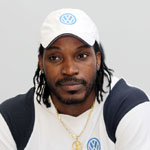
    Swashbuckling cricketer Chris Gayle has extended ties with Vijay Mallya’s United Spirits as the latter tries to spin a Caribbean rum story off the cricket pitch. The big hitting Jamaican, and arguably the most valuable player in Mr Mallya’s Indian Premier League (IPL) team, has signed an endorsement deal for the company’s latest brand, Cariba Rum.


    This is the first major standalone deal for Gayle, the highest run scorer in the current IPL season, on the Indian brand endorsement pitch. The move is probably part of Mr Mallya’s multi-million dollar strategy to retain Chris Gayle, who has been eyed by rival teams. Mr Mallya’s Bangalore team bought Gayle for $560,000 just before last season and managed to retain him in the fifth edition this year.


    While Gayle’s IPL price remains the same, his overall package, including endorsement fee, may touch the maximum $2 million for an individual player in the T20 league. United Spirits, which also owns the Bengaluru team, didn’t disclose the endorsement fee but said the contract was for “more than one year”.


    Outside cricket, USL’s move to use Gayle to build a Caribbean rum brand is part of the company’s premiumization strategy aimed at checking the rapid advance of MNC rivals. Prestige and premium brands will contribute almost 60% of the company’s profits in the current fiscal, up from just under 10% in 2005.


    Mr Mallya, who had Caribbean business interests when he owned Berger Paints, is rolling out Cariba with a blend imported from the islands where rum was first distilled more than 300 years ago. Gayle, who embodies the Caribbean free spirit, may help United Spirits to develop a rum story closer to the original home. Cariba rum aims to tap the upgrading rum drinkers in a market where most brands in the flavour category (barring exceptions like Bacardi) are regular and economy priced.


    “Gayle is the best fit as brand ambassador for a rum brand. Dark, brooding, and hard-hitting – all these facets make for great rum,” said brand consultant Harish Bijoor. “However, sportsmen and alcoholic beverages have always been a question mark in the minds of people. But then, Mr Mallya knows the cricket story,” he added.


    Source:The Economic Times

    Copyright © 2012, Bennett, Coleman & Co. Ltd. All Rights Reserved


    Photograph: Fotocorp


  • [MJR] Noosemakers: The life and letters of Dr Vijay Mallya

    By Ranjona Banerji


    “The Indian media and the ‘paid’ media that even the Prime Minister referred to are unscrupulous and they will do whatever it takes, part fact or fiction, true or untrue to achieve their sensationalist objectives.”


    These lines are from the opening paragraphs of Vijay Mallya’s letter to the employees of Kingfisher Airlines, promising them that he is making arrangements to pay their salaries. He also says that he intends to pay his taxes.


    It is heartening, however, to note that the media, paid and not paid (unpaid would refer to a Kingfisher staffer) have not been responsible for denying Kingfisher employees their salaries. Or indeed, that it is because of the media that Kingfisher could not pay so many taxes.


    The media has, therefore, just “sensationalised” the whole issue of Kingfisher’s troubles, we are to glean from Mallya’s letter and concentrated on one airline when the whole aviation sector is in trouble. (Again, thankfully, the media is not responsible here for the woes of civil aviation (at least I think not), just for talking about it.


    Except, he points out, the one airline which is not in trouble but even that could be true or untrue according to Mallya. I am not sure the media had any role to play here… does the media have the power to make just one airline in a sick industry successful?Indiawants to know.


    I don’t want to point fingers at anyone here, but I think Mallya should also blame passengers, especially his “guests” who paid but were then un-boarded and un-flown. These guests kept blabbing to the media about how they had been inconvenienced by Kingfisher Airlines. I think Mallya should have blamed them too.


    And all the pilots who upped and left to work for that one airline “that defies the odds and claims to be profitable, however unlikely that may be”. I’m guessing that they were paid rather than unpaid by that other airline with its bizarre claims.


    Many years ago, a person kept calling newspapers (there was not much TV those days, it was that long ago) and claimed to be Vijay Mallya’s PR person. She would talk about his latest horse or yacht or holiday destination. We could never determine if she was paid or unpaid, part fact or fiction, true or untrue. Somehow I feel that Mallya needs someone like her all over again. Might be better if he pays her this time and I know Niira Radia’s out of a job but maybe not her…?


    Here’s the text of the letter:

    http://www.ndtv.com/article/business/vijay-mallya-writes-to-kingfisher-employees-read-letter-180222


    Photograph: Fotocorp

  • The King in troubled waters

    By Ranjona Banerji


    Whoever picked the guests for the Kingfisher segment of the Newshour last night, obviously did not gauge TimesNow editor Arnab Goswami’s mood right. More than half the panel spoke out in favour of the besieged airline while Goswami was adamant that no one owed Kingfisher anything for its bad management practices. Even worse, the people of India had been inconvenienced (or at least the flying public) and that was unacceptable.


    Vijay Mallya on TimesNow was quite a departure from his normal braggart self as he petulantly explained that he was dying to pay everyone but couldn’t since the income tax department had frozen all Kingfisher accounts. He did acknowledge that he did have some tax dues but…


    From all the par-for-the-course studio histrionics, one thing was clear – some urgent analysis of the aviation industry is required.


    Obviously, television cannot provide it…


    The first edit in The Economic Times seems to feel that a government intervention or bailout is unacceptable and Kingfisher has to sort out its own problems. It even calls for a suspension of licence. This is in keeping with Goswami’s line but does not follow that of Kingfisher’s well-wishers within the travel and aviation industry who keep bringing Air India into the picture. As ET points out, “The state of the industry and the fate of Air India should not be allowed to cloud the issue.”


    **


    The alleged rape of a woman in Kolkata gets curiouser and curiouser. The behaviour of West Bengal chief minister Mamata Banerjee and her minister Madan Mitra – blaming the victim and claiming a conspiracy to destablise the government – has been roundly criticised. Indeed, Mitra’s comments about the woman being out drinking deserve wider condemnation – he should surely be treated on par with the Andhra Pradesh police officer and Karnataka minister for making such sexist and dangerous remarks.


    **


    In The Indian Express, Abhijit V Banerjee, Ford Foundation International Professor of Economics at the Massachusetts Institute of Technology and director Abdul Latif Jameel Povery Action Lab makes an impassioned plea for allowing the British government’s Department for International Development continues its “good work” in India and for India not to get carried away by nationalism. This is a subject which needs to be debated more stringently in India. Do we still need foreign aid, does aid work and should not India manage its own problems. My instinct is not to agree with Banerjee and to side with the nationalists…


  • Debrief: A wing and a player

    By Anil Thakraney


    Many experts (and non-experts!) have given us their views on the Kingfisher airline mess. Many reasons why the airline is in trouble have been speculated upon. And all this while the man in the hot seat, Dr Mallya, only posts pissed-off tweets. But doesn’t tell us what really is going on.


    Here’s my theory, and I put it out despite the fact that I know as much about the airline industry as Rakhi Sawant knows about nuclear physics. And I do so because I believe the main problem isn’t really about the business itself, it’s about branding.


    Yes, Mallya and gang have messed up on the running of the company. Yes, they could have handled flight scheduling better. Yes, they should have hired better talent at the top, and yes, the government’s unhelpful policies have added to their woes. But the real problem is that Dr Mallya has fallen into a self-created trap. Because the Kingfisher airline is a brand extension of the high selling and very profitable Kingfisher beer, it must carry forward the brand values of the latter. Any deviance from those would hurt the beer brand, because they share the same identity.


    Now, Kingfisher beer is synonymous with good life and high living. And has been so for many years. If the airline goes totally cheap and down-market, it runs contrary to the mother brand’s values. I suspect this is the battle that Dr Mallya lost, because it has conflict embedded within. With the downturn in the economy, spiraling cost of fuel, heavy taxes on airline travel and some serious competition in the sector, downgrading Kingfisher airline, cutting off all the frills, was the order of the day. What Dr Mallya did instead was to spend more on comfort, food, service and entertainment. And sent the operational costs crashing through the roof. He HAD to do this because the Kingfisher brand = Good life. He had no choice. Dr Mallya cuts the good life on the airline, it comes straight back to haunt his cash cow Kingfisher beer.


    Make no mistake about this: Dr Mallya is no spring chicken when it comes to dhandha, he runs a massive, very profitable liquor empire. He knows a lot about costs, revenues and bottom-lines. Where he went wrong was in the branding strategy. That trapped him big-time. He ought to have coined a new, independent brand name for the airline. A stand-alone brand that fights its own battles and is unburdened of any legacy. In which case Dr Mallya could have taken tough decisions on his airline. He could have gone really low-cost, and may well have been saved from the miseries he’s facing today.


    Perhaps he should have called it ‘Deepika’ airline. His equally flamboyant son would have approved! 🙂


    ***


    PS: Very happy that the media left Baybee Bachchan alone. Maybe Justice Katju has got to them. Maybe the broadcast editor’s guidelines were taken seriously. Maybe an earlier post from me opened their eyes (hee hee). Whatever. But this incident could well be a turning point for Indian journalism. Let’s hope so!

  • Brand Kingfisher in the red


    By Tuhina Anand


    The King of Good Times is battling bad times, and all eyes are waiting to see how much the whole bailout issue will cost Brand Kingfisher. Right now, the airline business of Kingfisher is under deep scrutiny and the media focus has only heightened the negative atmosphere. Public memory, of course, is short and all ‘bailout’, ‘bleeding’ and ‘those who die must die’ phrases will be forgotten once Vijay Mallya is able to arrange the corpus to manage the airline’s functioning. Remember, Jet Airways employees’ protests against job cuts some years ago didn’t do much harm to the brand in the long run.


    Kingfisher, known primarily for its beer, is unlikely to be affected. The brand has been there for a long time and people vouch for it. Even in this scenario, it’s the airline business that is under the scanner. The airline business is diversification of the core business, hence the impact on Kingfisher the brand would not be much. But when it comes to Kingfisher Airlines, people – especially frequent flyers and privileged guests wooed with the airline’s promise of an extraordinary experience – would stay away, considering flight cancellations and the consequent inconvenience.


    Expressing his view, Harish Bijoor, brand expert and CEO of Harish Bijoor Consults Inc, said, “Kingfisher is a dominant brand in the Indian context. The brand for a start is a beer. And from there on has developed the brand equity of brand Kingfisher Airlines. To that extent, the recent sets of issues in aviation tends to hurt the equity of Kingfisher Airlines more than the beer. The airline is a service brand that touches the lives of hundreds of people. The beer is a product brand. To that extent there is less of an issue there.”


    “The negative publicity that hits Kingfisher airlines is really about the pains of the traveller more than anything else. A traveller faced with flight cancellations at the last minute is impacted the most. This is where the biggest pain point of Kingfisher Airlines’ brand equity vests,” added Bijoor.


    So at one level where the crisis has hit most is the frequent travellers, but that is more of a short-term problem. In fact, the brand has taken a beating but not as much. Even V Balasubramanium, Director at RainMan Consulting, is of the opinion that the brand would have been affected if the issues were that involving ethics or credibility but something like a ‘bailout’ and being cash-strapped will not impact it long-term as people already know that the airline industry is bleeding and the same goes for Kingfisher Airlines. So while the issue has not come as a surprise, it’s true that the rumours about large-scale layoffs or the airline shutting operations don’t exactly help Mr Mallya’s case.


    One view that also emerges is that whenever UB has tried to diversify and move away from its core business of alcoholic drinks, they haven’t really succeeded. Ramanujam Sridhar, CEO, Brand-Comm said, “The next two to three months will be critical for Kingfisher, and how they manage to emerge out of this crisis and do damage control. There will be close scrutiny and overcoming this will be a challenge. There is a negative undercurrent especially among those who have raised eyebrows over the extravagant lifestyle and now the financial mess. I think it’s a wait and watch policy and the next couple of months will be make-or-break as far as the Kingfisher Airlines brand goes.”


    As it stands, the Kingfisher brand which is primarily associated with liquor will not be impacted in any case, as it will have its loyal followers, but for the airline business, which is actually a brand extension, it’s time to be cautious and move carefully. “Kingfisher needs to get off the pedestal and talk and emote with its users and those sitting on the fence with reference to its usage. It’s important to be transparent and admit folly where folly lies. In reality nothing succeeds like success. I do believe this is a temporary blip in the brand equity fortunes of Kingfisher Airlines. With some degree of fund infusion, it will be business as usual,” concludes Bijoor.


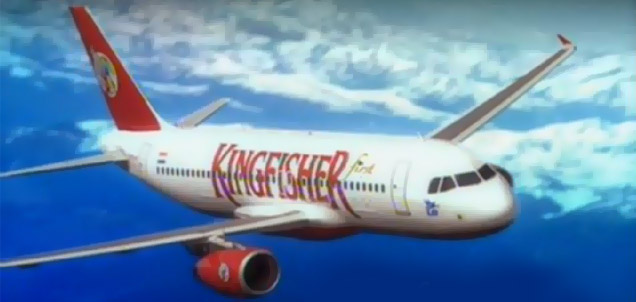
    Image: Grab from Kingfisher Airline TVC

  • Grand Prix countdown begins


    By Ritu Midha


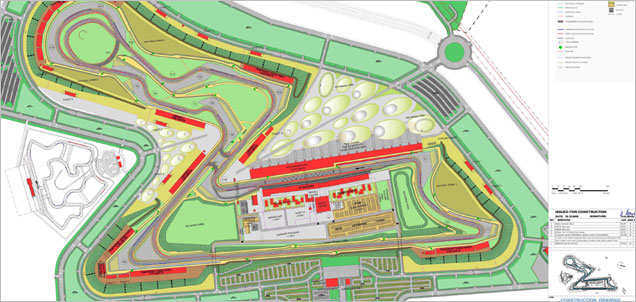
    Countdown to the Indian Grand Prix has begun – the Buddh International Circuit will attract 1.1 lakhracing enthusiasts from India and overseas From October 28 to October 30. The seating capacity, depending on the ticket sales, can be pushed up to 2 lakh.

    The response the race is getting can be gauged by the fact that flight tickets from Mumbai for that duration are almost double the usual price on ticketing websites, and most upmarket hotel rooms in Delhi and Noida are booked – in some cases at a 100 percent premium. Gurgaon hotels too are gainers here.

    Ticket prices for the event itself are between Rs 2,500 to Rs 35,000.


    The target group

    It is a young – largely male – premium audiences expected at the race. Defining the target group for Formula1, states Premjeet Sodhi, President, The Collaborative , Lintas Media Group, “Non-Cricket sports in India are quite Niche in India and the current followers of F1 are very small in number. However, in demographic terms, currently, the primary target group for the sport would be Males, SEC A, 15-34 years in the top 6 metros.“This target group is considered to be the most elusive – and hence the brands are interested in catching them on the tracks.


    Brands riding on F1

    Airtel as known, is ‘Title Sponsor’ for this sporting event, and the official logo of the India Race reads, ‘2011 Formula 1 Airtel Grand Prix of India’. Interestingly, Airtel gave up its title sponsorship of Champions League T20 sometime back, without completing its three-year tenure.

    Indian brands, are seeing an opportunity in associating with individual teams as well. The latest to be a part of Formula 1 is Sahara Group – it has bought 42.5 percent stake, at the approximate cost of Rs 500 crore, in the Vijay Mallya-owned Force India F1 team – and now the team has been renamed Sahara Force India. Interestingly, both these brands too are connected with the pace version of Cricket – owning Pune Warriors and Royal Challengers Bangalore in IPL respectively.

    Hero Motors, meanwhile, has signed a sponsorship deal with Narain Karthikeyan, India’s first Formula 1​ driver – as of now the deal is only for India Grand Prix.

    Interestingly Amul too is in the fray. The brand has tied-up with the Sauber Team (Ranked 17th). The brand logo will be seen on the front face of the rear wing, and also on the drivers’ helmets. On Amul’s part, it is an obvious attempt to establish itself as a youthful and ‘happening’ brand.

    And then there are brands with a long-standing relationship with Formula 1: like Red Bull and Mercedes Benz. Red Bull showcased its RB3 F1 racing car in Delhi throughout September, and has largely tried to attract the student community in the capital. Mercedes-Benz is looking at a long-term strategy, and plans to launch India’s first motor racing academy next year.

    Cafe Coffee Day has associated itself with the event by selling tickets at select outlets at Delhi, Bangalore, Mumbai and Gurgaon. The coffee shop, a favourite hangout of youngsters, must definitely have seen synergies between itself and F1. Or, perhaps, it was the other way round.

    The tickets would be available at Mercedes Benz showrooms as well.

    As for which brands would derive value by associating with Formula One, Anamika Mehta,COO, Lodestar Universal, states, “F1 is in its infancy in India and will grow from strength to strength with its first ever India Grand Prix. More than VFM its an opportunity to engage brands with the thrill and experience . Over a sustained period of time, it will definitely reap dividends for brands which create an engagement platform. India in that sense is poised right ‑ economic growth, young country that loves technology, thrill and speed.”
    It is not only youth brands, but also the Government that plans to reach out to the F1 fans flocking the capital. Tourism Ministry plans to promote tourist destinations close to the circuit, and at other places of interest. Plan, reportedly, is to promote 50 lesser known destinations including beaches, monuments, mountains, sand dunes, festivals and cuisines.


    The broadcasters

    The broadcast rights, as is known lie with ESPN. DTH service provider Reliance Digital TV (RDTV) has added ESPN HD and Star Cricket HD to its kitty of channels – objective obviously is to enable its subscribers experience the highly charged atmosphere as close to reality as possible.

    ESPN states that the spots have been sold out, and also that it is not selling Formula 1 Buddh International Circuit as a separate property. On ground activity too is meant for sponsors alone unlike Cricket. nil Sathiraju, Associate VP & Head-South, Mudra Max, said, “At this point in time, it’s apparently for the sponsors only. Also many of the deals are getting done outside of India because of the fact that it is F1.”

    Coming back to Broadcast media, Winners from India has Got Talent and Entertainment Ke Liye Kuchh Bhi Karega will perform live at the race. Bir Khalsa Group, Rohan & Group, Prince Dance Troupe, Reincarnation of Indian Acrobatics, Speed Painter Rabin Bar and several others will perform throughout the day on all three days. Of course, it is in addition to Lady GAGA (who would perform on the final day) and other well known DJs and bands from India and overseas.


    The online rush

    As a large proportion of racing aficionados are web friendly, there is a lot of activity in the virtual gaming world – where car races, anyway, continue to be all time favourites. Gaming organisations like Ibibo, Zapak and 7Seas Technologies are working towards providing users the excitement of being on the original track – virtually. While, Zapak has launched the official Formula One Game – ‘Vodafone Formula GP Racing, 7Seas Technologies too has a similar game ‘Xtreame’. The game on ibibo.com offers an opportunity to own a ‘high speed racing car’ in the virtual world.


    Ambush marketing: the Vodafone way

    If all this we not enough, enter ambush marketing. Even as Bharti Airtel is the title sponsor for the event, Vodafone is trying to steal the thunder from under its nose by holding road shows across the big cities. These road shows showcase an exact replica of the McLaren Mercedes racing car to be driven by Lewis Hamilton . And as mentioned earlier – the battle is being fought by Vodafone in the virtual space also – with Vodafone Formula GP Racing.
    F1 vs IPL

    In this backdrop, can one assume that it would be as attractive or the advertiser as a mini Three-day IPL? Our experts unanimously turn down the supposition. States Sodhi, “The IPL monetized the already existing mass fan following of cricket. It managed to over-night make Cricket a very premium sport despite it being a very mass followed sport. F1 on the other hand is a very different task of actually creating active fans in India. Today, it has the premiumness but lacks the mass appeal. Hence, from the advertising opportunity perspective F1 and the IPL are in a very different class. While F1 is for a very definitive age group and appeals primarily to the affluent and the higher SECs, Cricket is very broad based. Hence, the brands that would patronize F1 would be a subset of the IPL advertisers and then some more.” He adds, “In time, surely F1 will find its core set of advertisers but I doubt if its advertising valuations will come anything close to the IPL in the near future.”

    Top of the pyramid is growing in India – the number of rich is growing, and so is the number of young adults. Formula 1 being a race extensively patronized by the young rich surely has the makings of a future success story. A lot would, however, depend on the performance of Sahara Force India, and of Narayan Karthikeyan. Thrill and excitement of Formula 1, just might capture our fancy in a big way – car racing after all is a familiar territory with the kids growing up on a staple diet of virtual races.