Tag: Viacom18

  • Viacom18 unveils Voot Select with Ferzad Palia at helm

    By A Correspondent


    Viacom18 will launch its second subscription-based streaming offering called Voot Select. The new business vertical under Viacom18 Digital Ventures will be helmed by Ferzad Palia, Head – Youth, Music & English. Voot Select will be in addition to his existing responsibilities.


    Sudhanshu Vats

    Speaking about adding further scale to the digital business, Sudhanshu Vats, Group CEO & MD, Viacom18 said: “The video-on-demand market is the fastest growing segment in the media and entertainment sector today.  Subscription led business models are going to be the next big growth drivers in the years to come. Having established Voot as India’s second largest premium AVoD platform, we think the time is apt for us to unveil our premium subscription offering, Voot Select.  The new premium offering will bring more bespoke content to our always-on viewers.”


    Gourav Rakshit

    Added Gourav Rakshit, COO at Viacom18 Digital Ventures: “With Voot, the successful launch of Voot Kids and now Voot Select, our aim is to build a versatile and immersive digital ecosystem that will add value to our users. The new offering will provide them with differentiated content experiences across genres and segments. Currently in its final leg of testing, the all new Voot Select once live will see many untapped genres being made available for our users to experience and enjoy.”


  • Viacom18 to roll out ‘MTV Nishedh’

    By A Correspondent


    The MTV Staying Alive Foundation has partnered with Viacom18 to launch a new campaign titled ‘MTV Nishedh’ that will focus on fostering healthier attitudes and behaviours and removing the stigma surrounding several health-related issues, including sexual reproductive health and wellbeing, contraceptive care, tuberculosis (TB) and nutrition. Other funded partners include: Through the Children’s Investment Fund Foundation (CIFF), the David and Lucile Packard Foundation and The Centre for Social and Behaviour Change, Ashoka University, the Bill & Melinda Gates Foundation (BMGF) and Johnson & Johnson.


    MTV Nishedh, produced by Mumbai-based production company Victor Tango, will premiere on MTV India starting January 25 every Saturday and Sunday at 8pm and on Colors Rishtey starting February 1, every Saturday and Sunday at 10:30pm. MTV Nishedh will also be available on Voot.


    Sudhanshu Vats, Group CEO and MD, Viacom18: “I’ve always believed that doing good is good for business. We have, since inception, created content on social causes and built a successful broadcast business around it – from Balika Vadhu to Shakti to Laado – we have covered a gamut of socially sensitive issues through our TV content. Furthermore, through our youth brand MTV, we continue to create multimedia campaigns, over and above our TV shows, that highlight various social themes. We have explored issues as diverse as women’s empowerment to sanitation through our films like Queen and Toilet: Ek Prem Katha. This business philosophy of doing good was underscored last year when BMGF worked with us to bring forth a behaviour change content series called Navrangi Re! on the issue of Fecal Sludge Management. The sheer number of social organisations and like-minded corporate who are partnering us to launch MTV Nishedh bears testimony to its scale.”


    Added Georgia Arnold, Executive Director of The MTV Staying Alive Foundation and Executive Producer of MTV Nishedh: “MTV Nishedh marks an exciting point in The MTV Staying Alive Foundation’s journey. Bringing the highly successful MTV Shuga model to India facilitates young Indians to take up more space on issues affecting their everyday lives. The power of MTV Nishedh is in its reflection of real life – we engage young people in all stages of its development to ensure the stories are relatable, entertaining, and highly engaging. Crucially, all of our content drives the audience to health services where they can receive valuable help. We believe MTV Nishedh has the potential to be a genuinely relevant cultural asset, as well as a successful public health campaign.”


    Said Sonia Huria, Head – Corporate Marketing, Communications & Sustainability, Viacom18: “Well, more than a conscious strategy, I think it is an ingrained thought process at Viacom18. Allow me to explain in some more detail. Our mission is to connect every story to its audience and every audience to its story. And over the last 12 years, we have created stories that resonate with our audience across platforms. Interestingly, some of our biggest successes have been stories that speak of societal issues or regressive societal norms – be it Balika Vadhu, Its Not That Simple, Angels of Rock, Toilet: Ek Prem Katha…the list goes on. Projects like Navrangi Re! and MTV Nishedh are natural extensions of this philosophy of using content to amplify social change. What encourages me is how more partners are recognising the relevance of this approach and reaching out to us to use entertainment to bring forth such stories of social impact.”


  • IBF President & VP statement on NTO-2

    By A Correspondent


    NP Singh, MD and CEO, Sony Pictures India and Sudhanshu Vats, Group CEO, Viacom18 who are also President and Vice President of the Indian Broadcasting Federation (IBF) issued statements at a press conference convened in Mumbai on Friday.


    Here is the statement by NP Singh:

    “IBF is the industry body of broadcasters. It works towards ensuring that the television industry has a common voice which helps orderly growth of this sector. It also is a forum for the broadcasters to highlight issues which impact the industry as a whole. We all have gathered here under the aegis of IBF to discuss recent developments that can potentially trigger another round of large-scale disruptions, detrimental to the orderly growth of the sector.


    “Content is king and broadcasters invest substantial resources in producing and acquiring world class content, be it entertainment, knowledge or live sports. By packaging a variety of genres in economically priced bouquets, broadcasters offer the Indian consumer  world class news, sports, movies, music and entertainment at affordable prices. Any industry and especially one that is regulated, looks forward to a stable and consistent regulatory regime that works for the benefit of all stakeholders. As broadcasters, we expect a stable regulatory regime, which is necessary to enable long term business planning and a strategic approach towards investments. This is absolutely critical to enable us to provide the best of content to our consumers, more so in these times of rapid technological change.


    “As we have seen, in the last 15 years of regulating the broadcast sector, TRAI has issued more than 36 tariff orders, in an attempt to micro-manage what is arguably the most “value for money” form of news and entertainment in the world. This goes contrary to the Government’s stated position of ensuring the “ease of doing business”.


    “Last year in February 2019, TRAI came up with a New Tariff Order (NTO), which brought about far reaching changes to the way pricing of pay channels was managed. While the broadcasting industry was apprehensive about the magnitude of changes, we supported the move with the best of our abilities. The collective cost to the broadcasters was well over 1,000 crores in just communicating the changes to the consumers. Even with that, there was an overall loss of 12-15 million subscribers in the process. All stakeholders, most of all our consumers, went through considerable inconvenience during the transition period.


    “Even as the new regime was settling down, on 1st January 2020, TRAI notified certain amendments to the New Tariff Order and Interconnection Regulations for the Broadcast sector. These amendments attempt to make further disruptive changes in an industry already grappling with the paradigm shift to an MRP based pricing regime.


    “While the changes are many, I will summarise a few of the key ones:


    1. Arbitrary Reduction of MRP cap from Rs. 19/- to Rs. 12/-, for channels to be part of a bouquet: 

    Just a few months ago (February 2019) the Regulator notified a cap of Rs. 19/- as the threshold for creating bouquets and backed this up with empirical analysis. And now this has been reduced by 40% to Rs. 12/- without any logical rationale or consumer insight to back this change.


    Channel pricing is related to the quality and cost of content being offered, which the Regulator appears to consistently ignore. In a competitive and free market like broadcast, channel pricing should be determined through open market forces rather than through the arbitrary fixing of caps without any fundamental basis.


    2. Imposition of twin conditions on bouquet pricing:

    When the NTO was introduced last year, TRAI took a conscious decision to do away with the twin condition formula for bouquets as the Regulator advocated free pricing. Within a few months, in NTO 2.0, TRAI has sought to reintroduce the twin conditions, negatively impacting the pricing and packaging of bouquets. In order to offer wider choice to their consumers through affordable bouquets which is the practice world over, the broadcasters will have to either price their premier channels very low, hampering the ability to provide quality content or increase the price of other channels just to fit in the maths but artificially increase the burden on consumers.


    Another fall-out of the twin condition restrictions is that it limits the number of channels in the bouquet, which in-turn reduces the value delivered to consumers.


    Moreover, when SD and HD channels are clubbed together in a bouquet, the same price reduction is applicable to both in spite of HD being a premium offering.


    Additionally, using regulation to limit the number of bouquets being offered to consumers is fundamentally restricting consumer choice, given the large variability in consumer preference across 200 million TV homes.


    3. Restricting incentives only to a la carte:

    This is a completely arbitrary discrimination between a la carte and bouquet without a rationale. Just a few months back TRAI thought it fit to allow incentives on both bouquets and a la carte and now in NTO 2.0 TRAI has changed its mind and removed discounts on bouquets. From the regulator looking at the interests of all stakeholders and the industry at large, we expect a market facing and non-discriminatory approach to regulation.


    A few months back, at the request of the Regulator, the major broadcasters including Sony, Star, Zee, Viacom introduced promotional schemes and offered their premier channels at an MRP of Rs. 12/- for a limited period. But the results showed no uptick in the a la carte offering in spite of the price reduction, clearly highlighting the consumer’s preference for bouquets. In fact, our members suffered revenue losses in this whole exercise.


    Additionally, the on-ground experience of this consumer offer has indicated that the desired intention of consumers getting the benefit of such an offer has not materialised in a majority of cases but may have got absorbed as additional margin in the distribution chain. So, it begs the question whether the new changes being recommended will not again end up with the same outcome, given the challenges of on ground execution.


    However, TRAI appears to have a predisposition and bias towards a la carte and against bouquets and is attempting to compel DPOs to not offer bouquets by removing their incentives to do so. Clearly, this is arbitrary and discriminatory. Inspite of 15 years of regulations that sought to influence a consumer’s choice for a la carte, the lay consumer still prefers bundling, a fact the regulator seems unwilling to accept.


    4. Impact of NCF:

    While the stated intent of the Regulator is to allow consumers to get content at more affordable rates, the fact that it’s the imposed NCF is the single largest component of end consumer price is not being addressed.


    In the current NTO, if a consumer is paying, say Rs. 275 per month as his/her bill, ~60% goes to the distribution platforms, 15% towards taxes, and only ~25% comes to pay broadcasters. This when it’s the broadcasters who are creating the content, investing in talent and capability, and taking all the risks related to content development. Why then is the focus only on the broadcaster’s component of revenues, which is only 25% of the consumer bill?


    It is fair to say, the implementation of the MRP regime which came into effect on 1st February 2019 resulted in seismic changes in the distribution landscape. Nevertheless, with the support of all stakeholders and the end consumer, the transition to the new regime was managed relatively smoothly. Broadcasters, on their part, along with other stakeholders, did their best to ensure a smooth transition without disruption of services. It is therefore quite surprising that in less than 12 months after the commencement of the NTO and even before the industry at large and more importantly the end consumer has fully adapted to the new regulatory regime, TRAI has notified amendments in the NTO.


    IBF in its response to TRAI’s consultation paper had pleaded with the regulator to adopt a “soft touch” and allow the industry to come to terms with the current NTO before making further changes. In fact, TRAI itself had acknowledged this need by proposing a two-year moratorium on further regulation. Unfortunately, all IBF’s pleas have been ignored and, in this exercise, content creators and owners have been disempowered by taking away their fundamental right to monetize their content in the manner they choose.


    IBF believes these amendments will severely impair broadcasters’ ability to compete with other unregulated platforms and adversely affect the viability of the pay TV industry.


    And this is what Sudhanshu Vats said: “The objective of NTO 1 was first – to give choice to consumers, second – to bring transparency and third – to reduce litigation. While only the first two have happened, it’s too early to talk about the third. Statistically, overall 94% of Indians are aware of the NTO and the choices they have because of the efforts made by the broadcast industry collectively. The month on month churn in industry shows that people are continuously fine-tuning their choices. The other objective of NTO was transparency which it has also brought in. The question therefore, is “what is the fundamental need to change again? In my opinion there was no need.


    “India is a heterogenous country with different choices and abilities to pay. In every sector there is a wide spectrum and that needs to play out more in Indian media as well. This push for consistency shouldn’t come in the way of the industry’s and economy’s growth. In the M&E industry there is a lot of dynamism and flux and hence the broadcast sector needs to be able to settle down. If there has to be any change we need to allow for enough time for its implementation and also changes shouldn’t be suggested so frequently.”


     

  • Nickelodeon Kids Choice Awards today

    By A Correspondent


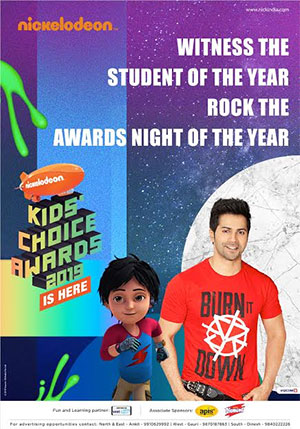
    Nickelodeon India has announced the fifth edition of the Kids Choice Awards 2019 to be held in Mumbai today (Dec 20).
     

    The Kids Choice Awards recognises and honors talents by empowering kids to vote for their favorites across various categories. The voting started on Children’s Day, November 14.


    Said Nina Elavia Jaipuria – Hindi Mass Entertainment & Kids TV Network at Viacom18: “We at Nickelodeon, always believe in empowering children and giving them an opportunity to voice their opinions and choices. With each passing year, we have strengthened the bond with our young audiences and their parents by creating new benchmarks in the kids’ entertainment space. So, once again it’s time to roll out the orange carpet and witness high decibel fun and entertainment at the marquee kids’ event for the kids, by the kids!”


  • Colors Tamil to air all-women KBC

    By A Correspondent


    Colors Tamil will air a Tamil all-women Kaun Banega Crorepati titled ‘Kodeeswari’ . To be hosted by Tamil film and TV actor and producer Radikaa Sarathkumar,  ‘Kodeeswari’ will premiere on December 23r at 8 pm on Colors Tamil and Voot.
     

    Said Ravish Kumar – Head, Regional Entertainment Cluster, Viacom18: “The Tamil market is an incubator for path breaking content, be it in films, art, print or television. Colors Tamil has, since its inception, pushed the boundary in terms of innovative content – through the stories we tell and through the way we tell them, How apt a homage to the culture and ethos of this market that one of the world’s most successful format shows ‘Who Wants To Be A Millionaire’ will go in for a global first with an all-women version on Coors Tamil.”


    Added Anup Chandrasekharan, Business Head – Colors Tamil: “It gives us great pleasure to put together this experiential stage that will empower women who are smart, aware and knowledgeable. We have had an overwhelming participation from the Tamil speaking women across the nation whose life stories are heroic in their own unique way. While the format of the game remains unchanged, our endeavour is to encourage strong willed women to challenge stereotypes and emerge victorious. We are happy to have onboarded the indomitable superstar Radikaa Sarathkumar in this journey who will multitask as a host, a friend and a guide.”


  • Tata Sky ties with with Viacom18 to launch Kannada cinema channel

    By A Correspondent


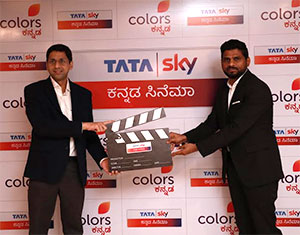
    Launch of Tata Sky Kannada Cinema by Chief Communication Office, Anurag Kumar along with Senior VP, Sales, CV Konda Reddy

    Tata Sky has partnered with Colors Kannada to launch Tata Sky Kannada Cinema, which will offer a line-up of 150+ films showcasing blockbusters and leading actors of Sandalwood.


    Commenting on the launch, Anurag Kumar, Chief Communications Officer, Tata Sky said: “Kannada film industry has seen a continued growth in viewership owing to high quality movie releases in recent years. With the launch of Tata Sky Kannada Cinema in partnership with Colors Kannada, we aim to deliver the best curated content to Sandalwood lovers across the country, enabling a great regional cinema experience.”


    Added Parameshwar Gundkal, Business Head- Kannada Entertainment Cluster, Viacom18: “With a contribution of 13% of the total Kannada television viewership, movies is an important genre in entertainment in Karnataka. We are witnessing a sharp growth in regional film consumption across screens. With this partnership, we aim at giving viewers more of what they want via a well curated line-up of uninterrupted blockbuster movies across genres, that will keep the Kannada movie buffs glued to their television screens.”


  • Colors goes to the big screens to market small screen show Choti Sarrdaarni

    By A Correspondent


    Colors has launched an in-cinema advertising campaign to promote its show ‘Choti Sarrdaarni’ exclusively on UFO Moviez network of cinema screens. The four-week cinema advertising campaign commenced on December 6 and is running on 2000+ UFO Moviez network screens.


    Commenting on the same, Siddharth Bhardwaj, CMO & Head of Enterprise Sales, UFO Moviez said: “To help engage effectively with target audience, the advertisers & marketers are increasingly leveraging cinema’s captive audience and immersive viewing experience. We are glad that the COLORS Team has conceptualized and customized a promo to connect with cinemagoers in a fun and engaging manner. With a network of over 3600 screens, UFO Moviez offers advertisers an unrivaled opportunity to communicate its brand story. We are very confident that the campaign will deliver the desired objective for COLORS and its shows”.


    Added Sapangeet Rajwant, Head, Marketing and Digital – Hindi Mass Entertainment, Viacom18: “Cinema has a strong influencing power in India, and so does television. We are using this dual power to create maximum impact and are proud to partner with UFO Moviez. This is a great way of engaging with audiences and to tell our story effectively. We continue to seek such opportunities and experiment with innovations.”


  • Viacom18 & Film Heritage Foundation hold annual workshop in Hyd

    By A Correspondent


    The fifth edition of the Film Preservation & Restoration Workshop India (FPRWI) 2019 was inaugurated at Hyderabad’s State Gallery of Art on Sunday. Supported by Viacom18, this initiative of Film Heritage Foundation (FHF) and International Federation of Film Archives (FIAF) in collaboration with Annapurna Studios is being held December 8 to 15.


    Commenting on bringing the workshop to Hyderabad this year, Shivendra Singh Dungarpur, Founder & Director, Film Heritage Foundation, said: “Over the last four years, we’ve been the Pied Pipers of film heritage drawing over 200 conservators, librarians, film scholars, academics, cinematographers, editors, colourists and technicians into our fold, eager to learn to save remarkable film patrimonies from our part of the world and showcase the richness and diversity of a heritage that has been lying dormant and forgotten for decades. And this number will cross the 270 mark this year. We are now ready to consolidate and build the country’s first world-class Centre of the Moving Image, an institution devoted to the art of film and we hope that we can count on the support of the film industry, the government and the public to make our vision a reality.”


    Speaking on the association with this initiative, Sudhanshu Vats, Group CEO and MD, Viacom18, added:, “India is a country of storytellers and the oldest stories in the world originate from here. Over the years, our cinema has portrayed the culture and heritage of India. At Viacom18, we realise the importance of preserving these stories that form a part of the Indian culture for the benefit of our future generations. As India’s foremost storytellers, we connect deeply with this ethos and our support to Film Heritage Foundation is a conflux of this shared sentiment. The Film Preservation & Restoration Workshop is a step in that direction and we at Viacom18 are proud to be associated with this initiative.”


  • Voot Kids partners BBC Studios on content

    By A Correspondent


    Viacom18 Digital Ventures has gone live with featuring content from BBC Studios’ CBeebies.


    Speaking about Voot Kids and the content from BBC Studios, Saugato Bhowmik – Business Head, Voot Kids said: “With Voot Kids, our endeavour is to create a superior curated platform that brings together a prudent mix of fun and learning… Kids love positive stories and adorable toons and the addition of CBeebies shows is sure to add significant diversity and value to our vast content slate.”


    Commenting on the content licensing agreement with Viacom18 Media, Stanley Fernandes, Sales Director, South and South East Asia, BBC Studios added: “We are pleased to be partnering with Voot Kids to bring some of CBeebies’ favourite programmes back to Indian audiences. CBeebies is known worldwide for its impressive content line up, with programmes specially designed by developmental experts to promote imaginative play, social interaction, language skills, and educational values. Along with Voot Kids, we are aiming to make screen time meaningful for kids, so that it is entertaining, engaging and enriching.”


  • Sidharth Kedia appointed CEO of Nodwin Gaming

    By A Correspondent


    Nodwin Gaming has appointed Sidharth Kedia as its CEO to spearhead and drive the online gaming business in India. Kedia, who was until recently EVP and Head of Strategy, Data Science and e-sports at Viacom18, will be based out of Mumbai where he’ll open the first regional office for Nodwin Gaming.


    Announcing the news, Akshat Rathee, Founder and Managing Director of Nodwin Gaming said: “It’s an exciting time for the firm as the overall e-sports scene in India is on the cusp of exponential growth. We are thrilled to have Sid joining us as the CEO at this time. With his rich experience in the media, entertainment, technology, and investment sectors coupled with his in-depth understanding of the gaming space and his proficiency in scaling businesses, I’m confident his leadership will provide the fuel that will propel e-sports and Nodwin Gaming to the next level. We wish him all the best. The CEO function will continue to report to the Managing Director and the Board.”


    Added Kedia: “In today’s age of digital disruption where several of our cultural experiences are undergoing an online evolution, e-sports has become an unequivocal buzzword. The gaming business in India is finally coming of age. The journey of e-sports that began as a virtual battle between geeky gamers in the confines of their homes or cybercafés a decade ago, is no longer just fun and games but has evolved into a major organized sport recognized at the Asian Games and even the Olympics. I am equally enthusiastic and anxious as I take up my new role as CEO and aim to make Nodwin Gaming a global player when it comes to e-sports.”


  • Colors partners Rouble Nagi Art Foundation for new show

    By A Correspondent


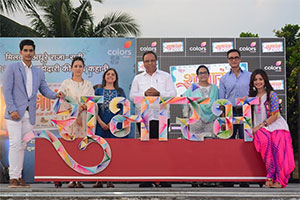
    We don’t normally write about every new show being aired on our general entertainment channel. It’s either got to be a magnum opus-like production or has to have a significantly different story line or format or has to contribute in a major way to society. This new Colors ticks these boxes and we are looking forward to how it develops over the next few weeks. We’re referring to Shubharambh, the new fiction show from Colors which has collaborated with Rouble Nagi Art Foundation (RNAF) to weave the longest ecofriendly bed linen. Giving a platform to the artisans from across the country, the initiative imparts the importance of strong partnerships and how it can help in the betterment of our society.

     

    Speaking about this partnership, Nina Elavia Jaipuria, Head, Hindi Mass Entertainment and Kids TV network Viacom18 said: “As broadcasters, we believe in harnessing the power of stories to cultivate change. Shubharambh presents a unique interpretation of companionship and the strength that it beholds, and that inspired us to launch this unique partnership. ‘Ek aur Ek Gyarah’ aims to rejuvenate and empower not just the underprivileged but instill within millions the power of togetherness. By partnering with RNAF, we are taking a step further and helping the community through a craft-based livelihood programme that reaches more than 16 states. It has been an absolute delight to partner with an organisation that has transformed communities through art.”


    Added Manisha Sharma, Chief Content Officer, Hindi Mass Entertainment, Viacom18: “As individuals, we all have flaws. We silently condemn them and try to conceal it from the outside world. The journey of Raja and Rani is no different and they will face many hurdles in life as people undermine their talent and often criticise them. The storyline of the show will bring forth many harsh realities of life in the most endearing manner and is sure to strike a chord with the viewers.”


    Said Rouble Nagi, Founder, Rouble Nagi Art Foundation: “We are excited to partner with Colors for the launch of ‘Shubharambh’, a show that has a behaviour-change message around ‘strong partnerships’. This association will give thousand men and women in villagers and slums all over the country a chance to showcase their skillset and at the same time provide help to the ones in need. With this collaboration, we hope to reach out far and encourage thousands to uplift each other.”


  • Sudhanshu Vats delivers keynote at CII Big Picture Summit

    By A Correspondent


    Sudhanshu Vats

    Sudhanshu Vats, Group CEO and MD, Viacom18 delivered the keynote at the 8th edition of Big Picture Summit in New Delhi He spoke on the topic ‘Create, Connect & Converge for Transformational Growth’.


    Presenting the full version of his address as under:

    “Esteemed dignitaries on the dais, my industry colleagues, ladies & gentlemen – welcome to the 8th edition of the Big Picture Summit – an annual gathering aimed at discussing, deliberating and decoding policy options to unlock the potential of our M&E sector.


    Many of you might be wondering – in your heart of hearts – that what’s so unique about the theme for this year. Create, connect & converge – are certainly not new terms. They’ve been used several times – in several permutations and combinations over the last 10 years at several industry events. So, I can’t discuss only those in the theme address. For me, the operative phrase is ‘transformational growth’. Why so? Because this is a very unique time for our industry and for India. Both, the industry and India for that matter – are seeing many ‘resets’ across the board. Our industry is seeing the entry of global firms that have enormous capital, patience and experience (Disney, TikTok, Google). At the same time, we are seeing emergence of smaller players, better talent and balancing of value chain within the sector with all the constituents beginning to partake in the value creation. We are also witnessing a Direct to Consumer revolution with OTT platforms driving consumption fueled by inexpensive data plans. Our country is witnessing a rethink on all types of legacy matters – be the matters of national security (article 370 of constitution), society (section 377 of IPC), economy (Insolvency & Bankruptcy code) and so on.  This reset is coupled with the consumer journey from $ 2000 per capita income to $ 4000 per capita income in the next 5-7 years. For our sector’s growth to be transformational, in my opinion, it has to meet two conditions:


    The growth has to be more widely distributed within the value chain – in fact it must be over-indexed towards smaller participants who wield lesser power than their larger counterparts. This will create a more competitive industry with a strong base – one that is more resilient to disruptions. That in my mind is very critical.


    For example: In the past, writers in India weren’t receiving as much due credit and value that they are now.


    The growth has to ensure a rightful share and size at a national and global level.

    Nationally, we need to move the sector’s scale from 1% share of GDP to about 2% of GDP like the developed world.


    Globally, we need to top the tables not just when it comes to metrics that measure product output (India is the 2nd biggest pay TV market in the world, largest producer of films) and audience metrics (world’s largest English newspaper audience, world’s 2nd largest internet user base etc.) but actual revenue and spend pools (even if we take the most liberal estimates of our industry size – say 26 Bn USD- convert that in PPP terms – say 100 Bn USD – we are about 14% of the US industry which is closer to 780 Bn USD).  These are only back-of-the- envelope calculations and there might be some differences when it comes to methodologies, exact numbers etc. but you can’t deny that there’s still a huge differential. In PPP terms, India’s overall economy is ~50% of the US economy.


    This growth – transformational growth – can be a huge driver of the 5 Trillion USD Indian economy.


    What is needed for this transformational growth? Any industry’s growth can be attributed to the actions of 3 main actors: firms (Supply side), consumers (Demand side) and policy makers.


    India has no shortage of firms. We have many legacy media businesses driven by Indian managements that are robust and rich. Also, as an open media market, several foreign firms have entered India and tasted scale and complexity. So, we’re covered on that front. Yes, there is scarcity of some types of manpower – but with time that will also get resolved. Like I mentioned before, there is no shortage of consumers either. Our content does travel the world. Yes, we are more or less diaspora focused, and our addressable market comprise (mainly) South Asian diaspora, but recent successes of India digital originals (Sacred Games scored 100% on Rotten Tomatoes) and Indian films (Andhadhun in China) demonstrate that we have the potential to make a global dent. Even if we look at South Asian diaspora, that’s a huge market. That leaves us with the third variable – policy makers. This is where I’d like to dovetail the other three parts of the theme for Big Picture – Create, Connect & Converge.


    Policy makers can drive huge impact on all these aspects. To a large extent, we are already seeing action on all fronts. On ‘create’ there’s a revamp underway of the copyright regime, the cinematograph act is with a standing committee in parliament, there’s some work that needs to be done to create a strong talent pipeline across creative and technical skillsets – the institute for animation & gaming still needs to be setup – but a lot of work is underway. On ‘connect’, we have the new NTO which is still settling in – it’s a mammoth change – kudos to TRAI for acting on it, there’s been a directive on Net Neutrality, some work happening on personal data protection – the bill is to be tabled soon in parliament – a lot of action there as well. Finally, on ‘converge’, there is this realization that there is negligible merit in slicing up our sector across different media platforms and regulating them as separate entities as convergence is now a reality – you can watch TV content on an app, podcasts have blurred the line between radio and internet, almost all print publications have a digital avatar and so on. I think this also means that regulation needs to converge – so that there is no scope for arbitrage. For instance, I can launch a digital OTT platform and charge whatever I want – play how many ever ads I want – but when I launch a TV channel I have to abide by a set of tariffs and not exceed 12 mins of advertising in an hour etc.


    More importantly, we need to agree to a liberal mindset with faith in the consumer market’s ability to keep us all disciplined. I want to draw your attention to a conversation I just had with someone from my team – who became a parent recently. Like all first parents, he too was anxious about parenting and all its challenges. I would like to share with you today what I shared with him. I am taking advantage of the fact that this message will reach policymakers – who are akin to the ‘parents’ of entities like us who are trying to grow. In the late 90s and early 2000s, this concept of ‘helicopter parenting’ became popular. It meant hovering around your children to ‘swoop’ in and help them in case they needed support. Over time, this led to over protective parents who actually stunted the ability of their children to transition into independent adulthood. The intention of the parents was always good – but it backfired when it came to the outcome. I sometime feel that regulators and policy makers might be making the same mistake when it comes to the M&E sector today. No one is doubting your intention, but the outcome could be different. This might be disastrous if you recall the point I made earlier, we have the potential for transformational growth. We should not look back later and regret our actions. ‘Over parenting’, like over regulating makes it impossible to ‘cut the (umbilical) cord’ (no pun intended!). And there’s no way we can compete globally if we don’t cut the cord! What is the alternative then? In the world of child psychology – it’s called ‘free-range’ parenting. The methodology behind this parenting style is to avoid hovering like a ‘helicopter parent’ by letting children experience life as it happens. That translates to less anxiety, less stifling behaviors and less coddling. We need our policy makers to replicate a similar philosophy of regulation for us. Let us be. Let the dust settle. Yes, we will make mistakes. Yes, we will be naughty at times. But we will learn. And that will make us globally competitive. For instance, we’ve just witnessed the most landmark reform in the world of Indian Pay TV broadcasting, ever. Of course, it’s not perfect – but tweaking it every month and quarter will have disastrous consequences. Maybe, in ‘free-range’ style, taking a break for say 2 years – and watching us closely – will be more beneficial for us in the long run. We provide employment (direct & indirect) to over 5 Mn Indians and can take this to 10 Mn in 3-4 years – creating transformational growth. Our export potential is 10 Bn USD -more than 10x of what it is today – and we don’t need exhaustive, difficult to negotiate multilateral agreements to get there. We just need to freedom to create, connect and converge. This is totally in sync with Prime Minister Narendra Modi’s vision of Maximum governance and minimum government.


    I won’t take more of your time. I hope you benefit from and contribute to the stimulating discussions that will take place over today and tomorrow. We have the potential for transformational growth. ‘Free-range parenting’ might be the key to unlock it.”