By A Correspondent
The Indian digital economy is on the upswing but, what is expected to further fuel this growth and the growth of the Indian economy as a whole is the growth of well established startup companies. The irony however is that unlike in the west, it is a huge challenge for aspiring entrepreneurs to start-up in India. A non-supportive government, lack of mentorship and lack of funds or capitals are said to be some of the big roadblocks for aspiring entrepreneurs. Â GSF Accelerator, said to be the single largest funding platform for the Indian start-ups, aims to change this by helping start-up companies, particularly those that are product oriented and primarily those into mobile, social, local and cloud.
- Rajesh Sawhney
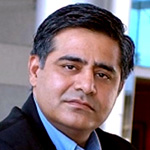
GSF Accelerator which is perhaps India’s first multi-city start-up accelerator launches on October 15, 2012. It is said to have received backing from 30 leading founders and five venture funds. GSF Accelerator is an initiative by Mr Rajesh Sawhney, Founder, GSF Superangels, a network of 30 leading digital founders and investors. The key advisors to GSF include Mr Naveen Tewari, CEO and Founder, Inmobi, a global mobile platform which is said to have raised $ 200million from Softbank recently; Mr Avnish Bajaj, Founder, Matrix Partners, one of the leading Venture fund; and ex founder of Bazee (acquired by ebay), Mr Saul Klein, Partner at Index Ventures, co-founder of TAG and Seedcamp; and Mr Dave McClure, founder of 500 Startups, one of the leading early stage investor in the Silicon Valley.
The GSF Accelerator initiative is said to have been built around three core values namely, ‘intensity of mentorship’, ‘deep collaboration with the ecosystem’, and ‘creation of a global springboard’ for the next generation of Indian start-ups. This program is designed to create the next wave of product-oriented technology start-ups in the areas of mobile, social, local and cloud.
In conversation with MxMIndia, Mr Sawhney explained, “Our goal is to precisely help these start-ups who are product oriented primarily in mobile, social, local and cloud and provide them the best experience you can give them. I have personally designed 25 workshops which I think are absolutely critical to the early days of startup i.e. for the first one year. We will be providing initial capital which will be the global benchmark i.e. providing US $ 25,000 to 30, 0000 for single digit equity, and we will be in line with that.”
According to Mr Sawhney, in the long run India will see a quantum leap in startup companies, however the problem today is that most of these companies are not being funded at their initial stage, which is very crucial for growth. “We are not providing enough mentorship to young companies and we are not funding them at their initial stage. Although, there are a lot many companies being formed even today, if aspiring entrepreneurs can get the right amount of capital, the right amount of mentoring, then I don’t see why we cannot build great companies in India with global impact. We are seeing huge entrepreneurial activities across cities but, what is really missing in India is the eco-system support. Therefore GSF Accelerator is for the startups and by the startups and that’s the core of this initiative.”
The GSF Accelerator program will run simultaneously in Delhi, Mumbai and Bengaluru between October- November, 2012, and each location will be hosting four start-ups. Extensive coaching will be provided to each of the 12 GSF start-ups over a period of seven weeks by a mentor pool of over 200 leading co-founders and digital masterminds from across the world. The GSF accelerator start-ups is said to attend 25 intensive and proprietary workshops conducted by global experts.
In addition to this, GSF Accelerator has inducted 10 serial entrepreneurs with deep domain expertise in technology and start-ups as Entrepreneurs-in-Residence (EIR). It is in the process of announcing three or four more EIRs who will be conducting this workshop and these EIRs will also work as buddy mentors during the seven weeks time i.e. between October and November 2012. “All these EIRs will be attached to one company each to help them steer through the program. All these EIRs have been carefully chosen; they are in their 30s, large tech orientation, many of them have worked in startups, many have established their start ups, etc. so they bring huge knowledge base to this workshop. More importantly they have been selected for their entrepreneurial attitude which we think is very important.”
In a prepared statement Mr Sawhney stated, “12 start-ups will receive initial funding from GSF this year. This is the single largest funding platform for the Indian start-ups. GSF Superangels will provide further funding to a few start-ups at the end of the program. The 12 start-ups will also be showcased at the GSF2012 (The Second Global Superangels Forum) on November 26 and 27, 2012, where 400 leading early stage investors from across the world will meet start-ups.”
When asked about expanding the initiative to newer cities and towns, Mr Sawhney said that while Mumbai, Delhi and Bengaluru are the three big hubs for startup companies, expansion to newer markets is also on the horizons for 2013. “We believe in India the three big hubs for start-ups are Delhi, Mumbai and Bengaluru hence we would be keen to look at other markets only based on our experience this year”, he said.
So, with more start-up companies setting up in India in the near future, what impact will it have not only on the digital economy but, the Indian economy as a whole? “What we are not seeing in India is more innovation and therefore many of the startups are not able to break-through in the overseas market. We are looking for those kinds of stories which have the potential to break through to global audience, so that is the key impact a startup should have. The problem however is that the venture community is not getting enough high quality startup companies. So, I think it will be a very significant effort in the way the startup eco-system gets shaped in India in the coming years,” observed Mr Sawhney.