Tag: Venkatesh Kini

  • Coca-Cola announces senior leadership changes

    By A Correspondent


    Coca-Cola India announced senior leadership changes in keeping with its focus on providing more choice to consumers. Deepak Jolly, currently Vice President, Public Affairs & Communication has been entrusted the responsibility of setting up a new function within the Company which will promote its growing portfolio of niche brands within the franchise bottling territories. Deepak will continue to report to Venkatesh Kini and will take over his new responsibility starting November 1, 2015. The Company already has an established portfolio of premium brands like Schweppes Tonic, Schweppes Gingerale, Schweppes Soda and soon to be launched Fuze Tea.


    Deepak is a veteran of the Coca-Cola system who has led the Public Affairs & Communication function within the company for over 10 years.  He joined Coca-Cola India at a time when the Company was facing significant challenges and helped turnaround the business by focusing on reputation management. Over a career spanning more than three decades, he has worked with top corporates like Hindustan Unilever, PepsiCo, Godfrey Philips and Bharti Airtel. In preparation for his new assignment, Deepak will soon attend an executive leadership program at a leading University in USA for a period of six weeks.


    Ishteyaque Amjad, who has joined Coca-Cola India, will take over the responsibility of the Public Affairs & Communications function for India and South West Asia. Ishteyaque most recently was Director Corporate Affairs for Cargill, based in Singapore. Ishteyaque joined Cargill in 2008 to establish the Corporate Affairs function for their India business. He launched Cargill’s ‘Nourishing India’ program that aimed to provide solutions for food and nutrition insecurity. In a career spanning more than two decades, he has held senior roles in companies such as HCL Enterprises and Essar Group and also served with the Indian Army. He is a Post Graduate from Symbiosis Institute of Management Studies in Pune and a Bachelor of Economics from Aligarh Muslim University. He is also an alumnus of the Indian Military Academy, Dehradun.


    Announcing these changes, Venkatesh Kini, President, Coca-Cola India and South West Asia, said, “Deepak has accepted the responsibility to lead the premium and niche segment in the franchise bottling territories. In many ways, he is returning to where he started his career from – the Operations and Sales role in a large FMCG Company. I wish him the very best as he takes up a very challenging new assignment. I also welcome Ishteyaque Amjad to the Coca-Cola family. He has solid credentials and will make a great addition to our leadership team.”


  • Be consistent, Stay relevant: Coca Cola’s Venkatesh Kini

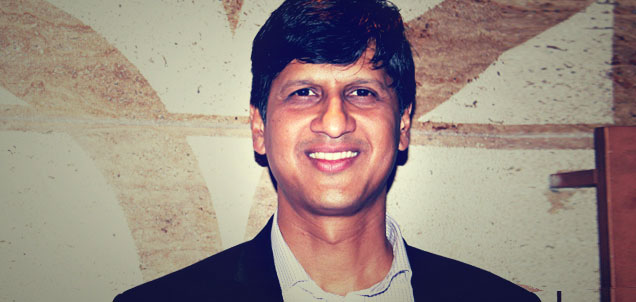
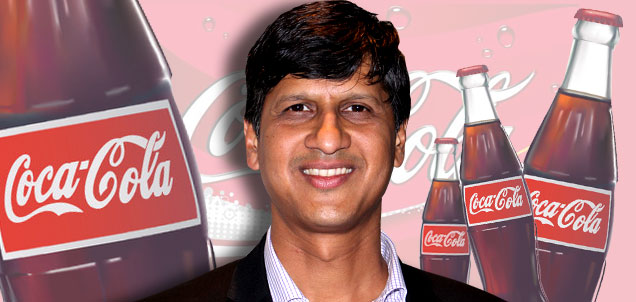
    Venkatesh Kini

    By Dyanne Coelho


    The International Advertising Association (India Chapter) hosted the ‘IAA Retrospect and Prospects: The Coca-Cola Viewpoint’ seminar in Mumbai, which brought in Venkatesh Kini, President, India and South West Asia, Coca Cola as the keynote speaker. And for those that had assembled at the venue to hear him speak, it was an opportunity worth the wait.


    Taking the audience right to the moment of reckoning in his career, Kini said “It was only after I quit marketing five years back and made the switch to general management that I realized the world doesn’t revolve around marketing,” He pointed out that Marketing is one of the many things that needs to go hand in hand for a product to be a success. “Coca Cola has been around for 128 years and the one thing we’ve learned is that advertising and marketing truly works”, he said. “Our consumers have helped make the brand what it is and that’s our secret formula,” Kini said, talking about Coca Cola sticking around successfully in the beverage industry for over a century.


    Presenting a comparative analysis, Kini said that the difference between then and now is that then there existed one screen for many people, and now it’s one person–many screens. The way one connects with consumers has changed, he pointed out. “Everything is moving to a 2”x4” screen,” he said. The concept of a target audience no longer exists, Kini said, that paradigm is changing, as we can no longer focus our communication on one set of individuals. “Your target is no longer a single point, but a node in a network.” The question today is, how does one get a conversation going about a brand and then amplify that conversation through television advertisements, social media, etc. “A consumer today is a great reporter, and twitter is the most widely read newspaper,” he said.


    Kini gave out a few pointers that he recommends marketers should absolutely not do without. He noted: “Be share worthy, simple, and contemporary, be constructively discontent, be consistent, disruptive, collaborative, and always have a purpose.” Kini spoke of a campaign initiated by Coke in the Philippines. Coke studied the Filipino population and realized that many left the country for better opportunities abroad, and due to very expensive air tickets, some hadn’t seen their families and kids in years and even decades. The campaign was done during the Christmas season, which is an important festival of celebration in the Philippines. Coke bought tickets for some of the Filipinos living abroad and sent them home for Christmas, surprising their families. The advertisement went viral in the Philippines and many other countries, not simply because of the brand Coke, but because the story was touching and share worthy, Kini stated.


    Coke has managed to keep the brand contemporary even after 128 years. It is important to keep the brand relevant for today’s consumers and evolve with them, he said, citing the example of the remake of Coke’s 1971 hilltop ad. In the hilltop ad of 1971, Coke gathered people from different parts of the world on a hilltop in Italy, where they sang, ‘I’d like to buy the world a Coke, it’s the real thing.’ This ad was a huge success in the 1970s and Coke wanted to reinvent and contemporize the ad for today’s consumers. So they partnered with Google and Google pitched the idea of actually creating a technology wherein people from one part of the world could actually buy a coke for a stranger on the other side of the globe. They came up with special vending machines, where you could pay for a coke in one country and someone in the country you chose would receive a free coke. The receiver could also send back a thank you message. This is how Coke has constantly reinvented itself, Kini said, “We haven’t reinvented or logo, product, or the color of our packaging, we’ve merely evolved with our consumers.”


    Talking about being disruptive in your marketing strategy, Kini cited the example of Coke Studio, where the company spent little or no money on advertising. The concept of Coke Studio was so unique that it automatically grabbed eyeballs, he stated. “We have given several emerging independent musicians a platform to showcase their own music through Coke Studio. No Bollywood music has been used. Simultaneously, we’ve also brought about the revival of folk music through Coke studio,” Kini added proudly. This out of the ordinary form of marketing is what has created a loyal fan following, he said. “There is a lot of value to doing the unexpected and unconventional.”


    Kini spoke about the CSR initiative that Coke has been working on in collaboration with NDTV. Support my School is an initiative by Coca Cola and NDTV by which they visit schools in rural areas and assist in the renovation, building toilets, playgrounds, etc. “We can’t thrive unless the communities we serve thrive. We ought to appeal to a higher purpose,” Kini said emphatically.


    Kini ended on a lively note, citing the example of the Coke ad wherein Coke arranged for a team of blind footballers to be able to touch and hold the FIFA World Cup. Usually the FIFA Cup can only be touched by the winning team and heads of state. Coke made it possible for these physically impaired young boys to be able to touch the cup of their dreams. This again was a story of having a higher purpose, Kini said, that’s why it got shared and became popular.


    Storytelling is the way forward, Kini added, and the story has to connect with human emotions. “The future is in the power of a story well told,” he concluded.


  • How Coca-Cola has stayed relevant over 128 years


    In this age of reduced attention span, how does a 128-year-old brand like Coca-Cola stay relevant for young, restless minds toggling between several screens? Venkatesh Kini, President, India & South West Asia, of the company presents a stock-take of marketing, media and advertising in 2014-15 along with some crystal ball-gazing at an International Advertising Association (India Chapter) programme in Gurgaon. Shruti Pushkarna captures highlights from the review. MxMIndia had carried a short report on the event last week, but this is a more detailed account as stated by Mr Kini.


    What’s the secret formula of Coca-Cola? The secret formula is its consumers and the Coca-Cola’s ability to stay relevant to changing consumer trends. The world of media, advertising and marketing is changing, and marketers and advertisers like us need to adapt to this change in order to stay relevant to the consumer.


    So how does a 128-year-old brand like Coke stay relevant?


    There are fundamental shifts that are occurring today. There is a shift from people watching one screen, to people watching many screens. What we see is not just a fragmentation of media, but also a fragmentation of attention. This fragmentation and shortening of people’s attention span, is the biggest seismic shift that we are seeing in the industry. Today, people watch more YouTube videos every day than they drink cans of Coke — or even all beverages put together. There are more cellphones in the world than there are people. And over 60 per cent of people in leading markets engage with social media on their phones. That means the world of communication is essentially shifting to a 2×4 screen. What does that signify for advertisers or marketers? We are moving away from the world of one-way communication — with television at the centre of it — to a world of conversations that start through social media and also occur on TV and other digital platforms. It all boils down to having conversations.


    Another interesting shift happening in the industry is the concept of the ‘target audience’ vanishing. Marketers always thought of the target audience as the destination. But now there’s no longer a single target audience. Earlier, the only way of consumers turning into networks was through word of mouth. Today, every consumer has a global audience.


    Marketers and advertisers have got to get into the business of consumer experiences because the rules of engagement are changing. The new rules start, first, with stories. Stories that are share-worthy; stories that people tell or brands tell and stories that will spread, with or without you. Today’s consumers don’t just consume brand messages, they get into conversations with each other. And the pace at which these conversations spread is unbelievable.


    The best way to get your message out there is to get people talking about it. And for it to be share-worthy, it needs to be provocative. Provocative sometimes means taking a few chances. A good example of this would be a campaign done by Coke on a sensitive issue like India-Pakistan. Coke put vending machines in Delhi and Lahore, and both vending machines had cameras that could display and communicate all that was happening on the other side. Coke did not spend a rupee to advertise this video. It was put on YouTube and people simply shared it. The reason people shared it was because it was a nice story and it was provocative.


    Apart from being provocative, one has to be able to break the status quo. One good example of this would be what Coke has managed to do with Coke Studio. This has created, by itself, a complete genre of music that is neither film nor folk. It has popularised music and musicians that would otherwise never have had an audience. This would be an interesting example of how to build a connect with today’s youth, where you bring them new experiences, and these experiences get them together. It’s not just a television commercial, it’s something more; it’s a consumer experience.


    It’s also important to keep your message simple. Today, if you can’t grab consumers’ attention in five seconds, then you’ve lost them. That’s the world we live in today. Just 140 characters is all it takes to get worldwide audience. So be simple, be short, be succinct.


    In the past 128 years, Coke has constantly reinvented itself. The one thing it hasn’t reinvented, is its logo, its product and the color of its packaging. So how does a brand like Coca-Cola stay contemporary? To cite another example, Coke took the most successful campaign from 1971 and contemporised it. The original campaign was called the hilltop ad and Coke partnered with Google to create a 21st century version of it. The hilltop ad was produced in 1971 and aired at a time when there was a lot of opposition to the Vietnam war, especially in the US. There was a desire to create peace and harmony, and Coke gave voice to that movement through this ad, where it assembled young people from all over the world on a hilltop in Italy to sing, “I’d like to buy the world a Coke…because it’s the real thing”. To contemporise that message, Coke partnered with Google, where the latter came up with the idea of ‘actually’ buying a bottle of Coke for a stranger across the globe. It was about connecting the world through technology, where technology is just a tool to make the world a little smaller, a little happier and hopefully a little more peaceful.


    When brands first started 150 years ago, they stood for a trademark that promised you a better product. Then as brands evolved, they said this brand doesn’t just make a better product, it promises a better you. And for a long time, it was all about creating emotional and personal benefits. But 21st century branding has become about a better world. Since social media has made consumers far more connected and conscious, they want to know if their brands and companies are making the world a better place. And brands that can connect to a higher purpose, find themselves connecting with consumers far more effectively.


    Ultimately, the world is becoming more complex and marketers and advertisers have to think of themselves as being part of a network. Through a collaborative model, they can spread a message or sell a service. Change is going to happen and change will be disruptive. So it is important to be adaptable, flexible and contemporary, as well as appeal to a higher purpose.


    This story first appeared in ‘dna of brands’ dated March 16, 2015


    Big Story imaging by Rafiq Barak

     

  • We’re seeing a fragmentation of attention: Venkatesh Kini


    By Shruti Pushkarna


    The India Chapter of International Advertising Association hosted its annual review of marketing, media and advertising at the Westin in Gurgaon on March 12. The annual review, titled IAA Retrospect and Prospects, was presented by Venkatesh Kini, President, India & South West Asia, Coca-Cola.


    Mr Kini started his presentation by citing the major shifts occurring in the world of media, advertising and marketing today. Through a series of audio video presentations, he pointed out the change in consumer trends and how Coca-Cola has tried to stay relevant for the past 128 years. “The secret formula of Coke is staying relevant to consumers and consumer trends,”  Mr Kini said.


    One fundamental shift according to Mr Kini that is occurring today is fragmentation of attention. He said: “There’s a shift from many people watching one screen to one person watching many screens. We don’t just see fragmentation of media but a fragmentation of attention. This fragmentation of attention and shortening of attention span is the biggest seismic shift that you are going to see in the industry going forward.”


    Among other changing trends taking place today, Mr Kini pointed out, the shift from one-way communication to conversations that take place on social media and other digital platforms. He said: “The concept of a target audience is gone. There is no one target but a network of people. And the best way to get your message out there is to get people talking about it.” For the message to be share worthy, it needs to be provocative, he added. He shared the example of a campaign by Coke on a sensitive issue of India and Pakistan, where they put vending machines in Delhi and Lahore, and both vending machines had cameras that could display and communicate what’s happening on the other side. He shared that Coke did not spend a rupee to advertise the campaign and just put it on YouTube where people shared it. The reason, he said, it got shared was because it was a nice story and it was provocative.


    Another change Mr Kini talked about is what brands have to stand for, today. “When brands first started 150 years ago, all it stood for was a trademark that promised you a better product. Then as brands evolved, they said this brand doesn’t just make a better product, it promises a better you. And for a long time it was about how brands create emotional benefits and personal benefits. But 21st century branding has become about a better world.” Mr Kini explained brands that can connect to a higher purpose connect to consumers far more effectively, because consumers are more socially aware and conscious today.


    Marketers and advertisers need to take note of the changing trends in consumer behaviour and consumer experience in order to communicate and get their ideas across, he said, adding: “The world is becoming complex and we’ve to think of ourselves as part of a network and through collaboration, we can sell anything we want or communicate any idea we want.”


    The event opened with a welcome address by Srinivasan K Swamy, President, IAA India Chapter who introduced the subject and the key speaker for the evening. He also listed out some of the upcoming events planned by IAA for this year.