Tag: UTV

  • 9X Media elevates Kanan Dave to business head of SpotlampE

    By Our Staff

    9X Media has elevated Kanan Dave to business head role of SpotlampE to drive the next phase of growth, strategy and the creative development.

    Kanan has been heading Marketing at 9X Media for the past 2 years. She is an experienced industry professional, with a career spanning over 15 years in media and entertainment sector. In her earlier roles at UTV and Disney, Kanan has managed the music and film marketing business, having worked on more than 50 movies across languages.

    Kanan Dave
    Kanan Dave

    Said Kanan Dave, Business Head  SpotlampE: “I am extremely happy to be a part of the company’s vision. SpotlampE has been a disruptor in the Indian music industry, giving independent and original music a great platform. The Independent music industry is at the beginning of a new era, driving deeper engagements in multiple genres and languages across the country and offering compelling content to artists, partners and fans. I look forward to working with the artists and creators alongside brands and media platforms to grow the music landscape further.”


  • Lotus Enterprise onboards Shrutish Maharaj as Chief Business Officer

    By A Correspondent


    Shrutish Maharaj

    Lotus Enterprise, the parent company of leading Marathi GEC, Fakt Marathi and sister concern of Enterr10 TV network, has unveiled its growth plans in the regional entertainment space. The soon-to-be-launched Kannada GEC, Dangal Kannada will be the group’s foray in south regional entertainment space. Former Enterr10 network Executive Shrutish Maharaj has been appointed to lead the charge as Chief Business Officer.


    Manish Singhal

    Maharaj, who has worked with media groups like UTV, Times TV Network, Helios Media and Enterr10 where he was Chief Revenue Officer until late last year, will see the revenue, strategy, syndication, operations,  marketing  and digital teams will report into him. Maharaj will also spearhead Bhojpuri Cinema, the leading Bhojpuri channel as an additional responsibility. He will be based in Mumbai andwill report into both the promoters Manish Singhal and Shirish Pattanshetty.


    Shirish Pattanshetty

    In a joint statement, both Singhal and Pattanshetty said: “We have immense faith in the capabilities and credentials of Shrutish and we are most confident that his is the right leadership to transform our vision into reality, as far as regional TV space is concerned”.


    Added Maharaj: “It’s thrilling to be back working with the group and the duo. Representing some exciting products in some exciting markets will be a precious opportunity to also learn while I lead. My objective will be to help them build valuable media brands while scaling up and fast tracking the revenue mandate. Adopting a transformational approach as against a transactional one has always been a key to differentiate brands from products and we pretty much are committed to lead our group in that direction from here on.”


    Meanwhile, the Fakt Marathi channel will be continued to be handled by Screenmax Media currently.


  • Abhishek Maheshwari to lead Disney Consumer Products in India

    By A Correspondent


    The Walt Disney Company India has announced the appointment of Mr. Abhishek Maheshwari as Vice President and Head, Disney Consumer Products. Mr. Maheshwari takes over from Roshini Bakshi who has resigned from the company to pursue other interests.


    “Abhishek has been a key member of our management team since 2012. Over this time, he has worked closely on the integration of Disney and UTV, on identifying local growth initiatives for the company and on formulating our long-term strategy in India,” said Mr. Siddharth Roy Kapur, Managing Director, The Walt Disney Company India. “Abhishek brings to this role a deep understanding of our businesses along with a diverse set of leadership skills, and he is well placed to help us continue to grow our consumer products business in India.”


    In addition to focusing his energies on leading Disney’s Consumer Products business, Mr. Maheshwari will continue to oversee Corporate Strategy and Business Development for the Company in India.


    Before joining Disney, Mr. Maheshwari worked in various management roles for Kubera and prior to that with McKinsey & Company at their Mumbai and Stamford, Connecticut offices. Abhishek received a Master of Business Administration (MBA) with distinction from Columbia Business School and a Bachelor of Science (BS) in Electrical Engineering from the Indian Institute of Technology, New Delhi.


  • Ronnie Screwvala sets up Unilazer Sports; Supratik Sen to head biz

    By A Correspondent


    Former Disney UTV head Ronnie Screwvala’s Unilazer Ventures has ventured into sports and has hired seasoned sports marketer Supratk Sen as its CEO for the venture. Supratik Sen joins in from Red Bull India wherein he was National Head for Sports and Events Marketing.


    Unilazer Sports, a division of Unilazer Ventures, led by Mr Sen will focus on teams, leagues, academies as well as creating IPs and franchises in two or three selected sports.


    This ex-national rugby player, who was also a professionally trained footballer and cricketer spent the last five years at Red Bull India leading all their marquee projects with athletes, sports projects and events in the country. Before joining Red Bull, Mr Sen worked with Australian major Repucom. He has also worked with sports, event marketing and media management companies Procam, Percept D’Mark and E-Sense Entertainment.


    Unilazer Ventures Ltd, promoted by First Generation Entrepreneur Ronnie Screwvala is a diversified entity with focus on creating ground up businesses and being a Strategic Equity Investor in others. Unilazer brings hands on business experience from its Founders backed by an expert team that adds value to strong entrepreneurs/founders in varied aspects of their business growth. While Unilazer is sector agnostic it has a leaning to new greenfield and high growth segments like Agriculture, Healthcare and Pharma, Education, E-commerce and sectors deeply entrenched in the India Consumption Story


  • Life after UTV for Ronnie Screwvala

    Life after UTV for Ronnie Screwvala


    By Malini Goyal


    What would you have done if you started off with a few thousands of rupees and turned them into a couple of thousand crore over roughly three decades? Ronnie Screwvala, 57, reckons it’s the time to do “something entirely new”. A smalltime cable operator in Mumbai in the early 1980s, Mr Screwvala went on to build a $1.4-billion media empire straddling movies, gaming and new media, TV content and broadcasting.


    After selling his entire stake of 70% in UTV Software to Disney by 2011 for a cool Rs 2,000 crore, last month Mr Screwvala exited the company he had founded – and in the process exited the media and entertainment (M&E) sector, too. “I came into this industry with Rs 37,500. Today, I have lots of money but that’s all notional. The struggle [going forward] for me will be of a different kind. I am at a crossroads, looking at incredible opportunities,” says Mr Screwvala.


    The opportunities involve parting with parts of the stash he’s sitting on in two ways – one, with a profit motive, by turning investor-mentor for start-ups; and the other with a philanthropic objective. And they promise to keep him busy – and away from the M&E world for some time to come.


    A non-compete clause signed with Disney bars Mr Screwvala from starting a conflicting business. But his new calling may ensure he never returns to the business he knows best. “If I know Ronnie well, he will never come back to the media industry. The sense that I get from him is that he has totally moved on,” says Star India CEO Uday Shankar. Globally, successful entrepreneurs like Marc Andreessen, founder of Netscape, have followed non-linear paths by exiting successful ventures to turn both investor and serial entrepreneurs. Back home, Ajay Piramal is one prominent investor who is looking for avenues to park the proceeds from the sale of a pharma venture.


    Elsewhere, Infosys’ NR Narayana Murthy and Wipro’s Azim Premji have set up funds to invest their personal wealth. But they both remain deeply entrenched in and committed to the businesses they co-founded or founded. Screwvala, for his part, belongs to a rarer breed that is starting all over again from scratch on a totally fresh canvas.


    Entrepreneurial Dream

    Sitting relaxed in his spacious fifth floor penthouse in the tony Breach Candy area of south Mumbai, Mr Screwvala is applying the finishing touches to the blueprint for his second innings. While his plans are still evolving, there are few ground rules he has set for himself. One of them: politics is a strict no-no as a career alternative. He also broadly wants to spend half his time in business and half pro bono. “I want to evangelize entrepreneurship,” declares Mr Screwvala. He wants to use 10% of his time figuring ways to build a platform to boost entrepreneurship.


    “I want to do this for myself. I have to do one or two very disruptive things so that people can look at entrepreneurship more positively in India.” He is vague, he admits. But his mind is running wild doing some blue-sky thinking. His options: either become a catalyst in building an ecosystem; or help figure out new ways to make crowdfunding possible in India; or even write a book. “That’s a massive passion for me. I want to build communication tools and platform to enable that ecosystem. This could be the touchpoint to my past.”


    Currently at the heart of his strategy for investing – both money and his leadership bandwidth – in start-ups is Unilazer Ventures. And here too he’s doing it his way: He won’t settle for less than 35% in a firm; unlike private equity investors, he will not have a time horizon; and he’s extremely selective about sectors, reluctant to look beyond e-commerce, health, education and agriculture.


    “This [Unilazer Ventures] is for profit. Agri is so unglamourized. Nobody is looking at it. But it offers great margins,” he says. While most of his investments will be in start-ups seeded by others, Mr Screwvala plans to build at least one or two businesses ground up.


    His optimism and passion notwithstanding, sections of the PE industry have their reservations about the start-up fervour in the country. “The track records of investments made by many entrepreneurs have been mixed so far,” warns Rahul Bhasin, managing partner at Baring Private Equity Partners India, adding that in India managing the external environment is a huge challenge for greenhorn entrepreneurs.


    Swades and Philanthropy

    By contrast, Screwvala’s other plan on the drawing board appears infinitely less risky although he will be as demanding in making every penny count. He’s set aside Rs 350 crore of his personal wealth and will raise a similar amount from others for Swades, the philanthropy arm. “India does not have a problem of resources. Government spends massive amounts of money but the impact is low. Execution is the key,” Mr Screwvala explains.


    Most corporate philanthropic outfits focus on a specific issue – Bharti and Premji foundations focus on education, for example. Swades, though, has a geographic approach – for starters it plans to look at all major issues faced by Maharashtra’s villages in a 360-degree manner. “I want to create a model that is scaleable, efficient and has measurable impact – like any company,” says Mr Screwvala.


    Swades is already working in 1,000 villages impacting a lakh villagers. Deval Sanghavi, cofounder, Dasra Foundation, a philanthropic organization, points out that Swades does not want to reinvent the wheel. It prefers to get the right expert partners in a range of areas like education, farming, water, health and sanitation, and turn into a catalyst.


    Take for example its work with the farmers. In villages you realize men between 20 and 45 have migrated to cities and are living in terrible conditions, Screwvala says. He wants to reverse the tide and figure ways to improve incomes and standards for farmers. Swades has collaborated with Jain Irrigation to introduce drip irrigation for small farmers. A year back it began working with agricultural bank Nabard. “The best thing about Swades is that they first do a pilot on their own to demonstrate the benefits and then seek government support for farmers,” says Nanda Survase, district development manager (Raigad), Nabard.


    One such villager to benefit is Jeeteshbhai, 22, who was in Mumbai since 2010 working at a retail shop on a monthly salary of Rs 5,000. Last year he returned to his village in the Raigad district. His farm is small – under three acres. But using drip irrigation, vermin compost and some smart management of crops like water melon and a few vegetables, he has earned Rs 25,000 in the past four months. He is looking at a net income of Rs 1 lakh a year – far more than what he was earning in the city.


    Praveen Jain, COO, Swades says there are a few things they keep in mind before starting work in a village. “We measure everything so that we know the progress. We only look at projects that are self-sustainable in 3-5 years. And our exit is built in.” Also to ensure villagers’ commitment, nothing is offered free. Villagers need to co-contribute, even if a small amount. Take for example, the water supply to each home. Villagers co-contributed 10-15% of the cost of the project. And they also put together a small committee and a mechanism to build a corpus for regular maintenance of the pipes. Today, six gram panchayats – 20 villages and 6,000 people – are getting drinking water right inside their homes.


    Understanding the Disney Exit

    It’s difficult for many – including his peers in the M&E sector – to figure why Mr Screwvala chose to quit the game he was so good at. “When I sold off, they [other entrepreneurs] were shocked. Most couldn’t believe it,” he admits. But he’s convinced it’s the right reason. For a couple of reasons.


    First, UTV may be well diversified within M&E, but lacks size and scale in most of them. In broadcast, for instance, the absence of a general entertainment channel (GEC) is stark. “Their presence was through niche channels where getting advertisements and franchises becomes difficult if you are not No. 1,” says Nikhil Vohra, an M&E analyst who recently founded Sixth Sense, a consumption-centric venture fund.


    The second reason for exiting is the challenging and uncertain nature of the content-driven business. One, while the industry is secular in consumer demand, its heavy dependence on advertising makes its financial performance asecular. Second, the entire industry is undergoing a massive churn as technology, ubiquitous smartphones and an anytime-anywhere audience are disrupting old business models. “Competition, choice and globalization of content mean that it’s game over for a lot of M&E companies. Many will disappear and there will be consolidation. Only those who have the resources to invest in high quality content and strong brands will survive,” says Mr Shankar.


    That Mr Screwvala is remarkably detached from the business he built with his blood, sweat and passion made the exit easier. “I don’t think you can expand and build scale if ownership and control is what you are obsessed with,” he says. Star India’s Mr Shankar explains that Mr Screwvala is “passionate but not emotional about his decisions”.


    Disney began its association with UTV first as a customer, then as an investor, partner and, eventually, owner. After picking up a minority 14.99% stake UTV in 2006, by 2010, both partners were asking the same question: “Now what?” “A buyout seemed the most logical step,” says the founder.


    The Disney Ride

    In 2012 after completing the buyout of UTV, Screwvala was appointed managing director with the mandate to steer the integration of the two companies. It wasn’t a smooth ride. “There were cultural differences although value systems were similar,” says Mr Screwvala.


    Like all integrations, this one too had its own share of issues. Some redundancies were inevitable. With the far bigger (in India) UTV dominating the merged entity and Mr Screwvala at the helm, it meant most key positions were helmed by UTV executives. Siddharth Roy Kapur, from the UTV stable, took over as managing director. Unsurprisingly, many Disney executives put in their papers.


    Disney’s MNC culture with a thrust on structures and processes is a polar opposite of Mr Screwvala’s entrepreneurial style of functioning. His informal style – epitomized by the round-neck T-shirts he often sported at meetings and important events – was in stark contrast to the formal suit-and-tie culture of Disney.


    By the fag end of his stint as Disney India MD, Mr Screwvala’s patience was running out. “He was completely stressed,” says an ex-Disney executive. For an entrepreneur who was used to taking quick decisions, working in an MNC where decisions were being taken far away in Burbank, California wasn’t proving easy. Take, for instance, a simple thing like finalizing office space – the process took an entire year. “I could see the frustration and suffocation building inside him,” adds the former Disney executive. Starting afresh is clearly proving to be liberating.


    Source:The Economic Times

    Copyright © 2014, Bennett, Coleman & Co. Ltd. All Rights Reserved

    Licensed to republish

     

  • Rise, Rise (& now Exit) of Ronnie Screwvala

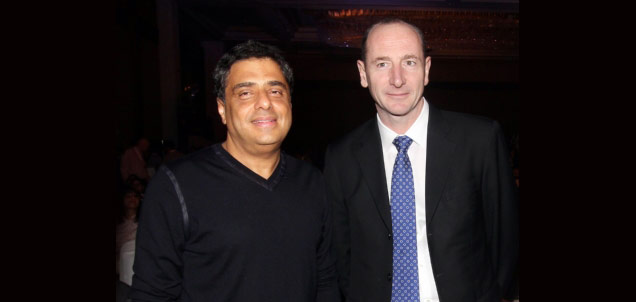
    Ronnie Screwvala with Andy Bird. Picture: Fotocorp


    By A Correspondent


    The exit wasn’t unexpected, the timing may not have necessarily been known. There were many who said while The Walt Disney Company may have acquired UTV, it was the latter which was calling the shots. Yes, indeed. Disney-UTV was a Ronnie Screwvala company, and even though Andy Bird, Chairman of Walt Disney International, was around to oversee that all was well with the India operations, clearly it was Mr Screwvala who steered the business.


    With reason. While UTV’s promoters were happy to cash out, Disney needed a UTV for its India presence. It was the film business that was a huge pull for Disney. Meanwhile, Siddharth Roy Kapur, currently Managing Director of Disney UTV’s studio business, has been appointed successor. He will take charge on January 1, 2014.


    Winner all the way

    Rohinton Screwvala started out big even in the early 1980s. He offered top quality international programming and movies via cable, when people were content watching all of it via video cassette recorders. Ronnie, as the boy in his 20s was known, built a cable TV network called Network and wowed his customers in the Cuffe Parade district of South Mumbai.


    Ronnie was popular on Bombay Doordarshan’s youth-centric show called ‘Young World’ as also in the city’s theatre circuit. He soon ventured into producing ad and corporate films and some content for Doordarshan. His crew comprised now-wife Zarina Mehta, Deven Khote, Shernaz Patel, Bugs Bhargava and a few others. Even then, programmes like ‘The Mathemagic Show’ from the Screwvala stable were considered slick and top-grade.


    On June 22, 1990, United Software Communications Private Limited was incorporated as a private limited company. The private was dropped in 1995, and the United turned into UTV in 1998.


    In 1992, when Subhash Chandra started Zee TV, he commissioned UTV to produce some 250 hours of programming. In the meantime, the company ventured into inflight entertainment for airlines and even started selling airtime for programmes made by non-UTV producers. In 1995, UTV launched India’s first daily soap titled `Shanti’. The soap starred a certain Mandira Bedi who now stars in the Indian version of ’24’.


    In May 1995, UTV acquired 54.60% stake in Laezer Production Private Limited (incorporated in 1982) in order to enter into the area of post-production. Laezer Production was rechristened United Studios (USL) the same year. In 1996, Disney contracted USL to dub its library into various Indian languages. Two years later, the firm acquired the animation production company of the renowned animation artist Ram Mohan. Somewhere around then, the company also got into movie distribution business.


    UTV’s foray in broadcasting started with Vijay TV in November 1998 and in 2000, Ronnie set up an internet content creation and aggregation business under the aegis of UTVNet.


    From then on, there was a fair bit of restructuring and financial consolidation that happened. In 2001, 51 percent of Vijay TV was sold to Star India and in 2002-03 and later in 2004, UTV’s 43.89 percent equity in the Tamil channel was also sold. In the meantime, the studio business of Western Outdoor Media Technologies Limited (WOMTL) was acquired.


    In 2005, UTV went in for an IPO which was oversubscribed by 26.35 times. Having forayed in news-based programming early and even anchored some shows, Ronnie set up business channel UTVi which was later called Bloomberg UTV given a tie-up with the overseas financial information network. The business channel saw a stake sale to Reliance Capital.


    Given the success it found with many movies , there were several international studios and entertainment majors eying a stake in UTV (including Rupert Murdoch who made an investment), but it was The Walt Disney Company which acquired it eventually. As of February 2012, UTV turned into a wholly owned subsidiary of Disney with Ronnie at the helm.


    Succession planning

    For a few weeks now, there has been a buzz that Ronnie was stepping down. On Thursday, October 24, the announcement finally came in as the Walt Disney Company (TWDC) announced that Ronnie Screwvala will step down on June 30, 2014 and Siddharth Roy Kapur, currently Managing Director of Disney UTV’s studio business, will take over the company’s India operations. Mr Kapur will become Managing Director of TWDC India effective January 1, 2014, and Ronnie will assist in the transition until June 30 next year. Later in the evening, he hosted a dinner for the staff. An early farewell dinner of sorts.


    “It’s been a fantastic seven-year working relationship with Disney,” said Mr Screwvala, “first as a co-shareholder, then when Disney held a majority stake in UTV, and since February 2012 as Managing Director of Disney UTV India. It has been a great experience to be part of the world’s No 1 entertainment company and to have worked with such a talented team to solidify our footprint in India as a diversified and successful business across television, broadcasting, movies, consumer products, games and digital.”  Andy Bird, Chairman of Walt Disney International added, “I’ve had the pleasure of working with Ronnie for the past seven years and appreciate his entrepreneurial drive and vision for Disney in India. He has successfully managed integration efforts and set the foundations of long term growth for our business. In 2012 when we acquired UTV, Ronnie had a clear mandate to merge two organizations, build a single team and lay the strategic direction for a diversified media and entertainment company that would be part of the growing India growth story. When he passes on the baton in June 2014, almost two-and-half years since the acquisition, he will leave the company in a great place strategically and with a strong leadership team.  I want to thank Ronnie for helping to shape Disney’s journey in India and for his contribution to our success. We are delighted that he will continue to be associated with Disney in the future,” added Mr. Bird.


    Mr Bird also announced that Mr Roy Kapur will become Managing Director of TWDC India effective January 1, 2014. “Sid has been an integral part of the Disney UTV family and brings to the role a diverse set of business and creative skills and a strong pulse on the Indian audience and consumers.”


    “Sid’s innate understanding of the Indian viewer, his ability to leverage those insights in business, coupled with his experience and expertise in fast-moving consumer goods businesses, television and in building India’s leading movie studio made him the natural choice for the role. I look forward to working with Sid to take Disney UTV to its next level of growth in the years to come,” added Mr Bird.


    “Disney is one of the most admired media brands in the world and I see this as a great opportunity to work together with the incredible team we have at Disney UTV in India, to take our content and our brands to the next level of growth in one of the most dynamic media markets in the world,” said Mr Roy Kapur. “It’s been close to 15 years for me in media and entertainment, more than half of those at Disney UTV, and it’s wonderful to be part of a fantastic team and the diversified businesses that now make up the combined company.”


    What next for Ronnie?

    As per a communiqué issue, after June 2014, Ronnie will pursue his entrepreneurial goals in some of the impact sectors in India and devote more time with his foundation, Swades. While at the time of writing one is unsure of what the contract says on whether he can venture into any of the sectors that Disney-UTV is into for a while, but clearly all those who have tracked his career know that you can’t keep the man away from the action for too long.


  • Keith Alphonso quits UTV, joins OML as Revenue Head

    By Meghna Sharma


    Keith Alphonso

    After one and a half years, Keith Alphonso has left UTV. He was business head of Bindass, the youth channel from the UTV stable which was recently acquired by Walt Disney, and was in charge of rebranding the channel in a bid to keep pace with the ever-changing outlook of its core audience set.


    Confirming the news to MxMIndia, Mr Alphonso said, “Yes, I have quit UTV and joined OML as Head of Revenue.”


    In his new role at Only Much Louder (OML), a company which focuses on reaching the youth market in India through high quality entertainment properties including music festivals, television and web-based content, Mr Alphonso will be creating more branding properties. “I have mastered the art of creating ‘branded content’ from my previous work experiences. So, will be in-charge of handling similar profile at OML too. The only difference being that here it will be across platforms – television, live events, web etc.”


    Prior to UTV, Mr Alphonso has worked with Zoom Television, MTV and Times of India in a career spanning almost 17 years.


  • Walt Disney India sets up DisneyUTV Digital

    By A Correspondent


    The Walt Disney Company India has decided to strengthen its digital business. On August 02, the company announced a restructuring of its digital assets with an aim to increase its growth in games, video and audio services for mobile, online and interactive TV.  The new division, DisneyUTV Digital will combine the businesses and talent from Disney, UTV and Indiagames. All content and brands from Disney, Marvel, UTV, Bindass, as well as original content and games will now be developed and managed by DisneyUTV Digital.


    DisneyUTV Digital will be headed by Vishal Gondal, who will be its Managing Director. Samir Bangara, also Managing Director, will be working in collaboration to drive DisneyUTV’s future growth. While Mr Gondal was the founder and CEO of Indiagames, Mr Bangara was the COO, Indiagames. Together they are said to have built Indiagames into India’s premier gaming company, earning close to 50 per cent market share in the country.


    The DisneyUTV Digital team will manage all mobile, video, audio, broadband, ITV, games and virtual world’s initiatives, with a combined audience reach of over 300 million in India. Some of the previous works from the Disney and UTV teams in India include products like “Audio Cinema” (a movie-on-your-phone service), “Divya Kathayein” (devotional content on mobile in 7 languages), “Digital Studio” (series of original content developed for the web and mobile), “Sponsored Tweets” ( the Twitter advertising platform ), mobile games such as “Aladdin” (India’s leading paid mobile game with over 8.2 million downloads), “DLF IPL Cricket” (the official mobile game for the DLF IPL Franchise), “Cricket Fever” with over 20 million downloads, “Ra.One Genesis” (which saw over 1 million downloads within a week of its launch) and others.


    DisneyUTV’s Digital team aims to innovate and deliver unique cross platform and cross media digital experiences focused on entertaining the Indian digital audiences across age groups.


    Disney UTV’s digital division will be structured as follows:

    Cyril Ferry – Executive Director -Mobile; Sameer Pitalwalla – Director – Video and Celebrity; Lavina Tauro – Director – Audio and Music; Deepak Ail – Director -Mobile;

    Hrishi Oberoi – Director – Games Publishing; Saishree Ashwin – Manager – Virtual Worlds; Tejraj Parab – Business Head – Games on Demand; Dushyant Saraswat – Director – Broadband & 4G initiatives; Sachin Janghel – Director – ITV; Aji Joseph – Director – Ad Sales


    The digital media in India is evolving rapidly with mobile leading the way. The country has the world’s third largest mobile Internet user base with over 121 million users (of whom 59 per cent are monthly active users) as of December 2011 in addition to the 85 million PCs and growing number of tablets. With the launch of 3G and onset of 4G services, digital consumption of entertainment is at an all time high and is exhibiting strong growth with new monetization models emerging around Freemium and Ad-funded content.


  • Vuclip wows women with video…on the go


    Text and Video by Shruti Pushkarna


    Mobile video portal Vuclip unveiled India’s first mobile video portal for women in New Delhi on July 11. The video portal for women, Mira!, is designed to appeal to the independent women of our times. Mira! draws content from around 30 content providers in India, as well as globally, to offer videos across a host of categories that interest women. The mobile portal will feature content relating to health, beauty, fashion, lifestyle, parenting, cookery, entertainment, astrology and much more.


    Launching the portal at the Press Club of India in New Delhi, Chief Guest Prof Kiran Walia, Delhi NCT’s women development minister, said: “Mobile phones are emerging as an economical tool for accelerating mass-scale development of women. Studies show that the mobile phone has helped women feel safer, more independent and connected, and has opened new professional avenues and income sources for women. As India’s first mobile video channel for women, I hope that this initiative will help boost mobile adoption among women, and will encourage the creation of more women-oriented mobile content.”


    Prof Kiran Walia, Delhi NCT’s women development minister, with a part of the the VuClip leadership team

    Vuclip also unveiled the findings of its global survey in which almost 40,000 women users participated from 176 countries, including nearly 13,000 women from India. The survey found that besides voice and text, 60 per cent of Indian women respondents use their handsets as a primary source of entertainment. As many as 80 per cent of the respondents reported steady increase in time spent on mobile-viewing. Besides movies and music, Indian women also loved watching TV soaps, funny videos, sports, news and celeb gossip on their mobile. Women between 18 to 35 years comprised 65 per cent of the Indian respondents, while 24 per cent were under 18 years and another 11 per cent were over 36 years.


    Commenting on the survey findings, Meera Chopra, Vice President-Advertising, Vuclip India, said: “Even as the adoption of mobile among women grows in India, it is encouraging to note that mobile is already becoming a woman’s preferred source for content. While 37 per cent women from India reported that they spend more than one hour daily on TV, print or radio media, a close 32 to per cent women reported that they spend over an hour to access mobile content every day.”


    Vuclip’s Global Vice President-Marketing, Judith Coley, said: “In contrast to the developed countries, internet in the developing world is arriving on phones before traditional computers. About 59 per cent of internet users in India get online via mobile phones. We hope that Mira! will help spark a revolution in the way women’s mobile content is perceived – by content providers, brands, and women themselves. Cisco predicts that mobile video will increase 25-fold to account for over 70 per cent of total mobile data traffic between 2011 and 2016.”


    [youtube width=”400″ height=”225″]http://www.youtube.com/watch?v=biLDcqZ-TkY[/youtube]

    Speaking about the choice of the name for the portal, Ms Coley said, “Mira!’ in Latin is the root word for ‘wonderful’, while in Spanish, ‘Mira!’ means ‘look’. Mira! is also the name of a bright star. The Mira! Woman is busy, engaged, radiant and full of life. She wants to make the most of every moment, and when she takes a break, she turns to her mobile phone for entertainment, news and tips.”


    MxMIndia also spoke to Salman Hussain, Vice President- BD & MD (India & Middle East), Vuclip. In his conversation with MxMIndia, Mr Hussain talks about the genesis of Mira!, Vuclip’s content partnerships, the road ahead and more.


    Excerpts from the interview:


    How did Vuclip decide to come up with a women mobile channel? And why ‘Mira!’?

    Vuclip launched in India in 2008 and it’s a mobile video portal. We were trying to get people to watch the videos they wanted on their mobile phones and it’s primarily search-driven. What we saw happening over the past couple of years that we’ve been around was that there were a lot of topics that were being looked at which were women-oriented and that was the genesis for us to create a verticalized portal with women-oriented content on it. The precursor to that was a global survey we conducted, where about 40,000 women responded, out of which 13,000 were in India. We asked these women that if we set up something with the kind of content they are looking at, would that be of interest for you. So that was the genesis for it. And Mira, the name was an amalgamation of the different things it means in various languages.


    Have you partnered with a content provider for all the content on the mobile video portal?

    Absolutely. Vuclip in India works with almost 80 content partners. We work with the large movie production houses, someone like a UTV. Then we work with television channels like a NDTV. We also work with a lot of regional players, like MAA TV down in AP, we also work with quite a few local news channels as well.


    So what about the content on Mira…

    Mira sort of becomes a subset of what’s happening on Vuclip. If you look at the Mira portal, you will see there are various kinds of content available, like the traditional entertainment genre, there’s also news so somebody like an AP (Associated Press) becomes a partner for that.


    If you could also share some mobile viewing trends in India indicated in the survey conducted by Vuclip.

    Vuclip is doing more than 4 million video views a day in India. We have an audience of more than 10 million unique users that are coming on to Vuclip each month. To talk about the kind of categories that people are viewing, they range from the typical movie related content, astrology, cricket and so on. But that’s not the only thing people watch. For example, you’ll be surprised that one of the big things that people look at is animation and nursery rhymes.


    Are you looking to launch any other channels apart from this women’s channel?

    Yes, there is a huge roadmap we have in terms of content that’s coming up. It will cover all genres. So there’s sports, music, devotional, cricket, health. It’s always going to be an ongoing process.


    Is this going to be an Instagram for video?

    Not really, because Instagram looks more at user generated content. In this case, we are more search-oriented, where we are saying that there is some curated content that’s available. But I think we’ll sort of move towards that phase eventually because while it’s easier to do that for images, it’s a lot tougher to do the same for video. Right now there is a huge demand for watching video content. I think as the space evolves, since video is still very nascent in Indian market, we will see folks starting to generate more video content. And that’s when we will see a video for Instagram sort of thing happen.


    Is Vuclip only for airing proprietary content? Or is it also into social video sharing?

    You know social is a very large aspect of why Vuclip grew in the first place. So if I watched a video which I liked, the biggest advantage that Vuclip brought to the table was that I could just forward that very quickly via Facebook, or tweet it or sms it to my friend. So that virality is what helped us grow in India. An interesting stat I want to share, when Vuclip started, 65 per cent of views came from search. But in the last four years, more than 65 per cent views come from people sharing. And that’s been the trigger for our growth.


    What are the infrastructural obstacles that something like Vuclip faced in being able to deliver bandwith-heavy content quickly? And what are the ways in which you worked around them?

    That is our USP, that’s really what we brought to the table in the Indian context. We have our own proprietary technology, whereby we can take a video and in real time make it match the handset which is requesting for it. Today we support more than 5,000 different kinds of devices and that has been our biggest strength in India. We have grown with the growth of mobile internet in India. With the advent of 3G and 4G, I think it’s only going to help us grow in a much faster manner.


    Will Vuclip be open to partnering with niche content producers to create subject or domain-specific content channels like this women’s channel?

    Absolutely. We are seeing content providers in three categories right now. Someone like a UTV is a much more tech-savvy partner who knows internet and mobile, and already has curated content. So it’s easier for us to work with them. But if you look at more regional content players, that’s been our focus for the last one year. And as we talk to them, they have great aspiration in terms of going mobile but they don’t know how to. So we are working with them, educating them and trying to get them to edit and tag their clips. From our perspective, we are a great distribution partner for them.


    Do you have to partner with each carrier?

    Not for Vuclip itself because if you are able to go on to a rediff or a yahoo on your phone, you will be able to go to Vuclip, it’s an off-deck site. And it’s free to the consumers, so there’s no billing integration required. But we are aligned with all the major carriers in India and that’s because we believe that the more we get to know about the consumer, the better product we can offer. Similarly, it’s a two-way path for the carriers as well; we provide a lot of insight in terms of what the consumers are watching. We are also able to tailor the experience for individual carrier depending on the kind of networks they have and depending on the kind of regions their audience is in.


    And how is it in terms of revenues?

    We are looking at two revenue models. We are looking at advertising increasingly becoming a larger play for us. I think it’s still in the nascent stage. What we have also been able to establish in parallel is like a ‘freemium’ model, where we take a subset of the audience that comes to us and up sell them on some premium video content for which they explicitly pay, and we proactively push out that content to them on a daily basis.


  • Hindi channels say ‘Vanakkam’ & ‘Namaskaaram’ to Southern hits


    By Meghna Sharma


    What is common between Ghajini, Wanted and Bhool Bhulaiya, apart from the fact that they were all blockbusters and starred A-listed actors? The fact that they were all remakes of popular South Indian films.


    Lately, Bollywood has been experimenting with a lot of films made down south. And since, the small screen is a reflection of what happens on the big screen, even the channels – movie as well as GECs – are cashing in.


    There has been a spate of south Indian dubbed films being shown on the television. According to the recent data, there isn’t much difference between the ratings for Hindi and dubbed films on TV. On an average, both get a 0.3TVR (HSM CS15+ on channels like Colors, Star Plus, Sony Max, UTV Movies, Star Gold in Jan -June) as compared to prime time where Hindi movies score better.


    So, it is logical to wonder, why the sudden acceptance of South Indian dubbed films on national channels? Is it a Rajnikanth effect or there is more than what meets the eye…


    Formula or freshness?

    Manisha Sharma, weekend programming head, Colors feels that the acceptance started gradually over four-five years ago with experimentation by all three stakeholders – Bollywood, broadcaster and viewer.


    Anilkumar Sathiraju

    “The viewer was getting hungry for content and the increased frequency with which Hindi blockbuster movies were being repeated ensured that he was willing to experiment with dubbed movies. The other thing that worked for the dubbed movies was the fact that the production quality of south Indian movies has gone up tremendously in the last decade. Also, the movies which were initial successes were the ones which had stars who, at some point, had crossed over into Hindi like Rajnikanth and Nagarjuna,” she added.


    According to media planner Anilkumar Sathiraju, associate VP and head South, Mudra Max, the fresh content and faces are working in favour of the dubbed movies on channels. “Movies down south, especially Telugu films, have a certain mantra – say six over-the-top fight scenes, two behind-the bushes romantic songs – which isn’t very common in Bollywood movies of late. So, people don’t mind watching something ‘different’.”


    Mohan Gopinath

    However, there are movie channels like Zee Cinema, which have been showing South Indian dubbed films for a long time, which feel that the trend has caught on other channels recently. “To be frank, these movies have always rated on Zee Cinema, so the appetite has always been there. Other channels have picked the trend up in the past few years and now the viewer gets South films, dubbed in Hindi, all across. Now with South Indian films being remade into Hindi films, the appetite for dubbed films has increased,” says Mohan Gopinath, business head, Zee Cinema.


    Manasi Sapre

    Also with broadcasters taking precautions to maintain the real essence of the film while dubbing, not much is lost in translation. So, viewers find it easy to relate to the films.


    Manasi Sapre, director programming and acquisitions, Movie channels UTV, said: “Though, dubbing is a challenging job, we make sure that the essence of the film isn’t lost in the process. Therefore, it varies – sometimes they are sourced dubbed and sometimes we do it.”


    Vijay Subramaniam

    “Till a decade or so ago, most regional movies were shown with subtitles which didn’t attract the viewer as much it does today, since they are dubbed. So, not only masala movies but also artistic films are able to find their way into one’s living room,” said Vijay Subramaniam, deputy GM, Madison Media.


    Apart from the content and viewer’s acceptance, Anamika Mehta, COO, LodestarUM feels that it’s the explosion of media which is behind this: “What happened with the song Kolaveri di is the finest example one can give today. Boundaries are shrinking and more and more people are coming to know about the film culture down South.”


    Cost cutting

    Vajir Singh

    Vajir Singh, editor, Box Office India accepts that freshness in content and crossover of actors – famous like Rajnikanth or lesser-known ones like Siddharth – does play a role, but feels that it is the cost of acquisition that plays a bigger part here: “If a channel can purchase entertainment at cheaper rates, then why shouldn’t it? South Indian films in comedy and action genre have always done well as they provide pure entertainment to viewers and eyeballs to the channel.”


    He’s not the only one to voice such a sentiment. Even media planners feel that cheaper acquisition rates are a main reason why suddenly these movies are being shown on television so frequently. “It is far cheaper to acquire little older or newer South Indian movies than latest Hindi movies which are showcased as premieres on the weekends by channels. So, it helps them to build a bigger library,” said Ms Mehta.


    “Broadcasters, over years, have been struggling with increased cost of acquisition, limited hits and increased competition. As compared to about a decade ago when a Bollywood star would have 2-3 releases a year, today stars prefer to do one movie at a time. Also, in a good business year the number of blockbuster movies will not cross 10. This, coupled with the fact that there are new channels getting launched in both Hindi GE and Hindi movie space, ensured that broadcasters was struggling for content and more willing to experiment with south Indian dubs,” explained Ms Sharma.


    The new experimentation seems to be working for Bollywood and it is working for the channels and viewers too. No one seems to mind it!


    Pictures courtesy: maxtelevision.com, Imaging: Rafiq


  • We want to be in the forefront when new media merges with traditional: Anuj Gandhi


    The writing was on the wall the day Anuj Gandhi joined Network 18 in March this year to oversee the group’s distribution and new business development. And the reason for this was the all-new relationship between Network 18-TV 18 and Reliance Industries forged a few months before his joining.


    Other than the providing of the much-needed funds and the consequent stake in one of India’s largest (and more powerful) media conglomerates, Reliance was also looking at making full use of the content produced and owned by the various Network18 and Television18 arms, especially for the Reliance 4G services.


    Also, in the post-digitization era, distribution becomes a key driver in the revenues of a broadcaster, especially for niche channels. And with various mobile devices becoming popular and wireless technology progressing rapidly from 2G to 4G even in India, the monetization potential for multimedia content leapfrogs.


    Enter IndiaCast, a joint venture of TV18 and Viacom18 to create India’s first multi-platform ‘Content Asset Monetization’ entity.


    IndiaCast Group CEO Anuj Gandhi is a veteran in the distribution and the affiliate sales front. An MBA from the SP Jain Insitute of Management, he has worked with Discovery Communications as Director – Affiliate Sales (1997-2002),  as President of SET Discovery (2002-07) and CEO of DEN Networks (2007-2010) and worked as an independent consultant for a little over a year. He has also worked with IndusInd Media in distribution (way back in 1994) and prior to that with Ranbaxy. Clearly, being an early leader in every aspect of the distribution business, Mr Gandhi is well-poised to monetize the wide variety of content that IndiaCast has in its basket.


    Hours after announcing IndiaCast, Anuj Gandhi spoke with MxMIndia, his first and until the time of publishing only detailed interview on the shape of things to come.


    So we see the the birth of a laaarge distribution company…

    IndiaCast is much larger than other traditional distribution companies because it entails monetizing content assets of all the groups – right now TV18 and Viacom18, and post-acquisition of Eenadu, but for all rights. It’s effectively all non ad-sales kind of monetization businesses. It will be online, traditional brick-and-mortar distribution businesses at a global level. So it is pretty huge.


    It’s just the beginning. My sense is that most people will do it because the lines are diffusing between various rights that people use in the market. It has already happened in the international market where a DTH guy blocks Over The Top (OTT) or IPTV rights from you and vice versa. So you will have technologies where OTT rights will sit on a box so the cable guy will come and tell you that I not only want to do cable rights but I also want OTT rights. Thus, with the passage of time, new media will get merged with traditional media and we want to be at the forefront of the revolution which will happen in the next few months/years.


    Any international tie-ups in the offing?

    We already have international updations in the US, UK and Dubai. Colors is being distributed there and going forward, we want to expand our portfolio. We plan to distribute more and more channels internationally. So it’s work-in-progress on that front.


    So what happens to Sun18 now that IndiaCast has been formed?

    Sun18 was an alliance that worked very well and will continue to do well. The deal at Sun18 was that we will distribute Sun and Disney channels in Hindi-Speaking Markets  (HSM) and they will distribute us in the South. So, the only change in the whole alliance is that instead of distributing in the whole of South, they will only do Tamil Nadu now. Otherwise everything stays the same, we still distribute them in the North and also Disney which is part of their network. With this, Sun18 North has kind of folded into IndiaCast.


    Is it a coincidence that IndiaCast happened days before the scheduled digitization in the metros or was it on the cards for a while?

    No it was in the pipeline and we were talking about it for a while now and we knew that we needed to get all our pieces in order.


    Any major challenges you see coming up in the future?

    I think the major challenge would be to get the deal right for digitization. Whether it happens in 25 or 90 days (as digitization in the four metros is likely to get delayed by a few months), this is a chance where the industry needs to correct itself; we all need to work in getting the ARPU situation right in this country. So the challenges are basically at the industry level. Also, on the global front, the challenge is to be able to do more channel launches in international markets and be seen as a serious player. Also, one more challenge will be about how new media unfolds in the country.


    With viewers being able to subscribe to channels a la carte, do you anticipate reach/visibility of channels to take a beating… for instance, what if a person just takes one or two channels a la carte?

    While there will be some percentage of the market that will opt for it because by law you have to offer it. Like when CAS started, everyone talked about a la carte and people taking only one or two channels, but it just doesn’t happen. It doesn’t happen anywhere in the world and it won’t happen inIndiatoo. There may be a few people who would want that but that would be a single-digit percentage for me. So I am not too worried about it. But what will happen is, as they say, the time spent on niche channels will go up with digitization as everybody will be getting the same quality of channels. But if you start picking and chasing packages, some channels will start suffering. Not everybody is going to take all Hindi news channels, for example. So if they are in the same package, then people may pick them but if they are placed differently then it may not be the case. So some impact will happen, but not in the short term.


    We see that IndiaCast will also represent Sun and Disney in HSMs. Any others on the anvil? Since UTV channels are now part of Disney, will they move too?

    Nothing right now, I think we already have too much on our table right now. If something happens tomorrow, we do not know but we are not looking at adding anything new as yet.


    As part of Network 18/Television 18 agreement with the Reliance Industries Ltd’s Independent Media Trust stake, there was also a plan of all Network 18/Television 18 content being syndicated to Reliance 4G? Will it be done via IndiaCast?

    I won’t be able to comment on this but as is known, all content monetization businesses lies with IndiaCast so the same businesses will be done with any 4G networks whether it is from Reliance or any other telco from the business.


    So going back to the earlier discussion, the arrangement with Sun18 stays…

    Yes, we have just changed the definition in terms of the three states in the south. Otherwise it remains where it was. So Sun18 continues to exist and holds up in IndiaCast. It won’t be called Sun18 anymore. There is no shareholding changing – Sun18 North is just folding up into IndiaCast.


    Do you see consolidation gaining prominence as we move ahead?

    I think it will happen for some time. What way and form – will now change as technology is becoming a critical part of our business. The traditional mergers may not happen as much but there has been a lot of M&A happening on the platform side which will also have an impact on broadcasting.


    With digitization happening, do you anticipate the revenue from non-advertising sources will actually be more than what comes from advertising?

    I cannot generalise it and will depend on channel to channel. But will certainly grow; I feel that it could be 50-50 at the network level. So niche channels will benefit more from subscription than ad sales but mass channels will still earn revenues from ad sales.


    So just as it holds true for the sales folk these days, do you see the distribution team also have much say in content in the future?

    I wish my bosses here say that distribution guy must have a say in content (laughs). But it’s not that now. Until now the interaction with the consumer was through various means and the stakeholders were too many in the value chain. Going forward, because it will be a box and be kind of a direct deal – so if I am going to an MSO, he can probably tell me area specific complaints – it will reach back to the content owners much faster and in much clearer terms than what is happening today. That is what is happening in international markets and it will start happening inIndiatoo. But we are a couple of years away from that.


    So we’ll soon have distribution heads becoming CEOs of networks…

    Touche.


  • The Anchor: Mansi Sapre on 5 reasons why dubbed Hollywood movies work in India

    By Mansi Sapre


    1. Growth in channels based on international content – movies, kids animation, infotainment, sports has seen tremendous growth in the last decade. This phenomenon is thanks to Indian audiences’ increasing exposure to, and appetite for, superior content, world class talent, international glamour, authenticity and production values far superior to most local content.


    2. Hollywood movies, when dubbed in Hindi or other Indian languages, reach higher number of audiences than in their original version, making them more mass. Dubbed TV channels carve out a healthy share of TV viewing from both English language channels and Hindi movie channels.


    3. Cultural bias against dubbed content has become passe – with Hollywood studios releasing prestigious titles in Indian languages and English channels (Infotainment/ movie channels) subtitling their content, people have accepted the need of localization of international content.


    4. Creative and meticulously localized dubbing – led by channels and resulting in maturity of dubbing industry has ensured quality of viewing experience without compromising on accessibility of language that dubbing brings to viewers.


    5. All the above has led to a strong brand identity of dubbed channels and advertiser interest in the same.


    Manasi Sapre is Director Programming and Acquisitions, Movie channels UTV