Tag: Uttar Pradesh

  • Marketers make hay in Rural India


    By Ritu Midha


    There’s no denying the unprecedented push being issued by marketers in getting their brands to reach out to rural cities and towns. Most marketers, who earlier had shied away from reaching out to these markets, are now reviving their interest and want to be a part of the action in the so-called Rural India. Till recently, the interest was not translated into action due to various issues like lack of infrastructure, information and consumers loyalty to a few brands that braved adversities and made inroads into these difficult-to-reach markets. However, things are changing now and, to a large extent, the change can be attributed to information access and the penetration strategy adopted by the mobile networks, which were closely followed by handset marketers.


    Harish Bijoor
    Avinash Oza
    Mihir Mody
    Mayank Shah

    As per Harish Bijoor, CEO, Harish Bijoor Consults, the rural consumer is just getting the taste of experimenting and owning, and hence a larger opportunity lies there. He elucidates: “I would segment the hinterland into urban, rurban and rural. The hunger deepens as you go from urban to rurban to rural. The opportunity for marketers therefore deepens as one penetrates further down this strata.”


    There are a number of pull factors attracting marketers to these areas; one also shouldn’t ignore the emphasis being laid by the government in improving infrastructure and education levels across the country. Avinash Oza, Director Brand Communications, DDB Mudra Max reflects on this sentiment: “The government’s infrastructure vision of connecting rural with urban through construction of roads and rail network has led to migration, mobile working population, and better education – it has also provided an opportunity for marketers to reach out to rural areas, thereby increasing accessibility across categories. In addition to infrastructure, Doorsanchar Kranti (Telecom Revolution) has bridged the rural-urban divide via satellite cable, and DTH connections.” He, incidentally, believes that it is a crime to call them villagers – they are distant urbanites.


    Presenting his outlook, Mihir Mody, Founder & CEO, Adwallz, said: “There is awareness and good spending power. Gradually these markets are becoming urban in attitude and awareness, thanks to the medium of television. Marketers, too, are exploring a new world in rural – FMCG and telecom success stories are now attracting other product categories… the sheer numbers are formidable.”


    Marketers have taken note of this evolution, and there is an increased focus on rural markets across product categories. Mr Krishna Mohan, CEO, Sales, Emami Limited said: “The great rural-urban divide in household consumption patterns has reduced drastically. Bharat is indeed keeping pace with India when it comes to spending on most fast-moving consumer goods. Rural sales contribute more than 40 to 50 per cent of total sales in various categories for Emami. We have increased emphasis on engaging rural consumers. The market is huge with a lot of potential.”


    Mayank Shah, Group Product Manager, Parle Products too is of the opinion that rural markets are indeed opening up, however there might be a difference in purchase behaviour and consumption pattern. He states: “In case of rural buyers, it is smaller units. Instances and opportunities of buying are less and they buy if the right quality is delivered at the right price.”


    It is not only the FMCG marketer who is witnessing an increased awareness and demand, but also the durables and electronics sectors. Kamal Nandi, VP – Marketing & Sales, Godrej Appliances explains: “It is not only the towns in these areas which are seeking a metamorphosis, but demand in rural markets too has increased. Though it might still be the entry level products that are being sold there – the aspirations are high, and demand is increasing. For instance, we have seen remarkable growth in sale of single-door refrigerators in these markets.”


    The consumerism in rural areas is being led by youth who are better connected, informed and travelled than the generation before. As Mr Oza stated: “Youth here are fast adopters, acceptors and can be termed as change agents. To reach households, the route is to bring youth on your side. Marketers can use youth by following ‘learning with livelihood’ model when they plan to penetrate hinterlands.”


    Another trend that has shown marked improvement is penetration of media in rural areas. This has resulted in more number of consumers who are being exposed to brands and their promises. However, the success of a brand in rural areas, to a very large extent, lies in the retailer’s hands – and it is important for the marketers to win them over. Citing an example, Mr Oza said: “Each retail store has 3-4 shop boards. On my visit to Khandwa in Madhya Pradesh, I came across unique shop boards. One brand – Pariwar tea, even deployed shop boards with retailers’ photographs. This shows that Maslow’s hierarchy pyramid works the opposite in the hinterland.”


    Beyond being in the good books of retailers, marketers have also realised the importance of educating consumers in these markets. The objective, of course, is to increase awareness levels and thereby consumption. Krishna Mohan stated: “The way forward is to help consumers, especially in the rural areas, to make the switch from loose to branded products or aid new consumption habits, either with novel products or new formats. We have embarked on a project called Swadesh, where Emami through its field staff would cover rural markets directly through dedicated organisation structure for rural operation.” He added: “Communication is another vital factor in ruralIndia. We need to reach out the consumers through innovative ways and create brand recall.”


    Though a number of theories have been floating around on the scope that rural markets throw up for brands, what is certain is that this is where the action would come from – and obviously more moolah. This would be driven largely by consumers from these belts that are increasingly becoming savvy, have better disposable incomes and are ready to spend. However, at the same time, the consumer is discerning, price conscious and desires to take small steps. The need of the hour is to communicate to him in a right manner and offer him the right product in the right size – win him over by giving the right advice and see your brand grow. But it must be mentioned here that word-of-mouth or buzz marketing is still the key to a making higher purchase decisions. As one jilted consumer might lead to many being drawn away and that’s the last thing a brand might want to confront itself with.


    Imaging: Rafiq, Photograph: Fotocorp
     

  • Hindi Hinterland: Happenin’ & How!


    By Ritu Midha


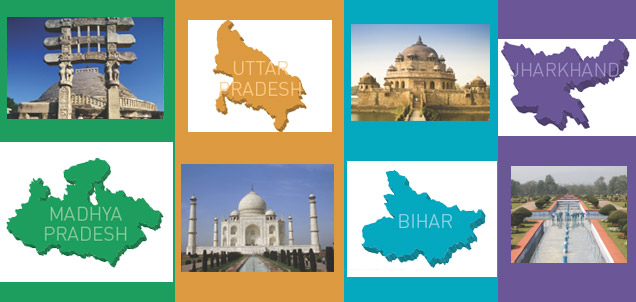
    The four key Hindi Hinterland states – Uttar Pradesh, Madhya Pradesh,Biharand Jharkhand, till less than a decade ago were considered to be sluggish in their outlook. That’s because consumers there were not really top-of-mind for marketers and if at all they became part of a media plan, especially television, it was done so by default, as Hindi television that catered to metros was available in the hinterlands too, and there was not much effort made to engage consumers there. If one looks at a broader picture, a similar tale rang true for most states across India, perhaps a decade-and-a-half ago.


    Cut to the present day, where India is the second-fastest growing market in the world, its middle class is the favoured target group of most marketers (both national and multinational), and in most global consumer surveys Indian consumers emerge to be the most gung-ho among the lot. Of the several states showing signs of speedy growth, the four states that are set for a big leap include:


    • Bihar, which is the second fastest growing economy in the country
    • Uttar Pradesh, which is the second largest contributor to the country’s GDP and also has the second largest urban populace in the country
    • Madhya Pradesh, which is touted as being an upcoming economic power centre and a major tourist destination
    • Jharkhand, which has always been an industrial hub


    One often reads of Indians leaving their cushy jobs overseas and returning to their roots to contribute to, and be a part of, the India growth story. In fact, stories of residents of Hindi Hinterland moving back home from metros too are not uncommon.


    Evolution of the Hindi Hinterland consumer

    Mayank Shah

    Consumers in these states are evolving rapidly and much of the credit for their evolution could be attributed to access to information and awareness boom. Mayank Shah, Group Product Manager, Parle Products reflects on the consumer psyche: “If you look at aspirations, there is no significant difference in Hindi Hinterland and metros. However, the urge to excel is far greater as they come from a modest background and the readiness to put in effort is definitely there. Even in semi-urban and rural areas, aspirations have grown – they are ready to consume CPG (consumer packaged groups), which is similar to their urban counterparts.”


    The increased awareness and steady GSDP enhancement has made the consumer ‘consumerist’, whereby it’s not only low-ticket items that are catching the consumer’s attention, the high-ticket ones are doing it in a big way too.


    Kamal Nandi, VP – Marketing & Sales, Godrej Appliances asserts: “Hindi hinterland is becoming an important market for consumption of durable goods. Consumer affordability has gone up, leading to a shift in lifestyle and consumers becoming more urban in their approach. Also, their top priorities are convenience and comfort.”


    Sushil Bajpai, President, Ghari Detergent, too, is of the view that it is no longer the market to be targeted sometime in future. For Mr Bajpai, the time is now: “There is excellent scope for marketers. Industries too are finding it attractive now. Consumerism is growing at a fast pace, and urban markets in Hindi heartland are no different from metros. The need right now is to understand the consumer mindset.”


    Krishna Mohan

    While the big cities in the region are getting ready to rub shoulders with metros, the semi-urban and rural areas too are getting out of dark areas. States Krishna Mohan, CEO, Sales, Emami Limited: “The great rural-urban divide in household consumption patterns has reduced drastically. Bharat is indeed keeping pace with India when it comes to spending on most fast-moving consumer goods. Rural sales contribute more than 40-50 per cent of total sales in various categories for Emami. We have increased emphasis on engaging rural consumers. The market is huge with a lot of potential.”


    Youth – Change drivers

    The change, as is expected, is being driven by the youth who are more adaptable and are akin to the youth from the metro – at least in urban areas. Having said that, awareness and information in semi-urban and rural areas is also growing and so are the aspirations.


    Somprabh Singh

    States Somprabh Singh, Head Marketing, Titan: “In attitude, they are not very different. They are independent, very ambitious and well informed. The only difference is that their exposure to many international brands is lower but that’s the function of the retail environment, which will change in sometime.” And, true to his vision, a change is currently underway across these cities.


    Harish Bijoor, CEO, Harish Bijoor Consults, believes that the booming Hindi Hinterland is the right place for marketers to be, more so for those catering to the youth. He exhorts: “The robust growth numbers in the education sector is proof enough. Add to it the entertainment market, the market for mobile phones, gadgets of every kind, clothes and accessories, cosmetics, shoes, exercise oriented products, and you have a solid market of the future emerging. There is spurring consumption of not only functional products, but products of cosmetic value as well. Products that relate to health, well-being and proactive health care, rather than just reactive care, are being craved for as well.”


    Harish Bijoor

    As per Mr Bijoor, there is a definite opportunity waiting, especially for brands meant for the youth, and the marketers need to make the most of it. He asserts: “The youth in these towns have a far bigger hunger quotient than the privileged youth in the bigger cities. I would segment this territory into urban, rurban and rural. The hunger deepens as you go from urban to rurban to rural. The opportunity for marketers, therefore, deepens as one penetrates down this strata.”


    Interestingly, while the debate between urban and rural might take some time to die down, it is the semi-urban areas that are attracting a lot of attention. Interestingly, the leap is expected to be bigger there, as they are keen to catch up with their urban counterparts, who themselves are always in a moving state.


    States Lloyd Mathias, the marketing honcho with experience around industries: “Youth in the urban areas of these states are quite close to metros in their awareness and aspirations, more so in case of bigger cities likeIndore,Lucknow,Bhopal,PatnaandRanchi. Though the semi-urban youth might be a little behind, they are catching up, what with the inroads being made by social media. Moreover, the influencers are the same, which are rapidly dissolving the differences.”


    Consumption pattern

    While rising aspirations is one part of the story, these regions are seeing an increase in activity by discerning marketers who are becoming more conscious of the finer nuances of the region, and are staying away from the one-size-fits-all approach.


    Explaining the phenomenon, Mr Nandi says: “While we have seen growth in double door refrigerator model in urban markets, in semi-urban markets it is the single door model that works.” However, it has not stopped Godrej from providing the entry-level consumer best value for money. He adds: “Even an entry-level consumer looks for high-end product features. A few years back, toughened glass shelves were there only in high-end model, today they are there in entry-level models as well. Brands have to seek to fulfil aspirations.” The company has also developed a refrigerator with a ‘Stay cool’ feature – powering cooling at the same temperature for 24 hours even after a power-cut.


    Coming back to the India analogy, the Indian consumer is perhaps one of the most price-conscious in the world. For him, value for money seems to be the mantra, but the consumers’ buying capacity is no longer questioned – the global marketers are tailoring India specific strategies, and the same is true of Hindi Heartland as well.


    Affirms Mayank Shah: “Instances and opportunities of buying premium products might still be less but they buy if the right quality is delivered at the right price. For example, premium biscuits like Hide and Seek cookies were rare in Hindi heartland, apart from cities likeLucknow,BhopalandAllahabad. However, now it has changed; we made it available in smaller packs, which has definitely led to sales enhancement.”


    The growth is not being noticed in purchase of a few specific product categories but across the board – a clear indication that the consumer is not seeking to fill just the need gaps, but is also looking for comfort, convenience and a bit of pampering.


    States Lloyd Mathias: “There is dramatic growth in categories like wireless broadband, consumer soft goods, mobiles and more; the consumption pattern is similar to other parts of the country. It is the sheer numbers that make it more lucrative.” He adds: “There is a homogeneity in these markets – the same is not true of any other part of the country, be it South, West or East.”


    Mr Krishna Mohan suggests that marketers look at a closer interaction with the consumer to understand him, and also to make him understand the brand. He asserts: “The way forward is to help consumers, especially in the rural areas, to make the switch from loose to branded or aid new consumption habits, either with novel products or new formats. For us, the categories of cool oil, cool talcs and fairness creams are doing extremely well with double-digit growth.”


    At this juncture, the Ghari Detergent success story can be an inspiration for many. With its origins inKanpur, it is the largest selling detergent brand in the country today. And a major focus on Hindi Hinterland has definitely propelled growth for the brand. Sushil Bajpai states: “Hindi hinterland is the biggest market for us; the brand name on our packs is prominently written in Hindi, and then in regional language. RoI in Hindi Hinterland is not lesser than other parts of the country; the key is to convey the right message accurately.”


    Key challenges

    Having assessed the scope that these markets present, one can safely assert that Hindi Hinterlands have come of age. And the marketers, of course, are in no mood to miss the bus. Thus, as per Somprabh Singh, it is important to “Act fast and act now, else be left behind. This is in terms of creating exciting products and new channels that will help reach them.”


    As per Mr Nandi, it is not just about being there; the key is to be relevant and to belong. He says: “You have a winning story in hand if you are able to provide relevant technology and play a role in them (consumers) fulfilling their aspirations.”


    Mr Bijoor agrees that relevance and market-specific approach is mandatory to be successful in these markets: “Marketers need to tailor-make themselves to the market, rather than take their tailor-made solutions to the market. Bottom-up marketing is the mantra to adopt.”


    Emerging markets indeed

    So while there exists an array of products that are being tailored to these markets, there is keen interest in interacting with the consumer there and understanding him and there definitely is an increase in the consumer spends. Are these markets ready for all the attention they are getting or would it be a case of yet another opportunity going bust?


    Laughing off the suggestion, Mr Bijoor states: “Hindi heartland is the new market that is just about emerging. What was derogatorily called the “cow belt” and the “Bimaru states” in the past, is a market that is coming to roost in the future. These states have become very progressive in their development indices. They boast of a GDP growth rate that is, at times, even more robust than the national numbers. This clearly means that these markets will see faster consumer growth in terms of demand and in terms of volumes, value and innovation.”


    Interestingly, the consumers staying in these markets are a very large demography, accounting for 20 per cent of the country’s population. And there has been a dramatic improvement in the standard of living in these states too. As these markets poise for the next big leap, it’s time the true potential of these markets is understood, and the consumer is serviced to the optimum.


    Click here for larger

    This article is part of ‘High on Hinterland’,  a special volume presented by Big Magic and produced by MxMIndia. If you wish to have  a copy of the volume, please email subscribe@mxmindia.com with your name, company details and address. We’ll courier you a copy within a week. Since we have limited stocks, we will mail a PDF to those who we are unable to send a printed copy.


  • Anil Thakraney: TV media is out of sync

    By Anil Thakraney


    TV media is out of sync

    So then why did Rahul baba get egg on the face in Uttar Pradesh? There are many reasons being flung around, and they’ve been discussed to death on the various news channels. Do allow me to add my two-bits: the single biggest reason is that Rahul baba’s suave appeal works only in the urban areas of India, particularly in New Delhi. For the small townies, he means NOTHING. They don’t connect with his jet-setting lifestyle, the voters know he’s a fly-by-night dude. That, even if they voted for his party, Rahul baba will not be seen again till the time of the next elections.


    If this is the case, and at least I think it is, then we have to question the excessive coverage our chap got in the TV news media all through the UP elections. If I recall correctly, on one show, BJP’s Ram Shankar Prasad accused a television anchor of being unfairly biased towards Rahul baba. He was right, of course. Compare the footage winner Akhilesh Yadav got with the Gandhi scion’s coverage right before the elections, and you will be stunned by the skew.


    And this totally lopsided coverage happens because the news channel editors and their crew happen to be from India’s urban areas. And their mindset is therefore very urbane. They don’t get India’s small towns and villages, and just because they find Rahul baba to be a charismatic figure, it gets wrongly assumed that the rest of India does too. Well, that’s obviously not the case, as we just witnessed in UP (and in Bihar in the recent past). Media’s darling was shown the door.


    The Rahul baba saga is actually a pointer to a large problem with our television news media. There is just too much attention given to the urban Indian middle class and their issues. To the cost of the rest of India. A girl who gets molested at Bandra station will become a sensational story. But a girl gang raped in Latur will get an apologetic mention. A small fire in a building in Bangalore will send TV anchors into a tizzy. But an entire colony burning down in Ranibennur will be covered reluctantly.


    [youtube width=”400″ height=”200″]http://www.youtube.com/watch?v=qkaZdjfyht8[/youtube]

    And this is why television studio views and discussions have little relevance to ‘non-shining’ India. No amount of frothing and fuming in the news rooms will make any difference to vote swings. By the way, even as I write this, all the news channels are very worried about Rahul baba’s future. Lagey raho!


    ***


    PS: Wow! Pakistan TV sounds like great fun. “Gadhe! Bewakoof! Stupid! Sharaabi!” All this on live television. Makes our Arnab’s chat show appear heavenly in comparison. Hello, we have a thing or two to learn from our esteemed neighbour.