
By Ananya Saha and Meghna Sharma
Girish Agarwal, Promoter Director, DB Corp Ltd
 Fundamental need of the hour is to boost the economy, which is essential for growth of M&E. The following steps are expected for sustained economic growth:
- The budget should send a clear message of “Stability, credibility and long-term vision for reforms”.
- Government revenues should increase without hurting growth while strict control on expenditure (especially non-plan) is expected from the budget.
- Clear roadmap for reforms/key bills viz.: Companies Bill, Mining, GST, DTC, Insurance, land acquisition etc. is expected.
- With rise in inflation and reduced earnings, savings have substantially gone down over the past 2-3 years. Appropriate tax breaks would boost savings.
The above basic steps should result in fresh and long term investments from domestic as well as international markets. Old policies for governing M&E sector must be revisited and reworked considering current business scenario. Policies should be framed in such a fashion that decisions at Govt. level are smooth and fast.
For Radio industry, we expect Govt. to roll out old pending 3rd phase of auction, immediately with clear transparent bidding process. We expect the 3rd phase license with larger period validity and also extension of time period to 15 years, for players related to 2nd phase of bidding. Prior to the same, we expect Govt. to address music royalty issue along with long pending demand of radio players of relay of news bulletins in FM radio. Further, renewal of 2nd phase of license, after expiry of its period, needs to be worked out in an acceptable and reasonable valuation, in order to ensure adequate return on investment for all radio players.
T Gangadhar, Managing Director, India, MEC
 It is important for the government to create policies that stimulate taxes and widen the tax base, not necessarily by lowering the taxes. It is important that in current economic situation, to raise consumer sentiment. We have been hearing of uniform GST, which has not been undertaken yet. Also, it is important to lower interest rates.
Rakesh Jariwala, Partner, Tax and Regulatory Advisory Services, Ernst & Young
 In the Direct tax category:
- Reintroduce erstwhile benefit available under Section 80-IB of the Income-tax Act, 1961 – profit linked deduction for multiplexes to boost their growth for tier 2 and tier 3 cities
- Introduce alternate mechanism or a monetary threshold for obtaining income-tax clearance for foreign performers, entertainers, etc before departing from India as the procedure is time consuming and onerous
- Introduce incentives for content creation and infrastructure to encourage the Indian film industry
- Currently, there is uncertainty with respect to income attributable to India in case of Foreign Telecasting Companies (‘FTCs’). Guidance should be provided by way of specific provisions for determining taxable income of FTCs.
Indirect tax:
- Provide exemption from service tax on costs of film making in line with the exemption provided on temporary transfer of copyright in cinematograph films
- Reinstate the exemption on service tax on services provided by digital cinema service distributors in a digitized encrypted format transmitted directly to a cinema theatre for exhibition – this exemption was withdrawn with the introduction of the negative list based service tax legislation
- Clarify that service tax is not attracted in case of post production services provided in respect of content temporarily imported into India for the purpose of re-export
- Exempt from service tax, services rendered by players and coaches to private sports leagues / bodies in line with the exemption provided for services to recognised sports leagues / bodies
- Subsume entertainment tax in the proposed Goods and Services Tax legislation without creating a window for its levy at the local or state level to ensure simplicity in the tax structure
M&E industry is expected to outgrow the Indian economy with an expected cumulative annual growth rate of around 15% over the next four years. To keep up the momentum, the industry deserves tax incentives in the upcoming Finance Bill, 2013 thereby providing an impetus to the industry and bolstering growth.
Budget 2012 was a bag of mixed beans and a budget wherein the M&E industry was not given its share of adequate encouragement. Key highlights are cited below:
Incentives:
Indirect tax
- Exemption of service tax on temporary transfer of copyrights in cinematograph films
- Inclusion of admission to entertainment events and amusement parks in negative list of taxable services
- In addition to the print sector, advertisements in media (except radio and television) including the internet or in outdoor media shall not be liable to service tax
- Services provided in capacity of referee, umpire, coach or manager to recognised sports body for participating in tournaments shall not be liable to service tax
Dampeners for M&E industry:
Direct tax
- Retrospective amendment to the definition of royalty thereby characterising payments for use of computer software, transponder, information databases, uplinking facilities, leased lines, etc as royalty under domestic tax laws. Hence, impacting the use of digital media
- Tax rate of non-resident sports persons and sports associations increased from 10% to 20%
Indirect tax
- Levy of service tax on costs on film-making
- Withdrawal of exemption of service tax on digital distribution of films tantamounting to the levy of service tax on such services
- Levy of service tax on services provided by players and coaches to private sports leagues / bodies
Tarun Katial, CEO, Reliance Broadcast Network
 For the broadcasting industries of radio and television we look forward to clarity, uniformity and relief from taxes. Advertisement in free to air mediums like radio should be treated differently and lower or nil service tax should apply for the same, aligning with the print and out of home industries. Also, FDI in non-news radio operations needs to be brought at par with television broadcasting. Customs duty on radio and television broadcast equipment should also be relaxed.
The TV Broadcast and Distribution industry is already reaping benefits from the success of the digitization initiated by the Government. We look forward to necessary fiscal incentives in the form removal/ reduction of multiple taxes and levies and regulations which ensure transparency and power of choice to the end customer.
Sandeep Ladda, Executive Director/Partner and National Leader – Entertainment & Media – Tax and Regulatory, PwC
 On the direct tax front, we could look at the following key areas:
- Clarification on the applicability of withholding tax provisions on discount offered by DTH operators for selling recharge coupons through subscribers to third parties and on payments made by TV channel companies to uplinking companies
- Providing a clarification stating that benefits of carry forward and set off of unabsorbed losses in amalgamation or demerger etc. also available to service sector companies
- Proposal to sign more Co-production treaties, to get the tax credits and subsidy benefits
- To provide a 10-year tax holiday to exports in the gaming, animation and the VFX (visual effects) industry for Indian content development, as they are emerging sectors (whether or not these are set up in an SEZ)
Key expectations on the indirect tax front include:
- To promote the domestic gaming industry, excise duty on local manufacture of gaming content could be brought down to 0%
- Service tax applicability to the DTH industry could be eased for a limited period till the phased implementation of digitization is complete
- Copyright services could be excluded from service tax net to avoid dual levy of service tax and VAT
- Multiplex operators could be exempted from levy of service tax on property rentals and to distributors for exploitation of cinematographic rights, till GST is introduced to result in a seamless pass through of these indirect taxes
The industry has been growing at a pace of around 17 percent YoY and is expected to maintain the momentum. The recent liberalization of foreign investment norms for a majority of broadcasting carriage segments and the radio phase III roll out will surely provide a fillip to the entertainment and media sector. Similar liberalization measures could be extended to the remaining broadcasting carriage segments like local cable operators. Also, the Phase III rollout could be implemented early for the industry to reap in the allied benefits flowing from the same.
There were a few positive steps seen in the 2012 budget such as eligibility of investment linked deduction to hotel owners even if operations are carried out by third parties and service tax exemption on temporary transfer of copyright in cinematographic films. However, on the whole, budget of 2012 left a lot to be desired:
- Retrospective amendments to widen the scope of royalty by including payments for transmission by satellite cable, optic fibre etc. as royalty were not expected. The relative standing of some of these retrospective amendments vis a vis India’s tax treaties has also been questioned by recent tax tribunal decisions. This has only added to existing confusion surrounding such royalty payments.
- The budget also introduced provisions casting obligations on a non resident having no presence in India to withhold tax on any payments being made to a non resident of income accruing in India. This measure has impacted some of the India content broadcasting transactions happening between non resident parties.
- Tax rates in case of non-resident, non-citizen sportspersons, non resident sports associations were increased from 10 percent to 20 percent on gross basis. Similarly, non resident entertainers were also brought under the tax net @ 20 percent on gross basis. Both these measures were burdensome.
Sunil Lulla, Managing Director and CEO, Times Television Network
 The burden on the growing service sector needs to be reduced, so it may accelerate India’s growth. In prior years, in recent times, we have not seen anything progressive as such via the budget. Investment norms in some parts of the sector have already changed, for encouraging investment. The industry has been asking for lower duties on STBs so that digitization can progress and benefit millions of consumers. This is vital. As for the last year, the economy has been slow, sluggish and behind expectations – 2012 has been a disaster!
Responses are in alphabetical order by surname.
 The Budget session in the Parliament is going to begin today and tomorrow, February 1, 2022, Finance Minister Nirmala Sitharaman will present Union Budget 2022. It’s an unprecedented situation when degrowth induced by pandemic has set back most industries in our economy by two years or more which has also been reflected in our GDP. The Advertising & Media (A&M) sector was severely affected by the shrinking of our GDP and researchers predicted last year that it would take the industry four to five years to recover to recover the pre-pandemic revenues across all media. What are the expectations of the A&M sector from the Union Budget at this critical juncture?


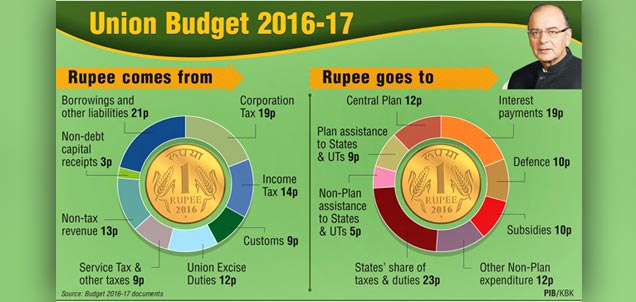
 “Kudos to the government for presenting a disciplined and inclusive budget. The emphasis on rural development and commitment to the fiscal deficit target augur well for the economy in the long-run. The proposal for a more conducive excise duty regime for STBs and other ‘entertainment-access devices’ is welcome. While many of us from the industry were anticipating more sector-specific announcements, I’m sure that this budget will benefit the larger economy and therefore, by extension, have a positive impact on our industry as well.â€
 “Overall there are some positives and some negatives in the Budget. On the positive side, not increasing the service tax is a positive, particularly for the advertising and media sector. General expectation was that Service Tax may go up in anticipation of higher GST rates. Controlling the fiscal deficit and several steps to invigorate the rural economy and rural consumption are positive signals. A rural consumption revival will help the economy and the advertising and media sector tremendously. On the negative side, there was an expectation, based on what the Finance Minister said in the past, that corporate tax rates would come down. That is not to be so for most large companies. Introducing double taxation on dividends is also a negative.  In balance this seems to me to be a mixed bag budget with a positive bias. If it is able to spur overall economic growth, we could see good times ahead for the advertising and media sector.â€
 “Digitisation, in my opinion is the most important factor for the Broadcast sector currently, we are very happy about the excise duty changes proposed for Set Top boxes which will help in the last mile infrastructure of DAS 3 and 4. Overall a stable and positive fiscal situation is good for the economy and that will support our Ad Sales growth projections. All in all Budget 2016 looks good for the Broadcast sector.
 “Overall, this is a responsible “Rural First†Budget that attempts to revive demand, while continuing on the path of fiscal consolidation. For the FMCG sector, initiatives to support the revival of rural and urban consumption should help bring growth back on track. Focused efforts on alleviating rural distress and uplifting the agrarian economy, will help put more money in the hands of farmers. Statutory backing of the Aadhar scheme will ensure more targeted delivery of benefits to those who need it. The need of the hour is job creation and focusing on skilling and education to make people more employable. The implementation of transformative reforms, like the GST, at the earliest, are however imperative to fast track economic growth and boost consumer confidence. Given the Government’s intent to stick to its path of fiscal consolidation, we look forward to an interest rate cut or more liquidity in the system to drive private capital investment. Going forward, given the plethora of schemes that have been announced, it will be important to deliver on the promises made through effective on-the-ground execution.
 “We are glad that there is no increase in taxes. Since the government is said to be pro-development and has allotted significant money for the rural infrastructure, railways and road development, we think it’s a positive sign for our future. We are also seeing great potential in expanding our reach to small cities now. The finance minister has also hinted at amending motor vehicles act for better transportation facility in the country. This may give us the opportunity to position our ads more effectively while on the move. We feel that in this critical economic condition, the budget has been so far satisfactory for the advertising industry.