
By Kunal Sinha
 A few months ago, one of my son’s close friends jumped off the balcony of his high-rise home.
For several weeks, I experienced first-hand, the trauma of a 15-year-old and his friends as they struggled to make sense of the loss. From talking to his school counsellor the very next day, to his friends speaking to each other regularly, promising to discuss their feelings – they showed remarkable maturity.
Not everyone does. The numbers of those in mental distress are alarming. And they need help.
According to a WHO report, more than 14% of people in India have mental health problems.
Unicef’s State of the World’s Children states that one in seven young people between the ages of 15 and 24 in India experiences poor mental health, including symptoms of depression and disinterest. Shockingly, only 41% of those surveyed felt the need to seek support when dealing with mental health challenges.
The sources of stress are numerous. There is a strong positive correlation between the population’s growing number of mental health issues, the decline in job opportunities for young graduates, unequal economic growth, as well as unrealistic expectations caused by exposure to social media.
49% of Indonesian internet users had experienced bullying on social media; the figure in India is a shocking 85% – the highest in the world.
A quarter of Americans said they were spending less time reading the news to manage their mental wellbeing.
What’s more, the stigma attached to the disorder goes hand in hand with the rising number of problems with mental wellbeing.
In India, there are 0.329 mental health outpatient services per 100,000 people. The ratio in Indonesia is highly disproportionate as well, with one psychiatrist serving approximately 227,000 individuals. Post the pandemic, the demand for online consultation had surged enormously, up to 800%.
People are looking for solutions.
In Indonesia, 83.6% of GenZ state that mental health is very important to them. The numbers for Gen Y and Gen Z aren’t too far behind, 80.5% of GenY and 80.3 percent of GenX also feel that mental health is very important to them. Over the past year, there was a 230% increase in search interest around the word ‘healing’, according to Google Trends.
That’s where brands and organisations have the opportunity to step up.
Help people dealing with stress
From the 12 markets included in Global Web Index’s Zeitgeist data, 37% of people are under financial strain, while 30% are struggling to find a work-life balance.
While 80% people globally believe businesses should assist customers during the cost-of-living crisis, only a small fraction of consumers received advice from their banks in the past year.
The UK’s Lloyds Banking Group’s charity partnership with Mental Health UK stepped up to the challenge. The partnership promotes awareness of the link between mental health and money problems, encouraging discussion between customers and colleagues while raising at least £2 million per year.
With this raised cash, Lloyds Banking Group went on to develop the UK’s first Mental Health and Money Advice service showing financial marketers around the world that clear, practical advice can support people experiencing issues with mental health and money.
Normalise conversations around mental health
Conversations about our feelings and mental health can be difficult, but they need to happen. Just 32% of internet users say they’re comfortable talking about their mental health, showing there’s still some way to go.
In 2022, ITV released the latest instalment of its Britain, get talking mental health ad campaign.
The ad depicts a conversation between a father and daughter after she’s had a bad day at school. Subtitles are used to illustrate the gap between what they’re saying and thinking, showing how difficult it can be for young people to open up. After a slow start, there’s a breakthrough, and the daughter finally tells her dad what’s on her mind.
Was the campaign effective? Exploring the gap between what we say and how we feel felt an important conversation to bring to bear, especially when it comes to the young people in our lives. Since launching Britain Get Talking with ITV, it became the UK’s most recognised mental health campaign and started over 100 million conversations.
Build a community of support
Maybelline Brave Together is a global initiative, active in 25 countries, to support everyone experiencing anxiety and depression. The cosmetics brand is not selling beauty products; rather creating awareness to de-stigmatise mental health issues facing the population.
https://www.maybelline.com/bravetogether
More than half of first-year college students (54%) frequently felt anxious since starting college – and 60% don’t turn to professionals for help. They turn to their friends.
Maybelline partnered with a community of mental health experts, and created support tools to help navigate everything from spotting the signs, to how to practice self-care, to exploring resources.
The brand developed Brave Talk in partnership with The Jed Foundation – a free, expert-developed training designed to be delivered by college staff to empower students with the skills to support peers who may be struggling and help connect them to care.
The campaign generated extremely high user engagement, achieving the goal of destigmatising mental health issues by promoting honest conversation among the audience:
25% of users went on to look up mental health resources, and over 50% users said that their opinion about Maybelline had improved as a result of the campaign. In India, Maybelline roped in badminton star PV Sindhu in its campaign that asks people to “Raise your hand if you are pretending to be okay in front of friends and family”.
So what do these mental health ads all share that make them so successful? Here’s a few things they have in common:
1. They’re authentic
Featuring real people, real stories, or real events that we can all relate to, all of these campaigns feel genuine, and are sensitively executed. The Jed Foundation works directly with volunteers with mental health issues, and Lloyds Bank encouraged discussion between its employees and customers in financial distress, and this creates empathy.
2. They’re guided by data
The best mental health campaigns draw attention to what’s happening right now, and they’re backed up by stats. When the story is led by true insights, it’s much harder to go wrong.
Global Web Index data shows that younger people are most likely to experience mental health issues (16% more likely than the average person to say they’re prone to anxiety), and are overwhelmingly in support of mental health messaging in ads (73% say this), highlighting they’re an important, and likely receptive audience to target.
3. They all include a clear message and call to action
There’s a common thread that runs through each mental health campaign I’ve drawn attention to: brands need to normalise talking about mental health, and assure people that help is available. It can be a simple, but impactful message.
Sources:
https://timesofindia.indiatimes.com/blogs/voices/cyberbullying-in-india-a-growing-concern-for-parents-and-educators/
https://www.idntimes.com/hype/entertainment/lala-dita-pangestu/6-film-indonesia-bertema-mental-health-salah-satunya-kukira-kau-rumah-c1c2?page=all
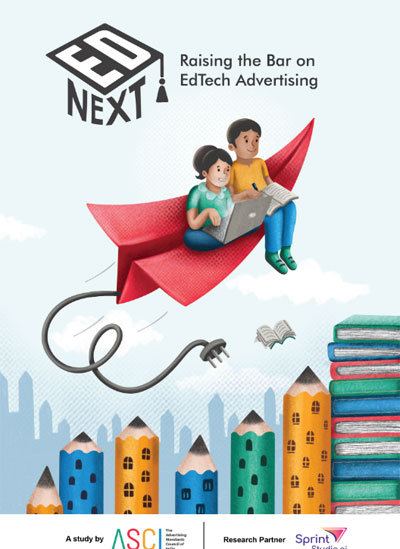 The Advertising Standards Council of India (ASCI) released a comprehensive report on advertising in the education technology sector (EdTech) and the impact it has on parents and students. The report aims to decode the challenges and opportunities for EdTech sector advertising. The report also identifies ways in which the sector can shape a more responsible narrative, and move away from opportunistic advertising which many consider problematic.
 Crocs has launched the fourth year of its ‘Come as you are’ global marketing campaign including new talent and product innovations.
 In its centennial year, Grey Group has joined forces with UNICEF to improve the lives of children around the world.