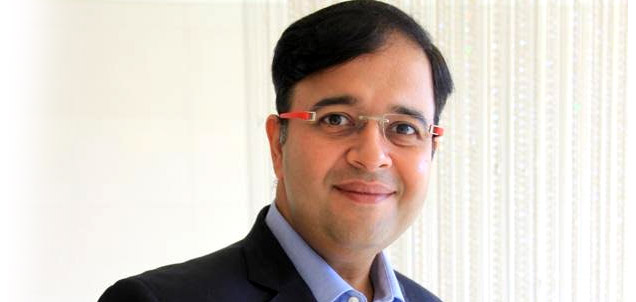
It’s been around six months that UmangBedi joined Facebook India and South Asia as Managing Director. While the world’s largest social networking platform doesn’t need any introduction, it’s not being embraced in right earnest in India by advertisers. And that’s the mandate Bedi has as he interfaces aggressively with the A&M fraternity. In Mumbai last week for some client meets, UmangBedi took time for this first extensive video and text interview with Pradyuman Maheshwari (Video production by Santosh Jangid)
Six months into the job. How has it been going?
It’s been fantastic. It’s been probably the best decision of my life joining Facebook and the last six months have been really categorised and focused on doing three things — the first is meeting our teams, literally every single employee within the India business, our entire team in Asia Pacific and our leaders in Menlo Park, getting a good idea of the business and meeting our Top 200 clients and our Top 20 agency partners. So that’s been on a big focus. The second big focus has really been pivoting on growth and literally focused on the fact that Facebook moves business outcomes for the biggest brands whether it’s helping them move their brand efficiencies or having them drive sales both in the online world and driving sales in the offline world. We are moving product off-shelves and that’s been a big narrative in the boardroom trying to really talk to CXOs and how we could help them move business metrics that matter. The third big focus area has been on building the ecosystem. When I say ecosystem it’s really focusing on the foundation for Facebook on our creative strategy, on our measurement strategy, on our agency partner strategy and our creative agency strategy which we think is going to be the fundamental pivot for growth going forward. So all and all, phenomenonal six months, really enjoyed the pace of it, been on an airplane most of the time but we have seen outstanding outcomes in the business as well. We have seen both growth on the user side and despite demonetisation we have seen healthy growth on the business because we have been able to pivot ourselves on being world class efficient marketing platform ad driving value for advertisers.
And we thought that Facebook was a networking platform, right? You’re obviously making money on us.
Well, I don’t know if I’d frame it that way but I think of Facebook as a discovery platform and I think it’s a platform that helps harness human attention and goes back to the philosophy of the company of giving people the power to share which is our mission and help make the world more open and connected. So it’s that platform which helps consumers discover content that is relevant, personalised and meaningful for them and give them the power to share and that’s how we think about Facebook. What drives it is we firmly believe that we wanna help the world get more open and connected. So drive more user growth on the platform and as on today we are 1.9 billion people on Facebook.
And the second largest number of people from India…
Yes, second largest number of people from India. More than 166 million MAUs or monthly active users and as we grow, what we are very focused on is driving engagement and we measure that by the amount of time an individual spends on the platform and the amount of content that he/she consumes.
As somebody who meets a lot of people, one of the worries is that people spend all of the time on Facebook.
Well, I don’t know if I would say that but what we are seeing is we have got a fair amount of penetration both on the user growth side. We are seeing that index forward, we are seeing timespent engagement index as well and when you have a large target audience who is engaged then its about connecting businesses to the people that matter and that’s the strategy.
You know it all sounds very good but actually it’s very scary because if I am on Facebook, you obviously know my profile and the kind of people I interact with. So you’ve actually got me covered and scanned and tracked through. You know what I do, you know what time I get up, you know what kind of people I interact with. So you have me covered inside out?
We take user privacy very seriously. So one thing you will find even in our ad policies is, for instance I would allow an ad for a builder, you’re into real estate and you’re selling a flat on Facebook and it’s true. Today Tata Homes sold 250 homes in a single day on Facebook and that happens but we wouldn’t allow you to target an ad to me that says, ‘Hey Umang you’re a Facebook employee so here’s 15% off’ because that would scare me because you just used personally identifiable information to give me an offer and that’s something we are very careful about. I was speaking at a client meeting today and they said, ‘Hey LinkedInallowed me to target CHROs or directors of product management and you have all my information. Why don’t you allow me to do that?’ and I think the answer for us and the answer I gave is the same thing I’m reeling now is we do not allow personally identifiable information
I thought the entire thing of tracking makes Facebook so powerful. You can actually figure that you want to target your ads through people who are from a certain college or a certain school or from a certain city or live in a certain area.
So you’re right, targeting is what makes personalisation really powerful on Facebook but it’s targeting to non personally identifiable variable. For instance, I would allow you to target, you wanna reach men between the age of 18 to 25 in a sub-section of Bombay in a certain area who has a device which is running 4G, that’s the level of targeting you would do. You would not go down to say black hair or brown hair or something which is very personal….
But there is a very thin dividing line between personalisation and privacy
Not really, because today if you look at the controls that we have given into the hands of the users, the users can decide what they want to be visible on their profile literally to down to the most ground level. So today I can share on Facebook and not share with anyone, it would just be with me. It goes down to that level. So, one is we have given control, two is we are being very careful. Our ad farm policy or our policy around blocking stuff that is using personally identifiable information is very strict… It’s built on trust and that’s the testimony to how we are building the business.
Over the last few months, we’ve heard you speak a fair bit of the advertising options that Facebook offers and you’ve all been meeting various stakeholders, clients and agencies. Infant you’ve partnered with WPP for something and you’ve partnered with Nielsen and Millward brown. So talk to us about what you’ve been doing engaging the industry?
Awesome, so that’s the most fun part about my job. So here’s what happening in the market….
Fun and tough or fun and easy?
Fun and fun. Fun and really engaging, really amazing, ill tell you why. When you think about let’s say the CPG[consumer packaged goods] segment. The CPG segment [marketers] are masters at brand advertising and they’ve always gone out and done stuff to increase brand awareness, recall, consideration whereas if you look at the commerce segment [marketers] for instance, they are very indexed on perform driven marketing but what we are seeing is lines between brand and performance are blurring. So the marketing funnel from awareness consideration down to purchase is actually collapsing. We are working on what we also know as the full funnel of solutions. It starts for us with creative, great marketing starts with great creative and we have indexed to set up something which is known as Facebook creative shops, these are creative strategies that we have hired who all have won Cannes Lions who really help creative agencies and our partners understand how do you build new feel friendly, mobile thumb stopping creative.
And this creative service is available for people in India?Â
Yeah, in India. It’s located at this office where we are sitting.
Could you name some of the people?
We have JuhiKalia, we have Dan Coben, we have Parul Arora, we’ve got a whole bunch of really strong creative partners who joined us and they are a part of Facebook. Fergus O’Hare who has been fantastic in this business and they really lean on creating the right creative strategy. The second piece once we do that is measurement and on the measurement side we’ve partnered with Millward brown, we’ve partnered with Nielsen and our and are driving some amazing outcomes. So when you think about the kind of outcomes we are driving, there are audience outcomes, there are brand lift outcomes and sales lift outcomes. On the audience side, what we have found is on an average when we are using a region frequency to reach out our target, we are giving a five-point incremental lift over television at a cost which is 1/7th that of TV. On the brand side, we have found that today when we are targeting brand consideration or brand motivation or purchase intent lift, we are today 1/3rd the cost of TV and half the cost of any other competing video platforms and the most exciting part about this is how we are driving sales outcomes and these are measured by cross media studies with milliard brown and match market test from Nielsen. I will give you an example, Garnier went and launched and did Facebook-only media in a high penetration cluster and a low penetration cluster city and we got a 26% and 19% sales rift respectively. Durex did this advertising campaign with us which helped drive a 29% increase in sales during the period of campaign resulting in 9% increase over the year and this is moving product off shelf. Tanishq went and did advertising beautiful, creative and absolutely stunning giving you a code making users walk into stores and then drive a 30% sales and all these examples are brick and mortar examples. The ones that we do seamlessly are because there is an integration of Facebook Pixel is what we do with amazon or e-commerce companies like Flipkart, Snapdeal and OLA cabs because there is conversion happening in the online world.
In the kind of clients you have, do you find any specific category or specific domain which has greater affinity to Facebook or is it across various segments?
I think it started off by being very heavy on e-commerce because it was a natural fit. They are digital natives, we are a digital platform, they want to drive performance and conversion, we offer them real people with real identities so that was a beautiful match. What we’ve found over the last few years is that there is spectrum across all verticals that are leaning in very well. So today if you look at the largest brands across CPG, telecom, you’ve been offered a Jiosim and an Airtel pack and a Vodafone depending on your profile, we work with automobiles in a big way, travel and almost every segment.
But still the amount spent in the digital media by the likes of a Hindustan Unileveretc is not significant enough. Right now it would possibly be single digit at most and inspiteof the fact that you are offering targeted stuff and fairly granular data of your possible target audience. Why is it that you think people are not putting their bucks on this media?
It’s a very interesting question so when you think about time spent v/s amount spent on media there is a dichotomy. So the least time spent is on print whereas print is 30% of the AdEx. Between print and television you’ve got 86% of the AdEx. Today the AdEx is 7 billion dollars about 14-15% is digital, 85% is between television and print. What we are seeing happening over the next four years and this is predicted by e-marketers, by GroupM report or any other report that you read, digital is going to be 40% of the spends, all spent in India. Today the market is 7 billion, by the next three to four years it will be about 9-9.5 billion which means that the digital part of the pie is going to be 3.5-4 billion dollars which means there is a 2.5 billion dollars of shift that’s gonna happen in the market. Now, you’re right. A traditional advertiser spends single digit on digital today but there are industries that have indexed as high as 35%-40% in e-commerce where they are very very driven around digital being the only play for them or a large play for them.
I was speaking to a very large BFSI advertiser recently and he said that possibly in his lifetime and mine, it’s unlikely that digital will exceed television. Do you think that this is something based people not really aware of how things are going or is it possibly the fact of life?Â
I think it’s where you are looking at the problem from. When you think about it, I would not agree with that statement and I’ll tell you why. Would you believe me if I told you ten years ago that a billion people in India would have a cellphone when you and I dialled using an analogue instrument? Just ten years ago that’s the landline we both had at our homes. We had a conversation 10 years ago saying that every Indian would have a cellphone with not even a wire connected to it, we wouldn’t have believed each other. I think it’s a little bit of that. In the West, what we’ve found last year in Australia which is the first market where mobile advertising pipped television and this year it’s going to be higher by 20 points. So my firm belief is that digital will increase whether its 30 or 40% is a prediction. Will it currently increase from the 15%? It will and there are two reasons for that — one is growth in the platform. Today, if I look at television there are 180 million television sets in the country, you look at the reach of any GEC its about 110 million. The moment you have half a billion people on digital which is gonna happen soon so we have 300 million people connected to the internet in India. Nasscom predicts that it’s going to be 720 million in 2010. Essentially, even if you say we have half a billion Indians connected and if that’s where they are spending a majority of their time, the shift is inevitable and we see that shift happening sooner than later and it’s happening as we speak. So when we are working with advertisers one of the things we are working on with them to say is when you television alone your efficiency is X but when you do television + Facebook your efficiency is at least 15% higher because what happens is even in television there is some amount of wastage whereas we could just remove the wastage part of the dollars onto the Facebook + TV narrative we’ve been talking to advertisers on and see a 15% uplift in terms of any campaign KPI that they are tracking.
Let me ask you a slightly unfair question and you don’t need to answer that if necessary. There is a fear that the likes of Facebook and google, etc are going to eliminate the advertising agency as an intermediary. You already mentioned that you hired creative guys here. Do you feel that the advertising fraternity in India is not really pushing your case that much because they possibly think that you ay eliminate them soon?
On the contrary, I think my #1 bet on my go to market in India is working with our agency partners whether you meet with our friends in GroupM or Dan or Publicis or Omnicom, they are integral and critical to our success. From our perspective the agencies are an interesting….
They obviously know that soon enough the clients could speak to you directly
So here’s the way I look at it. I think in India you have to build leverage scale models. There is no way that we have the workforce to go and cover the whole of India. It’s just not possible. If you look at Facebook globally as well with the number of people, agencies in India have twice as many number of people in the whole of Facebook. So I don’t think we ever have ambitions to go direct into every segment of the market. That’s not what we are.
Some segments you will.
No, we always work with agency partners. So we are very clear our creative is not an agency. We work with the creative agency to help built mobile first creatives. On the media side, when I look at how we are partnering with the agencies, we are doing three things which are fairly unique. The first one is they also understand that today their growth is going to be from all three mediums but the agencies are looking at media mix more than anything else today. It’s not just growth on television or print but they wanna see a healthier media mix come in to play and that’s where platforms like ours are critical to their growth. So we are working with them to embed our blueprint, training and certification program into their e-learning curriculum and that’s a big initiative. The second piece you referenced with the WPP, we are literally working all their creative strategists to just show them what are the best practices that we have learned on creating creative for being thumb stopping, mobile first creative that is thumb stopping which is very different from maybe what you see on television which is a far longer format whereas the attention span on mobile is a lot shorter and these are deep partnerships. So we literally spend two days with 90 professionals from WPP going through an entire course after which we gave them real client pitches and they came up with some outstanding outcomes because don’t forget, we are not creative professionals. The creative agencies are awesome at what they produce. The media agencies understand media mix, what we are doing is really showing them how we can participate with them to be mobile first and working with the agency partners is our number one priority.
And they don’t have this worry that you could avenge them?
I don’t think so and I don’t think anyone from our team at any point ever has this strategy. We will succeed with our partners.
What is it that’s stopping people from embracing Facebook in the way it is. Obviously there are worries, people are not putting in the money as they should be. What according to you is the single biggest problem that exists right now?
I think the single biggest problem for the industry in digital is really coming up with a standardised measurement narrative.
And that you know will never happen.
I think it will.
I think industry associations have kind of failed. In television you have IBF, in print you have the INS and the IAMAI seems to have been hijacked by various pressure groups?
I’ll stay from that comment on the industry association but what I would stay is, when I talk to marketers and I’ve literally spent a lot of time with them, when I talk to CEOs, there is an old saying  in IT that you will never be fired for buying an IBM, its one of those things. You will never be fired for doing an intelligent campaign because GRPs are a well-established standard. I will not go into the details of the fact that its sampled, etc. Having said that there has to be a uniform standardised measurement narrative and our belief is that as an industry there is a lot of jargon coming from the digital world. So let’s talk about jargon. So we first talk to your about cookies, we talk to you about clicks, we talk to you about CTRs, we talk to you about CPMs, CPMMs, CPAs. So we are confusing the hell out of you.
You mentioned that you run a two-day course for people. I was speaking to somebody senior at GroupM who heads programmatic there one of the worries I figured that exists even I an agency like that is even that the talent that exists is not really educated [on tech]. Is that something that you are looking at educating the world about what Facebook can offer?
Absolutely. I just want to complete my last point, I think what we need in that uniform measurement narrative is a narrative that’s not based on cookies but a narrative that’s based on real people. It’s a narrative that’s not based on CTR or CPM or a CPA. It’s really based on conversions and as a business leader you care about conversion, how many customers come. So let’s track conversion and you don’t care about what your CPM rate was whether it was high or low. You care about ROI on your business or return on you adspend. So let’s build a people based narrative that is focused on driving conversions for your business that is driving an ROI and a great ROS. That’s basic business if you talk to a CEO… he understands that language. That’s the narrative we need to get to.
Coming to the point on education, we have just launched Blueprint. Facebook Blueprint is a 54-odd course module across various parts of digital advertising with mobile being at the centre of that experience and one instance of what we are doing is GroupM has a very very vigorous training process known as their internal digivisits. we are embedding our blueprint into their digivisits. Those are the kind of initiatives that we are doing with all their agencies, we are working with all our partners, running blueprint live workshops, blueprint trainings and ultimately working wth them to help get their team certified. Facbook.com/blueprint has these 54 modules and they are free for the entire world. We are literally making it open source and open standard as an industry so people can learn and adopt.
What gives UmangBedi sleepless nights? I don’t see any dark circles but is there anything that worries you?Â
I sleep really well. I don’t sleep like a baby but I sleep well.
Don’t spend too much time on Facebook, do you?
I spend a lot of time on Facebook but we work on Facebook so Facebook at work or Facebook work place is literally how we communicate. We communicate in tribes and groups. So my email traffic has clearly fallen ever since I’ve joined because we just communicate on Facebook, on Messenger and groups in a big way but I think what worries me is the opportunity is so large today in the market that I don’t know if we are moving fast enough and I keep asking myself this question: is there more that we can do? As an industry to really move the needle forward, because I think every time you connect people to the internet every time you drive digital, you uplift a society. There is economic data from the world bank that proves the more people you bring online, you give them access to jobs, to healthcare, to financial services, to education, you add value to the GDP and as more and more business goes online as digital becomes a means to an end in the country transparency increases and we believe the businesses that want to reach brands we are that world class marketing platform that enables businesses to reach real identities. So are we moving fast enough towards that goal / mission is a question I ask myself.
I must saythat although you’ve been just six months in the job and you come for a different setting, you’ve learnt the idiom of this business fairly well?
Actually you could say both Facebook and Adobe are technology-driven companies.
Yeah, you did interact with marketers considerably but this is more of nuts and bolts advertising,Â
speaking to GroupMs of the world and all of that.
I think you just have to stay humble, keep your feet on the ground and learn from the best around you and Facebook has hired the best people, I’m privileged to work with the best people and learn from them. So, I think it’s a function of the team more than really I’ve really done I don’t think its that but I think I really love the industry. Best decision of my life…

 Discovery Communications India has entered into a partnership with news and local content app – Dailyhunt. It has introduced a video destination, Discovery Plus on the home page of Dailyhunt app offering short form video content customised for digital audiences in India. The content is currently available in five languages namely English, Hindi, Tamil and Telugu and Bengali.
 acebook has appointed Umang Bedi as Managing Director, India, where he will lead in building and maintaining strategic relationships with top clients and regional agencies in the country. He will take over from Kirthiga Reddy, who will be returning to United States to take on a new role at the company’s headquarters at Menlo Park.