Tag: TV

  • Jaldi 5 with M R Srinivasan: Chennai could need 3-6 months for digitization switch-over

    01. The court has extended the sunset date. How is the situation in Chennai post the extension?

    In Chennai currently, there is a big confusion. One day we went to the court and got interim order stay and now the case has gone to the Bench, which will have the hearing on 19th. Secondly, despite our letters to MSOs and MIB from our end, none of them are importing the set-top boxes. SAB said that they will be able to import boxes in 21 days provided the LCOs deposit advance money. But some of our members have already deposited two lakh rupees as advance last month. They are yet to receive to boxes. We will be submitting the dealing to the Court on 19th.


    There is uncertainty also because Arasu cable has not been given license yet to provide STB, and once it is given the license it will conquer the market. So, the existing MSO and licensed players are not sure of importing the boxes yet. As they may get wiped out once Arasu gets license.


    Four out of eight players who have got license, only three have installed head-ends.


    02. What are your expectations from the Bench on 19th?

    Well, they should extend the deadline. And if the extension is given, I&B Ministry should take views from all stakeholders. And all the information should be furnished clearly for and by stakeholders in front of MIB. Verification should be done if the said number of STB have been installed and activated. It should be made known as to how many boxes have been imported and how many of it installed by every player, since the imported boxes are usually smuggled in Middle East or Sri Lanka.


    03. How much of Chennai has been digitised, according to you?


    Right now, as per active status given to broadcasters by SAB it is 1.25 lakhs. As per our calculation, the active status is 1.3-1.5 lakhs only. DTH players are claiming that they have sold seven lakh connections. Most of these boxes, almost about 300-400 per month, are smuggled out of Chennai. In Chennai, about three-four lakh of these claimed DTH connections are active. We require about four million boxes in Chennai metropolitan area, which also covers the outskirts of Chennai.


    04. Even if the extension is given, how much time would Chennai require to reach 100% digitisation?

    Chennai would need 3-6 months to switch completely to digital signals. It is well-known that analogue signals are still on in Delhi and Mumbai where 100% digitization has been claimed. In Delhi and Mumbai, boxes are available aplenty and still they have analogue signals. Here in Chennai, we do not have STBs. It is important that analogue signals are not switched off.


    05. How does analogue benefit the stakeholder?

    We have 4G spectrum, but TRAI has not wiped out 2G. With digital, 10-15 analogue channels should be available. Not everyone can afford a STB. One should also think of low-income households.


    As told to Ananya Saha


  • Enough backers for payback series?


    By Johnson Napier


    The India-England cricket series that kicks off from November 15, 2012 is being billed as a revenge or payback series by most scribes who follow the sport closely. Be it the media, analysts, critics or even players/commentators, virtually all are going gaga about how the current series would be the one to watch out for as India will be fighting to prove its mettle as being the best in the business. The fact that the men in blue were thrashed badly by the Englishmen the last time they played each other makes the cause even more compelling. But is the prevailing sentiment as positive as is being made out to be, or will it be a tough ask for the channel as it begins its quest to draw in more audiences? And, more importantly, what is the response that can be solicited from the advertisers who of late are opting to stay aloof from their association with the sport?


    To begin with, the good news is that the tournament begins at a time when most of India is in the mood for celebration what with the festival season already underway. So while partying, visiting relatives and relaxing would be top of mind for most it would also mean being able to sit at home and watch Sachin Tendulkar or Virendra Sehwag get India off to a roaring start. And that’s what is leading everybody to believe that the Series will at least kick off on a high note.
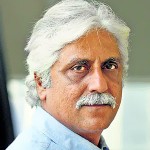
     

    Ayaz Memon

    Anticipating a huge response, senior journalist, sportswriter and now commentator Ayaz Memon is hopeful that the current series will be a success. As Hindi commentator for the current series, Mr Memon sounded positive: “I feel the pressure is more on India as they have to prove a point on the home turf. The fact is that India hasn’t lost a home series since 2004, and also the record since the last 12 months hasn’t been good so the pressure is squarely on the Indian team. Also the team is not in peak form as can be inferred from their recent performances across other tournaments. So one can expect the Indian team to put up a compelling fight, to say the least.”


    Backing up his claim, Mr Memon said that the channel has been doing a good job promoting the series. “I will be doing commentary for Star in Hindi and I can tell you that they have done a good job in building up the tournament and promotion-led activities. Even on the print platform the exposure has been pretty good. But we will have to wait and see how it pans out over the next few weeks. But I am sure that the viewership will be higher than the previous Test matches. The fact that you have Sachin Tendulkar playing in the series along with Yuvraj, Harbhajan and also Kevin Pietersen from England etc, I think it will be a marquee series.”


    Balakrishna

    Backing Mr Memon’s optimism is PM Balakrishna, COO, Allied Media, who said, “From a cricket and sentiment point of view, I feel people are looking forward to the series. It is being touted as the Grudge Series going by the promotional activities that are being carried out by the broadcaster. The audience really wants to see India thrash the English. So based on the hype, I expect to see more crowds at the stadium and also more ratings for the broadcaster.”


    But while the initial sentiment seems bright it is definitely not easy predicting results before the start of the tournament. The prediction becomes even more difficult when the series begins with a Test match and not ODIs or T20 that can guarantee some decent TVRs. When asked about the possible ratings that can be expected, Mr Balakrishna said, “Test matches have never been about ratings like ODIs or T20. But maybe because of the fact that this is a long holiday week, one can expect high ratings at least from the initial match itself. While it would be difficult to hazard a guess, I would be happy to go with an average TVR of 2-3.”

     

    Kartik Sharma

    Kartik Sharma, Managing Partner, Maxus India was more forthright, saying, “Any cricket tournament involving India is always unpredictable but exciting. As Indians, we obviously want our country to win but a sport like cricket is always difficult to predict. If you ask me, the sentiments are purely driven by the results of the first few matches. And going by our ability to digest defeat, we Indians don’t really fare well in that department. By that I mean that if we lose a match or two, we tend to divert our attention to other sports or television properties. But then again, this being a festival/holiday season I expect at least the first few matches to have a decent viewership as people will be at home and thus would be able to watch the matches. By nature, Test matches anyway do not draw in more audiences compared to what the T20 or ODI matches do. So I am expecting an average TVR of 2+ for Test matches and an average TVR of 4+ for ODIs.”

     

    Mahesh Ranka

    Presenting another factor that could guarantee ratings or dismiss them, Mahesh Ranka, CEO, Indus Sports asserted that it may even depend on the opponent playing against India: “If it is Australia or even England, there could be some decent ratings expected, as these teams are ranked higher compared to what a Bangladesh or Zimbabwe series would draw. The thing about England is that we lost to them badly when we went there so hopefully, we can look forward to avenging that result through the current series. And if India happens to win the first match, you could expect more audiences (in the range of 20-30 percent more on the base figure) who will come in for the second match, and so on.”


    But in the overall analysis, Mr Ranka is of the opinion that the current series will not have anything great to offer in terms of viewership, at least as far as the Test matches go. “The ratings that Test matches have thrown up in the recent past kind of puts everything under the scanner. Though people (particularly media) tend to hype any tournament, Test matches have never really managed to draw in the audience (viewership). That’s because people have their own mindset behind watching any match and advertisers will always have to move along taking into account the risk of losing out on viewership.”


    On the interest shown by advertisers, Mr Ranka said, “From an advertiser’s perspective, one has to always look at why cricket is typically watched: it is brought for reach. There are two things to that. Firstly it is the festival season where advertisers have monies to spend and whether it is cricket or no, they will eventually spend at this time of the year. The rates that could be expected for Test matches in the current series would be in the range of Rs 50,000 to 1 lakh for ten seconds.”


    Taking a diplomatic stand Mr Sharma said, “The advertiser sentiment depends on the packages that are being offered by the broadcaster and there are various deals in store. But I wouldn’t be able to comment if the rates are more or less compared to the previous tournaments.”


    Presenting a bullish outlook, Mr Balakrishna said that from the advertiser’s standpoint, the sentiment seems pretty positive. “Against the backdrop of digitization, one genre that is the least affected always is cricket, as the sport is not always about being CPRP-led but also about hype and other such factors. So I do see a positive resonance to the whole series from an advertiser standpoint. Also, I am sure that the channel would have factored in the tough economic scenario and therefore would have come up with a competitive package for the advertisers, making it a win-win for both of them.”


    So whether it will be a winner or a dampener, what the India-England Series is managing to do is turn the spotlight back to cricket. Which is a good move considering that the recently held Champions League tourney didn’t go down too well with audiences. The icing on the cake would be if India manages to whitewash the team from England. TVCs have been saying that India “Angrezon ki band bajaayega” – that is, will thrash the English. Music to our ears or hitting the wrong notes? The game will tell.

     

  • RK Swamy BBDO relaunches Parryware with unique insight

    By A Correspondent


    [youtube width=”400″ height=”225″]http://www.youtube.com/watch?v=IYefcFAeuXc[/youtube]

    As part of its brand relaunch mandate, RK Swamy BBDO has created a refreshingly new campaign for sanitary brand Parryware.


    RK Swamy BBDO, known for its insightful work, calls the bathroom “Apna sa Kona” (your very own space) in this new campaign. This insight is based on special moments which one spends in a bathroom.


    Sunil Kukreti, Senior Partner, RK Swamy BBDO, New Delhi, said: “The insight of the campaign is that the bathroom is one place in the house where you can be yourself. You might cry, dance or just ponder in this one space, which is truly yours. The ‘Apna sa Kona’ campaign is created around this.”


    The current campaign comprises of Print and TV.


    Parryware with a brand heritage of nearly 60 years is now part of the Spanish Roca Group.


  • The Anchor: Ruby Bana on 6 reasons FMCGs need to look beyond TV

    By Ruby Bana


    For years I hear again and again from FMCG clients that 90 per cent of our budget goes into TV first, we need to handle that well. Sure we DO! TVCs are what helps us stay in place (unless a brand is a new entrant). TVCs help us maintain SOV, and hence market share by helping remind consumers close to purchase that we are still there. But TV is such a passive medium and consumers are becoming active. They are educated, demanding and skeptical…. So to complete our communication we need to look beyond TVCs


    1. Tell the whole story: Nothing does it better than magazines.


    2. Immerse the consumers in the brand experience: Nothing does that better than the events.


    3. Interact and engage them: Nothing does that better than online website or social networking and consumer forums.


    4. Win credibility: Nothing does that better than Socially Responsible Marketing.


    5. Become local: Nothing does it better than newspaper or radio.


    6. Become part of lifestyle: Nothing does it better than ambient media.


    All of these add competitive advantage to our brands and help us get noticed, remembered and enrich our interaction with our consumers. The older and better established a FMCG brand becomes, the lesser and lesser must it rely on TV. It’s a fundamental truth… the strategies/tactics that get us to the top are not necessarily those that keep us there OR help us evolve to the next level.


    Ruby Bana is Chief Strategy Officer, Madison


  • No comebacks on Tariff Order: TRAI chairman

    By A Correspondent


    While the News Broadcasters Association has protested against the tariff order for digital cable TV issued by TRAI on April 30, saying that the order ‘legalized’ carriage fee, TRAI Chairman JS Sarma has maintained that there is no cause for dissatisfaction on carriage fee.


    In an interview to NDTV 24×7, Mr Sarma said: “Carriage fee is now a well-regulated issue and it should be transparent. We will intervene if required but we won’t relook at the recommendations.”


    The NBA claims, “The primary purpose of digitization was to increase the number of channels broadcasted. The objective was to give consumers greater choice and to eliminate the phenomenon of ‘carriage fees’, which were being charged due to capacity constraints. However, the NBA is distressed and disappointed that TRAI’s new notification has actually legalized the practice of ‘carriage fees’ and given distributors the freedom to unilaterally set the amount of ‘carriage fees’ broadcasters must pay.”


    The TRAI has also prescribed that the MSOs increase their channel carrying capacity. In its recommendation, MSOs have been mandated to carry a minimum of 500 channels by January 1, 2013. TRAI stated in its order, “The Authority has mandated MSOs to carry a minimum of 500 channels from January 1, 2013. However, keeping in view that smaller MSOs having less than 25,000 subscribers may need some additional time for building capacity, they have been given time up to April 1, 2013.”


    The TRAI has prescribed that every MSO should have a minimum capacity to carry 200 channels by July 1.


    The Indian Broadcasting Foundation (IBF) convened a board meeting to discuss the issues pertaining to the TRAI order. A press statement is scheduled to be released on the issue later today.


  • Narendra Nag on 5 reasons why no marketing campaign can do without social

    By Narendra Nag


    1. Your audience is online: 58 million Indians are on Facebook and half of them log in everyday. Younger people, usually the most attractive demographic for brands, spend more time on Facebook than they do reading the newspaper or watching TV.


    2. People don’t easily believe what brands tell them any longer – but they do trust what they hear/read about from real people. So, a blogger or someone of Twitter has more influence on purchase decisions than an ad on TV.


    3. Apple, mobile phones, health and wellness products/services, luxury brands and car/bike brands have it easy – people like to say nice things about them. For everybody else, pretty much the only time somebody mentions their washing machine or microwave is when it isn’t working. To combat all that negative sentiment, your marketing campaign needs to be social in nature – connecting with people over something they care about.


    4. Social stretches out each marketing rupee to the max. That event you’re doing at the mall, promote it on social and you’ll get a lot more people involved and engaged. That ad campaign on TV – don’t just show the ad on YouTube, create a social campaign that goes on a lot longer than the four weeks your ads on TV.


    5. If you’re not social, you’re dead. Brands no longer get to tell consumers what to make of them, audiences who’ve never bought the product are defining what a brand stands for. If you’re still thinking communication, your brand is dying a slow death. Start listening and participating in conversations to get a handle on what your brand truly means.


    Narendra Nag is Co-Lead, MSLGROUP India Social


  • Ranjona Banerji: After 100 days, I have fun dissecting what I see on TV

    By Ranjona Banerji


    Turning 100 is always auspicious and MxMIndia hits a well-deserved century today – the first of course, not yet the 100th 100th.


    In the beginning, I have to confess, I cursed MxMIndia for forcing me to watch TV news. Newspapers I can devour, but watching the hysteria which passes for debate every night on TV was trauma I could do without.


    After 100 days, I can’t really say I love it yet but I do have lots of fun dissecting what I see every morning. And I’ve gained a real appreciation for the tough lives of our TV anchors. Really. It’s not easy, sort of manufacturing sensation out of fairly ordinary news events. And yet, night after night they endeavour and yell away, full of outrage and nation-building or saving vigour.


    I thought working consecutive night shifts on a news desk was a tough job but this must be absolutely mind-numbingly exhausting. On the other hand, maybe that explains a lot – the shallowness, the lack of depth or understanding, the shrillness, the vacuous questions…


    Yet strangely, sometimes the hosts are completely overshadowed by their guests who scream, interrupt and insult each other with a total disregard for good manners or good sense. I’m guessing they watch a lot of the Jerry Springer shows in their spare time.


    Often to escape, I watch Hard Talk or Anderson Cooper to calm myself down a bit but then sometimes I catch Piers Morgan in passing and then I take 24 hours to recover. That’s when I’m a little kinder to Indian news anchors the next day.


    * * *


    The biggest thanks for the last 100 days must go to Anna Hazare and his Merry Men and One Woman. They managed to occupy all the news time available as they entangled us in their coils. It was fascinating to watch how TV was first all chuffed at saving the nation from corruption. And then, one by one, the questions started – CNNIBN, NDTV, NewsX, Headlines Today and the last to keep the flag flying, Times Now.


    By the time the circus reached Mumbai and tried set up tent at the MMRDA grounds at Bandra-Kurla, the party for Hazare & Co was over. And sadly so was it for TV-created hysteria.


    I’m waiting now to see what the next 100 days will bring. Any ideas?


  • Some clarity on Rushdie, please!

    By Ranjona Banerji


    The case of Salman Rushdie and the Jaipur Literary Festival gets curiouser and curiouser. After the Deoband seminary asked that the writer be denied a visa to attend the festival, Rushdie clarified that he did not need a visa to visit India. Newspaper articles and TV debates focused on freedom of speech and the sentiments of Muslim voters keeping the UP elections in mind.


    After a couple of days of confusion, the Rajasthan government said it feared violence if Rushdie showed up. Soon after Rushdie announced he wasn’t coming because of death threats reported by the Mumbai and Rajasthan police. It took The Hindu to break the lies off that story – there were no such threats said the Mumbai police and they had passed on no such information to anyone. The Rajasthan police then corroborated this and the Rajasthan government waffled on about how they felt there was a threat and the Union home ministry also issued an advisory about a threat and then said that the government was willing to provide security.


    So far then we have examples of religious sensitivities, an election, a controversial writer and governmental pusillanimity. By now, confused readers and viewers were weeping for a comprehensive report putting all these diverse elements together. No such luck. Front page news and top of the hour headlines give you updates but not explanation and analysis.


    Editorials and opinions were still about freedom of speech and not so much about all these other angles popping up. India’s long and controversial history of dealing with “sentiments” also needs better examination. Sidharth Bhatia has commented very aptly on our fear “offending” sentiments in Asian Age/Deccan Chronicle. Fali Nariman on the Indian Express edit page points out that blasphemy laws in the UK apply only to Christianity and are still in use.


    The additional problem now seems to be that the organisers showed some extra caution or cowardice – depending on how you look at it – by seemingly giving in to official pressure. Apart from a little hysteria on TV from the Hyderabad-based Asauddin Owaisi of the MIM, not enough effort has been spent perhaps speaking to Muslims and their representative groups about the issue, except perhaps by Mohammed Wajihuddin on the Times of India and by the Indian Express.


    **


    TV and the newspapers have kept up the pressure as far as the story goes, however. Extra twists have come from four writers, who in protest, read from Rushdie’s Satanic Verses, which is still banned in India. These writers were then either asked to leave the festival or left of their own accord. Again, reports are confused. Writer Hari Kunzru writes on his blog that he read from the book as a form of protest but seems to imply that the organisers wanted him to go since they had been “advised” of a threat or arrest. Jeet Thayil is quoted as saying that the organisers did not ask him to leave per se and they must have their reasons. Ruchir Joshi writes in India Today that Rushdie should be judged on fact not fiction.


    Everywhere then there is this “perceived” threat from some or the other Muslim groups but it’s all very bewildering. Nowhere have there been reports of massive street protests by Muslims or vandalism or anything similar. The organisers have appeared on TV saying that Rushdie chose not to come and that they had even at the last minute informed him that the Rajasthan government was willing to provide security. Yet, according to TV reports on Monday morning, even a video link up to Rushdie was seen as a terrifying idea.


    **


    Clearly, what we need is clarity! If someone could please do a little investigation and give us the real and perceived threats and figure out who is really in danger, other than the Indian Constitution.


    eom

  • Gouri Dange: Head Honcho’s Day Out

    By Gouri Dange


    I don’t tear up (fancy word for cry foolishly) watching anything on TV or in the movies usually. Close friends sit around pulling on their box of tissues even while watching TV ads, for godsake, and I usually smirk and talk loftily and alliteratively about manipulation of the mind by the media and other such airy stuff.


    Weepy Indian soaps, saas-bahu dramas in Hindi and Marathi, I catch only by accident when my finger touches the wrong buttons on the remote; and when I then see a screen-wide shot of large reddened cow-eyes, mascara fake lashes shimmering with tears, I only guffaw and cringe.


    But here I am, sniffling after every episode of Undercover Boss. Why, oh why? People around me ask. But they’re quite touched too, I can see.


    First a little about the format: in each episode (on BBC Entertainment) the CEO or owner of a big corporation goes on to his shopfloor or into the field, incognito as an entry-level employee, spending one week doing the rounds with ‘lower rung’ staff. He changes his appearance, and since the corporations are huge (45,000 employees, etc) and have far-flung operations, none of the staff that he interacts with are likely to recognize him.


    The explanation given for the accompanying camera is that a film is being made on entry-level workers. The boss works in various areas of the company operations, at different locations. This way, he gets to interact closely with the lower and middle order in his corporation.


    Invariably, his 7-day outing is an eye-opener for him, one day at a time. The episode is dotted with poignant as well as really funny interactions, as he gets to see and work the system himself. He himself is often bad at doing what they do, invariably needs help, and is sometimes declared unemployable by the supervisor he may be working with!


    He meets employees who soldier on in spite of serious health or personal issues, he sees some of the absurd outcomes of his own policies, made far away in corporate settings. He is, to use a cliché, humbled by his own people as he goes along with them on their daily rounds.


    At the end of his week undercover, the head honcho returns to his corporate HQ, and calls a handful of the employees who he feels are doing a particularly good job under trying circumstances. He first reveals his true identity to them, much to their shock and amusement, as they recall how frank and ‘themselves’ they have been around him, when they thought he was just a newbie. He also calls in a few link-men in the chain, who need to change something in order for some policies or attitudes or daily circumstances to change for the better.

    The hard-working, cheerful, resourceful employees are then rewarded with promotions, or bonuses, while some employees are given training or better working conditions. Sometimes, the boss will step right out of the groove and help with a personal problem, or even better, turn the person’s coping skills into something of use to the company itself.


    For instance, one employee who undergoes dialysis every week, and yet works hard and happily, is also given time off to volunteer at a hospital which is something he wants to do – here he becomes a shining example of the benefits of positivity and good work.

    A simple ‘go-cart’ may be given to some employee who legs it from one building to the other far too many times a day in a large factory compound. More budget allocations are made, as the Boss learns experientially, that his operations just cannot always be about maximizing profits and minimizing down time. When he communicates this to his Board, you can see some faces thaw, some faces tighten; it is very interesting to see those reactions too.


    Undercover Boss UK episodes are restrained, and I hoped that the US ones would not be simplistic and manipulative; luckily they are not. Now you’re free to call me a Hopeless Romantic, but what slays me each time is the profoundly shaken look on the Boss’s face, many times during his undercover week. The other thing that has me reaching for someone’s tissue box (I don’t own one, perhaps I need to, now) is the changing look on an employee’s face – from guarded, restrained listening, to a shy child-like slow flush or grin. This changed expression comes up when he/she realizes that someone has watched them closely as they do sometimes mind-numbing jobs (either monotonous, or plain icky, including non-flushing toilets), appreciated their work, and is following up with not just a perfunctory pat-on-the-back, but with change and rewards. There are also often frank and forthright apologies from the Boss for being blind to many things in his own company and his people.


    When everyone in an interaction becomes a little more human, I tend to come undone. Of course, the program has QUITE a few ad breaks, and that becomes the Brechtian device that alienates you nicely, so that you never get too caught up and carried away, fortunately or unfortunately.

  • TV-wallahs eager for digital wave


    By Rishi Vora


    The television distribution scene in India has for many years seen the dominance of cable wallahs. Digitization only started in a big way when DTH players pumped in huge sums (there was no ordinance then) and succeeded in building a critical base of subscribers in the country. As a result cable operators were seen as laggards. Sample this: there are about 40-45 million DTH homes out of the total viewing population of more than 225 million households, so DTH has grown despite competition from cable and is likely to increase the subscriber base substantially with the recently passed ordinance by the government.


    As for the cable operators and MSOs, they are left with no option but to invest in infrastructure. Den Networks is investing Rs 1,000 crore and expects to get 2.5 million subscribers in the phase one. Hathway will invest Rs 500 crore and they are also bullish about increasing the subscriber base. Analysts feel that now is the perfect time for MSOs to increase their share in the business.


    So, while it seems all good for the industry, the fact is that digitization is something that was always talked about, and is now a work in progress as far as complete digitization is concerned. The government has, in a recent development, pushed the sunset day for four metros from March 2012 to June 2012. The date for cities with a population more than 1 million is March 31, 2013.


    For broadcasters, this is a big relief from the carriage fees, which in the past have resulted in loss of revenues. The four metros is a big market with 20 million households; and digital homes eating into cable and analogue… But, digitization, for broadcasters, also means that the consumer will now have a choice of what channel to pay and watch. That in experts’ minds is a challenge many broadcasters will have to face – to keep their viewers’ interest levels high and for the long run.


    Subhash Chandra, Chairman, Zee opines, “Digitization will only help the television industry further grow. The government’s decision on clearing the ordinance is a very positive move. It will give a boost to the cable and satellite industry and help create a more sustainable business model for the television industry.”


    On the growth of DTH players in the county, he said, “DTH is leading the adoption of digital technology. There are about 39 million gross DTH subscribers in the country. Now they have a great opportunity to consolidate their businesses.”


    However Dinyar Contractor, Editor-in-Chief of Satellite and Cable TV Magazine, has a contrary view to the whole scene. He feels that there is still some time for digitization to happen pan-India (2014) as the ordinance states. And that broadcaster are wary of going digital, or are wanting to delay the process of digitization of TV in India, as the profits are not much, plus there is the risk of losing eyeballs, as there will always be viewers who are not open to the idea of paying and viewing, as against the concept of free-to-air channels.


    Tarun Katial, CEO, Reliance Broadcast Network Limited, feels, “Digitization will bring-in fair reporting of subscriber base, which will lead to standard pricing and subsequently eradication of local monopoly. It will help companies increase subscription revenues and reduce down carriage fees for broadcasters in a phased manner.


    Ajay Chacko, President, A + E Networks | TV 18 JV, says that the move will bring in more accountability in the business. And apart from additional subscription revenues, he believes that digitization offers a whole new benchmark for broadcasters, and a platform which is more measurable than cable and analog.


    Neo Sports COO Prasana Krishnan welcomes the ordinance. “This is the much needed change in the industry. What it will do to the industry? I think it will revolutionize the broadcast landscape in India.”


    If the ordinance were not passed, Mr Katial is of the opinion that the current capacity constraints in analog cable would have stifled the growth of new channels and introduction of technologically advanced content. “The carriage costs paid by broadcasters which currently remain high in view of the limited bandwidth of analog cable would decrease post digitization. This would allow broadcasters to make higher investments in programming and marketing, thus improving the customer experience,” he explains.


    Another advantage the industry will see over the years in the fast adoption of HD television and 3D, which will open new revenue streams. As far as television distribution industry is concerned, the ordinance will lead to more transparency and greater accountability. It means opportunity for all stakeholders – broadcasters, distribution platforms including cable companies, MSOs and DTH.

    Photograph: Airtel Digital TV HD Recorder from airtel.in

  • 7pm, the New prime time


    By Ritu Midha


    Once upon a time in Hindi GEC, 8 to 10 PM was known as prime time. Then happened Kahin To Hoga and Kaahin Kissii Roz (both on Star Plus), and prime time viewership extended up to 11 pm. The interesting thing here was that while 10 to 10.30 pm slot was viewed across HSM, 10.30 to 11 was largely metro centric. And today, the slot is used for more mature stories like Maryada Lekin Kab Tak.


    Interestingly, channels have now realised that older children and teenagers are not watching that much television any more – and there really is no requirement for shows tailored specifically for them in the 7 to 8 pm slot. Enter Saathiya – and now 7-8 pm has become an integral part of prime time television viewing. Star Plus successfully proved yet once again that Saas Bahu still works – and good scheduling too can be an excellent programming innovation. More on prime time expansion in a minute.


    Another interesting phenomenon one notices these days is that shows are not killed in too much of a hurry – shows that stop being TVR-garners are nudged, and shifted to another time slot preferably in the afternoon – two very recent examples are Na Anaa Iss Desh Lado and Laagi Tujhse Lagan. Elucidates Dinesh Vyas, Business Head, MEC Global, India, “Channels try out possible routes before killing the programme. And as a strategy they try putting programmes between two good performing programmes hoping for viewers to move on to this programme too.”


    While quite a bit of television slots are still sold based on GRPs, and many brands insist on prime time slots – there are a few which are keen to advertise on a specific show. what happens when these shows are moved from one time band to the other. Explains V Narayanan, General Manager , Maxus, Delhi, “This requires a deeper analysis of the new slot where the following parameters are taken into consideration in predicting the ratings which includes, Current viewership of the time slot, Whether the new slot is in prime time or non-prime time slot?, Ratings of competing programmes in the new slot, Promotion plan from the channel in promoting the specific programme slot etc.”


    Adds Mr Vyas, “The media planner analyses that time slot (over at-least 13 weeks) to which it has been shifted, to estimate drop or rise in viewership. Loaded with this data the planner/buying negotiate with the channel for better deal in rates proportionately to the drop percentage.”


    In place of these shows, in their previous time slot arrive new shows- which may or may not capture viewers’ attention – but this is a risk that channels have to take. It is after all about getting the desired eyeballs and audience acceptance.


    Moving back to the extended prime time, the 7 pm slot was made popular by Star’s Sathiya and 7.30 by Sasural Genda Phool on the same channel. However, now shows on Zee and Colors too are working well for their respective channels.


    A quick look at the delivery of this time slot:Star Plus: 

    Rank Date Day Start Time Programme TVR

    1

    25/10/2011 Tue

    19:00

    SAATHIYA SAATH NIBHANA

    4.3

    16

    27/10/2011 Thu

    19:30

    SASURAL GENDA PHOOL

    2.24


    Colors:

    Rank Date Day Start Time Programme TVR

    21

    25/10/2011 Tue

    19:32

    SASURAL SIMAR KA

    2

    87

    27/10/2011 Thu

    18:59

    HAVAN

    0.76

    Zee:

    Rank Date Day Start Time Programme TVR

    27

    24/10/2011 Mon

    19:30

    CHHOTI BAHU

    1.84

    70

    25/10/2011 Tue

    18:59

    EK NAYI CHOTI SI ZINDAGI

    0.89


    Target Group : CS 4 + Yrs ;

    For the week from 23/10/2011 to 29/10/2011

    Source: TAM peoplemeter system


    Havan, has, incidentally, not been able to do as well as anticipated yet. Says Mr Narayanan, “Saathiya is a popular programme and garners loyal viewership amongst the female viewers. Yes, with Havan being promoted aggressively by Colors, Saathiya viewership did drop during the first week of telecast which was expected. “

    While late night slots attracted metro audiences, the 7 pm to 8 pm slot has succeeded in attracting non metro audiences. States Mr Vyas, “I have always believed 7-8pm slots work best in non-metros where the audiences are home by that time.”

    Mr Narayanan, meanwhile elaborates that it is the mid-sized towns where this slot attracts maximum viewership, “ A closer look at Saathiya viewership across 8 weeks ( 2011, Wks: 33-40 & for the top channels only. Tg: All, AA, 15+, C&S.) indicates that 1 million + towns in Gujarat, Punjab/Haryana, UP, Rajasthan, MP procures higher ratings than 0.1-1million towns within each state respectively. As a comparison, the program ratings within the 1Million + towns of the above markets are relatively higher than Delhi & Mumbai ratings. “

    Interestingly the 7 to 8 pm slot is not doing well only in HSM but a similar trends can be observed in South markets as well. Explains Narayanan, “Within the 7-8 pm slot, the rest of AP and the rest of Karnataka performs better than Hyderabad and Bangalore respectively. Specific to TN, Sun TV programmes do well in 0.1-1 million towns than Chennai and 1 million+ towns.”

    Television always has options – programming experimentation, scheduling experimentation, changing the protagonist, the story line etc – and hence has the capability of being a step ahead of the curve. With three and a half hours of prime time – GEC don’t have much to worry – all they need is good characters. The next battle heating up is for the real prime time – 8  to 9 pm with all the channels bringing up new shows there.

  • Can telly newbies score with biggies around?


    By Dhara Salla

    Whenever one thinks of Antakshari on Zee TV there is only one face that comes to mind: Annu Kapoor. Or it’s Sonu Nigam for Sa Re Ga Ma. Fast forward to today, and the story is much the same – the big faces on television have always helped audiences to connect and reinforce the recall value. Today, all the channels have either celebrity hosts or celebrity contestants, be it the Big B Amitabh Bachchan in KBC, Salman Khan and Sanjay Dutt in Big Boss, Akshay Kumar in Khatron Ke Khiladi, Mithun Chakraborty in Dance India Dance, Madhuri Dixit in Jhalak Dikhla Jaa… and the list goes on. In the reign of big faces, the question to ask is, what is the scope for newcomers and can a new face create the same magic?

    Ms Anita Mookerjee, GM, Mediacom, said, “It depends on the newcomer and the format of the show. However, a big name is most often successful. In most of the cases the celebrity, along with the mass appeal, also has the ability to engage and enthrall the audience. Amitabh Bachchan is an icon, a legend people can’t get enough of.” She further adds, “Salman Khan has a unique mass appeal, he was media elusive for a long time and it was the fact that the audiences were getting to see a more personal side of him which worked to the advantage of the show. Akshay Kumar took Khatron Ke Khiladi to a different level; the same show as Fear Factor didn’t really click.”

    Mr Jamnadas Majethia, MD, Hats Off Productions, says, “No, I don’t believe a newcomer can create the same magic as the big stars. The life of a reality show is limited to about three months or 12-14 episodes. So it would take time for a newcomer to get established. By the time they reach the third or fourth week the viewers would have already shifted their loyalties. The pull that a Hrithik or any celebrity like Madhuri can give, nobody else can give.”

    Industry pundits’ views seem to reflect that a newcomer cannot create the same magic that big names and faces can. An established celebrity with an X-Factor, hence, can add more to the flavour of the show than a newcomer can. Having said that, the success of reality shows depends on influences such as the celebrity quotient, programme promotions, the channel on which the programme is telecast, controversies and PR, and lastly the concept.

    We may remember that Shahrukh Khan, Abhishek Bachchan, Genelia D’Souza and R Madhavan were also hosting shows which did not do well and were taken off air, so the success of reality shows depends not only on the celebrity but also on other things. There is more to it, as Rajendra Dwivedi, Vice President, Starcom Worldwide, Mumbai, explains. “Emotional stakes are more valuable than financial stakes. A real life credible drama or story of the participants works better than prize money. The format has to be engaging and good talent scouting should be undertaken. Then the celebrity host can build on these factors.”

    On Indian television, where there are celebrity hosts there are also celebrity participants on the other side. Examining the question of which one works better, Ms Mookerjee says, “Celebrity participants definitely work; we see spikes in episodes with celebrity participants.”

    On the contrary Mr Majethia says, “The shows with celebrity anchors or judges work better but not really the shows with celebrity participants. Celebrities should be there as they add a lot of value to the content. There is a lot of fresh talent, and because of these celebrity hosts they also get some mileage.”

    When almost all the reality shows currently on television include celebrities, then how does the TG differ? According to Mr Dwivedi, the TG of the reality show depends on the format of the show. Hence, for KBC it will be all individuals but for Emotional Atyachar it will be youth and for Khatron Ke Khiladi, it will be males.

    The big faces have been ruling the roost on the small screen for a long time in the reality show format. What is more interesting, however, is that the emotional storytelling and the HSM focus has added to the success of shows as it helps with audience connect. That’s something for media planners to note.

    Photograph: Fotocorp