Tag: Turner International India

  • Turner India names Rohit Khetarpal as Director, Network and Content Distribution

    By A Correspondent


    Turner International India has announced the appointment of Rohit Khetarpal as Director of Network and Content Distribution for South Asia.


    Khetarpal is responsible for content syndication, and driving mobile and interactive platforms including mobile, broadband, DTH, IPTV, gaming services for Turner’s portfolio of industry-leading news and kids entertainment brands including CNN International, Cartoon Network, and POGO. In addition, he leads CNN International’s hotel partnership program and broadcast partnerships in South Asia. He also manages the distribution of all Turner channels in South Asian markets outside of India.


    Siddharth Jain

    Based in Delhi, Khetarpal reports into Siddharth Jain, Turner’s Senior Vice President and Managing Director for South Asia. Commenting on the appointment Jain said, “With his proven track record in growing our linear distribution vertical in India, I am confident that Rohit will take this varied and business-critical portfolio to its next level of success in the South Asia region.”


    Khetarpal joined Turner’s Network and Content Distribution team in 2008 and has been managing the distribution of Turner’s portfolio of channels in India: Cartoon Network, POGO, Toonami, HBO and WB. He has over 15 years of experience in the television distribution business and has previously worked with Viacom 18, Zee Turner and ESPN Software in India.


  • Turner names new head for English entertainment portfolio

    By A Correspondent


    Rohit Bhandari
    Siddharth Jain

    Turner International India has announced the appointment of Rohit Bhandari as Senior Director and Network Head for its English entertainment portfolio that includes leading channels HBO and WB in South Asia.


    Bhandari will report into Siddharth Jain, Turner’s Senior Vice President and Managing Director for South Asia. Commenting on the appointment Jain said, “We’re really pleased to have Rohit on board in this key position as we continue to grow our leadership in the English entertainment genre. With his well-established expertise and industry experience, I am confident he will help us build upon our success in the India and South Asia region.”


    In this role, Bhandari will be responsible for the growth strategy, planning and execution of all network functions including content acquisition, communications, marketing and brand building.


    Bhandari’s appointment is effective immediately and he will be based at Turner’s office in Mumbai. He has over two decades of experience in television and advertising including overseeing business operations for AXN and Animax in India, as well as advertising sales in both India and Singapore. He previously led the media and entertainment vertical at Sahara India Capsac Limited.


  • It’s ‘Toonami’ from Turner India!

    By A Correspondent


    Turner International India announced the expansion of its industry leading kids’ entertainment portfolio with the launch of Toonami, a channel dedicated to bringing high-octane animated action to kids, superhero fans and their families across the country.


    Toonami has a significant presence is Asia Pacific across 14 countries including Singapore, Philippines, Thailand, Hong Kong, Indonesia and Sri Lanka. In India, Toonami complements Turner’s kids’ entertainment portfolio of genre leading channels – Cartoon Network and POGO. The channel is being distributed by Taj Television and is available on the country’s leading digital cable platforms across Delhi, Mumbai, Kolkata and Bangalore.


    Commenting on the launch Siddharth Jain, Managing Director, South Asia, Turner International India Pvt. Ltd. said, “It is a real proud moment for Turner to bring in a channel like Toonami to our young Indian audiences – we now offer a robust entertainment experience for all ages and interests. A highly successful international brand, it will meet the growing demand for premium quality action-adventure and superhero content.”


    Siddharth Jain

    Toonami, which is based on the hit programming block of the same name on Cartoon Network in the US, is a 24-hour English action and anime destination designed for viewers seeking a full tilt, rollercoaster ride of adventure, quips, drama and a whole lot more. The channel is set to be the ultimate destination for the action-and-adventure enthusiasts in every family. Toonami is a dream come true for superhero fans featuring franchises such as Batman, Superman, Transformers: Robots in Disguise, Justice League, Inazuma Eleven Go, Dragon Ball Z and many more!


  • ‘Kids want to be good-hearted superheroes’

    By Meghna Sharma


    The children’s genre in the country has never been child’s play. Major networks have fought each other to remain ahead and with summer holidays on, the battle only intensifies.


    Krishna Desai

    The Turner network which has two children’s channels – Cartoon Network and Pogo – to its credit is going all out to be on top. So, what has been their secret to lure children to their channels? “As such there is no recipe or element for success, but over the years, our experience in the genre has taught us what appeals to kids. The key is to provide the ultimate entertainment experience that meets the needs of kids,” says Krishna Desai, Senior Director & Network Head – Kids, South Asia, Turner International India Pvt Ltd.


    Their show Chhota Bheem is the most popular TV choice for kids according to Ormax in the year 2012. The network feels that the reason it is the most popular character because children aspire to be a good-hearted superhero like Bheem. “Also, one cannot strike out another important element to ensure kids keep coming back to the same show again and again and that is – humour! It is for the above reasons that Tom and Jerry is a timeless show. It’s been going for over 70 years, but is still one of the most popular shows on television across the world,” says Mr Desai.


    But today kids have a lot of options – shows on the internet, computer games etc – so what is the best way to keep the TG hooked? The network believes in giving kids the ultimate consumer experience. And, hence, engage kids across 360 degrees ensuring they are entertained at every touch point.


    “On air, we periodically conduct innovative contests wherein kids who win are rewarded with prizes such as iPods, PSPs, etc. For instance, last year, we did a highly successful exam contest with Roll No. 21 around the exam time that was a stress buster for kids. Annually, Turner conducts on-ground events for both, Cartoon Network and Pogo,” explains Mr Desai.


    Through their School Contact Programs, the network has increased the reach to over 1 million kids between Cartoon Network and Pogo. “These SCPs provide an excellent platform for our advertisers as well to interact with the end consumer,” adds Mr Desai.


    And considering the growth in popularity of mobile and internet platforms among kids, the network has also leveraged all their popular shows across these mediums. “Our strategic efforts of providing innovative games to kids across our websites and mobile applications have enabled us to make cartoonnetworkindia.com and pogo.tv the leading kids’ websites in the country with each site receiving over 5 lakh unique viewers per month. The Ben 10: Xenodrome mobile game that was launched a few months ago has got over a million downloads in India,” says Mr Desai.


    The network feel that digitization will bring about the biggest change to the broadcast industry including the kids’ genre. “With phase 2 under way, it will be interesting to see the level of STB and satellite penetration, thereby determining reach of all channels. It will also help broadcasters get a better understanding of the content consumption by audiences which in turn will enable broadcasters to deliver content better attuned to consumer demand. Digitization will also determine the effectiveness of the current revenue model. The current ad-driven model under-values and under-prices the kids’ genre. With a subscription based revenue model, broadcasters will hopefully receive a fair share of the revenue pie,” Mr Desai explains.


    So where does the network see the genre in the next few years? It feel that the growth of multi-TV households in India is also boosting the growth of the kids’ genre. And the demand from kids to be able to consume content ‘Anytime, Anywhere’ will lead to broadcasters aggressively focusing on delivering quality non-linear content.


  • Broadcasters set to mix ideas & business @ITF

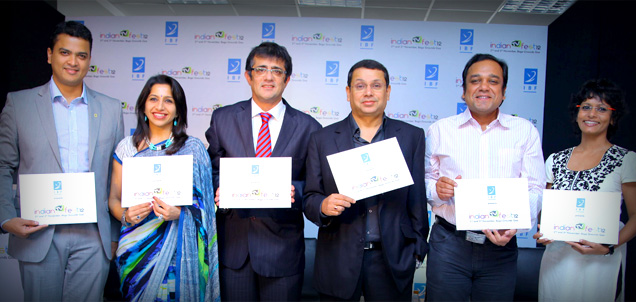
    Announcing the Indian Televsion Fest (from left to right): Keertan Adyanthaya, Monica Tata, Sunil Lulla, Uday Shankar, Punit Goenka and Lydia Buthello


    By Johnson Napier


    The god-like status that the medium of television commands in India today is indicative from the endless attention that gets showered on it from all and sundry. Whether for the advertisers who are willing to bend rules and swing  to their tunes or for the viewers who can take a liking to anything that’s thrown across at them (well, almost), the Indian broadcast industry is calling the shots in a manner that is pivotal to its growth.


    In fact, the popularity that it commands can be gauged from the growth that the medium has been throwing up in the past five years, which has been in the range of 12 per cent. This of course is backed by its ability to occupy a lion’s share of the ad pie and still remain a favourite medium for the advertisers.


    But while there are some obvious highs that ensue from the medium, the medium has been at the receiving end as well. Like the constant criticism it attracts for not being able to display a show of unity to voice common issues rather letting personal goals take precedence. Then there are also those who question the absence of a platform for the industry to come together and air and share views of common interest. But the last peeve may well be a thing of the past with the announcement of the Indian Television Fest 2012.


    The Indian Broadcasting Federation (IBF), led by president Uday Shankar of Star India and core festival committee members comprising Sunil Lulla of Times Television Network, Punit Goenka of ZEEL, Keertan Adyanthaya of NGC Networks, Monica Tata of Turner International India and Lydia Buthello of Star India announced the first-of-its-kind event for the industry. The two-day festival will be held at the Baga Grounds,Goa on November 2 and 3, 2012.


    The two-day fest would be a unique platform for the Indian and global broadcasting industry to network and exchange ideas through engaging panel discussions and master classes. Renowned names from India and across the globe are expected to participate in the mega event. And since it’s Goa, with the inviting beaches for company and some fun.


    Throwing open the idea to the gathering, Mr Shankar began by thanking his core team members, without whom the fest wouldn’t have been a reality. Explaining the thought process behind the exercise, Mr Shankar said: “The idea has been in the pipeline for almost a year now. We felt it was the right time to launch Indian Television Fest as the industry has grown big enough to manage an event of this scale. It basically stemmed from the need to create a platform where the entire broadcast industry could come together under a single roof – irrespective of the organisational and competitive background – so that there could be co-sharing and exchange of ideas and conversations on how the industry can take a big leap into the future.”


    According to him, what would make the event special would be its ability to get together honchos and industry persons from different verticals under television to come and be a part of the give-and-take. He affirmed: “Apart from some familiar and popular names the event will see the best in broadcasting brain trust from India and the world descend at the venue. The ultimate aim of ITF would be to service the larger Indian broadcasting community. It will also be driven with the dual need of being business-minded in its approach while at the same time having a social connect, as we believe the two are interlinked and cannot work in isolation from each other. All in all, we plan to make this event truly iconic in nature.”


    Giving a lowdown on the two-day event, Monica Tata of Turner India began by bringing to light some of the high points of the Indian broadcast industry. Providing a bird’s eye view of the current media scenario, she said: “India is the third largest market for media behind US and China. It has reported a growth of 12 per cent in the last five years which will continue to keep swelling. Further, the country boasts a reach figure of 500 million and is estimated to be worth Rs33,000 crore. This number is expected to triple to almost Rs100,000 crore by 2017. Needless to say there are tremendous opportunities that will enable the industry reach this figure in the coming few years.”


    Highlighting the tremendous opportunities that the Indian market presented for the future, Ms Tata said: “India has a penetration level of just 60 per cent leaving a lot to be achieved going forward. Further the C&S households are expected to grow to 88 per cent from the current 81 per cent. Also, the average time spent on television viewing is still low at 150 minutes compared to other countries that are almost double the number. And finally, with digitisation, DTH, HD taking off in a big way coupled with the unhindered growth of regional channels should see the industry enjoy prime status in the near future.”


    According to Ms Tata, some of the key themes scheduled at ITF include: best practices and masterclass that’ll be weaved around core areas of content, distribution, revenues, technology, etc; presence of visionary speakers like James Murdoch of International News Corporation, Andy Bird of Walt Disney, Hugh Johnson of Channel 4, Michael Lynton of Sony Corporation of America, Subhash Chandra of Zee & Essel Group, etc; debates and conversations; interaction with regulators and policy-makers; and finally encouraging cross-genre ideation.


    Presenting his viewpoint, Sunil Lulla of Times Television Network said: “There was no platform as yet in India where the issues and concerns of the Indian television industry were being raised and addressed. ITF will be a platform where one can learn, interact and demonstrate the road for the future. Three factors that’ll drive this event include the need for conversations, need for confidence to hold an event of this stature and need for commitment from the industry to take this industry from Rs33,000 crore to Rs100,000 crore by 2017.”


    On the key highlights to be expected at the event, Punit Goenka of ZEEL said: “We all know how New Media is going to be the platform of the future and we also know how regionalisation is going to take the industry further…and since regional has a lower base it is growing faster than the other genres. However, there are avenues that we need to discuss. Nobody has an answer as to how we will reach the Rs 100,000-crore mark but one has to start the process of thinking about it.” When asked if it would be a practically possible to reach the Rs100,000 crore mark in a short span of four years he said: “We have to talk about it and see how we get there. Nobody has an answer as to how we would get there. But unless you talk about it and bring it up in discussions how do we even make a beginning to reach there? I think the end goal is not important; it’s the journey which is going to be important.”


    When asked on the initial response that the event has managed to generate, Mr Lulla said: “Members from the broadcast industry have shown tremendous enthusiasm to the initiative, which can be seen from the initial buzz that is being created where registrations are concerned. As you know, we are a little late industry as we like to start things a little later. We hope the television industry supports us in a fashion by sending more members to attend the event. We have fantastic line-up of speakers from India and abroad; and of course, we would like the industry to stretch themselves a bit and sponsor many other themes and elements that we have lined up out there.”


    Mr Lulla added: “As you know, we are always a last-minute booking.com industry, so it’ll be a challenge to get a lot of people to attend the event. Also, there will be the challenge of generating advertising revenues so that we can stage the event successfully. But we are confident of putting up a successful event.”


    On the benefits that will accrue to IBF from the event, he said: “What IBF will particularly benefit from is take the ideas that come out and find out what will be the cornerstones for the industry going forward and what will become items of agenda. What people who come there to attend the event to take off is personal learning – so there will be ideas, new friends will be made…in all, it will be a mind-opening event, so to speak.”


  • The Anchor: Monica Tata on 6 reasons why running a kids’ channel is no child’s play

    By Monica Tata


    The kids’ genre is the largest genre in terms of viewership after mass genres like GEC contributing to 18.3 per cent of the viewership pie (Source: TAM Media Research | TG: CS 4-14 | Market: All India | Period: 2010 – Wk 3 of 2012).


    Although it caters to kids, being a successful player in this genre is no child’s play. It is a competitive market where players need to have the ability to constantly create content that is engaging and innovative. They need to be adept at technological evolution and have the foresight to adapt content over multiple and mobile platforms.


    #1 Single TV Households

    One of the biggest concerns of special interest channels like kids’ channels is the phenomenon known as ‘The tyranny of the single TV households’. In India, a majority of households have only 1 TV set which are controlled by parents during prime time hours. This is why GECs dominate the television viewership pie. Today, over 85% of kids also tune in to GEC channels. Thus the task becomes even more challenging to sustain and increase the viewership of kids’ channels. Kids’ channels’ need to constantly reinvent their content and packaging so that there are novelty factors to the channel that excite kids and at the same time, maintain familiarity so that kids don’t lose connect with the channel.


    #2 Target audiences

    It is the only genre which is fortunate to receive a new set of target audience every five years. Kids between the ages of 4-14 years being the core target audience, content and programming needs to be aligned with their entertainment requirements, perceptions, behavior, social and cultural ideologies, geo-demographics, etc. Kids also change their mind very easily basis what they or their friends think is ‘cool’ or not. Thus, it becomes imperative to stay ahead of times and ensure that content created for the target audience has the potential to be molded and refreshed from time to time.


    One such shift noticed in 2011 with regard to the viewership habits of kids is that they prefer to watch fewer shows on kids’ channels than before and have begun to spend more time per show. Thus, although the viewership for the number of shows has reduced, the overall category viewership remains mostly unchanged.


    Gatekeepers are another important factor to consider while trying to reach the core TG. *48% of parents always exercise control over what their kids watch. This means that if the parents are not happy with the content that is being aired on your channel, chances are that the kids won’t be allowed to watch it. Content on the channel should be considered safe by the parents for their kids. Another way to expand the viewership pie is by creating content that can be viewed by adults as well.


    #3 Content

    With consumers having a much wider choice of channels, ownership of quality content is increasingly being seen as a key differentiator for broadcasters. Once, Cartoon Network was the only kids’ channel airing international content, fast forward to today, and there is a plethora of kids’ channels airing classic international content (like Tom and Jerry), anime cartoons (like Hagemaru), local live action shows (like M.A.D) and the latest craze – Indian animated content (like Roll No. 21 and Chhota Bheem).


    Another way to garner success for content is to make it fun and engaging for gatekeepers as well as 66% of parents watch TV together with their kids. For instance, POGO has continued to hold the title as ‘The No. 1 Kids and Family Channel’ thanks to shows like Chhota Bheem and Mr. Bean that are among the top three rated kids shows by kids and adults. *(Cartoon Network New Generations 2011) Engaging and innovative content with storytelling and strong characters at the core is the focus for broadcasters of kids’ entertainment.


    #4 Animation

    Creating animated content is a time consuming and expensive process. Although we have taken it up as our prerogative to boost this industry via our ‘Desi Toons’ strategy, there are several challenges. Firstly, in order to truly make animation travel across borders, the storyline and characters need to have global appeal and resonate with kids irrespective of cultural and geographical borders. In this scenario, it becomes difficult to make mythology content travel which is what a majority of studios pitch to us. We have had some success in terms of shows like Kumbh Karan and movies like Arjun: Adventures of the Ice Lotus which have managed to do well in other regions of Asia Pacific because their plot is more contemporary.


    Another challenge is the outsourcing business models that animation studios have in place. This model makes it reasonable for large film production houses to outsource animation to India but for broadcasters it becomes quite expensive. Animation studios and broadcasters need to arrive at a happy settlement wherein there is a cost effective quality model.


    #5 Role of language/dubbing

    India is a vastly multicultural and multilingual region. This factor, initially, proved to be a challenge to expansion of viewership markets as content available on kids’ channels consisted of international shows available in English. Broadcasters began to realize the potential of dubbing content in local languages so that the channel could be consumed by the masses across India. Thus subsequently, kids’ channels were made available in Hindi, then Tamil and Telugu and now even in Marathi and Bengali.


    Content providers are taking this a step further by now transcreating scripts of international shows in local languages and not merely translating them. Shows based on humor are that much more hilarious if they capture the colloquialism and nuances of the language.


    #6 Beyond Television

    In today’s multi-screen playground, it’s not uncommon for kids to consume content on more than one platform. This represents huge opportunities for broadcasters to expand the presence of a brand or a character in the mobile and online space through smart phones, tablets and computers. Moreover, broadcasters and content houses are increasingly working towards building anytime anywhere access to content.


    The contribution of content to the digital success cannot be undermined here as well. It is important to leverage popular content on television to these online and mobile platforms in appropriate formats that are engaging, innovative and unique. For instance, Chhota Bheem’s popularity on-air has definitely contributed largely to the success of www.pogo.tv. ‘Chhota Bheem Balloon Blaster’ is one of the most popular games on pogo.tv which allows fans to connect with their hero through a game. The site has seen immense success with about 500,000 unique viewers per month. Apart from prime television when it comes to appeasing kids, merchandising is one of the most powerful tools to connect with them.


    Merchandising, today, has transformed into a global arena; providing an array of international and local brands to choose from. We are witnessing a healthy rise of various kinds of merchandising in every product category. Kids want to have their favourite characters with them (in the form of stationary, bags, lunch box, bottles, clothes, toys, etc.) wherever they go; be it school or outside or at home!


    For instance, Cartoon Network Enterprises (CNE), the licensing and merchandising division for Cartoon Network and Pogo, has reflected the growth of the industry by reaping profits and growing by almost 70 per cent in 2011 and has added 680 SKUs. CNE Products are now available in over 5300 retail counters across India. With the advent of 3G and the digitization deadline in sight, the prospects of growth in terms of market penetration and revenue accountability from subscription models in nothing but encouraging to invest the kids’ genre.


    In spite of these challenges, the performance of the kids’ genre in 2011 is an indication of the potential and growth of this market with the right mix. The genre not only recorded growth but also saw the entrance of new channels like Sonic and growth in regional languages as well with Marathi and Bengali feeds. In Tamil, for example, the share of Kids is higher than News. Many automobile, telecom, financial services and grocery products now target kids as well, which means this genre will continue to be attractive to advertisers in years to come. From that perspective, there is no looking back for the kids genre with infinite growth possibilities provided ‘Content remains King’.


    Monica Tata is General Manager, Entertainment Networks, South Asia, Turner International India Pvt Ltd.


     

  • Brands focus on toon channels as viewership changes

    By Ameya Chumbhale


    If you thought Cartoon Network, Pogo, Disney, and Hungama TV were kids’ channels, look who’s watching them – nearly a fifth of those watching these channels are between 25 and 44 years. And nearly four out of ten viewers of these channels are more than 14 years.


    Most children, on the other hand, either prefer or are forced to watch what adults are watching on general entertainment channels – soppy serials or reality shows. According to TV viewership data shared by TAM Media Research, only 15 per cent of all children viewing TV, watch kids’ channels. The rest – 85 per cent — watch general entertainment channels (GEC).


    Needless to say, this has become a big opportunity for advertisers, especially those who try and reach out to parents through their children. “Parents are increasingly looking at children as representatives of the new world and latest technology. Consequently, children between 10-14 have a considerable say while buying a car or a gadget,” said Santosh Desai, chief executive officer at Futurebrands.


    In fact, for Turner International India, which runs Cartoon Network and Pogo, nearly 35-40 per cent of their advertisers last year came from what would seem like “non-traditional categories such as auto, consumer electronics, finance and telecom,” said Monica Tata, general manager for entertainment networks at Turner in India.


    Chairman and chief creative officer at ad agency BBDO India Josy Paul, while explaining the rationale behind these channels attracting non-traditonal categories of ads, says that brands don’t want to miss out on any opportunity of talking to the mother who is the anchor of the house. Traditionally, one would expect kids’ channels to air ads by ice creams, chocolates, F&B, and toy companies.


    Insurance major Aviva India is a case in point. Aviva spent 5 per cent of its advertising budget on kids genre in 2011 and had run the ‘Aviva Young Scholar Hunt’ contest between July and October 2011 on Pogo. The impact was telling. “Of all the insurance plans sold by Aviva, the share of child plans went up from 2-3 per cent in 2010 to 11-12 per cent in 2011,” said Gaurav Rajput, director of marketing at Aviva India.


    Sony tablet computers and Hewlett-Packard printers too are advertising across all kids channels these days. In fact HP, which launched its printer campaign across kids channels two weeks ago, is something they have done after several years.


    “My target group for the campaign is parents of school-going children, so the kids channels were a natural fit,” said Ayesha Durante, country manager for marketing HP India. For Anuradha Aggrawal, senior VP for consumer insights at Vodafone India, whose team spends a lot of time researching the dual viewership (kids and adults), says it helps in choosing their icons — the pug and the ZooZoos, which connect with children, actually help to build an early brand association with these young consumers.


    Mr Desai cautions that this could be a long-term strategy which only sectors like telecom can afford as they have “cash to burn”. He further added that in a one-TV system, everybody has his/her time slot to watch TV. Therefore, if a child is watching a kids channel, the parent has no option but to watch it.


    For the genre, this means big business. The Disney channel has more than doubled its ad revenues last year while Hungama TV’s revenues rose by 35 per cent, said Vijay Subramaniam, business head at Disney Kids Network India which runs the Disney channel, Disney XD and Hungama TV in India. Disney enjoying highest share of viewership at 22 per cent among kids aged between 4-14, according to TAM.


    Subramaniam says that the return on investment is not proportional to the viewership as kids genre corners just over 1.6 per cent of total revenue of the television industry against the over 6 per cent share of viewership.


    According to the 2011 FICCI-KPMG report, the TV industry is projected to grow to 33,700 crore by 2015 from the current 14,400 crore (2010) at a CAGR of 17 per cent. And the kids genre gets the maximum in terms of viewership after GECs and movie channels, which lead currently.


    Source: The Economic Times

    Copyright © 2012, Bennett, Coleman & Co. Ltd. All Rights Reserved