Tag: TRPs

  • TRAI seeks views on TV ratings guidelines, accreditation

    By A Correspondent


    The Telecom Regulatory Authority of India (TRAI) has released a consultation paper on ‘Guidelines/Accreditation Mechanism for Television Rating Agencies in India’. The Minisgtry of Information and Broadcasting MIB has sought TRAI’s recommendations for laying down comprehensive guidelines and an accreditation mechanism for TRP (Television Rating Points) rating agencies in India to ensure transparency and accountability in the rating system.


    A release from the TRAI said that since TRP ratings indicate the popularity of a channel or a programme and assists advertisers, broadcasters and advertising agencies in making business decisions. Better ratings would promote a programme/channel while poor ratings will discourage a programme/channel or content. Incorrect ratings will lead to production of content which may not be really popular while good content and programmes may be left out. Therefore, there is a need to have an accurate measurement and representative television ratings for the programmes.


    The importance of a credible, transparent and representative television audience measurement system is recognized the world over. At present television rating in India is being done by only one agency and issues related to credibility and transparency of the ratings services in India has been raised by certain stakeholders.


    The key issues discussed in the consultation paper pertain to:

    Establishing an accreditation mechanism for the rating agency

    Methodology of audience measurement

    Sample size

    Secrecy of sample homes

    Cross holding between rating agencies and their users

    Complaint redressal

    Sale and use of ratings

    Disclosure and reporting requirement

    Audit competition in rating services


    Written comments are invited from the stakeholders by May 9, and counter-comments by May 16.


  • Anil Thakraney: KBC: Winning desi hearts

    By Anil Thakraney


    Everyone is surprised by the massive success of Kaun Banega Crorepati, which is now in its sixth season. I have a simple explanation: The Congress leaders said their party is with the aam aadmi, and they won the election in 2009 on that promise. Well, scams-ridden Soniaji & Co totally let the aam aadmi down, and the junta had nowhere else to go. Enter KBC. India’s only hope and home for the common men and women… to try their luck and up their bank balance a bit.


    KBC 6 opened to a rating of a staggering 6+ points (though NDTV will have doubts over these figures, hehe), and is now hovering at around 5. These ratings are actually spectacular, given the competitive scenario in the GECs segment, and also considering that this is an old show. Well, what’s happened is that KBC has become a truly desi gig, much like cricket, and it’s difficult to imagine that the format was created in another country. The Indian masses have made it their own… folks gather together to watch it, much as they would congregate at the village mela or at the ration shop in the cities. And Bachchan’s easy connect with the masses has made this very possible. He is like the adorable sarpanch of the village, the good headmen people like and trust.


    I watched a few episodes of KBC 6, and must say it’s packed with sponsors and advertisers. This is the only confusing aspect in my mind. Because I suspect the big-city upper and middle classes have lost interest in the show, and it’s the lower middle class and people from small towns and villages who provide the viewership numbers. So while the TRP figures are high, they aren’t coming from the rich urban middle class. Does that not put off most advertisers? I would imagine it would. So then why are they paying for the show? The only explanation is that perhaps the advertisers have found a single, convenient medium in KBC to reach out to India’s heartland. And this explains KBC’s commercial success as well.


    So, good show on all counts. However, the sad reality remains: The aam aadmi has to look to a TV serial for succour, having been failed by the political class.


    ***


    PS: Brilliant example of how to use a celeb in advertising. Acer Ultrabook exposes the hidden passion of the macho ’24’ television series star, Kiefer Sutherland. And that passion happens to be cupcakes! What I like about the treatment is that the ad exploits the star’s famous persona, and yet delivers a surprising solution. Cool!


    [youtube width=”400″ height=”220″]http://www.youtube.com/watch?v=5zemXwxg8Og[/youtube]


  • I’m not chasing ratings here: Tim Sebastian

    By Shruti Pushkarna


    Tim Sebastian

    Award-winning British television journalist known for his ‘hard talk’, Tim Sebastian will soon by seen on Indian television screens. Business news channel, BloombergUTV has joined hands with Sobo Films to produce a debate series called ‘The Outsider’, which will go on air in August. The show will be hosted by Mr Sebastian, the  founder and host of the world-famous ‘The Doha Debates’ and the first host of BBC’s flagship international interview programme, Hardtalk.


    Mr Sebastian is hopeful of bringing quality television to Indian TV screens, just as he has done in the past with the Doha Debates and Hardtalk in other parts of the world. He said that a similar rigorous routine will be followed in the making of this show in terms of research as he followed on Hardtalk. Mr Sebastian said: “These are very well-researched programmes. I’m known to do my homework. A very similar research team to the one I had on Hardtalk, providing me with a lot of details, will be working on this show.”


    [youtube width=”400″ height=”225″]http://www.youtube.com/watch?v=Vm5FHz1WD6k[/youtube]

    When asked about the choice of India for a debate show at this point of time, Mr Sebastian said: “I’ll be putting India on a global stage. I’ve always visited countries when they are in crisis. Countries don’t incite interest when they are doing well. This is a perfect time to come to India. Why now because the view in the outside world is that India is at a crossing point. Maybe it’s no longer shining in the way it was five or ten years ago. Maybe the national mood has sunk a little bit in India . People are obsessed with their problems; they feel a promise has not yet been fulfilled. My aim is to have a fair debate, a debate that should shed light on a particular issue of concern to India. My job is to make sure these debates contain both the heat of your passion and the light to illuminate extraordinary things to a curious world. India matters more than ever. There’s no escaping that.”


    A 13-part series, The Outsider will feature debates on some of the major social, political and economic issues faced by India, including subjects like education,Kashmir, relationship between business and corruption, dynastic politics and more.


    Each debate will have speakers arguing for and against the motion. Speakers will include politicians, business people and activists. The debate will be conducted in the presence of a live audience of around 200 people. The audience will vote for or against the motion at the beginning and at the end of the discussion and the votes will be compared at the end of the show. The motion will then be thrown open in the viral world for people from across the globe to post their vote to determine the majority sentiment for the motion.


    Sriram Kilambi

    Announcing the launch of The Outsider in New Delhi on July 12, Sriram Kilambi, President, BloombergUTV said: “To understand the business in India, you have to understand the business of India. Business is larger than just the stock market and we want to broad base what our channel can be. We want to be about business and we want to stay in business, but we believe a couple of shows like this help us broad base, so that our shows on policy and on judiciary can actually get people to see them.”


    Mr Kilambi said that BloombergUTV was excited about Tim Sebastian hosting the series. “The Outsider is the first ever television show about India to be showcased on a global platform and we are proud to be the channel to carry it. We expect the entire nation, and Indians living across the globe, to sit up, watch and participate in the series, which will send a strong signal to the bureaucracy and corporate India about issues that need to be tackled to ensure that the country stays on-course with its growth map,” he added.


    A lot of Indian television programming, as we know, is governed by how well the show scores on TRPs. When asked whether he will be tailoring the content of his show to generate enough ratings, Mr Sebastian said: “No, I am not chasing ratings here. I am chasing interesting television, whether it’s mass market or niche television, it doesn’t really matter to me. I am chasing what I think is good quality television, discussing issues that matter to people. I’ve worked for 30 years in public broadcasting system, and we never chased ratings. We did it because we thought it was useful TV to do. I am applying the same standards this time.”


    The Outsider will be broadcast by Bloomberg UTV in India and by Bloomberg TV across Europe, Asia Pacific, Africa and Middle East, thereby reaching out to over 300 million viewers globally, making it the first and only show about India to be produced in India and telecast across the globe.


    Mr Vikas Gulati, Director, Sobo Films (SBF), speaking about the series, said: “With a combination of Tim Sebastian, one of the leaders in his field, great topics, a young audience and international viewers, we are looking forward to the start of this series. We are proud to be able to give the youth of this country an opportunity to share their views with a global audience. This programme will allow an international audience to hear what the future leaders of this country have to say.”


    Tim Sebastian, previously a BBC foreign correspondent, based in Warsaw,Moscow and Washington has over 30 years of reporting from more than 25 countries. He is globally recognized as a sharp, incisive and unbiased cross-examiner and enjoys a track record for fearless and forensic questioning of some of the most powerful people on the planet.


  • Why IPLs are no fun without this man


    By Biswadeep Ghosh


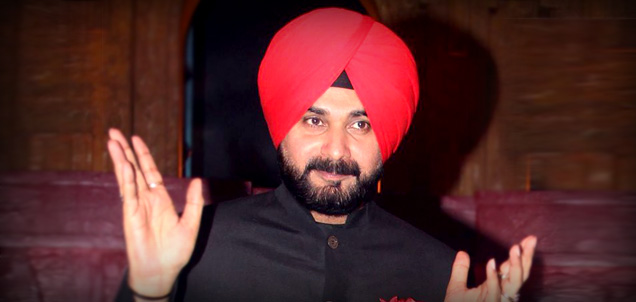
    Think of the Indian Premier League. Forget your favourite cricketers for a while. One, two, three, four… now that you have managed to push the players into the backyard of your mind, who is that one person whose association with the tournament is a fact you just cannot ignore? Rest assured, they aren’t Shibani Dandekar and Archana Vijaya, the two young ladies who do the rounds within the venues, asking unintelligent questions to intelligent cricketers when not busy matching their knowledge of the game with equally informed (or uninformed) celebrities. Despite the presence of so much glamour – which includes one Shah Rukh Khan – the man who is managing to colonise the maximum amount of attention is Navjot Singh Sidhu.


    After having been a successful international cricketer for sixteen long years in which he metamorphosed from being a maha-boring batsman to watch – particularly in today’s T20 terms – to someone who could step out and send the ball flying for miles while dealing with the spinners in particular, Sidhu’s second innings as a commentator has been comparably notice-worthy. He has irritated purists with his style of commentating, which is based on a unique formula. He talks very little cricket, and talks too much. As if that is not enough, he showers similes, metaphors, shayaris and proverbs on the viewers, hijacking the time of his colleagues who can do nothing apart from watching him with a partly amused, partly stunned look.


    When Sidhu joined the IPL5 commentary team as part of the Sony Max show Extraaa Innings, he had reportedly said that the show beats ‘Vidya Balan in terms of entertainment quotient’, the reference being to the actress’s affirmation that a film is about ‘entertainment’ in The Dirty Picture. Balan’s character Silk had used the word ‘entertainment’ three times, and Sidhu had promised five times more than that.


    Somewhat confusing, no doubt about that, since exactly how much entertainment did Silk promise by uttering the word three times? Sidhu may not know that, but he will have an answer to this query for sure. He has an answer for everything.


    What kind of rubbish does he talk? How much can he talk? How can he remember so many shayaris, proverbs and god knows what else? How does he misinterpret half the things he knows with so much confidence? As time has flown since the day he became a commentator many turbans ago – he started his career when India toured Sri Lanka in 2001 – what is amply obvious is that he has added a lot of new material to his arsenal, stuff he uses the way only he can.


    In the studio of Extraaa Innings, Sidhu, who says ‘gurrru’ whenever presented with an opportunity, came up with an outstanding statement the other day: outstanding since not even George Bush could have given rise to so much unintentional humour. Sachin Tendulkar, he said, is a genius, just as Adolf Hitler and Benito Mussolini were. Hence, the Master Blaster is meant to be admired. Sourav Ganguly, on the contrary, is a man of character. So, he is meant to be trusted.


    Presenting, some possible conclusions drawn from what Sidhu said:

    *Tendulkar is characterless, and hence, not supposed to be trusted.

    *Ganguly is not a genius and, therefore, should not be admired.

    *Tendulkar’s genius has parallels in Hitler and Mussolini.

    *A man of character cannot be a genius, and vice-versa.

    *Hitler and Mussolini are meant to be admired.


    Poor Harsha Bhogle, who sits right next to the man. Having been reminded of his hair transplant by Sidhu – for the consumption of the entire world, by the garrulous Sardar, who else? – he keeps staring at our protagonist, doing hee-hee-hee, distinctly clumsy and uneasy, acutely aware, one is sure, that he has been condemned to become one part of the ‘Jai and Veeru’ pair in the present edition of Extraaa Innings.


    That Harsha and Sidhu have become Jai and Veeru – the legendary characters played by Dharmendra and Amitabh Bachchan in the curry Western Sholay – tells us two things. Firstly, Extraaa Innings is not meant for the cricket connoisseur: which is fine, since neither is T20. Secondly, a character like Sidhu can only make its TRPs shoot heavenward, many watching the show seek the sort of humour that he has come to epitomize.


    That Sidhu’s prattle is not a 24-hour-reality in our lives is what works for the man. In a serious moment, when a batsman has failed to negotiate delivery after delivery, he has been known to irritate the hell out of a listener by comparing the batsman to a ‘one-legged man in a bum-kicking competition’. (He is not doing that in this edition of IPL, having been confined to the studios, but he has made many such comparisons in the past). But the thing is, the ‘idea’ of Sidhu has become an addiction with the passage of time. As his loyal fans will tell you, it is not an addiction which is subversive, like heroin, but a habit which makes one smile even when one gets completely exasperated.


    As a person talking cricket, Sidhu, having been a top-level cricketer himself, makes a lot more sense than, say, Mandira Bedi, who possibly believed that the leg stump was tied to a batsman’s leg when she had started out. Unlike serious commentators, however, nobody hears him for his reflections on the game. Sidhu’s USP is the ‘out-of-placeness’ of his thoughts, a carefully manicured image he has developed by insisting that the Indian team ‘without Sachin is like giving a kiss without a squeeze.’


    As someone who seesaws between being a purist and a lover of baseball cricket’s entertainment – the former, when I watch test matches and the latter, when T20 hits the mart – I am among many who lose it when he starts burying voices around him, and cracking meandering jokes in the middle of a serious discussion. But, my anger subsides when Sidhu says what he thinks is funny and introspective by combining humour with deep thought. He is at his best when devotedly absurd: an entertainer who puts up a whole-hearted performance. He is what every T20 player on the cricket field ought to be. Now, is that a Sidhuism?


    Born in Patna but based in Pune, independent writer-journalist Biswadeep Ghosh enjoys writing on films, literature and music. But, yes, cricket is his passion, and he (even) follows matches featuring Canada and Namibia whenever he can.


    Photograph: Fotocorp

     

  • 7pm, the New prime time


    By Ritu Midha


    Once upon a time in Hindi GEC, 8 to 10 PM was known as prime time. Then happened Kahin To Hoga and Kaahin Kissii Roz (both on Star Plus), and prime time viewership extended up to 11 pm. The interesting thing here was that while 10 to 10.30 pm slot was viewed across HSM, 10.30 to 11 was largely metro centric. And today, the slot is used for more mature stories like Maryada Lekin Kab Tak.


    Interestingly, channels have now realised that older children and teenagers are not watching that much television any more – and there really is no requirement for shows tailored specifically for them in the 7 to 8 pm slot. Enter Saathiya – and now 7-8 pm has become an integral part of prime time television viewing. Star Plus successfully proved yet once again that Saas Bahu still works – and good scheduling too can be an excellent programming innovation. More on prime time expansion in a minute.


    Another interesting phenomenon one notices these days is that shows are not killed in too much of a hurry – shows that stop being TVR-garners are nudged, and shifted to another time slot preferably in the afternoon – two very recent examples are Na Anaa Iss Desh Lado and Laagi Tujhse Lagan. Elucidates Dinesh Vyas, Business Head, MEC Global, India, “Channels try out possible routes before killing the programme. And as a strategy they try putting programmes between two good performing programmes hoping for viewers to move on to this programme too.”


    While quite a bit of television slots are still sold based on GRPs, and many brands insist on prime time slots – there are a few which are keen to advertise on a specific show. what happens when these shows are moved from one time band to the other. Explains V Narayanan, General Manager , Maxus, Delhi, “This requires a deeper analysis of the new slot where the following parameters are taken into consideration in predicting the ratings which includes, Current viewership of the time slot, Whether the new slot is in prime time or non-prime time slot?, Ratings of competing programmes in the new slot, Promotion plan from the channel in promoting the specific programme slot etc.”


    Adds Mr Vyas, “The media planner analyses that time slot (over at-least 13 weeks) to which it has been shifted, to estimate drop or rise in viewership. Loaded with this data the planner/buying negotiate with the channel for better deal in rates proportionately to the drop percentage.”


    In place of these shows, in their previous time slot arrive new shows- which may or may not capture viewers’ attention – but this is a risk that channels have to take. It is after all about getting the desired eyeballs and audience acceptance.


    Moving back to the extended prime time, the 7 pm slot was made popular by Star’s Sathiya and 7.30 by Sasural Genda Phool on the same channel. However, now shows on Zee and Colors too are working well for their respective channels.


    A quick look at the delivery of this time slot:Star Plus: 

    Rank Date Day Start Time Programme TVR

    1

    25/10/2011 Tue

    19:00

    SAATHIYA SAATH NIBHANA

    4.3

    16

    27/10/2011 Thu

    19:30

    SASURAL GENDA PHOOL

    2.24


    Colors:

    Rank Date Day Start Time Programme TVR

    21

    25/10/2011 Tue

    19:32

    SASURAL SIMAR KA

    2

    87

    27/10/2011 Thu

    18:59

    HAVAN

    0.76

    Zee:

    Rank Date Day Start Time Programme TVR

    27

    24/10/2011 Mon

    19:30

    CHHOTI BAHU

    1.84

    70

    25/10/2011 Tue

    18:59

    EK NAYI CHOTI SI ZINDAGI

    0.89


    Target Group : CS 4 + Yrs ;

    For the week from 23/10/2011 to 29/10/2011

    Source: TAM peoplemeter system


    Havan, has, incidentally, not been able to do as well as anticipated yet. Says Mr Narayanan, “Saathiya is a popular programme and garners loyal viewership amongst the female viewers. Yes, with Havan being promoted aggressively by Colors, Saathiya viewership did drop during the first week of telecast which was expected. “

    While late night slots attracted metro audiences, the 7 pm to 8 pm slot has succeeded in attracting non metro audiences. States Mr Vyas, “I have always believed 7-8pm slots work best in non-metros where the audiences are home by that time.”

    Mr Narayanan, meanwhile elaborates that it is the mid-sized towns where this slot attracts maximum viewership, “ A closer look at Saathiya viewership across 8 weeks ( 2011, Wks: 33-40 & for the top channels only. Tg: All, AA, 15+, C&S.) indicates that 1 million + towns in Gujarat, Punjab/Haryana, UP, Rajasthan, MP procures higher ratings than 0.1-1million towns within each state respectively. As a comparison, the program ratings within the 1Million + towns of the above markets are relatively higher than Delhi & Mumbai ratings. “

    Interestingly the 7 to 8 pm slot is not doing well only in HSM but a similar trends can be observed in South markets as well. Explains Narayanan, “Within the 7-8 pm slot, the rest of AP and the rest of Karnataka performs better than Hyderabad and Bangalore respectively. Specific to TN, Sun TV programmes do well in 0.1-1 million towns than Chennai and 1 million+ towns.”

    Television always has options – programming experimentation, scheduling experimentation, changing the protagonist, the story line etc – and hence has the capability of being a step ahead of the curve. With three and a half hours of prime time – GEC don’t have much to worry – all they need is good characters. The next battle heating up is for the real prime time – 8  to 9 pm with all the channels bringing up new shows there.

  • Sony touches new ratings high with Rs 5 crore KBC episode

    By Rishi Vora


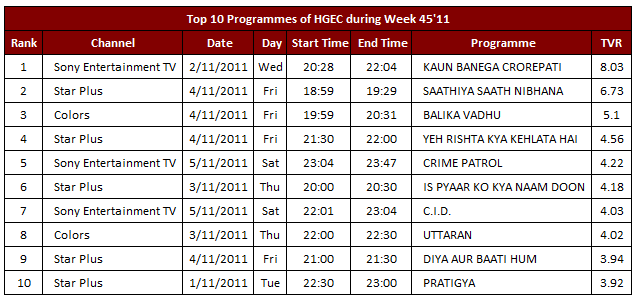
    Every Indian does seem to harbour the dream of becoming a millionaire. Last week’s ratings of Top 10 television shows reveal that Kaun Banega Crorepati (KBC) has, in its fifth season, registered a new high, becoming the highest TRP grosser among all weekday shows after Colors’ Uttaran did in 2009.


    The episode aired on November 1 registered 7.2 TVR while the episode on November 2 touched 8.03 TVR. The KBC episodes on these days were much-publicised and aired the winning of Rs 5 crore by a resident of Bihar. The channel has also upped its GRPs to 287 from last week’s 236, with KBC being the No 1 show in the week with an average TVR of 6.4. However, industry watchers feel Sony will see a dip in GRPs post KBC.


    Sneha Rajani, Senior EVP and Business Head, Sony Entertainment Television said, “The success of Sushil Kumar in KBC is an emphatic endorsement of the fact that KBC is not just a game show, but a melting pot of knowledge and aspirations of the aam aadmi, and the numbers show that KBC this season has broken all barriers of demography and geography and transformed lives of people all across the country.”


    In absolute numbers, the show has managed to reach out to 25 million people on November 1, and 27 million people on November 2, with 18 percent reach and 43 minutes of average time spent.


    Other channels too gained in week 45. Star Plus jumped to 335 GRPs from last week’s 273. Colors rose to 240 from 236 the previous week, while Zee TV rose from 131 to 143.