
Tag: TRP

  • News Ratings: “Approval” Received


    By Shailesh Kapoor


    Shailesh KapoorAdvisory. Directive. Missive. Instruction. Notice. Approval. Order. Go-ahead.


    These are some of the words that have described the communication sent by MIB to BARC India, for the latter to release new channels ratings with “immediate effect”.


    While the decision to revive news channel ratings has been long overdue, that such a decision must come from MIB and not from BARC India itself encapsulates the core issue with India’s television ratings system (or Indian television, in general) today. The industry must suffer from the vagaries arising out of too much interference from government bodies such as TRAI and MIB.


    To begin with, some of this interference is extra-constitutional. MIB has no official role to play in BARC India, which is an independent industry body. Some may argue that the MIB note is just an advisory that’s not legally binding on BARC India. But we know that’s not how things actually work. If MIB has said news ratings must restart, BARC India has no practical option but to comply.


    The restarting of news ratings is a welcome step. But the MIB statement begs the question: Whose decision was it? Why now, just before some big state elections? Have the “problems” that warranted the stopping of ratings in late 2020 been fixed?


    When founded as an independent industry body, BARC India would have aspired to hold the positioning of a credible and progressive TV ratings measurement company of one of the biggest TV markets in the world. It’s a highly technical role, and one that should command immense respect from stakeholders across the board. But today, they are positioned as an agency that’s at the beck and call of ministers and administrators, who seem to know more about research, measurement, and statistics than the company set up to run the show. The role of BARC India CEO should have been arguably the most enviable position in the Indian media and entertainment industry. Instead, it’s one burdened with controversies and bureaucratic hassles.


    It’s difficult to say how we reached here. Did BARC India make the mistake of opening its doors to “interference” in its early years? Avoiding government interference in media altogether may be difficult. After all, you never know when an “advisory” or a notification is coming your way. Perhaps BARC India could have pre-empted some of this, and worked on setting committees and processes in its formative years.


    So, we will soon have news ratings back. That, in isolation, is a good development on several counts, though some would argue that our news channels have become marginally more watchable since the ratings went out of their lives. But the real issue is: The government is finding new ways to run the Indian television industry by proxy, with no apparent logic at the heart of it. From the disasters called NTO and NTO 2.0 to the involvement in BARC India, the government seems to be back in the old Doordarshan mindset: That the state must exert its influence over the media, even if it is just to flex its muscles. And the television industry must grin and bear it!


  • So what does TRP Scam investigation mastermind Sachin Vaze’s arrest mean for the Indian broadcast industry?


    By Pradyuman Maheshwari


    Pradyuman MaheshwariWhen the news on Mumbai Police Assistant Inspector Sachin Vaze’s arrest came in on Saturday, March 13 evening, there was some sense of relief amongst those following events of the last fortnight. He was arrested by the National Investigation Agency of the central government, and there was an urgent need to investigate the bomb threat outside the Mukesh Ambani residence in South Central Mumbai. Yes, it’s the NIA and not the Mumbai Police or the ATS. Earlier in the week, Maharashtra Chief Minister Uddhav Thackeray had said this of Vaze’s name surfacing in the case: Sachin Vaze was no Osama Bin Laden. Indeed.

    Vaze has been in the limelight ever since Mumbai Police Commissioner spoke about Republic TV’s involvement in the TRP scam in early October 2020. From then on, there has been hectic activity on the case. It started with the arrest of Republic Media Network Managing Director and Editor-in-Chief Arnab Goswami. But Goswami was not the only person taken to jail. Republic TV Group CEO Vikas Khanchandani, distribution honcho Ghanshyam Singh, former BARC Chief Operating Officer Romil Ramgarhia and Partho Dasgupta, former CEO of BARC India. WhatsApp conversations between Dasgupta and Goswami and various others in the BARC fold were included as part of the chargesheet where Vaze played a huge role.


    Read full column at https://mediaah.substack.com/p/so-what-does-trp-scam-investigation

  • Ratings Row: It may Finally be the Time for ‘Less is More’


    By Shailesh Kapoor


    Early in the new year, there’s a potential storm building up in the television business. Mumbai police has filed its chargesheet in what is now being called the ‘TRP Scam’. This is no ordinary case. It can have far-reaching implications for the television business in 2021, 2022 and even beyond.


    Ratings, as we all know, is the primary currency on which ad inventory trading is done in the television industry. Any question mark on the credibility of the ratings system puts a question mark on the currency. It doesn’t matter how many people are involved in the case, or data for how many channels was allegedly manipulated. What matters is that allegations of data distortion are in the public domain.


    The Central Government has been largely silent about these developments, perhaps because the case is under the purview of a government from the Opposition. But in parallel, the Central Government has been issuing advisories related to measurement transparency, sample size robustness, etc. This twain shall meet. It’s inevitable. And when that happens, we may be in for some dramatic developments. Dare I say, a larger ratings blackout is not ruled out. If that happens, it may be a treacherous road ahead for the television business, especially given the healthy growth digital advertising is witnessing currently.


    The television industry should take part of the blame for the soup it finds itself in. The obsession with ratings has been a constant feature of the sector over the last 25 years. While mass channels like entertainment and movies looking at ratings keenly is understandable, the obsession with ratings for niche genres, where the weekly time-spent by an average viewer (TSV) is in single-digit minutes, is amusing to say the least. At times, weekly changes that translate into 2-3 Peoplemeter homes are analysed in so much detail that you wonder if everyone actually understands the math behind it all in the first place.


    Then there is the obsession about slicing the data to segments and sub-segments, e.g., 15-21 yrs. NCCS A in Mumbai. This is where the ratings agencies, current and those in the past, have faulted. By allowing liberal data cuts in the software, they have encouraged a culture of slicing and over-analysis. BARC India has been better on this front compared to its predecessor, limiting the geographical cuts within a state only for the bigger states. But it’s not enough.


    Irrespective of how the ‘scam’ unfolds, some structural changes may be in order. All these years, the Indian TV ratings system has been constructed on the ‘more the better’ (and ‘faster the better’) premise. There was even a time when a lot of channels were keen on daily ratings. And who has forgotten the torture of pre-sunrise ratings updates till a decade ago?


    From ‘more the better’, we need to shift the mindset to ‘less is more’. By less, one obviously doesn’t mean lesser sample size. One means lesser TG cuts, lesser parameters perhaps, lesser frequency of reporting for some genres, etc.


    This shift requires a fundamental change of perspective. It will be unsettling for those who have built their entire careers on the ‘more the better’ premise. But in the long run, ‘less is more’ is the only sustainable solution for the industry. Let’s hope there are enough minds in the industry who are willing to endorse this idea.

  • So who is India’s Most Progressive Celeb?


    By A Correspondent


    The Indian Institute of Human Brands (IIHB) has released its Tiara Research Report on Celebrities as Human Brands. The Report was released by the Coach of the Indian Cricket team, Ravi Shastri and Dr Sandeep Goyal, Chief Mentor of the IIHB on Dussehra day in Mumbai.


    Sandeep Goyal

    Said Dr Goyal: “The sample size of the TIARA Report is 25% bigger than the universe of TRP data collection currently being done by BARC. Our respondent base is 60,000; while BARC only covers 44,000 respondent homes. So, the study is comprehensive and representative of the entire India market. We have covered 23 cities. No study on celebrities hitherto has been so detailed and exhaustive. We have used 64 active attributes in the analysis of every single celebrity. Totally, there are over 100 data points that have been used in the analysis. This report, for the first time provides a DNA analysis of almost every prominent celebrity in the country. More importantly, our proprietary tools allow cross comparisons across celebrities, across attributes, across demographics, across cities, and more.”


    INDIA’S MOST BEAUTIFUL

    Deepika Padukone is India’s Most Beautiful. She scores 59.9 on the TIARA ratings. Padukone is way ahead of Aishwarya Rai Bachchan who leads the list of beautiful ladies in Bollywood, with a score of 45.0. In Television, Divyanka Tripathi Dahiya top scores with 39.1 TIARA ratings. Cricketer Mithali Raj has been voted Most Beautiful.


    INDIA’S MOST GLAMOROUS

    Deepika Padukone is also India’s Most Glamorous with a top score 60.3. In Bollywood, Priyanka Chopra and Ranbir Kapoor are seen to have the highest glamour quotient. In Television, Rannvijay Singh and Shilpa Shetty are top rated on glamour. In Sports, Virat Kohli and Sania Mirza occupy the top ranks. As a couple, Virushka are most glamorous.


    INDIA’S MOST INNOVATIVE

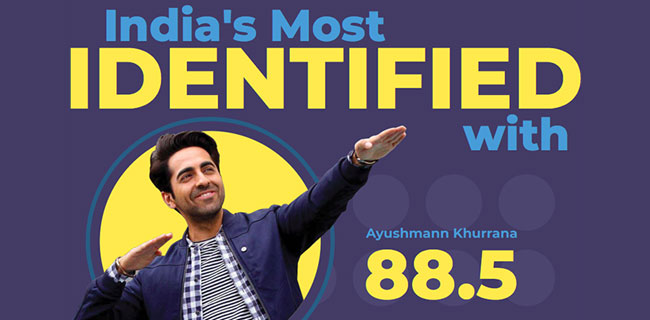
    Retired Indian Captain MS Dhoni is seen to be India’s Most Innovative. He top scores with a TIARA rating of 59.7. In Bollywood, Ayushmann Khurrana is easily No.1 in males, while Deepika Padukone leads on innovation amongst females. AR Rehman top scores in Television, Bharti Singh excels at top spot amongst women. Virat Kohli and Smriti Mandhana top score amongst sportspersons. DeepVeer – Deepika + Ranveer are the Most Innovative power couple.


    INDIA’S MOST  RELIABLE

    Shuttler Saina Nehwal is rated as India’s Most Reliable with a high 69.0 TIARA rating. In Bollywood, old warhorse Anil Kapoor ranks at No.1 while Nushrat Bharucha is top amongst the females. Zakir Khan and Surbhi Chandna are in top places in Television. Sachin Tendulkar and Harmanpreet Kaur are rated best in Sports while Virushka are rated the Most Reliable amongst couples.


    INDIA’S MOST PROGRESSIVE

    Vikrant Massey who was recently in the lead role in Ginny weds Sunny, is rated as India’s Most Progressive, surprisingly ahead of Ayushmann Khurrana who sits on top in the Bollywood list, alongside Deepika Padukone. In Television, Dharmesh Yelande and Mouni Roy top on Progressive. Jasprit Bumrah and Sania Mirza score best on Progressive amongst those in Sports. Virat Kohli and Anushka Sharma top score as a couple on Progressive.


    Other category toppers include:


    INDIA’S MOST RESPECTED : Amitabh Bachchan


    INDIA’S MOST APPEALING : Akshay Kumar


    INDIA’S MOST TRENDY : Virat Kohli


    INDIA’S MOST DISTINCTIVE : Nawazuddin Siddiqui


    INDIA’S MOST VERSATILE : Nawazuddin Siddiqui


    INDIA’S NO.1 HEART-THROB : Ranbir Kapoor


    INDIA’S MOST SEDUCTIVE : Radhika Apte


    INDIA’S MOST SEXY : Priyanka Chopra


    INDIA’S MOST DOWN TO EARTH : MS Dhoni


    INDIA’S MOST FEARLESS: Virat Kohli


    About the Tiara Report:

    The TIARA Report, notes a communique, is the largest and most comprehensive study of celebrities in India.

    • A sample size of 60,000 respondents pa- India.

    • 23 cities (Delhi including NCR), Mumbai (including Thane), Chennai, Kolkata, Bangalore, Hyderabad, Ahmedabad, Surat, Pune (including Pimpri and Chinchwad), Jaipur, Lucknow, Kanpur, Nagpur, Vishakhapatnam, Indore, Bhopal, Patna, Vadodara, Ghaziabad, Ludhiana and Agra.

    • 180 celebrities : 69 from Bollywood (37 male, 32 female); 67 from Television (46 male, 21 female), 37 from Sports (30 male, 7 female), and 7 celebrity  ‘power couples’.

    • The field study was conducted by Japanese research agency Rakuten.


    Tiara is an acronym for Trust, Identify, Attractive, Respect and Appeal. The study uses the research data across 64 active attributes covering image, personality and human factors; and a battery of confirmatory statements to quantify key celebrity dimensions.

    TIARA Research Final-Online


  • Comment: The Suspension of News Ratings


    By Sundeep Nagpal


    At the outset, let me state that this piece is not meant to comment on whether or not there have been any malpractices in the TRP measurement process. Nor is it designed to be an opinion on whether any channel is guilty of abetting such unscrupulous practices or not. It is not my role to comment on this aspect. That’s the job of the law-enforcers and the fact that there is an FIR on this, certainly suggests that there could be a serious problem. Most importantly, given that some skeletons may still tumble out of the cupboard, as we are seeing in the course of the daily investigations, it’s too early for anyone to pronounce judgment.


    So, what is this article about? It’s meant to lend a perspective on various aspects of the issue at hand. And it is being written purely on the basis of my experience as a media professional, who not only uses data to allocate brand advertising budgets to channels, but also as someone who has worshiped data, trained no less than a thousand individuals on its utilisation and strongly propagated its application in the decision making process, even to advertisers, for over three decades now.


    For a media professional, all it would take is a keen sense of observation and some common sense to read between the lines, to understand the reality.


    So, here are the aspects that are being addressed in this piece.


    Aspect No 1: The Suspension of News channel ratings, for upto 12 weeks, apparently for them to clean up the mess?


    Aspect No 2: Did someone say, that this a scam, and that too of the order of Rs. 30,000 crore… seriously?


    Let’s talk about the First Aspect:  The suspension of the News channel ratings, for upto 12 weeks, ostensibly to clean up the field issues in data collection.


    There could be three possible reasons for this:

    1. As claimed by a faction of news channels, there have been frequent and inexplicable fluctuations in the ratings of some news channels, and that ought to be examined and corrected, in case there are measurement flaws (In fact, in this context, readers would recall, that recently, the sudden growth in viewership of a wild card Hindi news channel, had become a big bone of contention, and this was vehemently debated by both sides, without any significant outcome. By now, perhaps the ratings have stabilised – as evident from the graphs). So, viewership fluctuations have been a way of life for media planners to contend with.

    2. Secondly, given the dust storm that has risen on news channels, another unstated consideration for this temporary suspension, could possibly be to let the dust settle on this matter, and until such time, to adopt some interim measure to avoid any further controversies, and mitigate the risk.

    3. This tussle between the state machinery on the one hand, versus the controversial network on the other, is only likely to bolster the network’s viewership, (yes, let’s not forget that the majority of viewers, regardless of how they’re inclined, just tend to get excited about such developments), and that may actually happen at the cost of some of the network’s competitors.


    So, one faction of news channels (called the NBA – which comprises mainly of the said network’s competitors), has been very vocal about supporting this move of temporary ratings suspension. Whereas the other faction, called the NBF – which comprises of he said network and several other regional networks, is dead against this temporary embargo. In fact, last Thursday, NBF released a statement to the effect that ratings agency, BARC has been unfair by singling out the news genre, for an overhaul, and that it was done without any consultation with its member channels and that other genres are equally fraught with anomalies, and hence are also in need of an overhaul, and therefore implying that all ratings should be re-examined, etc. etc. etc.


    So, the fact that BARC has suspended the news ratings, even temporarily, can actually be due to any one or more of the above reasons, but this embargo in itself, can be looked upon as an admission of a systemic problem.


    Now let’s talk about the Second Aspect: Rs 30,000 crore? Really?  Where did this number come from? Has any industry professional provided this figure or verified it? Can anyone substantiate and explain how it has been arrived at? Has BARC even hinted at such a large figure? Let’s understand, that Rs 30,000 crore is (probably less than the profit of Reliance Industries, but it is), still humongous, for anything to do with the advertising/ media business.


    So, again, where did this number come from? Or is it that, after the various ‘Bad Boy Billionaire’ scams, the yardstick for any issue to be labelled as a scam, has suddenly increased to a few thousand crores, by default? Just so that it is taken seriously !


    Hence the question here is not just as to what the general public is being told, but what lay persons end up believing !


    There can only be two reasons for such a headline – it’s either a desperate attempt to grab audience attention (sensationalise) or it reflects the ignorance of the claim maker, about the reality of the BARC system, or perhaps, both !


    As media/ marketing professionals, we must try to understand this: even if there is some malpractice about households (HHs) being paid to keep certain channels on, then how many such HH’s can make a significant difference to the viewership of the allegedly rogue channels? How much can some HHs in a single city, affect the national ratings of that channel? How much money would have to change hands to make a significant difference to the channel? And even if the viewership did rise, how much additional advertising could the channel in question attract, in return for this unscrupulous investment?


    Moreover, if the viewership number did not rise sufficiently enough, would that channel retain the loyalty of its existing advertisers? In other words, do advertisers select every channel only on the basis of viewership? Or do other intangible factors, like content synergy and audience profile also have an important role to play, in the decision making process?


    The answers to these questions are obvious.


    Incidentally, the number of channels that are included/ covered by the system, are in excess of 400.


    Also, the total amount of advertising revenue generated, annually, by all channels put together could be somewhere in the region of Rs 30,000 crore. (the exact number is not necessary here when we are only trying to understand the bigger picture)


    So, by logical extension, any such claim that alleges a scam of Rs 30,000 crores, must necessarily imply that all (approx.. 400+) channels, have been indulging in this fraudulent and illegal practice, of artificially boosting their viewership ratings, by paying some amount of money to sample households (HHs), right through the last 12 months !


    Now, for the mathematically inclined, here’s a small extension of this theory. Of the 44,000 sample HHs in the country, only about 2000 of them are in Mumbai. It’s impossible that all of these HHs could ever be paid off, in the above manner. So, as a ratio of the sample HHs all over the country, where viewership is being measured, to what extent can the viewership of these channels stand to gain, from this small allegedly rigged sample? In other words, how much can the TRP go up, even if the viewership in these few sample HH’s is artificially boosted?


    So, the claim that this is scam of the order of 30000 crores, seems preposterous, given that so far, just three channels have been alleged to have indulged in it.


    So, firstly the “scam”, if there is one, is probably not worthy of the magnitude of the hue-n-cry/ attention that it has generated so far. In my opinion, the newsworthiness of this entire ‘so-called scam’ (and I’m being objective, here), comes from other reasons, such as the controversial nature of the channel being implicated.


    Another reason for this, is that this is really not the first time ever that such a malpractice has come to light. There were at least two similar instances in the distant past, which were curtailed and rectified in a short time. And so, hopefully, so would this.


    Further, consider this. Do advertisers, media planners, marketing professionals rely only on TRP data for their decision-making? Don’t they understand the limitations of the data collection methodology? Surely there’s got to be some way in which their experience and first-hand feel/ non-data related expertise, come into play?


    It is also my humble opinion that any media analyst, worth his salt, understands when and where not to apply the data, in the decision-making process, and how to make the decision on other, less tangible/ non-tangible factors.


    It is my strong belief and contention that niche/ special interest channels, from genres such as English Entertainment/ English News/ Lifestyle/ Infotainment or even the Children’s channel genre, mostly do not attract advertising based on their viewership estimates. These channels are chosen by advertisers primarily based on their content and profile, which need not deploy the use of any data.


    This aspect can further reduce the intensity of the issue at hand, (for whatever has unfolded up to this point in time, unless more skeletons come out from the cupboard later).


    So, given the above two aspects – the question that arises is, why such a brouhaha over ratings? If there’s even a shadow of doubt on the field practices, then just correct those, why suspend the release of the ratings in the public domain, …. unless of course, there is enough evidence that the disease has reached pandemic levels.


    Ultimately, I believe, that no matter how superficial audiences may be, w.r.t their understanding of somewhat technical issues, they are not idiots. Their ability to connect the dots and come to their own conclusions, about the underlying causes of this issue, must not be undermined.


    Because, obviously, these developments are more than what meets the eye. It’s not just a question of news channel ratings, but it’s a no-holds barred business warfare between channels, and the Kurukshetra (battlefield) is not just the TV news arena, but in fact, a larger political arena as well.


    Some media professionals must believe that this entire TRP saga makes about as much difference to their jobs, as a drop of cyanide in the Atlantic (whereas it is being made out to disrupt marine ecology). All the same, true professionals (journalists or media planners), ought to be more concerned about how to retain and enhance the credibility of our own role / effort. But are we doing any better than the lay viewer ? We’re only being a little more than innocent bystanders, coz, we’re also basically just watching the drama unfold.


    Satyameva Jayate !


    Sundeep Nagpal is a veteran media profession and Director, Stratagem Media Pvt Ltd,  an independent media specialist firm, in the business for nearly three decades. His views here are personal

  • Ranjona Banerji: Murky journey over India’s TRP fraud gets filthy

    By Ranjona Banerji


    The battle over Television Rating Points (TRPs) continues its murky journey into the filth of the fight for revenue. There is also the additional drama of the fight between Republic TV and the Mumbai Police.

    After the Mumbai Police unearthed a scam where channels bribed people to pretend that they watched their channels and thus rig their ratings, and arrested six people, the Broadcasting Audience Research Council has suspended all ratings. The biggest “catch” for the Mumbai Police has been the Republic Network.

    BARC, an industry body which handles ratings, is also upset with Republic Network for leaking a confidential communication to “fabricate facts”. Much like Republic Network does in its regular day job, one might argue.

    https://www.thehindu.com/news/national/barc-charges-republic-tv-with-misrepresenting- private-communication/article32890924.ece

    Where does the media stand on this? Why isn’t the media up in arms against the Mumbai Police for infringing on the Constitutional rights of a free press? Why indeed.

    For my part, I do not consider Republic Network a journalistic enterprise or exercise by any stretch of the imagination. It is certainly a media enterprise. But as far as journalism goes, it is a propaganda channel for the BJP and a largescale purveyor of lies and hatred. One can only feel sorry for any actual journalists who joined it or work there to make a living.

    And it’s not just the BJP and Narendra Modi propaganda that is the problem with Republic TV. The despicable assault that it made on people, especially the actress Rhea Chakraborty, in order to make a massive melodrama out of the death of actor Sushant Singh Rajput is reason enough to question the channel’s credentials.

    Journalists, no matter how superior we consider ourselves, also operate under some rules. Putting forward wild theories and unsubstantiated allegations as fact is not journalism. There is a price to be paid for spreading lies and hatred. Perhaps this is it. And as BARC’s objections to Republic TV suggests, telling lies or manipulating and hiding facts is perhaps an essential element of the Republic Network’s modus operandi.

    The channel takes its cue from its boss, Arnab Goswami and he is the chief perpetrator of allegations and lies. It is not possible to soft-soap this. There are innumerable examples of bad journalism available and sadly, for now, most of them come from Indian television. But Goswami is undoubtedly the standard bearer for how not to be a journalist, although he was one many years ago. I can barely even remember the times when I praised his work in these columns! From his last days at Times Now to his life at Republic TV, there has been a downward spiral to the obnoxious behaviour of his channel now.

    Having run from court to court, Republic Network has now decided to sue the Mumbai Police Commissioner for ₹200 crore. They are well within their rights, but Republic Network’s role in this TRP scam has affected all of Indian television.

    https://mumbaimirror.indiatimes.com/mumbai/other/arnab-goswami-and-republic-to-sue- mumbai-police-commissioner-param-bir-singh-for-rs-200-crore-over-trp-scam- case/articleshow/78753585.cms

    **

    Meanwhile, journalists continue to be targeted by the state for speaking out against discrimination and incompetence. No crores being spent to save them by their employers or the media community either. That sort of money is only for privileged propagandists and purveyors of hate.

    **

    The Editors Guild of India, under fire in the past six years for its cowardly inability to criticize in any strong terms the actions of the Narendra Modi government and any BJP government, has seen a remarkable and interesting change in leadership. The Guild has managed to make itself part of the trend of propaganda “journalists” who are only upset by what India’s opposition parties do and have to be goaded into the mildest, mealy-mouthed objections to a series of substantial attacks on journalists by the government.

    In its first election ever, well-known BJP propagandists were substantially defeated. One can only hope for a stronger stance and hopefully courage from this so-called representative body.

    https://thewire.in/media/editors-guild-of-india-elections-seema-mustafa-sanjay-kapoor-shekhar- gupta-smita-prakash

    **

    As further proof of government interference in the media is the latest “clarification” on FDI in the digital media space. Paranjoy Guha-Thakarta analyses and explains what’s going on.

    https://www.newsclick.in/govt-plans-to-target-digital-news-media%3F


    Ranjona Banerji is a senior journalist and commentator. She is also Consulting Editor, MxMIndia. Her views here are personal


  • Das ka Dum with Dr Bhaskar Das: Can one trust audience measurement data?

    It’s going viral. Each Q&A we hear is firing up the Whatsapp and mail circuit. People have been laughing, screaming out incorrigible reading a response… but there’s no denying that each question-and-answer is profound and funny. Presenting Das ka Dum with Dr Bhaskar Das. And do come back next week for another round of questions and answers.

     

    Please go to the Das Ka Dum tab on the website’s top navigation bar, to visit the archives of Q&As.


    Q. Can one trust audience measurement data?


    A. I am a strong advocate of data-based insights to complement decision-making processes. So any measurement data can at best be indicative and should be leveraged for directional purposes. Doubting the credibility of measurement data isn’t a constructive route to move towards an augmented intelligence.


  • Life OK and SAB: The see-saw continues…

    By Meghna Sharma


    In India there is no dearth of television channels. The competition is only growing and the race to lead in the TRP race is heating up. In the past few weeks, the two channels which seen an increase in their TRPs are Life OK and SAB TV which have been fighting for the fifth spot in the TRPs race.



     

    Life OK, the newest entrance in the GEC genre from the Star India stable, was launched in December last year. The network renamed and re-launched their youth-oriented channel Star One with new tagline ‘cherishing what you have’.


    On the contrary, SAB TV has been around for over a decade now but has gone through various transformations. In March 2005, SAB TV was acquired by Sony Entertainment Television and was transformed into a youth-centric channel. In June 2008, the channel announced that it would return to its roots by being repositioned as a comedy-centric channel.


    So what does the race for TRPs mean for the two channels and do they pose a threat to other GECs? MxMIndia spoke to a few media planners to see what is the future of the GECs and what shape will this ‘war’ take.


    According to the latest TAM data, in week 24, SAB TV has toppled Life OK and regained No 5 position. Whereas, last week (week 23), Life OK was the fifth most watched GEC.


    Sundeep Nagpal

    Sundeep Nagpal, founder director, Stratagem Media feels that these are momentary fluctuations and cannot be contributed to anything per se. “These channels have a small base; therefore, even a single factor can affect the ratings of the show – positively or negatively – depending on how it did on a particular week. Hence, I don’t think we should be alarmed by such fluctuations. And they won’t be able to impact the top 4 slots.”


    The two channels have positioned themselves differently, too. SAB TV is a comedy-centric channel which portrays itself has a family channel, whereas Life OK has shows full of melodrama like other GECs.


    Janardhan Pandey, associate vice-president, DDB Mudra Max feels that the two cannot impact each other drastically. “SAB has its own set of audience which won’t get influenced by other GECs and vice-versa. They will continue to do well in their own categories; the fluctuation between the two is possible but they don’t have the same hold as other GECs do. They still have a long way to go.”


    Jai Lala

    On the other hand, Priti Murthy, national director – Insights, Maxus, feels that though these channels might be still small fish, they cannot be ignored entirely. “Like these two channels, even number two and three slots have been fluctuating for a while now. So, slot five and six can create an impact too. One cannot rule out the possibility of them gaining to higher positions in the future if they come up with new and better content.”


    On the channels growth, Mindshare’s principal partner, Jai Lala feels that the two channels have grown since Imagine TV, a Turner International India Pvt Ltd entity, was shut down earlier this year. “The shutdown of Imagine TV has benefited these two who are now turning out to be competitors. However, they still have a small base compared to others and unless and until they cross the 200+ threshold, I don’t think that they can or will affect the channels like Star or Zee or Sony which have been ruling the top slots in the TRP race for a long period of time.”


    Uday Mohan

    “While these channels are doing well they have a long way to go in terms of reaching the numbers of the mainline GECs. They still don’t have the kind of appointment viewing that the mainline GECs generate….they might eat into the shares of other frequency channels but will not threaten GECs, at least not immediately,” added Uday Mohan, executive director – North, MPG.


    Most experts believe that there is nothing to be alarmed about the two channels see-sawing. What they do feel is that both the incumbent SAB and challenger Life OK will have to work harder if they want to reach the top slots.