Tag: Tribune

  • Achche Din… Atul Phadnis’ What’s-ON is acquired by Los Angeles Times owner, Tribune Digital Ventures

    By A Correspondent


    Tribune Digital Ventures, the technology and innovation arm of Tribune Company has announced it has acquired What’s-ON, the leading television search and Electronic Program Guide (EPG) data provider for India and the Middle East. This move expands Tribune’s TV listings and video metadata footprint to more than 50 countries in 30+ languages, reaching more than 600 million pay TV subscribers.  Tribune has interests in multiple media as it runs 42 stations across the US and daily newspapers like Los Angeles Times and Chicago Tribune.
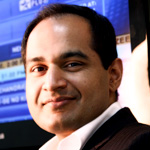
     

    Atul Phadnis

    What’s-ON provides EPG data and TV search products for 16 countries, including India, United Arab Emirates, Saudi Arabia, Jordan, Egypt, Qatar, Bahrain, Indonesia, Kenya and Sri Lanka. What’s-ON delivers data for more than 1,600 TV channels and helps power more than 50 million set-top boxes through the region’s top cable and IPTV services.


    What’s-ON customers include some of the biggest TV networks, service providers and consumer electronics manufacturers, such as STAR TV, Discovery Networks, Hathway Cable, Qatar Telecom, Samsung and Sony.


    Earlier this year, Tribune acquired music and video technology and metadata leader Gracenote. The company’s sizable presence in EPG data in Europe, combined with Tribune Media Services’ (TMS) presence in North America, immediately positioned Tribune as a leading provider of TV data, as well as music, around the globe. The addition of What’s-ON further extends this reach and strengthens Tribune’s position internationally.


    “The acquisition of What’s-ON fits with our broad strategy of diversifying revenue and scaling our metadata business to meet increasing client demand,” said Peter Liguori, CEO of Tribune Company. “The strategic investments we made over the last year expand Tribune’s presence internationally and enable us to offer a trusted solution to cable, Internet and consumer electronics clients globally. I’m pleased that with What’s-ON we will have a new presence in markets with significant opportunity and What’s-ON’s founder and CEO Atul Phadnis and his team will work together with Rich Cusick and Tribune’s existing TV metadata team to grow this area of our business.”


    India is the world’s third largest TV market, after the U.S. and China, with an estimated 175 million homes and a growing base of digital cable subscribers, according to ABI Research. The expansion of digital TV in Asia, featuring popular shows and movies, will enable Tribune to develop new technologies and services on top of its entertainment data that fuel discovery and recommendations on cable, satellite and over-the-top services.


    “We felt it was important to find a company that shares our vision for the business and understands the growth potential for TV data and services in Asia. And we believe we have found that with the Tribune team,” said Atul Phadnis, founder and CEO of What’s-ON. “Tribune’s portfolio of entertainment technology and metadata will provide us a solid foundation to grow the business and expand our services throughout the region.”


    “Electronic programme guides remain the primary vehicle for the discovery of TV shows and movies around the world,” said Rich Cusick, who oversees the TV metadata business for Tribune. “While data remains the foundation of what we do, our evolution will be centered on data-driven services and features to help define new TV platforms and experiences for viewers around the world.”


    What’s-ON will continue to operate out of its headquarters in Mumbai. Its leadership team, including Atul Phadnis, will remain with the company. Tribune’s Asian subsidiaries, including Tribune Digital Ventures Singapore Pte Ltd, are purchasing all of the shares of What’s-ON for $27 million subject to standard adjustments.  Edelweiss Capital served as the investment advisor for What’s-ON.


  • PM commends media while releasing book on Tribune

    By A Correspondent


    Prime Minister Dr Manmohan Singh released a book titled The Tribune 130 Years: A Witness to History, in New Delhi on January 19.


    In his speech on the occasion he said:

    “I am delighted to be in the midst of The Tribune family once again. The last time I was involved in your celebrations, I had the pleasure of releasing an anthology of selected writings to commemorate 125 years of this magnificent paper.


    “Today marks the release of a comprehensive history of The Tribune, on completion of 130 years of its publication. It is truly pleasant to go down the memory lane with the newspaper of my choice which has been my staple reading every morning for decades.”‘A Witness to History’ is an apt title of a book that records the 130 year old history of The Tribune. Indeed, this history stands closely intertwined with the story of our country’s journey during this turbulent period.


    “Sardar Dyal Singh Majithia, the newspaper’s founder was a man of rare foresight and a great reformist. He was inspired by high ideals and wanted The Tribune to be free of any sectarian or commercial bias, and unaligned to any dogma or political party. I am happy that the newspaper has by and large lived up to its founder’s vision. While being an effective watchdog of the interests of the people it has practiced responsible and credible journalism.


    “The Tribune has also been a wonderful example of good what trusteeship is about. Its Trustees have been men and women who have distinguished themselves in their respective professions and who embody the spirit of The Tribune very aptly.


    “The newspaper is one of the very few in the country where the editor is insulated – as much as is possible – from managerial demands and proprietorial interests. But even more importantly, the newspaper has always been blessed with Editors of impeccable credentials. My friend Raj is one of them, with many very illustrious names before him and some of them are present on this happy occasion.


    “I compliment all those who have helped shape The Tribune into the newspaper it is today-the generations before us and the current torch-bearers of this fine institution.


    “I congratulate the author of ‘A Witness to History’ Professor V N Datta for writing such a fine book. Prof Datta recounts how in the early years of the 20th century The Tribune became passionate as a patriotic and nationalist newspaper. He elaborates how from 1920 onwards, as events began moving at a fast pace and as communal tensions began building up, the newspaper’s sober and reasoned approach attempted to bridge the divide between the Hindus and the Sikhs on the one hand and the Muslims on the other. The Tribune was opposed to the dismemberment of India and made sincere efforts to prevent it, but in vain.


    “Glancing through the pages of ‘A Witness to History’ I was struck by the words of an avid Tribune reader who wrote to the newspaper on September the 25, 1947, the day The Tribune resumed publication from Shimla, after Partition had forced it to move out of Lahore. And he wrote: “The heart of Punjab has begun to beat again, though the pulse is yet faint.”


    “On May 13, 1948, to mark the Tribune’s shift to Ambala, the then Prime Minister Jawaharlal Nehru wrote in a special message to the newspaper in his inimitable style: ‘You have passed through many difficulties and have stood many tests. I trust you will not be carried away by momentary passions but will function with a vision of the future before you.’


    “We have come a long way from the early years of The Tribune. Today, while India sits at the high table of nations and is looked upon and heard with respect, a vibrant media is crucial to our needs-a media that informs and educates, a media that is inspired by public interest and not guided by sectarian or commercial considerations.


    “The Indian media of today has its inevitable highs and lows. Every day we see examples of journalism of a very high calibre. There are instances of fair and accurate reporting, free of biases. There are stories with painstaking research to back them up. Journalists often expose wrongdoings even at considerable risk to themselves. There are efforts to report constructively on subjects that are of vital national importance.


    “But we also see sensationalism, driven by a desire to sell a story at any cost. There are stories without a clear understanding of the underlined issues. There is reporting which is prejudiced. There is trivialisation of important matters. There is corruption. The prevalence of the practice of ‘paid news’ exposed recently has come as a shock to all right-thinking people.


    “It has been our government’s avowed belief that the Fourth Estate is an essential pillar of our democracy. We believe in complete independence of the media from external control. It is true that sometimes irresponsible journalism can have serious consequences for social harmony and public order, which the public authorities have an obligation to maintain, but censorship is no answer. It is for the members of the Fourth Estate themselves to collectively ensure that objectivity is promoted and sensationalism is curbed. It is for them to introspect how best they can serve our country and society and advance their well-being, and how best they can earn the respect of our common citizens. Those in the media should come together to exercise a degree of self-regulation to combat perversions like paid news.


    “It is an important responsibility of the media to expose corruption and other ills in our polity and society. It should also advise the government and even reprimand it when it goes wrong. But let me also suggest that it should not be all gloom and doom all the time. The world is looking up to us today and it would be but fair that positive news is also given its due share. The Indian development story is an exciting one and should be told through the print and visual mediums.


    “I believe that good journalism is very serious business and a very difficult work. The responsibilities that journalists carry are onerous – to inform and educate the public, to keep a watch on the government’s work and to highlight issues of critical importance. It is hard to be a good journalist – ever willing to learn, ever alert to new developments, objective, fair, sensitive, balanced and constructive in approach.


    “However, I also believe that collectively the country’s journalists have acquitted themselves reasonably well. I am convinced that the Indian media is on the balance responsible and attuned to serving national interest. I am also sure that the coming years will see even higher standards from our media.”