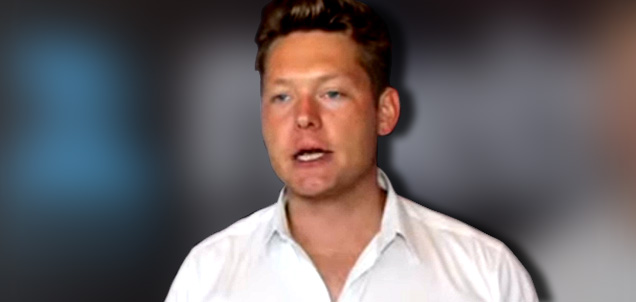
Tag: Tom Goodwin

  • MarTech & TV dominate sessions at Zee Melt 2018


    The fourth edition of Zee Melt 2018, the two-day conference on advertising, marketing, media and technology, conducted by Kyoorius was held in Mumbai on May 30 and 31. Along with the conference, there was an exhibition area which saw displays and experiential zones set up by Google, Surewaves, WION, National Geographic.


    Here are highlights of the two-day event:

    :: A live televised chat with Sir Martin Sorrell. The chat with senior journalist Anant Rangaswamion CNBC-TV18 assumed importance given that Sorrell had unveiled plans for his new venture

    :: Speaker sessions by Tom Fishburne, AnindyaGhose, Mark Shayler, Fernando Machado, Global CMO, Burger King; Tom Goodwin, EVP, Head of Innovation, Zenith Media; Ana Milicevic, Principal, Sparrow Digital Holdings; Babita Baruah, Managing Partner, GTB India and others

    :: “How Return Path Data Will Turbo-Boost Television Audience Measurement Globally” –Keynote by Ricardo Gomez-Insausti, Vice-President (Research), Numeris

    :: &Prive – A panel discussion featuring SonalDabral and Ashwini IyerTewari and a screening of “The Post”

    :: A panel discussion by Zee and Indian Market Research Bureau on TV: The Business Propeller

    :: A session by Jasper Donat, CEO, Branded & Producer, YouTube Fanfest was followed by a meet-and-greet with Bhuvan Bam, YouTuber, Singer & Songwriter

    :: Day 2 concluded with a Keynote session by James Southern, Managing Partner at Front Row Advisory. He addressed the audience on the topic, “The Next Seismic Shifts In Television”.The session was followed by a panel discussion hosted by SureWaves moderated by Paritosh Joshi (Principal, Provocateur Advisory) featuring Punit Misra (CEO, Zee Entertainment Enterprises Ltd), Shashi Sinha (CEO, IPG Mediabrands), Partho Dasgupta (CEO, BARC).


    And these are highlights of what some of the speakers said (for details on the Martin Sorrell session, please visit http://www.mxmindia.com/2018/05/return-of-the-sorrell/):


    Fernando Machado, Global CMO, Burger King:Creativity helps you thrive the business and grow your brand. You should start one campaign at a time. Understand the business and see what ticks people. There are certain brands that strike a chord with the consumers and Burger King is one of them. People ask, what if it didn’t work? They always have this fear. These 5 things helps coping with the fear:

    :: Need to understand the brand- it is about not doing random stuff. You need to understand the positioning. The positioning and personality of the brand should match

    :: Create a great brief– Challenge your client with a one line brief

    :: Let the idea grow- Trust on certainty

    :: The biggest risk is not taking any risk- We are afraid all the time. But the thing is if I am not afraid, probably I won’t do it

    :: One Team- Marketing, agency and everyone else together should be one team.  Fight with everyone, together


    Tom Goodwin, EVP, Head of Innovation, Zenith Media: Speaking about the power of digital transformation, he mentioned three key aspects to be taken care of:

    :: Understand people- People go to the internet consciously and get off it only to be reminded to go again. Brands still think of it as a pattern. But the consumer is obsessed with the idea like it is a behaviour. It is not helpful. It is a hybrid world that transcends it. People are disappointed if they don’t get the same experience as any other brand.

    :: Apply technology at the core- Consumers are inclined towards everything that has a quick turnaround. Brands are realising this pattern and providing quick, cheap and hassle free service without understanding that this remains as the outer most layer without deeper existential question. Younger brands are utilising contemporary technology and it is incredible to see how much value they have created.

    :: Rethink everything- The key is to think without expectations. The greatest threat to incumbent business is to not know too little or being naive, it is about having too much knowledge.


    Ana Milicevic, Principal, Sparrow Digital Holdings: “The advertising industry is stuck in between the technology change. As an industry and as professionals it is important that we are constantly changing and are not being outdated. There has to be a balance between speaking to the audiences and amplifying annoyance. Future without advertising is far-fetched. Hence, we need to focus on today’s advertising trends and that is story-telling. Every interaction the brand has with consumers, it becomes advertising. It is imperative to stay relevant or risk getting skipped.”


    Nelson Rodriguez, Global Director of Industry Strategy, Akamai:“Digital advertising still has a lot of noise. India has the highest ad-block user across the world, although ironically, India is an ad driven market. There are three innovations happening today in transforming relationship with audiences in this market.

    :: Relevance- Every industry that goes through change has an opportunity to build on that change by being relevant

    :: Value- Customer should have the power of consuming content. That is where optimisation can enter

    :: Choice- With micro-transactions in boom, customers can be charged according to the amount of content they want to consume


    Babita Baruah, Managing Partner, GTB India:“This topic means a lot to my heart. I thought a lot about how to have more women. Not in terms of number, but in terms of decision making roles and how we can keep this journey going. Melt and of course any forum where you have the industry coming together is good to start off this kind of conversations to get points of views. I think it is important for women to share their personal journey. Because there is a lot of learning from what someone has gone through. And a narrative or story telling is always a good way to connect.”


    Patrick De Pauw, CEO, Social Seeder:“There is so much clutter when it comes to brands today where all are shouting for attention in some way or the other. But to get visible I believe there are 2 things a brand should swear to follow and that is – stay relevant and do something so unique that it helps you gain recognition between this mainstream clutter. There is paid media and owned media today but earned media is the word of mouth which works in favour of your brand creating a high decibel impact. An ambassador (on a voluntary basis) is an internal or an external person that is more than integral to spread a word about your organisation. But being an ambassador starts with you.”


    Tom Fishburne, Founder, Marketoonist:Technology can’t save boring marketing. We need to stay focused on our marketing strategies and not get excited when you see new things. We need to know who we are creating our marketing for and what is our marketing campaign. I have never been this excited in my life, it was amazing to be here. I have never seen such an entrepreneurial environment. It is great to see what people can do to sell your small enterprises. On my first trip to India I loved to discover the campaign by Amul. In 52 years they have campaigned amazingly and their idea of serial story-telling is something worth taking note of. They have campaigned everywhere from Bollywood to hoardings to newspaper ads. I am always excited to know what incidence their next campaign will be based on.”


    Anindya Ghose, NYU Stern School of Business: “Crowdedness is one thing which works best in the case of AI, as when people are alone in a crowd, phone is their best escape. Over a period of time, we have witnessed brands identifying known as well as unknown needs of consumer’s basis which they are ready to invest heavily in mobile data metrics. Addressing to the unknown needs is what will give the brand an upper hand to serve better. This metric eventually helps in measuring the ROI on the capital spent.”


    Guneet Singh, Head – Marketing Solutions, Google India & SEA: “The big piece of work we do is on video and the reason is 80% of consumers are on mobile. The phone is a very intimate space, as it is 12 inches away, but your TV screen is 6-7 feet away which is not an intimate space. The average attention span in Mobile is 7-9 seconds; if you don’t change the arc in this time span, one skips the video. That’s how you look at the story arc in digital. In digital you know the exact persona of the person watching something. It is important for you to build content for the right audience. We’ve recently made 2300 videos all running in the same date to distinctive audience.”


    Mark Shayler, Director Ape:“Every single action has a reaction and every single movement has an angle. We are all millennial. People like tactility; if you are making a digital campaign make it real, make it human. We can’t lie anymore because the internet is everywhere and the truth will eventually come out. It’s high time that you innovate the new way. Define a purpose, as purpose makes you stronger, being good is new cool and Kindness is competitive.”


    Sakshi Choudhary, Creative Controller, Ogilvy India: “Women spend twice the time as men, they are playing more games, and they are also on social media. 74% purchasing decisions are made by women and in cities it goes up to 90%. 70% women are buying houses in top 8 cities of India and 40% overnight solo trips are made by women…. Honda has realised that the scooter market is overtaking the motorcycle market in rural India and therefore they launched Honda Cliq targeted only at rural Indian women. Alcohol consumption among women has been increasing; Bacardi has been making the best of it as their sessions are more focused at women. Hotstar has realised that their video consumption is 3 times more by women compared to men.”


    Erica Ng – Senior Editor Asia Pacific Insight – WGSN: “The world is getting future ready and so are our brands. The brands of tomorrow are using the 4 E’s – Engagement, Exclusivity, Experience and Emotion. While today’s traditional spaces are extremely crowded, it becomes a larger deal for the brands of tomorrow to get more creative in their thinking. The brands of tomorrow are engineering vitality, as they aren’t using space to advertise but instead growing their presence on digital. They are using psychographics to understand the consumer needs. Today people don’t buy products, they buy people!”


  • Tom Goodwin on digital media & the future


    One of the star speakers at the Zee Melt 2016 was Tom Goodwin, Senior Vice President of Strategy and Innovation at Havas Media. This was Goodwin’s second visit to India, and as in the past he kept the audiences of his sessions glued to their seats with his vision for the future and a reality check of the present. Excerpts from a quick chat with Tom Goodwin…


    In your session at Melt, you spoke about trends in the digital media – the goods and the bad. What is your view about the way things are in India?


    The famous saying by William Gibson about the future being here but not equally distributed… more than anything else as I travel around the world you realise how true that is. So, it is very easy for Americans to come here and to somehow think that the things are far behind here. There are some things which are very far behind here. But there are things which are way ahead of America and I also think that change will happen probably more quickly here as well. For example, if you look at the way the mobile phones are embedded in the culture of people here… When you look at people in terms of media consumption, it actually lags behind. The number of people that buy daily newspapers, for example, is something that has not been seen in the realm of a developed world for a long time. One needs to be mindful of the environment it creates and the degree to which companies can lead for a lot in the interim stages. It is very easy for China to build the world’s best railway network because they are able to invest in the very latest and very best and advanced trains which is why they have one of the best train structures in the world. It is interesting to look at what the equivalent infrastructure looks like for India. So, what is mobile banking like in an environment where banks have not built a vast system of high-end banks first. What does Uber or Ola look like in environment where people have not got high car ownership>  It is a very interesting market to look at how things can be very advanced very quickly. Retail would be a very good example of that.


    Why do you think there aren’t enough investments happening in terms of digital media spends?

    I think digital media has always been the next big thing and what we realised in some markets is that there needs to be a much more nuanced approach towards it. There is always a lag between new technology and how quick investment happens in that channel. Mobile is the best example at the moment where we find an incredible amount of time but investment in advertising is very low. So, what we are probably seeing is people learning from early mistakes that happened in other countries. We are seeing a certain degree of lag because that is how the world is. Probably, I am also seeing a slightly different demographic nature here where if you want to reach the mass market, it still may not be as possible to do so using digital channels and there are still huge numbers of people watching broadcast TV and reading newspapers as well, so it is a combination of factors.


    Consumption studies have claimed that print and broadcast are still going strong in India. So, traditional media is going to be here for long. Even the new media, for example Amazon, advertises a lot on traditional media.

    At the end of the day, India is a country that has 1.2 billion people and is going through a remarkable economic transformation with incredible amount of growth. So, unlike more mature economies, it is absolutely possible and likely and good that the entire advertising community grows. Traditional media will grow but it is also likely and sensible that digital marketing and channels will grow even faster. I would like to think of a world beyond digital and traditional split because if you are reading the Indiatimes on your phone, we are still reading quality journalism. I talk freely about the post digital age where you can shoot TV through streaming or broadcast or whether you are reading news on your phone or on your desktop or newspaper increasingly matters less. The distinction between traditional and digital will hopefully increasingly mean less.


    So, you are saying digital is going to get mainstreamed.

    I think in different countries in different times digital will become how virtually all mediums are delivered. Interestingly in India, the TV streaming infrastructure is pretty advanced. So, we are already seeing lots of people consuming TV on desktop and through the internet. If we look at the long-term future other than newspaper and outdoor virtually all media will become digital, it is a personal opinion of mine as Tom Goodwin. And, this differentiation between traditional media and digital will just become irrelevant. As it happens that digital is better, we got far more rich personal information, we get to see how people are behaving, we get to optimise and buy in real time. It is the best environment ever for advertising. So we should see a positive there.


    On a personal note, being a leading futurist yourself, don’t you want to do something bigger than what you are doing currently?

    I am lucky and have done quite a lot of things for the first time. I did one of the first mobile apps, the world’s first interactive digital ad. I feel very comfortable when I make things and less comfortable when I talk about things. At the moment, I really enjoy triggering a debate. I feel my role is not to have answers but to have really good questions and I enjoy going around the world observing behaviour and thinking about how things are changing and not changing and I like making things and more work that I can do for our clients. But for me as an individual I think I am an intrepreneur rather than an entrepreneur. I do not want to take on the massiver of risk and have sleepless nights making stuff when I already got an amazing job.


  • #ZeeMelt15: Multiple screens, many needs

    By Labonita Ghosh


    Digital is mainstream

    Adam Ostrow, Chief Strategy Officer, Mashable

    “In 2015, digital culture is the mainstream culture,” says Ostrow. Statistics show that the size of the online market has quadrupled in the last couple of years, he points out. Among other curious findings is the fact that about 38 per cent of two-year-olds now use mobile devices. However, while ad revenues for TV and broadcast are rapidly shrinking, as per research by Google, about 56 per cent of digital ads are never seen. Ostrow points out a few key trends in the media and advertising space. Social media has become primarily a mobile activity, he says. People are turning to social platforms for news and entertainment. “To succeed in 2015, you have to be relevant in your feed, you have to be able to draw attention in seconds,” he says. Nowadays, on a social media page, posts from advertisers and any corporate house are competing with posts from friends and family. You have to find a way to stand out of the crowd, he says emphatically, adding: “In a world where everyone is a content creator, data provides your competitive edge.”


    Content no longer king 

    Joshua Black, CEO, GroupM

    “If you believe that content is king, you’re probably still stuck in the 80s,” says Black. “Content is not king. The days of capturing a mass audience through television are over. If you’re not in the right place, distributing your content to audiences where they are, when they want it and how they want it, you’ve failed.” Today, the consumer is in control; people no longer have to sit before their TV waiting for their favourite show. “People are also always on the go,” says Black. “They don’t live in their houses any more. They live in offices, in coffee shops or even outdoors.” So content has to reach them wherever they are. Consumers want content in a specific way too. Studies in the US have shown that large numbers of people report binge-viewing their favourite TV shows, sometimes for six or eight hours straight. Clearly, consumers want control over this sort of consumption. “Producing great content is not a strategy,” says Black. “It’s only a part of the strategy.” The bigger, more critical part is delivering it, in a custom-made manner.


    Too many screens

    Tom Goodwin, SVP Strategy and Innovation, Havas Media

    There was a time when the TV was the most important screen in people’s lives. Then came the laptop. Now there are tablets, mobile phones and digital watches. A host of screens are competing for our attention. So what is a marketer to do? The answer, says Goodwin, is not to make ads smaller; but to “reimagine advertising for the future not by the size of the screen, but by the richness of data all around us.” Indeed, marketers will also have to keep some other things in mind. While the phone has become a gateway to everything, it will continue to become a thinner, more personal web experience. Moreover, the debate is no longer about digital versus traditional marketing; it’s just the modern world one has to cater to. Similarly, it’s no longer TV versus video; it’s just about video being viewed on multiple and different screens. “A whole generation of people will grow up with no concept of what it is to go offline,” says Goodwin.


    TV is a second screen

    Huib van Bockel, Marketing and (Social) Media Expert, The Social Brand

    Just as there is a whole generation that might never know what it’s like to be offline, there is likely to be a whole generation that will never know what a TV commercial is. Huib van Bockel has actually glimpsed such a future. On a recent vacation, van Bockel sat his kids in front of a TV to keep them occupied. After some time, his six-year-old daughter came rushing to him to say the ‘film’ they were watching was bad one because it had a man who was only talking about toothpaste. van Bockel explains that children today (his included) are so used to TiVo, provisions like TVadblocker or ad-less channels like Netflix that a whole generation might grow up never seeing a TV commercial. And that will pose a new challenge to traditional marketing. “Online has already or will soon pass TV,” says van Bockel. “Unlike an earlier time, the television is now your second screen. Your mobile phone is your first. There is no longer an ‘audience’ waiting for your message.” Consumers will decide, with just one swipe of their mobile screen, if they like or dislike a product. So brands have literally one second to grab their attention.


    It’s all about the moments

    Parminder Singh, Managing Director for SEA, India & MENA, Twitter

    Singh feels the important thing that marketers need to worry about today are the changing rules of customer engagement. After all, the mobile phone is less of a voice device today and more of both a content provider and a content creator (even when you take a selfie and upload it, it counts as content). According to Singh, in 2015, there are eight million connected devices. By 2020, this figure is estimated to grow to 50 billion. “We are in an age of digital Darwinism,” says Singh. “Only those who are adaptable to change, will survive.” Singh does provide solutions, too. He says there are at least two ways to improve engagement. First, to find the relevant moments, and then to create great content around those moments. “Brands don’t just have target markets any more, they have target moments,” he says. As a Twitter study shows, people tweet a lot during the Oscars or the World Cup, but they also tweet about special “moments” during their day, like the sunrise or a special meal.


    Mobile is the future

    Tomi Ahonen, Author and consultant

    The average smartphone owner looks at his or her phone at least 221 times a day, says Ahonen. He should know; among other things this long-time observer of the mobile industry has written 12 books on the subject exploring practically every aspect. “The mobile industry is worth 1.6 trillion dollars [as of 2014],” says Ahonen. “It is as big as the FM radio, internet, personal computers, and television and landline business combined. And its only 35 years’ old. While all of the other media continue growing, mobile is the future.” Indeed, there will be a ‘grand convergence’ of other industries with mobile, says Ahonen. “We all know that media is merging with the internet, which in turn is merging with advertising, which is then merging with mobile,” he says. “In all, some 17 industries will eventually land in the mobile space.” That is, they will find ways to do business on the mobile platform. “And the golden age of the mobile is only now starting,” says Ahonen. So what should marketers do? Jump on the mobile bandwagon, of course, with creativity and imagination. “But don’t spam and don’t spy,” says Ahonen. “Opt in to serve your customers better.”


    Navigate well through fragmentation

    Martin Sorrell, CEO, WPP Plc

    Sir Martin has no doubt that mobile phones and mobile content will become increasingly more important. At the same time, so will data (“Big Data is just a sexy term that trips lightly off the tongue”). So what can agencies do to keep pace? “We’re doing a lot to stimulate creativity and programming to various kinds, including lot of native advertising and sponsored content for mobile,” says Sorrell of WPP’s initiatives. But this will only get more challenging, he cautions. Digital today comprises about 10 per cent of the market. But as it grows, the market will get more fragmented. The role agencies will then have to play is to integrate the various kinds of media and lead their clients safely through the fragmentation jungle in a safe and coordinated way. Shouldn’t be too difficult for Indian agencies, however. Sir Martin believes India has the best talent in the world in the A&M sector, and that this will always be the case.


    Need ‘wide’ data, not Big

    Jason Harrison, Worldwide CEO, Gain Theory

    In this session about what keeps marketers up at night, Harrison said he found a few common ‘pain points’ in this group. They often find themselves swamped by data, which can be confounding; They work in a field which is replete with jargon and terminology, whereas it needs to be less so and more simplified; They often have to deal with inconsistent answers that they receive to questions and findings, and – the worst one – everything is about speed. That is, everyone feels the need to get faster and smarter insights. The last point, in particular, can be most challenging, says Harrison. “The reality of data is that it has created expectations among marketers that we should all be able to make decisions more quickly and effectively to grow our brand,” says Harrison. The fact, however, is that Big Data – that magical thing that everyone is talking about – is a misnomer, according to Harrison. “What we need to solve a problem is ‘wide’ data,” adds Harrison.


    Humanise the data

    Pele Cortizo-Burgess, Chief Media Strategist, MEC

    Cortizo-Burgess is a man with a mission. He wants to change what he believes is a globally-prevalent idea, that when it comes to various aspects of marketing, media people are always given the last 10 minutes of a meeting. In other words, the least important place in the discussion. “Media is treated as a backroom practice,” says Cortizo-Burgess. “[Brands feel] we need to create the idea first, and then we will invite the media people to come and take it forward.” Whereas the media function is extremely important because “the role of the media is to insert the brand and its products into the moments when people really need an ally,” says Cortizo-Burgess. But to be effective, the media team must be able to humanise data points; they must create insights that can ‘incite’ a change in thought or behaviour and keep connecting and reconnecting the dots till they have a better understanding of the market. “Don’t ask what’s the digital strategy,” says Cortizo-Burgess, in a refreshing change from the current preoccupation of marketers to create content for smaller and more multiple screens. “It’s all about storytelling.”


    (with inputs from Dyanne Coelho)