Tag: Tom Doctoroff

  • Biz with Purpose on Day 2 @ IAA-WC


    By A Correspondent


    The second day of the 44th edition of the IAA World Congress organised by the International Advertising Association (IAA) saw several star speakers addressing a packed audience of professionals, practitioners, academics and students. The joint themes of ‘Brand Dharma’ and ‘Tech for Good’ were what everyone spoke on or discussed.


    It was also time for felicitations and awards. Yusuf Ali, Chairman and Owner, Lulu Group, was felicitated by Srinivasan Swamy, Chairman & World President, International Advertising Association. In his speech, keeping with the theme of the conference, Ali reiterated to all the marketing and communications stakeholders to act responsibly towards the society and stay true to their business values.


    The IAA Golden Compass Awards were conferred to Marc Pritchard, Chief Brand Officer, Procter & Gamble and Andrew Robertson, President & CEO, BBDO Worldwide. The IAA Inspire Champion Awards was conferred to Raj Nayak, senior media professional and former Chief Operating Officer at Viacom18. The IAA Inspire Honorary Life Member Award was conferred to Ranil De Silva from Sri Lanka.


    In the first session of the day, Paul Polman, President of the ICC, Chairman of the B-Team and Vice-Chair of the UN Global Compact. CEO Unilever made a passionate plea to companies to run their businesses by heart, because he felt that businesses can’t succeed in a society that fails.


    Polman stated that value and trust are two important elements for a company. However, currently, trust is low in the industry because of fake news, frauds, unethical employment practices, sexual harassment etc, he said.


    As advertisers, we should look and hear from a consumer’s viewpoint since consumers judge us by what we do, not by what we say, Polman said, adding: “You cannot run business with freedom without responsibility. If we don’t protect it, we won’t have a future.  Partnership is important to work on sustainable growth. A partnership, which is for a common good. Putting other’s interests before ours is very important because although we have the resources to help the society, all we are missing is human will power. Tech has connected us better with people, but has also given us loneliness.” He ended his speech by urging the audience: “If you belong to 2% of population, think about 98% population and live responsibly.”


    Next up was Simon Kahn of Google APAC on the Future of Digital Immersion. According to Kahn, the next wave of technology will assist us, augment our experience and will help us accelerate things we need to get done.


    The digital tech has started to help us in all practical areas, most progress which we have seen is in the area of speech recognition. We are now up to near human quality in speech recognition.  In India recently, we worked with Flipkart when wanted to add the experience of haggling for the big billion day sales and it the result was many millions interaction with the tool with average time of engagement for min 6 minutes. Communication is also about gesture and nonverbal cues, hence we are training computers to replicate the same hence breaking down physical world barriers


    This was followed by a panel discussion. Tom Doctoroff, Business Leader and Global Brand Builder on Derisk the future in conversation with Michael McQueen, Trend forecaster and Author and Tim Reid, Comedy Writer and Innovation Expert. Said Reid: “Best ideas come as jokes make your thinking as funny as possible. What makes is laugh are two things, first is the truth (as it is relatable) and the second is surprise, we experience, when something doesn’t quite fit in in the normal trend. Truth with the twist is the biggest thing that make us laugh. In an idea session, if we can get people to say something which has point of truth with an element of surprise and you will probably see a genius idea there somewhere and hence there is a science behind it creativity works better with humour.


    Mcqueen, who has done a lot of work with millennials on what are they thinking and what are they looking at, shared his insights on decoding the millennial mindset and how one can bridge gaps. There are 34% millennial population in India, which is very important numerically and economically as they will enter spending peak by 2026. McQueen advised the marketers to market their products through them and not to them.


    There was much anticipation for the session of Marc Pritchard, Chief Brand Officer, Procter & Gamble. After screening the latest ad campaign from his company in India, Pritchard started the conversation with the proposition of ‘What if brand could be force for good and a force growth’. He emphasised on living the brand’s purpose and not just talk about it. He stressed on the need of brands to align themselves with a purpose. He covered three major problems faced in the business diaspora; Gender Equality, Sustainability and Technology.


    People expect more from brands, he said. They want the brand to take a stand on the social issues. 9 out of 10 consumers want brands to live with their values, they want brands to take stand. In sustainability there is a difference between what people say and do. 67% of the population talks about sustainability but only 30% of them actually act on it. Sustainable goals are equally good for the growth of the brands, he sai. He spoke about how P&G is doing its bit by using technology is work on a product that can eliminate need of water in cleaning,


    “I urge to reduce renew and recycle water, energy and waste. It will be nice if all brands can come together.”


    Later, Chris Tung , CMO, Alibaba, spoke about the Alibaba model and how it has built for itself an ecosystem for brand-builiding. Mark D’Arcy, VP of Global Business Marketing and Chief Creative Officer, Facebook was in conversation with Hungama founder and digital pioneer Neeraj Roy. India is the second-largest market for Facebook. D’Arcy asked mainstream brands to be always being interesting and relevant in reference to content marketing. The journey from attention to action is interesting, he said. All touchpoints in the journey should be engaging and seemless. FB is deeply committed to innovation too. We have curiosity of constantly learning as an organisation is important. It helps in growing the business and help improve the culture.


    The following session had Rahul Welde, EVP Digital Transformation, Unilever and Lindsay Pattison, Chief Client Officer, WPP in a chat with Ralph Simon.


    The biggest change in marketing and technology sector is speed, Welde said. The results are quick which enables faster changes meeting the needs. Apart from technology, the most important assets in marketing are skills and talent. To make a greater impact, one needs to have a skilful leadership and talent pool in the organisation.


    Said Pattison: Disruption is affecting everybody and every brand. India has a 14% ad spent growth which is highest in the world, making it the most potential market for the advertisers.


    After some serious business truths, the audience witnessed an extremely engaging session by Jacques Seguela, Co-Founder of RSCG & Vice President of Havas Media where Seguela underscored the need for storytelling and emotions to not get disconnected in our pursuit of technology.Seguela, who was celebrating his 85th birthday on Thursday, receive a standing ovation. His session was followed by that of Ed Pank of Warc who spoke on ‘Tech for Good, Innovating for Social Impact’.


    The final session of the day was by Ogilvy Chief Creative Officer and celebrate adperson Piyush Pandey offered a perspective on ‘Brand Dharma’ that made people sit up and take notice. “A lot of people spoke about sustainability, climate change and everything. I would like to draw your attention to sustainability of human emotions that are under threat in the digital world… Sustainability in environment is to make life longer but sustainability in relationships is to love and enjoy life.”


    The evening entertainment for the day was interestingly titled ‘Fashion & Flavours of India’. After a day packed with high energy session, the winding down was well-deserved.
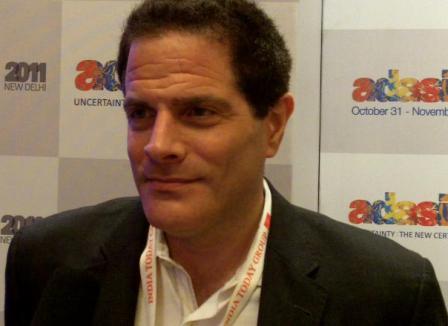


  • Need to focus on consistency: Tom Doctoroff, JWT

    [youtube width=”300″ height=”250″]http://www.youtube.com/watch?v=6qvtd5T__QI[/youtube]

    By Tuhina Anand

    Video by Shruti Pushkarna

    Tom Doctoroff is a JWT man who has worked with the agency across geography. Having started his advertising career at Leo Burnett in Chicago he later moved to JWT. In 1994, he moved to Hong Kong as Regional Business Director for clients such as Pepsi, Philip Morris/Kraft and Citibank and then in ’98 to China as the Managing Director of JWT Shanghai. In 2002, he was appointed Northeast Asia Area Director (China, Taiwan, Hong Kong and Korea) and Greater China CEO. In 2008, he also assumed leadership of JWT Japan. Mr Doctoroff has played a key role in the growth of JWT in North Asia.


    Q: How do you see JWT based in the scheme of things in Asia today?

    I think that we have a lot to be proud of. JWT has an extremely cohesive management structure where all our goals and values are aligned, and I’m particularly proud of our creative community which is probably one of the jewels of our global network out here in Asia Pacific. I think we’ve got people who are proud of their own output in their own countries. One thing that I’ve always liked about JWT is that we are not cultural imperialists. I’ve never felt for example that because I’m in China, even 13 years ago, that I am on the other side of the world. We have a company culture that does respect individual idiosyncrasies and that’s very important to avoid this hegemonistic-macho advertising ethos. So, I am proud of JWT. We’ve certain things that we could do better, like digital where we’ve been a little bit slow, but I think we are catching up now. We are trying to bring into the agency an ethos of the need for digital to reinforce brand ideas. As for India, JWT in India is a powerhouse and it has a lot to be proud of. And I’m sure that it will overcome some of the frustrations of the past year because everybody knows it needs to be done.


    Q: How do you see JWT China in terms of creativity, going ahead?

    If this doesn’t get broadcast in China I’d be happy because I don’t want to appear arrogant where I live, but I think we set the standards of creativity in China. Honestly, we have a very stable management team and a very stable creative leadership team, and what that means is that we create an environment of safe self-expression within the agency as a whole. So we usually are the ones that are doing the firsts, we won the first Cannes Grand Prix, yes it was for print but it still didn’t happen by chance; it’s because we have a belief of what creativity is and how people work together in the agency and in collaboration with people outside the agency, even outside of China to develop engagement platforms. So I am very proud of our creative leadership. People call us the ‘temple of advertising’ and I think that’s because we’ve been so stable for such a long time. I’m not saying we don’t have weaknesses but creatively speaking, I think if you ask around, we tend to define a high ground to a certain extent.


    Q: What are the two things that you would advise to people in the industry which they could follow to get more ROIs?

    As soon as you bring in the ROIs, you bring in a different question altogether. So before we get to ROI, I think that one needs to always focus on consistency. A consistent brand idea, a consistent engagement idea that is genuinely media-neutral. I think the danger is that as we experiment with new forms of technologically-enabled engagement, we forget about the primacy of an idea. And if you start your media plan without having that idea clearly understood by all, then you have chaos. One thing that is critical in new markets is order, in consistency, in clarity of ideas or else people will tune you out. Nobody wants to figure out how the internet or how the digital app or the landing environment connects to the TV ad. So consistency is always key, and that will always require a high degree of conceptual craftsmanship. And the second thing about digital is that all digital is not the same. There is certain digital that is relevant to campaigns, there is certain digital that is relevant for customer relationship marketing, there is certain digital that is more transactional at the point of purchase; some of those belong inside the agency and then the big question is how you make sure that the entire agency is digital, but having a digital core centre of expertise as a heartbeat within the agency with some of that for outside the agency. So agencies need to know who they are first and then build their digital strategy based on that.


    Q: Talent is an issue; how much of an issue is it and how do you tackle it?

    It’s an issue at the most senior level. I find that the biggest issue for talent is that many senior people – and this is in China, I don’t think it’s the same in India – there is an abstract nature of advertising which makes people feel insecure. Chinese people want to have a sense of control over their destiny and they revere the concrete, and so what we often find happening is that people in their desire for control either start leading dysfunctional agencies, their own small agencies or they leave the industry altogether. So what we need to do is find ways to make a long-term career in advertising seem safe. Part of that is financial and frankly in China it’s not a problem, because once you get to be senior in China as a local person, the pay is quite respectable. But the real issue is making sure that you are providing a platform for senior management to stand up and feel confident on, and that requires a lot of persuasion and a lot of coaching as people come up to the ranks. On the junior level or the mid-level, it’s really a question of liberating their creative potential and making them feel that when they will open their mouth, they will be saying something that’ll be appreciated; and that gets into corporate culture and how you have an environment of dangerous silence, safe self-expression where proactivity is truly rewarded in a meritocratic sense. So advertising has to be very meritocratic and that’s something that’s not always compatible with traditional Chinese culture. But we make it quite meritocratic, so our attrition rate is much lower than the industry average is.


    Q: What do you think of Indian advertising in recent times; how do you think it has improved?

    I have been working with India tangentially for 17 years so there’s been huge progress. I think the progress first came on the production level. The change started around 10 or 12 years ago. I just noticed the ads didn’t look that cheap, the production values were pretty high. And now when I take a look at Indian advertising, I think that it is strong. It is very culturally rooted which is fine, as long as that culture is not gimmicky and it comes from cultural insight as opposed to just a celebration of anything Indian. So I personally think that strategically Indian advertising is very strong, execution has become better. I just think that the unfortunate thing is because of its proud confidence in the Indian identity, it’s not as accessible to many people around the world but it’s good, it’s made much progress.

  • AdAsia: Change, the only constant


    By Shruti Pushkarna and Tuhina Anand

    [youtube width=”400″ height=”300″]http://www.youtube.com/watch?v=VswkUKXre-I[/youtube]


    The AdAsia 2011 conference opened to a jam-packed hall at the Taj Palace yesterday in New Delhi. Welcoming over 1200 delegates, Minister for Information and Broadcasting Ms Ambika Soni said who else but the government of India could understand the theme of this conference better, for which “uncertainty is truly the only certainty”. Going further with the Minister’s perception of change being the only constant, MxM India’s Shruti Pushkarna and Tuhina Anand caught up with a few delegates to see what ‘Uncertainty: The New Certainty’, the theme of this edition of AdAsia meant for them and their respective businesses.

    Through the sessions, speakers and delegates seemed to be in general agreement on how the world is changing rapidly, especially in terms of technological advancements, and it is the pace at which one adapts to this change that will determine how successful or unsuccessful one is.


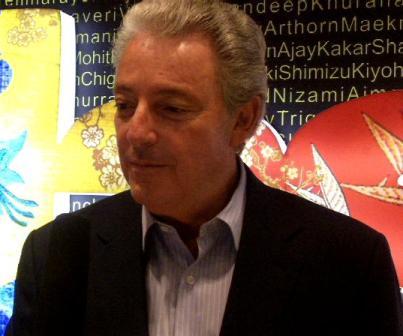
    Michael Roth, Chairman and CEO, Interpublic

    Michael Roth, Chairman and CEO, Interpublic said that the focus is on change, and with the global economy changing, the highlight of this conference is the need to stay ahead of the curve in terms of new technology and new economies. While Piyush Pandey, Executive Chairman & Creative Director, South Asia Ogilvy & Mather also agreed that the focus of the theme is about keeping our minds open to change, he added, “It does not mean that you have to change tomorrow morning… but prepare yourself for the change, if you are not ready for it, you will get left behind.”


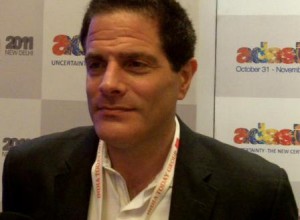
    Tom Doctoroff, JWT North Asia Area Director Greater China, CEO


    Tom Doctoroff, JWT North Asia Area Director Greater China, CEO, however also put some stress on consistency. He said while the theme of the conference might be provocative, we have to acknowledge that which remains timelessly true, like robust brand equity and big brand ideas.


    Vikram Sakhuja, CEO, GroupM South Asia

    Vikram Sakhuja, CEO, GroupM South Asia put it in simple terms, saying, “Uncertainty is the new certainty in the context of marketing primarily because communication to consumers has moved from a sequential, controlled, advertiser talking to consumer, to much more devolved, fluid and instant conversation with a consumer”.


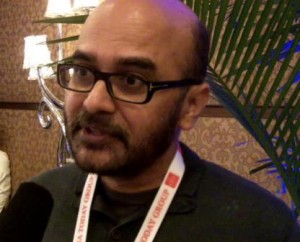
    Ravi Deshpande, Chairman and CCO, Contract Advertising

    Talking about the correlation that the politico-social world shares with the sentiment or the idea of a brand in a consumer’s mind, Ravi Deshpande, Chairman and CCO, Contract Advertising said, “…You are bound to have an impact on marketing or advertising when the world around us keeps changing… if the world is uncertain, so are we in our business.”