Tag: Tokyo Olympics

  • TV Ad volumes post double digit growth in 2021: BARC


    By our Staff


    The year 2020 was a subdued one for television advertising, leading to a decline in total Ad Volumes across the year despite the record stay-at-home rise in viewership. 2021 has bounced back with a substantial double-digit spike, delivering an all-time high of 1824 million seconds of Ad Volumes during the year. This translated into a 22% and 18% growth over 2020 and 2019, respectively. The Top 10 advertisers accounted for 780 million seconds of Ad Volumes, and the Next 40 accounted for 340 million seconds.


    FMCG brands continued to lead in share across categories and Hindi channels continued to dominate across languages.


    New advertisers and brands consistently jumped in throughout the year, thus playing an important role in the advertising volume growth witnessed throughout 2021.


    Commenting on BARC India’s latest Think Report, 2021 – A Voluminous Year (Yearly Ad Volume Report 2021) that analyses television advertising volumes for the past year, Aaditya Pathak, Head – Client Partnership & Revenue Function, BARC India said: “2021 certainly brought in much needed cheer to the broadcast industry. The year started off on a positive note and also ended on a high with the festive quarter. Year on year, despite pandemic impediments, television has repeatedly proved effective for every penny spent for advertisers and brands. 2021 saw over 9000 advertisers turn to television with a significant number of new entrants. Overall, 2021 was a positive year for the industry as a whole that witnessed growing value for both advertisers and broadcasters.”


    Here are highlights of the report:


    Advertisers & Brands Count

    TV had a total of 9239 advertisers and 14616 brands advertised on the medium in 2021, of which, 49% i.e., 4483 were either new advertisers or returning ones. Similarly, for brands, 51% i.e., 7470 were new or returning brands.


    Categories

    The FMCG category continued to lead with an enormous share of 1117 million seconds of Ad Volumes in 2021, followed by Ecommerce with 185 million seconds and Building, Industrial, & Land Materials/Equipments with 60 million seconds. Television also understandably continued to be an important medium for the Corporate Brand Image category which registered 2x growth over 2019 with 24 million seconds.


    The Ecommerce category had a total of 587 advertisers in 2021 of which, 65% were new entrants or earlier advertisers returning to TV in 2021, registering a growth of 51% over 2020 and 26% over 2019. Media/Entertainment/Social Media, Education, Online Shopping, Matrimonials and Financial Services were the top 5 sub-categories within Ecommerce. Ad Volumes for Education grew by 461% and Financial Services by 153% over 2020.


    Languages

    While Hindi continues to play a dominant part of the language mix, regional language channels recorded strong growth as well across 2021. Ad Volumes for Bhojpuri language channels doubled over 2019 and Punjabi, Marathi, Gujarati and Assamese language channels posted over 40% growth over 2019. South language channels i.e., Tamil, Telugu, Malayalam and Kannada, grew by 26% over 2020.


    2021 – Quarterly Analysis

    Q1 2021 kickstarted on a positive note having registered 24% growth over 2020 and 21% growth over 2019. Despite the sporadic and partial lockdowns on account of the second wave of COVID-19, Ad Volumes for Q2’ 21 were relatively higher at 417 million seconds as compared to Q2’19 which recorded 399 million seconds. Q4’21 brought in cheer for broadcasters with a bumper festive season that recorded 489 million seconds of Ad Volumes, the highest quarter ever. New advertisers continued to flock to television for effective communication with Q4’21 welcoming 2156 new advertiser or earlier ones returning to the medium, the highest for the year.


    After a marginal decline in Q2 2021 on account of the lockdowns, regional language channels experienced steady growth in Q3 and Q4.


    SD & HD Channels

    Ad Volumes for HD channels in 2021 grew by 11% over the previous year and SD channels grew by 22% in 2021 over 2020 and by 20% over 2019.


    TV Commercials

    TV commercials with an Average Commercial Duration of under 30 seconds, were most favoured by advertisers while spots more than 60 seconds were least preferred.  The Average Commercial Duration has been reducing Y-O-Y. The Prime-Time band, i.e., 20:00 hours to 24:00 hours enjoyed the maximum share of Ad Volumes at 27%. The share of Ad Volumes for the four time bands, viz 08:00 – 12:00 hrs, 12:00-16:00 hrs, 16:00-20:00 hrs and 20:00-24:00 hrs, continued to stay the same since 2019. TV Commercials in local languages on regional channels are consistently increasing since 2019.


    IPL 2021

    IPL 2021 registered a total of 1680 thousand seconds of Ad Volumes with 119 advertisers and 228 brands in all. There were 59 new advertisers and 158 new brands for the season. The Top 10 advertisers for the season contributed 35% of the Ad Volumes.


    Tokyo Olympics

    With 466 thousand seconds, Ad Volumes for the Tokyo Olympics were almost at par with Rio Olympics that was held in 2016. There were 34 advertisers and 61 brands that advertised during Tokyo Olympics. Significantly, 31% of the Ad Volumes during Tokyo Olympics featured Olympians.

     

  • Sanjeev Kotnala: Olympics; Brands continue Pride, Possibilities & Determination template

    By Sanjeev Kotnala


    Sanjeev KotnalaThe Tokyo Olympics start on July 23, 2021. We have moved from ‘Pressure on brands rising over Tokyo Olympic Games’ in May 202 to how to leverage them for the brand.

     

    As a nation, we honour the Olympic Spirit.
    We PARTICIPATE. Other than few sports like Archery, Boxing, Badminton and Shooting, we are rarely in contention for a medal. Naturally, all the brand communication around Olympics is about determination to succeed. We talk about the pride of representing the nation, the pain and sacrifices, and the possibilities. It is tough to differentiate messages and hence the execution style plays an important role.


    BRAND OLYMPIC COMMUNICATION.

    Adani group continues with #Garvhai from Rio Olympics. Give them marks for consistency, but the communication is along the standard lines, overcoming the challenges speak.


    The campaign getting positive reviews, shares and creating some heat is Thumps UP Palat Dal. No, there is not much difference there. But, the lines and the execution is engaging. The words surrounding you and reflecting the attitude of today’s generation. You enjoy it for the moment- wishing for some Palat Dal in the games.


    NOT MUCH HAVE CHANGED.

    Nothing much will change till we as a nation start performing. Till we begin winning medals that count. Till we are not in the top 10 countries on the tally. Till the time, people have no answer to the population – medals won the argument. And for that, the voices and the choices need to be free. Until there is no unbiased support on personal, social, and government levels, let us all continue celebrating the pains and hurdles we cross. And keep singing – Hum Hongey kamyaab eek din.

    JSW Group 2016 campaign ‘Rokna Nahi hai’ featuring 12 Tokyo bound athletes is very descriptive. The communication takes you through the challenges, opportunities and yes, it is somewhat motivational.


    BRANDS MUST CHOOSE.

    There is a choice before the brands. They can remain in the cluttered space of possibilities and potential. Or it can really think through the brand proposition and the Olympic imagery to create something that genuinely leverages the situation.

    It reminds me of the communications from Fevikwik released around the 2016 Rio Olympics. It is not a typical Olympics ad. However, the timing and use of hockey leave not much to the imagination. I find such humour far more effective than the standard hum hongey kamyaab chorus.


    Or the Tata Salt communication during the 2016 RIO Olympics, #NamakkeWaastey. Where they featured Shiva Thapa, Babita Kumari and Inderjeet Singh. Okay, it was still about grit and hope with an additional layer of pride.


    On the other side, here is an example of how to waste the opportunity. Support India, #IAmTeamIndia by Edelweiss Group during 2016Olympics.


    OLYMPICS MOVING FORWARD IN DARKNESS.

    So here is the Olympics communication that takes in to account the COVID time and the way athletes kept moving and preparing for future. Here we know the context and that is what makes it interesting and engaging.


    And when the games were pushed by a year- the one year out made all the difference. And the true Olympic spirit is embedded in this P&G communication.


    The Indian official anthem for the Tokyo Olympics- I am not sure- but here it is – Teer Ki Taraha Chal_ Lakshya Saamne Hai- Jeet Kar Hai Aana. Move like the arrow, the target in sight- come back with a win !!!! This is so disappointing. Outdated. No punch. Maybe someone is being too realistic and lowkey.


  • Dentsu Adspend Report highlights greenshoots of recovery in APAC

    By Our Staff


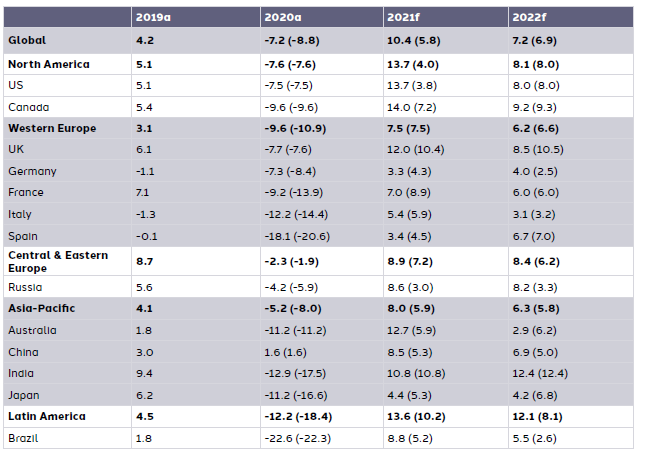
    Advertising investment is forecast to grow by 10.4% globally in 2021, according to the latest Dentsu Ad Spend Report. The twice-yearly report which combines data from 59 markets, anticipates US$634 billion will be spent globally with all regions enjoying positive growth.


    Adspend in APAC is expected to grow by 8.0% or US$17 billion to US$229 billion. In the region, Australia and India are forecasting particularly high growth rates in 2021, with 2021 growth expected to exceed pre-pandemic levels in China.


    The pandemic-induced decline in advertising spend during 2020 has proved less severe than anticipated. Some trends in consumer behaviour and spend in advertising which emerged during the past year have remained.


    In APAC, the 6.2% rise in digital spend last year is forecast to grow by 12.8% in 2021 to reach US$124.5 billion, representing a 54% share of total ad spend. Forecasts for Social (33.4%) and Video (10.8%) will also rise, with Search also growing (7.8%) reaching US$23.1 billion in 2021.


    Offline/Linear ad spend will see a return to growth 2.8% to US$104.8 billion, following a 15% decline in 2020, however it is predicted that spend levels in APAC will remain below pre-pandemic levels in 2021.


    While regional live events such Tokyo Olympics and Paralympics Games continue to be a significant driver of growth in Linear TV ad spend in APAC (3.9% increase in 2021 to reach US$59.2 billion), the dentsu data suggests a shift towards CTV (Connected TV) and OTT (Over The Top) and audiences moving more towards digital media consumption mean Linear TV spend will remain below pre-pandemic levels until beyond 2021.


    With restrictions lifting on social activity, OOH will see a bounce back post impact of the pandemic, rising 7.5% in 2021 in the region. Cinema has a slightly longer recovery, with a further decline in 2021 (-5.0%) but expected to bounce back in 2022. Radio will also see growth (4.3%) in 2021.


    While most channels will return to growth in 2021 (Cinema in 2022), Print is seeing a slight decline in 2021 (–2.7%) and expected to continue declining in 2022, as it continues to evolve towards new modes of digital delivery.


    Looking at the industries who will see growth in ad spend this year, it will come as little surprise that government spending remains a key growth area, supporting the Covid vaccine rollout and other related initiatives. In APAC’s key markets, the travel and transport sectors, will still be affected by the uncertainty of the past year and see a muted increase in demand (4.9%), while Media & Entertainment is forecast to see growth (9.7%).


    The decline in APAC advertising spend prompted by the pandemic in 2020, has proved to be less severe than originally anticipated. While 2020 remains the weakest performing year since the global financial crisis, the decline in growth has been raised since Dentsu’s January 2021 forecast (from -8.0% to -5.2%.) In 2021, the market is seeing a recovery in growth (8.0%), an improvement (2.1% pts) on January’s predication. Looking to 2022, recovery is set to continue when spending is likely to reach US$243.6 billion and grow at a rate of 6.3%.


    Ashish Bhasin
    Ashish Bhasin

    Said Ashish Bhasin, CEO APAC, Dentsu international: “It is promising to see a return to growth in the APAC region with two of our markets in the top five contributors of ad spend growth; China and Japan. While China continues to see strong levels of growth driven by Digital and OOH, Japan’s growth will be buoyed by events like the 2020 Olympic & Paralympic Games, and the House of Representative elections and the advertising spend associated with it, particularly in TV.


    In addition, Australia and India are two of the top year-on-year growth markets, forecasting a surge in ad spend. Australia has had a stronger economic recovery after the pandemic particularly in TV and Digital where the government focused much of their Covid-related campaigns, while India is expected to see a resurgence in Digital advertising spend though TV is still the main contributor with a 40.9% share.”


    Prerna Mehrotra
    Prerna Mehrotra

    Added Prerna Mehrotra, CEO Media APAC and MD Media Singapore: “We are optimistic that the region will bounce back to positive growth in ad spend, with some channels likely boosted higher than pre-pandemic levels. The main drivers behind the growth is economic recovery, with the APAC GDP set to increase by 7.3%, and a stronger-than-ever push to digital marketing. Serving as a stimulus the pandemic has accelerated digital adoption. Digital media will continue to drive ad revenue growth this year with strong performance in social (+33.4%) and video (+10.8%) and majority of spends in mobile. We will also see more investments diverted towards addressable and the digitalisation of OOH channels. Programmatic DOOH will also be a key growth driver in the future. With the growing numbers of SSPs and DSPs partnerships and an increasing demand for location-based solutions to ad-reaching consumers in these times of uncertainty, advertisers will benefit from the speed, flexibility and the targeting capability that the medium will provide.”


    Growth in global ad spend between 2019 and 2022

    Year-on-year % growth at current prices (January 2021 figures in brackets)


    Share of global ad spend by channel between 2019 and 2022

    January 2021 figures in brackets

  • Opportunity Knocks for Sports in India


    By A Correspondent


    Vinit Karnik

    GroupM’s ESP Properties released its ‘Business of Indian Sports Playbook’ in the backdrop of Covid-19. The playbook is a guide for multiple stakeholders like broadcasters, fans, sponsors, right holders, and the government, who play a vital part in the sporting ecosystem.


    It notes that the sports sponsorship industry in India has been growing at a CAGR of 12.8 per cent over the last 10 years, with the overall sports sponsorship market in India crossing the mark of Rs 9,000 crore for the first time, highlighted the GroupM ESP report on the business of Indian Sports in the wake of the crisis.


    Further, it states that mobile gaming will be the biggest gainer in the post Covid-19 era, with 20 per cent increase in the monthly active users during the lockdown in India, with daily average session going up to 45 minutes and frequency of these sessions increasing to 5-7 per day.


    The report also states that the situation is an opportunity for sports in India. India is a sporting nation in the making with the sector showing strong growth in the last 6-7 years. At a world level, everything is a standstill. It therefore needs to focus on athletes and performance of sports and have a strong vision for 2024 and 2028 Olympics. Keeping the fans engaged is an important KPI for a rightsholder and  broadcaster.


    Government partnerships in the sports realm are the need of the hour, it states. Government and sponsors have worked together as Public-Private-Partnerships.


    Talent needs to make full use of the lockdown to enhance relationships with fans via social media. Live talent interaction on social media has caught the eyes of a large fanbase since the fans need to see some action happening between the talent instead of no-action. Gaming & virtual sports should definitely be in the consideration set for active fan engagement, it noted.


    Here’s the executive summary:


    Business of Indian Sports COVID-19 Outlook Context – Sports sponsorship industry in India has been growing at a healthy CAGR of 12.8% over the last 10 years, with overall Sports Sponsorship market in India crossing the mark of INR 9,000 Crore for the first time

    1. 2020 was a year of Tokyo Olympics, T20 World Cup, Euro 2020 along with major tournaments like Vivo IPL. With most of the sports tournament either cancelled or indefinitely postponed, YOY growth / estimation for year 2020 pre COVID-19 will not hold true.


    – While there are many speculations around Sports to be conducted for TV audience only with no fans or limited fans in the stadium, anything is a possibility at this point in time. But from an audience appetite standpoint, fans are hungry and waiting for live sports.


    – Sports is a universal language that connects people regardless of their origin, background, religious beliefs, economic position. Sports brings us together. Once the dust around COVID-19 settles down, sports will play a pivotal role in helping fans deal with the emotional stress, post-pandemic trauma and give people at large reasons to look forward to.


    – This situation is also an opportunity for sports in India. India is a sporting nation in the making with the sector showing strong growth in the last 6-7 years. At a world level, everything is a stand still. We need to focus on our athletes and performance of sports and have a strong vision for 2024 and 2028 Olympics.


    – Mobile gaming will be the biggest gainers in the post COVID-19 era. We’ve already seen 20% increase in the monthly active users during the lockdown in India, with daily average session going up from 30 min. to 45 min. and frequency of these sessions increasing to 5-7 per day as against 3 sessions per day during pre COVID-19. Internationally, we’ve also witnessed rightsholders toying with gaming and virtual sports as a concept to keep athletes and fans engaged in the lockdown times (for example: UAE Tour launching cycling event namely ‘UAE Tour Mubadala Ramadan Virtual Challenge’ on virtual cycling platform Zwift). We see more of these pushing the envelope of virtual and real-world merger.


    – In a parallel world, esports has been trying to emulate traditional sports for some time now to reach a larger and more mainstream audience. It had already become a billion-dollar industry pre-COVID pandemic with tournaments witnessing arenas filled with screaming fans and sponsors increasingly injecting monies in the ecosystem globally. With the lockdown in place and millions forced to stay at home; esports has shifted to online format filling up the void for many of the LIVE sports’ hungry fans worldwide.


    Further breaking the playbook down, here are the key takeaways:


    I. The post COVID-19 time is expected to define “new normalcy” which in turn will have a telling effect on all aspects of business including sports


    II. Keeping the fans engaged is an important KPI for a rightsholder & broadcaster. The lockdown times could be a perfect opportunity for both to make heroes off their fans


    III. Broadcasters should toy around with various non-live sport-ainment formats as the fan acceptability quotient is high right now. Innovative content formats need to be thought of between the talent and broadcaster to make the most out of a fan’s interest in some sporting action.


    IV. Government partnerships in sports realm is the need of the hour. Government & sponsors have worked together beautifully as Public-Private-Partnerships. Post COVID-19 time will call for many such initiatives


    V. Talent needs to make full use of the lockdown to enhance relationships with fans via social media. Live talent interaction on social media has caught the eyes of a large fanbase since the fans need to see some action happening between the talent instead of no-action. Gaming and virtual sports should definitely be in the consideration set for active fan engagement during current times taking a cue from how cricket world cup winner Ben Stokes engaged with his fans through F1 esports Vietnam Grand Prix.