Tag: Tim Love

  • Indian creatives are a global influencer: Tim Love


    By Tuhina Anand


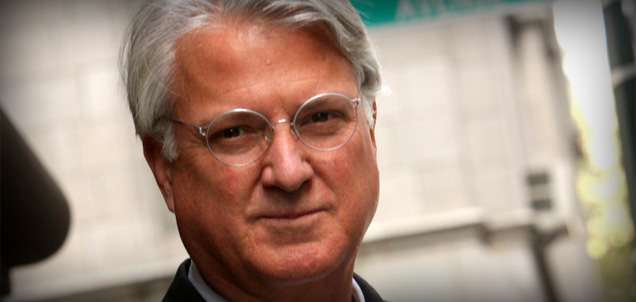
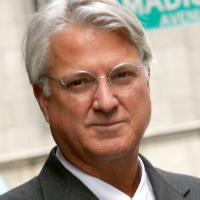
    Tim Love, Vice Chairman and Chief Executive Officer, Omnicom, APIMA is a known name in the Indian advertising circuit. He has been a frequent visitor to India exploring new opportunities for mergers and acquisitions, expressing his thoughts on various Indian advertising forum and playing a crucial role in the India chapter of the Omnicom Group. As Mr Love announces his retirement and plans to switch gear and get into developing teaching platform, MxMIndia seized the opportunity to talk to him about how he ventured into advertising, his long and illustrious career and life post-retirement.


    It’s been a long and successful career for you, if you were to pin point- what would have been the turning point in your career?

    I was very fortunate to have worked for two people at the start of my career who really took the time to teach the business. The first was someone who had been a teacher at the US Naval Academy. He was also debate coach there and his entire approach was to develop us into composite advertising people. This was a holistic approach, requiring me to get experience with all facets of the business. He was also very focused on innovation and, crucially, believed we learn more from our failures at innovation. He would take the time with me to better understand what I was learning. This also took the fear out of trying new ideas and challenging conventional wisdom.


    The other person was an incredibly disciplined business writer. He taught me the famous P&G one-page memo-writing discipline. He was so good at it that he later started his own consultancy called “Leadership on Paper” and has worked with many of the world’s biggest and best marketers, including P&G. He drilled this discipline into us. He would make us rewrite a recommendation or conference report so many times until it was about perfect. It affected how we organized our thoughts and how we presented our ideas. This discipline would prove very valuable as my career broadened with the globalization of our industry and the need to communicate with people all over the world.


    One challenge that you faced recently and how you overcame that?

    I have found that the nomenclature we use can be helpful in taking advantage of learning opportunities. For example, several years ago our industry became increasingly aware and focused on the analog to digital transformation. I thought we ought to stop talking about it like it was something in the future, and instead began saying we live in a “post-digital” world. This helped me shift my frame of reference and those of my clients and colleagues.


    You have had a close association with India, how do you see the creative landscape here and can India come out with creative solutions (more often) that can be used worldwide?

    There are more than 20 official languages in India and several hundred separate dialects. The challenge of creating big, relevant ideas that connect with people whose brain processes are wired so diversely requires a very sophisticated kind of creativity.

    Ideas in India need to be relevant across a wider array of mental technologies. This is especially so as internet access experiences explosive growth in India, and make people the first media. This also places a creative priority on visual strategy that is more prevalent than in some other markets which are less language-diverse. India’s writers, designers and artists are increasingly influencing our industry outside of India.


    In India, among the creative fraternity, who do you think has immense talent?

    My esteem for the industry talent in India is so deep that it would be unfair to mention specific names. The most creative people in any communications discipline know that an idea is just an idea until it changes the way you see the world. Recognition of India talent is vibrant and growing in Cannes, Effies and D&AD.


    How do you see the Omnicom group poised in India today and the way forward?

    We see India as a fundamentally important market for fuelling our need to attract top talent and business growth. That’s why we specifically identified India in our regional view. The “I” in APIMA is for India, loud and clear. (Here again an example of nomenclature breaking with convention.)


    For you, what has been your biggest achievement vis-a-vis Omnicom Group in India?

    I have been privileged to work with some of the most extraordinary leaders in India. Leaders who have not only influenced their countrymen, but have raised the professionalism of our industry over all. Leaders like Keki Dadiseth, Sundar and Shekhar Swamy, Sam Balsara, Jasmin Sohrabji, Shiv Sethuraman, Madhukar Kamath, Josy Paul, Bobby Pawar, Sonal Dobral, Ajai Jhala, Prabha Prabhu, Yusuf Hatia, Bharat Patel, Gurcharan Das and so many others since my first visit to India on business in 1993.


    You have had a long and illustrious career, what would you miss about advertising in your daily life after retirement?

    Few can look backward without regret and forward without fear.


    The paradox of being so plugged in and always on with so many clients and people worldwide. The really great thing is how easy we can continue to be connected today. I don’t need to miss these people, because I can still be in touch with them, just an email away. Someone said to me it really should be called rewirement.


    So, what do you plan to do post-retirement?

    I’m very much looking forward to developing a teaching platform for global brand-buidling with Dr Linda Scott of Oxford University. And, continuing to grow through “lecture and learning” opportunities at schools like MICA, Yale, Columbia, the Lee Kuan Yew School of Public Policy, Miami University and others who invite me. For example, I will be at MICA the first week on February for a Management Development Programme and really looking forward to deepening my understanding of India advertising and marketing services.
     

  • Goafest 2012: Innovation is the magic of ideas: Tim Love

    By A Correspondent


    Tim Love, CEO, APIMA, Vice Chairman, Omnicom Group talked about how the world we live in today has become interdependent especially because of technology during his address on ‘The Magic of Ideas – Our Language Impediment’. He was of the opinions that one thing the financial crises have taught us is that we are all inter-dependent.


    Mr Love spoke about how “Digital is not a channel but, the air we breathe and communicate with each other,” giving the example ofIndiabeing the fourth largest internet user population despite its internet penetration being merely 8 per cent. He also talked about how language is a technology and how we have underestimated the effect language has on human misunderstanding.


    Besides talking about the importance of verbal communications, Mr Love also spoke about the importance of nonverbal communications. He said that just as verbal or spoken communications, nonverbal communications like sign language, although universal, differs from culture to culture; but no matter what the stream of communication, technology will always flow through.


    During the Q&A session moderated by Ms Kainaz Guzdar of P&G, when asked to give a few suggestions or advertisers and marketers on how to come with great ideas on language impediment, Mr Love explained that one must be more cognisant in languages, and show some sensitivity to different languages verbal or nonverbal. He added that ideas are best communicated from individual to individual. He also pointed out that one needs to be careful with languages in different cultures, as it could have different meanings in different cultures, and how we have always minimised the importance of language.


  • Goafest 2012: ‘Need for old & wise to guide youth’

    By A Correspondent


    Keeping in line with the theme, ‘Ideas that impact the full circle’, a panel discussion moderated by Anuradha Sengupta, Features Editor, CNBC TV18 and including panelists like Tim Love, CEO, APIMA, Vice Chairman, Omnicom Group; Jonathan Mildenhall, VP, Global Advertising Strategy and Creative Excellence, Coca-Cola; Jayant Murty, Director of Strategy, Media and Integrated Marketing, Asia Pacific Region, Intel Corp and Jean-Yves Naouri, COO, Publicis Group discussed the need to present their agencies differently; the loss of long-term relations between the clients and the agencies and the need for multiple agencies to build a brand.


    Tim Love observed that advertising is actually an education and noted that while the advertising industry is all about ideas and thus need young rebellious minds, there is also a need for the old and the wise to guide and direct the youth.


    Jean-Yves Naouri, on the other hand, insisted that creative agencies are here to respond to business and gain the trust, mind and presence in their client’s life. “Keep the dialogue between brand and consumer alive. Engage consumers as there will be people who will be inspired by the brands and this is what matters the most.”


    Speaking on the agency-client relationship, Jonathan Mildenhall said that it is easy to maintain one relationship better that ten different ones, and therefore he would reluctantly look outside his roster agencies for creativity. However, he felt that brands may scout for multiple creative agencies if they find the need for specialist agencies that could help them reach out to their clients more effectively. He was also quick to point that although digital is showing robust growth in India, it needs to boost its creativity in this space. “Majority of UK spends on digital, however the internet reality is bigger than the creative ambition in India.”


    Click here to view all Goafest 2012 stories

  • Ad Conclave Takeout #1: Technology is the new tool for creativity!


    By Robin Thomas


    ‘Ideas that impact the full circle’ is the theme for Goafest Advertising Conclave 2012, expected to be attended by over 3,000 members of the media, advertising and marketing fraternity from not just India, but various south Asian countries as well. Yes, this year’s edition of Goafest is billed as the biggest ever in the history of the event and will include delegates from Sri Lanka, Pakistan, and Bangladesh.


    The Goafest Advertising Conclave 2012 held on Thursday highlighted the fact that the next few years are going to be transformational as far as creativity in the industry is concerned. We live in an era where young people are growing up in a digital era, they spend more time on social network and brands are targeting their consumers on social networking sites. India is restless and what the country needs is not traditional creativity, but radical creativity. Technology is the new tool for creativity and India must immerse into it.


    Tim Love, CEO, APIMA, Vice Chairman, Omnicom Group spoke about how the world has become not only interconnected but also inter-dependent due to digitization and globalisation. He was also quick to point out living in an era of digitization, there is plenty of information available, but there is a need to know how to use that data effectively.


    Jonathan Mildenhall, VP, Global Advertising Strategy and Creative Excellence, Coca-Cola pointed out that there are two types of creativity – traditional creativity and radical creativity. What India needs today is not traditional creativity but, radical creativity. “We need to develop ideas and hence we need to integrate technology with creatives. We need to move away from 30 minute television storytelling to dynamic storytelling,” he clarified.


    Mr Mildenhall also explained that brand stories must add values and significance to the consumers’ life. The stories must engage the consumers and make them feel connected to the brand. “We need bigger creative thinking in our heart and we need online dialogue as well as engagement with our consumers. Nevertheless, we need to iterate our content and not replicate them.”


    While speaking on ‘Building brands in an era of multiple degrees of freedom’, Jayant Murty, Director of Strategy, Media and Integrated Marketing, Asia Pacific Region, Intel Corp  observed that most often brands bribe their consumers to get involved, but they fail to understand that the consumers do not want to be bribed. He added that brands must be remarkable and different. “Immerse in technology because technology is the new tool to creativity and find partners that understand the use of technology,” he further added.


    Keeping in line with the theme of ‘Ideas That Impact The Full Circle’, a panel discussion moderated by Anuradha Sengupta, Features Editor, CNBC TV18 and including panellists Tim Love of Omnicom Group, Jonathan Mildenhall of Coca-Cola, Jayant Murty of Intel Corp and Jean-Yves Naouri, COO, Publicis Group focussed on the need to present their agencies differently; the loss of long-term relation between the clients and the agencies and the need for multiple agencies to build a brand.


    Mr Love observed that advertising is actually an education, also noting that while the advertising industry is all about ideas and thus the need for young rebellious minds, there is also a need for the old and the wise to guide and direct the youth.


    Mr Jean-Yves Naouri, on the other hand, highlighted that creative agencies are here to respond to business and gain the trust, mind and presence in their client’s life. “Keep the dialogue between brand and consumer alive. Engage consumers as there will be people who will be inspired b the brands and this is what matters the most,” he counselled.


    Speaking on the agency-client relationship, Mr Mildenhall said that it is easy to maintain one relationship better that ten different ones, and therefore he would reluctantly look outside his roster agencies for creativity. However, he felt that brands may scout for multiple creative agencies if they find the need for specialist agencies that could help them reach out to their clients more effectively. He was also quick to point that although digital is showing robust growth inIndia, it needs to boost its creativity in this space. “Majority of the UK spends on digital, however the internet reality is bigger than the creative ambition inIndia.”


    KV Sridhar aka Pops, NCD, Leo Burnett talked about how advertisements look in a world of censorship. He was of the view that though advertising is a serious subject, it is nothing less than entertainment. Therefore, if one puts restrictions on advertisements, it may lose its enjoyment. Pops highlighted that there are two types of people in advertising, the ones that care and the ones that don’t care and therefore the industry must be sensitive to the sentiment of various people. He also said that while the industry should be governed by creativity and not regulations, there is also a need to keep a check of the contents as it is in our hands.


    Industry expectations are high, especially after the conclave on Thursday as was summed up by a variety of delegates. Said Niloufer Dundh, Head- Integrated Media, Hungama Digital Media Entertainment Pvt Ltd: “The advertising conclave was fabulous. Great speaker line-up and the points raised finally focused on digital. The international speakers don’t treat digital as an extra or add-on; it is part of their communication strategy. Jonathan Mildenhall’s speech on Global Advertising Strategy and Creative Excellence was awesome!”


    Another delegate who did not wish to be named said he was looking forward to getting the ”real” lessons from marketers. “I am glad Goafest is giving us this opportunity.” But, he said, the only problem is the “awful” heat. Now you can’t get all things in the world your way, can you?


    Click here to view all Goafest 2012 stories


  • Special to MxM | Daily Commentary by Shashi Sinha

    By Shashi Sinha


    The Conclave got off to a rousing start yesterday. The sessions this year were in a different format from last time, where we had a few international speakers. What’s working is the international case studies that were being presented by several international leaders. There is a common theme running this year where it is not about digital, it is not about activations but about larger ideas which can be made popular and which people can use as a part of their journey. They don’t necessarily have to embrace the content, but they can embrace an idea and they can exploit it as per their wishes. So there is a consistency in the way in which the sessions have been rolled out.


    One of the moving sessions was by Tim Love of Omnicom, who expressed how ideas multiply when you connect with them in different ways. So, while there was a common theme this year at the Conclave, each one was different and had their own theories to present. Personally, this format works better than the format we had last year, where we had presenters coming and discussing internal issues like recession and so on, which were good to an extent but there is a newness that is needed every year and that was what has been achieved at the Conclave this year.


    This enables a level of conceptual thinking that is needed behind every idea. So, all in all, it was a good day to start with as there were not too many sessions and there were less but effective presentations.


    The Conclave saw some big international marketers from Coca Cola and Intel discuss the way ahead for the industry, but the sessions on Saturday will see some key and large marketers from India shedding light on mantras and ideas for a better tomorrow. I think from an organiser’s point of view, not only getting them to interact but also present their point of view is what will make it a different experience for the delegates this year.


    As for the awards that would begin from today, we are proud to have received tremendous amount of participation from agencies, but I think still that the scale could have been bigger. That is what we will attempt to do next year. This year there was a delay in the forms being dispersed and so on, so it requires evangelisation and we need to sell the idea and concepts well. But it is a very good beginning; you will see the results on Saturday.


    Net-net, I think, this year we have managed to get some high quality marketers to come and share their mantras. Second, the whole theme around the power of ideas has been simplified and has been presented in an enlightening way to the delegates. A lot of people were saying it is all about digital; but that is not the case. It is about an idea and how you magnify an idea. Third, and last, everyone keeps talking about co-creation of ideas but it is not about that – it is about how consumers embrace ideas. Delegates can look forward to more empowering sessions in the two days, especially the young turks from the industry.


    Shashi Sinha is CEO, Lodestar UM. He is also President of the Advertising Club Bombay and Chairperson of the Goafest Awards Governing Council.


    Click here to view all Goafest 2012 stories


  • 10 Days to Go-Goafest! It’s all about celebrating ideas: Arvind Sharma


    As the countdown begins for Goafest 2012, Arvind Sharma, Chairman Goafest 2012 and Chairman, India Sub-continent, Leo Burnett, speaks to MxMIndia’s Tuhina Anand on the festival this year and why it is truly the celebration of creativity at its best.


    What can one expect from Goafest 2012? How will it different from last year?

    The Festival will stay true to its fundamental vision. It is a platform for celebrating creativity and a source of inspiration. Most importantly for the entire fraternity comprising young and not-so-young, Goafest is the preparatory ground for the industry to gauge where and how to go forward. I feel that the core, sometimes, is forgotten in the bid to do something new.


    I mean, we live in a world which is changing rapidly, so having something new is inevitable. If you look at successful festivals around the world 90 per cent remain the same. Similarly, at Goafest, we have defined categories and 95 per cent remain the same in terms of predictability of entering, judging, Awards Governing Council and Goafest Committee. There is consistency in that format and our effort of providing conversations. All this is same as what one had last year.

    Having said that about the predictability factor, let me also add that moving forward is equally important.


    So, what’s new?

    This year we are looking at ways to involve clients in a meaningful way. The fact is that, there would be no advertising if there were no clients. The business of advertising is about partnering with the marketers. We, at Goafest, believe in evolving vision that doesn’t really mean evolving identically, but in evolving together. We look at bringing in more opportunity for conversations and that’s the reason why we have brought clients this time into the seminar.


    There is a slight change in the format. So far, there have been series of international speakers, while some of these presentations have been received well, some weren’t, and there have been questions on the relevance of those to India. Changing that, we have brought in senior Indian clients to raise questions after the presentation. So there will be 30-35 minutes for the speaker followed by 10-15 minutes of Q&A led by a senior Indian client. He or she will be the voice and mind of the audience and bring in the Indian perspective to the entire presentation by agreeing, challenging, bringing contextual light and interpreting the whole presentation.


    We have also brought the Marketing Wizards to Goafest. This is calling the under-30 staff of the marketing community. We have had a good response and we expect overall 70 to 80 major advertisers to participate, which include team of two people representing to some even registering team of 30 people even though we have a limit to numbers.


    Why this whole idea of bringing in Grand Prix to all verticals?

    Grand Prix, traditionally, has been awarded in Print, TV and Integrated. This year, we have expanded the Grand Prix to cover all the 9 verticals. This was not an easy decision and the step was debated. We believe that the time has come for specialists in area to move to the centrestage. I don’t really know if the jury will find works worthy enough for Grand Prix in each of the vertical, but this would help in finding worthy advertising and celebrating it around India and even around the world.


    For a young designer who is always on the periphery of an agency, winning gold is good but winning the GrandPrix might help in moving the same person to leadership position. We hope that the move will catalyze long term fundament change in the way we create advertising.


    We hear this year there are entries from other South Asian countries?

    Yes, we have entries from Sri Lanka and Pakistan and we will have delegates from Sri Lanka and Bangladesh. In South Asia, we have different cultures but there are more similarities than differences within those cultures and we can learn a lot from each other. Unfortunately, the politics of the subcontinent is more difficult. We had planned a road show in various countries but our passports got stuck and this could not happen.


    Can you throw some light on the conclave and the seminar?

    We have put together an enviable list of names and these are speakers who really are worthy of listening. Jean-Yves Naouri, COO Publicis Group spends almost 150 days in flight. He knows what is happening in the business around the world and will share his valuable insight. Tim Love has been involved with theCannesand he played important role in the shaping of the future of Omnicom Group. Jonathon Mildenhall, VP of Global Advertising Strategy and Creative Excellence, CocaCola promises to be stimulating session. Steven King, CEO, ZenithOptimedia will also be on panel. Anuradha Sengupta, who loves throwing challenge, will be part of the session.


    On the seminar speakers, Amir Kassaei, Chief Creative Officer, DDB Worldwide, Rishad Tobaccowala, Chief Strategy and Innovation Officer, VivaKi and Prof John Philip Jones, Emeritus Professor at the Newhouse School of Public Communications,Syracuse University,New Yorkwill be speakers. While the world is talking video as the future, Lucas Watson, Vice President, Global Sales and Industry Marketing, YouTube will tell us how and Simon Wardle, Chief Strategy Officer, Octagon will be worth listening to for all the planners in the industry. Erik Vervroegen, International Creative Director, Publicis Worldwide will give his take on creativity. We will announce one more name in this list soon. From the Indian marketers side who will be part of Q&A, we have Sanjay Behl from Reliance, Kainaz Gazder from P&G, Viral Oza from Nokia, Gayatri Yadav from Star India and Hemant Bakshi from Unilever.


    Awards have been under the scanner, do the controversies surrounding it mar the event in anyway?

    Awards show will have criticism. What is driving us is the celebration of creativity and look at this Fest as a platform to prepare ourselves for the way industry will go forward.


    Why did the Goafest Committee decide the theme – Magic of Ideas?

    Everything that happens at festivals is ideas. While advances in technology and database is important, but what we celebrate is ideas. If we add everything on an excel sheet, we will see that when a brand gets a lot of traction or if it is ignored, it is all to do with ideas. No client launches a product with the intention of not succeeding, so getting it right is important. For a product to be embraced, it has to connect with people and this cannot be reduced to a formula but has to do with the magic of ideas.


    The awards have been leaked in the past, losing some of its credibility, how do you ensure that this doesn’t happen this year?

    We believe that awards will not be leaked. In this, the media as well as the organizers have a role to play. There is a symbiotic relation. We do our best to avoid any such incident. Some information has to be shared with the media beforehand, but there is an embargo on release information and last year journalistic fraternity showed a sense of responsibility. I will add that the media has equally a big stake in the Fest.


    What will you say to the agencies that have decided to stay away from the fest?

    Whether to participate or not is an agency’s decision. We on our part, including the AGC, have been ensuring that our job that includes category, rules, audit and the jury does their job well. Let creative minds debate as for us touch wood, thing are going as per planned.


    If you have to send a formal invite to the industry for the Fest what would you say as to why must the fraternity attend?

    You will get to see the best of work and see the best creative minds judging what they think is worthy of awards. You get to interact with seniors and bright creative minds which many times is impossible in the busy schedules that we lead. Besides you will get to hear exceptional speakers’ line-up.


    Goafest creates the space for debate with peers and youngsters, which includes large group discussions and one-on-one interaction. We are expecting around 2,500 people to attend Goafest this year. Not to forget that Goafest is not heavy-handed like training sessions but good learning place where you also have loads of fun.


    Personally for you, how has it been plugging all the gaps before the festival?

    We have a very big team working across agencies. There is a sense of joy and shared sense of purpose to make Goafest a success. We are in it together and there still is a fair bit of work to be done. However, it’s been an enjoyable experience.

    Click here to view all Goafest 2012 stories