Tag: The Times of India Group

  • Times Prime unveils campaign with Mithila Palkar

    By Our Staff


    Times Prime, the lifestyle membership programme from The Times of India group, has partnered with actor Mithila Palkar of Little Things and Karwaan fame for its More Every Moment Campaign. The campaign aims to spread the message of living a good life among India’s digital native modern consumers.


    Announcing the launch, Harshita Singh, Business Head at Times Prime said: “Times Prime is disrupting the digital subscription market with its innovative offerings. The new campaign created with Wondrlab and Mithila Palkar will resonate with users and connect them with the brand and its promise. Mithila is the perfect fit for Times Prime’s appeal. Our digital native young user base and potential subscribers can relate to her persona and the characters that she has played across web series, mainstream films, and TVCs. This association lends well not just to our brand but also to our More Every Moment campaign.”


  • #Mirrored! | Times of India Group Statement on Mumbai Mirror closure as a daily

    By A Correspondent


    This is the communique and statement issued by The Times of India group via its PR agency on Saturday, December 5. A revised statement was issued on Sunday, December 6. The text below is the revised statement. The text in italics is what has been changed in the revision.


    “Fifteen years ago, the ‘city that never sleeps’ had a new and good reason for staying awake – and for waking up, when it did manage to get some sleep: Mumbai Mirror. Feisty and fearless, energetic and enthusiastic, playful yet punchy, it lived up to its name from the day it was born, mirroring Mumbai in all its myriad moods. It was as local as Mumbai’s locals – the lifeblood that keeps the city on track and moving. The paper became such an integral part of the reader’s life, driving the narrative of the city, that it was decided to extend the experience to Bengaluru, Pune and Ahmedabad.


    “Sadly, just as the pandemic, lockdown and unprecedented economic crisis have laid low many great ideas and initiatives before they could fully take root, they came as a body blow for the still-young brand. Not only has the newspaper industry been among the hardest-hit in terms of revenues, it has been weighed down by an import duty that has added to newsprint costs. With the long-held hope of a stimulus for the newspaper industry as represented by the Indian Newspaper Industry (INS) not materializing and the economy now officially in recession, it is with a heavy heart that the group has decided to cease publication of Mirror in Pune and relaunch Mumbai Mirror as a weekly. They will, however, continue to have a strong digital presence.


    “The group in a statement said, “Following months of discussions and deliberations, we have made this extremely difficult and painful decision to recalibrate our portfolio of publications. We truly value the contribution of our journalists and other staff towards building such a strong brand in a relatively short time, and thank them for their hard work and great effort.”


  • Mumbai Mirror to shut. To turn into a weekly + digital. Pune Mirror to shut completely

    By A Correspondent
    The creative of one of the ads in a Mumbai Mirror campaign released in September 2019

    If you thought the Indian print media was experiencing the ‘achche din’, pause for a bit. On the afternoon of Saturday, December 5, Mumbai Mirror announced it will shut operations as a daily. Will turn into a weekly, plus a digital presence.Pune Mirror will shut completely.

    The staff has been spoken with. Needless to say, they are shattered. If The Times of India group could be taking this drastic step, then what about the small players?

    Here’s a statement issued by The Times of India Group regarding the Mirror publications in Mumbai & Pune.
    The Statement:

    “Fifteen years ago, the ‘city that never sleeps’ had a new and good reason for staying awake – and for waking up, when it did manage to get some sleep: Mumbai Mirror. Feisty and fearless, energetic and enthusiastic, playful yet punchy, it lived up to its name from the day it was born, mirroring Mumbai in all its myriad moods. It was as local as Mumbai’s locals – the lifeblood that keeps the city on track and moving. The paper became such an integral part of the reader’s life, driving the narrative of the city, that it was decided to extend the experience to Bengaluru, Pune and Ahmedabad.”

    “Sadly, just as the pandemic, lockdown and unprecedented economic crisis have laid low many great ideas and initiatives before they could fully take root, they came as a body blow for the still-young brand. Not only has the newspaper industry been among the hardest-hit in terms of revenues, it has been weighed down by an import duty that has added to newsprint costs. With the long-held hope of a stimulus not materialising and the Indian economy now officially in recession, it is with a heavy heart that the group has decided to cease publication of Mirror in Pune and relaunch Mumbai Mirror as a weekly. They will, however, continue to have a strong digital presence.”

    The statement said further: “Following months of discussions and deliberations, we have made this extremely difficult and painful decision to recalibrate our portfolio of publications. We truly value the contribution of our journalists and other staff towards building such a strong brand in a relatively short time, and thank them for their hard work and great effort.”

  • Times group conducts ‘WinEasy’ to incentivise readers

    By A Correspondent


    The Times of India group has launched a big bang promotional initiative called ‘Win Easy’ which started in the Ganesh Chaturthi week and will end around Diwali.
     

    The aim of the nine-week exercise is to build up the festive fervour by encouraging consumers to shop to their heart’s content and get rewarded for it. The contest will be open to all consumers who shop for more than Rs. 2500 by purchasing products of any of the brands advertised in the Times Group publications viz., The Times of India, The Economic Times, Mirrors, Navbharat Times, Maharashtra Times, Ei Samay and Vijay Karnataka.


    Consumers need to log on to www.wineasy.shop to upload their invoice, write a slogan and be eligible for the weekly draw. The draw will happen every week (defined as Monday to midnight of Sunday) and invoices dated within a respective week will be eligible for that week’s draw.


    Notes a communique: “Thanks to Win Easy, brands now have one more reason for advertising in the Times Group publications, as consumers are incentivised to purchase their products. The more they advertise, the more they stand to gain.  Consumers stand to win a car every week. Other prizes include 40 inch TVs, Smartphones and 2gm gold coins.”


  • Vice Media flags off operations in India with Times & Facebook

    By A Correspondent


    Youth media brand Vice Media officially announced the launch of its operations in India last week with a partnership with The Times of India group. Vice India will bring locally relevant content in Hindi and English.


    According to a communique, Vice will produce and distribute local programming for digital, mobile and linear platforms. Vice India has introduced all of its digital brands under the Vice.com banner, premiering a late night primetime television block across The Times of India portfolio.


    New offices in Mumbai and Delhi will host full-scale Vice operations, including a local offering of Virtue Worldwide, Vice’s in-house creative agency, and a full-service content production studio, Vice Studio, producing local news, culture, documentary, film and scripted content for television, SVOD, OTT and digital platforms.


    Last month, Vice India announced the appointment of Chanpreet Arora as Chief Executive Officer and Samira Kanwar as Head of Content. Speaking about the launch, Arora said: “We are humbled by the response we have received on our content as we launch and are excited to partner with people, brands and organisations who are on a mission to connect with India’s youth and impact their future positively.”


    Beyond Vice’s main partnership with The Times of India group, there is an additional partnershipwith Facebook and multiple platform partnerships on the anvil. Added Saurabh Doshi, Head – Entertainment Partnerships, Asia-Pacific at Facebook: “A large number of people on Facebook in India are young.  We are happy to see Vice Media launch in India and excited about the opportunity that people will get to see content that will be relevant, high quality and something which will encourage meaningful conversations.”


    Meanwhile, Virtue Worldwide, the creative agency of Vice, has entered into major brand partnerships that will provide creative services in India. Launch partnerships in the region include Mountain Dew (PepsiCo) and Anheuser-Busch InBev.


  • BCCL scores maximum metals at Publisher Abby

    By A Correspondent


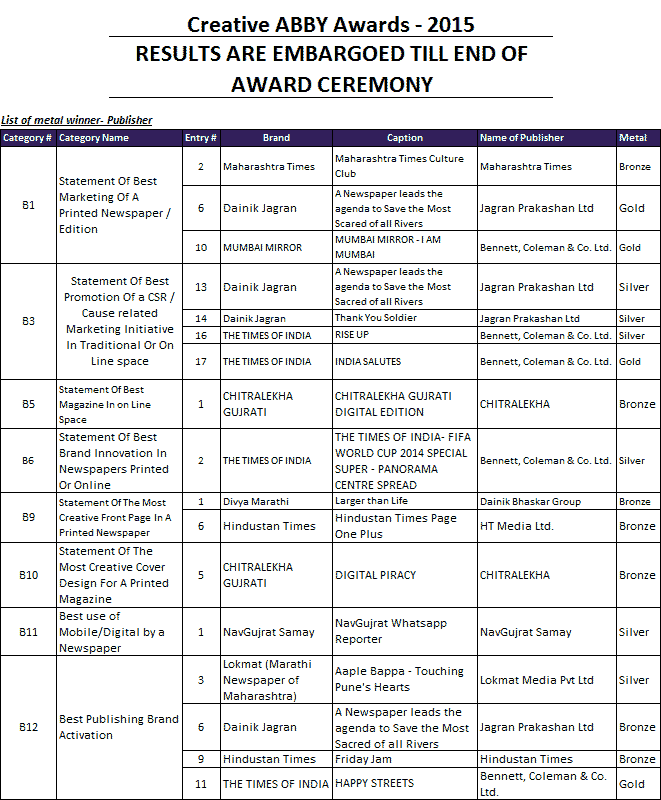
    The Publishers Abby category of the Creative Awards at Goafest 2015 may have got a lukewarm response from the print players  – some of who have in fact partnered Goafest in the form of sponsorship, but it’s a sound beginning nevertheless and in an industry where there aren’t too many awards for print publishers, this could well see growth in forthcoming years.


    There were 62 entries in all from across 10 publishers and 17 metals were awarded. There were four Golds, six Silvers and seven Bronze metals.


    Bennett, Coleman and Company Ltd (The Times of India group) bagged three Golds, three Silvers and one Bronze. The Dainik Jagran group followed by one Gold, two Silvers and one Bronze. Lokmat bagged one Silver while HT Media and Chitralekha bagged two Bronze metals each. The Dainik Bhaskar group bagged one Bronze. Among the publisher brands, The Times of India scored the maximum.


  • Satyam Joshi has put in his papers as Dy Chief Manager – Brand at BCCL

    By A Correspondent


    Satyam Joshi, who has worked with The Times  of India group for nine years, has put in his papers. As Deputy Chief Manager – Brand, he was actively involved in the language business and was heading marketing for the Delhi edition of Navbharat Times, Sandhya Times and Economic Times (Hindi) since the last 6 years. He is set to take the entrepreneurial route.


    Prior to joining Navbharat Times, Mr Joshi helped set up the ‘Non – traditional revenue stream’ for Radio Mirchi, popularly known as Mirchi Activation.


    In his 13 years in sales and marketing, he has been associated with different industries as well, specifically ICICI Bank and Bombay Dyeing where he was responsible for building the channel and improving the distribution.


  • INMA 2012: Managing complexity in South Asia

    By Shruti Pushkarna


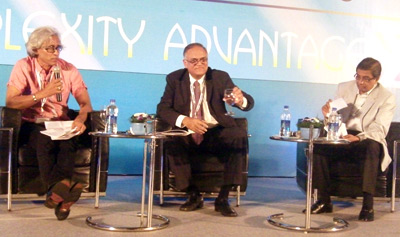
    Keeping in line with the theme of the 6th annual INMA South Asia conference, ‘Complexity Advantage’, one of the sessions focused on the complex media markets inSouth Asia.


    Titled, ‘Managing Complexity In South Asian Markets: A Sri Lanka, Pakistan and Bangladesh Experience’, the session was moderated by Mr Bhaskar Das, President & Principal Secretary to MD, The Times of India Group. Representing Bangladesh and Pakistan respectively, were panelists, Matiur Rahman, Editor & Publisher, The Daily Prothom Alo, Bangladesh and Mr Javed Jabbar, Chairman & Chief Executive, JJ Media (Pvt.) Ltd and former Federal Minister,Pakistan.


    Mr Rahman started the discussion by sharing the complexities and challenges facing media market in Bangladesh: “Media industry can best thrive in a democracy but democracy in Bangladesh in only 22 years old. The dominant political parties are poles apart and can’t even come to a consensus on major national issues. People in the media are threatened, tortured and even murdered. Political interference is a huge challenge and yet there are some resilient media houses playing an important role.”


    He added that another challenge is to keep the press free from its owners because many media houses are now being owned by corrupt business owners. Speaking of evolving technology, Mr Rahman said: “Earlier our competitors were only newspapers, but now all electronic media are competing with us. With mobile and digital growing at a fast pace, product offerings have to be modified to suit the needs of both consumers and advertisers.”


    Speaking of complexities and challenges facing the Pakistan market, Mr Jabbar said that both India and Pakistan, two nations who have the single most complex bilateral relations, suffer from a lack of awareness about each other. He said: “Countries are societies and nations before they are markets. News media have played a pivotal role in determining a lack of awareness among these two nations. All media are inherently subjective, selective and suppressive.” Furthermore, he said that the question in Pakistani people’s minds today is whether media content eventually makes a difference in governance or violence. Does media content really change things?


    As for advertisers, he said: “They are aggressive intruders voracious for media space. Editors and proprietors of newspapers are willing to debase to any level and they are even allowing advertisers to sponsor verses of the Holy Quran. In Pakistan, advertisers in collusion with news media have encroached on space that belongs purely to news content. But at the same time, advertisers are beginning to invest in research which was long overdue.”


    Talking of technology and the onset of digital, Mr Jabbar said: “New technology is ubiquitous and pervasive. Media landscape in Pakistan is thriving, especially in terms of IT connectivity and television channels. However changes that are taking place in India in terms of mobile and devices are not as rapid in Pakistan. Innovations are not taking place at a desirable pace.”


    Mr Jabbar concluded by stating a common challenge facing all three nations, India, Bangladesh and Pakistan, with respect to media ownership. He said, “Ownership of media should be redistributed through publicly listed companies on the stock exchange so that profit doesn’t become greed.”


  • Complexity presents opportunity @INMA 2012


    By A Correspondent


    The sixth edition of International Newsmedia Marketing Association (INMA) South Asia Conference opened to a packed house on August 6 in New Delhi. The theme ‘Complexity Advantage’ was not only explored, but dissected and deconstructed. The sessions at the event saw discussion on various topics ranging from the need of newspaper companies to become multimedia organisations to the future of news, and if cost deflation is an achievable matrix.


    Mr Sanjay Gupta, President INMA South Asia and CEO & Editor, Jagran Prakashan Ltd welcomed the delegates and Mr Ravi Dhariwal, President INMA Worldwide & CEO, The Times of India Group, gave the inaugural address. Talking about the volatile Indian newspaper landscape, Mr Dhariwal outlined five key points: “There is great optimism even when things have not been going great economically. There is a very big opportunity in tier II and III cities, which every newspaper is witnessing. On the back of multimedia and strong publishing business, companies have been witnessing double digit growth. However, the newspaper business is being treated as ‘one shot fits all’. Going forward, this strategy will have to change as the consumer needs customisation according to their needs and interests.”


    He went on to say that publishing, as a business, has a bigger purpose of being at the forefront of change, and gave the example of TOI’s ‘Lead India’ and ‘Teach India’ campaigns.


    Ravi Dhariwal
    [youtube width=”400″ height=”225″]http://www.youtube.com/watch?v=qdAI1R8UBTw[/youtube]

    His also commented on how advertisers are struggling with value: “We need to deliver and innovate to deliver extra value to the advertiser. My fourth point would be that the competitors need to join hands and collaborate to give better value to the readers and advertisers. If we do not do that now, we might bleed like the newspaper industry bled in the West.” He concluded by saying that fleeting FMCG advertisers who prefer TV as a valuable medium to advertise: “Should be given single rate from all newspapers.”


    Mr Bhaskar Das, President & Principal Secretary to MD, The Times of India Group, who acted as a sutradhaar at INMA noted: “The newspaper business is rapidly changing. There is no equilibrium, only punctuations. The businesses today are caught in ‘complexity science’- any business can and will survive if they adapt to the changing environment.”


    Mr Nandan M Nilekani, Chairman, UIAI, Planning Commission, Govt of India raised important points about how newspaper industry should integrate its print version with digital format to reach out to the larger, younger audience: “The advancement of computing technology is bringing dramatic changes in how media is being consumed. It is important to understand the interplay of demographics, cloud computing, content, mobility, and access to technology, to create a business model that integrates the disruptive advertising and subscription models.” He summed his theory as: “Get ready for online mobile-aware resident.”


    Earl J Wilkinson
    [youtube width=”400″ height=”225″]http://www.youtube.com/watch?v=sKl9f2Yjxyg[/youtube]

    Highlighting the fact that advertisers want quality reach, target richness, engagement, purchase intention, and actionable audiences from the newspaper media, Mr Earl J Wilkinson, Executive Director & CEO, INMA spoke on ‘The new growth path and how to get there’. Talking about the learning and examples from the US and UK markets, he said that Indian newspaper industry is at crossroads because of: growth beyond demographic changes; the struggle being less about circulation but more about readership; delivering value to advertisers even as multimedia and digital pose challenge.


    Mr Wilkinson said: “The integration of content across platforms is bound to happen. And this is not true for content only, but also for the readers and advertisers. The problem of complexity does arise across platforms, but herein lies the opportunity. As the integration becomes a norm, the organisation models of newspaper companies will also change. The companies need to ‘aggregate’ and ‘atomize’.”


    The new model, according to him, would focus more on competence and value that it gives than the product itself. He further said that most news would be consumed via mobile by 2015. “Mobileand social media would result in exponential engagement. We, as newspaper industry, need to be more relevant to the nebulous pursuit of quality. Going forward, the multimedia organisations need to manage print for profit, and digital for growth,” Wilkinson concluded.


    The session on ‘Future of News’ brought interesting perspectives as the panel discussed if the attractiveness of news can be synchronised with commerce and content. ‘Winning the ad growth challenge’ saw industry veterans talking about factors that impact ad revenues.


    The highlight of the day was the interesting session with young college students on ‘Walking through the mind of the post-90 born: ‘Creating a newspaper I would like to read”. The session gave interesting insights to the delegates about how newspaper is not a necessarily a chore for the 19-21-year-olds. They consume news on-the-go, and read newspaper “when they have nothing else to do.” Moreover, the young panel highlighted that they preferred going through trending articles and video links, showing how digital was their preferred medium of news consumption.


    ‘Battle of  Bulge: Is cost deflation a utopian expectation?’ was moderated by Mr Mohit Jain, Executive President, Supply Chain, BCCL. He pointed out the three challenges of newspaper business when it cones to cutting costs, “Globalisation of cost structure, supply chain issues, and volatility of newsprint.” The session spoke on how new business models of publishing and printing newsprint are managing the currency, size and quality; how newspaper companies need to unlock internal manpower potential across board; and effective supplier partnerships.


    Mr Ashish Pherwani, Partner-Advisory Services, E&Y noted that newspaper organisations should pool-in their back-end resources, such as printing facility, to cut costs. Mr Pawan Agarwal, Non Executive Director Bhaskar Group echoed Mr Pherwani’s thoughts, and added, “We have created a common infrastructure for two or more of our editions. This helps in capping my Opex and Capex.” Mr Piyush Gupta, Group CFO, HT Media agreed: “Co-sharing is already happening in aviation department. If it can happen there, it can happen here as well.”


    Mr Pherwani added: “Every newspaper industry goes through three stages: chopping off wastage; optimisation, and partnering with vendors. Currently, the Indian newspaper industry is going through the third cycle. It is imperative that we build a right product at right price by creating a win-win relationship with vendors.”


    The panel also highlighted the fact that harnessing inner potential is important for any and all newspaper organisations to achieve its top-line growth. The panel also noted that what is core to a business and what can be co-shared: this will emerge as a real game changer for a newspaper organisation.


    Giving a different perspective to the newspaper session was the speaker Mr Santrupt Misra, CEO, Carbon Black Business and Group HR Director, Aditya Birla Management Corp who spoke on ‘Managing cultural asymmetry in a multi-media organisation’.