
Tag: The Social Street

  • BTL is big business


    By Anuka Roy


    The last time you visited a shopping mall, you would’ve noticed a huge soda can replica has been installed and a few people representing the soda brand are trying to convince you to taste the new drink and give your feedback. Or closer home, a small table of cookies has been laid out for you to taste outside the kirana shop because a popular biscuit brand has come up with an array of new and healthy range of cookies. Brands even organise games and contests in malls and other public places to connect with the consumers. These are few such examples of product promotions that happen these days.


    It is not just new or local or small brands which are taking such unconventional path to promote their products. Big brands are increasingly taking this route and spending more on marketing activities which have a direct connection with the consumer and the target audience. These activities are not restricted to food brands or FMCG companies, even the financial sector and automobile sectors have been investing in it for quite some time.


    “I think the bevy of experiential marketing have stood up on its own feet. It has a lot more to accomplish and go forward but we know that now it has set a stage that this industry in itself can be self-sustaining and can be called an industry. In the past it used to be that very few brands believed in engagement. They were more looking at reaching out to masses at an economical cost. But the shift is moving in to sustenance relationships with brands,” said Mandeep Malhotra, Founding Partner and CEO, The Social Street about the arrival of BTL or experiential marketing in present scenario.


    These on ground promotions and events are known as ‘brand activation’ in marketing lingo. They are unconventional advertising activities, called below the line (BTL) advertising, and in certain companies, have more stakes than popular advertising activities.


    “Normally, if I look at an FMCG company it would have 14-15% in BTL but for us it is critical. In our business, you do not have people who keep coming in to your stores just for browsing. They will come in if they have a need for furniture. And, as a brand we are not present in high footfall zones. So, you will not find Godrej Interio stores inside a mall. They are always kept independently outside.  The objective is to ensure that the people who have a need come in there,” says Bedraj Tripathy, AVP, Marketing, Godrej Interio ,  the furniture division of Godrej and Boyce, about the amount that is generally spent on BTL activities.


    On the other hand, for the newly launched Himalaya Wellness, the wellness division of the The Himalaya Drug Company, BTL is the only way to go. Speaking about the same, SudheerSrinivas, the Marketing Manager of the company who looks after the wellness division, says, “The importance of retailing for our wellness range is because of many reasons. First, people today can afford and second, they think about their health more than anything today. Third, people have stopped being reactive and started being proactive over their health issues. Earlier when we used to go to a doctor we would spend Rs 50 maximum but today it is minimum of three to four thousand rupees. People today want a solution for their basic health care needs which they can pick it up along with their monthly shopping and they would want to make it a part of their lifestyle. So, BTL is very important for wellness care products.”


    Speaking about the sectors which have adapted well or are trying to use BTL advertising to its full potential, Rajesh Grover, Managing Director, Viscomm presents a very interesting view. He says, “Experiential marketing is basically the present and the future. The main reason is that brand spends have decreased, a lot of brands are weary of spending on ATL activities because the future is very uncertain and economy is very uncertain. To connect directly with the consumer experiential is the best kind of platform. I would say across all sectors. There is no specific sector where experiential marketing works. It works wonderfully in the rural segment, FMCG, automobiles, in services, so it is across sectors according to me. The only thing is as we go forward since digital is also becoming a very important platform because of social media and all of that, an integration of experiential and digital is the way forward. Agencies or brand need to focus more on the integration of digital with experiential. Monies have to invest in the right strategies in that space.”


    So, what are the activities that are done under BTL? To promote the Tata Sampann low oil absorb besan campaign titled ‘Ab Khao Befiqr’,  the company tied up with top 104 Vadapav stalls in Mumbai. This popular snack is considered unhealthy by some due to amount of oil used for it. “With this activation we wanted to encourage consumers to eat their favourite snacks and indulge without guilt. Tata SampannBesanabsorbs lesser oil as compared to the ordinary Besanand the tie-up enabled the consumers to witness this for themselves. We reached out to around five lakh consumers with this activity,” said the Marketing Head of Tata Chemicals Ltd (Consumer Products Business), SagarBoke.


    According to Sevantika Bhandari, Senior VP and Head Marketing, DHFL, as a housing finance company they are always in touch with the consumer. “We interact with the consumer inside his house by the way of our advertising, through digital, television and radio. As soon as he steps out we interact with him on transit medium with hoarding, press and newspapers. When he walks towards a large shopping area or a congregation of people, we engage with him on the ground with our people available in some form or the other undertaking the BTL activity. We engage with him on his mobile. We engage with him at a point of sale of his home with large building projects. So, the idea which is true for all marketers and true for DHFL as well is to engage with the customer wherever he or she is.  We also map all our activities according to that journey,” she says.


    But whether companies take the conventional advertising method or they invest in BTL, at the end of the day everyone is concerned with the ROI (return on investment). “The cost of acquisition from a reach point in this business will always be very high. It would not be as economical as a television or a print but then you need to put a balance between just reaching out to a number and really converting that person in to a fan or a consumer of your own product. There are two different objectives which are being met here but CPT (Cost per thousand) will never be achieved as efficiently as it would be on television,” says Malhotra.


    “Consumer engagement and brand recall. These are the two most important things for us. There is always a debate between biggest or best – and I can firmly say that we want to be the best. We’re a vibrant and authentic brand, and it comes to life through our product, our communication and really through everything we do. There is certain positivity about us and BTL is the more effective tool to help us with consumer engagement and through this – recall,” says Chaitanya Rele, Vice President, Marketing, Havmor Ice Cream about measuring the success of a BTL campaign.


    Even though this kind of marketing is on the rise and in some cases the only way to move forward for certain brands, but can it survive on its own without any help from the mainstream marketing methods or above the line advertising (ATL). Most of the experts are of the opinion that for certain products it can yield good results but that would take time. For the time being, BTL does require a certain push from ATL to be successful.

     

  • Deepak Singh appointed Chief Creative Officer at The Social Street

    By A Correspondent


    Deepak Singh

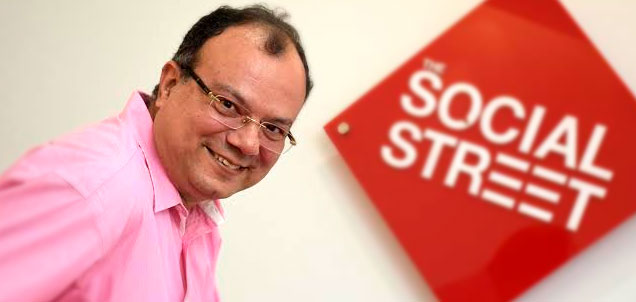
    The Social Street has appointed Deepak Singh as its Chief Creative Officer. He will be based out of Mumbai and will report to Pratap Bose- Founding Partner & Chairman, the Social Street.


    Commenting on the appointment of Deepak Singh, Pratap Bose- Founding Partner & Chairman, The Social Street said, “I am thrilled that Deepak is joining us! Deepak is one of the most decorated Art Directors and one of the finest Art talents we have in our country. Easy-going, light-hearted and humble to the core, he’s proof that looks can be deceiving. Because deep beneath that unassuming persona lies a hunger to keep raising the bar, only to topple it over. I wish him the very best and look forward to seeing some path breaking creativity from him!”


    On his appointment as the Chief Creative Officer, The Social Street. Deepak Singh had this to say, “I feel advertising now is much more than just TVCs, Print and Radio. That’s why with time we should change and try to explore bigger things. Pratap has a clear vision about his plans for The Social Street and knows why he was hiring me, which gives me more confidence. I think the next generation of advertising is much more than mainline advertising and that is what attracts me to shift, and I feel I can do more challenging things now. Digital / Outdoor / Interactive / Activation makes advertising much bigger and more interesting. I am really looking forward to do some great work for The Social Street. My mainline experience will bring new solutions to clients’ problems.”


    Deepak brings a wealth of experience, spanning 15 years, having worked with advertising firms like Leo Burnett, Grey Worldwide, McCann Erickson, DDB Mudra and Dentsu.


  • The Social Street makes angry babies dot the country skyline

    By A Correspondent


    IDBI Federal Life Insurance has launched its outdoor campaign with The Social Street to promote its insurance solutions for children’s future
     

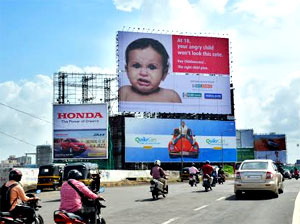
    Hoardings across prominent locations in the country are plastered with grumpy baby faces after private life insurer, IDBI Federal Life Insurance launched its funny, yet hard-hitting, outdoor campaign to promote its child plans category – Childsurance.


    The angry baby photos attract your attention and lead you to an important message – the child will not look this cute when he /she is angry at the age of 18 years! With inflation in education costs ballooning year after year, it is important that young parents systematically plan for the future needs of their little ones. The outdoor campaign, like the other campaigns from the company, adds a bit of humour to communicate an important message. The campaign spans 105 towns in the country.


    Explaining the objective of this campaign, Aneesh Khanna, Chief Strategy and Marketing Officer, IDBI Federal Life Insurance, said, “According to a survey, about 60% of Indian parents are worried about the rising education costs. According to the National Crime Records Bureau statistics, an Indian dies in an accident every 90 seconds. With such uncertainty and rising costs, the biggest worry in the minds of today’s young parents is, whether their goals for their children will be fulfilled, especially in their absence. Our children’s insurance solutions address these concerns effectively. The plans not only help customers build a sizeable corpus, but also offer life cover. The waiver of premium benefit ensures that the plan continues even in the absence of the parent and children’s future needs are secured no matter what.”


    He adds, “The message of angry babies is so strong and striking at the same time that we thought an outdoor campaign would effectively communicate the campaign thought. The best part about this campaign is that while it gives a gentle nudge to young parents to plan for their children’s future needs, it takes does so by taking a complete departure from regular advertising featuring babies. While you would see happy baby faces in most advertising, ours features angry babies and this has caught the attention of the audience.”


    Say’s Pratap Bose Founding Partner and Chairman of The Social Street … ’’The Childsurance campaign from IDBI Federal is indeed an intriguing one, as the cute angry babies immediately draw your attention. Large scale formats in the OOH space, enables the imagery of the visual to be disproportionately large, so as to draw attention and drive home the point that your child’s insurance is certainly not something that you can take for granted’’


    Nitin Rastogi Associate Vice President The Social Street adds “We executed The Childsurance campaign in 105 cities, with more than 900 billboards  pan India in Phase 1, we planned & shortlisted each and every media considering the creative, even the way the baby looked towards the traffic as per the positioning of each site. The beauty of the outdoor is that you can use the creative suitable to each and every medium, which no other medium offers, and we’ve tried to explore this effectively in this campaign, in phase one we integrated the campaign with radio, and in phase two we’re planning to take it a step further with on-ground activation & digital”


  • Thinking Big with The Social Street


    If you drive around the arteries of Mumbai, the billboards – some fifty of them – tell you the story. Pratap Bose, former Chief Operating Officer of the DDB Mudra group, has moved to the fast lane. And with a bang. Last Monday, Bose announced that he along with outdoor and experiential specialist Mandeep Malhotra, Arjun Reddy an entrepreneur who owns and runs a diversified portfolio of businesses, and Pradeep Uppalapati, who was Senior Director and India Lead for Global Corporate Development Team at Accenture have teamed up to launch ‘The Social Street’, billed as India’s maiden advertising conglomerate. Positioned as a digitally driven agency, traditional creative advertising, digital and social media will be added on to the bouquet of offerings by the end of the financial year along with more offices across the country.  In an interview with Pradyuman Maheshwari and Dyanne Coelho, Bose that he believes starting big, with multiple types of businesses, several offices and many big-ticket clients, all within a few months.


    What’s the journey been like from the time you left DDB Mudra. And when did you start thinking about this venture?

    To be honest, when I left at the end of April last year, the natural tendency was to reach out to headhunters, and find out what the offerings and options were.


    So you had nothing in hand when you left?

    No. I had no inkling that I was going to start my own agency. That’s a thing you do when you’re still working. The thought was there, but honestly when I left, the first thing was that headhunters started calling within the first 10 days [with offers].


    And you were getting offers until as late as December 2014?

    Yes, in fact, I was getting calls until I announced the venture. I was flying to Malaysia, Hong Kong, Singapore, New York for meetings. But on one flight back from Singapore, after an interview that went very well and the company pretty much confirmed me for a regional position, I asked myself: do I really want to do the same thing for another day? You live month by month, not even quarter by quarter. It’s all about the numbers at the end of the day. I sort of snapped and decided that I don’t want to do this again. I’ve done it for 24-odd years, and if there is a better option, then I’ll look at it. I got a few client calls as well which were interesting, but at the end of the day it’s one client, a few brands, and it didn’t excite me enough.


    So when did you actually think of setting Social Street?

    Mandeep and I went to Cannes in June, and on one drunken afternoon we went to that love bridge and proclaimed our undying love for each other and the business. When we came back, we said it’s probably a good idea that we should start something of our own. But at that point of time, we had no inkling of how we were going to do it.


    You went to Cannes on your own?

    Yeah, I have been going there for some years. All the global heads and CEOs were there and I had a lot of meetings and interviews lined up. That was two months after I’d left, so the time was also right. But around then my mother was detected with cancer. That was in July. I brought her to Mumbai and was looking after her, but then she passed away a day before my birthday. That shattered me and any thoughts I had of starting anything on my own, fell by the wayside. At the end of October, given that my gardening leave and contract with Mudra ends in December and I need to move now. That’s when I sort of started putting things together. I envisaged what sort of agency I wanted and met every probable Venture Capital firm in the country, because I needed a certain amount of money to start up.


    I heard from VCs that you were asking for loads of money…

    Yes I was asking for a lot of money because I’m not the type of person who’s going to start with 10 people, build an agency, win your first client, then grow with it and add people. I think if you’re really serious, start big and take the risk. If you’re sure of your business model and you know your numbers, then there’s no point in starting small. Also, because of the kind of businesses we are in and the clients we chase want scale. Large clients want scale in terms of ideas and capabilities. The fact that we’re opening up three offices simultaneously, which not many people do, and then scaling up to 140-150 people within a year or less, needs a considerable amount of funding. I spent a lot of time trying to work out the business model. You can have any number of great launches, but at the end of the day, you have to have a business that works. I spent a lot of time looking at areas that are high-growth margin businesses, or those that have the potential to grow for the next 10 years in the space where we are.


    Let me give you an example, in the rural space. I don’t think there are more than four rural agencies in this country. It’s virgin territory, with no competition. That’s the space to be in, because that is the future. If you’ve got a great offering, I think there’s a lot of money to be made, especially with not too much competition. So it makes it easy to grow. Why will I not be excited about digital? There’s no finite definition of what is digital, and technologies are changing so fast. So I will not start and build a digital agency; it doesn’t make sense. I will go and acquire somebody.


    And finally you got somebody who is not a typical VC…

    Yes, so I decided two months after meeting every VC, that I was just making them more knowledgeable about my business. VCs come with a huge chip on the shoulder saying ‘since I’m giving you the money, I’m your Lord and master’, and they contribute very little to the business. I decided that VCs are not the route I want to take. Therefore, I went around looking for like-minded individuals who trusted and believed in the business that I was in, and were prepared to stay with me for the long term. I ended up with a short list of about three or four people who were happy to fund me.


    So how active are Pradeep and Arjun going to be in the business?

    So Pradeep has worked for 11 years with Accenture. I think he spent eight years in Australia, and three in India. Obviously he’s the CFO/analytics/strategic investor, and Arjun is the part of a larger conglomerate. He owns hotels and varied businesses, and is on the retail side of the business.


    Have you also put in any money?

    Yes.


    Is this a long-term investment or will your investor-partners and yourself sell out eventually?

    No I don’t think you start a business with the idea that you’re going to sell out. If someone is starting a business with the idea that he is going to sell out, then I don’t think he should be starting a business in the first place. Does that thought occur to you? I’d be lying if I said no. But I think right now that’s far from anyone’s thought.


    So this happened April-end, May first week. How many people have joined you from DDB Mudra?

    I’ve lost count. But I think the media is making too much of an issue of it.


    Come on, there is an issue.

    There isn’t (laughs).


    Okay, but what you’ve started is like a MudraMax, right?

    I think people make that comparison. But I’ve already been there and done MudraMax. I don’t want to create MudraMax 2; that’s not my intention.


    Things like content, digital and social is pretty big for us and will become very big, but was never part of MudraMax, nor was branded content or entertainment, sports marketing etc. We’re looking at the businesses very differently and, unfortunately, not very many people are able to actually see a USP. So we’re in this space, and I’ve been in this business long enough, and the one guy who really taught me what the real power of integration is with clients was Ranjan Kapur.


    Did you go to him for funding, because he is also a VC in his personal capacity?

    No. Ranjan has always been my boss and mentor. I have the most immense respect for him as an individual, so I did talk to him in his personal capacity.


    Given that you are an outdoor-experiential business guru, isn’t that’s going to be your mainstay?

    No, it won’t. We have all the operations right. We have all of the skillsets. So we into out-of-home, rural, events, promotions, trade marketing, retail, shopper, youth marketing, media, branded content etc.


    The way I see it, in the next three years, I think retail, sports, branded content are going to be the big players and not the other businesses. Because the big money and opportunity are in those areas. The retail industry is probably five times bigger than the entire communications and advertising business. Sports entertainment is massive. Exhibitions, though we’re not into it, is part and parcel of the experiential and retail business. It’s probably bigger than anyone can imagine.


    These are areas that you’ve not typically been specialists in…

    No, but I’m saying that’s the opportunity. At the end of the day, most agencies see themselves as B2B and never B2C; they’re never in direct contact with consumers. I think with the offering that we have, and the use of technology and the ability on great ideation, for me the biggest challenge would be in the B2C area.


    So Social Street isn’t going to an outdoor specialist?

    No, outdoor is a medium, as much as digital is a medium. It’s part of a media plan. It never works in isolation. Twenty-five years ago, I brought the specialisation into this country. I created the AOR concept. I started my career with it and I’m very proud of that.


    But outdoor is or was 12-15 per cent of DDB Mudra’s revenues?

    It always has been profitable. It was an extremely profitable part of Ogilvy when I was there. I’m not saying that that is not going to be a part of my business, it is. I think what’s important is the positioning in which we go with clients. It’s not that we’re experts in all of those areas. I think the biggest USP for us is that we’re able to string it together with a team that is a combination of excellent creative people within those tiers. Not typical agency people who are making print and TV ads. Everyone’s asking me why I have media in this whole business. I think people don’t realise that media for me is the kind of glue that binds everything together.


    Do [clients] take advice from people from a creative consultancy or from a marketing consultancy service like yours?

    Only if you really understand his/her business as well as he does, then are you a trusted partner. You can never do it across clients. You can do it with a select number of may be eight to 10 large clients. But it positions you as far more than just an advertising agency. And the kind of businesses I am, I’m looking at marketing budgets of clients, not advertising budgets. Sometimes marketing budgets are much bigger than advertising.


    How did you come up with the name?

    Actually the biggest problem was that no one had ever talked about finding the name of the agency.


    Getting Josy and Bobby to help was interesting…

    So I came up with about 150 names, and we were struggling for about 45 days to come up with a name, so names from Wasabi, to Deep End Purple and all floated around like those names, but once Mandeep just went to meet Josy and told him we’re struggling for a name. So Josy asked what are the businesses you’re going to be in. So he rambled off some things and Josy just came with The Social Street within like 10 seconds. If you’re in advertising you try and look at the sexiest names. So the name social in terms of what we do, and also the brand manifesto that we wrote out, it fitted, it was kind of very apt for what we did.


    So when was the name finalised?

    About four to five weeks ago.


    Moving on, are your partners ready for the vagaries of the business?

    They understand the business. I think a lot of people ask me because the businesses that are in it, are also very spread out. I’m not risking it; I’m not just a digital or advertising agency where, if something goes wrong, I’m screwed. Because I have so many verticals, even if just three or four fire, I’m home on the numbers.


    You obviously have a lot of senior people and more will come. When are you getting your creative head?

    I think it’ll be a while before I have a creative head, since I’m not an advertising agency. First of all, I don’t think there’s anyone qualified to be a Creative Director for all of the businesses that I have. So I’m not looking at a typical Chief Creative Officer profile.


    So how many clients have you had on Day1? Is the meter running?

    The meter is running, the clock is ticking, the taxi is moving. I would say we have about 15 to 20 clients on board.


    One or two names?

    I don’t want to talk about it.


    But you will eventually?

    Of course I will. I’ll be releasing saying that streetsmart Social Street wins  creative duties of xxx.


    Any targets to yourself? What do you want to achieve?

    I think the role I see — apart from driving business — is to build a strong people-driven agency. A sense of ownership is something that I’m currently driving. I use the word ‘our’ and ‘we’ all the time and every single person that I’ve spoken to I’ve told it’s your agency, our agency.


    So numbers purely in terms of business and revenue targets — any ball park figures?

    I will have about 140-150 people by the end of year, or within nine months of operation. We’ve already hired about 50-odd. We’re across three offices, not just one. If I broke even in 14 months, I’ll be a very happy person.


    And how much will it take to break even?

    You can ask the question in as many ways you want to ask (laughs). When I moved from Ogilvy to DDB, we made huge investments. With no business, we probably hired about 120 people overnight. We broke even in 12 months.


    So do you think you should achieve a Rs 100-200 crore you’re looking at Rs 100 crore in year one or nine months, in billings?

    Yes, billings will be about 250 crore. But billings is not an indication of what your revenue is. However, 250 crores we will definitely do, easily.


    It helps being a finance person to run a business?

    It does, at the end of the day numbers bring a lot of happiness because you can invest and go to exotic locations for conferences. You can go to Barbados, you can go to Port of Spain, you can go to Hawaii, you can only do that if you have profits, you can’t do that if you have no money.


    One last question: Can you, in 140 characters, tell us what ‘The Social Street’ is all about and how are you different?

    It’s difficult to say it in 140 characters. I believe in brevity, so you need to be able to say it on one slide. But because we are so many different businesses, we’re not just one digital or advertising agency. I think we want to be seen as the best-in-class digitally-driven social agency.


    A shorter version of this appeared in dna of brands dated June 29, 2015