
Tag: The Economist

  • Disability in the Spotlight: Controversies, Triumphs & Passionate Debates

    Disability in the Spotlight: Controversies, Triumphs & Passionate Debates

    Shruti PushkarnaThe last few days or maybe weeks have been brimming with news around disability. These include several updates in the form of a historical court ruling, controversies, (presumably) offensive videos, distasteful representation on a reputed magazine cover, influential individuals’ responses to brewing disagreements and more.

    Believe you me, this makes me happy. Or even excited. At least we don’t have monotonal deliberation around disability. There is anger, frustration, vociferous expression, hearty articulation, a whole flurry of emotions in the public space.

    Disability is complex and so should be the conversations around it. That’s what makes it real. Let me begin by citing some of these sensational items.

    #1 Famed disability rights activist Nipun Malhotra filed a lawsuit against Sony Pictures for one of its productions, ‘Aankh Micholi’ which portrays persons with disabilities insensitively. In response, the Supreme Court ordered an immediate injunction of the film in its current form. It also mandated respectful and accurate depiction of disabilities in films, issuing a detailed set of guidelines to prevent disparaging future portrayals.

    Grateful to the Supreme Court of India for creating guidelines on portrayal of Persons with Disabilities in visual media, following my petition against @SonyPicsIndia for lampooning PwDs in ‘Aankh Micholi.’
    Happy about the distinction made in the judgement between “disability… pic.twitter.com/UC9YMD8EpN

    — Nipun Malhotra (@nipunmalhotra) July 8, 2024

    It’s important to note that the court distinguished between ‘disability humour’ and ‘disabling humour’, the latter demeaning individuals with disabilities. The seven-point guidelines designed to foster inclusion focus on avoiding derogatory terms like ‘cripple’ or ‘spastic’, steering clear of myths and stereotypes, consulting disability experts, sensitising creators and so on.

    Of course, there’s the other side which feels that this impinges on their right to freedom of expression. In fact, that debate simmers and amplifies further in the next incident.

    #2 Former Indian cricket team players Harbhajan Singh, Yuvraj Singh and Suresh Raina posted a video on Instagram where they were seen grooving to Vicky Kaushal’s latest song, Tauba Tauba. Except their movements were awkward and para-badminton star Manasi Joshi was the first one to call them out for mocking the gait of polio-affected people. Then ensued a series of clamorous gripes online.
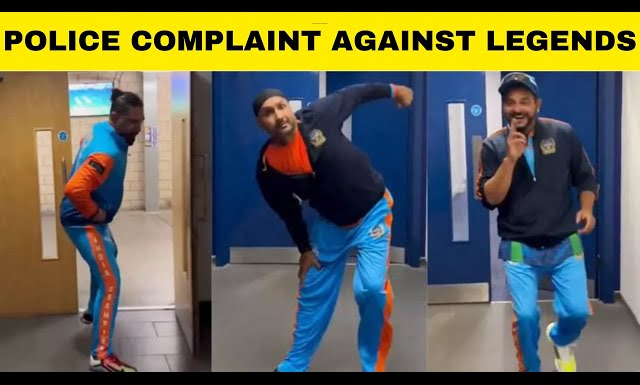
    While most disability advocates fumed at the inconsiderate act of celebrated sportsmen, some cautiously piped in their alternate views on tolerating a joke. However, an official police complaint was lodged by Arman Ali, Executive Director of the National Council for Promotion of Employment for Disabled People (NCPEDP).

    Here’s my take. We have become a society of increasingly easily offended people, thanks to the cultural shift propelled by polarising politics. So why should we expect any different reaction from Persons with Disabilities, who are equal citizens of the same country you and I inhabit. It’s a bad joke, one that reminds of me children in school, mimicking a certain teacher’s amble given her osteoporosis-ridden knees.

    Should they have done it? No. Is it insensitive? Yes. Have we blown it out of proportion? Certainly. I say this about all news political as well. There is no need to play up silly occurrences and utterances as primetime headlines. Ditto for this one. By the way, a public apology was issued by the players.

    #3 Trainee IAS Officer Puja Khedkar’s selection to civil service has come under the scanner. There is a criminal case accusing her of “misrepresenting and falsifying facts” to appear for the UPSC exam multiple times. She obtained three disability certificates in three years and a fake caste certificate. In 2007, while securing admission in a medical college, she was declared ‘medically fit’. In 2019, she secured a certificate of vision impairment from Ahmednagar district hospital. In 2021, she got a combined certificate of vision impairment and mental illness from the same hospital. In 2022, she filed an application for locomotor disability in a Pimpri hospital.

    She also sought relaxation under the OBC quota, which was questioned after her father, Dilip Khedkar, a former Maharashtra government officer, was suspended facing a corruption charge. Her mother, Manorama Khedkar, who is a sarpanch, was arrested in an Arms Act case when a video of her brandishing a gun threatening some farmers surfaced on social media.
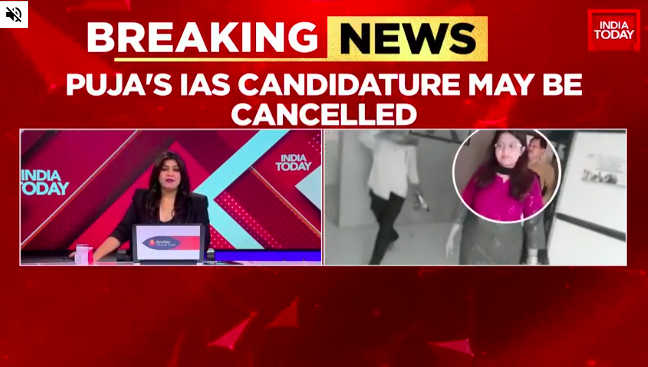
    Disability rights groups have been united in their reaction to this egregious act. While opinions were circling around the misuse of disability and the usual ‘one dirty fish spoils the whole pond’, reactions from the non-disabled audience validated the analysis.

    Senior Telangana IAS Officer Smita Sabharwal stirred a fresh row questioning the need for disability quotas in All India Services (AIS). She tweeted, “Does an airline hire a pilot with disability? Or would you trust a surgeon with a disability? The nature of AIS is field work, long taxing hours, listening first-hand to people’s grievances, which requires physical fitness.”

    Unfortunately, this was seconded by Former CEO of Niti Aayog, Amitabh Kant (Former N) when he said, “I am in favour of SC/ST or OBC reservation. These reservations should continue, with the creamy layer regulations being enforced. However, the existing reservations for the physically and mentally handicapped and the proposed 1% reservation for the third gender for the top Civil Services need to be reviewed. They are being misused.”

    Now that’s taking it a bit too far, because reassessing appropriate implementation of provisions and policies, will be opening an abysmal Pandora’s Box! By the way, I can instantly name Pranjal Patil and Beno Zephine. two women with disabilities who are IAS/IFS officers and have been doing superlative work despite the odds.

    #4 And there’s been some contentious news across the Pacific Ocean. So far, we’ve only had Former US President Donald Trump taking jibes at persons with disabilities, and specifically those in the media. Well, stupidity and ableism don’t come with any copyright, do they? After the disastrous show by President Joe Biden in the first presidential debate and consequential speeches, The Economist featured a walker adorned with a Presidential Seal on its cover. And the headline read, “No way to run a country.”
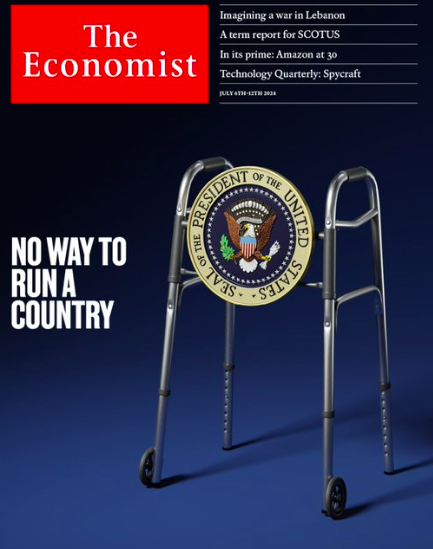
    Several slips there. Ableist representation in the use of a graphic that shouts, ‘crippling’ or ‘disabling’. The cover implies that if a person is physically disabled, or needs a crutch, he or she is incapable (read incompetent). Also, disrespecting several world leaders with disabilities. Like, Franklin D Roosevelt who was left paralysed waist down due to polio. Winston Churchill who had a speech impediment.

    A rather poor editorial call by a publication one least expects it from. The only thing that can possibly change media representation of disability is the act of hiring and working alongside persons with disabilities. Also, bold calls like the photo carried by The Indian Express in November 2022 following the appointment of 50th Chief Justice of India, DY Chandrachud. It’s a candid shot of him with his family which includes two foster daughters who have a disability.


    #5 But let’s end this piece on a rosy note. Or should I say pinkish? As part of this year’s global Barbie Fashionistas lineup, Mattel Inc. introduced the first ever Blind Barbie reinforcing inclusion and representation for all. Throughout the design process, Barbie partnered with the American Foundation for the Blind (AFB) to develop accessories, elbow articulation, textured fabric, accessible packaging, distinct eye gaze et cetera.

    Last year, Barbie had introduced the first-ever doll with Down Syndrome (DS), partnering with the National Down Syndrome Society (NDSS). Again, fixing the right hair, sculpt, glasses, outfit and so on. They have introduced its next Black Barbie doll with Down Syndrome along with the Blind Barbie. These dolls will soon be available in Indian stories as well.

    Clearly the disability landscape is evolving across the world. One day, we cite progress and hullabaloo on another. As long as the discourse is relevant, consistent and moderate, I think we are headed in the right direction. It is these complexities surrounding disability that will open up the dialogue to challenge stereotypes of all kinds. 

     Wondering why MxMIndia publishes a disability advocacy column? Well, we strongly feel that the media can dramatically transform the world for persons with disabilities. This series attempts to help bring forth issues that the media must champion to create a truly inclusive and accessible India. Writing  this column is Shruti Pushkarna, a former journalist and now a disability inclusion advocate based in New Delhi. Her views here are personal. To access the archives of her 95-plus columns, please visit: https://www.mxmindia.com/category/ columns/shruti-pushkarna/

    If you have a view on the issues raise or would like to align with MxMIndia on this cause, write to us at editor [at] mxmindia.com.

  • By Invitation: Puneet Singhal: Ableism in One Picture: A Disappointing Stance by The Economist

    By Puneet Singhal

    The recent cover of The Economist, featuring a walker adorned with the Presidential Seal and the headline “No Way to Run a Country,” is a blatant display of ableism. This image, from a publication that prides itself on insightful and balanced journalism, is both shocking and deeply disappointing.


    An image of a walker with the Presidential Seal of the United States attached to it. The cover headline reads "No Way to Run a Country," suggesting a negative stereotype about physical disability and leadership. This is the cover of The Economist magazine for the week of July 6th-12th, 2024.
    An image of a walker with the Presidential Seal of the United States attached to it. The cover headline reads “No Way to Run a Country,” suggesting a negative stereotype about physical disability and leadership. This is the cover of The Economist magazine for the week of July 6th-12th, 2024.

    The Implications of the Cover:

    1. Perpetuating Harmful Stereotypes: The cover reinforces the damaging stereotype that physical disability equates to incompetence or incapability. By implying that a person who uses a walker is unfit to lead, The Economist dismisses the abilities and potential of millions of individuals with disabilities.
    1. Undermining Inclusivity: At a time when society is striving to be more inclusive and accepting, this cover sets us back. It suggests that those with physical disabilities cannot hold positions of power or influence, which is not only false but incredibly harmful.
    1. Disrespect to Disabled Leaders: Many leaders with disabilities have made significant contributions across various fields. This cover disrespects their achievements and perpetuates a narrative that physical ability is a prerequisite for leadership, which is a gross misrepresentation of reality.


    The Economist’s Responsibility:

    As a respected news organisation, The Economist has a responsibility to challenge stereotypes and promote inclusivity, not reinforce harmful biases. This cover fails in that responsibility and highlights a troubling acceptance of ableism within its editorial practices.


    A Call for Accountability and Change:

    The Economist must be held accountable for this ableist representation. It should:

    – Issue a Public Apology: Acknowledge the harm caused by this cover and apologize to the disability community.

    – Commit to Inclusivity: Implement editorial guidelines that prevent such discriminatory content in the future.

    – Highlight Disabled Voices: Dedicate space to stories of leaders and achievers within the disabled community to counteract the negative message this cover sends.


    This cover by The Economist is more than just a poor editorial choice; it is an affront to the progress made towards disability inclusion. It is a stark reminder of the pervasive ableism that still exists in media and society. We must demand better from our news organisations and continue to fight for a world where disability does not define a person’s worth or ability to lead.


    Puneet Singhal is Co-founder, Billion Strong and Curator, Curator, Green Disability. Based in New Delhi, Singhal is a leading voice for issues and causes for Persons with Disability, especially on areas on inclusivity and accessibility. He tweets at @puneetsinghal22. The views expressed here are personal. The comment above is from a tweet posted by Singhal.

  • Our news media has no courage


    By Ranjona Banerji

    Ranjona BanerjiSome amount of handwringing in India about how the British media was more courageous than the Indian media when it came to the recently ousted prime minister Boris Johnson.
    In the UK, on the other hand, there has been consistent anger on how the British media was not courageous enough when it came to Boris Johnson.

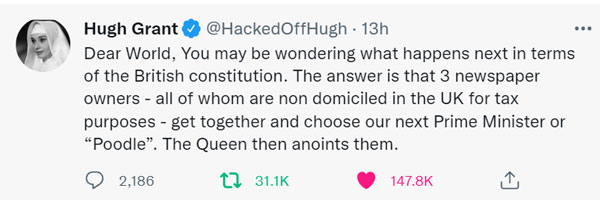
    This tweet by the actor Hugh Grant sums us that anger:

    “Dear World, You may be wondering what happens next in terms of the British Constitution. The answer is that 3 newspaper owners – all of whom are not domiciled in the UK for tax purposes – get together and choose our next Prime Minister or “Poodle”. The Queen then anoints them.”


    Scathing.

    Grant himself has taken on the worst of the British media and won.

    What it does tell you is how low we have fallen in India that an excoriated media is seen as something to look up to.

    And, cliché alert: it’s all relative.

    So the faults of the British media are not comparable to the dire capitulation of most of the Indian media.

    And similarly, the fact that X former governments had similar transgressions does not provide excuses for current governments.

    Context and degree.

    That’s what the Indian media needs to look for and cannot bring itself to do.

    Every journalist and commentator who looks to past for justifications for current transgressions fails to see context. And probably is scared of the consequences of not bowing down to the powers-that-be.

    With good reason of course, if your main colour of choice is lily-livered cowardice.

    It is true that the British media has been traditionally left and right with a bit in the middle.

    It is also true that the Indian media was once mainly middle and is now largely right.

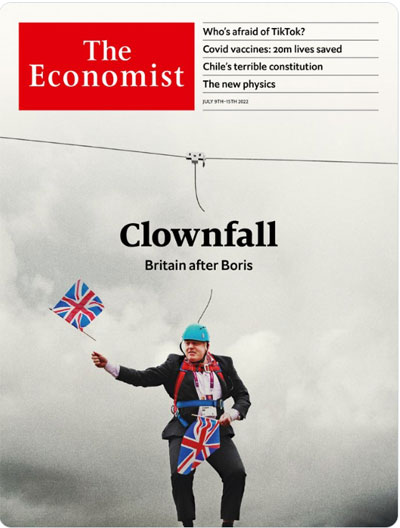
    This The Economist on Boris Johnson:

    “The party will hope that its agony is now drawing to a close. But that depends on it taking the right lessons from Mr Johnson’s failure. One is about character in politics. Mr Johnson rejected the notion that to govern is to choose. He lacked the moral fibre to take hard decisions for the national good if that threatened his own popularity. He also lacked the constancy and the grasp of detail to see policies through. And he revelled in trampling rules and conventions. At the root of his style was an unshakable faith in his ability to get out of scrapes by spinning words. In a corner, Mr Johnson would charm, temporise, prevaricate and lie outright. Occasionally, he even apologised.”
    You can tell immediately that none of these problems which the journal has with Johnson apply to Indian politics at all. If you suggest either character or moral fibre as a prerequisite to a political career, you would be laughed out of a newsroom.

    In the Indian media, lying is seen as a fine art. Dissemination is accepted as a primary trait of politicians. Lack of constancy and inability to grasp policy details is spun to reflect a mind that only sees the bigger picture. The problem with the Conservative Whip’s sexual transgressions would obviously have absolutely no role to play at all in the Indian political sphere.

    In fact, the growing crisis in the Conservative Party and Boris Johnson’s tenure would have played out very differently in the Indian political scenario. And the media would have had a strong hand to play in finding excuses for every misstep, lie, prevarication and disaster.

    I have deliberately picked The Economist because it is seen as centrist and capitalist. Apart from being seen as a voice of reason by many.

    How does the mainstream Indian media compare in largely being true to its principles, any principles?

    Dismally.

    Of course, there is a readymade excuse: that the Indian government has no qualms in going after publications which it feels are overly critical.

    And most of the mainstream media has no courage.

    And that explains this cover and why you won’t see something like this in India in the near future.


     Ranjona Banerji is a senior journalist and commentator. She writes on MxMIndia on Tuesdays and Fridays. Her views here are personal


  • DDB Mudra wins The Economist’s Battle of Wits quiz

    By A Correspondent


    The DDB Mudra Mumbai comprised Anwesh Bose, Manasa Nayak, Siddharth Srivastava team won The Economist’s Battle of Wits quiz held at Garden of Five Senses in Delhi last Friday.


    The NTPC team comprising Sujit Varkey, KM Prashanth and Chandan Shahi came in second and Zenith Optimedia team, comprising Sudipto B, Ashima Thapliyal and Vikrant Dhawan came in third.


    The quiz was conducted by Firstpost senior editor Anant Rangaswami.


    17 teams from various clients and media organizations participated in the quiz.


    Mahesh Nambiar, ad sales director, The Economist,India, said: “We are delighted at the turnout for the event. We were worried that the searing heat may act as a deterrent but 65 of our friends from media and client organizations turned up.”


  • The Economist circulation in India grows 26% y-o-y

    By A Correspondent


    The Economist inIndiaregistered an impressive 26 per cent growth (year-on-year) in its circulation as per the latest ABC period [ABC UK/US July-December 2011] to reach 34,953 copies.


    Suprio Guha Thakurta, managing director,India, said: “This is the eighth consecutive ABC increase, confirming our belief that curiosity about the world is growing rapidly inIndia. We have made considerable investments in developing the magazine’s circulation inIndiaand the results are heartening.”


    TheIndiaperformance is in line with the growth of The Economist globally. The world wide circulation of The Economist has passed the 1.5 million mark for the first time. It has achieved print circulation of 1,487,010 in the latest ABC period [ABC UK/US July-December 2011], combined with a digital-only paid circulation of more than 100,000 in December 2011.


    Andrew Rashbass, CEO of The Economist Group, said: “It took us 160 years to reach one million circulation, but only seven years to reach one and a half million. We now expect to reach two million within five years, fuelled by rapid growth in digital circulation. By then, we expect to have more digital than print readers.


    Although our print circulation continues to rise, at some point in the near future it will go down as more and more of our customers choose to read us on a tablet or e-reader. We’re relaxed about that because we are discovering great opportunities in digital having already reached a digital-only circulation of more than 100,000. Over 75 per cent of these readers are new to us and 12 per cent had previously given up their print subscription.”


    The following table is a breakdown of ABC UK/US released and certificated figures July-December 2011 for the print circulation of The Economist.


    Table: Combined growth figures for The Economist in print and digital:


    Print CirculationABC UK/USJuly-December 2011 Print YOY GrowthABC UK/USJuly-December 2011 Digital CirculationData sourced from The Economist
    Global 1,487,010 +0.9% 100,000 


    UK 210,384 +0.1%
    North America 844,766 +1.3%
    ContinentalEurope 241,726 +0.4%
    Middle East andAfrica[MEA] 29,129 +0.4%
    Asia Pacific 146,531 +2.2%
    Latin America 14,474 -14.4%
    Combined total circulation: 1,587,010


    With a global print and digital circulation of over 1.5million and a reputation for insightful analysis and perspective on every aspect of world events, The Economist is one of the most widely recognised and well-read current affairs publications. The paper covers politics, business, science and technology, and books and arts, concluding each week with the obituary. Its website (www.economist.com) offers articles from the past ten years, in addition to web-only content such as blogs, debates and audio/video programmes. The Economist is now available to download for reading on Android, iPhone, or iPad devices.


  • The Economist publishes its annual Books of the Year list

    By Akash Raha


    The Economist’s annual Books of the Year list has been published in this week’s issue and highlights this year’s 50 most fêted authors and their works. The categories span politics and current affairs, economics and business, history, science and technology, culture, society and travel, fiction and poetry, all selected by The Economist editorial team.


    The best books of 2011, according to The Economist, were aboutChina,Congo,Afghanistan, Charles Dickens, Vincent van Gogh, the “Flora Delanica”,Jerusalem, Mumbai’s dance bars, quantum physics, sugar, orgasms, blue nights, two moons and other people’s money.


    Fiammetta Rocco, books and arts editor at The Economist said of the Books of the Year, “Whether it is politics, finance, history, science, culture or fiction, we look for big ideas, deep imagination and wonderful writing. The 50 books that we have chosen as our Books of the Year, all break new ground and stretch the mind.”


    To coincide with the Books of the Year announcement, The Economist and Southbank Centre have launched their first ever Christmas literary weekend from 9-11 December at Southbank Centre where six authors will read from, and discuss, their work and take part in a book signing session.


    In addition, The Economist is hosting a range of debates on its Facebook page to discuss a selection of books and allow readers to put questions to the authors. The Economist Books of the Year can be found online at: http://www.economist.com/node/21541386.

  • Aidem Ventures to handle sales for The Economist online in India

    By A Correspondent


    Inez Albert
    Suprio Guha Thakurta
    Neena Dasgupta

    Aidem Ventures has been appointed as the media representative for The Economist online business in India.
    Announcing the appointment, Inez Albert, Digital Sales Director – The Economist Group (Asia/Pacific) Ltd. said, “We look forward to strengthening our business presence in India by appointing Aidem Ventures as our representative in India. This partnership, enhanced with Aidem’s business acumen and expertise in the field, will ensure that our commitment of sharing world views and unbiased news reaches out to all stakeholders in the Indian market.”


    Speaking on the appointment, Suprio Guha Thakurta, Managing Director, India at The Economist Group said, “We have appointed a strategic sales partner in Aidem and going by their domain expertise (news and digital), we are certain that we can take our online business to new heights in India.”


    Neena Dasgupta, Head, Digital & International Business – Aidem Ventures, said, “We are very excited with this mandate to enhance the advertising potential of a credible, global and iconic media brand like The Economist in India. As India continues to integrate strongly with the world economy, an increasing number of Indian companies and brands are looking at expanding their footprint globally, and are seeking robust global media platforms to build their brands to ensure a sustained engagement with the consumers. Aidem, with its extensive experience and track record in the news and digital space, is best equipped to partner with The Economist Online to strengthen their presence in the Indian market.”


    It is estimated that the advertising expenditure by Indian entities (like Incredible India) and companies (private and public sector) in the international markets would be around US $ 100 million. With new emergent sectors like medical tourism, software companies, telecommunications, spiritual and wellness tourism, it is anticipated that there will be brisk growth in the years ahead.


    Inez Albert

    Neena Dasgupta

    Suprio Guha Thakurta