Tag: The Anchor

  • The Anchor: 6 reasons why Arnab Goswami should be given the Bharat Ratna

    By A N Chorrea


    1. He generates extreme emotions in his viewers: the man whom many love to hate and even more hate to love.

    2. He has a single-minded devotion to rid India of all its malaises

    3. His brand of journalism rubbishes all that one was taught in media school that as a journalist one ought to be neutral. Takes a position as a journalist like few others

    4. The more he damns his guests, the more they love him

    5. You can read him from his body language. He lets his body do his talking

    6. He shows his human side when he meets someone powerful: last year when he interviewed Raj Thackeray, he was soft and gentlemanly and let him off easily.


    A N Chorrea is a senior industryperson writing under a pseudonym


  • The Anchor: 8 gifts that Indian media sectors could do with from Santa Claus

    By A N Chorrea


    Newspapers:

    Ethics: Getting rid of paid content. It may exist in sections of some publications like The Times of India and Mid-Day officially, but there are many which practise it on the sly. Nothing wrong with newspapers being run for profit, but don’t run to the government for DAVP ads and various concessions.


    Radio:

    Content: Getting rid of paid content which exists here too in the form of commercials coming under the garb of RJ mentions. Also, one could do with differentiating content other than the jockeys.


    Entertainment television:

    Ideas: Save a few shows on each of the GECs, there is not much of a choice between the various general entertainment channels. While one isn’t very sure of the case with the regional languages, perhaps a few fresh ideas may not be a bad idea.


    News television:

    Content: You need to look at the content on the Hindi and English channels very closely to know that all that’s said against news TV isn’t all untrue. While the old argument that news doesn’t necessarily have to be about politics holds, but often it’s stretched beyond imagination. The recent Zee News-Jindal case (and the consequent Broadcast Editor’s Association decision) also doesn’t speak too well for the genre.


    Digital media:

    Good content: It’s been the flavour of many seasons, but the content needs to get really compelling for people to befriend the digital mediums of web and mobile. The time is right, and advertisers are waiting!


    OOH:

    Order: Oooh, aaah, ouch! Among the first media sectors to get majorly affected by slowdowns, the sector needs some serious rethink on how to grow bigger and more robust


    Experential media:

    Science: There is no disputing the role of BTL and events in a client’s life, but the sector needs some quick order in the way it works. The practitioners need to move out from the roles of event managers into influencers of public behaviour!


    PR:

    PR: Yes, the PR sector needs some heavy duty PR to be taken more seriously by clients and the media. But for that some quality talent needs to make its way to the business.


    A N Chorrea is a senior industryperson writing under a pseudonym


  • The Anchor: Harish Bijoor on 6 reasons brands need good consultants

    By Harish Bijoor


    #1 Brands tend to get inward looking. You need a guy from outside to get you looking outward. Get that guy!


    #2 Brands are about outside people: Consumers. Your consumer facing may need to be corrected. Aligned. Modified. Get an outsider to do that!


    #3 Brands need outsiders more than insiders. There is a certain degree of insider-incest that needs to get ventilated and aired, more often than not. Get him in!


    #4 Brands get jaded by being continually fondled by insiders. Get the outsider in! For a while, before he starts behaving like an insider!


    #5 Brands get pompous. You need a good consultant to get you off the pedestal of pomposity!


    #6 Brands need Devil’s advocacy periodically. Get a consultant who is a devil!


    Harish Bijoor is a brand expert and CEO of Harish Bijoor Consults Inc. His Twitter handle: @harishbijoor


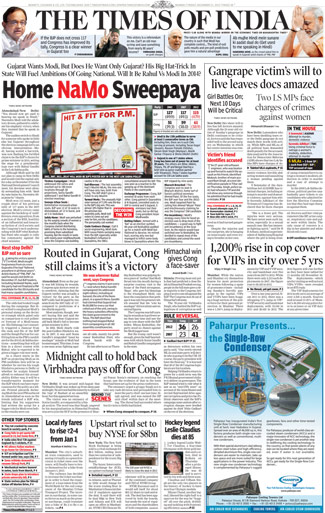
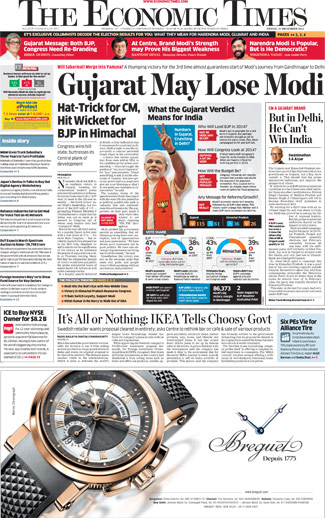
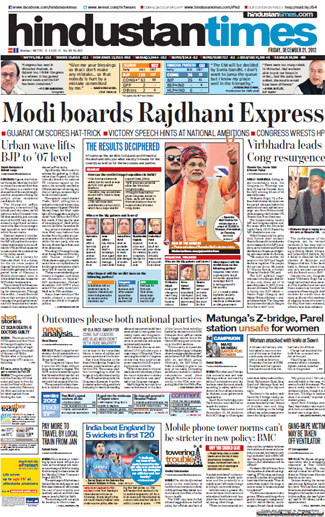
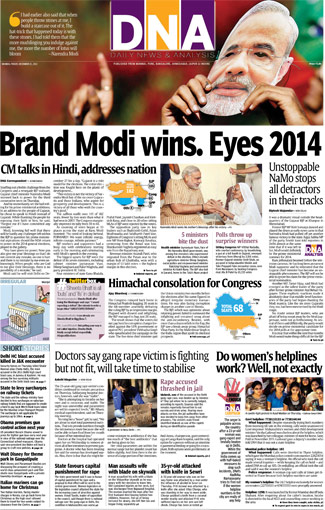
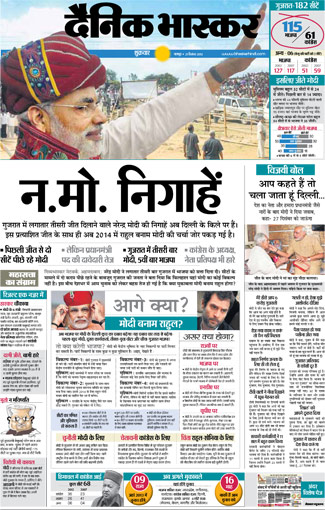
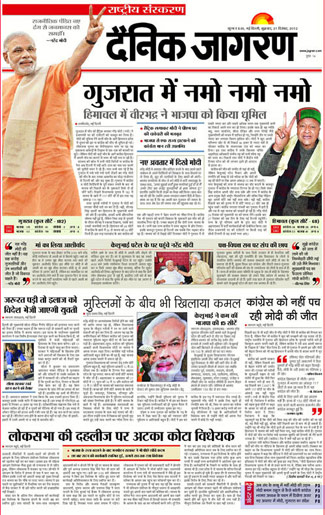
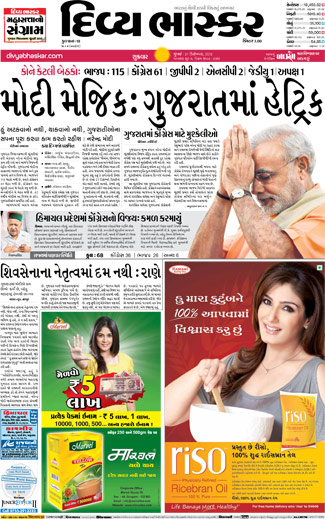
  • The Anchor: How eds dressed up Page 1s for Modi

    Compiled by Rafiq Barak


    The editors of our national newspapers appeared to have a good time dressing up their front pages as is evident from the screenshots of various Page 1s that we checked this morning


    Times Of India – Mumbai Edition

    The Economic Times – Mumbai Edition

    Hindustan Times – Mumbai Edition

    DNA – Mumbai Edition

    Dainik Bhaskar – Mumbai Edition

    Danik Jagran – Mumbai Edition

    Divya Bhaskar – Mumbai Edition

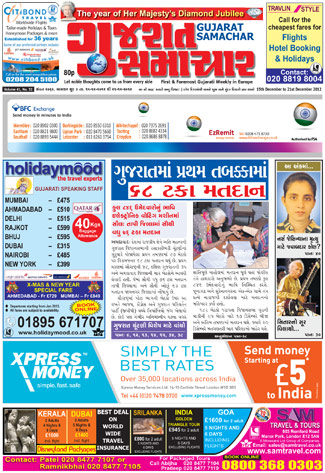
    Gujarat Samachar – Mumbai Edition
  • The Anchor: 5 errors brands made on social media in 2012

    By Rajiv Dingra


    #1 The brands assumed that everything that works offline also works online. Just because you might have a sexy campaign offline, does not imply that it will remain sexy on social media.


    #2 Purely looking at marketing, and not looking at social media as a customer-relationship medium.


    #3 Focusing more on content more than communication. There is too much focus on gifts, contests and participation, with very little focus on what message is being passed through.


    #4 Inability to differentiate between customers and users. There are people who come to your fan page and ask serious queries about products. But we are chasing numbers of fans instead of individually replying to those customers.


    #5 Larger number of fans or spread of platforms does not mean presence on social media. Social media is as good as your last update, or campaign, or how it engages the fans. Social media is an ongoing daily effort to be responsive, interactive. Presence on platforms does not imply that you are doing social media.


    Constant innovation, and constant upgradation, is the need of the hour.


    Rajiv Dingra is CEO of WATConsult.com


  • The Anchor: 7 telltale signs in the media that winter’s arrived

    By A N Chorrea


    #1 At least three newspapers have a human interest story on the Tibetans/whosover selling woolens on the footpaths/roads (one of the headlines would read: ‘The Tibetans who came in for the cold’ or some such).


    #2 Some good, but many tackily done ads for winterwear start appearing on all channels.


    #3 Cold cream ads start appearing on television.

    #4 Reporters and the met department bring out their winter stats to figure which is the coldest day in x years (at least one headline of an English paper would say: Brrrrrrrr!)


    #5 Studio guests and panelists on various nightly shows on News TV will start wearing fancy jackets and scarves. In warmer climes, viewers wonder why this heavyduty layering.


    #6 At least once in the next few months, the Sunday papers have winter recipes or at least celebrating the seasonal stuff. And this exists across the country – not just the north or the cooler spots. Undhiyu in Gujarat, Gajar ka Halwa in the north. Yummmm!

    And finally:


    #7 Flights in various parts of the country are delayed due to fog and this naturally makes for top news on channels and the papers.


    A N Chorrea is a senior media-watcher writing under a pseudonym


  • The Anchor: 5 things brands must keep in mind while opting for a logo/design change

    By Rajesh Varma


    Times change, people change, and outlooks change too. Things which were contemporary yesterday are passe today. Hence, to walk with changing trends, logo redesigning becomes obvious. While redesigning our logo, we should keep the following things in mind:


    Storytelling:

    A logo should tell a story. About the activities of the company. What they are into? The over all personality of the brand should be conveyed through its logo.  A brand could be sober, a brand could be jazzy, it could be serious or cool, and there is a long list of personality types a brand can pick from.


    Similarly, logo also defines business. This brand is all about educational endeavours, that one is all about creative industry, I do this and you do that. Consequently, while redesigning a logo one should script a story very prudently.


    Simplicity:

    A logo should be simple. A simple logo design allows for easy recognition and allows the logo to be notable.


    Positioning:

    A logo should establish a clear brand positioning. Like “We are Dynamic and flexible.” The logo should create a brand offer in such a manner that it occupies a distinctive place and value in the customer’s mind.


    Versatility:

    An effective logo should be able to work across a variety of mediums and applications. A logo should be such that it can be scaled to any size. The logo should be able to work in all formats.


    Uniqueness:

    A logo is an identity. It expresses individuality. Therefore, it should be unique. Like human face, it’s the face of a company. One should recognize it as a different identity from others.


    Rajesh Varma is Founder Director at CRI Events


  • The Anchor: 4 reasons why it’s the last Wednesday many of us can have fun

    By A N Chorrea


    Chill, next Wednesday is December 19 and all those theories about the world plunging into darkness etc can be reserved for the 21st.


    So why is this the last Wednesday for fun?


    #1 Note the date next Wednesday: December 19. That’s when TAM ratings will come alive once again.


    #2 This article ought to have appeared yesterday. Folks, last night was your last Tuesday night of fun… don’t expect similar luxuries to happen again


    #3 Not just Wednesday, you may as well tell the family that the weekend of Dec 22-23 will be spent crunching numbers, and analyzing data for the last two-odd months


    #4 It’s not the last Wednesday of fun for broadcasters, media agencies and the folk at TAM, but also the entire ecosystem. Beat journalists who have to interpret stories. PR agencies who will need to figure new talking points for their TV clients. Advertising agencies who may be required to work overtime to capture mailers and magazine ads. Even IT and admin departments as they’ll need to ensure the machines are working fine and the printer toners are refilled. Accounts department to reimburse the late night food and taxi bills… phew!


    Surely, there’s someone out there at the Mumbai headquarters of TAM Media Research laughing out loud: Yeh TAM TAM ki baat hai! Meanwhile, enjoy the next six days!


    A N Chorrea is a senior industryperson writing under a pseudonym


  • The Anchor: 5 ways to piss people off via email

    By Vidya Heble


    Email is a great way to reach out and stay in touch… but it is also only too easy to make the mistakes that make people mad. Here’s a shortlist of what to avoid


    #1 Signature

    Coloured, no. Bold, no. Large font size, no. Lots of words, no. JPEGs or GIFs that some mail programs turn into attachments, certainly no. If your company has foisted a signature upon you, nothing you can do about it. But if you choose to do it, if you must have a signature, keep it simple, informative, and to the point.


    #2 Font

    It sounds unbelievable that people still use Comic Sans. In purple. And bold, and a large font size. Chances are, the formatting was done by someone about three generations up the chain who had discovered Microsoft Word and the delights of a colour monitor. And never got over it. But hey, YOU can click “send as plain text” or something like that, or just select all (ahem, Ctrl +A) and make the font something sober like Calibri or even, heck, Times. In a normal sort of size, and black. If the email is worth sending on, it’s worth doing this much.


    #3 Subject line

    If you yell “Must Read!” – and, worse, do it in all caps – the recipient may do just the opposite. Because chances are you are forwarding someone seven generations up the chain who first screamed “Must Read!”, and that forward has probably already reached your audience through other sources way before your breathless email. And it has probably reached them twice, at least. Seeing “Must Read!” may just make them go Aargh! So, if you are forwarding something that you liked and you would like your friends to read (assuming you still want them to be your friends after this), take the trouble of saying something about the content of the email in the subject line.


    #4 Tone

    This is a true story. No, really, it happened to me. A PR person visited our editorial offices and met each person who she thought was important, in turn. We found it a bit amusing but we went along as we believe in encouraging young things. About two emails later, in the next couple of days, she says this to me suddenly, in an email with no other salutation or ending: “Listen, why don’t you interview XYZ?” I may have imagined the punctuation in that sentence but those were the words (XYZ was a client’s CEO). That was supposed to be her interview pitch. Even I, with the kindest of hearts, could not look kindly upon this. I was only one among many other journos. Not her bosom buddy. Even if I had been, an interview pitch is an interview pitch and this is not how it is written. So, make sure your tone is appropriate to your email’s contents.


    #5 And, of course, spam

    A baby was miraculously saved from a rare disease. A little girl is dying and needs your email to survive. You can win untold riches from Microsoft with just one little forward. Changing room mirrors have cameras behind them and there are gangsters in the parking lot and the world is going to end because NASA said so. Drop it, get a grip, and stop spamming people with lies, damned lies and bullshit.


  • The Anchor: 6 things young companies should do to attract talent

    By Ambika Sharma


    Talent equals value and value drives strong organizations. Talent is capital and for young companies and start-ups, talent acquisition decisions can make all the difference between short-term and long-term success. Younger companies often face challenges when looking for talent. Here are six things one can do to attract the right talent.


    1. Build your brand, get your name out there. Most times it’s seen that startup teams get so busy pulling every day business together that they ignore showcasing and brand building. Build your organization’s brand carefully, ensure that you talk to potential talent pool right at the beginning and steadily create a conversation with your audience. Make sure you convey your brand values; what your company stands for, why are you doing something exciting and why they should want to work for you.


    2. Underline the opportunity for growth. Start-ups have advantages; they are less bureaucratic and hierarchical, show openness to fresh ideas and have a higher growth ratio as compared to traditional organizations. The new generation of talent realizes the potential of a free workspace and the growth opportunities it presents. Being able to walk up to the boss and present your case is a huge benefit. Don’t under value its potential. Be open list your advantages, package well and be honest, it’s a lot of hard work to be employed in a start up don’t let that fact slip through the cracks.


    3. Reward and respect. Respect the talent you have. Begin with setting the tone, if you had a good year don’t put off sharing the fruit for later. Give those well-deserved bonuses, and reward your talented partners, that’s what being a startup is about if you want to stop being a startup and graduate to being a respected employer. Last year, when the industry was putting off the increments and cutting the bonuses, we gave out nice juicy bonus packs. The team who ensured it is a good year deserves it. It’s about respecting the talent you have on board they are your strongest advocates to the outside world.


    4. Create value. Take initiatives early on to nurture the culture of being a valuable employer, being a great place to work in. Make your workplace fun, chose your benefits carefully and ensure your employees get well-constructed plans, Medical cover for the family, birthday bonuses, R&R programmes create value in the work place for every one on the team. Build in referral programmes, it’s a great way to identify talent as well as open a dialogue.


    5. Be inspiring: Talent and inspiration have a strong equation don’t forget to inspire. When you recruit, spend time to explain your organizations values to your HR partners, explain to them the qualities you want in a candidate and ensure you let them know why. They are your mouthpiece and must get the correct pitch on why your organization will be the game-changer for promising careers.


    6. Be consistent: Don’t go looking for talent when you are in need. It’s a constant process identify your 5 A-team list, constantly evaluate people you would like to have on board (yes even if you cannot afford to today) don’t settle for less it will not be fair on your current team or on your organizations future. I find this the most trying, to give time to a potential candidate when I am not looking to hire any time soon, but it’s important to know the trends and connect with talent on a consistent basis.


    Ambika Sharma is Managing Director and CEO, Pulp Strategy Communications


  • The Anchor: 5 reasons localization is important

    By Rahul Kumar


    1. Localization is becoming paramount and extremely important in the Indian market.


    2. India is a country of many sects; each sect represents different communities. For the food Industry it is very important for an international brand like us to have extensive market research to determine what assortment is the best fit for Indian culture.


    3. Localization is essential as it demonstrates a brand’s commitment to its consumers and builds a strong connection with them.


    4. A diverse product range can also increase customer satisfaction.


    5. It is also important to localize in the Indian context as there are seasonal changes, various festivals, and to attract consumers we need to adhere and revolve as per these changes. It’s essential for a brand like us to keep reinventing and customize or localize flavours as per our customers’ demands.


    Rahul Kumar is CEO & Principal Owner, Red Mango India


  • The Anchor: How 24×7 TV would cover Babri Masjid demolition today

    By A N Chorrea


    The attempt is not to make light of what happened at the Babri Masjid structure on December 6, 1992 and what happened before and after the incident. But given the way 24×7 news is on television these days, the mind wonders what the coverage would’ve been like if the event had occurred 20 years hence and often wanders :


    So in the style of a a stand-up act, here we go with eight of the several news channels we have beaming to the country:

    Times Now: Arnab Goswami has a 24-hour coverage of the event and a floating 24-member panel. People from across the world are connected and he says for the first time “our” channel is bringing such live footage… cecause India wants to know. Before the discussion starts, Arnab talks for some seven minutes on the incident and tell us how “our” channel is the only channel with six cameras at the place of action. Among the panelists: Lord Meghnad Desai, Shobhaa De, Vinod Mehta, Ravi Shankar Prasad, Abhishek Manu Singhvi, Suhel Seth, Mohandas Pai

     

    NDTV 24×7: The channel’s most bankable faces are on the job. Barkha Dutt embeds herself in special helicopter with P Chidambaram (yes, we know he’s no longer Home Minister, but still has a say in most matters) and Home Minister Sushil Kumar Shinde. Get ready for the inside dope as a makeshift studio is made with the structure as the backdrop. Among the panelists: Vinod Mehta, Ravi Shankar Prasad, Abhishek Manu Singhvi, Brinda Karat, Ramchandra Guha, Mani Shankar Aiyer, Swapan Dasgupta

     

    CNN-IBN: A dismayed Rajdeep Sardesai and Bhupendra Chaubey evaluate the impact on the society and polity. In between the discussion, he keeps asking for calm in the country… being the unofficial conscience-keeper of news television. A discussion follows on how the media treated the coverage. Among the panelists: Yogendra Yadav, Vinod Mehta, Ravi Shankar Prasad, Abhishek Manu Singhvi, Swapan Dasgupta, Ramchandra Guha, Mani Shankar Aiyer

     

    Headlines Today: Rahul Kanwal leads the discussion, enraged. The panel goes on about whether the event could’ve been avoided. The discussion takes a break with Kanwal’s exclusive interview with the Vishwa Hindu Parishad chief.
     

    Aaj Tak: The channel airs an interview with one of the actors of a movie it is associated with. Later, a discussion follows on the issue with a large panel: Uma Bharati, Abhishek Manu Singhvi, Lalu Prasad Yadav, Mahesh Bhatt and the UP Chief Minister.

     

    ABP News: Deepak Chauraisa leads the discussion, and as always give you a feeling that he’s on top of the news… he knew it all. Tough questions asked with panelists: Ravi Shankar Prasad, Abhishek Manu Singhvi, Mani Shankar Aiyer and the UP Chief Secretary and the Collector of the Area.

     

    IndiaTV: High decibel relay of story. There are interviews with people who have bought bricks from far and wide. Plus an exclusive telephonic interview with the person who was the first to go up the structure



    DD News: The President is travelling to the North East for the first time and there is a four-minute report on the event, followed by the release of a postage stamp of well-known actor Rajesh Khanna. Before the news is summed, the anchor tells us about what happened at Ayodhya. Not surprisingly, in the two minutes we get more information of what the status is on the ground than most of the private news channels.


    AN Chorrea is a senior industryperson writing under a pseudonym