
Tag: Tavleen Singh

  • Some beacons of hope this Diwali


    By Ranjona Banerji

    Ranjona BanerjiHappy Diwali!

    Why not write about Diwali, said the Editor.

    Unspoken subtext: instead of your usual ranting and raving.

    So I dumped the rant and looked around me.

    For years, Diwali coverage in the media walked along a few set routes:

    What people could do, what they should do, what they wanted to do, what others wanted them to do, what the market wanted and how expectations matched reality.

    However, as media-owners got greedier, they refused to allow their journals and platforms to mention any retail outlets, food, clothes and so on, because they felt that they could earn ad revenue from them. This meant that the platform could not present a reasonable guide to readers and even worse, that small outlets got left out because they could not afford advertising rates.

    And the consumer, of news and information, also got left out. No help to make informed choices was available any more.

    Much has changed from those early days of course.

    Tech rules your life, bombards you with deals and tries every trick to get you to spend, using all the info about your likes and dislikes that it has stored and exploited.

    But you are still left without anyone to sift through, to give you opinion and ratings, to review what’s available. So your mind is scrambled by choice, but once again it depends on who paid the tech giant the most.

    You can no longer search for anything without getting sponsored options showing up as well as shopping sites.

    The other stories about Diwali: about market reactions, about expectations from retailers who are still struggling after two years of the pandemic and the general decline of the economy, about households burdened by inflation and unemployment, those are also buried. They are not positive enough and worse they show the Government of India in a bad light.

    Thus we have “debates” about firecrackers for Diwali, endless discussion on the Congress president, new, old, ancient, future…

    It saves the mainstream media from having to look at the real world.

    May your Diwali be as happy as you can make it. More light than sound, if you’re lucky, and some beacons of hope.

    *

    Meanwhile, in the other media world: The Wire takes down its investigations on Meta, to investigate its own investigations. It soon learns that the most unethical take great glee in questioning The Wire’s ethics.

    Eminent columnist Tavleen Singh makes a rookie error on TV: she presents gossip as fact, gets roasted, takes it back. I blame the lure of TV that forces you to sound more knowledgeable than you are by presenting all this glam publicity.

    Sections of the media happily present a clearly fake bad-CSI picture of Modi ji in a classroom. To prove either that Modi ji did go to school or that all schools in Gujarat have laptops. Because, well, what else can they do but push BJP IT cell publicity matter?

    Yes, yes, the Congress Party has a new president. It is either this one or that one.

    And finally, the Modi government displays its vindictive side as ever. Journalist Sanna Irshad Mattoo was stopped at immigration at Delhi airport, as she was on her way to pick up her Pulitzer Prize.

    This is the second time that Mattoo has been stopped this year. In case it needs to be spelt out, Mattoo works in Kashmir and won her Pulitzer for her photographs of the pandemic.

    Kashmiri journalists have been systematically targeted since the state lost its legislative status, under the Modi government.

    Apart from the usual suspects who spoke out for Mattoo and against the government’s actions, the bulk of the Indian media remains unresponsive and unsympathetic.

    On which note, Happy Diwali.


    Ranjona Banerji is a senior journalist and commentator. She writes on MxMIndia on Tuesdays and Fridays. Her views here are personal
  • Deliberate blindfolding on relentless rise of fascism?


    By Ranjona Banerji


    Ranjona BanerjiWhat does it mean when India’s most senior journalists are unable to distinguish between political finagling, however reprehensible, and the relentless rise of fascism?

    Cognitive dissonance?

    Loss of critical faculties?

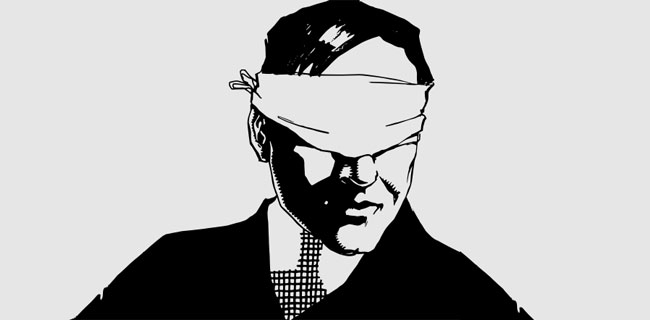
    Deliberate blindfolding?

    Genuine belief that Fascism is what we need.

    All of the above?

    Shekhar Gupta’s amazing take on Mohammed Zubair’s arrest for exposing BJP hatespeak, for exposing fake news, for instance? What does one make of that? Gupta has a long and illustrious career in journalism. He has been defence correspondent for India Today magazine when it genuinely did set the “gold standard” of journalism. He has been editor of The Indian Express. He is now editor-owner of The Print, a digital news platform which hires several excellent journalists and does some good work.

    But Gupta is unable to accept what is happening around us.

    He goes back to some earlier time to find justification – as they all do.

    He comes up with fantastic arguments to justify Zubair’s detention: if Zubair had not exposed fake news then no one would have known about the lies and abuse and then the world would not have chastised India and then India would not have hit back at Zubair.

    Or maybe, this is not so fantastic after all.

    Maybe this is what Gupta and his ilk really believe.

    That the basic job of the journalist is to accept what is put before him or her, ask no questions and quietly go about the basic job of regurgitating government press releases.

    And whistleblowers must pay the price.

    As an aside: Gupta’s argument also suggests that no one watches the TV channel Times Now, where Sharma made her comments! Because no one would have got upset if Zubair and Alt News had not put the clips of Sharma’s abuse of the Prophet Mohammed on Twitter.

    Now here’s one to upset the righteous!

    Gupta’s argument also gets worse. He goes into some convoluted Hindu-Muslim thinking. If Zubair is upset with Sharma for her abuse of the Prophet then he should not be upset when Hindu priests call for genocide of Muslims. Or something strange like that.

    The upshot is that the Hindu in Gupta is upset by Zubair, the Muslim.

    Please don’t say that I’m being unfair.

    In all the wiggles and twists and turns, that’s what emerges.

    Which is just about what the current dispensation, the Hindutva brigade and the Hindu supremacists also believe. They are generally upset by Muslims, Christians, Dalits, women, liberals, thinkers, writers, artists, activists, NGOs and whoever else they come up with. Did not Gupta himself write something derogatory about “wine and cheese liberals”, to justify Prime Minister Narendra Modi’s comments about the “Khan Market gang”?

    I was going to add “journalists” to that list. But the universe of journalists who oppose the government and stand up for each other is shrinking by the second.

    One could also live in a balloon like respected columnist Tavleen Singh does. Singh also has a long and illustrious career in journalism. She did some amazing investigative work and was an inspiration to women journalists.

    Yet she is today, in her Indian Express columns, unable to accept or consider or admit, yes that’s the word I was looking for, admit, that the BJP-RSS led by Prime Minister Modi has unleashed militant Hindutva and all its horrors on India over the last eight years.

    She starts to say it, and then pulls back. She says it, and then blames some earlier Congress government. She goes off on a tangential rant about Sonia Gandhi.

    I have named these two as examples because I admired them once, and also because of their reach and fame.

    There are many others.

    Who disappoint when they dissemble.

    All of them have failed in the basic tenet:

    Ask questions to those in power.

    Now that’s a joke!


    Ranjona Banerji is a senior journalist and commentator. She writes on MxMIndia on Tuesdays and Fridays. Her views here are personal


  • Ramnath Goenka Awards presented, heated debate on journalists’ intellect ensues

    By Akash Raha


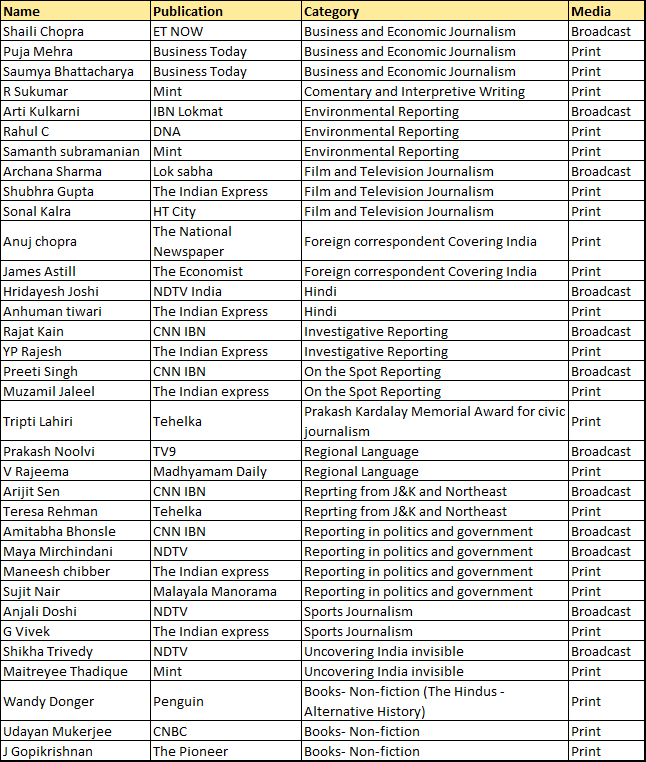
    The Ramnath Goenka Memorial Foundation hosted The Ramnath Goenka Excellence in Journalism Awards, one of the most prestigious awards that acknowledge excellence in all forms of journalism, print and broadcast, in all languages on January 16 in New Delhi.


    The awardees for the year 2012 are as follows.


    Like every year, the award ceremony was followed by a panel discussion. This year, the subject based on the Press Council of India chairman Justice Markandey Katju’s observation: “The majority of media people are of poor intellectual level.”


    Justice Markandey Katju was present during the award ceremony and the discussion that followed. There were several politicians, journalists and academicians present, amongst the audience and the panel, who spoke on the topic and ensured that the discussion and debate was at a fever pitch with their war of words.


    Speaking on the issue, panelist Mr Digvijay Singh of Congress party said that there are black sheep in all works of life and the same holds true for the media as well, but to generalize and say that all of them have low intellectual level would be wrong. However, fellow politician and panel member Mr Sharad Yadav of JDU said that times have changed and with that the standards of journalism have fallen too, illustrating his argument by pointing towards the TV channels, who “invest too much in irrelevant news”. He also pointed at the issue of paid news which has tarnished the image of journalists and media houses alike. He said that the proliferation of media has caused the standards of news to fall.


    Furthermore, he said: “the media industry has to be accountable… If the Prime Minister of India is accountable for his deeds, so shall be the media.”


    Some panel members also raised the question whether it was important for journalists to be intellectually strong. According to some, journalism is of two kinds, hard news and opinion – and in the former, one does not need intellect, only moral integrity. LK Advani, who was the part of the audience said: “I don’t think that journalism has failed the democracy. However, there have been a few shortcomings off late. Yet, I will not say that they have low intellectual levels.”


    Digvijay Singh stated that intellect is required in the whole profession of journalism, be it opinion or reporting. However, he added that with the kind of expansion media has seen lately, it is possible that the training of young and budding journalists remains incomplete. He also advocated for accountability and self regulation in media.


    Union HRD minister Kapil Sibal agreed with Sibal: “Putting out information as soon as possible has become the need of the hour for those in visual media. At such times, news which needs to be evaluated is often not evaluated and is broadcasted without any checks. It is not the fault of the journalist, but that of the medium itself.”


    Pratap Bhanu Mehta, an academician, and a member of the panel said that when a state dictates terms as to what is to be broadcasted or not, it creates insecurity. He made his point when he censured Katju’s stand on Dev Anand’s demise, when he said that the news should not have been on the front page of all newspapers.


    Senior journalist and columnist Tavleen Singh engaged in a war of words with Katju when she questioned the credentials of judiciary. Katju evaded the question by asking her to “please confine yourself to the topic at hand… there will be other days for discussion on the judiciary,” but she persisted with her attacks on Katju and his authoritarian comments on media. She went on to say that PCI has to be more active in the future to regulate media, as judiciary is too incompetent to do so.


    Senior journalist Nalini Singh thought it important that journalists and media houses, especially the visual media, should introspect as to what kind of news stories they are doing. She said that usually only 5-6 big stories are followed on and so many news stories are ignored every day. Udayan Mukherjee of CNBC agreed: “A lot of our media are not up to the mark… and I don’t feel resentful of the idea that there is something wrong with the media.”


    When Shekhar Gupta of The Indian Express group was asked how he feels about visual media and the pace at which news is disseminated today he said: “Everybody with a camera is not a journalist, he is only a transmitter of raw unchecked data.” Editorial intimidation is very important and one has to ensure that the news published is factual, in public interest and of public interest.”


    The panel discussion was brought to an end by Mr Katju where he congratulated all the awardees.