Tag: Tarun Rai

  • MxM Mondays: Is magazine readership sliding?


    By Ananya Saha


    As magazine publishers are set to meet for the Indian Magazine Congress in Mumbai on February 14 and 15, the indifferent numbers posted by the latest findings of the Indian Readership Survey continue to mar what appears to be business as usual. According to the IRS 2012 Q3 figures, magazine readership is on the decline barring a few magazines that have gained AIR.


    Even as the Indian print industry continues to see new launches, the readership of magazines is sliding (including regional language, Hindi and English magazines), as recorded by the IRS. MxMIndia spoke to a cross-section of industry veterans about the Indian magazine industry, and the shape of things to come. In alphabetical order of their last names:

     

    Suresh Balakrishna, CEO, BPN

    Newspapers and television have taken over the space which was once occupied by magazines. Therefore, general news/interest magazines readership is on a decline. However, niche magazines which cater to a small but specific audience are doing well and will continue to do well. Even as we speak niche magazines on jewellery, garments, travel etc are being launched. And advertisers are interested in putting their money on them as they are leisure magazines and will get their message across to their target audience. Hence, the future of niche magazines is bright although other magazines will have to take a hit



    Mitrajit Bhattacharya, Publisher & President, Chitralekha Group

    A survey like IRS hardly does justice to a highly complex category like magazines. Magazines are heterogeneous in nature with skewed distribution, which is missed by a huge survey like IRS; or in simple words, IRS is not even designed to capture readership of magazines (particularly special interest or niche ones). There are concerns about certain genres of magazines facing difficulties in retaining loyalty among its audiences, but there is surely traction in the specialized space. How else can you justify launch of so many new titles every year? IRS is not a good measurement tool. It is a one-size-fits-all omnibus survey with no focus on skewed distribution of magazines.


    The industry is reorienting, specialised genres are doing great even if some traditional genres are threatened. Also the digital formats are doing well for all big magazine brands. I see further traction in this. Digital will complement the print formats in a great way and magazines will lead the space for their superior content and presentation.


    Varghese Chandy, Chief General Manager, Marketing Advertising Sales, Malayala Manorama

    The quarterly result or six-month readership data will not establish if readership is declining or not. The readership is dropping compared to a few years ago. What we need to understand is that the way a magazine is consumed or read is getting different. It is changing because online versions are available. The time will come that when you talk of magazine readership, you will actually have to add the online and offline (print) readership of the magazine, including tablets and mobile. That is what one should look at in the long run, whether you are able to retain readership through all possible formats. Unfortunately, we are not in position to capture this readership currently.


    The way readership is captured in India for the magazine is very newspaper-oriented. For the newspaper, the readership is concentrated is the catchment area that is near printing or publication centres. Magazines, on the other hand, are dispersed widely, and in most cases, nationally. Even the language magazines are dispersed beyond one geographical state where the language is read. Thus, the sample pickup for magazine and newspaper cannot be the same because of the wide dispersion. The present readership survey, and this is something all of us have been saying for some time, is not actually geared to capture the readership of the magazines; particularly the niche magazines and magazines that have specialized readership.


    That is why you see readership drop even in cases of English and general interest magazines. Some readership figures and drops should be seen as rationalization of numbers. There used to be a time when the readership of one copy was seen as 10 or 15, which is out of the question. Some of this rationalization is definitely happening.


    We need a much larger sample base for a magazine-focused readership survey.

     

    Ashish Pherwani, Partner, Advisory Services, M&E, Ernst & Young

    To measure the readership of magazines, a standard measure is used by IRS. It does not capture the online readership of magazines. Also, one needs to understand that readership is one of the ways that a magazine reaches the readers. The magazine is a brand that you (readers) believe in. The brand can reach their targeted audience via television, internet, tablet, event etc. Take the example of Femina: the brand is larger than a magazine and the database of customers that Femina is connected with is much bigger than its magazine readership. It is connected to readers via Facebook, social media, its website, events, and what not.


    IRS is the only currency, so it needs to be used. It does not measure the brand value. IRS is just one part of the brand and publishers need to take cognizance of that.

     

    Tarun Rai, CEO, World Wide Media and President, AIM

    Declining readership of magazines is a myth. Magazines like all media are going through dynamic changes. Yes, there are some genres of magazines which may be witnessing some decline but most others should actually be showing an increase. Our circulation numbers are going up. So many new magazines are being launched. That wouldn’t be the case if readership was going down.


    There are issues with the retail infrastructure of magazines. Getting our magazines to our readers is not easy and is expensive. However, our concern is more fair measurement. In its current form the IRS does not capture the reality of magazine readership. We have been in discussions with them and hope we will be able to get to a satisfactory solution soon.


    Rather than a decline, we see an increase in magazine readership, going forward. There are two reasons for this. On the one hand, with increasing disposable incomes and more choices, people are looking for quality content and expert advice which only magazines offer. On the other hand, digital devices are enabling magazines to take their content to a much larger number of people. And digital technology also allows magazine editors to enhance the reading experience. I believe that lifestyle and special interest magazines are the sunrise sector of Indian media.
     

  • Could Indian mags go the Newsweek way?


    By Ananya Saha


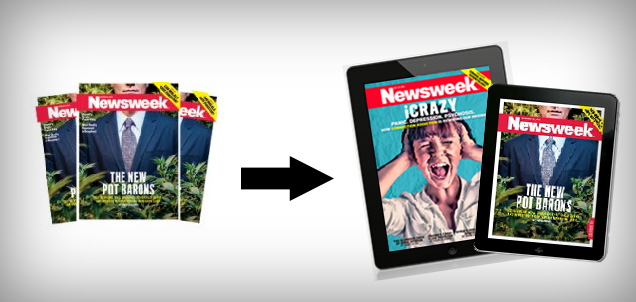
    Newsweek, founded nearly eight decades ago, is moving to a digital-only product from 2013. According to editor-in-chief Tina Brown, it cost $42 million a year to manufacture, print, distribute, and manage the circulation of Newsweek.


    Newsweek is in the best position to go completely digital due to their strong online presence through Daily Beast. But the news has sounded an alarm bell for print magazines all around the world. As news becomes a 24/7 affair and people prefer online access, the readership of news magazines is on decline the world over. It is no wonder then that magazines are reaffirming their presence in the online space too. With Kindle usage on the rise, e-magazines are creating waves.


    Tarun Rai

    Even as Indian print industry continues to see new launches, the readership is on the decline (though a minor slide), as recorded by recent IRS figures. “I am not very surprised at the decision. I believe the issue for Newsweek is the nature of the magazine it is. As a result, the relevance of a weekly ‘news digest’ has diminished. It is not a question of print or digital – it is a question of the nature of some magazines that may not be as relevant today. The same cannot be said for lifestyle and special interest magazines,” opined Tarun Rai, President of the Association of Indian Magazines and CEO, Worldwide Media.


    Suggesting that print media still has a bright future, Paresh Nath, Editor and Publisher, Delhi Press said, “It is more of a failure of a publisher than the sunset of an industry. Printed books and material will continue to be relevant as they were in the last several hundred years.” Agreeing that the digital market for Newsweek may have matured earlier than the publishers expected, Pradeep Gupta, chairman and managing director of CyberMedia, said, “In the market they are operating in, digital is growing very rapidly and therefore Newsweek has moved in that direction.”


    The predicament of the dawn of the digital era has been repeated often in the Indian context.


    “I am happy to say that magazines are already re-inventing themselves for the digital world. Abroad as well as in India. All our magazines are available in their digital versions. We are also aggressively developing various magazines’ apps and will be launching them soon. We see an opportunity in reaching a new younger audience through our digital initiatives,” said Mr Rai.


    Even while most magazines have moved towards digital and print versions simultaneously, the print version remains important for reaching the wider audience of readers and advertisers. Time magazine also has responded with their online version adaptable to any platform and any size, particularly for mobile reading. Varghese Chandy, Chief General Manager, Marketing Advertising Sales at Malayala Manorama said, “Reinventing needs to be done not only for news magazines, but every single product for its survival.”


    According to Anilkumar Sathiraju, AVP & Head, DDB MudraMax – Media, South, revenue will still come from print version since revenues from digital in India are still at a nascent stage, even though digital penetration is increasing rapidly. Going forward, he predicted that revenues will still be higher from offline magazines.


    Magazine have the most engaging format with the deepest touch points according to various international surveys. The growing numbers of tablets reassert the fact that this is the platform that gives the closest magazine-reading experience. Mr Chandy said, “However, monetizing the digital platform will be a greater challenge even for Newsweek.”


    While the industry believes that magazines should be ready for the digital era, Mr Nath holds an interesting view: “Magazines do not need to reinvent themselves due to the digital onslaught. Digital delivery of content is like delivering content in Times Square by shouting when hundreds of voices are simultaneously trying to convey the same or similar things. When crowds assembled in Tahrir Square, Cairo, it was thought that the digital media is a powerful weapon, as sentiments were whipped up not by newspapers but by digital media. What is the end result? Muslim Brotherhood that conveys thoughts through printed material ultimately got into power. Very little original content is created on digital media. It only copies and pastes and does so millions of times over. Magazines or print versions of newspapers do not know how to overcome the shouting match where noise and not seriousness is the basic currency. When the time of reckoning comes, people will have to go to the print version, and magazines and newspapers will remain relevant. Magazines have to find out how to outgrow the noise.”


    Delivery is still an issue – from readers visiting libraries in the past for content consumption, to wanting the content delivered to them. “Print brands have given up the will to fight and are trying to join the digital crowd that has weapons stolen from print itself. Yes, the world of delivery has changed, not consumption of content,” said Mr Nath.


    But with readers wanting immediate access to content, 24×7, digital is only going to grow. It is time that that magazines move faster towards the digital era, according to Mr. Sathiraju.


    The way forward

    “In India, spend on magazines continues to grow because of an increase in literacy, increase in disposal income and lower internet penetration. Therefore, Indian publishers are embracing digital formats. Print advertising is currently 10 times the digital advertising in India. Over the next five years, the penetration of digital will increase. And that is why CyberMedia has reoriented its strategy around creating of a media mesh,” predicted Mr Gupta.


    Mr Nath said that the question of digital versus print comes from the English-educated class in India. He said, “Long ago in India, content used to be created and consumed under the banyan tree. Now it is in front of a screen but the quality of this content is poor, one-way, where hundreds speak and no one listens. In India among the English educated there is a problem as this class cannot enjoy English content (is there any English Indian serials or English Indian movies or English Indian music?) whether in print or on digital media. This class keeps shouting that print is dying as it does not know how to ‘read’ in any language.”


    The view might hold true but the increased consumption of magazines on digital platforms cannot be ignored.


    “It’s anybody’s guess as to when the digital versions of magazines will become bigger than the printed ones. I firmly believe that the lifestyle and special-interest magazines space will continue to grow in both. It is the sunrise sector of Indian media. And both the print as well as the digital versions will grow, allowing our content to reach an even wider audience,” said Mr Rai.


    As Mr Chandy concluded, “The Indian print industry needs to be ready for the future. Currently online penetration is single-digit. This is likely to change in the near future, especially in the metros.” Thus, publishers need to be platform-agnostic and essentially become content managers. Their primary task will be to reach the audience through whichever platform is relevant.


  • WWM launches week-long initiative to celebrate art

    By A Correspondent


    Mumbai will witness a week-long celebration of art through GoodHomes for Art, an initiative by Good Homes magazine to foster love for art and to make it accessible for all. The event is being held from October 29 to November 4.


    The art week was declared open at a press conference that included members of the art industry such as Arzan Khambatta, Brinda Miller and Jaideep Mehrotra along with the pioneer of the concept of GoodHomes for Art, Tarun Rai, CEOof Worldwide Media. The preview of the art week showcased works of 25 celebrated artists. The launch event included a cocktail soiree attended by celebrities including Pria Kataria Puri, Kahini Arte-Merchant, Nisha Jamwal and Sangeetha Chopra.


    Tarun Rai

    About the art week, Tarun Rai, CEO, WWM said, “Good Homes magazine has been covering the Indian art scene since its launch issue. We believe that art is integral to a beautiful home. And, as such, we want our readers to be educated on art. GoodHomes for Art is another step in the same direction. The objective is to make Indian art and artists a bit more accessible to people. We also want to celebrate the vibrant Indian art scene. We are lucky that over 40 artists and many galleries and art institutes are partnering us in this initiative. We are starting with Mumbai but hope to take this movement to other cities in the coming months.”


  • Jaldi 5 with Tarun Rai: Beaten a new path with Good Food

    Good Food, the popular BBC magazine published in India by The Times of India group’s Worldwide Media, completed a year of publishing last week. And a very successful one at that, having achieved the mindshare of the discerning Indian when it comes to food-related content. MxMIndia interviewed Tarun Rai, CEO, Worldwide Media, a day after it celebrated the Good Food Day at Mumbai’s ITC Grand Central hotel.


    01. When you spoke to us on the eve of the launch of ‘Good Food’ last year, you had said: “We are going into uncharted territory and we are beating a new path. There are dangers but as I said, somebody has to do it and we believe that the potential is huge”.  Now, a year later, as you celebrated your second ‘Good Food Day’, how do you look back?

    It is good to be the first. While there are no precedents at least there is no baggage. The territory was unchartered but we believed the potential to be huge. We believed the timing was right too. The food sector in India was buzzing. People were experimenting with different cuisines both in their homes and while eating out. And we had a powerful magazine brand in BBC Good Food. And the last twelve months has borne that out. The response to the magazine has been fantastic from readers, the industry as well as advertisers. It, therefore, gave us immense pleasure to celebrate Good Food Day on October 21.


    02. Was it tough walking a new path in a slowdown year?

    We went about our plans and investment behind the launch. We were not going to pull back because of any perceived slowdown. We even invested in our 2000 square feet kitchen and studio to test all the 100-odd recipes in the magazine, three times. Triple testing of recipes is the promise that we make and we needed our own kitchen to test the recipes and to create new, original ones. At the end of twelve months we are ahead of our revenue targets.


    03. Does it help having a surfeit of television food shows and food channels? Would you say they have fuelled the demand (and need) for an international-level food magazine like yours?

    The shows on TV are another indicator of the new interest in food. Yes, they do help in creating the excitement around food.


    04. Will you be looking at extending the ‘Good Food’ franchise to other areas like television shows and even food stores as well? (There’s a ‘Good Food’ food channel in the UK.)

    The Good Food brand has a lot of potential beyond magazines. We are looking at various possibilities of extending the brand. We hope to launch a big property sometime early next year.


    05. Now that a year is past us, what are the things that we can look forward to in the next year?

    We are going to keep investing behind the brand in our second year. We will continue to work with the industry and our clients to promote our common agenda to encourage people to try out new cuisines. The Good Food kitchen will become the hub of a lot of activity be it Master Classes with chefs or other food events. The Good Food application and site, which is hugely popular in UK, will also be launched in the year. We have beaten a new path and it has turned out to be a very exciting one.


  • BBC Good Food India launches kitchen-studio

    By A Correspondent


    A good kitchen is integral to culinary creativity and quality assurance, and that is the motivation behind the launch of the brand new BBC Good Food India kitchen. Like the magazine, the Good Food test kitchen is the first of its kind in India and firmly establishes the brand as the pioneering authority in food in India.

     

    BBC Good Food India has at its core the triple testing of every one of the 80 plus recipes featured in the magazine each month. This makes the kitchen crucially important to the magazine. It has been designed to fulfil the brand’s central philosophy of fool-proofing every recipe so our readers get it right the very first time they try it in their kitchen. The kitchen will also serve as a laboratory for the creation and development of new recipes by the Good Food cookery team, thereby underlining our commitment to culinary innovation and growth.


    Located centrally in Mumbai’s Prabhadevi, the 1,800 sq ft property houses a fully equipped kitchen as well as a photography studio. The mod cons in the fully fitted state-of-the-art kitchen include stovetops, wok burners, griddles and ovens and fryers, besides essentials such as a refrigerator, a cooler and a dishwasher. The kitchen is designed in a modular style, with an ergonomic central kitchen island.


    Commenting on the launch, Tarun Rai, CEO Worldwide Media, said, “BBC Good Food is India’s first and only international food magazine. And we are very happy that, in another first for the magazine industry, we now have our own kitchen and studio to test each recipe and create new, original ones. The food scene in India is changing rapidly and people are experimenting with cuisines both in their kitchens as well when eating out.”


  • A Golden year for Femina Tamil

    By Archita Wagle


    The 1st anniversary special issue of Femina Tamil was unveiled by actress Amy Jackson, cover girl for the issue, and Tarun Rai, CEO, WWM, at a party held at Taj Coromandel, Chennai. Leading city jeweller GRT Jewellers partnered with Femina Tamil for this event, providing select pieces of jewellery from their newest collection for the anniversary issue.


    Femina Tamil was launched in April 2011, taking off from the parent brand with content customised to suit the modern, progressive Tamil reader.


    The anniversary issue is a special 200-page issue with the focus on Tamil Nadu. It includes a tete-a-tete with 10 most gorgeous women of South India, the fun side of Chennai explored in 24 hours, and scoops on the biggest scandals to hit Tamil Nadu in recent years.


    Additionally, there is a gold pendant that is the special cover mount for the issue. There is also a contest where readers can win jewellery vouchers, sarees, holidays and other gifts.


    The marketing campaign for the anniversary issue spans radio, print, Facebook and on-ground visibility through display, POS and inserts.


    Tarun Rai, CEO, Worldwide Media said, “We are very happy at the response that Femina Tamil has got, both from readers as well as advertisers. It has only been twelve months and Femina Tamil has already established itself as the magazine-of-choice of the discerning and progressive Tamil woman.”


    Commenting on the 1st Anniversary Issue, Tanya Chaitanya, Editor of Femina & Femina Tamil said, “It has been a year of remarkable grit, inspiring stories and women power. It has been a year of Femina Tamil. A huge thank-you to all our readers who have helped us gain an insight into their lives and who have given us a thumbs up. Here’s to a great first anniversary and many more to come.”


    ‘The perfect magazine for the modern, progressive woman’

    On the occasion of the first anniversary, MxMIndia talked to Tarun Rai, CEO, Worldwide Media, about Femina Tamil, the magazine industry, and whether there will be more Feminas in South India.


    Q: With 2011 witnessing a decline in the readership figures of dailies, monthlies and fortnightlies, how comfortable were you launching a new magazine in such a scenario?
    We launched Femina Tamil last April. For us, this was an entry into a new market where we tapped a whole new set of readers. The Tamil market is a large one, with multiple magazines being present in the Top 10 list of most popular magazines in the country.

    We have targeted the 20-29year old SEC A Tamil-speaking woman who is modern, progressive and forward thinking. Based on previous IRS figures, there was no Tamil magazine that was popular with this segment and it provided us with a perfect opportunity to enter the market.

    The increase in sales figures month-on-month has been promising and we are very happy to have been accepted by the readers.


    Q: What was the different approach you took… positioning and branding?

    Femina Tamil was positioned in line with the popular English magazines that are available in the market. The monthly magazine is a 140+ page glossy with production values and quality same as that of the parent brand Femina (English). The content is a mix of stories written specifically for the Tamil reader and popular features from the parent magazine.

    The magazine was targeted towards the progressive, modern, Tamil-speaking woman in the age group of 20-29 years from SEC A.

    All communication and branding was customised to speak to this woman – showcasing different aspects of her life and how Femina is the perfect magazine to suit her needs as she tackles different roles in her life. The campaign embodied the tagline of the magazine “for all the women you are”.


    Q:What was the revenue model you adopted? How has it helped?

    As in the case of all print media, this magazine also relies heavily on ad sales. The advertisers are a mix of local and national clients who have used this vehicle to reach out to their TG in this market. Additionally, we have relied on magazine sales through new channels like format bookstores like Landmark and Crossword. We have also worked aggressively to get subscriptions for the magazine. Tamil magazine market is primarily a sales driven market. We have rolled out several attractive schemes to bring in subscriptions both from ground activations as well as online channels through our subscription website www.timesmags.com and promotions on Facebook.

    Femina Tamil is also available on Magzter, the popular online magazine portal where it is receiving a good response from the readers in terms of downloads and online subscriptions.


    Q:There have been a lot of specials in the magazine. Was it a deliberate move? Has it helped?

    Femina Tamil has had a special theme in all its issues – this has ranged from Akshay Tritiya special in May to Ddiwali, Pongal and Valentine’s Day specials. We have also had ‘shopping’ and ‘bridal’ special issues. The aim has been to give readers something interesting to look forward to in every issue.

    Being a new entrant in the market competing against multiple old and established magazines, we have used our fresh and novel edit content to attract readers.

    The special articles, along with other edit initiatives have helped us gain a dedicated reader base in the market in a very short space.


    Some key changes we have introduced:

    The cover girl is always a woman who is a celebrity in Tamil Nadu. In the past, we have featured Trisha, Asin, Shriya Saran, Shruti Hassan and Kajal Aggarwal and Deepika Pallikal on our covers.

    The cover story is always an original story, covering topics that are relevant to t he reader.

    We have introduced a special column called ‘I want’, where our readers meet experts and learn a new skill like make up or baking – anything that they want!


    Q: Do you have the readership figures for Femina Tamil for the past year?

    We have not participated in IRS in the launch year. However, we have seen a steady growth in our numbers both from Trade sales as well as Subscriptions from the launch issue onwards. This is a positive indicator that the magazine has been well accepted by the readers. We plan to become even more visible and active in the market in the coming months to capitalise on the buzz created by our recent marketing activities and consolidate our position in the hearts and minds of readers.


    Our print run is 85,000 copies across South – 80 percent circulation is in TN, rest in main cities (Bangalore, Hyderabad and Cochin). While we have no IRS/NRS figs, however even if we take two readers per issue, we have 1,70,000 readers.


    Q: What plans for the future? Are you planning to launch in other South Indian markets too?

    South India is a vast market and is extremely exciting in terms of the scope it provides us to reach out to new readers. Yes, we are looking to launch in other South markets too.


  • Femina, L’Oreal announce Women Awards 2012

    By A Correspondent


    Women’s lifestyle monthly Femina in conjunction with beauty products brand L’Oréal Paris has announced the launch of women’s awards property ‐ the L’Oréal Paris Femina Women Awards 2012, in association with Rasvihar, to be held in Mumbai on March 22, 2012.


    The first ever L’Oréal Paris Femina Woman Awards will celebrate and honour the most accomplished women in the fields of art, music, education, business, social activism and cinema for their talents, grace and ability to inspire. The jury includes names from photography, film and the corporate world such as Gayatri Ruia, Jatin Kampani, Nandita Mahtani, Nathalie Gerschtein, Priya Dutt, Sulajja Firodia Motwani, Tanya Chaitanya and Zeenat Aman will choose the winners across various categories.


    Readers are also invited to vote for The Man We Love, The Woman We Love, and The Favourite Face of a Cause by visiting www.facebook.com/feminawoman. They can also participate in the L’Oréal Paris ‘Who’s worth it to you?’ contest by logging on to www.lorealparis.co.in. Commenting on the announcement, Tarun Rai, CEO, WWM said, “Indian women are making their mark in diverse fields including in the traditional male bastions. The L’Oréal Paris Femina Women Awards are both a celebration and a recognition of the achievements of Indian women in arts and entertainment as also science and business. Femina believes that the modern Indian woman can be all that she wants to be and these awards are a tribute to this belief. And we are very happy that L’Oréal Paris is our partner in this celebration.”

    Tanya Chaitanya, Editor, Femina said, “The first‐ever L’Oréal Paris Femina Women Awards set the spotlight on how much a woman can achieve if she believes in herself. Femina, having known the Indian woman for more than 50 years, hopes that the inspiring stories behind each of our winners will help our readers realise their own strength. To women power!”

    Nathalie Gerschtein, Director of L’Oréal Paris in India said, “Our legendary signature – “Because you’re worth it” – has empowered women over the past 40 years. These four timeless words are a reflection of women’s potential to express themselves. L’Oréal Paris is not just a leading beauty brand, but also a brand that embodies self‐confidence and empowerment. Today, being a L’Oréal Paris woman means being an individual with a charismatic personality, a determined outlook and a strong personality. We are happy to honor such women by partnering with Femina to host our first Women awards.”

    Readers can vote in the categories of Woman We Love; Man We Love; and Face of a Cause.


  • AIM slams penalty against Times Now

    By A Correspondent


    Tarun Rai, President, Association of Indian Magazines (AIM), has reacted strongly to the penalty against the Times Now channel in the defamation case brought against it by Justice P B Sawant.


    “The quantum of penalty levied on Times Now is unheard of. It is not only unreasonable but can set a precedent that would threaten the independent functioning of news media in the country. Media in India is very vibrant and has helped uphold the strong democratic traditions of our country. It should be allowed to function and grow. At AIM (Association of Indian Magazines) we are extremely concerned about this development and hope for a fair outcome that will encourage media in India to continue to operate independently and fearlessly,” said Mr Rai in a statement to the media.


    The Indian Broadcasting Foundation (IBF) and the News Broadcasters Association (NBA) earlier had also reacted strongly to the impact of the Supreme Court’s dismissal of the Special Leave Petition filed by Times Now. The channel had asked for relief against the Bombay High Court order directing Times Now to deposit Rs 20 crore and furnish a bank guarantee for Rs 80 crore to hear an appeal in a defamation case.


    The directive occurred following a district court in Pune asking the channel to pay Rs 100 crore as damages in favour of Justice (Retd) PB Sawant for alleged defamation. The defamation case was registered after the channel published a photograph of Justice Sawant in place of another judge with a similar name, in connection with the Ghaziabad Provident Fund scam.


    Times Now had appealed to the Bombay High Court.

  • Yummy launch event for BBC Good Food

    By Akash Raha


    BBC Good Food magazine from the Worldwide Media stable is all set to kick off its inauguration event on November 19 in Mumbai. The magazine was earlier launched on October 21, which was also the Good Food Day. MxM India got in touch with Mr Tarun Rai, CEO, Worldwide Media Group to know more about the launch event and how the magazine has being doing in the market thus far.


    Speaking about the response towards the magazine Mr Rai said, “The response has been quite overwhelming both from advertisers and readers. Our mailboxes are flooded with compliments from readers, many of who have actually tried out the recipes. Some others have gone and checked out restaurants that are recommended.”


    The launch event on Saturday is set to be a grand celebration of fine food with fine entertainment. The menu is a five-course meal specially put together for the occasion by chefs from India and abroad, and it is a sit-down dinner for a select group of people. It will be a room full of celebrated chefs, restaurant owners, food critics and writers, food retailers, senior corporate and the high-profile set of Mumbai including stars from Bollywood.


    Mr Rai went on to say, “We are the first international food magazine in the country and we expect to have the first mover advantage in the fast-evolving Indian food sector. I believe we spotted the opportunity well before the others and will reap the benefit. Besides just the business objectives we do expect BBC Good Food to contribute to the exciting new developments that are taking place with food in India. We want to help people experiment more in their kitchens and when they eat out. We want to showcase the young and dynamic Indian chefs who are making food so exciting. We want to introduce our readers to world cuisines… We believe India is ready for a specialist food magazine.”

  • BBC Good Food whets appetites

    By Akash Raha

    Worldwide Media is all set to launch BBC Good Food in India. The magazine will be on the stands on Good Food Day, October 21. The magazine will be priced at Rs 100 at newsstands and UCOs. In a conversation with MxM India, Debolin Sen, Publisher – Good Food, Worldwide Media said the expectations riding on the title were huge. “It’s an exciting brand to launch in India, especially now,” said Mr Sen. “Food is the most exciting story unfolding in the country. Experimentation with global cuisines, presence of international restaurant brands, access to exotic ingredients in the neighbourhood supermarket, 125 food shows on television, three dedicated food channels, gourmet store expansions pan India. There’s so much that’s happening. We are at a point in time in the market, when it made much sense to launch the brand. So yes, the expectations are huge.”


    In a recent conversation, Tarun Rai, CEO, Worldwide Media said, “We are launching BBC Good Food on Good Food Day, October 21, which we are celebrating and we are encouraging people to try something new on the day. We have huge expectations from Good Food. India is changing, food habits are changing. People are experimenting with food, both in their kitchens as well as when it comes to eating out in restaurants. We believe that the time is right for such a magazine. There are no precedents; there are no international food magazines in the country. We are going into uncharted territory and we are beating a new path. There are dangers but as I said, somebody has to do it and we believe that the potential is huge. And the response we’ve got from advertisers for the magazine is excellent and you’ll see it in the number of ad pages we’ve got in the first issue.”


    Speaking about the target audience of the magazine, Mr Sen said, “The magazine will appeal to a diverse mindset. From Everyday Chefs – people  who cook regularly for family, friends and even themselves, to Recreational Chefs – people who are interested in new recipes and experimentation, but don’t cook on a regular basis, to Restaurant Junkies – people who love eating out, and finally Globetrotting Foodies – people who love to experiment, sample local cuisines when they travel.


    “BBC Good Food is an extremely exciting magazine to launch. The brand allows you to explore new territories and create engaging properties unlike others. The launch will involve sufficient amount of marketing dollars being invested to create the required market impact. We intend having a phase-wise launch build up to Oct 21, the day the magazine hits stands, and thereafter post-launch,” said Mr Sen.


    Whereas marketing of the brand is concerned, it will be done through various campaigns and activations such as Good Food Survey, Good Food Day, Good Food Privilege Program, Good Food Nights, Good Food Website and Apps, Good Food Social etcetera.


    BBC Good Food also has an incredible legacy. It’s UK’s best-selling food magazine for the last 22 years. In fact it’s a successful food media brand with its content present across mediums: as a magazine, as a TV channel, a website which is a storehouse of over 7,500 recipes, and hugely successful iPad and iPhone apps which have crossed the 100,000 download mark.

  • All the World Magazine Congress videos

    David Hill, President & CEO, International Publishing Services, IDG, USA and the new FIPP Chairman


    On becoming the new FIPP Chairman [youtube width=”400″ height=”250″]http://www.youtube.com/watch?v=DLtfwVV8jYQ[/youtube]
    On the outgoing FIPP Chairman, Aroon Purie [youtube width=”400″ height=”250″]http://www.youtube.com/watch?v=eD7YFZdY89M[/youtube]
    On the future of magazines [youtube width=”400″ height=”250″]http://www.youtube.com/watch?v=W3iQuijzoY8[/youtube]
    On the future agenda of FIPP as he takes on as Chairman [youtube width=”400″ height=”250″]http://www.youtube.com/watch?v=jQiqMJPPW_Q[/youtube]


    Tarun Rai, CEO, Wordwide Media, India and new President, Association of Indian Magazines


    On his AIM Presidency and things on top of his agenda [youtube width=”400″ height=”250″]http://www.youtube.com/watch?v=mhPNt1g3SXU[/youtube]
    On the attempt to change the mindset of advertisers and media buyers [youtube width=”400″ height=”250″]http://www.youtube.com/watch?v=ZfANp6vxVQ0[/youtube]
    On launching Good Food [youtube width=”400″ height=”250″]http://www.youtube.com/watch?v=KKPL01uKuDA[/youtube]
    On the prospects of Indian mags becoming international brands [youtube width=”400″ height=”250″]http://www.youtube.com/watch?v=-gdT17SBAtk[/youtube]
    On take aways from WMC [youtube width=”400″ height=”250″]http://www.youtube.com/watch?v=VrNFqocrqNU[/youtube]
    On the potential for mags in India [youtube width=”400″ height=”250″]http://www.youtube.com/watch?v=TLEfoXF1fjk[/youtube]


    Chris Llewellyn, President & CEO, FIPP, UK


    On the upcoming FIPP events [youtube width=”400″ height=”250″]http://www.youtube.com/watch?v=aAWNhbrXZ5o[/youtube]
    On the magazine market, Indian market [youtube width=”400″ height=”250″]http://www.youtube.com/watch?v=5rgYpWMJhjU[/youtube]
    Magazine business model might change, but the medium isn’t going anywhere [youtube width=”400″ height=”250″]http://www.youtube.com/watch?v=rCMEvZtioqc[/youtube]
    On take aways from WMC [youtube width=”400″ height=”250″]http://www.youtube.com/watch?v=Gtgers8eSAw[/youtube]
    On the feedback from delegates on the congress and the Indian experience [youtube width=”400″ height=”250″]http://www.youtube.com/watch?v=PCEmmKmPrdI[/youtube]


    Pradeep Gupta, Chairman & MD, Cybermedia and the outgoing AIM President


    On his journey as AIM President [youtube width=”400″ height=”250″]http://www.youtube.com/watch?v=4xAaeDwh0Pk[/youtube]
    Suggestions on focus points for AIM in the future [youtube width=”400″ height=”250″]http://www.youtube.com/watch?v=CTiINmiMEhQ[/youtube]
    On the PRB recommendations [youtube width=”400″ height=”250″]http://www.youtube.com/watch?v=Q0PjQmZjBqg[/youtube]
    On take aways from WMC [youtube width=”400″ height=”250″]http://www.youtube.com/watch?v=1RxZq6ShZso[/youtube]
    On the need to look at a brand approach and multiple media [youtube width=”400″ height=”250″]http://www.youtube.com/watch?v=ucck–hZd5c[/youtube]


    Vikram Sakhuja, CEO, Group M, South Asia


    On the falling share of AdEx [youtube width=”400″ height=”250″]http://www.youtube.com/watch?v=GSS2j9PQMkU[/youtube]
    On the engagement study [youtube width=”400″ height=”250″]http://www.youtube.com/watch?v=RhdD-vPnStY[/youtube]
    On the future of magazines [youtube width=”400″ height=”250″]http://www.youtube.com/watch?v=eXx1uUtjPz8[/youtube]
    Philip Thomas, CEO, Cannes Lions, UK


    On what advertisers want from magazine media [youtube width=”400″ height=”250″]http://www.youtube.com/watch?v=1i_qUImjYB8[/youtube]
    On the future of magazines [youtube width=”400″ height=”250″]http://www.youtube.com/watch?v=OoX1M6kN9SE[/youtube]


    Tomas Ernberg, Managing Director, Volvo Auto India


    On what advertisers want from magazines [youtube width=”400″ height=”250″]http://www.youtube.com/watch?v=XyYQZEWhdGM[/youtube]


     Juan Senor, UK Director, Innovation Media Consulting
    On the theme of the congress- 360 degree [youtube width=”400″ height=”250″]http://www.youtube.com/watch?v=t_s-VFGfO5E[/youtube]
    On the future of print- no medium ever dies [youtube width=”400″ height=”250″]http://www.youtube.com/watch?v=oepk4aS1uZA[/youtube]
    On the Indian magazine market and future prospects for print [youtube width=”400″ height=”250″]http://www.youtube.com/watch?v=oSYNEZB57KA[/youtube]
    On the need to focus on the content [youtube width=”400″ height=”250″]http://www.youtube.com/watch?v=qdkYu4ZAOdY[/youtube] 


    Kalli Purie, Chief Operating Officer, India Today Group Digital
    On having WMC in India [youtube width=”400″ height=”250″]http://www.youtube.com/watch?v=TOsMAe4x5i0[/youtube]
    On the theme of the congress- 360 degree [youtube width=”400″ height=”250″]http://www.youtube.com/watch?v=BpPeL1grthY[/youtube]


    James Tye, CEO, Dennis Publishing, UK
    On choosing the right app for your publication [youtube width=”400″ height=”250″]http://www.youtube.com/watch?v=wYyVQBfbk0o[/youtube]


    Voxpop@ World Magazine Congress Day 1
    On expectations from WMC and experience in India [youtube width=”400″ height=”250″]http://www.youtube.com/watch?v=KuT6DwoMFMg[/youtube]


    SRK dancing to Chhamak Chhallo [youtube width=”400″ height=”250″]http://www.youtube.com/watch?v=mTxOmOwhVjw[/youtube]


    Pre-event: Mitrajit Bhattacharya, CEO, Chitralekha
    On the upcoming WMC [youtube width=”400″ height=”250″]http://www.youtube.com/watch?v=w4wq2LulVWc[/youtube]
    On the prospects of business transactions on the sidelines of the 38th FIPP World Magazine Congress [youtube width=”400″ height=”250″]http://www.youtube.com/watch?v=VMgjob9NwfU[/youtube]


    Pre-event: Ashish Bagga, CEO, India Today Group
    On hosting World Magazine Congress & AdAsia, two broad format events in the same month [youtube width=”400″ height=”250″]http://www.youtube.com/watch?v=T7zC5_yLkbs[/youtube]
  • Huge expectations from ‘Good Food’: Tarun Rai

    Tarun Rai has been the CEO since 2008 of the Worldwide Media group which, during his tenure, has seen several new launches and titles. The most recent in the long list of magazines is BBC Good Food which is to be launched on October 21. In a conversation with MxM India’s Akash Raha and Shruti Pushkarna, Mr Rai, who took over as AIM President from Mr Pradeep Gupta, Chairman and Managing Director, Cybermedia, talks about the Engagement Study, Good Food, Zinio platform and the future of magazines in India.


    [youtube width=”350″ height=”250″]http://www.youtube.com/watch?v=KKPL01uKuDA[/youtube]

    Q: You are launching BBC Good Food in India. What are your expectations from the magazine?

    I just got to hear that the magazine is ready; it’s bound, ready for dispatch. We are launching BBC Good Food on Good Food Day, October 21, which we are celebrating and we are encouraging people to try something new on the day. We have huge expectations from Good Food. India is changing, food habits are changing. People are experimenting with food both in their kitchen as well as when it comes to eating out in restaurants. We believe that the time is right for such a magazine. There are no precedents; there are no international food magazines in the country. We are going into uncharted territory and we are beating a new path. There are dangers but as I said, somebody has to do it and we believe that the potential is huge. And the response we’ve got from advertisers for the magazine is excellent and you’ll see it in the number of ad pages we’ve got in the first issue.


    Tarun Rai on Indian magazines becoming successful international brands
    [youtube width=”350″ height=”250″]http://www.youtube.com/watch?v=-gdT17SBAtk[/youtube]

    Q: Several international brands are licensed to India. When do you see an Indian title becoming a successful international brand?

    As you know Femina and Filmfare are heritage brands for us and they are doing fantastically well. Femina already is present in Sri Lanka. Filmfare we’ve licensed last year to UAE and we’re hoping that we will take it to many countries; there is already interest because Bollywood today is international. The Indian diaspora still wants to connect with Bollywood and I think very soon you’ll see Filmfare in many other countries. The other advantage is, thanks to what people say the ‘digital issue’ but I see it always as an opportunity, we are already on the Zinio platform with Filmfare for the past month; and the response has been fantastic. Almost 60 percent of our total sales of all the magazines that we’ve put on Zinio have been for Filmfare because this is the demand which is coming from the international markets and now suddenly it has become very easy to subscribe to Filmfare just at the click of a button. So I think there are going to be huge opportunities on some of the brands like Filmfare and Femina.

    Q: What do you feel at being appointed the President of the Association of Indian Magazines? What does this responsibility mean to you?

    It’s an honour… I have been a part of AIM for four years now, pretty much as soon as I joined the industry. For me it has been a fantastic experience. I come from advertising and I had no idea about the magazine business. Thanks to my membership of AIM, very quickly I was co-opted to the magazine industry. I have learnt a lot from my peers in AIM and I owe a lot to them. Mr Pradeep Gupta, the outgoing President, has had a terrific run in the last two years and as I take over from him I hope to continue the good job that AIM has done over the last two years. We are a small organization but I think we have learnt a lot to collaborate and make sure that we do things that are beneficial to the entire industry. Right now we are too small. We are just 3 percent of the total ad spends. We deserve more, but just by saying that we deserve more we are not going to get it. So we have to do things to convince the advertisers about the strength of our media. That is the reason we instituted the engagement survey and we are going to take it to its right conclusion by having a proper campaign around it and material which will convince the advertisers. That’s just one of the things. Generally speaking, the magazine industry can do with a higher profile.  So my attempt will be to raise the profile of the magazine industry by doing activities. One of the things it will do is to bring more talent to our business. The way our industry is growing we need a lot of people very fast. We need different kinds of people; with this digital opportunity that has come up we need different and varied kinds of young people to come to our business. By raising the profile of the industry we will also attract new talent to the business. That is going to be one of my important priorities.”


    Q: Do you think the Engagement Study that AIM has come out with will solve the measurement woes of the industry? Moreover, do you think that the advertisers will accept it as a robust currency?

    You never know until you try, and this is our attempt. Now it’s up to us to convince them. One piece of research is not going to do it. The good news is that the media buyers and the advertisers themselves are trying to understand media better. Ambika Srivastava spoke about the touch point study, the brand experience points, about how magazines score very highly when it comes to influence. So the conversation has already started. We want to push that conversation along where the judgment on one media is not only dependent on the numbers but also dependent on the quality of numbers, on the quality of engagement. And therefore the engagement survey is just the first step; it is not going to persuade people overnight but we don’t know whether we’ll be able to persuade people till we make our first step. So this is our first initiative to do that.

    Q: What are the take-aways from the India edition of the World Magazine Congress, moreover, on the 360-degree opportunity theme?

    It is called the 360-degree opportunity, not challenge, because I am of the firm opinion (and the board of FIPP was of the firm opinion) that we should look at it as an opportunity rather than as a threat. I just think it’s a fabulous place to trade ideas, to get to know what people in the developed market are doing, what people are doing in the South East Asian market which is still coming up. It’s new territory for us. Organization structures are being experimented with; we had this whole thing about how do you manage content along with so many platforms, do you have a core editorial team…? Business models are being experimented with. So to me it’s still a time of flux. Everyone agrees it’s an opportunity which we cannot ignore; do we have the right answers yet, maybe we don’t but this is a forum where you can learn, you can share, you can discuss and hopefully going forward we will arrive at some solutions which will work for different magazines.


    Q: What according to you is the future of magazines in India?

    I think the potential for magazines in India is huge. I always say that magazines, specially the lifestyle and special interest magazines, in India are a sunrise sector. So if it’s a sunrise sector, we are only 3 percent, the only way is up. We are too small to go any lower than that, the only way for us is up and I am very bullish about magazines in India.