Tag: Taarak Mehta Ka Ooltah Chashmah

  • Taarak Mehta Ka Ooltah Chashmah celebrates 15 years on Sony SAB

    By Our Staff


    Taarak Mehta Ka Ooltah Chashmah, a sitcom on Sony SAB, completes 15 years of telecast this year. The show has successfully bagged the title of one of the longest-running show on Indian television and features amongst the top 10 shows in the Hindi general entertainment category year on year.


    Asit Kumarr Modi
    Asit Kumarr Modi

    Produced by Asit Kumarr Modi, Taarak Mehta Ka Ooltah Chashmah is based on late Gujarati columnist/writer Taarak Mehta’s Duniya Ne Undha Chashma and has set a benchmark for family-friendly entertainment in the Indian television industry. On its 15th anniversary, the entire team of Taarak Mehta Ka Ooltah Chashmah expresses their heartfelt gratitude to the viewers for their unwavering support and promises to continue spreading laughter and positivity in the years to come.


    N.P. Singh
    N.P. Singh

    Said N.P. Singh, CEO, Sony Pictures Networks India: “Television is a canvas that allows us to paint stories that touch the hearts of millions. It’s our constant endeavour to create content that not only entertains but also leaves a lasting impact on our viewers. We believe in breaking barriers, defying conventions, and presenting unique concepts that resonate with diverse audiences. Together we strive to weave laughter, emotions, and relatability into every show, creating an unforgettable viewing experience. Our journey is fuelled by the love and support of our audience, and we remain committed to delivering joyful moments that unite families and spread smiles across the nation. On the occasion of Taarak Mehta Ka Ooltah Chashmah’s 15th anniversary, I congratulate the entire team and crew on this significant milestone.”


    Neeraj Vyas
    Neeraj Vyas

    Neeraj Vyas, Business Head, Sony SAB: “At Sony SAB, we are dedicated to presenting stories that deeply touch the hearts of our viewers, evoking strong emotions. Our aim is to create relatable characters, that our viewers can resonate with and develop a genuine emotional connection with. Celebrating a momentous milestone, the 15-year journey of Taarak Mehta Ka Ooltah Chashmah has captured the hearts of many. The channel’s focus remains on producing family-friendly content that appeals to audiences of all ages, showcasing our passion for quality storytelling. We want to be known for weaving stories like Taarak Mehta, which take viewers on an enjoyable ride while leaving a lasting impact.”


    Asit Kumarr Modi, Producer of Taarak Mehta Ka Ooltah Chashmah: “When we began this endeavour 15 years ago, we never imagined the immense love and appreciation that would come our way. It feels like it was just yesterday that we started this incredible journey. To witness the love and acceptance of our viewers over the years has been nothing short of a blessing. Taarak Mehta Ka Ooltah Chashmah has not just been a show but a way of life for me. The show’s success lies in its ability to bring people together through laughter and to showcase the importance of relationships and values in today’s fast-paced world.”


  • Anupama: The Rare Hindi GEC Success Story


    By Shailesh Kapoor


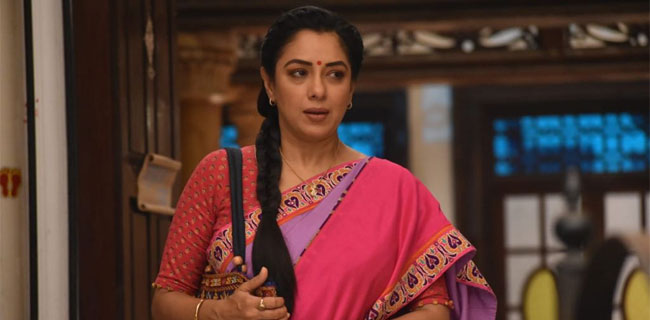
    Shailesh KapoorAmid all that’s wrong with the Hindi GEC category (and readers to this column will know that I have a long list), there is an occasional spark that brings some joy. After being the most-loved Hindi GEC character on Ormax Characters India Loves for 39 consecutive months (from July 2018), Jethalal from Sony Sab’s Taarak Mehta Ka Ooltah Chashmah passed on the top rank to Anupama, the titular character from Star Plus’ 2020 launch.


    Anupama, an adaptation of the Bangla show Sreemoyee on the same network, has been a runaway hit, achieving the unthinkable 4% rating mark in urban Hindi-speaking markets in recent months. In a category where a 2% rating is now considered an achievement (though Netflix’s Dhamaka tells you that you lose your job as a new anchor at 70% ratings, which is available live!), Anupama’s numbers have been exceptional. An average Anupama episode doesn’t rate much less than an IPL game, for example. And while IPL airs only 45 days a year, the show has managed to sustain this for several months, six days a week.


    With its multitude of well-etched characters, Anupama is one of the few well-written Hindi GEC shows currently on air. The storytelling is in broad strokes, but the characters and the conflicts are consistently engaging, and there’s enough entertainment on offer too in what is essentially a high-voltage drama of late.


    The casting and the performances are a notch above the operating level of the Hindi GEC category too. And the lead actress Rupali Ganguly has made the character very much her own, layering the portrayal with mannerisms that can possibly not be written on paper. It’s easy to guess that the show’s creative development process has managed to break away from the daily soap assembly line rut.


    If an OTT show would have even been half as good as Anupama, the press and the internet would have gone ballistic singing its praises. But GEC content earns no such respect in recent years. Not that the channels, including Star Plus, have anyone else to blame but themselves. They continue to diss their own category on air, an inexplicable thing to do. “Don’t act like a daily soap mother-in-law” and “There’s always a daily soap running in your house” are just two examples of dialogues (translated from Hindi) that you will hear in some of the top HGEC shows, including Anupama. When a category decides it can write a joke on itself, and the joke does not even come across as a joke but is taken in all seriousness by the audience, you know there’s a lot wrong at so many levels.


    Nevertheless, Anupama deserves even more love. It’s that rare sensible show that can potentially change some people’s perception about Hindi serials, only if it reached them. But the more important question is: Can there be more like it, or is Anupama a one-off? If there’s enough talent in the Hindi fiction television industry to pull off a show as interesting as Anupama, why are other shows so drab in comparison?


  • Taarak Mehta to air 6 days a week now

    By Our Staff


    The Sony Sab mega-show Taarak Mehta Ka Ooltah Chashmah (TMKOC) will now air six days a week, with all-new episodes, according to producers Neela Film Productions Private Limited, The change comes on the back of Sony SAB’s decision to extend programming to six days a week.


    Notes a communique: “Taarak Mehta Ka Ooltah Chashmah  is said to be the world’s longest running daily comedy show is in its fourteenth year of uninterrupted airing with upwards of 3200 episodes. Simultaneously, with its subscriber count having crossed 10 million, the show’s official YouTube channel too has been receiving much response from its fans. Taarak Mehta Ka Ooltah Chashmah is authored and created by Asit Kumarr Modi.”


  • June Diaries: Entertainment in Covid Times


    By Shailesh Kapoor


    Shailesh KapoorGoing by official numbers at least, the worst of the second Covid wave in India is now behind us. The wave has scarred many families forever, and with a vaccination programme that is struggling to gather momentum, a third wave is not ruled out by experts. But for now, life goes on, and different states are cautiously opening up in phases.


    The April-May period has impacted the Indian entertainment business considerably. Those dependent on advertising revenues suffered more, with even digital advertising showing a sharp drop, judging by industry estimates. But it’s the content side that has been impacted across the board.


    With Maharashtra announcing a stringent lockdown, Hindi GEC content production was impacted. Unlike last year, channels could travel to states that have less stringent lockdowns and record there, which they indeed did. At one point in early May, about six Hindi GEC shows had their stories set in a resort. This includes the two big hit shows in the category currently: Anupamaa and Taarak Mehta Ka Ooltah Chashmah. Many others played out of hotels and resorts, but passed them off as homes and kept the story running as normally as they could. Not an easy task, given that almost all shows had a part of their cast unavailable because of a Covid infection.


    In the entire months of April and May, there was only one show launch in the Hindi GEC category (Sasural Simar Ka 2 on Colors), an unprecedented low by a wide margin. Regional languages had about four to eight show launches per language over the two months, but that’s lower than their running average too. Under normal circumstances, the IPL cancellation would have been a great opportunity to launch new shows, especially those on the weekend. But then, there would have been no IPL cancellation to begin with, if there was no second wave.


    The theatrical business has bled the most over the last 14 months. Theatres will re-open in the coming weeks, though it remains to be seen how many single screens have permanently shut down. The first quarter of this calendar year had seen huge footfalls for the marquee films in Telugu and Tamil languages, and one hopes that sentiment is reflected in the Hindi markets too this summer.


    It may seem that all’s well with the streaming category, with more audience locked down at home. But if you notice carefully, the number of launches on the top platforms have reduced. This impact of the constricted content pipeline will continue to be felt over the next six months in both streaming and theatrical sectors.


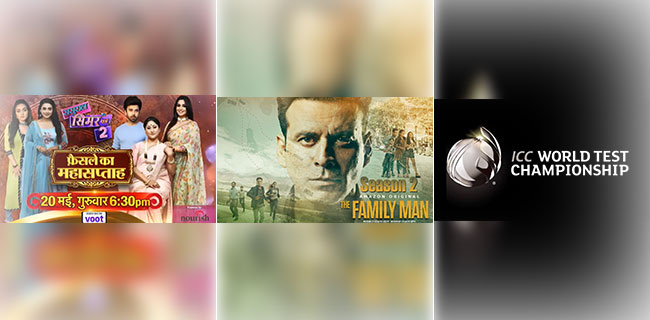
    June has got off to a good start, with a smasher of a show in The Family Man S2. One hopes that it’s a sign of things to come in the coming weeks. The other big event this June is the final of the World Test Championship, where India plays New Zealand from June 18. The event has not been hyped up by the media so far, but wait for another week and you will see it becoming the big distraction from the pandemic, especially if India wins the title.


    But keeping nationalism aside, World Test Championship is a great idea, and though the first edition has been curtailed because of the pandemic, it’s great to see it find a logical conclusion, and to see India featuring in the final. One would have liked to see the game being played at a full house at Lord’s, but in these difficult times, an empty stadium at Southampton will do just fine.


  • Post-Lockdown Blues for Hindi GECs

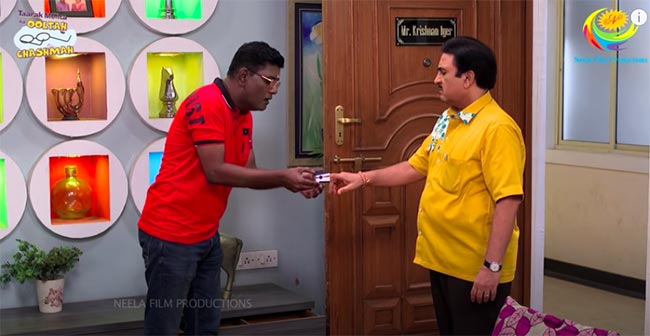
    Oximeter Check: Screengrab from a recent episode of Taarak Mehta…


    By Shailesh Kapoor


    It’s been a month since original episodes of Hindi GEC shows started airing again. The genre that survived primarily on mythology during the lockdown is now moving back to its old staple fare.


    The results of the first four weeks have not been very encouraging. Given that there are Covid-related restrictions still in place in large parts of India, and the overall TV viewing time is higher than pre-Covid, the Hindi GEC category (pay channels) has lost about 10% of its pre-Covid viewership levels despite the return of original episodes. Drop in the ratings of the top shows is particularly striking. Except Taarak Mehta Ka Ooltah Chashmah (TMKOC), which opened at pre-Covid levels upon its return, most other top shows have struggled, with some being less than 60% of their pre-Covid numbers. Long-running shows like Kundali Bhagya, Kumkum Bhagya and Yeh Rishta Kya Kehlata Hai have not got a section of their audience back, who were probably continuing only because of habit. Star Plus’ recent launch Anupamaa has emerged as the joint category leader in Urban HSM, along with TMKOC.


    The signs were ominous. During the lockdown, Ormax Media’s data suggested that only 42% of regular Hindi GEC audience are missing their favourite shows “a lot”. The category will soon face severe headwinds with IPL in the next quarter, and will have to look upto reality shows like KBC and Bigg Boss to uplift it from the precarious position it finds itself in.


    Having said that, the early success of Anupamaa is a positive development. It shows that the category discontent is not so high that a well-crafted new show that’s relevant and authentic will not find an audience. But we need more Anupamaas, and some of the upcoming launches look promising too. But the category urgently needs to shed its flab. Channels’ obsession with long-running family dramas that have long outlived their purpose is still a major villain in the 2020 Hindi GEC story.


    The other element of curiosity was to see how fiction shows integrate (or ignore) Covid in their plots. It’s been a mixed bag so far. While some shows have stayed completely clear of it, others have used token references, and a few have integrated Covid into the running plot, though not always in a way that’s sensible. To give an example (and there are a few), earlier this week, a plot point in Star Plus’ Yeh Hai Chaahatein involved the female antagonists plotting to get the protagonist out of the housing society by proving that she’s high-risk for a Covid infection. The society’s management committee comes to the protagonist’s house to insist she’s taken to a hospital or a quarantine centre. In this highly charged Covid discussion with half a dozen people, not one is wearing a face mask, making a potentially topical scene come across as fake, if not bizarre. It is this half-hearted attempt at depicting reality that creates emotional disconnect with many Hindi GEC shows.


    In sharp contrast, TMKOC has integrated Covid masterfully. For a show rooted in topicality and social reality, not recognising the Covid reality would have been a definite compromise. But it’s easier said than done. If they would have based the entire show in a Covid world, there would be limitations, related to society gatherings, functions, festivals, shop scenes, etc.


    What the makers have achieved is a fine balance, through a tried and tested device: Protagonist Jethalal’s dreams. In the three weeks on air so far, he has had two dreams (cumulative play-out of about five episodes) which tell a free-from-Covid story, while the rest of the episodes consciously recognise Covid and create genuine entertainment around it. This is how it should be done!


    With all its problems and a few silver linings, the Hindi GEC category is at a crucial phase. Something tells me the next six months may shape its future decisively.


  • The Most Successful TV Channels of the Decade


    This is the fourth in a series of six decade-ender lists in this column. The previous lists:

    The most-defining Hindi TV shows of the decade

    The most-defining Hindi films of the decade

    The most successful OTT brands of the decade


    By Shailesh Kapoor

     

    The decade of 2010-19 was easily the most uneventful decade in the history of Indian television so far. Each of the previous three decades was dotted with events that unmistakably shaped television in India. The 80s was the golden age of television content, as Doordarshan started to provide primetime programming and engaged with some of the best writing, directing and acting talent in the country for the same. The 90s saw the emergence of satellite television, which widened the options available to the audience multi-fold. The 2000s saw the daily soap movement, led by Star Plus, and then, the rise of the alternative force in Colors, which brought a unique, real and rustic touch to mass entertainment. Each of these decades had a big highlight at the start. The Asian Games in the 80s saw the arrival of the colour TV. The Gulf War telecast in the 90s, albeit niche, introduced us to the fascinating power of satellite television. And Kaun Banega Crorepati ushered in a new era in 2000.

    In contrast, the last decade (2010-19) can only be remembered for what happened ‘off-screen’. The ratings controversies, leading to the birth of BARC India, in the midst of digitisation, headlined the first half of the decade. And TRAI’s New Tariff Order was the big talking point as the decade ended.

    Low content innovation and a general sense of inertia became even more apparent as digital and social media grew on the side, becoming a dominant force by the time the decade ended. Yet, some TV channels stood out, challenging the status quo and making a mark for themselves. Here’s my list of the top 5 most successful TV channels in India over the last 10 years, based on how they navigated through this tricky decade, making a mark for themselves, and their parent networks.


    5. Sony SAB

    SAB’s flagship show Taarak Mehta Ka Ooltah Chashmah (TMKOC) launched in 2008, and kept going strong through this decade. For large chunks of time over the last 10 years, SAB struggled to have a second hit show. But there were strong periods in between, when the channel managed to add fire power to TMKOC to emerge as a strong contender in the Hindi GEC category. 2019 was one such year, and the channel has been on the heels of Star Plus, Colors and Sony for the top spot, and often taken it too. SAB’s success is even more remarkable if you consider than it operates at significantly lower programming costs compared to other top Hindi GECs. TMKOC itself has gone from strength to strength, and SAB’s packaging and family-inclusive positioning are arguably the brightest and the sharpest respectively, in the genre.


    4. Nick

    In a category that’s essentially commoditised, and one flagship show is all you need to dominate the ratings charts, Nick managed to rule the roost for a large share of the decade, and often by a wide margin too. While its competition found it difficult to extend their portfolio beyond one show (e.g. Chhota Bheem on Pogo and Doraemon on Disney), Nick kept the animation mill running, launching several properties through the decade, with varying levels of success. While its 2012 launch Motu Patlu remains its biggest success story till date, the channel managed to sustain a strong second line, and showed nimble-footedness in experimenting with content shifts between the two sister channels Nick and Sonic.


    3. Star Plus

    The decade started with Colors emerging as a disruptive force in the Hindi GEC category, throwing Star Plus and Zee TV off their comfort zone with a new programming outlook. After a year or two of trying to figure out what had hit them, Star Plus found its feet back. Its ‘Rishta Wohi Soch Nayi’ campaign in 2010-11 is easily the most effective brand campaign any mass Hindi TV channel in India has ever launched. Unlike the umpteen ‘brand refreshes’ that GECs indulge in, this one was actually backed by content, ushering in a new line of shows like Diya Aur Baati Hum and Pratigya, which put strong women protagonists on the forefront, in relatable, small-town settings. In the second half of the decade, the Hindi GEC category went through a tough phase, losing ratings to regional, news and movie genres. Star Plus innovated here too, launching the ‘Rishta Wohi Baat Nayi’ campaign, signaling its focus on differentiated content that breaks the monotony of sameness. On the side, experiments like Satyamev Jayate continued, even as the channel managed to steer through many highs and lows over 10 long years.


    2. Zee Tamil

    For the first half of this decade, the Tamil GEC category was a one-horse race. Sun TV led its closest competitor Star Vijay by an embarrassingly-wide margin. The ratio of their viewership was often higher than 10:1. Zee Tamil was in a wooden spoon battle for the second spot with Star Vijay, with no hopes of catching up with the big force at the top. But somewhere in mid-2006, the channel started finding an alternative content space. It took a couple of years, but Zee Tamil became a strong contender, overtaking Sun TV in some prime-time slots, and bringing down the 10:1 ratio to 2:1, even less at times. Importantly, it altered the viewing behaviour of the category, as it made the audience realise there are options beyond Sun TV to consider. Even Star Vijay has gained because of this behaviour change. While Sun TV still ranks no. 1, it has lost about 20-25% of its viewership through the decade, even as Zee Tamil has grown by a whopping 500%+.


    1. Star Sports

    There’s so much to say about Star Sports’ dominance of the sports scene over the last 10 years that it may need a separate article some time. One can talk about the thought leadership shown in backing Kabaddi (and later soccer), or the front-footed approach towards IPL rights, or the digital strategy for sports with Hotstar, or the championing of Hindi commentary in the early part of the decade to the launch of regional channels in the latter. The long list of Star Sports’ innovations in the sports category provides a silver lining to a dull television decade. Star Sports’ much-underplayed tagline says ‘Believe’. It’s probably more a reflection of how Star looks at the future of sports and sports programming in India, than what they want Star Sports viewers to feel about the channel!


    Shailesh Kapoor is founder and CEO, Ormax Media. He writes on MxMIndia every Friday. His views here are personal




  • Top 5 Category-Defining Hindi GEC Shows of 2018


    By Shailesh Kapoor


    Even if only in relative terms, 2018 has been a better year for Hindi GECs than the last 2-3 years. The category, on a share decline since 2015-16, did not see a further downward trend, and there was some recovery too by the end of the year.

    In a year when original content in the OTT space, led by Netflix and Amazon Prime Video, grabbed most headlines, the Hindi GEC category tried to find its footing back. And though the ‘success’ achieved can only be considered partial in nature, it sets a good base for 2019 to emerge as a revival year for the category.

    Here is my list of five Hindi GEC shows that drove the category and its perceptions this year, eventually leading to a respectable year.


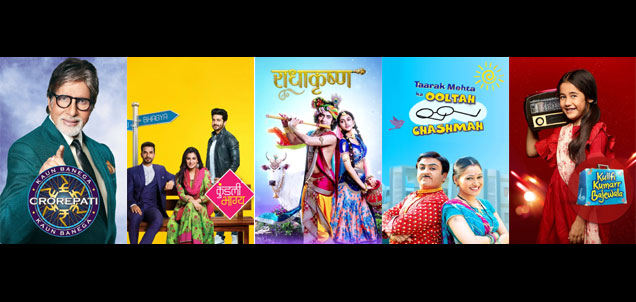
    5. Kaun Banega Crorepati

    KBC had another successful season, both in terms of viewership and its revenue impact on the channel (Sony), with the latter benefitting considerably from the digital revenues that have become a strong force for the show since the last season in 2017. All the classical elements remained, and the show was virtually a replica of the successful one last year. KBC is emerging as India’s comfort family viewing in the prime-time year-on-year. And you don’t mend what’s not broken.


    4. Kumkum Bhagya-Kundali Bhagya

    The 9-10 PM block on Zee TV has emerged as a fortress of sorts, owing to the two Balaji Telefilms shows that continued to thrive in 2018. In times of content fatigue being a real concern among viewers, Kumkum Bhagya managed to stay fresh and relevant. Kundali Bhagya, the more recent of the duo, found its peak towards the end of 2017, and held on to it through this year. The combo delivered a solid package of traditional and the modern, covering wide-ranging and engaging characters and emotions between them. How long can Zee-Balaji milk this double bill remains to be seen. But in 2018, the combination was rock-solid.


    3. Radha Krishn

    Star Bharat’s RadhaKrishn launched at the start of the last quarter of the year, and immediately propelled the channel’s viewership. It is bizarre to think that Indian television has not had a TV series of Radha and Krishna’s love story till this show came in. The idea was a winner at the get go, and the visual execution, supported by top-level music, made the show a quick audience favorite. Mythological shows tend to have a shorter shelf-life than family dramas. But RadhaKrishn has just about taken off and should have a good early 2019 at least.


    2. Taarak Mehta Ka Ooltah Chashmah

    Taarak Mehta Ka Ooltah Chashmah (TMKOC) is the KBC of television comedy. Nothing else that happens in the category can seem to shake up the staunchly-loyal viewer base the show has built. The difference, of course, is that unlike KBC, TMKOC is on-air all year. Now, that should make it doubly hard for a show to stay fresh and relevant. But no such concerns with TMKOC. Aided in no small measure by its immensely-popular lead character Jethalal, TMKOC may be a fixture of the Indian viewers’ watchlist for another 2-3 years at least, if not more.


    1. Kullfi Kumarr Bajewala

    Star Plus adapted its very successful Bangla show Potol Kumar Gaanwala into Kullfi Kumarr Bajewala in an early-2018 launch. The show found its real footing after the IPL, finding levels of viewership that were out of reach of new shows for the last 2-3 years. The endearing Kullfi even usurped Jethalal briefly to become the No. 1 fiction character in the category (Ormax Characters India Loves). Differentiated stories, when rooted in viewer relevance, can be runaway successes. And with Kullfi Kumarr Bajewala, this combination was achieved by a mainstream (read non-mytho-historical) Hindi GEC fiction show after a long time.


    Shailesh Kapoor is Founder and CEO, Ormax Media. He reviews trends and insights on MxMIndia every week. The views here are personal