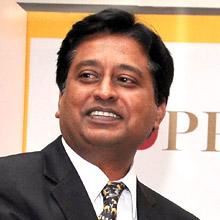
Tag: Suresh Srinivasan

  • Last Year, This Year


    By Shobhana Nair


    The financial Year 2013-14 may have ended with some optimism given the forthcoming elections, but was the year good for the advertising and marketing services sector? We spoke to a few industry leaders to get their views about the same and also asked them to look ahead.

     

    Ashish Bhasin, Chairman India & CEO South East Asia, Aegis Group plc:

    Last year was a brilliant year for us, because it was the first year that we managed to bring Dentsu and Aegis together to form the DAN Network. We saw a lot of growth in digital, out-of-home, retail and so on. We were happy that our growth rate was two-and-a-half times more than the market growth rate and we managed to gain a lot of market share, etc. For us, it was a good year and it has set the pace for the following year. We are looking forward to more growth as we’ve gathered momentum on the basis of the growth that we had in the past few months. As a model, we have one P&L across the country so nobody is driving to sell just TV or Print to the client. We do whatever is required for the brand as nobody has an agenda. That’s giving us a huge competitive edge in the market. The idea is to give to benefit of specialization to the client.”

     

    Nagesh Alai, Chairman, Draftfcb Group India:

    “I would say advertising is inextricably linked to the macro and micro economic environment. Considering that India’s GDP growth for FY 2013-14 is expected to be sub-5 percent, the advertising industry’s growth would be in the range of 5 to 6 percent at best. FCB Ulka Group’s growth would be about 6-7%. Overall, it has been a challenging year for the industry. Given the general elections and a sort of policy and execution vacuum till the new government gets in place and that the macro-economic indicators are still in the caution mode, my personal view is FY 2014-15 is going to be no different than the previous year. There is an air of exuberance and over expectation, which may not materialise in the current year.  Note that even a country goes through economic cycles and the worst is not over yet for the Indian economy. Q 4 of the 2014-15 may show some pick-up trends.”


    Ashok Venkatramani, Chief Executive Officer, MCCS

    It’s a mixed bag as the first half was not good at all due to recession, slowing down of economy, the fear of ad cap getting implemented. The first half was not very good but the second half was marginally better than the first half because of the elections. Overall it has been an average year.


    FY 14-15 will augur well if there’s a stable or a strong government. With a Fractured mandate comes uncertainty and then I expect it to be bad.


    Suresh Srinivasan, Vice President (Advt), The Hindu Group:

    It was a good year for the print industry which fared better than television on an overall basis with reference to revenues. Despite subdued economic conditions coupled with low growth, high inflation and with Forex volatility the industry performed well. The growth was more or less in line with the growth projected, largely contributed by significant growths from Realty, FMCG, Retail and Consumer Durables.  Auto, Education and BFSI verticals fared lower than expectations. Rising incomes and infrastructure development in tier2/3 towns saw several retail brands expand their store presence coupled with ad expenditures.


    It will be one of the best years for print. AdEx on elections alone will be significant with the rupee getting stronger, stock markets hitting an all time high and with the hope of a stable and better government the economic growth will be higher leading to optimism and higher spends in print advertising.


    Auto and BFSI are looking poised for a revival. We are already seeing good volumes in our Tamil daily indicating there is room for good language publications and the trend should continue.”


    Asheesh Chatterjee, Chief Financial Officer, RBNL

    For the TV market, the growth has not been strong. The 12-minute ad cap & LC1 ratings added a lot of pressure on the TV broadcasting company. But the good news was on the digitization front as there was rapid progress. Hence, clearly it was a mixed year. With respect to our channel, Big Magic has grown steadily and there are a lot of good things that we are expecting from this year like the ad cap which will help a large number of channels as the advertising money will be spread across them including the smaller ones who otherwise were not getting inventory.”

     

    Alok Jalan, Managing Director, Laqshya Media Group:

    “It was generally a mixed year. While the year started on a good note and the first quarter was very good, things slowed down in the next two quarters and then bounced back again in the last quarter. Overall the industry growth was about 8-10%. For Laqshya Media Group, revenue- wise it was a mixed year where some verticals and markets showed very high growth while some fared below expectations. That aside, we have looked at new areas to expand our footprint in terms of media ownership.


    I feel 2014-15 will be a turnaround year for advertising and marketing industry. I believe that we will see early signs of revival from the first quarter itself and second half of the year is likely to be substantially better. Also industries like BFSI, Auto and Real Estate who were less active in the current financial year will become more active in the coming year by putting more media investments on the table. What I am also looking forward to seeing is the growth of digital OOH advertising in India… it is quickly becoming crucial to the transitioning media ecosystem.”


    Roshan Abbas, Managing Director, Encompass Events:

    2013 has been a good year for us! We focussed on new business development and got on board brands as diverse as Datsun, Fortis, GVK, Eicher, Samsung etc. Encompass has remained a leader in the business. I asked about 20 agency members of the Event and Entertainment Management Association (EEMA) and most have said the year saw a lot more competition and no growth. Those who focussed on internal cost management or capability building have improved margins while the ones who have invested in IPs over the long term are hoping for a profitable return soon. There were multiple new arena-based events and detonation festivals from EDM to Wellness, etc. but the jury is out on spend versus return.”

     

    Neeraj Roy, MD and CEO, Hungama Digital Media Entertainment Pvt. Ltd:

    “FY 14 has been one of the most challenging years for the VAS economy in India because of the implementation of the TRAI directive which was initiated back in     FY 13 and had a subsequent implementation in July 13. Therefore in the back of that, across the board there would have been very vast erosion. Around the same time, telecom companies were grappling with challenges of cancelling licenses to overall costs going up in this way. It’s really been one of the difficult challenging years. As a company which has been the leader in the industry, we had to experience it the same way. Fortunately for us, there are other areas where we focussed like the gaming industry & the international markets. It’s been a tough year but has only made us more determined & gritty. I don’t see the market turning in an extremely positive territory immediately in the coming financial year. I believe the first 6 months will be extremely crucial as the new government comes into power. It is important to know what will be their outlook towards the telecom economy as it needs a lot of policy driven direction. If that is done then I think it will set the pace for the growth phase in the next couple of years. In FY 15, I would say I am cautiously optimistic about FY 15.”

     

    Jaideep Shergill, CEO, HANMER MSL

    We follow a calendar year for global reporting so that’s January to December, 2013. The year was good for us and we grew. In fact the first two months of 2014 have also started on a good note. In my assessment, the industry grew at about 10 percent overall.



    Sabyasachi Mitter, Managing Director, Interface Business Solutions (I) Pvt. Ltd:

    “I think overall 2013-14 was a tough year for the industry. The rising dollar, political paralysis and an overall depressed sentiment led to a lot of cautious approach by marketers. A lot of independent digital agencies got acquired in the last financial year continuing the trend of consolidation. On an average my estimation of growth for the digital industry would be in the range of 20%. For ibs, the last year has been good with a turnover growing 90% YOY. We have been aggressively investing in talent, research and development hence profit growths have been more modest.


    The initial trends point towards a great year ahead. The dollar has dropped below the psychological Rs 60 mark. There is a belief that if the elections result in a decisive and stable government at the centre, overall economic outlook would be extremely positive. On the back of the last two years of caution, this could lead to a 30-40% growth in the digital industry. We at ibs are also extremely bullish about 2014-15.”


     

  • The Hindu’s Lit for Life festival begins

    By A Correspondent


    Lit for Life, a festival that celebrates literature in India, was kicked off by The Hindu Group of Publications in New Delhi on February 6. The Delhi segment featured a discussion on the book “Accidental India – A History of the Nation’s Passage Through Crisis and Change” by Shankar Aiyar. The speakers were Communist Party of India (Marxist) politburo member Brinda Karat, Union Minister of State for Environment and Forests Jayanthi Natarajan, economist and professor at the Centre for Policy Research, and columnist Bibek Debroy and editor of The Hindu, Siddharth Varadarajan. The event also featured a presentation of photographs by award-winning photographer Steve McCurry, famed for his picture of the “Afghan Girl” on the cover of National Geographic.


    The event saw the announcement of the shortlist for The Hindu Literary Prize, an award given to encourage Indian writers in English. The shortlist: Anjum Hasan for Difficult Pleasures, Easterine Kire for Bitter Wormwood, Jeet Thayil for Narcopolis, Jerry Pinto for Em and the Big Hoom, and Kiran Nagarkar for The Extras.


    Previous winners of The Hindu Literary Prize are Manu Joseph (2010) for ‘Serious Men’ and Rahul Bhattacharya (2011) for ‘The Sly Company of People who Care’. The conclave will now move to Chennai (February 16-17, 2013, at Sir Mutha Venkatasubbarao Auditorium) for two days of discussions, lectures and workshops by speakers such as Gopal Krishna Gandhi, Rahul Bose, Jeet Thayil and Sidin Vadukut. The winner of The Hindu Literary Prize 2012 will be announced in the Chennai segment of the festival on February 17.


    Suresh Srinivasan

    “For a publication respected for its English, credibility and authenticity, it’s not surprising that The Hindu Literary Prize has rapidly become the most coveted award in its genre in India,” said Suresh Srinivasan, VP, Advertisements, The Hindu. “Lit for Life is an opportunity for our readers to engage in conversations with leading world class authors and participate in the workshops and seminars of their interest.”


    The festival was conceptualised by Nirmala Lakshman, Director, Kasturi & Sons Ltd (publishers of The Hindu). “Lit for Life is a festival which will make the experience of books and reading more meaningful to readers. It is an opportunity for people to interact directly with many well-known authors,” said Ms Lakshman. “It is also a chance to engage with issues of contemporary interest through discussions and workshops that we hope will be of lasting value to them. Through The Hindu Literary Prize being given for the best published work of fiction this year, The Hindu recognizes, felicitates and supports excellence in writing in India.”


    Website: www.thehindulfl.com/www.thehindu.com/litforlife

    Facebook: www.facebook.com/TheHinduLitForLife

    Twitter: @hindulitforlife

    YouTube: www.thne.ws/playlist-lfl


  • Hindu hits back with a tough punch


    By Tuhina Anand


    The Times of India fired the first salvo with its hints at a “boring” newspaper. The Hindu has countered with its ‘Stay ahead of the times’ campaign. A bit of a revelation coming from the house of the newspaper which is perceived as traditional and old-fashioned, the 360-degree pan-Indian advertising campaign seeks to bring the core values of journalism to the fore. At the same time it shows how the ‘popular’ read has trivialised the kind of news being dished out to the readers, with the result that they are more clued in about Aishwarya’s baby and Hrithik Roshan’s pet name than knowing the name of the Vice President of India.


    What is more surprising is that in the campaign, even though it’s bleeped out, one knows that people who have been featured say that they read The Times of India, thus clearly acknowledging at one go that TOI is a force to reckon with but at the same time responsible for this trivialization of news. The tagline leaves no room for doubt as it states, “Stay ahead of the times.”


    This kind of aggressive marketing could be the answer to the campaign that The Times of India had come out with a few months ago in the Tamil Nadu market which targeted The Hindu for being boring. The Times of India campaign says, “Stuck with the news that puts you to sleep? Wake up to The Times of India.” In fact, it is learnt that the TOI had even printed a dummy newspaper, circulated within the industry, with The Hindu masthead and “zzzzz” printed all over, to underline its message that reading the newspaper put people to sleep.


    Mr Suresh Srinivasan, Vice President (Advt), The Hindu Group of Publications insists that the campaign is not a reaction to the earlier TOI salvo. He said, “We have been on a path of transformation and change where we have not only undergone organizational changes but also been contemporising our product in order to connect better with our reader. The changes have been in content, layout and packaging based on the research we had commissioned, and their suggestions.”


    He added, “We are the country’s most respected English daily and the number 1 English daily in the South, with a growing footprint in the North. While we build on our strengths there is also a need to protect our turf. The Times of India is definitely our single largest competitor down South.”


    The Times of India, meanwhile, has been watching the recent development with a  touch of amusement. Mr Rahul Kansal, Chief Marketing Officer at Bennett Coleman & Company Limited, said: “It is good fun to watch it from the sidelines. TOI is an all-India brand and has redefined the news and newspapers altogether. In fact, this doesn’t really damage our brand in any way. On the contrary, it reiterates the fact that we are a very strong contender for the leadership position in the Chennai market. Remember, the Coke and Pepsi war? It didn’t hamper Coke in any way but it did establish Pepsi as a worthy young brand.”


    One of The Hindu TVCs
    [youtube width=”400″ height=”200″]http://www.youtube.com/watch?v=xmXPBp7DpQw[/youtube]
    The Times of India TVC
    http://timesofindia.indiatimes.com/videos/news/Wake-up-Chennai/videoshow/10557020.cms

    “While advertising, one does exaggerate and that’s what we had done when we said in our earlier campaign that The Hindu is a staid brand. One takes extreme positions in advertising to bring out the humour, so even now when the ad says we give only Page 3 news that just to bring out humour. Everybody knows that the TOI is a complete newspaper,” added Mr Kansal.


    Despite the impressive numbers of The Hindu, there definitely seems some concern about the might of the TOI which led to this kind of aggressive marketing. Mr Narendra Kumar Alambara, Vice President at Starcom Worldwide, who has been observing the Chennai market, explained: “The TOI has made inroads into the Chennai English newspaper market and there is no denying that. While the gap between the leader and TOI is still huge, but the latter has become a strong competitor. Youngsters and migrant population have been picking up this newspaper, especially, because of the kind of news reporting that TOI has been doing. While earlier there was no option, but now there is an alternative read. In terms of readership, I think that for The Hindu it has remained stagnant while TOI has grown the category itself. However, one should remember that in the Chennai market retail advertisers lead and for them The Hindu is still a priority.”


    On the campaign, Mr Srinivasan said: “The Hindu believes that, more than ever in a globalising, knowledge-driven economy, it is vital that readers are well-informed about the world at large. And yet, over the last few years, the news and media industry in India has become increasingly focused on serving up a steady diet of trivia, shying away from the national and international issues that really matter. This may help sell more newspapers or get more viewership in the short term, but it is the news equivalent of junk food. And the long-term result is a steady dumbing-down of readers who end up knowing more about Aishwarya’s baby than the Arab Spring.”


    The campaign shows how one may be creating a country that is fully conversant with gossip and Page 3 culture but clueless about current affairs and world events.


    Mr Srinivasan says, “The campaign is aimed at triggering conversation and if we succeed in provoking thought and debate that would be the measure of our success. It is intended as an eye-opener to get people to re-evaluate their media choices, to demand a smarter newspaper.”


    The campaign will be on TV, radio, cinema, print, outdoor and digital. It will be supported by on-ground activities in malls, cafes and other locations.


  • The Anchor: Suresh Srinivasan on 5 reasons IRS is an effective measurement tool

    By Suresh Srinivasan


    #1 The only indicator. Currently IRS is the de facto gold standard for measurement of newspapers and magazines. IRS is based on continuous study with fairly large data base. More importantly there is no other indicator and it is the standard used by the industry.


    #2 It’s not about just absolute numbers, but also gives the trend of the industry over the years. The trends are a valuable resource for media planners, publications and advertisers. These are not volatile numbers but have been slow and steady indicators of changes in the industry. This gives a meaningful picture of what’s happening in the industry.


    #3 Considering that we are a large nation, IRS proves to be a cost-effective, valid and timely method of assessment of consumption of media. The sheer magnitude and scale of collecting and collating this data involves lot of work but IRS makes this possible and a valid data is available its users.


    #4 Besides the readership data available on frequency and demographics, IRS has become a vital source of comprehensive information. It has become a repository of data that can provide information on various other parameters like intent to purchase.


    #5 With technology coming in IRS is poised to become much more robust and will take research to higher level. It is a continuous journey to present better data to its users.


    Suresh  Srinivasan is the Vice President (Advt) of The Hindu Group of Publications.