Tag: Suresh Balakrishna

  • Suresh Balakrishna quits IPG, to join WPP’s Kinetic

    By A Correspondent


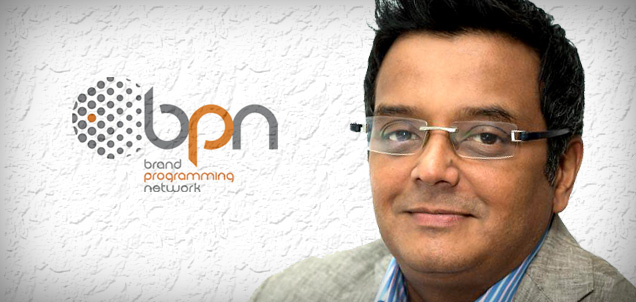
    Suresh Balakrishna, CEO of the IPG Mediabrands agency BPN (short for Brand Programming Network) who also led media agency Initiative’s non-global accounts as well as Rapport, the out-of-home agency of the group, has resigned. He is set to join WPP’s out-of-home agency Kinetic India as CEO South Asia and Middle East in January 2016. For Balakrishna, although it’s a shift from a manifaceted CEO of a media agency to an essentially outdoorsy company, the regional role is definitely a huge plus. Plus his reporting will be directly to Global CEO Mauricio Sabogal who was incidentally Global CEO of BPN before getting into Kinetic.


    Confirming the development, Shashi Sinha, CEO – India, IPG Mediabrands said: “I am sorry to see Suresh go. He’s been a great asset to the company and an excellent professional.”


    Said Balakrishna: “I have had four very exciting and fulfilling years here. Having said that I am looking forward to my new role. WPP is the world’s largest advertising group and Kinetic is India’s largest OOH company, so taking an established company to greater heights in the South Asia and Middle East region will be a challenge which I am looking forward to.”


    Balakrishna who has donned many hats in media and advertising has been with IPG since January 2012.He will be with IPG till December 31.


  • Suresh Balakrishna now also CEO of Lintas Outdoor

    Suresh Balakrishnan

    IPG Mediabrands has announced the appointment of Suresh Balakrishna as CEO of Lintas Initiative Outdoor. The leadership responsibilities of all the OOH businesses of IPG Mediabrands will now report to Suresh Balakrishna, with immediate effect, according to the official communique.


    Mr Balakrishna, a media veteran with over 25 years of publishing, brand building and media agency experience, had rejoined Lintas Media Group in January this year to roll out and lead BPN, the third agency network of IPG Mediabrands.


    He will be handling this assignment in addition to his current responsibilities as CEO of BPN India.


    Hemanth Shah, Managing Director of the company resigned a month ago and will be with the organisation till the end of August. His next destination is not known. He joined the company two years ago from Times OOH.


    Some of the leading OOH businesses in IPG Mediabrands include Nokia, Hindustan Unilever, Union Bank ofIndia, Coca Cola, Tata Consultancy Services, Expedia, Citibank, Monte Carlo etc.


    For the record, Lintas Initiative Outdoor has 22 offices around India.


  • ‘If you’re not ready for digital, your company is’: Media Rhythm 4


    By A Correspondent


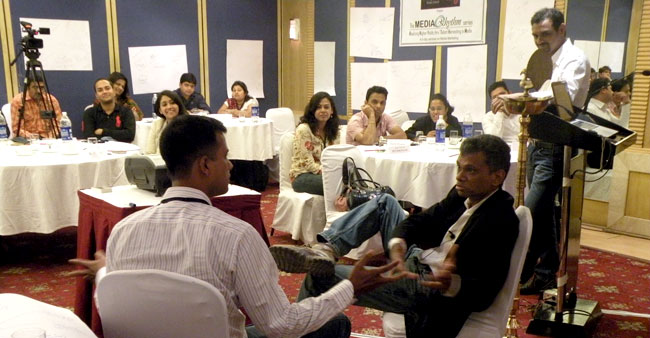
    Stratagem Media Pvt. Ltd, an independent media services company, held its fourth training program called ‘ReveNEW Concepts – The Media Rhythm series and Ideas’ on July 21 in Mumbai. The workshop saw participants from The Times of India, The Hindu, Malayala Manorama, Eenadu, Amar Ujala, MY FM and other media companies.


    Among the speakers were Mr Sundeep Nagpal, Founder Director at Stratagem Media Pvt. Ltd; Mr Suresh Balakrishna, CEO, Brand Programming Network; Mr Bharat Kapadia, Chairman, Whatuwant Solutions and Mr Madan Sanglikar, a digital media expert and CEO, AD2C.


    About bending backwards with ease:

    Mr Nagpal, the first speaker of the day, delved on ‘Bending back with ease’ wherein he asked the participants to first know what they are selling. He said that instead of selling many things at one time, there has to be some clarity and certainty of what is being sold and only then the expectations of the clients can be met. Mr Nagpal also spoke about the importance of reminding the consumers about the brand even after awareness is created: “A consumer needs to see the ad frequently. Time and again we have been able to convince clients that in a crowded market, playing one advertisement is not enough. Therefore a reminder is very important.”


    He also said that even though there is awareness, reminder and high impact, the brand may not sell as the problem could be because the competition is making more noise. “At times when everything is good, there is no recall because competition is making more noise. Response measurement is very tricky and must be done in a scientific way. Low response could be because of the lack of good features, price and distribution issues,” he said.


    Mr Nagpal also pointed out that it is very important to know the client’s business or product: “If you are managing client expectations, you must also know the client’s needs. When you do consultative selling, you can reduce the discount selling.”


    He also spoke about the two ways a brand can grow. First, get new consumers and second get the same old consumers to consume the brand more frequently. Some other ‘home truths’ Mr Nagpal shared were: remove discount, adopt differential and value based pricing.


    He said it is important to know the competition as is important to calculate, permute and innovate and that you can always refuse a business instead of selling lower than what you deserve.


    Customising media usage for brand communication:

    Mr Suresh Balakrishna kick-started his session by playing a one minute trailer of the film ‘Rocket Singh, Salesman of the Year’ as an example of how one should and can sell his brand to the consumer. He spoke about going beyond media objectives and looking at communication objectives, quickly pointing out that the media objective is only a channel; the client however wants a communication objective. “You need to create a connect between communication objective and media solution. It is important to understand the communication objective of the client, his needs and aspirations as well. You must, therefore, involve your clients and listen more to what your client wants.”


    Mr Balakrishan presented three case studies – Union Bank of India, Vodafone, and Cadbury Dairy Milk Shubh Arambh. He split the participants in different groups and asked them to do various exercises on the case studies presented. He gave the participants various challenges and asked them to come up with solutions to those challenges: how they would have connected with the consumers; how they would have amplified a particular campaign in the media or solved a certain problem in a different way.


    On Motivation and Innovision:

    Mr Bharat Kapadia spoke about the importance of motivation in an individual and the need for ‘innovision’- a combination of innovation and vision. “Everyone cannot have wrong card, what is important is how you play your cards. Unless ‘You’ believe that nothing is impossible, nobody will be able to help you out. Whenever you are given a tough task, don’t see it as impossible, but instead attempt it to raise the bar for yourself.”


    On the need for innovation, Mr Kapadia stated that even innovation needs to have a vision. He said that one needs to innovate, to not only stay ahead of the competition, but also to create a new experience or even to solve a problem which at first looked quite challenging.


    Mr Kapadia shared four crucial points for innovation: Uniqueness, Impact, Achieving the goal and Sustainability. He was quick to state that ideas and creations are nobody’s monopoly as each one is capable of generating ideas. Therefore, one needs to start thinking without any baggage.


    He also stressed that an idea needs nurturing, which could be achieved with the help of family, friends and colleagues. He asked the participants to mentor the ideas of their juniors, so that they would come up with better ideas. But he was also quick to stress that the real test lies in the execution of the idea. One must always think of the end objective of their idea, and the hurdles they might have to cross.


    Mr Kapadia also warned the participants about the dangers of an idea: “Be careful that your idea is not gimmicky and irrelevant, the idea must fit into the objective of the brand. A good idea becomes a great idea if it is implemented well.”


    He also told the participants not to be afraid of mistakes and failures, but to learn from them. Mr Kapadia shared his experience about how he managed to successfully execute the Bru Coffee aroma campaign on The Hindu and the challenges he have to overcome to execute the campaign successfully.


    Mr Kapadia also gave participants some practical or exercise work during his session. He asked them to come up with an innovation for any media vehicle for any brand, whether existing one or a fictitious one. He asked them to exploit the strength of that medium. The teams were split into five groups.


    While concluding his session, Mr Kapadia reiterated that an idea is no one’s monopoly. It must however be relevant, feasible and beneficial to the client. He concluded: “There is no dearth of money in the market because it is all about a good idea. If you come up with a good idea, then the client will also shell out the money required for that idea. A good idea can even bring new advertisers.”


    Teleporting to 2015:

    Mr Madan Sanglikar shared nine concepts on digital, emphasising the growth of digital and the implication of that growth to other medium and the brands. He spoke about the future of print, television, gaming, mobile, social media, e-commerce, data visualization and eco-system transition, pointing out the need to think digital, that innovations are also happening on digital, and the fact that digital media is the fastest growing medium in the country.


    He said that the growth of digital will see more advertising categories increasing their spends on digital. He also said that digital will reduce the urban- rural gap. On the future of print media: “Print will be the biggest beneficial from the digital growth among the media categories. Dailies and magazines will get a new lease of life and static and AV (Audio Visual) formats of content and ads will co-exist.”


    On the future of television, Mr Sanglikar said that television experience will get better, a lot of which will be gesture controlled. Online video format will merge with television; it will create an explosion of online and on-demand videos.


    Talking about the gaming market, he stated that it is expected to grow to Rs3,100 crore by 2015 and there is a shift of gaming from bedroom to living room, wherein it becomes a family entertainment medium.


    Mr Sanglikar gave the example of a bakery in London who used Twitter to attract customers to his bakery as an example of how social media can be used for enhancing the business. He said that very soon there will be no emails as corporate social network will see huge growth.


    On the e-commerce front, Mr Sanglikar stated: “E-commerce market is also growing tremendously. Online shopping is getting more interactive with more pay options available and newer shopping categories soon catching up.”


    Mr Sanglikar also explained the difference between paid media, owned media and earned media and how today we are witnessing owned media and earned media share growing. He concluded: “Digital is like another medium and not imbibing the medium will not work. If you are not thinking about digital, your companies are certainly thinking about it.”


    What the participants say:

    At the sidelines of Media Rhythm 4, MxMIndia spoke to some of the participants for their views on the daylong event. According to Mr Subin Thomas from MY FM: “It was very interesting and fun too. Mr Suresh Balakrishna’s session was especially very good. There has been lot of learning, especially about innovation and communication objective.


    Ms Zeenat from Eenadu said: “The workshop was definitely helpful for us as it helps us with new ideas. After being in the industry for a long time, you tend to get a rigid mindset but, when we attend such forums where so many different issues are discussed, it refreshes our thoughts and allows us to think differently. The session on digital will probably help us in our work in digital.”


    A Times of India participant said: “It was a good way of looking at certain things and even on media selling. All in all it was a good and interactive sessions. There have been some good learning and takeaways too. I would also be taking some of the takeaways from these sessions to my clients.”


    Mr Soham Khimani from Malayala Manorama said: “The sessions were really wonderful and the speakers too were good. There was lot of creativity in the session which is very important in media sales today.”


  • Stratagem’s 1-day training for media sellers


    By A Correspondent


    Stratagem Media Pvt. Ltd, led by Mr. Sundeep Nagpal, began as a media planning hub for medium-sized ad agencies in the early 90s and somewhere along the middle of the last decade, it morphed into a media services company.


    The ‘Media RHYTHM’ series is a recent initiative by the company to enable participants channelize the thought processes that govern modern day practices in media selling.


    The initiative engages experts from the industry who jointly conceive and design such programs over hours of discussion to make them as relevant as possible. RHYTHM is an acronym for Realizing Higher Yields thru’ Talent Harvesting in Media. At another level, the programme also serves to orient the thought process in a particular direction and thereby condition the mind.


    Mr. Nagpal believes that such open programs are useful for companies which wish to develop talent and knowledge base of select personnel in their sales departments.


    The forthcoming program, to be held on July 21, has been conceived as a single-day workshop titled “ReveNEW Concepts and Ideas”. The modules will focus on concepts that are integral to the media business – media evaluation & utilitarian concepts, as well as the subjective aspects that can be used effectively by sellers.


    Facilitators like Madan Sanglikar will administer a module on the applicability of new media for new brand and how media houses can build on it. Bharat Kapadia will stimulate participating sellers to think creatively by involving them with certain exercises.


    Suresh Balakrishna will engage participating sellers on how to translate the basic tenets of a brand communication into a media-led solution.


  • Making brand the hero with BPN


    Just when you thought that the media agency space is getting crowded in India comes the news of another agency setting up shop in India. Brand Connections that was present in 12 countries across the globe excluding India and the United States, will now be rechristened Brand Programming Network. In effect this will be the official launch of BPN in India. And simultaneous with the rest of the world. This will make the agency the third such offering from IPG Mediabrands in India. It already has two in the form of (Lodestar) UM and (Lintas) Initiative. BPN will work under the LMG umbrella.


    Says Lynn de Souza, Chairman and CEO of Lintas Media Group in a communique, “For media agencies thus far, the starting point has always been the advertiser. Consolidation, portfolio management, aggregation etc. are all client focused and to some extent consumer data driven. BPN will focus on the brand. The time has come to turn back several chapters and make the brand the hero of all communication effort, and BPN has developed processes to do just that.”


    BPN will take on the service mandate of clients like Jyothy-Henkel, Bajaj Auto, Samsonite, and several other clients of LMG to start up with a billing volume of over Rs. 1000 crores, in Mumbai, Delhi, Hyderabad, Kolkatta and Cochin.


    In India the agency will be led by Suresh Balakrishna, who has assumed charge as CEO of the agency. While BPN will be essentially a media agency, it will play the game differently by focusing on the brand. “Everything that we are recommending is going to be from a brand strategy direction,” assures Mr Balakrishna, as he gave MxMIndia a quick peek of what to expect from the agency in India, hours before it was unveiled.


    In conversation with Pradyuman Maheshwari and Johnson Napier, Mr Balakrishnan delves on how BPN will be different from the others, on the increased emphasis that will be laid on social media and digital and the new initiatives to look forward to from BPN in the coming few months. Excerpts:


    Is Brand Programming Network old wine in a new bottle?

    No, it is not. The usual answer that comes up about a third agency is that it is created due to a conflict of clients, allowing you to take on more of the similar clients. But with BPN, it is a thought-out strategic decision. If you look at India, there is no immediate conflict business (from network agencies) that is being parked in BPN. If you look at Mediabrands, for the last 10 years it has had a network called Brand Connections in other countries. But as markets have developed, especially a market like India, we find that there are enough businesses out here to have a third agency with a different character, a different way of thinking…and of course help handle conflict in the long run. So it’s not a knee-jerk old wine in a new bottle reaction from our end.


    The reason we ask you this question is that you have reallocated some of your existing businesses here. Does this also mean that Initiative and BPN could be in conflict with each other?

    It could be. In our system we can compete for businesses for the same pitch and may the best team win. Therefore we have a Lodestar UM, an Initiative and a BPN; we have three networks here in India and all three can compete for a business if necessary.  We do believe there is enough business out there and why leave some money on the table…


    What is it about BPN that differentiates it from others?

    A few things actually. Firstly, we are turning the clock back as an agency. We are going back a little in time and therefore the name Brand Programming Network. The whole idea is to focus on the brand. Earlier, media used to be in one house there used to be much more brand focus, even the media guys owned the brand. But over a period of time, media has become more professional, accountable, larger, etc but somewhere in the process we believe that brand connect has got lost. Therefore, BPN would be an agency that would focus on the brand; everything that we are recommending is going to be from a brand strategy direction. To give an example, in the last four months we have won over four-five businesses and in almost all the business pitches the client fed back to us saying is this a creative agency presentation or a media agency presentation? So you can imagine the extent to which we are spending time to analyse the brand, looking at brand strategy, looking at TG, etc. We are focusing on that aspect of the business and of course at the end of the day media is just a delivery vehicle.


    In fact Mr Shashi Sinha even hinted in an interview with us that we need to return to the full-service agency model. Are you in agreement with that statement?

    Half-way house, I would say. We are calling ourselves a full-service media agency in the sense that the touchpoints today have become all-pervading. For example, the touchpoint would be you ride on content. But who creates that content? You have an instance where the customer himself creates content in digital and then you have specialists who create content. So content itself has no owners and therefore reaching out to the customer has become that much more complex and you can only do it of you have the fabric of the brand and what it wants to convey.


    But the same thing could even be said by the creative agency bosses like, say, R Balki of Lowe, etc who feel that creative is alright but we also need to add some media to it. They could also be thinking on those lines…

    So what if they think the same, but I think at the end of the day to deliver media, you need a certain size… in fact many media heads today are CFOs; they are not media people. They have a commercial bent of mind and manage money.


    So are you saying that a media agency can be a full-service agency but a creative agency cannot be a full-service agency…?

    In today’s context yes, I believe you can say that.


    Sorry to be asking you this for for the third time in different ways, but getting back to BPN, in a sense it will be a brand agency…

    Yes, and across the world in the 13 other countries that we are present in apart from India, we have a lot of retail businesses and that is another area of growth that BPN is seeing. That seems to be the character of the agency globally – handling a lot of retail clients on a local basis.


    Will you only handle products and not brands in other sectors?

     There will be no category and geographical limitation. What the agency will bring to the table is brand perspective. In many cases, we have seen that clients do not want a brand perspective from a media agency. They get enough of it from a creative agency and want only the media bit from us. So I may not be the right pick. But being part of an agency like LMG I may bring along a necessary clout; I am big enough to matter and small enough to care. But that is not going to be my reason to be.


    In fact for BPN, one of the things being discussed is India as the analytics hub for BPN worldwide.


    Is it likely to happen soon?

    Yes, it is going to happen very soon.


    Wouldn’t analytics have done better as a separate unit like what the other networks offer?

    Maybe if it did well it could become a separate agency but to begin with it will be a part of the service that we are offering.


    Somewhere in your press release you have emphasised on laying adequate stress on social media. Is BPN going to be basically a digital or social media agency?

    No. But globally, and in India, I believe that digital and social media has much more mindspace than wallet space. So it really has a long way to go. Having said that, digital is growing very rapidly globally. One of the things that you will hear from us is a tie-up of sorts with a large platform about which you will hear soon.


    Will social media be the mainstay for BPN…?

    Not in India but worldwide, yes.


    So here you will be doing the traditional stuff plus digital and social…

    Absolutely.


    Could you delve a bit on the team that will drive the function for you in India?

    We have Premjeet Sodhi as the COO, Patrick Gomes would be the head in Mumbai, Mahesh Motwani would be head of Kolkata, Vidya Nanda Kumar will be head of Kochi…we have identified a head for Delhi and Hyderabad that we will announce very soon. We have a staff strength of about 70 and about 40 clients till now.


    Going forward, will BPN and Initiative be sitting together and pitching for a business?

    All the existing businesses in Delhi, Bangalore etc will belong to Initiative while Mumbai, Kolkata, Kochi etc will belong to BPN. We will be having separate offices which ever cities both of us are present.


    Any other plans on the anvil for BPN?

    Yes, we would be having a training and consultancy cell for media houses. The other thing will be branded content….


    Paid news?

    No (laughs). AFPs, in-film branding etc.


    You have always been a print man, do you still have a soft corner for the medium compared to television which is more popular of the two?

    Brands of course want television but I think print also works. Ours is the only country where print is still growing.


    But TV is growing a bit faster.

    Yes.


    What will the the revenue mix of BPN look like in future… if it’s 99 traditional and 1 digital?

    Going by your 99-1 yardstick, it will be 80 per cent traditional and 20 per cent from other mediums. Possibly even 75-25.


    If BPN has business worth Rs 1000 crore, how much will Initiative be?

    It would be the same. LMG as a group is Rs 2000 crore.  All the businesses in Delhi and Bengaluru belong to Initiative while Mumbai, Kolkata, Kochi are now part of BPN.


    In Indian corporates, there is a tendency to guard one’s fiefdom. Did Initiative feel bad you took away some of its businesses?

    They haven’t expressed anything as yet.

     

  • LMG bags Yepme’s media duties

    By A Correspondent


    Online fashion brand Yepme has awarded its media planning and buying duties to Lintas Media Group. Yepme already has a line of men’s fashion wear and accessories and is launching the women’s wear line on May 30. The brand has signed leading Bollywood actress Kangana Ranaut as its style ambassador. Yepme has over 1.1 million fans on Facebook, making it the largest fan base amongst Indian e-commerce sites.


    The task for Lintas is not only to build saliency for the brand but also to encourage a change in shopping habits for apparel and accessories. As Vivek Gaur, CEO at Yepme said: “Yepme is creating a category for itself. Unlike most other brands that are using the online route, Yepme has a non-metro focus and is creating a network of clients across the country. The role of media for such a challenge is extremely critical and requires a fine balance between mass reach and narrow targeting. We are glad to have Lintas Media Group partner us and give us very strong support in media as we nurture the brand further”.


    Suresh Balakrishna of Lintas Media Group was very enthusiastic about the addition of this new age business: “Yepme will go a long way in adding a young and futuristic character to the portfolio of brands that we work with. Fashion and e-tailing are both growth areas of the future and their media needs are extremely dynamic. We are very glad that the management of Yepme recognized our strengths and decided to partner with us for their future growth”. The account size is estimated at Rs30 Crores annually. This win comes soon after the recent wins at Lintas Media Group of Henkel,EdenCityand OCL.


  • LMG wins Henkel India media buying duties

    By A Correspondent


    In a multi-agency pitch for the newly acquired portfolio of Henkel, Jyothy Laboratories Ltd has awarded the media buying responsibility of Henkel brands to Lintas Media Group. Mudra Max will handle the Planning mandate.


    The media buying for Jyothy Laboratories is handled by Lintas Media Group and therefore, in a reiteration of their faith in LMG, they have awarded the Henkel business to them as well. Put together, the account is estimated to be around Rs150 crores. The other agencies invited for the pitch were OMD and Mudra.


    K. Raghavendra – General Manager Marketing, Jyothy Laboratories confirmed that the media buying AOR  for Jyothy Laboratories Limited and Henkel will be handled by Lintas Media Group and the Planning mandate has been given to Mudra Max.


    Suresh Balakrishna of LMG said: “We are extremely delighted to have won the Henkel business. We have constantly delivered on the Jyothy Laboratries brands and therefore, this new win not only encourages us, but also spurs us on to deliver better business solutions to our clients at optimal costs.”


    The business pitch was led by the newly-elevated COO, Mr Premjeet Sodhi. “The science that we bring to the process of buying, negotiation, optimization and evaluation, with the help of some of our unique proprietary tools, has made our product truly cutting-edge. We are happy that Jyothy Laboratories has recognized this and this win will ensure that we continuously strive to deliver a better media product to our clients, year after year,” he said.