Tag: Sunil Lulla

  • #Frames2013: Making Phase 2 of TV digitization a reality

    By Johnson Napier


    When phase 1 of digitization became a reality in India there was a sense of accomplishment that was witnessed amongst most factions within the broadcast industry. Apart from the huge advantages that it presented to the broadcasters and allied interests, it was also seen as an exercise that enabled the consumer to become empowered like never before. But while issues remain about the impending challenges emanating from phase 1 of the rollout exercise and also the non-interest shown by some metros, the industry seems to be waiting with bated breath for phase 2 of the rollout to take shape.


    In the session on ‘The second phase of TV digitization’ noted panelists from the sector came together to discuss and mull options of making the exercise a more robust and achievable one. The panellists comprised of N Parameshwaran of TRAI, Sameer Manchanda of DEN, Sunil Lulla of TTN, Man Jit Singh of Multi Screen Media, Raman Kalra of IBM, Tarun Katial of Reliance Broadcast and Anuj Gandhi of Indiacast. The session was moderated by Vivek Couto of Media Partners Asia.


    N Parameswaran

    N Parameswaran, Principal Advisor, TRAI began by highlighting the outcomes witnessed by rolling out of P 1 of digitization. “We all know what has happened with P1 of digitization where metros like Mumbai and Delhi have recorded a remarkable conversion rate. We may have questions about the metros of Kolkata not yet achieving their target and Chennai not yet taking off but rather than the negatives we should focus on the positives from this exercise, including the role that the industry players and stakeholders played in making this dream a reality.” According to Mr Parameshwaran, while P2 digitization would be kicked off from March 31, 2013 it would again require the coming together of industry players, trade bodies, MSOs/LCOs and the government itself in making this dream an achievable one.


    Sameer Manchanda

    Sameer Manchanda, Chairman and MD of DEN began by appreciating the efforts put in by all from the industry and added that “digitization has been the biggest change that has ever happened to our industry. While there are a lot of positives from this exercise, one of the big drawbacks as been lack of accountability. The MSO/LCO operators have to ensure that the KYC forms are filled by the consumers as it is mandatory and binding on them. There is still some time to go before that becomes a reality. Where I see it, P2 of digitization is a transition phase and will start rolling out over the next 60 days.”


    Anuj Gandhi

    Without wanting to sound too cynical, Anuj Gandhi, Group CEO, Indiacast said that while digitization has bought about a positive change for the industry there was some serious thinking that is needed. “If P1 of digitization is taking us about 7-8 months to become a reality we can imagine what P2 would be like. The onus lies on the MSO/LCOs to make this rollout a reality but I can assure you that this won’t be possible without the coming together of all from the industry.”


    Man Jit Singh

    Man Jit Singh, CEO, Multi Screen Media had a similar feeling to share as he voiced his excitement at the good that was seen from rolling out P1 of digitization. “Due credit should be given to one and all from the industry who made this a possibility and we can hope for a similar outlook from P2 as well. Even the government’s role has been encouraging but there are a few shortcomings that have to be worked upon if further rollout is to become more successful. There are issues that are cropping up at the MSO/LCO level regarding filling of KYC forms, data collection etc. All these have to be addressed immediately.”


    Raman Kalra

    Raman Kalra of IBM Global Business Services said, “We have entered an era where it is the end of digital. By that I mean that we are already in the know-how of how digital works and the benefits that the medium presents but the challenge now is how do we take it to the next level. There is need for the industry to come up with strategies to cater to the ever-evolving ecosystem.” Pointing out that the consumer today was faced with an array of choices to access entertainment, he said that consumers won’t mind paying more money to access content but it is essential that we know who our customer is and what are his likes/dislikes.”


    Tarun Katial

    Tarun Katial, CEO, Reliance Broadcast said that what DAS has done is enabled channels to have a wider reach and get carried more easily. “Early data has shown how most channels, especially those offering niche offerings, have benefitted in terms of ratings and acceptability from DAS. For new players, as you sharpen your positioning there are high chances of they getting lapped up more easily. The exercise has also opened new avenues for advertisers who will be looking at niche channels with renewed interest. I guess the advertisers will have to shell out more advertising dollars where niche channels are concerned.”


    Sunil Lulla

    Sunil Lulla, MD & CEO, TTN highlighted that the current economics do not fund the ecosystem as the industry is going through a transition and there is need for change. According to Lulla, it would do the industry a lot of good if the prices were to be lowered but that is not a logical thing to do. “In fact it is commendable to see how the industry has come together in making phase 1 a reality and the same can be expected from phase 2 too. At the end it is essential that we keep the customer at the centre of all that we do and keep on satisfying him so that he comes back to us for more.”


  • What M&E wants from this year’s Budget


    By Ananya Saha and Meghna Sharma


    Girish Agarwal, Promoter Director, DB Corp Ltd

    Fundamental need of the hour is to boost the economy, which is essential for growth of M&E. The following steps are expected for sustained economic growth:

    • The budget should send a clear message of “Stability, credibility and long-term vision for reforms”.
    • Government revenues should increase without hurting growth while strict control on expenditure (especially non-plan) is expected from the budget.
    • Clear roadmap for reforms/key bills viz.: Companies Bill, Mining, GST, DTC, Insurance, land acquisition etc. is expected.
    • With rise in inflation and reduced earnings, savings have substantially gone down over the past 2-3 years. Appropriate tax breaks would boost savings.


    The above basic steps should result in fresh and long term investments from domestic as well as international markets. Old policies for governing M&E sector must be revisited and reworked considering current business scenario. Policies should be framed in such a fashion that decisions at Govt. level are smooth and fast.


    For Radio industry, we expect Govt. to roll out old pending 3rd phase of auction, immediately with clear transparent bidding process. We expect the 3rd phase license with larger period validity and also extension of time period to 15 years, for players related to 2nd phase of bidding. Prior to the same, we expect Govt. to address music royalty issue along with long pending demand of radio players of relay of news bulletins in FM radio. Further, renewal of 2nd phase of license, after expiry of its period, needs to be worked out in an acceptable and reasonable valuation, in order to ensure adequate return on investment for all radio players.


    T Gangadhar, Managing Director, India, MEC

    It is important for the government to create policies that stimulate taxes and widen the tax base, not necessarily by lowering the taxes. It is important that in current economic situation, to raise consumer sentiment. We have been hearing of uniform GST, which has not been undertaken yet. Also, it is important to lower interest rates.


    Rakesh Jariwala, Partner, Tax and Regulatory Advisory Services, Ernst & Young

    In the Direct tax category:

    • Reintroduce erstwhile benefit available under Section 80-IB of the Income-tax Act, 1961 – profit linked deduction for multiplexes to boost their growth for tier 2 and tier 3 cities
    • Introduce alternate mechanism or a monetary threshold for obtaining income-tax clearance for foreign performers, entertainers, etc before departing from India as the procedure is time consuming and onerous
    • Introduce incentives for content creation and infrastructure to encourage the Indian film industry
    • Currently, there is uncertainty with respect to income attributable to India in case of Foreign Telecasting Companies (‘FTCs’). Guidance should be provided by way of specific provisions for determining taxable income of FTCs.


    Indirect tax:

    • Provide exemption from service tax on costs of film making in line with the exemption provided on temporary transfer of copyright in cinematograph films
    • Reinstate the exemption on service tax on services provided by digital cinema service distributors in a digitized encrypted format transmitted directly to a cinema theatre for exhibition – this exemption was withdrawn with the introduction of the negative list based service tax legislation
    • Clarify that service tax is not attracted in case of post production services provided in respect of content temporarily imported into India for the purpose of re-export
    • Exempt from service tax, services rendered by players and coaches to private sports leagues / bodies in line with the exemption provided for services to recognised sports leagues / bodies
    • Subsume entertainment tax in the proposed Goods and Services Tax legislation without creating a window for its levy at the local or state level to ensure simplicity in the tax structure


    M&E industry is expected to outgrow the Indian economy with an expected cumulative annual growth rate of around 15% over the next four years. To keep up the momentum, the industry deserves tax incentives in the upcoming Finance Bill, 2013 thereby providing an impetus to the industry and bolstering growth.


    Budget 2012 was a bag of mixed beans and a budget wherein the M&E industry was not given its share of adequate encouragement. Key highlights are cited below:

    Incentives:

    Indirect tax

    • Exemption of service tax on temporary transfer of copyrights in cinematograph films
    • Inclusion of admission to entertainment events and amusement parks in negative list of taxable services
    • In addition to the print sector, advertisements in media (except radio and television) including the internet or in outdoor media shall not be liable to service tax
    • Services provided in capacity of referee, umpire, coach or manager to recognised sports body for participating in tournaments shall not be liable to service tax


    Dampeners for M&E industry:

    Direct tax

    • Retrospective amendment to the definition of royalty thereby characterising payments for use of computer software, transponder, information databases, uplinking facilities, leased lines, etc as royalty under domestic tax laws. Hence, impacting the use of digital media
    • Tax rate of non-resident sports persons and sports associations increased from 10% to 20%


    Indirect tax

    • Levy of service tax on costs on film-making
    • Withdrawal of exemption of service tax on digital distribution of films tantamounting to the levy of service tax on such services
    • Levy of service tax on services provided by players and coaches to private sports leagues / bodies


    Tarun Katial, CEO, Reliance Broadcast Network

    For the broadcasting industries of radio and television we look forward to clarity, uniformity and relief from taxes. Advertisement in free to air mediums like radio should be treated differently and lower or nil service tax should apply for the same, aligning with the print and out of home industries. Also, FDI in non-news radio operations needs to be brought at par with television broadcasting. Customs duty on radio and television broadcast equipment should also be relaxed.


    The TV Broadcast and Distribution industry is already reaping benefits from the success of the digitization initiated by the Government. We look forward to necessary fiscal incentives in the form removal/ reduction of multiple taxes and levies and regulations which ensure transparency and power of choice to the end customer.


    Sandeep Ladda, Executive Director/Partner and National Leader – Entertainment & Media – Tax and Regulatory, PwC

    On the direct tax front, we could look at the following key areas:

    • Clarification on the applicability of withholding tax provisions on discount offered by DTH operators for selling recharge coupons through subscribers to third parties and on payments made by TV channel companies to uplinking companies
    • Providing a clarification stating that benefits of carry forward and set off of unabsorbed losses in amalgamation or demerger etc. also available to service sector companies
    • Proposal to sign more Co-production treaties, to get the tax credits and subsidy benefits
    • To provide a 10-year tax holiday to exports in the gaming, animation and the VFX (visual effects) industry for Indian content development, as they are emerging sectors (whether or not these are set up in an SEZ)


    Key expectations on the indirect tax front include:

    • To promote the domestic gaming industry, excise duty on local manufacture of gaming content could be brought down to 0%
    • Service tax applicability to the DTH industry could be eased for a limited period till the phased implementation of digitization is complete
    • Copyright services could be excluded from service tax net to avoid dual levy of service tax and VAT
    • Multiplex operators could be exempted from levy of service tax on property rentals and to distributors for exploitation of cinematographic rights, till GST is introduced to result in a seamless pass through of these indirect taxes


    The industry has been growing at a pace of around 17 percent YoY and is expected to maintain the momentum. The recent liberalization of foreign investment norms for a majority of broadcasting carriage segments and the radio phase III roll out will surely provide a fillip to the entertainment and media sector. Similar liberalization measures could be extended to the remaining broadcasting carriage segments like local cable operators. Also, the Phase III rollout could be implemented early for the industry to reap in the allied benefits flowing from the same.


    There were a few positive steps seen in the 2012 budget such as eligibility of investment linked deduction to hotel owners even if operations are carried out by third parties and service tax exemption on temporary transfer of copyright in cinematographic films. However, on the whole, budget of 2012 left a lot to be desired:

    • Retrospective amendments to widen the scope of royalty by including payments for transmission by satellite cable, optic fibre etc. as royalty were not expected. The relative standing of some of these retrospective amendments vis a vis India’s tax treaties has also been questioned by recent tax tribunal decisions. This has only added to existing confusion surrounding such royalty payments.
    • The budget also introduced provisions casting obligations on a non resident having no presence in India to withhold tax on any payments being made to a non resident of income accruing in India. This measure has impacted some of the India content broadcasting transactions happening between non resident parties.
    • Tax rates in case of non-resident, non-citizen sportspersons, non resident sports associations were increased from 10 percent to 20 percent on gross basis. Similarly, non resident entertainers were also brought under the tax net @ 20 percent on gross basis. Both these measures were burdensome.


    Sunil Lulla, Managing Director and CEO, Times Television Network

    The burden on the growing service sector needs to be reduced, so it may accelerate India’s growth. In prior years, in recent times, we have not seen anything progressive as such via the budget. Investment norms in some parts of the sector have already changed, for encouraging investment. The industry has been asking for lower duties on STBs so that digitization can progress and benefit millions of consumers. This is vital. As for the last year, the economy has been slow, sluggish and behind expectations – 2012 has been a disaster!


    Responses are in alphabetical order by surname.


  • Times TV Network expands footprint to 45 countries

    By A Correspondent


    Times Television Network (TTN) has recently launched its channels, Times Now and Zoom, on Canada’s major cable distribution company Cogeco Cable. With this launch, TTN is now directly available in 45 countries across four continents on leading cable, DTH, IPTV and mobile platforms.


    Indians residing abroad form a substantial diaspora that is keen to stay connected with the latest in news and entertainment content from India. With relatively higher per capita income than most other ethnic groups residing abroad, the Indian and South Asian diaspora also displays a higher propensity to pay for premium content and services. TTN channels are already popular brands among the Indian community residing abroad and by using a mix of localized marketing and programming events in respective international markets, TTN has further strengthened its connect with the Indian diaspora there. TTN will be extending its international presence further this year with its impending launch in Europe.


    Sunil Lulla

    Commenting on the success of the international business, Sunil Lulla, Managing Director and CEO, TTN, said, “Times Television Network has found great resonance with the viewers from the Indian Diaspora. Despite having launched only quite recently in some of the markets, the brands have gained the same stature and respect as they have here. TIMES NOW is a daily news habit and zoOm the first port of call for Bollywood. We expect to penetrate more geographies shortly. Increasingly, we are able to bring strong solutions to advertisers for their brands in these respective geographies.”


    With over 60 advertisers already on board the channel feeds in the USA, Canada, Singapore, UAE, Australia & New Zealand, TTN’s international business is setting a strong pace in growing its advertising revenue stream. Leveraging the network strength further, TTN is also in discussion with other content owners and broadcasters in India and South Asia for alliances that will see TTN taking their content and channels into international markets.


  • MxM Monday: Are the 4 metros really ready for digitization?


    By Ananya Saha


    It is less than a month to go (24 days to be precise!) before the extended Sunset Date on Phase I of digitization arrives. The West Bengal government has already asked for an extension, and Chennai grapples with issues too. While Mumbai and Delhi seem on track, does 100 percent digitization in all four metros seem like a remote reality? Are the four metros ready to switch off analogue signals from midnight of October 31?

    MxMIndia sought a variety of views from stakeholders – Multi System Operators (MSOs), Local Cable Operators (LCOs), and broadcasters – on the status of digitization for Phase I.


    Susmit Basu, VP, Strategy & Business Development, DEN Networks Ltd

    I will not comment about Chennai but Delhi, Mumbai and Kolkata are geared for digitization. The cable operators are positioned to digitise the market by the deadline. What is needed for digitization: setting up of digital head-end. Once the digital head-end is established, the same cable network that was running the analogue signals can transmit the digital signals. The third and the critical step is placing the set-top boxes in the homes.


    The first two steps in the three cities have already been covered. For the third step, with the earlier deadline of June 30, it was true that a lot of MSOs were not ready. Many were, like DEN, since we were pushing for STBs aggressively. But in the three months that has passed since then, MSOs have ordered a lot of STBs. Also the ministry, I&B, central government and TRAI are playing a very active role and tracking digitization day-to-day. It is quite remarkable the detail and granularity that they go into on taking status from various MSOs, finding and visiting various kinds of households to see if the digitization is happening and at what level.


    MIB has launched a campaign as well in the last few days, and that kind of consumer messaging was missing. We, as MSOs, came together and were doing a consumer awareness campaign. The kind of push that has been out through the new campaign by MIB, which is being beamed across various channels, is completely unprecedented in terms of the scale and the push from all stakeholders. Broadcasters are giving primetime inventory to run these ads. The entire ecosystem is working together.


    This is the last one month, and if we continue to work like this it is a very achievable task. Between now and the deadline, a lot more awareness is going to come into play.


    Swapan Chowdhury, General Secretary, Cable & Broadband Operators’ Welfare Association, Kolkata

    Digitization of the cable TV system is the need of the hour and cable operators of Kolkata and West Bengal are all set to welcome the next generation technology. The idea of adopting the technology is to win-win situation for all the stakeholders of the industry that started way back in 1990-91.


    Digitization has been taken up in a fashion which is contrary to its actual application. If we set aside the WB state government’s request for extension, what we see on the matter is:


    • There was no movement/activity from any stakeholder after Ordinance and Notification vide dated 11.11.2011 from the central government and cable operators were only been communicated from late December 2011.
    • MSOs were delivering STB without assigning any appropriate scheme to opt with variable price that fluctuates, very often leading to confusion in the market and in the consumers’ sentiment. Neither have MSOs undertaken any consumer awareness programme.
    • Cable operators were not informed of the revenue that will be retained by them after executing their role and responsibility untill April 30, 2012. The revenue sharing model between MSOs and cable Operators in the term of Section 5 of the Tariff order is for FTA @ 55:45 and pay channel @65:35. It has given better right to the MSOs, ignoring the cost incurred by the cable operators in executing the service. In the CAS zone TRAI alloted around Rs 82 for analogue free-to-air channel, but in absolute digital system the revenue of DFTA has brought down to Rs 45 only. Despite objection from cable operators, TRAI has not considered while formulation the sharing nor did they reconsider the same. Cable operators demanded allocation of considerable /justified charges to enable them to deliver digital cable TV service to the consumers after taking into consideration all costs involved therein, including cost of providing services, network upgradation, repairing and recurring cost, salaries and wages, electricity and all government statutory charges.
    • There were no steps to declare the programme package and its price so that cable operators could start dialogue with consumers. Cable operators are the interface of the whole system but have not been considered and kept informed in the matter, though they are responsible for ultimately selling the product to the consumers. Recently cable operators have come to know about the package and its rate from the media, but none of the MSOs have officially communicated this to the operators in detail till now.
    • There was no arrangement from the MSOs in regard to the “Interconnect Agreement” which is to be completed with the cable operators. Only in the last week of September did one MSO come out with their interconnect agreement, while the others are still to come. The terms and conditions of such an agreement is absolutely contrary to the interests of the cable operators; it has been formulated arbitrarily and is biased in nature. The MSOs have failed to win the confidence and trust of the cable operators who have been doing business since the last 20 years and are the key architecture in building this huge industry.
    • There was no advertisement material in the print media from the Ministry of Information & Broadcasting except one only; as a result consumers were not convinced of the system. On the contrary the DTH service providers were coming out with different and negative insertion in the print media, causing even more confusion.
    • The DTH service providers are also using their own infrastructure for promotiom of their own service and system. At a time when the cable TV industry is on the verge of a massive migration process from analogue to digital platform, the DTH service providers have played a negative role and stalled the digitization process.


    In absence of cooperation from the stakeholders, cable operators could not come forward. The malpractice of the broadcasters and the DTH service providers confused the consumers’ sentiment. Demand for STBs did not pick up as expected. Moreover, a few MSOs of Kolkata are running short of inventory and could not deliver set top boxes to their associated cable operators in spite of advance payment from the operators. The government is indifferent and not ready to understand the ground reality, and instead is trying to implement DAS forcibly.


    In the process, the government and the TRAI are giving misleading information in connection with the seeding rate of STBs. The actual penetration is far below the recent announcement by the I&B Ministry. In Kolkata out of approximate 40 lakh STBs, only 12-13 lakh STBs have been seeded and hence forcible implementation of DAS on the deadline date will deprive around 65-70 percent of cable subscribers.


    Anil Khera, CEO, Videocon d2h

    All the responsible bodies, whether it is TRAI, MIB, Broadcaster, DTH operator & MSOs, are doing everything to achieve the deadline.


    As a DTH operator we would like to welcome the efforts by the government and bodies affiliated to broadcasting & distribution. All DTH operators in country have jointly digitized nearly 50 million homes pan India. India’s total household population as per the 2011 survey is 240 million households, out of which 150 million have TVs, which takes India’s CTV ownership penetration to 60 percent. Out of 150 million TV households, 50 million have been digitized already by DTH operators.


    In the first phase of digitization there are 11 million households in four metros. Out of which two million have been already digitized by DTH operators and as per MIB’s latest figures released, there are only 2.2 million homes left to be digitizes or where boxes need to be seeded. We all are 99.99 percent sure that this time, digitization dates will not get postponed. If this phase gets started on the specified dates, the rest of the country’s schedule will follow in a timely way.


    The digitization process will bring about a level playing field for DTH and cable operators in the content cost, taxation and addressability. This also help the DTH and cable operators to increase the ARPUs because of non leakage of revenue. The digitization process will create a wonderful, transparent ecosystem whether it is DTH operator, cable operator, broadcaster, state government or central government. Everyone will reap the benefits of this law of digitization.


    The consumer will get universal pricing, choice of packaging, enhanced picture quality, and better viewing experience, whether he stays on DTH or cable. Earlier the consumer used to switch between cable and DTH as cable has no entry cost. But now it will be a cautious decision by the consumer. This will create box rationalization. Also, everyone will migrate to ‘per TV price’ regime. Digitization is therefore will lead to a paradigm shift in home entertainment.


    There is another benefit to the consumer, and that is high definition. We have almost all the required channels in GEC, movies, music and sports genres in HD format, and most of the DTH players are also capable of broadcasting 3D channels.


    Sunil Lulla, MD and CEO, Times Global Broadcasting Company

    A law has been passed and awaits implementation. Over the last many months, broadcasters, MSO, LCO, DTH operators and consumers have been made aware of digitization and the benefits of the same. MIB has released information which indicates that penetration of the four cities under DAS Phase I is rapidly progressing. The sunset date of October 31 has to be met.


    Broadcasters, MSO s and MIB are all promoting the date and benefits, with a shared responsibility. There is never a perfect marketplace and perhaps some consumers may wait till late or beyond.


    Television has come to be a part of every Indian’s life (definitely in these cities) and consumers will act. Perhaps some may be slow off the block. From a business point of view, Broadcasters and MSOs are in discussion to close DAS-based negotiations. Obviously each part of the eco-system is desirous of gaining an economic advantage. We must not take a short-term view of things – DAS will evolve to a more transparent and welcoming economic regime in satellite television and cable broadcasting, and that’s what we should look forward to.


    In essence, digitization will and must happen. Significant investments have been made by MSOs, DTH operators and broadcasters in ushering in digitization. There should be no spoilers to what will be a new and healthier market place.


    Digitization is not a rainbow; on November 1 we will not find a pot of gold there. It is the ushering in of uniform capacity in cable systems, resulting in transparent choices for the consumer. Moreover, the consumer experience is enhanced in terms of better picture quality and sound. Certainly we expect transparency in terms of declaration of subscribers, which is the first big step towards a stronger economic system. Adoption of channels is the key for viewer homes and that will be a big decision homes evolve, too. From an expectation perspective, with capacity being created and placement as such ‘banned’ as per law, carriage should not be an economic stream for cable systems.


    However, given the investments made by MSOs we expect a phased increase in subscription revenues and it is likely that broadcasters and MSOs will jointly market channels in communities/ micro-geographies. Over time, ARPUs at the homes will need to go up, if there has to be an upside in terms of economic value for all stakeholders. Broadcasters, MIB, MSOs, DTH operators have expended significant resources in communicating the benefits and deadline of DAS. Moreover the beginning of digitization in terms of discussion, policy and partially via CAS all started eight years ago. So the industry cannot say it’s not prepared. However, it can never be perfect. Let’s move on and welcome digitization!


    Ashok Mansukhani, President, MSO Alliance

    Mumbai and Delhi are ready. Chennai is a question mark. Kolkata is a question mark.


    The next step, hence, is up to the government to decide. MSOs are completely geared up for Kolkata, but if there is an issue of the state government, the will of state government prevail. Chennai as a market is not known to many, except there are 3-4 major players there. The ministry has said in its presentation that over 50 percent of Chennai has been covered through DTH and 20 percent has been covered by Sumangi TV, which is its own partner. So Chennai should not be a problem with so much of houses already covered, unless the state government has different view. The way I see it, is that the deadline will not be extended but if the state government is not ready they will speak to the central government.


    The four metros are ready. But if you have political factors deciding on consumer issues, then there is no comment. What more can an MSO do than what we have done or are doing? The MSOs are ready.


    The customers are ready. There have been surveys that prove the awareness of the consumers. What is needed is the education of consumers, and fast, by MSOs and DTH operators to explain various packages. There have been enough advertisements. Even the MSO alliance has campaigned in the four metros. Awareness of DAS is not an issue. Awareness of DTH packages is what has been submitted to the government and the packages should be available on every operator’s website soon.


    The MSOs are ready to broadcast 200-300-500 channels. The question is: are customers ready to buy pay channels in the way they were paying for bulk channels? The cost of channels will be decided by the cost at which the broadcaster wants to sell their product. And whether customers are ready to pay a la carte or bouquet is a question that broadcasters need to answer. The pipeline owner cannot predict what a customer will do. Ultimately, it is their own product (broadcaster) and they should advertise on their own channel to promote their product. I do not see that happening.


    Every broadcaster is thinking that it is the divine right to be bought by the customer. In the past you had packages being sold as bulk. The broadcaster sold a bulk package to MSO, who sold the bulk package to operator, who sold the bulk package to consumer. Now, the customer can ask: I have a budget of Rs 200, which channels can you give me in that budget? This is what going to be the question for the next few weeks. Everybody knows that we are switching to new technology, which is more cost beneficial, more attractive, more features. There is no negative in adopting new technology.


    Vikram Mehra, Chief Marketing Officer, Tata Sky

    Digitization would benefit every stakeholder including the government, broadcaster, MSOs, DTH operators and consumers. The consumers will have an immediate benefit of choice with more channels, a better viewing experience, attractive package options, new and better services like HD, VoD, DVR and an improved quality of service. Going with the latest MIB numbers and reports, we believe that all the four metros are surely geared to meet the deadline.


    Digitization is in favour of every stakeholder especially the consumer. Every stakeholder including the government, broadcaster, MSOs and DTH operators are currently building awareness around digitization to ensure that the deadline is met.


    Every stakeholder including the government, broadcaster, MSOs and DTH operators are currently running multiple campaigns to build awareness and educate the consumer on the benefits of digitization. The internal study across the four metros indicate that there is high awareness among consumers and many of them are now going digital.


    As far as DTH is concerned, the industry has been driving digitization in the country for the last six years. It is currently adding over one million customers every month. With digitization coming in, the unfair pricing advantage arising out of structural anomalies such as under-declaration will go away, thus putting all pay-TV operators on a level playing ground. With pricing becoming similar, the brand that provides the greater customer service and value for money will become a winner.


    Jehangir S Pocha, CEO, INX News

    There is no doubt that people across India (not just the four metros) are not only ready but eager for digitization. It will offer consumers more and better quality TV channels, it will allow the ailing broadcast industry to grow, and most significantly it will allow average Indians to get cheap and instant access to broadband internet connections. All this will empower citizens and produce huge and obvious benefits for advertisers, equipment and IT companies, and a range of industries. The US was the first nation to reap these benefits when it built its ‘information superhighway’ in the 1990s and the rest of the world was quick to follow America’s example.


    Unfortunately in India, some narrow-minded cable operators and misguided politicians have kept India 20 years behind the rest of the world. These people just don’t seem to understand how digitization, especially greater availability of broadband internet lines, can transform nations. They appear to be more interested in protecting the narrow vested interests of a handful of people benefiting from the current artificial scarcity in broadcasting bandwidth. Their main weapon is their ‘go-slow’ strategy, which sees them raising all kinds of spurious excuses to delay the rollout of digital services.


    It is exactly things like this that have always hurt India’s modernisation and progress. I hope better sense prevails in our industry. Failing that, I hope the courts, government and the anti-monopolies commission protect India’s larger interest by ensuring rapid digitization.


    Arvind Prabhoo, Owner, Orbit Television Network

    The cable operators, MSOs and broadcasters are ready for digitization. But it does not look like the consumer is ready for it. In spite of all commercials, in spite of cable operators telling the consumer that digitization is a must, I think 30-40 percent of consumers are not taking it seriously. They are thinking that the cable operator is trying to push the product for their own benefit, or that since it is an initiative of the government it will get postponed. Unfortunately, on November 1 they will ask the cable operator or the MSO to resume the new service immediately, which is not going to be possible. To educate the consumer on how to use the set-top box (STB) is becoming quite an issue. And therefore, I predict that 30-40 percent of at least Mumbai will be blacked out by November 1 if immediate steps are not taken.


    Seeding of boxes is also an issue in Mumbai. Imagine 30-40 percent of households not being connected. To top it all, there were thundershowers in Mumbai a few days ago and 3-4 percent of STBs got damaged. In my network alone, 80-90 percent STBs got damaged because of voltage fluctuations. When we approached the MSO, they said that they will replace it after a particular time. What happens to the consumer in a 2-3-5-day period when they do not have access to STB till the box is replaced or repaired? What is the cable operator supposed to do in that case? We have an inventory of 5-10 service STBs but in case there is more damage, where do we go? It would have been preferred in such a case that government allowed us to keep on the analogue signals, and the consumer would have had access to a few channels if not all channels.


    I think the government needs to look into the matter. The government should come out with a white paper explaining why they have made digitization compulsory. This will help the consumer understand that it is not the cable operator or broadcaster who is initiating the deadline.


    The only beneficiary I see in the whole digitization process is the government. I doubt if any of us in the chain are going to benefit.


    Roop Sharma, President, Cable Operators Federation of India (COFI)

    Two states out of the four are definitely not ready. Chennai has just got the tenders out. They do not even have the required number of STBs. Cases are on in the court currently for revenue sharing with operators. STBs are not inter-operable when they should be.


    The lower-strata consumers are not switching to DTH saying they do not have the money. The government is not making the stance clear that every STB connection needs to pay 10.5 percent as service tax or entertainment tax nor that it will consume 20 watts of electricity.


    The problem of the STB has not been solved. The cable operators are opposing it since they are the face of digitization. The cable operators will face the consumers, not MSOs and broadcasters.


    We are all for digitization, but there should be transparency and consumers should be made aware of all the hidden charges and expenses by the government.


    MR Srinivasan, General Secretary, Chennai Metro Cable TV

    The calculation done by the I&B ministry for the Chennai market is wrong. They have taken Chennai’s cable and satellite homes at 11 lakh. Chennai metropolitan area in itself consists of 40 lakh connectivity of households. Out of 11 lakh, they have numbered 6-6.5 lakh as digital connectivity and two lakh of the existing MSOs in Chennai. Considering 11 lakh is the universe, close to nine lakh homes are digitised and only two lakh STBs are required to complete 100 percent digitization in Chennai.


    But this is an absolutely wrong perception by the I&B ministry. Out of the four million households, seven lakh have STBs. Also, none of the STBs are seeded in Chennai. They are smuggled to the Middle East or Sri Lanka. Out of seven lakh STBs, which they are claiming are present in Chennai, 50 percent are not available. Since it is cheap in India, compared to neighbouring countries, half of the stock ends up getting smuggled. Only two lakh boxes have been seeded out of the 3.3 million STBs are required. Apart from the two MSOs already present, two private players have taken the licenses but are not yet ready. There is uncertainty in the business here in Chennai because of the presence of Government Cable Corporation. Hence, they are not keen to invest STBs.


    Also, the last UPA government distributed free television sets. Hence, every house in Chennai has a second television set at home. To go digital, even the second TV set requires STB. The I&B ministry and TRAI have not come forward in Chennai to check the situation. We have requested the I&B ministry to have representation in the task force from Chennai, but it has not happened. With 25 days left, the tender has been floated recently. Thus, to procure boxes in fast-track mode is going to be difficult.


    Implementing the sunset date in Chennai is impossible. If they still go ahead, only 10 percent of the consumers in Chennai will be able to watch through digital signals. If the analogue signals are turned off according to the current sunset date, it will result in a law and order problem in Chennai.
     

  • Broadcasters set to mix ideas & business @ITF

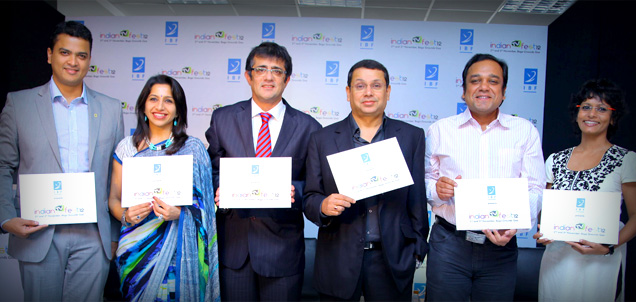
    Announcing the Indian Televsion Fest (from left to right): Keertan Adyanthaya, Monica Tata, Sunil Lulla, Uday Shankar, Punit Goenka and Lydia Buthello


    By Johnson Napier


    The god-like status that the medium of television commands in India today is indicative from the endless attention that gets showered on it from all and sundry. Whether for the advertisers who are willing to bend rules and swing  to their tunes or for the viewers who can take a liking to anything that’s thrown across at them (well, almost), the Indian broadcast industry is calling the shots in a manner that is pivotal to its growth.


    In fact, the popularity that it commands can be gauged from the growth that the medium has been throwing up in the past five years, which has been in the range of 12 per cent. This of course is backed by its ability to occupy a lion’s share of the ad pie and still remain a favourite medium for the advertisers.


    But while there are some obvious highs that ensue from the medium, the medium has been at the receiving end as well. Like the constant criticism it attracts for not being able to display a show of unity to voice common issues rather letting personal goals take precedence. Then there are also those who question the absence of a platform for the industry to come together and air and share views of common interest. But the last peeve may well be a thing of the past with the announcement of the Indian Television Fest 2012.


    The Indian Broadcasting Federation (IBF), led by president Uday Shankar of Star India and core festival committee members comprising Sunil Lulla of Times Television Network, Punit Goenka of ZEEL, Keertan Adyanthaya of NGC Networks, Monica Tata of Turner International India and Lydia Buthello of Star India announced the first-of-its-kind event for the industry. The two-day festival will be held at the Baga Grounds,Goa on November 2 and 3, 2012.


    The two-day fest would be a unique platform for the Indian and global broadcasting industry to network and exchange ideas through engaging panel discussions and master classes. Renowned names from India and across the globe are expected to participate in the mega event. And since it’s Goa, with the inviting beaches for company and some fun.


    Throwing open the idea to the gathering, Mr Shankar began by thanking his core team members, without whom the fest wouldn’t have been a reality. Explaining the thought process behind the exercise, Mr Shankar said: “The idea has been in the pipeline for almost a year now. We felt it was the right time to launch Indian Television Fest as the industry has grown big enough to manage an event of this scale. It basically stemmed from the need to create a platform where the entire broadcast industry could come together under a single roof – irrespective of the organisational and competitive background – so that there could be co-sharing and exchange of ideas and conversations on how the industry can take a big leap into the future.”


    According to him, what would make the event special would be its ability to get together honchos and industry persons from different verticals under television to come and be a part of the give-and-take. He affirmed: “Apart from some familiar and popular names the event will see the best in broadcasting brain trust from India and the world descend at the venue. The ultimate aim of ITF would be to service the larger Indian broadcasting community. It will also be driven with the dual need of being business-minded in its approach while at the same time having a social connect, as we believe the two are interlinked and cannot work in isolation from each other. All in all, we plan to make this event truly iconic in nature.”


    Giving a lowdown on the two-day event, Monica Tata of Turner India began by bringing to light some of the high points of the Indian broadcast industry. Providing a bird’s eye view of the current media scenario, she said: “India is the third largest market for media behind US and China. It has reported a growth of 12 per cent in the last five years which will continue to keep swelling. Further, the country boasts a reach figure of 500 million and is estimated to be worth Rs33,000 crore. This number is expected to triple to almost Rs100,000 crore by 2017. Needless to say there are tremendous opportunities that will enable the industry reach this figure in the coming few years.”


    Highlighting the tremendous opportunities that the Indian market presented for the future, Ms Tata said: “India has a penetration level of just 60 per cent leaving a lot to be achieved going forward. Further the C&S households are expected to grow to 88 per cent from the current 81 per cent. Also, the average time spent on television viewing is still low at 150 minutes compared to other countries that are almost double the number. And finally, with digitisation, DTH, HD taking off in a big way coupled with the unhindered growth of regional channels should see the industry enjoy prime status in the near future.”


    According to Ms Tata, some of the key themes scheduled at ITF include: best practices and masterclass that’ll be weaved around core areas of content, distribution, revenues, technology, etc; presence of visionary speakers like James Murdoch of International News Corporation, Andy Bird of Walt Disney, Hugh Johnson of Channel 4, Michael Lynton of Sony Corporation of America, Subhash Chandra of Zee & Essel Group, etc; debates and conversations; interaction with regulators and policy-makers; and finally encouraging cross-genre ideation.


    Presenting his viewpoint, Sunil Lulla of Times Television Network said: “There was no platform as yet in India where the issues and concerns of the Indian television industry were being raised and addressed. ITF will be a platform where one can learn, interact and demonstrate the road for the future. Three factors that’ll drive this event include the need for conversations, need for confidence to hold an event of this stature and need for commitment from the industry to take this industry from Rs33,000 crore to Rs100,000 crore by 2017.”


    On the key highlights to be expected at the event, Punit Goenka of ZEEL said: “We all know how New Media is going to be the platform of the future and we also know how regionalisation is going to take the industry further…and since regional has a lower base it is growing faster than the other genres. However, there are avenues that we need to discuss. Nobody has an answer as to how we will reach the Rs 100,000-crore mark but one has to start the process of thinking about it.” When asked if it would be a practically possible to reach the Rs100,000 crore mark in a short span of four years he said: “We have to talk about it and see how we get there. Nobody has an answer as to how we would get there. But unless you talk about it and bring it up in discussions how do we even make a beginning to reach there? I think the end goal is not important; it’s the journey which is going to be important.”


    When asked on the initial response that the event has managed to generate, Mr Lulla said: “Members from the broadcast industry have shown tremendous enthusiasm to the initiative, which can be seen from the initial buzz that is being created where registrations are concerned. As you know, we are a little late industry as we like to start things a little later. We hope the television industry supports us in a fashion by sending more members to attend the event. We have fantastic line-up of speakers from India and abroad; and of course, we would like the industry to stretch themselves a bit and sponsor many other themes and elements that we have lined up out there.”


    Mr Lulla added: “As you know, we are always a last-minute booking.com industry, so it’ll be a challenge to get a lot of people to attend the event. Also, there will be the challenge of generating advertising revenues so that we can stage the event successfully. But we are confident of putting up a successful event.”


    On the benefits that will accrue to IBF from the event, he said: “What IBF will particularly benefit from is take the ideas that come out and find out what will be the cornerstones for the industry going forward and what will become items of agenda. What people who come there to attend the event to take off is personal learning – so there will be ideas, new friends will be made…in all, it will be a mind-opening event, so to speak.”


  • The Half-Year That Was-II

    By Team MxM


    Continuing with the feature we carried on July 2 (Link: http://www.mxmindia.com/2012/07/the-half-year-that-was/), we bring in more views from the industry on the six months gone by. This half-yearly report card is again a mixed bag – while some have had an excellent run, others had few hitches on the way. Here’s bringing views from some leading players of the industry.


    Broadcasting:

    Rohit Gupta

    Rohit Gupta, President, Sony Entertainment Television

    So far, it’s been an excellent year for Sony network. And I’m sure it’s been same for the industry, at large. The industry is still growing and there have been no cuts in spends. People are still putting their money in the medium. I’m sure there is no gloom surrounding this industry. Even the 2008 slowdown didn’t affect us. So, there is nothing to worry about too.


    Sunil Lulla

    Sunil Lulla, MD and CEO, Times Television Network

    I would say, it has been testing six months for the broadcast industry. The biggest set-back has been the extension of the digitization implementation. The IBF ran a very good campaign for it but since MSOs couldn’t fulfill the requirements, unfortunately it has to be postponed. My advice to the ministry now would be to take strict actions and make sure the new deadline is met. It is important for the industry since it will shape the industry and help us understand it better too.


    By and large, important events in the broadcast industry like IPL, Indian Idol did well and a new show like Satyamev Jayate was launched. However, there is still a gap between how a show performs and what the viewers really want. Hence, I think TAM needs to be more clear and needs to increase its sample size too.


    But what really shocked the industry was the new adult timings and ‘A’ restrictions on television. What happened with Dirty Picture’s telecast was regrettable. Nevertheless, after the self regulation imposed by various channels – news and GECs – the quality of content has improved.


    As from the business point of view, from January till April, it was good; but May onwards the marketers have had a watchful attitude. It might not impact the industry at large, but a certain sections might get affected. Also, given the current economic climate, one will have to keep a very watchful eye for the near future.


    Prasana Krishnan

    Prasana Krishnan, COO, Neo Sports Broadcasting Pvt. Ltd

    The last six months have been eventful for the broadcast industry. First it was the whole discussion regarding digitization – from notifications to it finally getting delayed. Hopefully, the new deadline will be met as it is positive for the broadcast industry. Also, the new advertising guidelines set by TRAI will make sure that the market doesn’t get diluted.  Such moves will only benefit the industry and help it grow.


    However, there has been a slowdown in ad sales and revenue generation. Everyone knows what happened during an event like IPL. It is a slow phase right now, but the costs of purchasing rights are still high. So, it won’t be wrong to say that testing times are ahead.


    K Sriram

    K Sriram, GM, Vijay TV

    The last 6 months in the Tamil GEC space has seen a dramatic change in programming. KBC travelled into Tamil Nadu and with actor Suriya donning the role of anchor. The barrier between the big screen and television was truly breached for the first time. KBC Tamil ensured that prime time television in TN was redefined, as it not only cut across audiences, but also surged ahead of the power cuts and the IPL fever and eroded into SUN TV’s prime time shares. Vijay TV saw a growth of 41 per cent in the year in a market which was otherwise declining. Content came to the fore.


    Tamil television also saw the movie acquisition game being taken to another level with Nanban, the hit Tamil adaptation of 3 idiots, being screened within 100 Days on Vijay TV. Another path breaker given that A+ titles before were insulated for a year. Loud and clear in the Tamil GE space – the game just got bigger and in the last 6 months there was only one player playing the game. Competition is sure playing catch up.


    Marketers:

    Harkirat Singh

    Harkirat Singh, MD, Woodland

    The overall market in the branded retail segment has been seeing growth. The biggest change that one sees in this segment is that now the growth comes from smaller towns. In the earlier phase, the growth came from metros; and if one ventured into smaller towns in branded retail say a decade back, most likely, things would not fall in place. Now the risk factor in venturing into the smaller towns is much less and there are many players in branded retail who are turning towards these cities knowing that growth opportunity lies there.


    For Woodland, last six months have seen steady growth and we intend to open 60 stores this year, though the rider is to expand but be selective. The market, I would say, has been slow. But that is the trend I would say during a particular time of the year where each year business is slow and picks up only later. As for retail, I think the market is vibrant and the sector has been seeing activity and is slated to see increased activity with FDI in retail being relaxed.


    Vikas Jain

    Vikas Jain, Executive Director and Co-Founder, Micromax

    For the mobile phone industry there has been no concern about consumption, as the demand for new sets continues to be on rise. The change being that now the customers are well-educated on the mobile sets they want to buy and with change in technology there have been change in the preference on the type of mobile sets. The key, therefore, is to recognize and anticipate the product in demand and meet the needs of consumers. The players need to create a roadmap of the products to be launched rather than get carried away by technological changes. Keep an eye on the changing trends and tweak the launches accordingly.


    On the flip side, the devaluation of rupee has put pressure on the margins and Micromax being a player that vouches for being cost effective will not yield to increasing prices of the phone sets. As for following any trend on cost cutting on the marketing and communications front, we have not done any. We continue to be associated with Bollywood and Cricket and would associate if any good opportunity came to us.


    Media Agencies:


    PM Balakrishna

    PM Balakrishna, COO – Allied Media

    I think the months of April-May were on par but June was not so great. The feeling is that of a slowdown for sure. But an advertising perspective there is cause for worry. It’s a reflection of the economy not looking good in the past few months with petrol prices seeing a hike, inflation seeing a rise and other such factors. These factors play a part in the way media spends pan out.


    Where television is concerned there were some properties that did well like the Euro Cup recently and also the IPL before that, but then there are signs of slowdown with advertisers not being too keen to be associated with properties and also with the rates coming down. With Print, which sees ads from sectors like Real Estate and so on, there was a sudden upsurge that was seen in June with most property dealers advertising a lot in dailies and magazines. But that may be a sheer sign of desperation because transactions are not really happening or consumers are not really picking up stocks. There has not been a surge from other sectors as well and they are treading cautiously. So if one were to do a quarter to quarter analysis, one would see that there has been a decline in April-June this year compared to the same quarter last year.


    As for the revival, what I have observed recently is that clients have been drawing up plans which they might want to unveil soon, probably around the festival season. But I think overall, the growth will meander along in the next quarter also. Probably the last four months of this year may turn out to be good but whether it is enough to offset the slow-burn over the first six months – I am not too sure.


    Anamika Mehta

    Anamika Mehta, COO – Lodestar Universal

    Although we are six months into the year, I do not think the industry will record the original projections that were forecasted. We are just into the first quarter and therefore we cannot conclude much but overall some categories are seeing a slowdown. Sectors like real estate and finance have seen a slowdown in the spends but FMCG companies are yet to go slow. They are playing a cautious game though.


    Also, much of the growth is also the result of the current economic conditions which do not look good at the moment. But it will not be all gloom and doom as is being witnessed in Europe but it will also not be a great story as was being propounded forIndia. Also, one cannot predict the exact figure beyond a point but the approach is going to be that of caution.


    Sundeep Nagpal

    Sundeep Nagpal, MD, Stratagem Media

    I would say the media industry in India is already feeling the effects of the economic gloom that has been in the works for some time now. From what I have been given to understand the first quarter of this fiscal has been reasonably difficult. In fact nothing can be said about the trend that will emerge in the next six months as there is some amount of scepticism in the industry. Unfortunately, in our industry fluctuations are happening faster than what we have witnessed before – whether up or down. It takes a lot of deeper understanding and attention to details if one has to figure out what the current media scenario correlates to. Frankly, even I do not have an answer to that. It’s very easy to say that it is dependent on the overall global or Indian outlook but that is too macro a view to attribute to. If I was a media planner, I would be looking at ways to look out for the early signals and accordingly find out the relevant methods to adopt. Overall, the industry may just about see a decline in its growth numbers for 2012 than what was originally anticipated.


    Advertising:


    Arvind Sharma

    Arvind Sharma, Chairman, Indian Subcontinent, Leo Burnett

    As the GDP numbers have been showing a slowdown, one can see that it is getting reflected in the advertising spends too. While at peak the advertising industry was showing a growth of 25 per cent, it would be somewhere around 7 per cent in the first half of 2012. At individual agency level, while we have seen a growth on 40 per cent in 2010 and 25 per cent in 2011, in the first half of 2012 we would see a growth of around 15 per cent. But I think at an individual agency level we still can manage fairly good growth as India has close to Rs35,000 crore advertising expenditure hence the need of the hour is to get aggressive and lay claim to the bigger pie from that budget. This will happen from organic growth from current clients to acquiring new businesses. This growth will also come from making our offering robust.


    If one were to look at growth, then in our case, I would say that we have seen growth from our existing clients but growth from new clients or from new major initiatives have been significantly less. However, I would say that the mood currently is to be cautious.


    PR:


    NS Rajan

    NS Rajan, Managing Director, Ketchum Sampark

    While we have grown by about 20 per cent in the first half, we are witnessing headwinds gathering across various sectors which can in turn affect growth in these segments and consequently the PR business in the second half.


    Also margins could be under pressure in the coming months as the increased cost of servicing may not be compensated by incremental revenues unless the economic environment changes significantly which can lift up sentiment.


    [To be Concluded]


  • Can we achieve the October 31 deadline?


    By Shruti Pushkarna


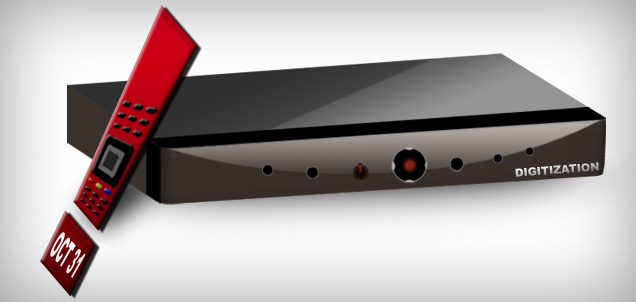
    Under mounting pressure from various stakeholders, the government announced an extension of four months for the first phase of digitization of cable television. Digital Addressable System (DAS) will now be effective from November 1 in the four metros, Delhi, Chennai, Kolkata and Mumbai.


    A press release issued by the I&B Ministry read: “The Cable Television Networks (Regulation) Amendment Act, 2011 has made it mandatory for switchover of the existing analogue Cable TV networks to Digital Addressable System (DAS) by December 2014, in a phased manner. In respect of four metros of Delhi, Mumbai, Kolkata and Chennai, the digital switchover is mandated to be completed by 30th June 2012.”


    But towards the end in the press note, the ministry acknowledged that keeping ground realities in mind, the MIB is compelled to set a new deadline. The statement reads, “…keeping in view public interest and after intensive and extensive consultations, as well as written commitments from all the stakeholders, for fully implementing the regulations of TRAI, the Ministry of Information & Broadcasting has decided to modify the 30th June deadline for a complete switch over to 31st October 2012 for all four Metro Cities i.e Delhi, Mumbai, Chennai and Kolkata. All the TRAI regulations for DAS will come into effect from 1st November, 2012.”


    The extension was announced notwithstanding the pending matters before the Delhi and Bombay High Courts and the TDSAT. The Bombay High Court will hear the petition on June 21 and the Delhi High Court will hear the matter on June 25, which is also the date when TDSAT will hear a similar matter filed by LCOs and IndusInd Media & Communications Ltd.


    Soon after the announcement of the new sunset date, MxMIndia spoke to various stakeholders to get their reactions on the new timeline and to find out if October 31 is an achievable deadline. While some welcomed the government’s decision for postponement to November 1, others felt that the extension issued by the ministry is not enough for the humongous task at hand.


    MSOs welcome the govt’s decision, though some still unsure of achieving the deadline

    Ashok Mansukhani

    Ashok Mansukhani, Director, IndusInd Media & Communications Ltd said: “I think it’s a sensible development and it will help in smooth transition to digitization. The new date is completely achievable, it was fully discussed in the taskforce. I don’t know about Tamil Nadu since the government there is supposed to install the set top boxes but for the other three metros, certainly it will happen. It’s a welcome step and it was fully discussed in the taskforce and it’s a natural result of the taskforce deliberation.”


    JS Kohli, CEO, Digicable said: “We are happy with the postponement. Although it’s not a six month extension but yes we can deliver on the new date. We are satisfied with the extension.”


    JS Kohli

    Ravi Gupta, Independent MSO, Delhi said: “The new sunset date is good although it is two months less than what we were expecting. They should have given a six months extension, I still don’t think we can achieve the task by November 1. A lot of digital headends are under installation and integration is what takes time. I don’t think anyone from the ministry has done a detailed study of this process. No senior official from the ministry or from the TRAI has visited a digital headend. A minimum of six months extension should have come.”


    LCOs happy with the extension but feel four months not enough

    MR Srinivasan, General Secretary, Chennai Metro Cable TV Operators Association said: “It is good in a way because we are not yet ready because in Chennai only 2 lakh boxes are available. But now atleast we have some breathing time. Moreover, the government of Tamil Nadu is planning to start some MSO operation in Chennai, so it’s some relief and we have some time to plan ahead and be ready before the sunset date. Actually we expected an extension upto December but atleast we have got a slight relief, something is better than nothing.”


    Sanjay McGee, Local Cable Operator, East Delhi said: “Although it’s a good decision, in the last meeting between LCOs and I&B Ministry, Rajiv Takru agreed that four months extension was not enough. At first the ministry refused any extension, but when we urged on atleast three months extension, Rajiv Takru stated that if there has to be an extension then take atleast six months. But they have taken a middle path and decided on four months. They shouldn’t have announced the extension at this point, they should have waited till June 29. Now the consumer will not take the deadline seriously and the pace will slow down. If we keep working at the same pace as of today, then we might be able to achieve the new deadline.”


    Swapan Chowdhury, General Secretary, Cable & Broadband Operators’ Welfare Association, Kolkata said: “I am not satisfied because four months will not cover up the whole situation. Government might have given an extension but they have not considered any facts and figures. I say that because 70 per cent in Kolkata still don’t have set top boxes (STBs), so four months are not enough for deployment of such a huge number of STBs. It will not even happen on November 1. Maybe another 20 or 30 per cent seeding will be done up till the new date but what about the remaining numbers. In the June 8 meeting with the I&B Minister it was categorically mentioned that none of the government appointed nodal officers have checked the actual seeding position or the status of ordered material. Unless and until the government studies the ground situation deeply it will again fall back. The actual facts are different from what’s being presented on paper. They should have given an extension upto atleast Jan 1.”


    Broadcasters disappointed with the postponement, suggest on strict penalties for those who don’t adhere to the timelines

    Sunil Lulla

    Sunil Lulla, Managing Director & CEO, Times Television Network said: “It’s a complete disappointment. What is the guarantee that the new date will be held, when there is a date set by law, why should the date be changed? A lot of time, money and effort has gone by broadcasters in promoting and communicating the date and making sure consumers went along. The industry and the consumer suffers because there are some parts of the entire constituent which may not have adhered to these deadlines, may not have implemented the seeding of the boxes. This was announced on the net through a press release, the government hasn’t really notified us. I think it would have made sense for them to invite all stakeholders and agree on a new date if there was to be one and to a process by which these date wont slip.”


    Rahul Sood

    Rahul Sood, Head- Network Distribution & Affiliate Sales, NDTV said: “Basically LCOs were pushing for a Jan 1 timeline and broadcasters were saying that if you have to give an extension, it should be only for three months. So I guess they have taken a middle path by extending it upto October 31. The TRAI guidelines which came out on April 30 were such that within six months there has to be implementation of the same. I think that’s the loophole that MSOs and LCOs were quoting and asking for a minimum six months extension. So keeping all that in mind, I think ministry has taken this step. But if as an industry we have this discussion again on October 20, then it’s a real shame. There should be no excuses now, timelines have been extended, now there has to be a joint willingness to from all stakeholders to make sure this happens. While they have issued this date change, I think with that strict penalties and penalization code should be put in place as well for those who don’t adhere to the new timelines.”


    An independent commentator says new sunset date ill-conceived

    Dinyar Contractor

    Dinyar Contractor, Editor and Executive Publisher, Satellite and Cable TV Magazine said: “This is not going to work, this date is ill-conceived. There is no way that set top boxes can be procured and deployed in that timeframe even if the order is released today. As I’ve mentioned earlier, delivery time on set top boxes alone is around four months so this extension makes no sense except postponing one more extension. Any date prior to end of December is not realistic and is not going to resolve the problems or the issue, which is obtaining and deploying set top boxes. So I feel that the extension is inappropriate.”


  • TDSAT reprieve for broadcasters, stays TRAI’s ad duration rule

    By Shruti Pushkarna


    The Telecom Disputes Settlement and Appellate Tribunal (TDSAT) has stayed the Telecom Regulatory Authority of India’s (TRAI) notification to limit the duration of ads to 12 minutes per hour. The case will come up for hearing next on July 17.


    The TDSAT stay comes is a relief to broadcasters who slammed the TRAI’s move to limit the duration of ads on their networks. Uday Shankar, President of Indian Broadcasting Foundation (IBF) and CEO of Star India has confirmed the development to MxMIndia.


    In an earlier statement, Mr Shankar had said, “TRAI has no jurisdiction in the subject. Advertising is governed by the Cable and Satellite Act and the appropriate authority is with the ministry of information and broadcasting. The regulator is overstepping its brief.”


    Speaking to MxMIndia after the stay order by TDSAT, Mr Sunil Lulla, Vice-President, IBF and Managing Director & CEO of Times Television Network said, “Since the stay is only for a month, there’s another hearing coming up. It’s not appropriate for us to comment when it’s work in progress. As for our stand on the ad cap issued by TRAI, our stand is well known and it won’t change.” Mr Lulla, who is also on the Board of Directors of the News Broadcasters Association, had criticized the TRAI’s decision on limiting the duration of ads, in the past. He said, “This move is completely ridiculous. Self-regulation is the best regulation.”


    Broadcasters believe that low revenues from subscription leave them no option but to rely heavily on revenues from advertising. However, there is a large section of media professionals and consumer organizations which which believes that broadcasters have misused the leeway given to them so far, and the number of ads screened at peak hours mars the viewer experience.


  • TAM to cross 10,000 Peoplemeter mark soon

    By Meghna Sharma


    In a country like India with numerous channels on air and where television watching is an obsession, it is vital for broadcasters and advertisers to know how well the channels and the various programmes on them fare. TAM, a joint venture between AC Nielson Research Services (Nielsen Company) & Kantar Market Research, was mandated by the broadcast and advertising industry to do exactly that. Over the last decade-and-a-half, TAM has been optimizing coverage of the growing TV audience across the country by increasing breadth (expanding to cover larger number of new markets) and depth (enable deeper level of analysis in existing data markets).


    By the year end, the TAM Media Research plans to increase its sample size by nearly 2000 households. The present expansion is in alignment with the above thought process and is an attempt to bring insights on audience engagement with TV Content. “The current Indian broadcast landscape is dotted with some very different and complex influencing factors like the need to dive deep into untapped semi-urban/rural markets and the upcoming mandate of digitization,” says LV Krishnan, CEO, TAM Media Research.


    He adds, “With digitization, we are already seeing increase in not only the channels entering the distribution pipe but also audiences trailing more content across newer genre of channels. As the long tail of unique content channels explode in 100% digital markets (Phase I being the Metros), TAM will be enhancing the sample size in these digital markets (Metros) to throw more light into audience consumption of these unique content channels. This enhancement will benefit micro targeting of viewer groups for not only broadcasters with their content but also advertisers interested in specific audience groups for their brand communication.”


    Keeping this in mind, TAM will be taking a few steps. The first initiative being taken is to increase the panel size in Mumbai, Delhi, Kolkata, Chennai, Bengaluru and Hyderabad totalling 650 homes. This will increase the SEC AB sample size in these metros by around 60%. All additional 650 homes will be recruited among C&S SEC AB homes.


    But that’s not all. As part of the initiative, TAM will expand in the less than class I India markets too. In the annual January 2012 establish report, the fastest growth for digital TV platform continued to be from less than Class I towns (with population of less than one lakh) and semi-rural markets in the Hindi belt markets. “This affirmed our hunch of the need to beef up representation in the semi-rural markets. Since 2009, we have been covering Maharashtra in the ‘Less than Class I’ geographic stratum. To this stratum, we are now adding seven more states: Gujarat, Madhya Pradesh, Punjab, Haryana, Himachal Pradesh, Rajasthan and UP. These will be reported as individual states except for Punjab, Haryana, Himachal Pradesh which will, as usual, be reported together as PHCHP,” adds Mr Krishnan. The increasing the sampling across these five new markets will be 1110.


    With this expansion, TAM will practically complete covering the entire urban stratum for the Hindi Speaking Market group. This also means that TAM will now cross the 10,000 Peoplemeter deployment mark and will be add 63 more towns to the existing base number of (162) sample towns with this expansion. Now, it will cover 225 towns.


    However, there are some who feel that an increase of a sample size of 2000 is not enough. “From the current sample size of around 8000, an increase of around 2000 more does brings up the number, but considering the size of the country it’s not an ideal number to know the ‘correct’ pulse of the viewers,” feels Anamika Mehta, COO, Lodestar UM.


    Agreeing with her, Tarun Katial, CEO, Reliance Broadcast Network Ltd., adds, “With the current sample size, it is very difficult to map the evolving choice of consumers. And right now TAM does not represent the digitalized packages. Therefore, until and unless it is done universally it won’t be able to ‘help’ like it should be. I would want TAM to look at their international counterparts to learn from them how they tackle the issues.”


    Even Sunil Lulla, MD and CEO at Times Television Network believes it’s high time that TAM woke up and smelled the coffee. “We are delighted that finally the industry pressure has worked. Many broadcasters, including us, have been telling TAM about various issues which affect our rating process. So, we hope that this increase in sample size, though small but relevant, will benefit and mark a beginning of improvement and swift growth of the system.”


    There are many who feel that the move by the TV audience measuring firm should be welcomed and shouldn’t be criticized. “We should understand what a tedious process it is. And over the years, TAM has been working to help the industry. TAM has been working with the over 8000 sample size for years now, so we should give them credit for increasing it. This move will not only increase the household numbers but also increase the cities which will make the sample more robust,” points out Anilkumar Sathiraju, Mudra Max Media, Head – South. As proposed, TAM has started preparing to implement both the initiatives in the full swing. Both the data cuts are targeted to be made available starting January 2013.


    Mr Sathiraju adds, “However, there is no denying the fact that over 10,000 sample size for a country with over one billion population isn’t correct. And I hope and wish that this will lead to a quicker growth in the next level of the phase. It is a challenge and hopefully won’t take years.”


    Mr Krishnan is of the view that the measures initiated will benefit broadcast. “Over the last three years, in our annual baseline (Establishment) study we conduct and release in Week 1 of January, we are witnessing a tremendous growth of Cable & Satellite TV and Digital TV platform penetration. This growth is fuelled by the growing aspiration to engage in multiple Content – Entertainment & Information, that these platforms are providing on a simple TV screen. In the Jan 2012 report, the fastest growth for Digital TV platform has come from less than Class I towns (with population of less than 100,000) and Semi Rural markets in the Hindi belt markets. Once access and engagement with multiple content happens, it is pertinent to measure the behaviour to help broadcasters, in particular, the regional language broadcasters for aligning content to these audiences. It also satisfies advertisers and nedia agencies needs as their need to target brand communications to consumers in these markets become a reality. Also, these new markets from TAM will give you a closer picture to the Rural India’s TV consumption habits in the Hindi heartland.”


    Meanwhile, with the imminent digitization in the four Metros, Mr Krishnan explains that in a market in Mumbai and  Delhi, with already 25% of the TAM panel and market digitized, his team and he are seeing new patterns of viewing settling in. “More viewers are glued to genres of their choice and landing straight on their favourite stations. Time spent with TV and within specific genres are increasing too. This will mean that there is enough scope for more channels to either get launched within the existing genres or new genres with Unique Content will launched soon in the new 100% digital era (given that creating access to the Content will be easy!). Tier packages will get formed and purchased by the potential viewers, thus sub-segmenting the audiences into more fractions! To capture these new behaviour trends, TAM is increasing the metro samples by almost 60% and in markets like Mumbai and Delhi, TAM is almost doubling the sample!! This will help broadcasters and bdvertisers to not only understand audience content consumption patterns but also target their programming and brand communications very well.”


    So what next? The preparation to implement both the initiatives is in “full swing”. Both data cuts will be made available starting January 2013.Also, with an eye to aid the understanding of the digitization progress, TAM has initiated The TAM DASES (DAS Estimation Study) : A study focused on the Phase 1 markets (as notified by the I&B Ministry for DAS implementation). Wait for it!


  • From agency maverick to ‘khadoos’ client…


    By Shubhangi Mehta


    Switching jobs is an avenue for growth. But how does it work when the switch is drastic – such as going from an agency which creates a communication for a brand, to becoming a part of that brand? With increasing numbers of agency heads moving towards the client side, it looks like a trend.


    A mix of work and pleasure is what agency life promises an individual. With that also follows a pattern of sleepless nights, tight deadlines and the pressure to impress the client. What happens when one moves to the client side? How does life change, and do the switchers miss the agency days?


    We have an ample amount of such examples already in front of us. Rahul Kansal, Sunil Lulla, Ajay Kakar, Abraham Alapatt and Sheran Mehra are some such examples.


    Kamal Basu, Head of Marketing, Skoda, who was working with Saatchi & Saatchi is the most recent example of such a move.


    On his new role, Mr Basu said, “Moving to the client side is all about trying something new for me. I personally feel that advertising agency and brands work very closely and cannot do without each other hence the changeover is fairly easy as compared to moving from an agency into banking. For me right now, the most important thing is to have the mindset of a student eager to learn new aspects of the business.”


    Ajay Kakar, CMO – Financial Services, Aditya Birla Group who has worked in a creative agency environment as well, said, “The grass is always greener on the other side. Having been on both sides of the table, at the agency and client ends, I can now relate and empathize with this sentiment. Throughout my 14+ years experience at the agency side I shared the sentiment of every colleague, ie, ‘Hum kaam karte hain, while clients aish karte hain’. And during my more recent six-odd years at the client end, I can’t deny having heard or felt the sentiment, ‘Yeh agency waale kya jaane, what pressure we face’!”


    On the agency side, one is usually thought to be a lot more casual about ideation, creative, deliverables etc and the perspective is that it changes completely when one becomes a client.


    Rahul Kansal, CMO, Bennett, Coleman and Co, said, “I moved to the client’s end nine years ago. I had experienced agency life for approximately 20 years and was itching to implement my own ideas rather than just being an advisor. Though the two lives or work culture cannot be compared, yet as a client there is an ownership of the brand which leads to a personal connect.”


    Certainly an agency person enjoys agency life. But an invitation to partner a client is a thrilling mandate which might be quite enticing.


    Abraham Alapatt said, “After 10 years in the agency business, I was keen to grow into a more complete ‘marketing’ professional (as opposed to remaining a pure advertising man) and when I was offered my first head of Marketing role in 2005 with Reliance Mutual Fund, I took it most eagerly.”


    For those in the agency, the universe tends to revolve around advertising and agency imperatives. But as a as a marketer, one comes to understand that advertising and the agency are key cogs in a very large wheel.


    Sheran Mehra, Head of Marketing and Corporate Communications at Dhanlaxmi Bank, said, “I had planned my career in such a way that I wanted to move to the client side after working with an agency, since I wanted to play a larger part than just being an advisor for the brand. The agency setup is more informal, and more like a family. Not that here it isn’t like family, but it’s more formal, more of a corporate environment.”


    Alapatt further explains, “In terms of effort and pressure, being on the client side is as challenging and difficult, because the line of responsibility and accountability, especially when it comes to ROI, budget accountability etc, is a lot more definitive. If earlier at the agency, I spoke to my clients every morning and then planned my day’s priorities before catching up with my team and then breaking up jobs to meet expectations – now as a client I have to plan my day ahead (based on current business and leadership priorities) and then along with my team, chart out tasks/timelines/deliverables. I also have a lot more information available to help prepare an annual plan, review it regularly, and then make more meaningful contributions to overall marketing and business strategy then when I was on the agency side. Overall it is a lot more organised, planned, systematic, and accountable.”


    A client initiates a brief. And his job is not complete till long after the agency hands over its input and output.


    The most obvious change after moving to the client side is that one can now plan a day or a schedule and prioritize a lot more, and there are far fewer firefighting situations than when working with an agency. This is probably because ad agency teams (who work with multiple clients) need to constantly re-align their priorities in line with their clients’ changing needs.


    Mr Kakar further adds, “Today I feel like the ‘complete man’, because I now have a realistic perspective from both ends. Having been on the agency side I believe that I can be more sensitive to the agency’s needs and constraints. But on the other hand, I am more demanding on what I know is possible. But life in an agency is what I miss… the masti and the laughter in the corridors, the camaraderie, the training sessions, et al.


    “As a client we can say that one is responsible for one’s team delivery (besides your own KPIs). These are directly linked to the company’s overall performance targets and plans, and every idea, plan, activity, campaign needs to be very clearly defined and measurable as one is accountable for every rupee spent to the CEO and the board of directors.”


    Most of the people who have made a move have stuck to the client side, which seems to indicate that working as a client is more enthralling.


    “I am not sure I yet have an answer to which part I enjoy playing more. But I do believe that the agency and client are two sides of the same coin. A marketer’s success depends on his agency partner, just as an agency’s existence depends on its clients. And only when both of them come together in harmony, is there real value in the form of fun, fame and fortune, adds Mr Kakar.


    While Mr Alapatt muses, “Looking back, I am glad I made the shift for the growth, learning and opportunities it has afforded me. But I can confidently say that the first 10 years of grounding/experience that I enjoyed with ad agencies like Ogilvy and the exposure to multiple clients/categories has been invaluable to my growth, both personally and professionally.”


    The big picture seems to be that the transition from one side to another is a natural evolution and part of the growth process. And this part of the journey as a client can be said to mature one as a person and marketing professional.


  • Times TV boost for Ajay Trigunayat, Avinash Kaul

    By A Correspondent


    Times Television Network has enhanced the responsibilities of two of its senior personnel: Avinash Kaul, who will now be Chief Executive Officer ET Now and Zoom, and Ajay Trigunayat, who will be Chief Executive Officer, English entertainment channels.


    Mr Kaul and Mr Trigunayat will continue to report to Sunil Lulla, Managing Director and Chief Executive Officer (MD & CEO), Times Television Network.


    Announcing the new organizational focus, Mr Lulla said, “2011 has been a significant year of growth for Times Television Network (TTN). As the channels consolidate positions, it offers opportunities for talent to develop. Mr Kaul and Mr Trigunayat will bring new ideas, energy and passion for the network’s ambitious growth agenda. We wish them great success.”


    During the course of 2011, TTN’s revenue has grown by over 50 per cent, its reach has spread to 26 countries besidesIndiaand its channels are in leadership positions.


    Speaking on his appointment, Mr Kaul said, “‘Bollywood’ and ‘Stocks’ are deep passions ofIndia. I’m delighted to have a blend of entertainment and information as part of my mandate. I look forward to ensuring that ET NOW continues to consolidate its position asIndia’s premier stock market channel.”


    Mr Kaul was previously the CEO of Zoom and prior to that has worked with Fulcrum (Group M), Discovery Communications, Star, NDTV Media and Sahara One in strategic and management roles.


    Mr Trigunayat, commenting on his new role, said, “Movies Now has just about completed one year of stellar performance and I am looking forward to consolidating and growing the franchise of Hollywood entertainment for Times Television Network”.


    Mr Trigunayat was earlier Channel Head of Movies Now. Prior to joining Times Television Network, he has been in theMiddle Eastin an entrepreneurial capacity. He has also held the position of Business Head of the Zee English Channels bouquet, built brands and strategies for Lintas, Contract and Rediffusion and was in Sales at Pepsi.

  • Uday Shankar re-elected IBF president

    By A Correspondent

    Star India CEO Mr Uday Shankar was re-elected president of the Indian Broadcasting Foundation at its annual general meeting in New Delhi yesterday.

    Until recently treasurer, Mr Sunil Lulla, CEO and MD of Times Television Network will be vice-president. Zee Entertainment Enterprises Ltd CEO Punit Goenka will be the new treasurer.


    Detailed report on MxMIndia tomorrow