Tag: Suman Srivastava

  • Weekend Donor programme gets enthusiastic response from volunteers

    By A Correspondent


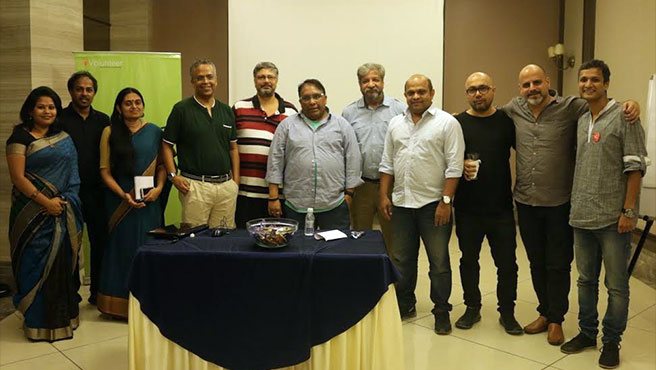
    Five creative leaders joined with 25 committed creative people and 11 NGOs to create a success of the first ever Weekend Donor event in Mumbai last week. The Weekend Donor programme was the result of a joint effort between iVolunteer, a social enterprise that seeks to connect volunteers to NGOs, and Marketing Unplugged, a marketing consultancy firm founded by Suman Srivastava.   This event was part of the Joy of Giving Week, now called DaanUtsav.


    The 11 NGOs briefed the creative teams on their marketing and communication challenges and each creative team then came up with a solution within 36 hours. Their work was judged by a panel of creative leaders from the industry and the winning teams won a cash prize of Rs 50,000.


    The judges decided to declare joint winners. Both the winning teams were from FCB Ulka. The team of Pankaj Sinha, Niraj Patil and Praveen Chavan won for their work for Cuddles Foundation. While the team of Dia Kripalani, Shambhabi Raha and Shweta Hoyle won for their work on YRG Care.


    The creative teams who participated in this effort came from FCB Ulka, FCB Interface, Publicis and Contract. The judges were Bobby Pawar (Publicis), Agnello Dias (Taproot Dentsu), Ashish Khazanchi (Enormous), Prashant Godbole (Ideas@Work), Vineet Mahajan (Contract) and Venkat Krishnan (DaanUtsav). The judges got into the spirit of the event by contributing their own money and volunteering their own time for specific NGOs who they were fascinated by.


    Shalabh Sahai, founder iVolunteer said: “This is more than a contest.12 NGOs leave with communication solutions developed by some of the brightest and most enthusiastic minds along with a potential to build a longer term relationship with each of them.”


    Added Suman Srivastava, founder Marketing Unplugged: “I am glad that these 25 young people from the advertising industry got a taste of volunteering and giving their most precious resource – time. I am delighted with the quality of work done in the short time. I hope this becomes a regular event and spreads to more cities.”


    The participating NGOs were: Guidestar India, Letzchange, Cuddles Foundation, Sol’s Arc, Oscar Foundation, Helpage India, Make a Wish India, Values India, iVolunteer, India Cares Foundation, CSA, YRG Care.


    DaanUtsav (earlier Joy of Giving Week) is India’s largest festival of philanthropy. Started in 2009, this festival has seen millions of people experience giving in the most amazing and inspiring of ways. From railway stations and classrooms in poor schools getting a makeover to CEOs of corporates pledging their time to be shadowed by wannabe entrepreneurs, from vegetable vendors contributing a portion of their wares to old age homes to young children raising a rupee a day to give away to charity… this festival has touched scores of people – those giving and those receiving.


  • Adspends don’t make a brand big: Suman Srivastava


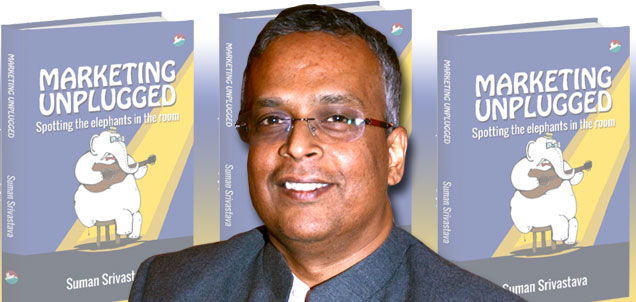
    Veteran advertising professional Suman Srivastava, who is vice-chairman and Chief Strategy Officer at FCB Ulka, has authored a book entitled ‘Marketing Unplugged’. In this interview with Pradyuman Maheshwari, Srivastava talks about the changing demands of marketing in India, and how the world’s biggest brands were not built on huge ad spends


    You’ve dwelt on the changes in the way marketing is practised today. Would you say this is because of changing needs of consumers, or have organisations and their stakeholders gotten more demanding?

    Change is a cliché. The drivers of change are equally clichéd — technology, social media, consumer sophistication. My perspective, though, is that marketers seem to think their profession has reached maturity and doesn’t require further innovation. Or that innovation needs to come from doing the same things as everyone else, but only better. This book is really a cry for innovation in the way we approach problems, and in the tools we use to deal with them. These days everyone doing well is referred to as a ‘brand’. From cricketers to film stars to even political parties or even our country. A lot of the attempts to treat products, services and people is not well-strategised or executed by trained practitioners.


    Would you say marketing is no longer the preserve of trained B-school graduates?

    Marketing was never the preserve of B-school graduates. One of the great things about marketing is that the lead is often taken by practitioners in the field and then academia catches up, rather than the other way around. I would say that the key problem may be that too many trained practitioners are trying to manage brands. They are all doing it in exactly the same way as the next guy. This is a recipe for disaster. I have always maintained that the best B-schools train you how to think and approach a problem. That is the valuable bit. The tools they teach you are outdated by the time you step out of class. If you cling to those tools, then you are unlikely to succeed. Huge ad spends are often mistakenly considered to comprise smart marketing, as evinced by the approach adopted by big retailers and some flush-with-funds e-commerce players.


    So what is your view, and recommendation, to marketers?

    The strongest brands in the world today are Google, Apple, Starbucks, Facebook, Tesla, Red Bull – and none of these was built by huge ad spends. The big e-commerce players are not really brands; they are just great deals. Brands command a premium. These guys are discounters. Perhaps that is a lesson to all of us.


    You’ve written on how Apple has succeeded in generating a buzz without using social media. As competition gets stiffer for Apple from the big and small device players, do you think the company will need to influence opinion via social media?

    What I have said is that Apple does not have a direct presence in social media. But it already influences social media. It is a brand that is obsessed with word-of-mouth and is quite skilled in handling that. Look at the way it leaks information about products, creates Mac events and uses its fan base to advantage. The company does use social media, but it doesn’t do posts.


    It’s interesting that you write about brand experience. But in India, while attempts are being made to have smarter packaging and design, attempts to improve the experience are generally considered an unnecessary addition to overheads. Like it happened with Kingfisher. Would you say that brand experience is a casualty, given RoI presssures?

    The problem in India is that brands think it is cheaper to get a new customer than serve an existing one. It certainly is simpler to get a new customer. The market is growing and mass media still works. But creating a brand experience is hard work and the results are not instantaneous. Still, I would argue that this is a short-term view; If you take a lifetime-view of the customer’s interactions with the brand, then it is far better to improve brand experience than not.


    Kingfisher was a marketing success story that was undone by one bad business decision (to buy Deccan). Even today, there are many customers (including myself) who yearn for that brand and would love to fly the good times again.


    Marketing Unplugged – Spotting the elephants in the room By Suman Srivastava

    Is available to purchase at: www.marketingunplugged.in

    Price: Rs 399 (Paperback), Rs 199 (Kindle)


  • FCB Ulka appoints Saad Khan as VP, Strategic Planning

    By A Correspondent


    Saad Khan

    FCB Ulka Advertising announced the appointment of Saad Khan as Vice President, Strategic Planning. Saad has spent over 17 years building brands and has worked with some of the biggest advertising houses in India like Leo Burnett, Lowe Lintas, Dentsu Marcomm and Euro RSCG. In 2011, he founded ‘Marketing Unplugged’ along with Suman Srivastava.


    Commenting on Saad’s appointment Suman Srivastava, Vice Chairman – Strategic Planning, FCB Ulka Group said, “Saad is one of the most creative planners that I have ever worked with. Many creative people have told me that they love working with Saad because he makes their job easy. To me that is the highest compliment that a planner can get. I have worked with Saad almost continuously for the last 10 years and it is great to have him as part of the strategic planning team at FCB Ulka.”


    Suman Srivastava

    Saad started his career as a management trainee at Leo Burnett. His passion for brands and finding innovative strategic solutions for clients led him to being given independent charge of Coca-Cola regional and key account businesses. He has a rich cross category experience having worked on brands like Coca-Cola, Wills Lifestyle, Honda, Jack Daniel’s, Voltas, Max New York Life, Volvo and Reckitt Benckiser. Saad loves to challenge formulaic marketing. Being inspired by the fresh wave thinking happening in the sphere of behavioural economics and consumer understanding, Saad brings in a larger perspective beyond just advertising. He strongly advocates the philosophy of ‘helping businesses innovate’.


    Speaking on his new role, Saad Khan, Vice President, Strategic Planning, FCB Ulka said, “Excited to be back in the business of advertising after consulting. It is like coming back to the alma mater.  There is a lot of energy and fervour at FCB Ulka which is infectious, and this agency culture driven by Rohit Ohri and Suman Srivastava, will propel me to do work which is distinctive and brave and will help client businesses stand out and grow.”


  • Suman Srivastava appointed as Vice Chair & CSO, FCB Ulka Group

    By A Correspondent


    Rohit Ohri, Chairman and CEO FCB Ulka Group has announced the appointment of Suman Srivastava as Vice Chairman & Chief Strategy Officer, FCB Ulka Group.


    Rohit Ohri

    Commenting on the appointment, Rohit Ohri said, “Good people make good things happen. That’s my guiding principle as I build my leadership team at FCB Ulka Group. In Suman I see a brilliant mind, a deep passion for brand building and inspiring leadership. I’m delighted to have him as my strategic partner as we write a new chapter in the history of FCB Ulka in India. ”


    A graduate from Delhi University, IIM Ahmedabad and IMD Lausanne, Suman started his career with the Lintas Group and was part of the team that set up SSC&B. He then moved on to Euro RSCG in India and eventually became its CEO as well as Chief Strategy Officer for its Asia Pacific region. Suman then turned entrepreneur and started a strategic consulting firm – Marketing Unplugged, which will now be a part of the FCB Ulka Group.


    Suman Srivastava

    As he takes charge in his new role, Suman Srivastava said, “I seem to change jobs every year in which India hosts the cricket world cup. I started my career in Lintas in 1987, then moved to Euro RSCG in 1996 and started Marketing Unplugged in 2011. I am thankful that Rohit offered me such an exciting new role just in the year that India is hosting the T20 World Cup. That ensures my record stays clean. And given that India is not likely to host another world cup for many years, I look forward to a long and happy tenure at FCB Ulka.”


    Suman will oversee strategy and all related functions for the Group, including Strategic Planning, Cogito Consulting, Asterii Analytics and Marketing Unplugged.


  • Suman Srivastava joins FCB Ulka as Chief Strategy Officer

    By A Correspondent


    Suman Srivastava

    The FCB Ulka Group has brought in Suman Srivastava as its Chief Strategy Officer.


    A graduate from Delhi University, IIM Ahmedabad and IMD Lausanne, Suman is the quintessential advertising strategist. He started his career with the Lintas Group and was part of the team that set up SSC&B. He then moved on to Euro RSCG in India and eventually became its CEO as well as Chief Strategy Officer for its Asia Pacific region. Suman then turned entrepreneur and started a strategic consulting firm – Marketing Unplugged. Suman is not just a master strategist; he is also an author, a trainer and a marathon runner.


    Along with bringing Suman on board to helm its strategic planning, FCB Ulka Group has also entered into a strategic alliance with Marketing Unplugged, making for a win-win situation. While being actively engaged with the FCB Ulka Group and its clients’ brands on an ongoing basis, Suman will continue to provide his professional services to the clients of Marketing Unplugged and give it the necessary thrust.


    Speaking of his new assignment, Suman Srivastava said, “I have always admired FCB Ulka Group for its commitment to long term relationships and its formidable strategic edge. Advertising has been my first love and I am delighted to be back with a large, mainstream agency that shares my philosophy of strategic solutions”.


    Nagesh Alai

    Nagesh Alai, Chairman, FCB Ulka Group said, “This is a step towards fortifying our leadership with fresh blood and energy and preparing our organization for the future. As head of our solid strategic planning function, I am sure Suman will help take our clients’ brands to greater heights.”


  • He came, He Conquered


    By Fatema Rajkotwala


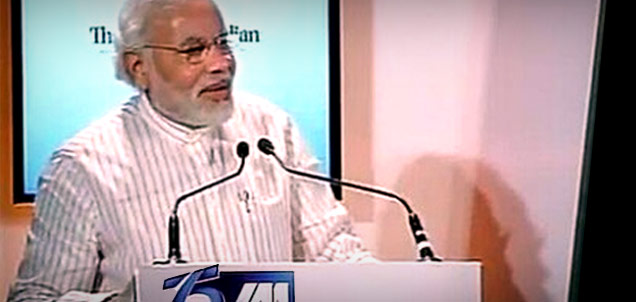
    Outside there were traffic jams as he made his way to Bandra Kurla Complex and then across the tracks to Taj Lands End. Inside the Ballroom of the hotel, the audience didn’t mind waiting. Media professionals of all levels gave him a standing ovation twice over.


    In many ways, it was an interesting choice to get Narendra Modi as Chief Guest. The Gujarat Chief Minister and the Bharatiya Janata Party’s Prime Ministerial candidate’s campaign for the elections is known on the importance he has laid on messaging and employing technology to reach out to people.


    Beginning by acknowledging the fact that as Indians we haven’t done enough to showcase our strengths to the world. He spoke on how we still lack confidence in ourselves as a global brand, a result of years of being subject to submission and foreign rule but even though India has taken the ‘brand route’, some indigenous products have acquired a symbolic value and become door-openers in the global market.


    Mr Modi encouraged Indian marketers to take tips from Mahatma Gandhi’s communication, write a book on it and present it as a case study as a sureshot way for India’s branding and make it an irresistible destination for the world to turn to. He suggested that marketers ought to move away from “impressive marketing” and instead strive for “inspiring marketing” to survive and flourish.


    Industry veterans and captains MxMIndia spoke with were suitably impressed.


    Said Brahm Vasudev, Chairman, Hawkins Cookers: “I thought Mr Modi’s content and delivery were excellent. I think his insights on marketing were top notch and I was very pleased to hear his thoughts.”


    Bobby Sista, who is now founder-trustee of Population First, “The entire day was worth my time. All the speakers were good in their own way and one gathered new insights from each other. From a marketing point of view, Mr Modi’s speech showed that he had no doubt in his mind as to what is Brand India and he spelt it out as we would do for any product or service by listing out values and attributes. We have so many strengths and home truths that he highlighted – from our spirituality to mythology to traditions to our today’s achievements in terms of products and services. And we have not marketed ourselves. He is a brilliant orator and as a marketing and advertising person, I wish we had him as the head of our fraternity. The interest in him is heightened due to the expectation that he will win the elections and judging by the way he is being treated, it does seem to be a possibility.”

     

    Sam Balsara

    Said Sam Balsara, Chairman and Managing Director, Madison World, “Mr Modi struck me as an outstanding communicator and not just an orator, to use his own words. I was truly impressed by what seemed like an impromptu speech on a topic that is arguably, not his subject and yet he spoke eloquently on it with well thought through ideas and concepts. Therefore, I feel that if he could come up with such ideas on what is not his subject, I’m sure he has some very good ideas when it comes to the economy, to uplifting our poor, education, employment and more. So, I think we owe it to ourselves to give him a chance.”
     

    Shashi Sinha

    Shashi Sinha, CEO, IPG Mediabrands echoed this view. “Mr Modi’s thoughts and suggestions on Brand India were excellent and it is evident that he is a great orator.”


    Said Suman Srivastava, marketing consultant and former adman: “As Mr Modi said, we tend to impress or inspire. This may be one of the many speeches he has given today and to think that we tire out after a few presentations… I am left inspired.”

     

    Suman Srivastava

    Mr Modi listed out a range of examples where there is a clear need gap between the global market and our products such as Indian architecture, music and dance, film industry, organic foods, herbal and holistic health care and more. He further highlighted how our rich culture and traditional values could help solve world problems such as global warming because of our beliefs such as respecting of nature and our resources, which were earlier considered orthodox and medieval. “Not everyone has to be sold the Taj Mahal but we have failed to look beyond it. Soft powers rule nations, more than economic or military strength. We have what the world is waiting for but we lack faith in our own product. If we meet global requirements with our legacy, our identity will spread. We have to fill Brand India in our minds; to speak, breathe and live it in order to turn it into a reality.”


    The IAA India chapter made Mr Modi an honorary member.


    The speakers before Mr Modi

    What makes a brand a brand? Are Indian brands still suffering from an apparent lack of confidence in the global market? Are we not recognizing and respecting our “Indianness” and using it to leverage our brand identity? How should marketers brand their corporate responsibility in a way that it builds and leverages their brand and the Indian society as a whole? These are some of the areas on which other conversations permeated at IAA’s Global Marketing Summit.


    To mark the platinum jubilee of the Indian chapter of the IAA (International Advertising Association), marketing stalwarts came together for the Global Marketing Summit on Monday (September 30) at the Taj Lands End, Mumbai.


    In attendance were global names such as Wally Olins, Chairman & Co-founder, Saffron Brand Consultants, UK; Will Platt-Higgins, Director, Global Account Partnerships, Facebook, USA; Arunachalam Muruganantham, CEO, Jayaashree Industries; Ashley Benigno, Director, Creative Expression, Global Brand Strategy & Marketing Creation – Nokia, Finland; Tyler Benson, General Manager – Marketing and Operations, Microsoft, SMSG, India; and Sanjeeb Chaudhuri, Regional Head for South Asia and Global Head of Marketing, Standard Chartered Bank. The gurus shared their insights on brandbuilding, the art of marketing in a competitive environment and the sustainable strategies to be deployed in the future in the Indian context. The marketing knowhow sessions were followed by a dinner session and speech by Hon’ble Chief Minister, Gujarat, Shri Narendra Modi.


    Pradeep Guha

    The agenda and vision for the daylong summit was introduced by Srinivasan Swamy, President IAA India and VP Development, Asia Pacific; Pradeep Guha, VP and Area Director, Asia Pacific, IAA; and Anurag Batra, Chairman and Editor-in-Chief, exchange4media group.


    Wally Olins, Saffron Brand Consultants, UK left the audience nodding in agreement with his eye opening presentation on ‘What A Brand Really Is’. Mr Olins firmly propagated brands to clearly define what they stand for and pronounced “authenticity” as the new zeitgeist for marketing. “A brand is not a logo, a tagline or a slogan. It is what you stand for visually. It is demonstrating what the company does visually. Emotional factors profoundly affect the way we think about brands. If there is no empathy and warmth with the brand then you cannot choose. What does the product stand for? Why should I buy it?”
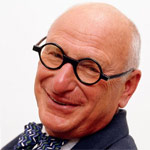
     

    Wally Olins

    In his talk titled, ‘Encountering a fast changing virtual world and a real slowdown, how does a bank stay competitive?’ Sanjeeb Chaudhuri, Standard Chartered Bank shared handy marketing strategies needed in the banking sector. Looking at the challenges for the software industry, Tyler Bryson, General Manager – Marketing & Operations, Microsoft SMSG India spoke on his presentation, “Reimagining marketing in a digital world”. This was followed by a panel discussion on the ‘Future of Sports and Movie Marketing’.


    Sharing Nokia’s experiences and learning from their latest brand offering, Ashley Benigno, Nokia, Finland presented his talk themed on “Connecting to an Emergent Global Youth – Lessons from Nokia Asha’. Sharing their research and statistics on the Indian youth demographic, trends in internet usage worldwide and emerging behaviours, Mr Benigno highlighted how recent successful crowdsourced campaigns by Nokia in Asian countries such as the ‘Querty Me’ campaign and their experience and learning from them. “Participation, appreciation and awareness” and “resonance and relevance” are two key takeaways for the company.


    Another session that was unanimously applauded and enjoyed by the audience was by Arunachalam Muruganantham, CEO, Jayaashree Industries on his out-of-the-box presentation on his journey as a rural innovator, themed, ‘Marketing and beyond’. Mr Muruganantham’s story is an awe-inspiring one that begun by a simple problem definition within his own home – lack of access to affordable sanitary napkins by women in India. There on, he designed, tested and invented a low budget napkin-making machine that he then converted into a sustainable business model that today, helps offer livelihood, hygiene, dignity and empowerment to underprivileged women all over the world.


    Through his presentation, he dropped nuggets of pure marketing advice and wisdom to an expert audience after pointing out that he had received no formal education. “Be original; don’t copy. As a rule of marketing, don’t fear your future. Marketing is not done on a war footing; it should be a sportive and passionate approach. Be proud of your product. Your product, organization or business model should be the solution to a problem – that is, build your organization on measurable social impact.”


    Will Platt-Higgins from Facebook spoke about how marketers and advertisers can turn to Facebook, things to keep in mind while creating content and design, practical suggestions for brands in his presentation on ‘Building Brands on Facebook’. “Rather than building a brand community, brands need to enter a user’s community. There is a need to design for the Newsfeed but good creative is just good creative. Shared passions are a great way to connect with consumers. One per cent of brand apps get more than 2000 users, so if you are thinking about investing in apps, it is incredibly difficult.” Despite talks on Facebook fatigue, Mr Platt-Higgins argued “Effectiveness on Facebook for advertisers and marketers lies on the basis of the increasing scale of people using it, which in turn increases the time spent, at the new prime time, which is – all the time.” Talking about the evolved narrative on Facebook from fan base count to a greater understanding of ROI, these were the core learning, “Branded content, impressions, reach and placement matter on the Newsfeed”.


    Photographs of event awaited from IAA India Chapter


    Narendra Modi Photograph: www.NarendraModi.in


  • The Anchor: Suman Srivastava on 5 Reasons why Marketing is a Creative Business

    By Suman Srivastava


    1. The marketer has to define the category he is in:

    Marketers should define their category by the way their customers see it, rather than the way the industry sees it wrote Theodore Levitt in Marketing Myopia. This is true even today. One can argue that a discount airline and a full service airline operate in different categories, even though they both fly planes.


    2. Pricing has become an art and not an accountancy exercise:

    Cost plus pricing is dead. Today consumers live in a “free” economy. Musicians give away their music for free from their websites and then make money on the concerts and the merchandize. Printers in the USA cost less than a full set of cartridges in them. Go figure.


    3. Marketers increasingly sell augmented products:

    You never just buy the car. You buy the car and the service and the resale value. As products become more commoditized, the pressure is on the marketer to differentiate the product in some other way. Hyundai offered to buy back cars from people who lost their jobs in America. That ensured that it increased its market share in a declining market.


    4. In India, creative distribution ideas can truly disrupt markets:

    Cavin Kare changed the rules of the game by launching shampoos in sachets. They started a revolution that has extended from personal care products to telecom (prepaid cards). Sachets could be placed in the smallest of stores and be within reach of the poorest of customers.


    5. Advertising doesn’t work as well as it did before, so marketers need to think of unique brand experiences:

    Smirnoff is not allowed to advertise, so it created a series of events where consumers were taught to make cocktails. These were fun events where the consumers left after not just having a few drinks, but also learning the right way to make and serve cocktails. Beats a 30 sec TVC any day.


    Suman Srivastava is Founder & Innovation Artist at Marketing Unplugged, a firm that helps firms create marketing innovations


  • Need to monetize radio-social media connect (+Vdo)

    By Robin Thomas (Videos: Insiyah Rangwala)


    Social media has, more or less, become a necessity for every organization today because the consumers are out there and no brand can afford to not be interacting with them. Moreover, social media can also help  brands know their consumers’ thoughts, behaviour, likes and dislikes. It also allows brands to have a two-way communication with their consumers, and thus provides high level of interaction and engagement. And it is not just brands but other media like radio stations which are coming out with innovative ways to connect with their listeners through social media.


    At the sidelines of the India Radio Forum (IRF) 2012 industry veterans from the advertising fraternity discussed the importance of social media for radio.


    Mr Premjeet Sodhi, COO, Lintas Media Group said: “Social media is certainly important for not only the radio industry today, but also for every other medium. In the long run we will see more integration taking place between social media and radio.”


    Mr Raj Nayak, CEO, Colors- Viacom 18 explained: “Social media is growing by the day. Today almost 65 per cent of the people in India are below the age of 35 and 50 per cent are below 25 years of age. I believe this is the fastest growing medium, therefore, it is a very important medium and those that have not got onto social media, must get on before it is too late.”


    Mr Suman Srivastava, Founder and Innovation Artist, Marketing Unplugged said: “Social media is important for radio at two levels. One is to connect with the listeners and therefore, get much larger engagement which might even result in an increase in the reach. On the other hand, it is a fantastic medium for radio channels to build their own brands as well as the brands of their advertisers. In the future, I believe, we will see a lot more advertisers using radio and social media together along with, perhaps, ground activations to create events which could have a multiplier effect for those advertisers.”


    Speaking on the need for radio to partner with clients, Mr Vinay Bhatia, Customer Care Associate and Senior VP- Marketing, Shoppers Stop said: “The real big partnership for radio and their clients is in the digital space. Digital and radio have to come together and ally in such a way that they deliver joint value to the client, and I don’t think any of this is happening today. Radio is an out of home medium and we are increasingly seeing out of home consumption for digital. I think these two medium can go very well together and brands like ours which have large Facebook pages need content, we need engagement and I think radio channels that provide us that.”


    Mr Harshad Jain, Business Head – Radio and Entertainment, HT Media said: “Radio is a medium which is free of cost, it is the cheapest form of entertainment in the country, and if there are issues that can be interlinked with social media, it could call for a good integration. Having said that, it is still early days because radio as a medium still has to catch up big time before it starts integrating with social media.”


    While there are calls for integration between radio and social media, the radio industry must also find ways to monetize the radio-social media connect. Mr Sodhi pointed out that while social media can make radio activations richer, it is vital for radio stations to find newer ways to monetize this activation.


    Agreeing with Mr Sodhi, Mr Raj Nayak said that no business will work if there is no monetization. He added: “One of the biggest disservice broadcasters have done is that they have not woken up to the digital media.”


    So while radio and social media will see more integration in the long run, there is also another school of thought that believes that radio is still at a nascent stage and has a long way to go before it can get into integration with social media. However, monetization is the key for survival of any business and radio stations must find ways to monetize its social media activations.