
Tag: Sugato Banerji

  • Rishabh Pant joins D2H as its Brand Ambassador

    By Our Staff


    D2H, the DTH brand of Dish TV, has announced the signing of Indian cricketer Rishabh Pant as the new brand ambassador. Rishabh Pant will feature in 360-degree brand communication for the next two years.

     

    Commenting on the association, Anil Dua, Executive Director & Group CEO, Dish TV India Ltd said: “We are delighted to have Rishabh Pant as brand ambassador for our D2H brand. Our brands are our biggest strength. This investment in the D2H brand is going to make it even stronger. The close affinity between D2H brand and Rishabh Pant as brand ambassador will enable deeper engagement of D2H with its TG.”


    Speaking on the partnership, Rishabh Pant said, “D2H is a large DTH brand with a long record of disruptive innovation in the industry. It is wonderful to be associated with D2H and looking forward to working closely with the team to take it to greater heights. ”


    Added Sugato Banerji, Corporate Head – Marketing, D2H, Dish TV India Ltd: “Rishabh has quickly developed into a distinctive entertainer on the cricket field, with his boundless energy behind the stumps and innovation in shot-making. He brings a spark each time he enters the field and appeals to the huge 18-35 age group across the country, our core audience. We see him as a strong fit with D2H Brand values. We are confident that this association with Rishabh will take the brand D2H to a stronger, more defined position within a short time through continuous investment in creating awareness and affinity.”


  • Dish TV promotes d2h’s customised offerings in latest ad campaign

    By A Correspondent


    Dish TV has launched a new TVC for its d2h brand targeted at rural audiences. The TVC highlights the discomfort caused due to withdrawal of channels from the free DTH platform and its impact on a regular family through the eyes of a mischievous kid.


    Commenting on the d2h brand’s value proposition, Anil Dua, Executive Director & Group CEO, Dish TV India Limited said: “Many customers in Tier-3 and Tier-4 markets are currently missing out on entertainment and we are here to address their needs. To benefit these customers, we are delighted to announce attractive and innovative offerings on our d2h brand. Our new customer awareness TV campaign also underscores the continuous investment being made in the d2h brand.”


    Speaking on the new offer and brand campaign, Sugato Banerji, Corporate Head – Marketing, d2h brand added:  “Our new campaign is aimed at the rural Hindi speaking market. Entertainment consumption is growing in rural areas and watching television for entertainment has become an important part of their lives. The objective of this TV campaign is to create awareness amongst them, supported with extensive trade engagement and on-ground activation. The TV campaign also aims to attract existing inactive d2h customers to reactivate.”


  • D2H introduces ‘Alag Hi View’ campaign for the festive season

    By A Correspondent


    Dish TV has launched a new brand campaign for its D2H brand titled ‘Alag Hi View’ for the forthcoming festive season. The campaign aims to highlight the younger, innovative avatar of D2H brand, bringing out its technologically advanced offerings and customer centric solutions.

    The current TVC highlights how D2H offers something different and how that enables the consumer to have a different point of view either in life or when it comes to watching television. The campaign brings alive the different product / service offerings D2H has in a youthful, vibrant way.

    Commenting on the new D2H campaign, Anil Dua, Group CEO – Dish TV India Limited said: “Our D2H brand believes in giving our customers technological advanced solutions to enhance their TV viewing experience. Through this new campaign ‘Alag Hi View’, we would like to highlight the unique customer experience and technological solutions offered by D2H platform in India. D2H is transforming the way we watch television, with its advanced Smart Remote Mobile App, RF Remote, HD STBs and now taking forward our vision of providing customers with a robust and enhanced television viewing experience. Adding to its unique technology solutions is a unique cashback offer this Diwali, with which we wish to light our customer’s TV viewing experience this Diwali.”

    Speaking on the new campaign, Sugato Banerji, Corporate Head – Marketing, D2H brand said: “The hero of the new D2H campaign is our very different Diwali offer. In the process we are also positioning D2H a technology driven brand for the younger tech savvy generation. Today’s gen X is about having a perspective, a view and an opinion. This campaign celebrates this spirit.”

    Added Arko Bose, Group Creative Director, Mullen Lintas Lowe Group: “’Alag hi view’ mirrors the thought process of the youth today. They have different perspectives and different ways of doing things, meandering away from the traditional approaches. With television viewing evolving itself in distinct ways using the plank of technology, we feel that the campaign finds a sweet spot in balancing youth-speak and brand philosophy.”

  • Vizeum awarded media duties of Srei

    By A Correspondent


    Vizeum, the media agency from Dentsu Aegis Network, has been awarded the media duties of Srei following a multi-agency pitch. With this, Srei joins Vizeum’s long list of successful wins this year including Hindware, JetPrivilege, VGP Universal Kingdom, Saint-Gobain and HDFC Bank.


    Srei is one of the largest private sector integrated infrastructure institutions in the country. The company has been playing a significant role in nation-building for two-and-a-half decades, both in urban and rural India. Headquartered in Kolkata, the company has a network of 86 branches covering almost the entire geography of India and has also replicated its business model overseas. Vizeum has been appointed to manage the client’s corporate brand campaign. For the record, Vizeum already handles the media mandate for Srei’s Non Convertible Debentures (NCD).


    Commenting on the win, Sugato Banerji, Head, Brand and Corporate Communications, Srei said, “We are happy to increase the portfolio of Vizeum as our media agency partner. We are confident that with their proven approach of creating solutions with the business constraints in mind, they will bring substantial value to our corporate brand.”


    Shripad Kulkarni

    Shripad Kulkarni, Managing Director, Vizeum India, said, “It’s very satisfying to see Srei reaffirming their confidence in our solution based approach by awarding further responsibilities. We were managing the media duties of Srei’s NCD product for the past 2 years and the excellent work put in by the team is one of the key reasons behind this.”


    Samarjit Rajkumar, Executive Vice President, added, “Our clients have always been our ambassadors. Srei invited us on strong client recommendation and now we look forward to delivering communication solutions that address the client’s business challenges in India. This business will be handled out of our Mumbai office.”


  • What next, now that digitization has begun?

    By Ananya Saha


    L V Krishnan

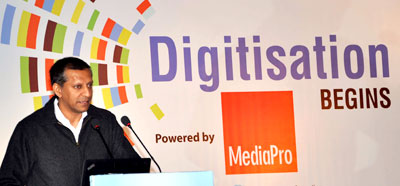
    The past two months, after the implementation Phase I of digitization, have been quite an incredible journey. From doubts about whether we would achieve 100 percent digitization at all to achieving it in Mumbai and Delhi. Of course the hiccups still remain. Probably Phase II will see less of these hiccups and more of successful implementation. This and many more issues about digitization were discussed at afaqs event in the capital titled ‘Digitization Begins’. The panellists not only discussed the ramifications of post-DAS scenario but also what the stakeholders should do to take advantage of digitization.


    Numbers game

    According to LV Krishnan, CEO, TAM India, the digitization onus is on marketing and programming. At the summit, ‘Digitization Begins’, culling facts from the data (based on eight weeks pre vs post DAS CS4+ in Delhi and Mumbai), Mr Krishnan said, “There has been 2.5 times growth in the availability of channels in the initial months but it does not match the viewing with 30 percent increase in incremental fragmentation.” He also noted how North and West markets in India are maturing faster than the Southern market when it comes to digitization. “Today channel-surfing behaviour is prolonged in digital homes, while direct landing is leading to increased reach for English entertainment, English movies, and the kids genre.” According to him, inter-genre surfing may also come down.


    Other findings that Mr Krishnan shared included: with sports channels becoming omnipresent, other sports will also get benchmarked; viewing is getting spread from primetime to other day parts, eg: youth music to the early morning band of 7-9am. However, he cautioned, “The biggest disadvantage is that DAS will hit single channels since the top seven channels garner almost 80 percent of audience in DAS-enabled Delhi and Mumbai.”


    Mr Krishnan, however, viewed digitization as a positive change and said, “The clear action step for the broadcaster to be present on distribution chain should choose between two cluster homes: home with kids, and home without kids. For the advertiser, they need to focus on cost of targeting, increase in co-creation of brands. Advertising will see a boost via paid media, and additional media budgets will get shifted from localized ground promotions to unique television content channels.”


    The next 6-8 months will also see a spike in free-to-air channels, according to Mr Krishnan, to cater to the bottom-end of the market.


    Chasing the momentum

    Roop Sharma

    Digitization was promised to bring in not only the set-top boxes (STBs) into the house of the consumer, but also digital services such as digital billing, services such as video-on-demand, broadband etc. Even though the seeding of STBs has been achieved, it is still a long way before we achieve digitization in the true sense.


    Vivek Takalkar, VP, Marketing and Business Development, MediaPro and Roop Sharma, President, Cable Operators Federation of India believe that post seeding of boxes, digitization has not achieved desired results while Ashok Mansukhani, Director, Hinduja Venture and President MSO Alliance asserted that the all the stakeholders of the digitization process should work together towards establish contact with the consumer.


    Sugato Banerji

    Sugato Banerji, COO, What’s-on-India, noted, “Content discovery will become important for operator to push channels. As digitization progresses, EPG in various languages will also be required.” While broadcasters and content creators might struggle with monetisation, the panelists were of the view that digitization will result in demand for more content.


    Giving the advertisers’ perspective, Anita Nayyar, CEO India and South Asia, Havas Media, initiated a discussion with Amit Tiwari, Country Head, Media and Digital, Philips India and Sunil Raina, Business Head, Lava International. Mr Raina emphasized content co-creation, while Mr Tiwari said, “Channels have to become brands. They have to think from a marketers’ perspective. Even though we have not changed our media plans, depending on digitization numbers, but I am sure that as digitization grows and sub-category of genres emerges, it will impact us directly. We will look at focused advertising.”


    Anita Nayyar

    Ms Nayyar noted, “When it comes to advertising, the brands prefer to go with what has been working in the past and their gut feeling. When the digitization process began close to Diwali, we did not have the numbers. But even then the brands advertised because it was the season and went with the gut feeling.”


    Even as marketers have not clearly changed their media strategy based on initial numbers, it is clear that as content becomes targeted, media preferences could change dramatically.


    Neeraj Sanan

    Neeraj Sanan, CMO and Head, Distribution, MCCS India said, “Good content will determine market share and role of distribution will reduce. Even as time spent on television has increased by 5 percent, the choice has also increased from 80 channels to 250 channels.”


    Even as business models will undergo huge changes, the panel believed that the future implications have not had any affect on their current strategies. And while DAS is believed to be a game-changer, the veterans think that more then the distribution equilibrium, it is the convergence that will have an effect on the consumption of content. As Mr Raina said, “It is important for us to integrate online and offline media to create impact. Plans are not going to change because of digitization but because of convergence. I would like to reach my consumer through the medium they prefer: it can be a television or a tablet. I have to be present where they are.”


    With competition rising, Mr Sanan noted, “There are going to be some wild implications of digitization including, local events can become content through MSOs; a good EPG search engine could take off; concept of broadcast UGC can happen; with triple play, MSOs can think of ad options with a clear-to-call action.” He also noted how MSOs will start competing with national channels for content rights.


    Though there is still a long way to go, digitization is throwing up interesting trends. How many of these will get converted, only time can tell.


  • Jaldi 5 with Sugato Banerji: Digitization has opened up opportunities for service providers

    What’s-on-India, TV Search & EPG (Electronic Program Guide) technology company, took a leap forward with the the appointment of Sugato Banerji as its Chief Operating Officer. Mr Banerji was until recently CMO at Airtel DTH & Media.


    A graduate from IIM Bangalore and a chemical engineer from IIT-BHU, Mr Banerji has worked with advertising (Ogilvy, JWT and Lowe), internet (Aptech), banking/finance (Visa, Stanchart) before being CMO at Airtel for the last five years. He started his 23-plus-year career at Xerox in sales.


    Mr Banerji spoke to MxMIndia hours after his appointment was announced:


    01. And we thought the action was happening in DTH, given digitization?

    It’s a misconception that DTH is the only category that will grow and thrive in the digitization programme. Globally in highly penetrated C&S countries where DTH has been existing for 20 years, it has been able to garner only between 40-45% of the total C&S share. It is expected that with the seriousness of the government to pursue TV digitization being demonstrated by adhering to the extended timeline given for Phase 1, more and more action will shift to the MSO who control large chunks of the next 38 cities.


    There is a clear message the MSOs and LCOs have taken home and we are already seeing MSOs, both big and small in the Phase 2 cities gearing up as fast as they can for digitization.


    And as the digitization takes root, there will be an entirely new ecosystem of various service providers who will participate in the category. Allied service providers have a window of massive opportunity akin to how VAS service providers, billing systems, domestic centered call centres, network companies, passive infrastructure companies have worked with telecom majors to drive telecom category growth and efficencies.


    We at Whats-On-India strongly believe that the momentum will continue on digitization giving as opportunity to grow because every set top box will need the core Whats-On-India product – the programme information, programme synopses and series information necessary for the electronic programme guide to be functional.


    The critical consumer change cable digitization will bring in is the fact that there will be 500+ channels available to chose from as declared by the regulator and the introduction of multiple tariff plans by the MSOs. Let’s talk about the proliferation of the channels available to the viewer once the home is digitized. The plethora of choices and competing programmes would make it difficult to choose the right one. One could miss a fabulous programme and end up surfing aimlessly. Content discovery will become more and more complex. This is precisely where our sophisticated TV search applications come in.


    Now look at the tariff plan regime change that will start in the digitized homes. The operators will need to know the best programmes to recommend, the most appropriate channel mix to promote. The unique ARPU enhancer and the Pack Builder products will be crucial tools for the operators to start building usage and revenue enhancement programmes around the customer base they digitize.


    So, the action is far, far wider and diverse than just the DTH operators. I wanted to be a part of this exciting time in the bigger digitized TV category, that’s why I am here.


    If there’s one thing that you would like the DTH business to be able to redo, what would it be?

    The DTH industry has grown rapidly in the period 2008-2011 largely led by the entry of four more competitors. This increased distribution reach and heightened consumer awareness due to big budget ad spends by the 6 DTH operators in the private sector. The intensity of competition brought several short-cut methods to grow customer acquisition. On an already subsidized set top box, DTH operators kept adding irrational freebies on two sides simultaneously – higher and higher margins for the retailers and more and more free months/channels with each purchase for the customer.


    This has led to massive churn by consumers in the lower end who merely swapped a 6-month-old box with another box of a different or same brand at a lower price than earlier, with the retailer selling the roof top accessories to another customer. A win-win for the customer, the unscrupulous retailer and a lose-lose all the way for the DTH operator. The DTH industry should have avoided this shooting at its own feet. It is paying a heavy price for this, even today.


    02. From an ex-DTH marketer’s point of view, are you happy with the way the digitization process is going?

    Digitization is moving forward surely albeit slower than we would like. This has to be understood in the context of the deep-rooted analogue cable industry’s revenue distribution. Local cable operators (LCOs) are the owners of the customer in an analogue regime. They share 20-30% of their revenue with the MSOs. There is rampant under declaration of subscriber numbers. MSOs therefore are forced to depend on carriage fees as a source of revenue. There are many politically well-connected entities running analogue cable.


    With digitization, the LCOs share will come down drastically to 30-35% of the total subscription revenue. This will impact 60,000 LCOs, controlling about 80 million analogue homes. Who would want their income to drop nearly 3 times? So there is bound to be resistance. However, the government has done a considerable bit to ensure the timelines are adhered to as close to the original deadlines as possible. The broadcasters and the government both have run extensive on air campaigns for consumer awareness. Additionally, the broadcasters are switching off analogue feeds, the MIB officials are undertaking head end visits to audit compliance of switching off analogue signals. The first phase was easy with only 7 million homes to be digitized. Phase 2 will be the real test as 22 million homes need to be digitized in less than 4 months. It’s a tall order and while we want the digitization deadlines not to be extended, given the enormity of the task, there is likely to be some slippage. But overall are we happy? Well, the answer in a single line is somewhat happy. The government has demonstrated seriousness with the first phase and one sincerely hopes the GoI adheres to the rest of the deadlines without extensions.


    03. The change also means moving back to Mumbai. Happy about that? You can’t take Mumbai too far away from a true blue Mumbaikar, huh?

    Haha! Well from the BPO capital of the world and glitzy buildings portraying the epitome of India shining where BMWs often outnumber motorcycles in a traffic signal, to amchi Mumbai with its incredible all-round buzz, efficient public transport systems available 24×7, loads of interesting cultural and gastronomic opportunities to spend leisure time on ! Well apart from the joys of winter I won’t really miss much because I truly think the Whats-On-India role is intensely exciting. Plus this is the hub of the media and entertainment industry in India so professionally it’s an exciting city to be in. Immensely glad to be back here.


    04. What’s-On-India is unique in many ways. It’s a technology company which facilitates information processing. Is that what you will be driving further?

    What’s-On-India is uniquely positioned to drive change in the way digital TV distribution companies will operate in India going forward. While technology is the facilitator, the real product we have is a transparent search service that pools in information from multiple sources including the viewer’s preferences, his profile, his social network and other sources to present a comprehensive personalized recommendation of the best programmes. As more and more connected TVs, connected wireless devices get bought, the consumption of TV content will dramatically increase in these devices. Catch Up TV, Recorder devices, side loaded content, peripheral content all will start quickly. This is where search and content discovery will help simplify the viewer’s choices of what to watch when. What’s-On-India is right there in the middle of this pitch ready to score.


    There are ground-level  analyses and reports we provide to broadcasters from 2000 head ends for aiding  distribution as well as consultancy for broadcasters to improve their products placement. This comes under our TV Street Maps division which we recently acquired.


    We are already present in the Middle East catering to the Arabic electronic programme guide market through a recent acquisition in Jordan where we have already been working with two large operators.


    I would be working to expand our client both at the operator side and broadcaster side  roster in India as well as deepen the existing relationships in light of digitization, consolidate the ME operations while  work at judiciously expanding our footprint.


    05. So what’s the immediate action point for you? What’s the new thing one can expect?

    India is the focus because this is where the immediate opportunity lies. So my task would be to get cracking with deepening our relationship with the large DTH operators like Airtel, D2H, Reliance, Tata Sky and in parallel working with the MSOs and broadcasters. I will work on getting a more structured client management approach with the sales team so that we can cover more clients and get faster closures of deals. In the next 90 days we want to sign up lots more clients and build a robust revenue stream that will allow us to start building deeper product penetration with each client.


    In summary what I would be doing is consolidating and deepening the large relationships while expanind the client roster at the medium to small end.


    You are an accomplished marketing professional having spent some quality time in the internet space, banking, finance and telecom and who has cut his teeth in advertising. Do we see a greater marketing offensive coming up at Whats-On-India?

    What’s-On-India has a strong brand recall in the relevant segment we operate in for being a quality driven innovative organization. We need to enhance this further by becoming the thought leaders in the domain. I see a lot of scope of What’s-On-India becoming the benchmark in the category of search and viewer analytics in the TV space.


    We have a B2C website that is getting revamped by among the world’s top notch digital design firms. This will be ready soon and we will need to market that effectively using cost-efficient ideas. The team is already working on them as I speak.


    We will be launching a slew of more sophisticated products to enhance the capability of the entire product suite we have. So on the product and B2C front there is a lot we will do.  Plus the whole effort of overseas market entry and growth.


    That’s a lot for any marketing man to work on…  it’s exciting.


  • Airtel’s Sugato Banerji joins What’s-on-India as COO

    By A Correspondent


    Sugato Banerji

    What’s-on-India, TV Search & EPG (Electronic Program Guide) technology company, has announced the appointment of Sugato Banerji as its Chief Operating Officer. Mr Banerji has called it a day as CMO at Airtel DTH & Media to join Intel-Sequoia-Nexus funded TV start-up What’s-on-India.


    At What’s-on-India, Mr Banerji will lead the company’s growth strategy in the TV Search, EPG and Recommendations space and consolidate key partner and client relationships. Under him, What’s-On will also look at expanding into newer International markets just as the company set up, What’s-On-Arabia, in the Middle East in 2012.


    Sugato Banerji’s move from a large corporate set-up to the new, racy, disruptive world of start-ups comes in as What’s-On-India rapidly expands into International markets as well as launches new solutions in the Domestic TV sector, in the wake of the ongoing Government efforts to digitize cable.


    Atul Phadnis, CEO & founder, What’s-on-India, said, “What’s-On-India is at an exciting crossroads of TV Search and new TV devices in an increasingly digitalizing television sector. Sugato brings in tremendous experience in the TV and Media business that would be extremely valuable as What’s-On-India charts a new, growth and expansion agenda in the coming months.”


    “I am excited to join What’s-On-India at the cusp of a transformation of the TV industry into digital. Digital TV would mean more programs, more channels, increase in regional and local content, greater diversity of set-top-boxes, recorder devices, increased viewing of TV on wireless devices, leading to anexplosion in the demand for sophisticated TV Search, Recommendations and Personalization. What’s-On-India with its suite of new products is perfectly poised to ride this digital wave, from both ends- the broadcaster & distributor. I am looking forward to lead the market expansion operations in this direction”, said Mr Banerji.


    Recently, What’s-On-India received its first Series B funding round with Intel, Nexus VP and Sequoia Capital in September 2011, followed by the acquisition of TV Street Maps, a TV Channel Distribution Monitoring company, in December 2011.


    The company also launched a series of TV Search and Preview apps on Android, iPad, iPhones, Windows Mobile and other platforms. The most recent announcement was that of an expansion in the Middle East via an acquisition in Jordan.