Tag: Sudhir Sharma

  • Josy Paul, Sanjiv Sharma and Sudhir Sharma also in Spikes Asia jury

    By A Correspondent


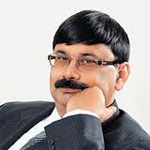
    Josy Paul
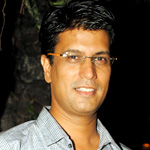
    Sanjiv Sharma
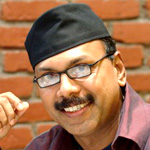
    Sudhir Sharma

    The Spikes Asia Festival of Creativity, to be held this from September 15-17 in Singapore, has announced its final jury line-up. The names of judges for Branded Content and Entertainment, Craft, Design, Film, Print, Radio and Outdoor; Integrated and PR were announced by the organizers in a communique. The names of jury members for Creative Effectiveness, Digital and Mobile, Direct and Promo & Activation and Media categories have been released.


    Josy Paul, Chief Creative Officer and Chairman, BBDO, Sanjiv Sharma, Chairman, Optimystix Entertainment  and Sudhir Sharma, Creative Chairman & CEO, Indi Design are among the Indian jury members. There is no jury member from India in the Craft, Integrated and PR categories. This makes a total of five of the 16 categories with no Indian jury member (digital and mobile categories announced earlier had no Indian jurors). There are a total of six Indian jurors in the 78 members name for the Spikes Asia categories (in the earlier list Chandrasekar Radhakrishnan, Pratap Bose and Ajit Varghese were named).


    Branded Content & Entertainment Jury

    Anthony Freedman, Group Chief Executive Officer, Host, Australia – Jury President

    Angus Gordon, Head of Creative Content, The Well, Singapore
    Ean Hwa Huang, Creative Director/Partner, Merdeka LHS, Malaysia
    Jeremy Paul, Managing Partner, Fuse APAC, Asia Pacific
    Kentaro Ichiki, Creative Director, Hakuhodo Inc., Japan
    Christopher Harrison, Head of Invention, APAC, Mindshare, Asia Pacific
    Nancy Lan, Head of Newcast China, ZenithOptimedia, China
    Sanjiv Sharma, Chairman, Optimystix Entertainment, India


    Craft Jury

    Sheungyan Lo, Chairman, Asia Pacific Creative Council, JWT, China – Jury President
    Andrew Hook, Creative Director, DDB Singapore
    Badong Abesamis, Chief Creative Officer, Y&R Philippines, The Philippines
    Peter Grasse, General Manager, Curious Film, Regional, Australia & New Zealand
    Rob Galluzzo, Executive Producer, Managing Director, Finch, Australia
    Russell Miranda, Executive Creative Director, Grant McCann Erickson, Sri Lanka
    Thananuj Ebrahim, Executive Producer, Hay Day Films, Thailand


    Design Jury

    Derek Lockwood, Worldwide Director of Design, Saatchi & Saatchi, New Zealand – Jury President
    Christine Pong, Founder & Partner, Twohundred Limited, Hong Kong
    David Smail, Chairman & Executive Creative Director, BBDO, Vietnam
    Hsintzu Wang, Director of Visual Development, The eslite Spectrum Corporation, Taiwan
    Jung A Kim, Creative Director, Innocean Worldwide, South Korea
    Richard Westendorf, Executive Creative Director, Landor, Singapore
    Stone Lei, President, 180 China, China
    Sudhir Sharma, Creative Chairman & CEO, Indi Design, India
    Yagi Hideto, Creative Director, Art Director, Dentsu, Japan


    Film, Print, Outdoor and Radio Jury

    Tham Khai Meng, Worldwide Chief Creative Officer & Chairman, Worldwide Creative Council, Ogilvy & Mather, Global – Jury President
    Andrew Petch, Executive Creative Director, Ace Saatchi & Saatchi, The Philippines
    Andy Fackrell, Executive Creative Director, DDB Group, New Zealand
    Chris Chiu, Founder / Chief Creative Officer, Ren Partnership, Regional, Singapore
    Giap How Tan, Head of Art, Grey Group, Singapore
    Gigi Lee, Executive Creative Director, Y&R, Malaysia
    Hisashi Hayashi, Creative Director, Dentsu Inc., Japan
    Josy Paul, Chief Creative Officer and Chairman, BBDO, India
    Norman Tan, Vice-Chairman & Executive Chief Creative Director, Lowe Worldgroup, China
    Steve Coll, Executive Creative Director, Havas Worldwide, Australia
    Surachai Puthikulangkura, Managing Director, Illusion Co., Ltd., Thailand
    Tim Green, Executive Creative Director, Leo Burnett, Singapore
    Yehoon Lee, Creative Director, Cheil Worldwide, South Korea


    Integrated Jury

    Tham Khai Meng, Worldwide Chief Creative Officer & Chairman, Worldwide Creative Council, Ogilvy & Mather, Global – Jury President
    Anthony Freedman, Group Chief Executive Officer, Host, Australia
    Chris Chiu, Founder/Chief Creative Officer, Ren Partnership, Singapore
    Derek Lockwood, Worldwide Director of Design, Saatchi & Saatchi, New Zealand
    Gigi Lee, Executive Creative Director, Y&R, Malaysia
    Jose Miguel Sokoloff, Chairman Lowe SSP3, President Creative Council Lowe Worldwide, Lowe SSP3, Global
    Lynne Anne Davis, President & Senior Partner, Asia Pacific, Fleishmann Hillard, Asia Pacific
    Masaru Kitakaze, Executive Creative Director, Corporate Officer, Hakuhodo, Japan
    Mike Cooper, Worldwide Chief Executive Officer, PHD, Global
    Steve Coll, Executive Creative Director, Havas Worldwide, Australia


    PR Jury

    Lynne Anne Davis, President & Senior Partner, Asia Pacific, Fleishmann Hillard, Asia Pacific – Jury President
    Angela Spain, General Manager, PR & Activation, Draftfcb PR & Activation, New Zealand
    Eduardo Fuentes, President, Fuentes Publicity Network Inc., The Philippines
    Danny Phan, Managing Director, Burson Marsteller, Singapore
    Kelvin Yeo, Managing Director, MSLGROUP, Singapore
    Marion McDonald, Managing Director, Strategy & Measurement, APAC, Ogilvy PR, China
    Masato Mitsudera, Executive Creative Director, Beacon Communications/Leo Burnett Tokyo, Japan
    Rob Lowe, PR Director, Eleven PR, Australia
    T. Marlene Danusutedjo, Director of Public Relations, Four Seasons Hotels Jakarta, Indonesia


    Said Terry Savage, Chairman of Lions Festivals, on the announcement: “With so much inspiring and forward-thinking work coming from the region, we’re delighted to have such a great team confirmed to judge this year’s entries. We look forward to seeing these talented individuals come together in Singapore to collectively judge and ultimately decide on the winners of the 2013 Spikes Asia awards.”


  • Are we really ‘free’ at work in Indian media?


    By Tuhina Anand and Meghna Sharma


    As India gets ready to celebrate her 66th Independence Day, one wonders how much freedom one really has to express oneself – specifically those who are in the creative business. While one has to be responsible when communicating with the masses – be it journalists, or planners for content that is shown on the various channels or the creative agencies that work on various communication strategies for different brands – but there are deterrents to this key element of freedom that the fraternity craves for to express freely.


    Keeping these factors in mind, MxMIndia spoke to cross-section of people from the industry to get an understanding on their Freedom Fundas.


    Bobby Pawar

    Bobby Pawar, Chief Creative Officer and Managing Partner at JWT India is clear that there is no unfettered creativity that exists and that is probably best for a creative agency. He explained: “Our job is to come up with brilliant communication solutions for our clients, hence there is a purpose to achieve. So what we follow is creativity within a box where it is harnessed to achieve maximum result. We partner with various people to come up with this solution and hence we have to listen to various opinions. I do not profess complete freedom for the creative industry.”


    However, Mr Pawar would like to have more control over the shape that an idea finally takes and how it gets executed. Also he definitely would like to have more control over the research that is handed to them and definitely over the way an allocated budget on a brand is being invested.


    Research seems to be the bane of the creative frat. Rahul Sengupta, NCD at TBWA India too would want freedom from research. He feels that if one wants to do anything that’s trendsetting, often research acts as an impediment to take it forward. As for clients’ demands, Mr Sengupta said: “The client is the one sponsoring the idea, so definitely one would not want freedom from them! I have met clients who are hazards to creativity as well as those who are best guardians of an idea.”


    He added pragmatically: “Of course, there are frustrations and there is lack of freedom but if I would rather have freedom from research than clients as latter can be worked amicably to enhance the client-agency relationship.”


    We also spoke to people at mid level like Auro Chattopadhyay, who quit Ogilvy recently, who also wanted freedom from research. He said: “Often research might not help in the brand story, but insistence to stick to it hinders creativity.”


    A creative hand at JWT pointed that conflict happen when there is no match with one’s creativity and that of one’s higher up. Fortunately, this has never happened with him. He feels that the creative industry gives him much freedom to use his ideas as opposed to many other professions.


    However, another stated that hierarchy means towing the line of ideas that the higher in authority believe in. Freedom of creativity in such cases often refers to agreeing to somebody else’s vision.


    The case, however, is different in the new medium such as digital where there is largely freedom to execute an idea. Carlton D’Silva, CCO, Hungama Digital, said: “Right now, digital is like the last three slide of a presentation- very much an afterthought. Hence, spend on the medium is miniscule. There is a fair amount of freedom to explore creativity. However, one would like freedom from data as often clients demand for it but in digital especially, when suggesting some new technology and a unique idea to take shape, there is no data available.”


    Prosenjit Datta
    Courtesy BusinessWorld

    We also spoke to people from the print and broadcast industry to give us an understanding of freedom they enjoy at work. Cyrus Oshidar, Creative Director at Bawa Broadcasting is credited with creating some unique content at MTV and even pushing the boundaries. His view: “If one only wants creative freedom then one should be an artist. If you are producing or making a show for which a client is paying, then there will definitely be some constraints. Ratings do matter in our business and sometimes might even alter one’s choice rather than giving the freedom to do something which one really wants to. Also, one needs to be politically correct in this country. Even the government which is supposed to protect people’s freedom sometimes backtracks from its duties. One needs to be careful about how they approach an issue without offending or hurting feeling of any section of the society. Honestly speaking, we have too many restrictions which are created by us. There is no true democracy in this country.” Mr Oshidar clearly pointed that freedom in creative business is a myth.


    Sucheta Dalal

    Prosenjit Datta, Editor, Businessworld, giving his take on the print industry, said: “Every magazine or a newspaper has a certain set of audience and purpose. For instance, a business magazine like ours won’t focus so much on political stories as political or general magazine would do. So, what stories they choose and how they analyse will be different from genre to genre. Hence, it would be unfair to say that there isn’t creative freedom or if media is ‘restricted’. We don’t have any management policy which will hamper or obstruct our editorial approach. A lot depends on the editors too as they enjoy full freedom to how to go about an issue.”


    Pointing out the restriction that comes with the economics of business, Sucheta Dalal, senior journalist, commentator and consulting editor, Moneylife said: “With so many newspapers, magazines and news channels making losses, it is hard to say or believe that they are not dictated by marketers. Today, we can even see head of various companies writing with their bylines which wasn’t the case earlier. I don’t know how things are right now as I’m not working with any newspaper at the moment, but when I was with Times and Express, the pressure from the advertisers was quite evident.”


    Sunil Lulla

    And how is it in television? Said Sunil Lulla, CEO and MD, Times Global Broadcasting: “Over the past decade or so, the television industry has evolved. There is greater sense of self-regulation and discipline as well as maturity on entertainment and news channels. Though there are guides and policies set by regulatory bodies like IBF, industry enjoys the freedom to operate freely. Besides, there is greater acceptance of TV now which enjoys sense of confidence and responsibility. So, there is culture of freedom in media.”


    Sudhir Sharma

    Said Sudhir Sharma, Producer, Sunshine Productions: “TV as a medium is for the masses and targets everyone from kids to adults to old folks. We make TV shows to entertain. We do follow certain guidelines and censorship which is surely a necessity. By and large we surely have the freedom to make the content we want to show. Creative freedom parameters may vary from producer to producer. Compared to films, TV censorship guidelines are surely stricter keeping in mind that television is accessible on the press of a remote button. In my opinion, we have enough creative freedom and we as makers are progressing and so are the maturity level of audiences.”


    Freedom, limited freedom, no freedom… we received no clear answers to our question. However, the fact remains that despite the current slowdown, the fraternity is still managing to survive and thrive in the prevailing system.


    Image: Rafiq