Tag: Stratagem Media

  • 25 years of Stratagem


    By Anuka Roy


    The first thing that gets your attention about Stratagem Media is its logo. It is a chameleon. And if you are wondering the reason behind this, it’s simple. A chameleon does not change colour, it merely blends in with as per the need of the hour. So, the belief as mentioned in the company website is, “In fact to a chameleon, stratagem is inherent! Its adaptation of colours is its natural stratagem. Similarly, at Stratagem Media, we believe that we reflect the colours of our client and adapt to their ever-changing requirement from time to time.”


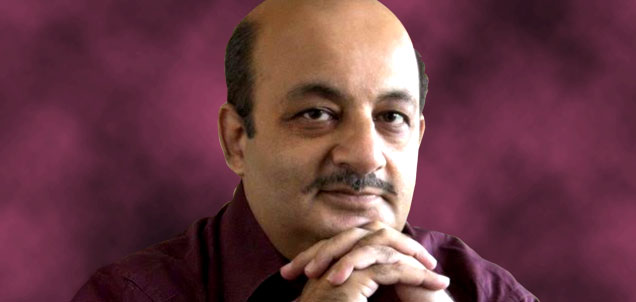
    Founded in mid-1991, by media services veteran Sundeep Nagpal, Stratagem operates in the fields of media buying, planning and consulting. Currently, the company is celebrating its silver jubilee year. On this occasion, we caught up with Nagpal to know more about his journey, the current trends in the industry and more.


    The beginning

    There is no answer to why I began. I was young and it was an impulsive decision to be on my own. I began by just actually offering whatever I thought I knew to anybody who I thought could use my services. So, I had been lucky that I had worked on some of the best brands in the country by that time. I decided to offer my services to media professionals, initially to those agencies that did not have in-house media planners. Thankfully, there were maybe half a dozen of them who said that we do not want somebody full-time and were looking for somebody part-time. That is exactly what I wanted, so I said I can give you part media planning service and I will operate out of my office but I will also come here and take briefs whenever it is required. There were three or four such agencies who tied up with me later in the sense that they became clients. And, that is how we started.


    Then and now – the difference in media planning

    Now, the service of media planning, first of all has not only become very large in scope because the media players have increased so much but also it is more easily available. There are individuals, agencies who have enough of expertise now. In those days, there were a very few of us and we were somehow a rare breed those days. Obviously, now, one has to think about how to stay afloat.


    There are many brands who now know what media is planning, they understand it, and they get some of the nuances, even the Indian entrepreneurs they know about it. Now, I do not have to explain to people what I do. Earlier, I had to explain to them in great detail that this is what I do but now I do not have to explain so much.


    Milestones

    Somewhere in the mid-90s, my company was asked to start a new kind of an initiative with seven medium-sized agencies, which was a media buying initiative on behalf of all those seven media agencies combined. That was a milestone because nobody had done it before, we did not know how to go about it and we went and did it. Whatever time it lasted, it did not last for more than two and a half years but whatever it was, it was perfectly natural. There was no worry about why it was not working. Everybody understood these were the pitfalls and therefore we may not be able to push it forward. But that was a fantastic time because for me it was a great moment as I had done this.


    In 25 years, there have three or four milestones. Again, somewhere in the mid-90s we started working for brands who not only wanted to use media planning but media companies such as newspaper groups and television channels wanted to understand how to increase their advertising revenues. So, we started consulting with them. We used the same knowledge and background to help them to earn more advertising revenue, again something nobody had done before. I was very happy that I am to do this and continue to do that even today.


    Then, the third milestone was in the late-90s where we stopped working with agencies because the entire industry changed because these agencies either they were absorbed by other larger agencies or they lost their main clients or for whatever reasons.  So, I reinvented the whole process and was working directly with brands, with advertisers. That was another milestone for us.


    We did a couple of other things which were very unique. One was, we worked with a large financial investment company on a three months project where they wanted to understand the strengths and weaknesses of a particular television network in the current competitive scenario. That was a humongous exercise which we never realised that we would be capable enough to do it but we did it.


    Now, of course, we are looking towards a few new things as well in the area of digital perhaps.


    The evolution of clients

    They have had to learn how to separate the wheat from the chaff- this is good and this is not and this is what is going to work for me. Earlier, they did not bother and left it for the agency to bother. Secondly, despite the fact that they have learned something, unfortunately or as a parallel the number of options has grown hugely. They are still grappling and they are still not consistent with what they want to try. See, as a final result of any particular communication exercise there could be many things that could have gone wrong. Very few people understand how to identify what has exactly gone wrong in the communication exercise which is an overall thing or let us say in the brand’s bottom line or top line. There could be 100 reasons but you should not give up what you have started on. Try it consistently, identify the problems and move on. Plug the loopholes, most people do not want to plug the loopholes. That is probably the wrong attitude.


    Surviving the obstacles

    Any business goes through ups and downs because of the market. Initially, like I said, I was quite content providing my services to the ad agencies but the mid-sized agencies I was working with were either absorbed by larger agencies or they lost their main clients, the big pitfall that happened for me was that I was not ready for it. I did not even expect it. And, it happened almost overnight. I was forced to stand up on my own again. So, that challenge happens anywhere. Now, for example, if I was to look for challenges, how do I keep pace with changes that are happening in the media sector and I do not want to call it just digital because within digital there are so many options. And, I do not want to necessarily say I am an expert in all of them. But I must know how to judge one from the other. Once I know that, I need to know how I execute it for a client. We have a very small set of clients and thankfully some of them are very happy with us in the sense that within the realm of whatever they require we have delivering well enough which is now nothing to feel very happy about but the next thing is how do I get some growth for them as well and for me as well.


    Looking forward

    The future is a mix of some trepidation in my mind along with some amount of excitement. There is excitement about doing something new but at the same time there is a concern that will I get it right.

     

  • Stratagem Media announces 2-day training for ad sales and media/mktng pros

    By A Correspondent


    Leading Mumbai-based media advisory Stratagem Media has announced a two-day open training programme for media practitioners as well as marketers and advertisers.



     

    The fifth in the series of intensive learning sessions under the Media Rhythm banner, under the Media Rhythm series. “I’ve always believed that the media business is a combination of both, knowledge and a skill,” said Sundeep Nagpal, founder-director of Stratagem while unveiling details of the sessions scheduled for November 28 and 29 in Mumbai.  “Once a year, we organise this programme where our endeavour is to contribute to the development of this knowledge and skill and bring participants up-to-date with the latest practices being adopted in the business, as much as make them a bit future-ready, if possible,” he said.


    We asked Mr Nagpal a few questions, and rather than let the finer details get lost in the paraphrasing, we present his responses as is:


    What will this year’s session offer:

    Sundeep Nagpal : Over the last five years, we have stayed relevant with the Media Rhythm series of programs. The topics have kept pace with the current needs of the industry.  So, this time we felt it would be relevant to combine the understanding of digital media with that of traditional media. I have observed that hitherto, these were quite compartmentalized. So, this program is titled – The Big Fat Media Wedding – Digital weds Traditional Media


    Firstly, more than 50 % of the program is devoted to Digital marketing – it breaks up into separate modules on Search, Social, Mobile and Display.


    Then there are separate modules on Media measurement, Creativity in Media and even one on ‘How to integrate multi-media for a given campaign’.


    Is a two-day programme sufficient for all the topics you have planned?

    SN: We have conceived this more like a workshop. And hence, it’s a two-day programme, so, I think, we will have the bandwidth to deep dive into the concepts, metrics and practices.  And given the variety of topics, we have chosen to have 4 specialist trainers for this programme.  Participants will get a chance to think and do. They will be put through a few exercises – on creativity and strategy development as well as some hands-on analytics.


    Who are the trainers?

    SN:  It would not be incorrect to say that all trainers are highly experienced specialists in different areas of the media business.


    Mr  R P Singh: who will handle the digital module, has been in the digital space for as long as it has existed in this country. He was with Group M and McCann (APAC for Commonwealth), and now is the CEO of a Delhi-based digital company called Sirez.


    Mr  Bharat Kapadia : is the man of ideas and has more than 35 years, mostly as a publisher, with 4 prestigious media houses in this country.


    Mr  Suresh Balakrishna: who has spent more than 28 years and has had considerable experience on both sides of the media business – planning/ buying as well as selling. And now heads BPN, part of IPG Mediabrands


    And myself:: For most of my professional career of 28 years,  I’ve inter-acted intensely, with media sellers and advertisers, and I feel there’s a lot of scope to bridge the gap.


    Ideally  who would you target/ like to see as participants?

    SN:  Well, as such anyone who has anything to do with the business of media or who is in the field of marketing  would stand to benefit from this program.  Also, I’d like to draw special attention to the scope that this programme offers to media planners and sellers of traditional media – I think this would be an ideal opportunity for them to understand how to apply and add the learnings of digital media and marketing in their job profiles.


    So, all in all, professionals from media agencies, marketing companies as well as media houses, would stand in good stead with this program.


    To register:

    http://www.marketingbelly.com/digitalmarketing/program/The-Big-Fat-Media-Wedding-%3A-Digital-weds-Traditional/events/sucess/2   


  • End of Season 1 of Satyamev Jayate: The good, the bad and the ugly truths of life

    By Meghna Sharma


    In the past 13 weeks, one show has done what no other show has been able to in a long time – get people face-to-face with the ugly truths of our society. Aamir Khan’s television debut, Satyamev Jayate, was the most-talked about show even months before it was aired. It was touted to revolutionize the Sunday morning slot on the Indian television.


    From the very first episode till its last episode on July 29, the show was able to create a lot of buzz. People shared their views on the social ills the show highlighted on social networking sites. The news channels and newspapers carried expert views and opinions on the show. It didn’t back down from highlighting the fact that a country of one billion lives like ostriches when it comes to taking action against such evils.


    However, inspite of all the hue and cry, one question still remains on everyone’s mind: was it really effective?


    MxMIndia spoke to industry experts, journalists and even activists after the show was aired on May 6 and almost all of them gave it thumbs up. Now that the show has ended, we got in touch with the same people to know their opinions…


    TRP: the only yardstick?

    Chandradeep Mitra

    For any channel and show, the TRPs it gets are the yardstick at which its popularity is measured on. Star India’s Satyamev Jayate which premiered across nine channels – Star Plus, Star Pravah, DD National, ETV, Star Utsav, Vijay, Star Jalsha, Star World & Asianet – got a rating of an average 4 TVR for the CS4+ in the Hindi speaking markets and an average of 4.9 TVR for the All 4+, according to the TAM viewership data. But, as the weeks rolled on, the ratings dipped.


    Many, however, feel that such shows cannot be measured by TRPs as they are much bigger than that. “For a show like this, ratings alone cannot be the yardstick. One must not forget that the it was a non-entertainment show and was aired on Sunday mornings.  For a slot and content like that, the show did very good,” said Chandradeep Mitra, managing partner, Anvention.


    Anil Sathiraju

    He added: “We must look at the social impact it created and I’m sure it will remain in people’s memories for a long time. Apart from the buzz created on social networking sites and getting eyeballs, I’m sure now companies will also increase their CSR activities as it highlighted the work done by a few.”


    Similarly, Anil Sathiraju, Head – south, Mudra Max Media, too feels that content and impact are more important than the ratings: “What the show has done to the morning slot is evident enough, that it made people sit up and take notice. And I’m sure now most channels, including Star, will want to revive the slot and come up with shows which will not make the slot redundant.”


    Sundeep Nagpal

    The show wasn’t developed and promoted for TRPs, said Sundeep Nagpal, founder director, Stratagem Media. “It was applicable for the masses and not many shows of such genre have been created. Hence, it would be wrong to judge it on the ratings…it’s much more than that. It bought out the issues which are prevalent but under the surface. For example how many of us in Mumbai knew about Khap panchayats? The show is a turning point in the Indian television history.”


    The much-hyped show even went on to charge an exorbitant amount for the 10-second advertisement slot which was sold at thrice the usual rates. “For an advertiser, the show was the best medium to reach its audiences. For the first time, a show was created, which in turn created two new stakes – timeslot and a new category of a show. So, many didn’t hesitate in paying that extra for the quality they were getting in return,” explained Llyod Mathias, director GreenBean Ventures and former CMO of Tata Teleservices and Motorola.


    Aamir Khan vs Content

    Anita Nayyar

    According to the media planner, Anita Nayyar, who is moving back to her former agency Havas from Bennett, Coleman & Company (BCCL) by August, initially the show got the hype only because it was anchored by the actor and the fact that the concept of the show was well hidden. However, for a show like Satyamev Jayate, it’s the content which plays a bigger role.


    “Satyamev Jayate is a socially relevant show and in the beginning, I think, it did mobilize people. However, in between it lost its public appeal. And I’m not surprised as such shows only appeal to a certain section of the society. Hence, it wasn’t even able to garner the TRPs it deserved,” said Ms Nayyar.


    She explained that though the show was anchored by a popular actor like Aamir Khan there was a gap between enlightenment and mobilization. “The show was supposed to mobilize people, but it was only able to highlight the evils which we all know exist. Nonetheless, it was a good show.”


    Voicing the same opinion, Sarla Bijapurkar, sociologist, believes that if one has to score Aamir Khan vis-a-vis the content of the show, Aamir would win. “Public memory is very short and everything will be lost if there is no follow-up. For instance, take the episode where diktats of Khap panchayats were highlighted. Has anything changed? No, we still have such bodies making people’s lives miserable. Sometimes, when one hears or reads about such instances, it makes you wonder if we, as a society, take two steps backward for every one step taken forward.”


    “For me, the show will only mean something if it is able to do a follow-up on the issues highlighted. Also, instead of raising a new issue every time, I think, they should have focused on fewer and discussed about different dimensions related to a particular issue. Maybe, then it would have been able to brought about a change,” said Ms Bijapurkar.


    Waiting for a change…

    Ranjona Banerji

    However, there are many who think that the show was a success and was able to do more than just generate public interest and will eventually lead to some change as evolutions don’t happen overnight.


    Ranjona Banerji, a senior journalist and contributing editor, MxMIndia, feels that the show did justice to the concept though there were a few dodges like the show being too emotional, sometimes. The first two episodes – female foeticide and child sexual abuse – were able to create a lot of public interest. “Apart from these two episodes, the episodes which moved me were the ones on disability and senior citizens. The show did the work of a journalist and was even able to answer a few questions. Hopefully, they’ll tweak the show a little bit and come up with a second season – better and stronger.”


  • Life OK and SAB: The see-saw continues…

    By Meghna Sharma


    In India there is no dearth of television channels. The competition is only growing and the race to lead in the TRP race is heating up. In the past few weeks, the two channels which seen an increase in their TRPs are Life OK and SAB TV which have been fighting for the fifth spot in the TRPs race.


     

    Life OK, the newest entrance in the GEC genre from the Star India stable, was launched in December last year. The network renamed and re-launched their youth-oriented channel Star One with new tagline ‘cherishing what you have’.


    On the contrary, SAB TV has been around for over a decade now but has gone through various transformations. In March 2005, SAB TV was acquired by Sony Entertainment Television and was transformed into a youth-centric channel. In June 2008, the channel announced that it would return to its roots by being repositioned as a comedy-centric channel.


    So what does the race for TRPs mean for the two channels and do they pose a threat to other GECs? MxMIndia spoke to a few media planners to see what is the future of the GECs and what shape will this ‘war’ take.


    According to the latest TAM data, in week 24, SAB TV has toppled Life OK and regained No 5 position. Whereas, last week (week 23), Life OK was the fifth most watched GEC.


    Sundeep Nagpal

    Sundeep Nagpal, founder director, Stratagem Media feels that these are momentary fluctuations and cannot be contributed to anything per se. “These channels have a small base; therefore, even a single factor can affect the ratings of the show – positively or negatively – depending on how it did on a particular week. Hence, I don’t think we should be alarmed by such fluctuations. And they won’t be able to impact the top 4 slots.”


    The two channels have positioned themselves differently, too. SAB TV is a comedy-centric channel which portrays itself has a family channel, whereas Life OK has shows full of melodrama like other GECs.


    Janardhan Pandey, associate vice-president, DDB Mudra Max feels that the two cannot impact each other drastically. “SAB has its own set of audience which won’t get influenced by other GECs and vice-versa. They will continue to do well in their own categories; the fluctuation between the two is possible but they don’t have the same hold as other GECs do. They still have a long way to go.”


    Jai Lala

    On the other hand, Priti Murthy, national director – Insights, Maxus, feels that though these channels might be still small fish, they cannot be ignored entirely. “Like these two channels, even number two and three slots have been fluctuating for a while now. So, slot five and six can create an impact too. One cannot rule out the possibility of them gaining to higher positions in the future if they come up with new and better content.”


    On the channels growth, Mindshare’s principal partner, Jai Lala feels that the two channels have grown since Imagine TV, a Turner International India Pvt Ltd entity, was shut down earlier this year. “The shutdown of Imagine TV has benefited these two who are now turning out to be competitors. However, they still have a small base compared to others and unless and until they cross the 200+ threshold, I don’t think that they can or will affect the channels like Star or Zee or Sony which have been ruling the top slots in the TRP race for a long period of time.”


    Uday Mohan

    “While these channels are doing well they have a long way to go in terms of reaching the numbers of the mainline GECs. They still don’t have the kind of appointment viewing that the mainline GECs generate….they might eat into the shares of other frequency channels but will not threaten GECs, at least not immediately,” added Uday Mohan, executive director – North, MPG.


    Most experts believe that there is nothing to be alarmed about the two channels see-sawing. What they do feel is that both the incumbent SAB and challenger Life OK will have to work harder if they want to reach the top slots.


  • Planners happy with Satyamev’s 4.9 TVR

    By Meghna Sharma


    Star India’s much discussed show Satyamev Jayate which premiered across nine channels – Star Plus, Star Pravah, DD National, ETV, Star Utsav, Vijay, Star Jalsha, Star World & Asianet – on May 6 got a rating of an average 4 TVR for the CS4+ in the Hindi speaking markets and an average of 4.9 TVR for the All 4+, according to the TAM viewership data.


    The media planners are happy with the TVR of 4 and feel that it’s a good start for the show at the morning slot. “With Aamir Khan hosting the show and the whole secrecy about what the show is going to be, the show got its viewers. The slot worked too, as the repeat telecast has got a lower TVR than the morning slot. However, I was expected a rating of 5. In the metros the show has done extremely well but one cannot rule out DD’s reach too,” said Mona Jain, CEO, VivaKi Exchange.


    The show which marks the entry of Aamir Khan on the small screen does not fall into the typical ‘entertainment’ genre. The content is serious; however, it didn’t stop people from watching. The show reached 27 million people (All4+ category).


    “It’s a good TVR for a show at a Sunday morning time slot. But we’ll have to wait and watch if the show will be able to maintain it. However, without a doubt, one can agree with the fact that the time slot has worked for both the show as well as the channel,” said Jai Lala, Principal Partner – Exchange at MindShare.


    Agreeing with Mr Lala, Anil Sathiraju, Mudra Max Media, Head – South, explained that the 11am time slot on weekends is much better today: “The opening TVR for the show is 4, so it’s that context it might be around 3.2 or 3.4 in the coming weeks which will help the channel be on the top slot.”


    Sundeep Nagpal, director, Stratagem Media, predicted that the show might get a rating between 3.2 to 3.7 on Star Plus. According to TAM, it was able to get a rating of 3 on the channel: “It is unfortunate that the show got a rating of only 3. Social transformations cannot happen with a TVR of 3; it needs much more than that. It is a good property which advertisers should be happy to be associated with.”


    “For a show of such caliber and content, marketers should associate with it because it means quality viewership rather than the numbers,” said Mr Sathiraju.


  • Suresh Balakrishna to join LMG, Premjeet Sodhi likely to replace NP Sathyamurthy (who is joining Mudra)

    By A Correspondent


    Senior mediaperson and former chief operating officer of Mail Today, Suresh Balakrishnan is getting back to the Lintas Media Group fold. He is likely to be CEO of one of the agency’s arms and will report to LMG chairperson Lynn de Souza.


    Confirming the news to MxMIndia, Mr Balakrishnan said he’s looking forward to returning to LMG after a gap of nearly a decade.


    In his 25-plus year career, Mr Balakrishnan started his career in publishing with The Times of India group and spent a fair amount of media agency business at Initiative Media. After he quit Mail Today last year, he took a sabbatical and taught media management at the Symbiosis Institute of Mass Communications amongst others.


    Meanwhile, as reported by MxMIndia on December 15, N P Sathyamurthy is moving to Mudra. He is likely to be replaced by Premjeet Sodhi who is currently with LMG as president, The Collaborative. Yesterday, LMG also announced the elevation of Deputy CEO Sudha Natrajan to CEO of Lintas Initiative Media.


    Image courtesy: Stratagem Media