Tag: Steve Jobs

  • Prabhakar Mundkur: An Ode to Steve Jobs

    Prabhakar MundkurBy Prabhakar Mundkur


    “Think different” was written by Craig Tonamoto, art director at Chiat/Day who also did the initial concept work on Apple. In a way that shattered the notion that art directors are meant to do art and copywriters are meant to do copy.  But the world had changed already in 1997 when this tag line was written, breaking the boundaries between different disciplines in creative, a notion that existed in the advertising business of the 60s and 70s.


    October 5 of course brought back memories of Steve Jobs because it has now been a decade since he passed.  As an Apple user for the last 15 years, I couldn’t help feeling a twinge of sadness when I read the statement that his family put out on this memorable day.


    “For a decade now, mourning and healing have gone together. Our gratitude has become as great as our loss.

    Each of us has found his or her own path to consolation, but we have come together in a beautiful place of love for Steve, and for what he taught us.

    For all of Steve’s gifts, it was his power as a teacher that has endured.

    He taught us to be open to the beauty of the world, to be curious around new ideas, to see around the next corner and most of all to stay humble in our own beginner’s mind.

    There are many things we still see through his eyes, but he also taught to look for ourselves. He gave us equipment for living, and it has served us well.

    One of our greatest sources of consolation has been our association of Steve with beauty. The sight of something beautiful – a wooded hillside, a well‑made object – recalls his spirit to us.”


    With that statement was also released a film that encapsulated the essence of Jobs and Apple.


    Before I started using Apple, I would be amazed at the instant connection that two Apple users felt in a room when they first discovered each other to be Apple users. The connection was almost electric. It was magical, the sense of camaraderie and the feeling of belonging to a secret cult of Apple lovers.


    When I saw the shape of the newly launched iPhone 13 this month, I couldn’t help feeling that it reminded me strongly of the Apple iPhone 5 which was the last phone launched by Jobs.


    I can’t get over the brilliance of the commentary of the Think Different commercial.  It makes me proud to belong to a cult of Apple users.


    Here’s to the crazy ones

    The misfits

    The rebels

    The troublemakers

    The round pegs in square holes

    The ones who see things differently

    They are not fond of rules

    And they have no respect for the status quo

    You can quote them, disagree with them,

    Glorify them or vilify them

    About the only thing you can’t do is ignore them

    Because they change things

    They push the human race forward

    While some may see them as the crazy ones

    we see genius

    Because the people who are crazy enough to think

    They can change the world, are the ones who do


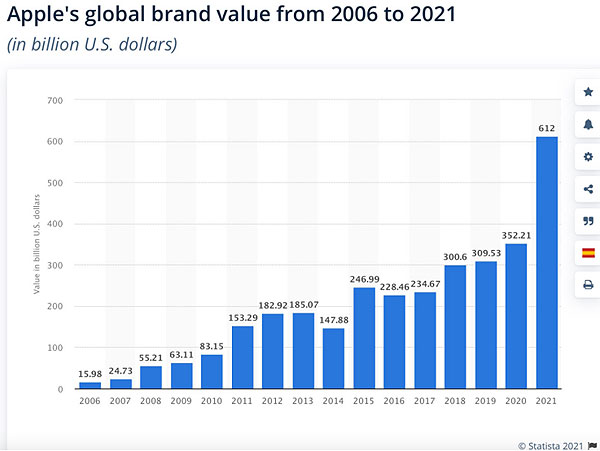
    It was to catapult the Apple being one of most worthy  brands on the planet. Today, it is worth $ 612 billion.


    In many ways, the commentary of Think Different glorified the Apple user and made her/him feel a strong part of a tribe around the world.


    As we remember Jobs, this powerful and shared feeling carries on.


  • 75 years young, John Sculley is rearing to go.


    By Moinak Mitra


    Youth is effervescent. Bubbling over that target audience, American businessman, entrepreneur and investor in high-tech startups John Sculley, who is more famously known to have ‘fired’ Steve Jobs from Apple in the mid-80s, gushes with renewed enthusiasm. After trouncing Coca-Cola as PepsiCo’s youngest CEO in the now-famous ‘Cola Wars’ by targeting the youth, Sculley amped up the youth quotient in Apple.


    In his latest avatar, at 75, he is now set to launch his ‘youth-centric’ range of Obi mobile phones in the Indian market as a test case, to be taken to other emerging markets upon the India experience. While reams have been written on how Jobs invited Sculley to Apple in the early 80s with the bait ‘Do you want to sell sugared water for the rest of your life? Or, do you want to come with me and change the world?’ and their eventual fallout over the Macintosh versus Apple II row, Sculley’s management mantra is pivoted on Jobs’ ‘zoom-in, zoomout’ approach.


    INDIAN CONNECTION

    Sculley had his fi rst brush with the Indian market in 1991 when Ratan Tata came to visit him with a delegation of Indian business leaders in his California home. When he left Apple in 1993, Tata visited him in his Connecticut home as well. “I’ve been coming to India ever since 1996 and have seen the country when there was hardly any electricity,” says Sculley. Apart from Tata, he counts Nandan Nilekani and Pradeep Kar of Microland among his close friends. He ‘s driven several thousands of kilometers in the hinterland with Kar and his wife, Kalpana. From a business standpoint, it is India’s emerging middle class and the frugal Asian business model that attracts him.


    Zoom in, zoom out

    The duo met for the first time in 1982 and took five months in getting to know each other over long sessions at Jobs’ triplex apartment on New York’s Upper West Side. Later, upon signing up with Apple, Sculley and Jobs would spend time walking around the Stanford campus, Apple campus and high-tech citadels on the West Coast. “So Steve would say, ‘Let’s zoom out’.


    That meant the big picture. He said, ‘When I was in Reed College, I learnt about calligraphy and then I got this opportunity to visit Xerox Park, Palo Alto research center and I saw what they were doing with the Star and the Alto.’ These were the first experimental media computers. He said, ‘If I could commercialize something and make it really easy to use and very inexpensive and I could connect the dots with calligraphy that I fell in love with at Reed, and put that together with a media computer, that would change the world’”, narrates Sculley.


    While the zoom-out principle encapsulated linkages that wove past, present and future into a missionary zeal for novelty, zoom-in was all about simplification. The most important decisions were not about what you put in, but what you leave out. Sculley would hang around with Jobs at the Mac building at midnight because all the engineers worked late. “An engineer would just come and say Steve, look, I just simplified this function to four steps. Steve would say, it’s not good enough. He said, Steve, you just didn’t look at it.


    Steve would say I don’t care. Come back when you have it in three steps,” says Sculley. One look at Apple today, whether it is iPod, iPhone, iPad—it is zoom-in, zoom-out in motion. Sculley believes Apple can only be understood correctly as a systems design firm. “It’s not a technology company. Most of the technology comes from other people. It’s a series of choices. When Steve was alive, one person made all the choices. That’s how you get a product like iPad, iPhone, iTunes, AppStore. It’s zoom in, zoom out.”


    Though he regrets the fallout with Jobs, the septuagenarian has surely imbibed the bulwark of his business philosophy from the man who saw the future. “It was my mistake not understanding back in those days how important the founder is in Silicon Valley as the most innovative companies are really the ones with founders at the helm, not professional managers,” says Sculley, dishing out sterling examples from Jeff Bezos (Amazon) to Jack Ma (Alibaba), Mark Zuckerberg (Facebook) to Larry Page (Google).


    Failures propel greatness

    It is his admission to mistakes that sets him apart. He confesses that at Apple, he made the mistake of not going with the Intel processor and Apple really lost out in the PC revolution in the 90s as Intel became the heart of every PC ecosystem. “I even failed to read Apple Newton’s (PDA) prowess, which was 15 years ahead of itself, and would become an inspiration of things to come, like the worldwide web and digital cellphones,” he says. Failure is looked upon as valuable experience in Silicon Valley and as startups fail, founders get asked about their learning, unlike in India. “You don’t have a culture that gives permission to fail, while we do,” says Sculley, pointing out that despite the IITs, India has zero success stories in high-tech.


    The Cola Wars

    Sculley would know better than most that good things crop out of failure. Back in the 70s, when Coca-Cola outsold Pepsi by 5:1 in the US, he tried a bevy of tricks to upset that, including imitating the hour-glass shaped Coke bottle, but every time met with dejection as it infringed on the Coke design. Armed with a mathematical and industrial design background, Sculley then ran a market research with a 550-home sample, wherein each week, Pepsi would deliver a certain quantity of soft drinks, including the competition, to these homes. After nine weeks, a very interesting pattern emerged—no matter how much was delivered to the household the week before, the household inventory was always empty the next week.


    “We realized that we were solving the wrong problem and shouldn’t be designing a little bottle with Coke’s little bottle,” he reminisces. In fact, that was the started the development of the world’s first 2-liter plastic bottle. This coincided with the rise of mass merchandisers in the US, like Walgreens, K-Mart and a certain Wal-Mart.


    “I remember going to meet Sam Walton to convince him to sell soft drinks as he said he would not sell soft drinks as bottles break and get messy,” he recalls. So Sculley took along with him the newly minted 2-litre PET bottle and held it out to Walton. But before Walton could grasp it, Sculley let it go. “Everyone gasped as it hit the floor and bounced.” With the buy-in, Sculley designed an entire line of merchandising equipment for plastic bottles and did the first off-shelf displays and visi-coolers and new shelf design.


    Again, to get one up on Coke, Sculley and his team at Pepsi co-developed with McKinsey & Co something called the universal product code, which came to be known as the bar code. In those days, the large chain stores had no idea how much soft drinks they were selling as they only had information about the products sold to the warehouses. Pepsi became the first consumer product to have a bar code.


    Bermuda Triangle

    Sculley’s 15 years at PepsiCo was marked by marketing-led innovations that made him the darling of corporate America with a call to ride the crest of the tech wave as CEO of Apple Computers in 1983. His siblings are equally illustrious. Arthur Sculley was Managing Director of private bank JP Morgan until 1995 and David Sculley was President of HJ Heinz & Co’s domestic ops until 1989.


    Through their family investment office, Sculley Brothers, John and his brothers are investing in smart tech and healthcare. “We’re extremely close and we’ve never had an argument our entire lives,” says Sculley. Perhaps, their work ethic has to do with the trio’s wonder years in Bermuda and New York, mostly raised by their grandparents as their folks passed away when they were young. Or, maybe, it has to do with Sculley’s grandpa, a marine engineer, who co-invented the first submarine at Liverpool


    Lesson in mentoring

    That said, Sculley increasingly sees himself as a mentor and rues the fact that he didn’t have one in his days. He is penning a book on mentorship slated to be out later this year. “The mentor is like a coach for an athlete. I like being a mentor because I can share my experience, and what you discover with more experience is that the best lessons are from your failures, not from your successes.”


    As our conversation starts winding up, Sculley has this unmistakable twinkle in his eyes and a surprise up his sleeve. In a soft stutter he says the world will be out of wireless spectrum when the next 2 billion people get smartphones, and every telco knows it. So he’s worked with Steve Perlman, his colleague at Apple, who introduced the world to Quicktime and Web TV and became Prez at Microsoft, to co-develop a solution to that problem for over a decade. “We’re planning to commercialize it now and it will be what we call a tubes-totransistor moment, or a moonshot,” he says, without batting an eyelid, harking back to a youth well spent, journeying along the cusp of talent and innovation.


    Source:The Economic Times

    Copyright © 2014, Bennett, Coleman & Co. Ltd. All Rights Reserved

    Licensed to republish


  • Is Apple still the ‘hot’ company Steve Jobs left behind a year back?

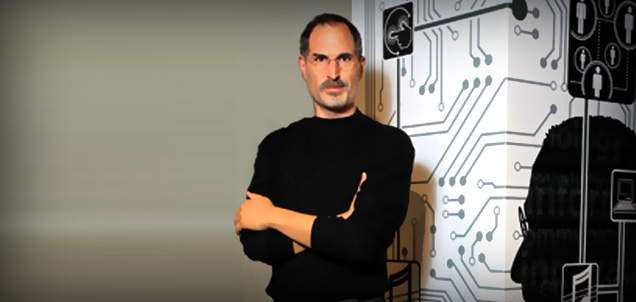
    A wax figure of Steve Jobs was unveiled at Madame Tussauds Hong Kong to mark the first death anniversary


    By A Correspondent


    Dassera Day, 2011. We were woken up by the news of Steve Job’s death.


    That he was suffering from cancer and indifferent health thanks to that was known. He had announced that he was moving on from the role that he was playing, but was around. And for many that’s what matters.


    A lot of what has been written on Steve Jobs before and after he passed away. There have been many who’ve said that the Maps controversy wouldn’t have happened had Jobs been around. But, remember, it’s not that Jobs has always got all his products right, and Tim Cook wrote a letter to consumers and apologized for the booboos.


    Would Jobs have done that? Perhaps not in the good old days. But in the era where social media (and Twitter) can be cruel and demolish one’s reputation, a ‘sorry’ works wonders. Jobs hence may well have done that.


    Would Jobs have fought Samsung so much to the point of upsetting die-hard loyalists? Should Apple have just let Samsung be… after all imitation is the best form of flattery, right? Yes, but imitation could also lead to a deep erosion of income, and one can be sure, that Steve Jobs would’ve not let it pass. It’s in fact the spirit of Jobs that Apple has ensure it doesn’t lose out on.


    “While we’re improving Maps, you can try alternatives by downloading map apps from the App Store like Bing, MapQuest and Waze, or use Google or Nokia maps by going to their websites and creating an icon on your home screen to their web app,” Tim Cook wrote in his mail.


    Would the iPhone 5 have had cooler features and not dispensed the age-old power connector? Perhaps Jobs would’ve done the same. Only if he had unveiled it, people would’ve hailed it as a masterstroke. Now, it’s being questioned.


    Would Jobs have planned launching an iPad mini with a 7-inch screen that he had scoffed at? We are sure he would have. It’s the need of the hour. As the mobile phone is turning into a small tablet and vice versa, he would have been compelled to change the course of his thinking.


    To those who’ve followed Jobs, he was more than just a device-maker. He was a thinker. A visionary. A designer. The Personal Computer became truly personal with Apple. The mobile phone became cool with the iPhone. Tablets were no longer bitter, and computing had an all-new meaning when the iPad was launched.


    On October 5, 2011, Apple issued a media advisory:

    “Apple has lost a visionary and creative genius, and the world has lost an amazing human being. Those of us who have been fortunate enough to know and work with Steve have lost a dear friend and an inspiring mentor. Steve leaves behind a company that only he could have built, and his spirit will forever be the foundation of Apple.

    No words can adequately express our sadness at Steve’s death or our gratitude for the opportunity to work with him. We will honor his memory by dedicating ourselves to continuing the work he loved so much.”


    In his letter on August 24, stepping down as CEO of Apple and recommending to the Board of Directors that Tim Cook be appointed CEO, Jobs wrote:


    I believe Apple’s brightest and most innovative days are ahead of it. And I look forward to watching and contributing to its success in a new role.

    The question is: are Tim Cook and his team at Apple worthy inheritors of the Steve Jobs legacy. Yes, they are. Steve Jobs did for Apple what he did for his various technological breakthroughs: make it Future Ready.


  • I Will Miss You Dad: An iPhone pays tribute to its Legendary Father, Steven P Jobs

    Author:
    Kris Dhingra

    It’s not often that you get woken up in the morning on your day off with a piece of news that leaves you shell-shocked and makes you fervently pray that what you’ve heard is all a rumour or a dream. Such reactions are normally reserved for unfortunate incidents that happen to your near and dear one’s.

    On the morning of October 6, 2011, while lying in sleep mode, I was suddenly picked up from my dock and rushed into the living room to verify what my owner had heard, “Steve Jobs has lost his battle against pancreatic cancer“. It was true, the moment I believed was still many years away had come much sooner than I expected. It was shocking, it was painful and it was sad both for my owner, myself and for millions of my siblings (other iPhone models) and cousins (ipod, iPad and other iOS devices) around the world.

    My birth father and the person who had visualized, conceptualized and created me was no more. I think I saw my owner shed a tear while watching visuals of my dad’s amazing keynote presentations from previous years. As the news started to sink in, my body started to get into motion as I began to access the twitter and facebook apps, update the timelines, render the graphics etc. It was hard to deliver the fabulous experience that I am known for given what I had just seen and heard, but I managed it as it was part of my DNA.

    My chief Architect and originator Steve Jobs was undoubtedly a brilliant man. In fact he was one of the greatest inventors and visionary entrepreneurs that this generation has ever known. Not many people in today’s world have seen or heard the likes of Edison, Marconi, Graham Bell or Einstein, but they have surely seen and heard my father introduce devices that have changed the face of this planet. He envisioned us in a manner no one could have ever imagined thanks to his extraordinary risk taking ability and capability to understand what users needed before they themselves knew what they needed.

    My owner and other iOS users around the world love what we can do for them and how easy we have made their lives, but what they don’t know is how loved we feel when we are bought. I have many foes today who come in a variety of weird names from the house of Samsung, LG, Motorola, Nokia etc and when I see people lining up for days outside our first homes (the Apple stores) it gives us such great delight and joy. No one else has or ever will manage to get such a following unless they believe what my father believed:

    Your time is limited, so don’t waste it living someone else’s life. Don’t be trapped by dogma — which is living with the results of other people’s thinking. Don’t let the noise of others’ opinions drown out your own inner voice. And most important, have the courage to follow your heart and intuition. They somehow already know what you truly want to become. Everything else is secondary.

    Today, I can’t help but feel sad at the passing away of Steve but I also consider myself fortunate to have shared some part of my life with him. I am certain that my owners will continue to take great care of me and treat me in the best way possible, and they will certainly remember Steve every time I create some of the magic that my father gifted me with. Thank You Dad for everything you have done, I will miss you dearly.

    Steve Jobs encouraged us to listen to our heart and think differently, so in keeping with that spirit we decided to try this new format to pay homage to our idol.


    Kris Dhingra is founder and editor at DelhiPlanet Media. He can be reached at krisdhingra@delhiplanet.com]

  • Steve Jobs – The Vision and the Conviction

    By Prasanto K Roy


    It’s a well-worn cliché to speak of the end of an era when someone well known has passed away.

    Today, however, it does feel like something has changed forever in the world of tech.

    The brilliance and clarity of vision, the courage of conviction, the fiery intolerance for imperfection.

    I really don’t see another individual impacting technology in anywhere near the same way, in our era, as Steven Paul Jobs did.

    He wasn’t just the guy who made the world’s coolest gadgets. Oh, well, that too. I don’t know of any other company for whose products buyers queue up for three days, ahead of launch.

    Steve Jobs created markets and product categories. He changed how we consume information and entertainment. He redefined leadership.

    I can’t think of another person whom I have been so proud to have merely met, once, for a few minutes, or sat through as many as two of his “oh, and one more thing” launches. When he pulled that first iPod out of his jeans pocket, we all stood up, and I didn’t even notice when my new notebook slid from my lap and cracked its display. It was a small price to pay to be a part of a piece of history, to experience the famous Jobs near-field distortion. “The Force is strong with him”, an elderly, pony-tailed journo sitting next to me said, perhaps to console me.

    There’s so much about Steve Jobs that marks him out from the many tech visionaries that dot Silicon Valley and the rest of the world. His never-say-die reinvention of himself and the companies he started, repeatedly turning adversity into advantage, described most famously in his Stanford address. His candor about shamelessly stealing the best ideas he came across, and then turning them into life-changing gadgets. His violent intolerance for ‘good enough’, making life hell for his design and execution teams, but turning out extraordinary products.

    Can you think of another person who would have had the vision to take his company into uncharted waters like a mobile phone with no keypad, which no market research had showed any demand for, and then change the world with that? Or who’d have the courage to bet upon and live with one, just one, model to take on the world’s phone vendors… and then to edge them out, with the world’s most brilliant, and most profitable smart phone? Or have the vision and execution to back great design with the amazing apps and accessories ecosystem that led to the re-invention of the tablet?

    This is a eulogy from a non-fanboy, and indeed something of an Apple critic. Though my first computer was an Apple IIc and my home is today dotted with iPads and iPods, I am no fan of Apple’s closed-garden approach, its secrecy and indeed its arrogance, or its historical lack of interest in India.

    I know that all of these largely derive from Steve Jobs, despite his old ties with India, which famously made a big impression on him as he backpacked through it (or when he went for his meals to a Hare Krishna temple in California).

    But we lived with all that that, and still bought Apple products. The secrecy and arrogance were an inseparable, even necessary part of the picture of Steve Jobs and Apple, especially if you go by results: stunning, life-changing lifestyle devices.

    With every chapter that ends, there is a new beginning.

    Of course the world, and Apple, will produce more outstanding, life-changing products. But yes, something has changed in the world of tech today, leaving (for Star Wars fans) not just a disturbance, but also a major discontinuity, in the Force.


    Prasanto K Roy is the chief editor of CyberMedia’s ICT group, and can be found at http://www.pkr.in/ or found on twitter.com/prasanto

  • Those iconic Apple ads

    The famed Superbowl ad [youtube width=”300″ height=”200″]http://www.youtube.com/watch?v=HhsWzJo2sN4[/youtube]
    Apple ads [youtube width=”300″ height=”200″]http://www.youtube.com/watch?v=3OZg3ljsbc0[/youtube]
    Apple ads 1997-2001 [youtube width=”300″ height=”200″]http://www.youtube.com/watch?v=2fl3Ifv9yGQ&feature=related[/youtube]
    They have a Mac [youtube width=”300″ height=”200″]http://www.youtube.com/watch?v=HGmjr4p34Y8[/youtube]
    Airplane Middle Seat [youtube width=”300″ height=”200″]http://www.youtube.com/watch?v=H7oLj6NW1jM&NR=1[/youtube]
    12 and 17-inch PowerBook [youtube width=”300″ height=”200″]http://www.youtube.com/watch?v=wjoQF4kJOYs&NR=1[/youtube]
    Macintosh switch [youtube width=”300″ height=”200″]http://www.youtube.com/watch?v=DXaYwTzkNaA[/youtube]
    The iPod Nano commercial [youtube width=”300″ height=”200″]http://www.youtube.com/watch?v=rfywLP0rXxU&NR=1[/youtube]
    iPhone ads [youtube width=”300″ height=”200″]http://www.youtube.com/watch?v=0lfmlKYZ-vU[/youtube]
    iPod Nano 4G ‘Bruises’ by Chairlift [youtube width=”300″ height=”200″]http://www.youtube.com/watch?v=bk32oCGKvzQ&NR=1[/youtube]
    iPod Nano Touchscreen [youtube width=”300″ height=”200″]http://www.youtube.com/watch?v=PK2WulMuyDs&feature=fvwrel[/youtube]
    iPhone 4 ads
    Longer: [youtube width=”300″ height=”200″]http://www.youtube.com/watch?v=wU7s0EMaXp8&feature=relmfu[/youtube]
    Smile: [youtube width=”300″ height=”200″]http://www.youtube.com/watch?v=niOCmIuts90&NR=1[/youtube]
    Big News: [youtube width=”300″ height=”200″]http://www.youtube.com/watch?v=6CRfHl1Glwk&NR=1[/youtube]
    Hair Cut: [youtube width=”300″ height=”200″]http://www.youtube.com/watch?v=diUjVY8zRJc&feature=relmfu[/youtube]
    Grandfather: [youtube width=”300″ height=”200″]http://www.youtube.com/watch?v=N2Wn7rYSBVQ&NR=1[/youtube]
    Retina: [youtube width=”300″ height=”200″]http://www.youtube.com/watch?v=IeDTJZtFfI0&NR=1[/youtube]
    Santa: [youtube width=”300″ height=”200″]http://www.youtube.com/watch?v=3_vGH96kfM0&feature=relmfu[/youtube]
    MacBook Air [youtube width=”300″ height=”200″]http://www.youtube.com/watch?v=q6oGhLvLfgs&feature=related[/youtube]
    iPad [youtube width=”300″ height=”200″]http://www.youtube.com/watch?v=R41NNPBqRCk[/youtube]
    iPad2 [youtube width=”300″ height=”200″]http://www.youtube.com/watch?v=xRwBpjm2kQE[/youtube]
    We believe: [youtube width=”300″ height=”200″]http://www.youtube.com/watch?v=tyEpaPEbjzI&NR=1[/youtube]
    Smart Cover: [youtube width=”300″ height=”200″]http://www.youtube.com/watch?v=naVZDRcI0p4&NR=1[/youtube]

    Btw, Apple also did some cool print ads. Here’s a sample at the New Yorker:

    http://www.newyorker.com/online/blogs/backissues/2011/10/pitch-me-another-apples-ads.html

  • The Anchor: Anil Thakraney’s 4 reasons why Steve Jobs was so special

    The entire world seems to be in collective grief over the death of Steve Jobs. As if people have lost someone close. Does it make sense? When you consider he was just another businessman out to make a lot of money. And there are thousands of very loaded industrialists all over the world. Most of who we don’t care much about. And Jobs, unlike rival Bill Gates, wasn’t even big on charity work. So then why do we all adore him? Even those of us who have never touched an Apple product in our lives. (I certainly haven’t.)
     

    There are many reasons behind the cult of Jobs. Here’s my little list on what made the man so special. And my reasons actually lie within Apple’s own legendary ‘Think Different’ advert. It’s as if the script was written with Jobs in mind. Businessmen and industry leaders must pay close attention to what it takes to catch consumers’ hearts and minds. From across the world.


    #1 Because he was a rebel: Jobs did not conform to the industry standards, nor did he try to surpass them. Instead, he showed them the finger. He was a true inventor, a visionary, who believed he could do it his way. Self-belief was at the heart of his success. And that’s how a lad working out of a car garage went on to build an international tech empire.


    #2 Because he didn’t just make and market products, he pushed the human race forward with his bold innovations. Product innovations that are not just technologically marvellous, but are slick and aesthetically rich. Consumers don’t just wait for a new Apple product. They queue up for it. They save up for it. They dream about it. Jobs never short-changed his buyers by taking short-cuts. He thought big. He delivered better.


    #3 Because instead of throwing out the ‘square pegs in the round holes’ from his organization, he trained, nurtured and cherished the misfits. He saw the genius in his crazy, offbeat employees. He knew he needed people who thought differently, if his vision for Apple was to come good. Look around you… very, very, very few leaders in the corporate world are capable of such an ideology. That’s why we have just one Steve Jobs.


    #4 Because he genuinely, passionately believed he could change the world. And he did.


    Links: The unforgettable Apple advert.
    [youtube width=”400″ height=”250″]http://www.youtube.com/watch?v=4oAB83Z1ydE&feature=related[/youtube]
    A touching tribute to the tech king.
    [youtube width=”400″ height=”250″]http://www.youtube.com/watch?v=XzWft8ZtTTY[/youtube]

    ***


    PS: Apparently there’s a TV journalist called Mandeep Something inside the Bigg Boss mad house. And she wailed on national television that she hasn’t gone to crap for four days. If a journo is doing stuff like this, can we really blame the other bimbettes on the show for all the nonsense? Anyway, guess now you know why it’s called a crappy show.

  • Steve Jobs. 1955-2011

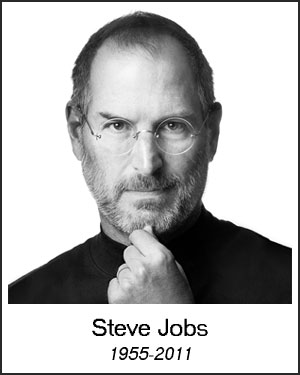
    Steve JobsWe woke up to this rather sad news on a Dassera morning. Steve Jobs has passed away.


    Sad. Very, very sad.

    He has of course named Tim Cook as successor but  there will be questions on whether Apple will continue to produce such wonder products and services.

    On behalf of the vast number of Apple users and tech watchers from amongst India’s marketing and media fraternity, our Salaams.

     Tell us how Steve Jobs or his products and services have impacted your life. Email MxMIndia at editor@mxmindia.com

    Recommended reading:
    A look back at Steve’s life, in pictures wired.com/gadgetlab/2011…

    New York Times link to stories: http://topics.nytimes.com/top/reference/timestopics/people/j/steven_p_jobs/index.html?inline=nyt-per

    Bill Gates: http://www.thegatesnotes.com/Personal/Steve-Jobs

    Huffington Post obit: http://www.huffingtonpost.com/2011/10/05/steve-jobs-dead-apple-obituary_n_997256.html?ncid=edlinkusaolp00000003

    Time magazine’s Top 10 Apple Moments: http://www.time.com/time/specials/packages/article/0,28804,1873486_1873491_1873530,00.html

    Poynter: How he changed journalism. http://www.poynter.org/latest-news/media-lab/mobile-media/144051/how-steve-jobs-has-changed-but-not-saved-journalism/


    Picture: www.apple.com