Tag: StarIndia

  • Channel [V] says goodbye to Bollywood music

    By A Correspondent


    Star India’s Channel [V] is ready for a change from July 1 when it will discontinue all music slots in its programming. With this transition, the channel is set to consolidate its position in the youth entertainment genre.

     

    This move is being made to strengthen its stance as a holistic youth entertainment channel. The drastic change in the content strategy took almost three years. Speaking on the move, Prem Kamath, Executive VP & GM, said: “This shift in programming strategy is rooted in our continuous effort to remain a unique entertainment destination for the youth. We recognize the affinity the youth have developed for our shows and we can only oblige them with greater hours of these preferred shows.”


    In an effort to increase weekly hours of original content, Channel [V] will convert its teen crime show, Gumrah – End of Innocence into a daily. And, it also plans to launch new fictional shows like ‘The Buddy Project’ which will occupy the 6pm slot from Monday to Friday.


    However, the channel promises not to distance itself from music. “As for music, it can never go out of the youth DNA. We will continue our on-ground and on-air properties that are based on music. We will simply stop airing Bollywood music slots.”


    Launched in 1994 and reaching out to over 25 million viewers, the channel’s current mantra – Bloody Cool – manifests itself not only through its shows, but also through the broadcast persona and out of TV alliances created to engage with the youth.


  • Life OK and SAB: The see-saw continues…

    By Meghna Sharma


    In India there is no dearth of television channels. The competition is only growing and the race to lead in the TRP race is heating up. In the past few weeks, the two channels which seen an increase in their TRPs are Life OK and SAB TV which have been fighting for the fifth spot in the TRPs race.

     

    Life OK, the newest entrance in the GEC genre from the Star India stable, was launched in December last year. The network renamed and re-launched their youth-oriented channel Star One with new tagline ‘cherishing what you have’.


    On the contrary, SAB TV has been around for over a decade now but has gone through various transformations. In March 2005, SAB TV was acquired by Sony Entertainment Television and was transformed into a youth-centric channel. In June 2008, the channel announced that it would return to its roots by being repositioned as a comedy-centric channel.


    So what does the race for TRPs mean for the two channels and do they pose a threat to other GECs? MxMIndia spoke to a few media planners to see what is the future of the GECs and what shape will this ‘war’ take.


    According to the latest TAM data, in week 24, SAB TV has toppled Life OK and regained No 5 position. Whereas, last week (week 23), Life OK was the fifth most watched GEC.


    Sundeep Nagpal

    Sundeep Nagpal, founder director, Stratagem Media feels that these are momentary fluctuations and cannot be contributed to anything per se. “These channels have a small base; therefore, even a single factor can affect the ratings of the show – positively or negatively – depending on how it did on a particular week. Hence, I don’t think we should be alarmed by such fluctuations. And they won’t be able to impact the top 4 slots.”


    The two channels have positioned themselves differently, too. SAB TV is a comedy-centric channel which portrays itself has a family channel, whereas Life OK has shows full of melodrama like other GECs.


    Janardhan Pandey, associate vice-president, DDB Mudra Max feels that the two cannot impact each other drastically. “SAB has its own set of audience which won’t get influenced by other GECs and vice-versa. They will continue to do well in their own categories; the fluctuation between the two is possible but they don’t have the same hold as other GECs do. They still have a long way to go.”


    Jai Lala

    On the other hand, Priti Murthy, national director – Insights, Maxus, feels that though these channels might be still small fish, they cannot be ignored entirely. “Like these two channels, even number two and three slots have been fluctuating for a while now. So, slot five and six can create an impact too. One cannot rule out the possibility of them gaining to higher positions in the future if they come up with new and better content.”


    On the channels growth, Mindshare’s principal partner, Jai Lala feels that the two channels have grown since Imagine TV, a Turner International India Pvt Ltd entity, was shut down earlier this year. “The shutdown of Imagine TV has benefited these two who are now turning out to be competitors. However, they still have a small base compared to others and unless and until they cross the 200+ threshold, I don’t think that they can or will affect the channels like Star or Zee or Sony which have been ruling the top slots in the TRP race for a long period of time.”


    Uday Mohan

    “While these channels are doing well they have a long way to go in terms of reaching the numbers of the mainline GECs. They still don’t have the kind of appointment viewing that the mainline GECs generate….they might eat into the shares of other frequency channels but will not threaten GECs, at least not immediately,” added Uday Mohan, executive director – North, MPG.


    Most experts believe that there is nothing to be alarmed about the two channels see-sawing. What they do feel is that both the incumbent SAB and challenger Life OK will have to work harder if they want to reach the top slots.


  • Planners happy with Satyamev’s 4.9 TVR

    By Meghna Sharma


    Star India’s much discussed show Satyamev Jayate which premiered across nine channels – Star Plus, Star Pravah, DD National, ETV, Star Utsav, Vijay, Star Jalsha, Star World & Asianet – on May 6 got a rating of an average 4 TVR for the CS4+ in the Hindi speaking markets and an average of 4.9 TVR for the All 4+, according to the TAM viewership data.


    The media planners are happy with the TVR of 4 and feel that it’s a good start for the show at the morning slot. “With Aamir Khan hosting the show and the whole secrecy about what the show is going to be, the show got its viewers. The slot worked too, as the repeat telecast has got a lower TVR than the morning slot. However, I was expected a rating of 5. In the metros the show has done extremely well but one cannot rule out DD’s reach too,” said Mona Jain, CEO, VivaKi Exchange.


    The show which marks the entry of Aamir Khan on the small screen does not fall into the typical ‘entertainment’ genre. The content is serious; however, it didn’t stop people from watching. The show reached 27 million people (All4+ category).


    “It’s a good TVR for a show at a Sunday morning time slot. But we’ll have to wait and watch if the show will be able to maintain it. However, without a doubt, one can agree with the fact that the time slot has worked for both the show as well as the channel,” said Jai Lala, Principal Partner – Exchange at MindShare.


    Agreeing with Mr Lala, Anil Sathiraju, Mudra Max Media, Head – South, explained that the 11am time slot on weekends is much better today: “The opening TVR for the show is 4, so it’s that context it might be around 3.2 or 3.4 in the coming weeks which will help the channel be on the top slot.”


    Sundeep Nagpal, director, Stratagem Media, predicted that the show might get a rating between 3.2 to 3.7 on Star Plus. According to TAM, it was able to get a rating of 3 on the channel: “It is unfortunate that the show got a rating of only 3. Social transformations cannot happen with a TVR of 3; it needs much more than that. It is a good property which advertisers should be happy to be associated with.”


    “For a show of such caliber and content, marketers should associate with it because it means quality viewership rather than the numbers,” said Mr Sathiraju.


  • Press Club Bombay honour bigger than Padma Shri: Vinod Mehta

    By A Correspondent


    Acknowledging to the audience that his heart still favoured Mumbai over Delhi and it was Mumbai that saw him at his pioneering best, Vinod Mehta, now advisor to the Outlook Group, was a picture of pride and fulfilment as he received the coveted Lifetime Achievement Award bestowed on him by the Press Club of Mumbai on May 4.


    Receiving the award from Kapil Sibal, Union Minister of Communications & IT, Mehta thanked the members of the fourth estate and said that this award means more to him than even the Padma Shri. Mr Mehta was felicitated for his selfless contribution of more than 35 years to his passion – journalism. Mr Mehta joined a host of winners from the fourth estate that were honoured by the Press Club for outstanding contribution to the trade.


    The evening also witnessed two special awards being given to late Pradeep Vijaykar (formerly with Times of India) and eminent journalist Madhu Shetye for their outstanding contribution to the domain. Gurbir Singh, President of Press Club of Mumbai delivered the keynote address while veteran sports journalist Ayaz Memon was the emcee for the evening.


    Prior to the awards ceremony, the evening witnessed a scintillating panel discussion on the role that media was portraying in the country and whether it was headed in the right direction. The panellists included Arnab Goswami of Times Now, who moderated the session, Vinod Mehta of Outlook Group, Kumar Ketkar of Divya Marathi and Uday Shankar of Star India.


    Mr Goswami began by stating that there is no shortage of attention being showered on media but expressed concern when he said that never has the media done so wrong. “The question that all journalists and editors need to ask ourselves is, are we doing everything right today? Is the chase for news headed in the right direction?”


    Replying to his question, Mr Mehta said: “There is no problem with the direction, what is essential is for us to judge the media in the environment it works in. The judiciary and press media still function with a degree of idealism and integrity but there is so much of self-congratulation that is happening; that is something that is slightly out of proportion.”


    Expressing his views on the issue of responsibility, Mr Mehta said: “Where the young journos are concerned, I feel they have a good sense of idealism and integrity but if there is somebody who has to take the blame for the current state of affairs, it is the editor. Even if somebody from the team has committed an error, the editor has to take ownership of that and find a solution to it. The problem is that the editors have forgotten what their job is and are pursuing their own agenda. The need of the hour is self-examination; we need to introspect and be accountable for our actions.”


    Replying to Mr Goswami’s query on whether there was unity between members of the fourth estate and the role that editors essayed, Kumar Ketkar said: “It is the editors who stop news from being published and not the management as many think. The editors try and control their reporters and that should not be the case.” Mr Ketkar cited the example of the slain BJP leader Pramod Mahajan, who was shot by his brother a few years ago. “When his brother was arrested for his murder, he had written a letter from the jail explaining his stance and he wished to supply the letter to all in the media. I was told that most editors had agreed to play up the letter in their publication and so I went ahead and planned a big editorial spread for the news. But the next day, I was surprised to see that only my paper had carried the news. This shows the lack of unity existing between the media players today.” According to him, “The media today is not clear on the role that it has to essay. They are not mature enough and lack understanding skills. Journalists themselves are timid and lack courage.”


    Uday Shankar, CEO of StarIndia went on to describe how television as a medium emerged in a big way first during the 90s and then again during 2008-09. “A lot is being said about how news television has been crowded space but I feel it managed to rediscover its own agenda during 2008-09. I cannot understand when some people say media doesn’t do self-introspection. If that is what is claimed, then how come they’ve come to rediscover themselves? Personally, I feel media has done the right thing by chasing news. If there are people who still have questions about the role of news channels, then I cannot understand whether media should be responsible for what it does or whether it should concentrate on doing the right thing?”


    The panel went on to discuss how urban centres led by metropolitan cities were receiving maximum attention from the media and how stories from the rural and less important towns were being ignored in a large way. The need of the hour, the panel highlighted, was to bring out stories from these small cities and towns which were inspirational in nature.


    Winnerspeak:

    Ashish Khetan, Editor – Investigations, Tehelka

    “I bagged the top award for my story on the national rural health mission scam that was unfolding in UP. The story was not about the bonds between the corporation and ministers but how corruption was actually killing people. The funds which were allocated for improving healthcare for the needy and rural people were being siphoned off and embezzled by the whole gravy train of bureaucrats, including politicians. Unfortunately the story did not get much play in the national media because it was centered around the poor but I feel the story was more important than 2G, CWG or other scams that were covered by the media.”


    Abhijit Sathe, Sr Asst Editor, Mumbai Mirror

    “I won the runners-up award for Crime (Pradeep Shinde award) for my story Hiranandani vs Hiranandani. The award means a lot to me. The story was a big one that chronicled infighting between families of one of the biggest names in business today. I exposed how two siblings were sabotaging each other’s interests. I am greatful that I was selected for, and eventually won the award.”


    Rafique Baghdadi, Business India

    “More than react to the win, I would like to say this: more than 62 years ago, a lady called Ms Panna Shah, had done a PhD in Indian Cinema and since then there is nobody who has done that course in the industry as yet. It’s high time the business houses, film industry and the state government should give grants and scholarship to aspiring candidates to pursue that course.”


  • Movies OK will focus on families: Hemal Jhaveri

    By Meghna Sharma


    After the launch of Life OK in December 2011, Star India is planning to launch a new channel on May 6 under the OK banner – Movies OK.


    The channel promises to be different from Star Gold, the movie channel launched by the network in 2000. “There is a difference between the two channels. Movies OK will focus on family audience. This means we are going to showcase movies which a whole family can enjoy together,” said Hemal Jhaveri, general manager, Star Gold, who heads the channel. The channel plans to concentrate on genres like comedy. “There is going to be more comedy and less action on the channel,” he added.


    Apart from content, the other thing which will differentiate the channel from the competitors is the treatment. “The promos are going to be very different and unique from what the other channels do. For instance, we are going to have a Best of Salman Khan Festival called ‘Bhai Ok Please’ where no film footage has been used. So, for the first time, people will see a promo for Salman Khan without him in it. Communication is going to be unique,” explained Mr Jhaveri.


    If that’s not enough, the channel also boasts of having a World TV Premiere every night by the end of this month. Mr Jhaveri said: “The 7 day 7 premiere is something which no other channel has experimented with earlier. I think it’s the first-of-its-kind in the world as well. So, every night at primetime, one will get to see movies like Kahaani, London Paris New York, Jodi Breakers and others. We are planning to build our channel as a unique platform.”


    The channel also hopes to use the learnings from their other channels, especially Star Gold which was revamped last year. So, one can expect shorter breaks.


    The channel has a library of over 1000 movies. “We have been investing in the channel from the past two-three years and will continue to do so in the future as well. Therefore, it’s going to be a unique library. Last year, we acquired the Viacom18 library so that will also add to it,” elaborated Mr Jhaveri.


    The Hindi movie genre enjoys the third largest viewership pie, trailing behind regional channels and Hindi GECs, according to a FICCI-KPMG report on the Indian media and entertainment industry, released in March.


    “There are various Hindi movie channels, but there is always space for one more, if it’s different and has good content,” said Mr Jhaveri. Agreeing with Mr Jhaveri’s sentiments, Ashwini Kamat, general manager, MediaCom added: “People don’t have loyalty towards movie channels. So, if a channel has a good library, then it doesn’t need to worry about others because people will switch to it, if they want to watch a particular film.”


    Janardhan Pandey, associate vice-president, DDB Mudra Max elaborated: “There is enough space on TV to launch a channel but all depends on if one can sustain it at the top slot. A new channel might showcase latest movies, but after some time, many stop investing in a new library and repetition starts. It is then people tend to move away from it. So, it might make an impact in the beginning, but it is difficult to say how a channel will do in the future.”


    However, advertisers aren’t optimistic about it. “One more channel means more segmentation. So, I don’t think it’s going to benefit us,” said Praveen Kulkarni, general manager (marketing), Parle. The categories which spend heavily on Hindi movie channels are services, auto, personal accessories and telecom. “Launch of any new channel means fragmentation and overall inflation for advertisers,” added LK Gupta, CMO, LG.


    The channel has a 360 degree promotional plan for the channel. It will also be promoted during Star’s new show, Satyamev Jayate, which will also be premiered on May 6. Radio and digital platforms will be used too.


  • @FF12: Opening session weighs pros & cons of digitization


    By A Correspondent


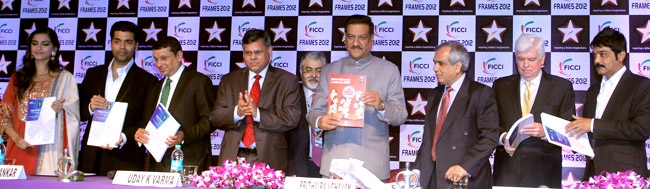
    FICCI Frames 2012, now in its 13th year, kicked off on March 14, Wednesday at Hotel Renaissance, Mumbai. The morning session started with a welcome address from Karan Johar, Co-chair, FICCI Entertainment Committee. After Mr Johar’s welcome address, Uday Shankar, CEO, Star India & Chairman, FICCI Broadcast Forum, took the stage to address the audience.


    In keeping with the theme, ‘Embracing the Digital World’, Mr Shankar said “digitisation is a big reality which will revolutionise the way content (creation and distribution) is offered”. Even though he said that digitisation will create a level playing field for the broadcasters and the cable operators, he had a word of caution to ad when he said that his biggest concern was “the chaos which will be caused by the broadcast industry’s inaction”.


    Mr Shankar was of the opinion that instead of lamenting the loss of carriage fees, the MSOs should appreciate the opportunity of “customisation and localisation of content” being presented by digitisation.


    Though Mr Shankar admitted that there is a need for legislative enablers to remove the bottlenecks, he also said that the broadcast industry is still not ready to move to the digital format. To drive home his point he used the example of the film The Artist, where the star of the silent era films loses out when he refuses to move with times. With this word of caution, Mr Shankar ended his keynote address.


    Prithviraj Chavan, Chief Minister,Maharashtra, next took the stage to talk about the “exciting times that we are living in”. He said that the challenge is to adopt the regulatory framework to the new technology and ensure that over regulation doesn’t kill a good thing. He also said that the move towards digitisation will create a huge employment opportunity. He stressed on the need to balance technology with creativity, adding that “growth should not be lopsided but all inclusive”.


    Shri Chavan also stated that the government is taking all possible steps to ensure that content piracy is curbed but accepted that the state has not delivered on its promises to curb piracy till now.


    He also touched upon the need for regulation and said that regulation is a major challenge. Shri Chavan suggested that instead of the state regulating the media; it should look at self regulation.


    Moving on, Shri Chavan welcomed the foreign delegates and announced that his government was creating new centres for film shooting in the state. He stated that the first such centre will come up atKolhapur, where entrepreneurs would be provided with lots of financial incentives. He said that the government will “protect any creative attempt within the framework and not allow any fascists elements to disrupt it”. He also assured the film industry that its concerns over policing on film locations would be looked into.


    The Chief Minister also released the FICCI-KPMG Indian Media and Entertainment Industry Report 2012; FICCI-Amarchand Lawbook and ‘Positivity: The impact of television on India’ by The Indian Broadcasting Foundation.


    Mr Jehil Thakkar, Head, Media & Entertainment Practises, KPMG made a brief presentation about the highlights of the FICCI-KPMG Indian Media and Entertainment Industry Report 2012.


    Senator Chris Dodd, Chairman, Motion Pictures Association of America, who took the stage next, underlined the need to look into stringent regulations against content theft.  “When content is stolen, 95 per cent of the people who contribute to the vitality and success of a film are adversely affected”, he said. Quoting an Ernst & Young report, he said, movie theft contributes to a loss of US$ 1 billion annually and threatens the jobs of half a million people. He stated thatIndiais among the top 10 nations as far as online copyright infringement is concerned. He said that technology (digitisation) and content need each other and one can’t be without the other.


    Mr Uday K Varma, Secretary, Ministry of I&B, opened his address by stating that the concerns that the industry had over digitisation and the Phase 3 of FM radio have been addressed by the move to allow 839 new FM stations and 500 community radio stations.


    He stressed that the government is committed to ensure time bound digitisation and said that come July 1, the four metros will switch over to the digital format and the plan is to ensure that the move to digitalisation is completed by December 31, 2014. He agreed that the challenge was mammoth- to convert 80 million analog connections to digital format but added that the move will ensure faster and deeper penetration. “This will address a plethora of issues facing the television industry, such as addressability, carriage fees, audience measurement and consumer choice,” he said.


    Mr Varma added that in order to combat piracy, they intend to carry out an all-encompassing multi-media campaign during the 12th five year plan period involving all stakeholders from the film and music industries.


    He also outlined the ministry’s plan to celebrate 100 years of cinema inIndia. Mr Varma said that the Government of India, in cooperation with the film industry, has a line of activities between May 3, 2012 and May 3, 2013. It also proposes to present a tableaux of ‘100 years of Indian Cinema’ at the Republic Day parade next year where the plan is that the stalwarts of the industry also take part.


    Mr Varma also announced that the government is setting up a National Film Heritage Mission to safeguard India’s celluloid history by undertaking picture and sound restoration of more than 2,500 films. In Addition, theMission, with a budget of over Rs500 crore, would also look at constructing preservation vaults for archiving restored material, and for conducting workshops and training.


    The session closed after a vote of thanks given by Dr. Rajiv Kumar, Secretary General, FICCI.