Tag: Starbucks

  • Are businesses missing out on opportunities to sensitise & include?

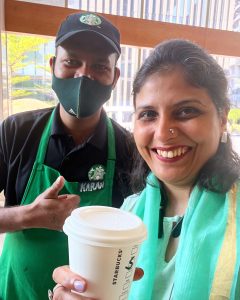
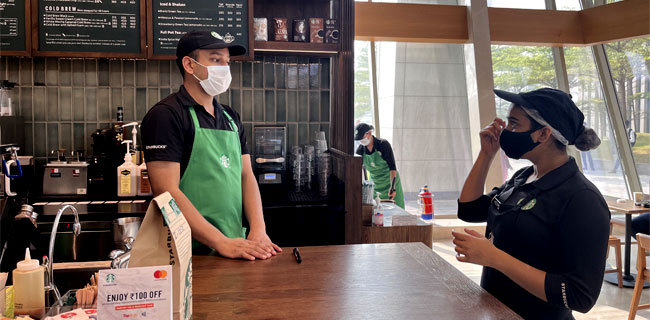
    Starbucks outlet at Noida Sector 16B where the baristas use sign language
    Starbucks outlet at Noida Sector 16B where the baristas use sign language Photograph: Shruti Pushkarna


    By Shruti Pushkarna


    Shruti PushkarnaThis week started with waking up to the news of Morbi bridge collapse and the death toll crossing 130. Since 2020, health, education, employment, entertainment and almost every aspect of our lives have been reeling under the aftermath of Covid 19. News reports and social conversations revolve around natural or manmade disasters, rape and murder, fiscal scams and political horse trading.


    Radicalisation and inflation are on the rise. Cars, petrol, houses, food, everything costs more. There are no jobs.  Businesses are struggling. We are taxed for everything, including hospital room rent.


    In short, an average Indian is grappling with a gazillion problems on a daily basis. If your own issues don’t depress you enough, there is communal hyperbole to push you towards hopelessness.


    A simple ask for empathy seems unreasonable against this ubiquitous backdrop of societal grief. At a time, when the daily commute to work and back is an exercise in aggression due to bad roads, bad driving and bad traffic, how can anyone retain their sensitivity towards another human being?


    Thousands of people in urban and rural parts of the country can’t think beyond arranging two square meals a day. No wonder politicians and corporate giants get away with dirty ploys and false promises, because who is keeping track anyway?


    Fighting for inclusion and access for persons with disabilities sometimes seems secondary in this context. Especially if a large part of advocacy involves calling out the gaps and faults. At times, it helps to apply a two-pronged approach to the same problem. Where shrill activism fails, positive reinforcement does the trick.


    On that optimistic note, let me refrain from citing unmet targets and implementation loopholes pertaining to the country’s disabled population in today’s piece. Instead I want to share two encouraging encounters which deserve propagation.


    Due to temporary confinement following a knee injury, my movements inside and outside the house were possible only with the aid of a wheelchair. Desirous of watching a movie in the cinema hall, I booked a seat in PVR Director’s Cut at Ambience Mall, Delhi. I assumed there would be wheelchair access to the last row of seats I booked. But when I reached the assigned auditorium, the staff enquired if I could stand up and walk at all. Used to taking my mother (in her wheelchair) around inaccessible spaces, I was ready to slip into my activist avatar, demanding access. Just then the extremely polite personnel brought out a motorised wheelchair and helped me shift out of mine.


    Before anyone else entered the hall, I was escorted up the several set of stairs, seated secured with a seatbelt. It took the wheelchair operator around ten to fifteen minutes to transport me to my seat. He did that with patience and grace. I was mightily impressed. Of course, similar treatment was meted out at the time of exiting the hall. In addition, as my husband escorted me to the accessible washroom, the PVR staff jumped up to help, ensuring the facility was clean.


    My inability to walk didn’t hamper my entertainment experience, thanks to the trained and empathetic staff. There are definitely solutions available to accommodate and include, even in physical spaces that are built discarding the principles of universal design.


    I also noticed fellow movie-goers observe how a young person with an impairment was out and about, enjoying a fun evening like anyone else. If there were people speculating why did I venture out at all, I’m certain there were an equal number wondering, why not!


    Subtle sensitisation supersedes stereotypes.


    A few days ago, when I went down to a newly opened Starbucks to fetch myself my morning dose of caffeine, I was in for a pleasant surprise. I noticed the baristas at work were quietly focused on their jobs except they exchanged a few signs with each other as orders were passed on.


    Curious, I asked the cashier if they were hearing impaired. Her response was affirmative. All the seven baristas were hearing and speech impaired and their two managers were fluent in sign language. The cashier proudly shared that she was pursuing an advanced course in Indian Sign Language to further bridge the communication gap.


    With a barista at the Starbucks outlet
    With a barista at the Starbucks outlet

    As I collected my cup of coffee, I remembered to sign ‘Thank You’ to the cheerful server. I also signed to check if I could take a picture with him. He obliged, acknowledging my honest attempt to communicate in an inclusive language.


    This Starbucks is located on the ground floor of a commercial building that houses several private offices and a co-working space, in Noida Sector 16B. High influx of professionals provides an unmissable opportunity for sensitisation. Hiring persons with disabilities in a mainstream job helps counter misconceptions along with restoring agency and dignity.


    These two recent incidents speak of the power of change that is possible with certain additions and adjustments to a limited (and rigid) idea of normal. Publicising and broadcasting such acts of inclusion can whip up support for the excluded (disabled, elderly, severely ill) sections of the population. Practical demonstrations also help individuals and institutions realise that incorporating accessibility is not unfathomable.


    Here’s hoping that several such reports feature on the ‘good news’ sections of mainstream media.


    So why are we publishing this column on an A&M site? Well, we strongly feel that the media can dramatically transform the world of persons with disabilities. And this series can help bring forth issues that the media must champion to create a truly inclusive and accessible India. To write this column, we invited Shruti Pushkarna, a former journalist who now works as Director, EnAble India where she heads North India operations as well as media and communications outreach. Shruti writes for MxMIndia every other Thursday. Her views here are personal. To access the archives of all her 60-plus columns, please visit: https://www.mxmindia.com/category/columns/shruti-pushkarna/


  • 6 things to remember when creating a new brand


    By Alok Nanda


    Today a brand must stand for something beyond functional attributes. For instance, a brand like Saffola stands for heart care, not just better cooking oil. Here are six things to remember when creating a new brand.


    1.Have a purpose

    Employees are the first to imbibe purpose– it gives them direction. Being a coffee fiend, I spent time recently trawling coffee shops in the US. Stumptown, Blue Bottle and Ritual Coffee are carving a space for themselves in the face of Starbucks. Spend time observing the front-end staff and you’ll know why. They aren’t serving a beverage; they are preaching a religion they believe in. How else could they painstakingly turn out cups of perfection while spending time talking to you about the differences between roast and bean? Today, where access to capital is uniformly easy, talent aligned to the brand’s bigger picture is a big differentiator.


    2. The consumer is overrated

    In creating your brand, you are the most critical component. I’ve seen how companies faced with the same business opportunity, targeting the same consumer, armed with the same research, but adopting completely different strategies. Why? The difference is internal culture, belief systems, vision and unique strengths. Don’t under-value them. Harness them instead. Entrepreneurial vision and conviction — your unique take on the business has the power to become reality. The consumer is only 50 per cent of the equation. Okay, let’s be charitable, 60 per cent.


    3. Every product category creates its own clichés. 

    You have an opportunity to disrupt them and stand apart in a crowded market. When IDFC approached us to do the identity for its bank, we discovered the banking cliché — a symbol (usually abstract) followed by the name of the bank in reverse white on a strip of colour. You take red, I’ll take blue and someone else will take orange. The identity we devised, of coloured tiles, breaks category codes. More importantly, it is designed to move in the digital world. Of course, an identity is only a reflection of who you are: In this case, it began with the positioning of a differentiated bank.


    4. Advertising is not branding. 

    There are many powerful tools available. Know when to use what. Advertising, for example, is terribly inefficient in enhancing perceived product value. Product design is a better way (look at Apple). Investing in great packaging design is another. Get these right first.  For luxury brands, experience design and a livery that creates a seamless world, is critical. Real estate is another category where branding supersedes advertising. You unlock the value of an address with appropriate branding. You propagate it with advertising.


    5. Tell a story

    There is no better launch pad for a new brand than having an interesting story to tell. An amazing ingredient sourced with difficulty. The passion of two engineers toiling in the garage to bring their dream alive. A family recipe lost in time, resurrected. A powerful story can become part of the brand. Your core loyalists will propagate it.


    6. Start with a unique product or differentiated service 

    You’ll need less help from consultants like us to do the above.


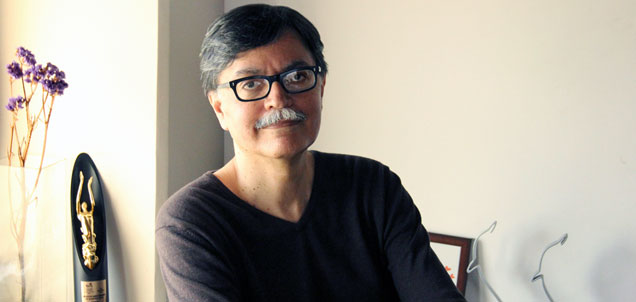
    (Alok Nanda is Founder and CEO of Alok Nanda & Company, a creative brand consultancy)


  • No passive, one-sided communication…


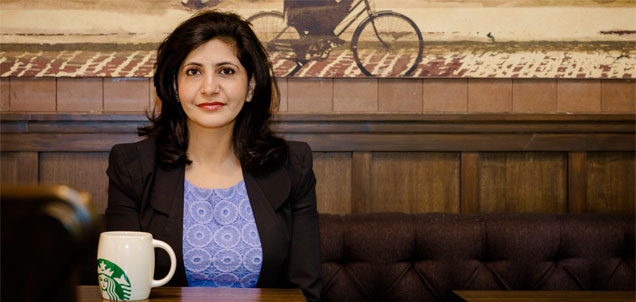
    Marketing at Tata Starbucks Private Limited outlets is more of building connections with customers, says Manmeet Vohra, Director – Marketing and Category of the international chain which open its 75th outlet in the country in Bandra today. The lady behind the much-seen but less-advertised brand speaks on what has kept the buzz going, ever since it made its India debut in October 2012.


    From your first store at Fort in Mumbai to the 75th one in India, how has the journey been so far? 

    It’s been amazing. In less than three years, we’ve reached the 75th store milestone. For Starbucks, India’s been [one of] the fastest growing markets. It’s been overwhelming to see how customers here have embraced us. We still get long queues every time we enter a new city or a different location. The excitement of the brand is very much alive.


    You have stores with proper seating, and you also have kiosks. Going forward, what’s your focus going to be?

    We have two or three classifications for our stores. Some of them are ‘flagship’ stores, like the one in Horniman Circle in Mumbai, Hamilton House in Delhi Indira Nagar in Bengaluru and Koregaon Park in Pune. These stores are special in terms of design, decor and space. For instance, the Hyderabad flagship store has drawn its inspiration from Hyderabadi pearls. Then there are ‘core stores’ and ‘corporate stores’ which are in commercial complexes, and are more like corporate stores. So all this is a function of the space available, and the neighborhood you’re in. But the one common thread is that all the stores reflect the values of the neighborhood and the spirit of the area in which they operate.


    While the familiarity with the Starbucks brand is high, were there challenges with the brand over the last three-odd years?

    The welcome we got when we launched has continued, and it’s really encouraging that we have been able to bring more customers to our stores. And not just the ones who have traveled abroad. So, more people have accepted us.


    Every time a new store opens, there’s a lot of local advertising and promotion. What’s been your stand on promotions?

    First, the offerings we have are designed — in terms of food, beverages and merchandise — to suit the needs of a wide variety of Indian customers, with regard to local sensibilities, culture and palette. We’ve made sure we have the signature blueberry muffin alongside a murg kathi wrap. Food is very important for Indians. A lot of our customers look forward to coming to Starbucks not just for coffee, but for the complete [dining out] experience.


    Another thing that attracts more customers is the connection our store partners have been able to create with them. It’s a key ingredient to a brand’s success in India. Starbucks’ store partners are not addressed as ’employees’ but ‘partners’. And this really reflects in the warmth and passion with which they make every handcrafted beverage. That connection between our customers and store partners has become stronger, as reflected in our loyalty programme. Customers are choosing to come to Starbucks over any other place because of this feeling of a connection.


    The third thing we’ve done is to engage with customers through various campaigns. One of them is the ‘Meet me at Starbucks’ campaign, launched in November 2014. The campaign turns on the need of people to meet, rather than be in touch over the phone or SMS. Today, youngsters are spending more time on their phones and laptops rather than with their family. In a world where everyone’s connected through social media, Starbucks emphasises that need to meet. So what we’re trying to tell our customers is that Starbucks is the place you can come to: a unique ‘third place’ (away from home and office) where you can meet people or spend time with friends and family, or talk business etc.


    Players like McDonald’s are doing similar things with their ‘Kuch offline ho jaye’ campaign, and connect with customers is a given in most snack outlets. How do you ensure there’s differentiation in what you do?

    Coffee has a strong social connotation. In a tea-drinking country like India, even people who drink tea at home, will go outside for coffee. These are some unique insights our brand has noted. We’ve actually seen customers come in for coffee, stay for the warmth [of the treatment from store partners] and come back for the human connection.


    What’s your biggest marketing tool? Is it the relationship your store partners have versus typical tools like ATL or BTL?

    Beyond the product, the customer looks for an emotional connection with the brand. And that emotional connection is what is required to build any marketing programme or brand communication. For us, it’s not just about a marketing campaign or a promotion, it’s about creating experiential marketing to build that emotional connection. And a big USP of our brand are our store partners who are really our brand ambassadors. Another way in which we connect with customers is through the ‘fourth’ or digital place. Your communication is not complete as a brand unless you also connect digitally.


    In terms of your spends (marketing and advertising), what’s the distribution like? Digital versus BTL, experiential and ATL?

    About 30 per cent each on store experience and digital. The rest are miscellaneous elements. That’s how much importance we’re giving to not just connecting at the store level, but also in the digital space. It’s important to have these ongoing conversations with customers — whether it’s through social media or our ‘meet me at Starbucks’ programme. Recently, we had a summer campaign called ‘Starbucks Fun Ventures’, in which we engaged with youth influencers. And in the internet space, we had great engagement with food and beverage enthusiasts and bloggers, and got people like Sonakshi Sinha, Rannvijay and Saina Nehwal involved.


    And what about mass media advertising?

    We don’t believe in passive communication.


    As you go pan-India, are you looking at doing television and print advertising at all?

    Some of it is important purely from an awareness creation point of view. For us, it’d be more from an awareness objective, than engagement. And 95% of my focus is on engagement marketing, not on passive, one-sided communication. Plus, every two months we launch new beverages. Recently we had the Alphonso mango Frappuccino, and our Christmas beverages are hot favorites. There’s a bit of awareness-led communication that one needs to do, but our focus is always on how to put engagement in the whole communication.


    Do you run campaigns on social media or is it all organically grown?

    A lot of organic conversations happen on our social channels — through bloggers and old assets — but we’ve also done a lot of campaigns like ‘Meet me at Starbucks’. We ran that campaign selectively in Bengaluru because it had a larger younger audience. In the internet space, we had a microsite called meetmeatstarbucks.in. We asked people to post stories and asked others to vote on it. There were stories that got up to 28,000 likes, and showed that people spent an average of 4.18 minutes on the site. And that’s a lot of time. These kind of things tell us that people want to engage with us.


    Is there any change in strategy for markets in the south, where coffee drinking is already big?

    One of the things we did for our Chennai launch was offer a special pour-over set there. This is a method of brewing coffee that we had especially for Chennai so that customers can buy from our selection of coffees, take it home and brew it using the pour-over system. Apart from this, the offerings of the brand have been quite consistent, whether in Chennai or Delhi.


    From the time you started to now, on the basis of insights that you’ve had, has there been a change in strategy that you employed to get more customers?

    In our product offerings, we have made certain modifications, given the local touches that we’ve created. In terms of food as well, we’re constantly introducing new items in keeping with the Indian taste palette, which appreciates international offerings but also wants its own comfort zone.


    What’s the next milestone and how fast do you think it’ll be achieved?

    We are already the fastest growing market for Starbucks worldwide, and I think the journey is pretty much clear ahead of us. We are going to be in locations where our customers want us to be and where they expect us to be. We’re constantly evaluating new locations, new cities, new geographies. So we are definitely going to grow beyond the current six cities we are present in, and go to other metros as well.


    Could you give any rough indicators about what kind of targets you have for the next year?

    We are evaluating more cities in the north, and more in Gujarat. We’re there in the main metros of the west and south already. We want to evaluate and move forward in some cities in the north.


    This interview first appeared on MxMIndia.com on July 20


  • Global, going local


    By Moinak Mitra


    In January 2011, when Starbucks chairman and CEO Howard Schultz made his maiden India visit to sign the 50:50 JV with Tata Global Beverages, hopping over to Asia’s largest coffee maker Tata Coffee’s 8,258 sq feet roasting facility at Kushalnagar near Coorg made perfect sense. After witnessing the plant first hand, his team pointed out that the coffee at the roasting facility matched the global espresso blend that Starbucks prides itself on.


    So for the first time ever in Starbucks’ history, the company pinned its faith on a partner-owned roasting facility, outside the five plants it owns across the world, including one at Amsterdam. Local coffee, global taste.


    WHAT’S IN STORE

    That set the ball rolling for a slew of localization initiatives which the JV kickstarted from October 2012, as it launched its very first outlet in Mumbai. The store in Horniman Circle, which can accommodate 120 people, has hand-carved wooden screens, tables of solid Indian teak, painted vintage trunks and old leather-bound books, harking back at Mumbai’s mercantile past.


    As for the grub, there’s Konkani Twist or a Reshmi Kebab Roll, jostling for mouth-share with the standard Blueberry Muffin or the Classic Breakfast Chicken Sandwich-all coming from the Tata-owned TajSATS, India’s largest provider of meals to domestic and international airlines. While the coffee variants are largely untouched, the beans and espresso blend at the heart of the coffee are locally sourced. Even the Tata Tazo tea range throws up a spice-infused Chai Tea Latte-distinctly Indian. Similarly, when Starbucks opened shop in Delhi’s Connaught Place in February 2013, the ropework design of the store stood out as a local theme, along with food offerings, such as Murg Kathi Wrap and Murg Tikka Panini.


    The Pune store, on the other hand, honours the rich copper culture of the city through copper artifacts and even has a traditional Indian swing for customers to sway. While certain elements in its food kitty are customized to suit local taste-buds, things are no different when Starbucks launched its 50th store in the country at Chennai earlier this month, which is the only outlet vending a ‘pour-over set’ single brew serving merchandise, typical of the filter coffee culture down south.


    Procurement, store décor, F&B, merchandise- across locations , Tata Starbucks has set out to garner neighbourhood connect, to create what its CEO Avani Davda claims as the “third place” between the office and home. Unlike rival Café Coffee Day, which operates across multiple formats on a franchisee model, Tata Starbucks prefers operating the third place on its own, with an average covered floor area of 1,000-1,200 square feet. Much of that is governed by homegrown research that points to a more leisurely café culture in India than the west, where it is an on-the-go, grab-a-bite, kiosk-led approach with tiny outlets located near workplaces. That explains why Starbucks gets about a fourth of its revenue here from food as against 20% globally.


    Though Ms Davda’s cuppa of choice is Sumatra or a vanilla latte in the morning, she would any day welcome the growing consumption of Chai Tea Lattes from her stores. Unlike in most countries, Starbucks realized that India is largely a tea-drinking nation and has now solidified that beverage selection on its menu. It has also launched the India Estates Blend – a country-specific blend developed with Tata Coffee, and the India Espresso Roast, which is sourced locally through the coffee sourcing and roasting agreement with Tata Coffee.


    LATE, YET RELEVANT

    As the local theme gains momentum, Starbucks’ late entry into the country’ Rs 1,200 crore coffee chain market must not be overlooked. When it finally entered in 2012 after a botched entry in 2007 with Future Group’s Kishore Biyani , the domestic market was nearing saturation, with quite a few players snapping up prime properties in the top ten cities.


    Though the JV never compromised on real estate, Starbucks President, China and Asia, John Culver said forging a sense of community will be key, while inaugurating the Horniman Circle outlet. Surely, the $14.89 billion Starbucks has also drawn lessons from the localization bids of other food retail chains, particularly KFC and McDonald’s. While the former ranks Paneer Zinger and Veg Twister as its top-sellers, McDonald’s McAloo Tikki and Masala Grill scorch the tables.


    But since such chains operate across multiple formats, some of them even resort to differential pricing across different formats or locations, to cater to a broader consumer base. But Starbucks is clear about its premium pricing and aware of its international brand following.


    “We now have an average customer who is very well-informed, and has exposure to international brands and experiences… although price and convenience play a part in their spending decisions, they are also more and more influenced by a brand’s values,” says Manmeet Vohra, Director-Marketing & Category, Tata Starbucks.


    THE NAYSAYERS

    The Indianizing influence, particularly from a brand like Starbucks, has its own share of sceptics though. “People line up outside Starbucks for a global gourmet coffee experience with knowledgeable staff (partners) and baristas who can toss up the Starbucks experience…. unfortunately, the company has adopted a cookie-cutter approach (in India)….it’s like Zara saying it’ll sell salwar-kameez in India,” observes Harminder Sahni, Founder and MD, Wazir Advisors.


    As a counter, Ms Davda claims that a career at Starbucks starts with learning about coffee, often through coffee-tasting and roasting events. “Our baristas are trained for specific periods by certified baristas, and each partner undergoes the training before undertaking their respective roles,” she says. Keeping the debate alive, former VPMarketing of Tata Coffee and brand consultant Harish Bijoor observes that Starbucks must not dilute its international flavour in order to grow in India.


    “It must not become an Indian cafeteria from an American café,” says Mr Bijoor, adding that strong brands are often inflexible. Even marketing guru Jagdish Sheth dismisses the ‘think global, act local’ approach of Starbucks, pointing out the new trend as ‘think local, act global’, with a slew of examples, such as Haldiram’s, Dabur and Pathak Pickles from India now riding high overseas with very ethnic offerings.


    BANKING ON THE HOOD

    But Tata executives, like Davda and Vohra, remain steadfast in their commitment to serve local communities and grow the business case around regions and neighbourhoods. It goes to explain why each outlet supports the surrounding ecosystem.


    In Mumbai’s Horniman Circle store, for instance, Starbucks maintains the adjoining heritage park while in Gurgaon’s HUDA Metro Station store, partners take time out for regular cleanliness drives. Pradeep, one such partner, works the counter in Delhi’s Hamilton House branch at Connaught Place and keeps watch as the outlet’s assistant manager. Amid rope chandeliers and the surrounding wood, steel and concrete surfaces that resonates the character of the Lutyen’s-era building, Pradeep helps fellow partners with orders, calling out names of consumers alongside the order on delivery.


    Right next to where he stands, about one-fifth of the food section has local offerings-“Chatpata Paratha Wraps and Tandoori Paneer Rolls are the highest selling food items in this outlet,” claims Pradeep. Though Davda will be happy to see local grub flying off the tables, for Tata Starbucks, food accounts for just 25% of its Rs 16 crore revenue. It is the core beverage category that Ms Davda will be watching closely after ensuring that the beans at least are sourced and brewed in India.


    Source:The Economic Times

    Copyright © 2014, Bennett, Coleman & Co. Ltd. All Rights Reserved

    Licensed to republish
     

  • Coffee way to go!


    By Rahul Sachitanand & K R Balasubramanyam


    It is 5 pm on a weekday evening and the line at Starbucks in Indiabulls Finance Centre, a swish business complex in south Mumbai, is teeming with executives looking for their caffeine fix. With ties loosened and jackets casually slung over their arms, these men and women from the financial services, consumer goods and media firms housed in the towers of the complex are an ideal target audience for a range of beverages and snacks sold by Starbucks, the world’s largest coffee retailer; in 20 months of its inception in India ‘ via a 50-50 joint venture with Tata Global Beverages ‘ Starbucks has set up 46 such stores nationwide and has plans for dozens more.


    Cut to Ulundurpet, far removed from the urbane chatter at Indiabulls. This town of some 400,000 people in southern Tamil Nadu is best known for being halfway between Chennai and Tiruchirappalli, an industrial and temple town some 320 km to the south. If Starbucks has embarked on its fastest-ever expansion globally in India, the homegrown leader Cafe Coffee Day (CCD) isn’t easily intimidated. India’s largest coffee retailer has launched some 150 stores in the past 12 months and plans a similar number in the next year. What’s more, it isn’t sticking to one format. In a bid to firm up its position, CCD has launched formats for malls, highways, an upscale offering called Lounge and a single-origin coffee destination called Square.


    The world’s largest chain and India’s No. 1 retailer are squaring up for control of the country’s coffee retailing market.


    VG Siddhartha, the reticent founder of CCD, is all beans when he speaks to ET Magazine. ‘Our dream is to be among the top three retail coffee brands in the world,’ he says. Already, CCD is present in some 200 towns across the country (it is often the first and only coffee retailer in many locations) and is aggressively expanding its footprint. ‘We hope to grow our retail business at about 20% in 2014-15 [and] we hope to do a revenue of Rs 1,200 crore from retail sales and another Rs 350 crore from the wholesale and export business this year.’


    Siddhartha is firmly stepping on the gas with CCD. ‘We want to have around 2,500 Caf’ and Express outlets in three years’we will set them up wherever there are opportunities, including at educational institutions, hospitals, expressways and high streets.’


    Bean There, Done That

    Siddhartha, who pioneered the bean-to-cup concept in the coffee industry ‘ his Amalgamated Bean Coffee owns the plantations where coffee is grown and processed and later served at CCD outlets ‘ is now set to take his next big step. According to reports, CCD has initiated plans for an initial public offering, which may value the chain at $1 billion and provide PE investors such as KKR an exit. CCD and its investors declined comment on the possibility of such an IPO.


    A war chest from such an IPO will help Siddhartha finance what is quickly evolving into a two-horse race for India’s coffee cafe mart. India’s No. 1 chain, which has spent the past two decades building up its business ‘ and has been predominately unchallenged ‘ will face up to its strongest challenge yet. The $15-billion Starbucks is preparing to raid its citadel, digging its heels in for a long, bruising brawl.


    Coffee, Anyone?

    India is predominately a nation of tea drinkers, with most chains struggling to keep business afloat. Siddhartha opened the first CCD in 1996 on Bangalore’s Brigade Road, initially to serve pricey cups of coffee and let customers experience internet, then a novelty. While he opened the first store based on visiting a similar store in Singapore, the internet novelty wore off and CCD gradually became a beverage and food retailer.


    Over the past two decades, CCD and other chains have been trying to persuade more people to visit their outlets and drink coffee. For all the coffee drinking claims, India remains a relative lightweight. Scandinavians throw back, by far, the most amounts of coffee and, across the world, several other countries such as the US and China swill vastly more coffee than India (see A Tea Country Still).


    Since inception, CCD (and several other chains) have scaled up the coffee drinking experience from crowded non-airconditioned cafes to far more luxurious outlets, offering clean cutlery, a refined ambience and, increasingly, a growing assortment of food. Indians have willingly signed up, with industry estimates pegging this segment’s growth at about 20% annually.


    The advent of CCD and later a plethora of chains targeting this free-spending consumer catalyzed coffee sales. ‘Domestic consumption of coffee, which was almost stagnant in the 1980s and 1990s, picked up an impressive pace in the past 7-8 years,’ says Jawaid Akhtar, chairman, Coffee Board. ‘We estimate the domestic consumption at about 115,000 metric tonnes a year now which is growing at about 5% a year’driven largely by consumption through branded coffee chains.’


    CCD and Starbucks are both wrestling for a share of this fast-growing market ‘ and elbowing out the strugglers in their slugfest.


    Risky Business

    CCD’s Siddhartha will be the first to admit that running a cafe chain can be a bruising business. For starters, real estate costs have hobbled and humbled many of CCD’s rivals, who’ve struggled to make costly stores in central districts viable.


    According to industry estimates, rentals can account for 15-25% of the cost of running a cafe chain. Then, there’s the investment in making a store appealing to customers with its interiors, finding people to run them and building a food and beverage menu that’s hip enough to keep 18-24-year-olds ‘ the target market for coffee chains ‘ coming back for more. CCD has tried to find a way around this problem by entering into a revenue-sharing deal, paying 10-20% of a unit’s proceeds as a fee. ‘Store location is a prime factor to consider for these chains,’ says Reteesh Shukla, associate director, food and agriculture, with Technopak, a business consultancy. ‘Retail space is becoming very expensive, but you need to balance the ever-increasing costs of this prime real estate by being in [relatively less expensive] areas frequented by the youth.’


    CCD has been successful in India because of its beanto-cup business strategy, which gives it control over bean production and processing and greater efficiency from its back-end set up. While Starbucks does have similar strengths thanks to its Tata tie-up, industry watchers say its relative lack of size in India means it’s at a disadvantage in squeezing out similar economies of scale. Opening a new store isn’t just about finding a good location and dressing it up for a brand-conscious a u d i -ence. Instead coffee chains need to figure out a tricky supply chain ‘ how to get food and beverage to these outlets quickly, while keeping quality high.


    The others, who don’t have this backward linkage, have predictably struggled.


    While the opportunity may be tempting, food and beverage outlets are dealing with a soft market, where consumers are cutting down on how often they eat out and reducing how much they order when they do. For cafes such as CCD or Starbucks, this is a blessing in disguise ‘ consumers are reducing their spend on full-scale restaurant meals and instead scaling it down to a coffee and a snack.


    Starbucks’ Advent

    Since he started his coffee chain, Siddhartha is facing up to perhaps his biggest challenge. Starbucks, which opened its first store in 1971 in Seattle’s Pike Market, today operates 20,519 stores globally. In the US, the chain has become a byword for a quick, upscale cuppa (not just coffee, but increasingly tea too, with Teavana Oprah Chai launched with talk show host Oprah Winfrey), with Alist celebs and executives all having their personal favourites. Starbucks has attracted thousands of loyal customers to its My Starbucks loyalty programme and has even worked with tech start-up Square to pilot cashless transactions at its stores.


    While Starbucks has till recently focused on its home market, it has changed tack in the past few years. For example, it announced ambitious plans to scale up its presence in China ‘ it will open 700-odd stores this year ‘ even as it looked to manage tough economic headwinds. In October 2012, the firm announced a JV with the Tata Group to launch some 50 stores in India. While Starbucks thought of initially going it alone in India (foreign direct investments in single brand retailing are kosher) it decided to lean on Tata Global Beverages’ experience in the coffee industry supply chain to give it additional leverage here.


    Expanding faster in China and then India is financially prudent for Starbucks. Starbucks’ operating margin for the second quarter of financial year 2014 (ended March) was 32.8% for the China Asia-Pacific segment, 21.6% for the Americas and 5.7% for Europe, the Middle East and Africa.


    While CCD had to build its brand from scratch in India, Starbucks hopes to leverage a globally familiar label with its target audience. When its first store opened in each city, winding queues were formed well before opening time. Familiar with its offerings in tall, grande and venti sizes, thanks to consumers who’d travelled overseas, either in real life or virtually, Starbucks’ India business got off to a rousing start.


    Chinese Inspiration

    Starbucks has shown some gumption going after opportunities overseas. For example, it has made a splash in the Chinese market, says Elizabeth Friend, an analyst with Euromonitor, a research and analysis firm. ‘Starbucks has done very well in a number of emerging markets’much of this has had to do with the brand’s very strong global reputation, which helped it to gain more immediate traction than other lesser-known chains,’ she says.


    ‘They’ve also done a really great job tailoring their brand ‘ through store design, menu innovation and even learning how local stores are operated ‘ to best suit each individual market.’ In China, this has included leaning toward larger store footprints that offer space to relax with coffee in the afternoon. The addition of beverages such as the red-bean frapuccino and a broader tea-based menu have helped Starbucks make strong inroads into the Chinese market, says Friend.


    Starbucks’ rise in China may provide many lessons for its India business. In a large country Starbucks has had to localize its menu to keep customers coming in ‘ something it has done quickly in India too, with dishes such as chicken tikka panini. Starbucks had cornered over two-thirds of the coffee caf’ market in China until 2010, estimates Euromonitor, even if aggressive domestic rivals have more recently cut its market share to 60%.


    Friend of Euromonitor says Starbucks has been able to replicate some of this success in India, too. ‘Some of India’s new outlet launches have been among Starbucks’ most successful in its history,’ she claims. ‘Starbucks has been steadily gaining on local leader Cafe Coffee Day, though the chain will continue to pose a significant threat.’
    Slow Brew

    Starting with its first store in Elphinstone Building in south Mumbai ‘ the Tata’s iconic Bombay House headquarters is just a stone’s throw away ‘ Starbucks has built its business steadily in India. In fact, the chain is behind its initial target of 50 stores ‘ it has 46 operational currently ‘ but has expanded to the National Capital Region, Bangalore and Pune as it seeks to take on CCD.


    According to analysts, Starbucks has firmed up its presence as a premium coffee retailer, with some malls even using it as a carrot to attract free-spending consumers to its premises. ‘Having a Starbucks outlet is a guarantee to attract upscale customers to a mall and this in turn helps convince international labels to rent space there,’ says Anand Sundaram, CEO of PPZ, a mall management firm which operates malls nationwide; RCity in Mumbai’s Ghatkopar suburb, for instance, houses a Starbucks store.


    A 34-year-old Tata Administrative Services graduate is piloting Starbucks’ business in India. Avani Davda went from being an executive assistant to Tata Group veteran Krishna Kumar to helming the joint venture with Starbucks for India. Having tasted her first Starbucks Coffee in Seattle in 2011 (she counts Sumatra and India Estate Blends as her favourites), Davda thinks the chain has plenty of scope for growth. ‘India is one of the most exciting markets in the world’we believe we have a unique opportunity to deliver an unparalleled coffeehouse experience to Indian consumers,’ she says.


    ‘We firmly believe in our ability to build and grow the Starbucks brand in India and are confident in the opportunities that the Indian market offers for it to become one of the top five markets for Starbucks globally.’


    Heady Growth India provides a fertile market opportunity for CCD and Starbucks. According to company executives and analysts, there is plenty of opportunity for growth. Euromonitor says the Indian coffee cafe market will grow from Rs 1,683 crore in 2012 to Rs 2,276 core in 2017.


    ‘Growth of cafes in India is driven by many factors, including favourable demographics, rising income levels, graduation from mid-sized towns [to large metros] and the advent of global chains,’ says Sunitha Barlota, a research analyst at Euromonitor International. ‘Cafes in India are considered a perfect place to socialize among college goers and working professionals.’


    Others such as Asitava Sen, head of the food, agriculture research and advisory team at Rabobank Group in India, believe there is plenty of headroom for growth in this space, with cafes just starting out on a sharp growth curve. Sen estimates that there are around 2,000 coffee cafes across India and there is room for 5,000 or more nationwide. ‘The Indian market is very different from the West ‘ here a visit to a caf’ is more a social occasion and less a quick visit’the opportunity for cafe owners is to try and get a greater share of wallet from these consumers,’ he adds.


    Starbucks has discovered over the past few months how different it is doing business in India. According to Manmeet Vohra, the Indian operation’s marketing and category chief, they discovered that peak hours in India were 2 pm to 6 pm (compared to 5 am to 11 am in the US, for example) and takeout orders accounted for barely a fifth of their business in India (compared to 80% in the US).


    What’s more, as customers spend time in the cafes, they needed to design them differently. So the cookie cutter design gave way to customized spaces in each city ‘ for example its store in Pune uses copper elements, in a nod to the heritage of the city. ‘After office and home, we want to be the firm favourite as a third place to hang out,’ Vohra adds.


    According to brand consultant Harish Bijoor, consumers have made their preferences clear ‘ Starbucks is the more upscale hangout, while CCD is a budget option. ‘Both these brands have strongly defined identities and consumers identify with them,’ says Bijoor, who worked for eight years at Tata Coffee (a subsidiary of Tata Global) between 1993 and 2001. By his estimates there are currently 2,350 cafes, while the potential is for as many as 6,440 such outlets.


    Success Potion

    According to analysts such as Euromonitor’s Barlota, there are three or four key ingredients that determine the success of a coffee cafe. Other than location ‘ CCD’s success to date is determined by being located close to colleges, business complexes, high streets and malls ‘ pricing can be a make or break factor. This is particularly crucial at the lower end of the market where budget-conscious buyers are wary of shifting from cheap restaurants (sometimes called Darshinis) to a CCD or Starbucks. Those that do make the shift and pay the premium can be demanding on quality of service and product.


    As consumers make their choices known, there seem to be strong indications that India’s coffee cafe market is going to consolidate. According to analysts, while CCD may be the mass market leader, Starbucks has occupied a strong position in the premium space, with plans to slowly but surely expand its presence. This means others in the market, including Costa Coffee, Baritsa and Gloria Jean’s, will struggle to attract and retain loyal custo mers. As the market gets polarized, CCD and Starbucks are expected to soon dominate the coffee cafe sweepstakes.


    Some of these signs of strife are already visible. For example, Barista, the second organized retail chain in India after CCD, is on the market for a third time . While Ravi Deol, the chain’s first CEO, was tipped as a leading takeover candidate, his interest has faded in the past few weeks. Deol couldn’t be reached for comment. Italian owner Lavazza also declined comment.


    Then, Costa Coffee, brought into India by Devyani International, is the subject of much wrangling between partners. Devyani, which runs the India business for the likes of KFC and Pizza Hut, has struggled for years with the Costa Coffee business. Virag Joshi, the CEO of Devyani, wasn’t available on the phone and didn’t respond to an email seeking comment.


    Costa Coffee, however, doesn’t seem to have given up on India. ‘Costa is the world’s second largest coffee shop brand and is growing rapidly in its domestic UK market and globally adding over 300 stores a year,’ says Kate Manning, a spokesperson for the chain. ‘We are very much committed to growing our presence in India.’ While Costa has some 120 stores in India, she declined to enumerate the firm’s future plans. Costa’s India head, Santhosh Unni, has recently quit.


    Third, Gloria Jean’s is also dealing with its own dose of bitter beans, with its joint venture with The Landmark Group on the rocks. Both sides didn’t respond to emails seeking comments, but real estate analysts said the chain was scaling back its presence in costly high-street locations to salvage the business.


    However, CCD’s Siddhartha isn’t getting distracted by the woes of the competition. ‘All foreign coffee brands are looking at the top 5% of the Indian market ‘ i.e. high income group consumers,’ he says. ‘But we are focusing on the dynamic youth population. Roughly 70% of Indians today are below 35, and our goal is to reach out to them.’


    Focus Matters

    Experts argue that as a scale player, CCD has been able to escape much of the tumult in the sector because it has focused on its core proposition of affordable coffee, with comfortable surroundings, and steered clear of trying to tinker too much with a winning formula.


    This is not to say that it has stood still in an evolving market. CCD, for example, gets around 35% of its business from food ‘ an area it only focused on in the past 12-18 months.


    ‘What stands out about Siddh artha and CCD is their ability to make strategic changes in response to customer demand and competition ‘ expanding the food offerings or rationalizing store count to sustain growth and profitability are great examples,’ says Sanjay Nayar, MD and CEO of KKR India.


    ‘There is a great opportunity for CCD to leverage its large network to drive growth in a new direction,’ he adds. In March 2010, KKR invested $210 million in Coffee Day Resorts, the holding firm which includes the coffee retailing business.


    Venu Madhav, who has been with CCD since day one and got promoted as chief executive over a month ago, says the coffee retailer is streets ahead of the competition in understanding the Indian consumers’ needs.


    ‘Cafes are social hubs, where coffee and conversation play a key role in the success of an outlet,’ he says. ‘India is a value-conscious market and we see ourselves in the affordable luxury category of coffee retail.’


    Madhav is keen to expand the reasons consumers stroll into a CCD ‘ not just for a relaxed cuppa but for breakfast, lunch and dinner, too. It’s no surprise that CCDs on many highways are popular rest stops and the chain is focused on expanding its presence in the space.


    Brand Battles

    CCD is acutely aware that it takes little for consumers to switch loyalties ‘ however good the coffee may be. To try to keep pace, CCD’s interiors are periodically updated to prevent its ambience from looking dated and jaded. ‘The look of our stores changes completely every couple of years,’ avers Madhav.


    While CCD continues on its rapid expansion path, Starbucks isn’t rushing to keep pace. According to industry sources, Starbucks could add a dozen or more outlets in the next year in India and is looking to expand its presence in the cities it is present in and consider going to second-tier metros, too.


    ‘Each market comes with its own set of opportunities and challenges and our guiding principle across all markets continues to remain the same: to inspire and nurture the human spirit ‘ one person, one cup and one neighbourhood at a time,’ says Davda. And in the process she’d be hoping Starbucks coffee becomes most Indians’ cup of tea.


    Source:The Economic Times

    Copyright © 2014, Bennett, Coleman & Co. Ltd. All Rights Reserved

    Licensed to republish

     

  • Starbucks goes plush for India, gives stores a local flavour

    Rasul Bailay & Ratna Bhushan


    If Starbucks to you means the ubiquitous chain that sells coffee on the go through hundreds of small stores all over the US, its Indian avatar might come as a bit of a shock.


    The world’s largest coffee chain is positioning itself as an aspirational brand in this tea-drinking nation, and is going over the top with its stores, some of the plushest it’s opened anywhere in the world. “We believe a coffee house should be a welcoming, inviting and familiar place for people to connect, so we design our stores to reflect the unique character of the neighborhoods they serve,” a Tata Starbucks spokesperson said in an emailed reply.


    Starbucks entered India in October 2012 through an equal joint venture between the Seattle-based retailer and Tata Global Beverages. The alliance has opened 15 stores in India so far – in premium locations like Horniman Circle, Colaba and Bandra in Mumbai, Connaught Place in Delhi and Koregaon Park in Pune. Experts say it’s following the same strategy it adopted in China, where it opened in prominent locations to increase visibility to consumers. A person familiar with Starbucks’ India strategy, who asked not to be named explained, “Right now, the idea is to familiarise Indians with Starbucks.”


    Research on the coffee chain showed that for Indian consumers, coffee is not the primary reason to visit a cafe – and very few order a beverage to take away with them. Most consumers spend about 45 minutes in a cafe, using it as a spot to meet friends and relatives.


    So, Starbucks wanted its stores to be as appealing as possible while giving consumers a unique “Starbucks experience”, the person familiar with Starbucks plans said. That meant stores in India don’t fit the global design template – each store has been designed differently, with “local” touches incorporated. For example, the store in New Delhi’s Connaught Place has ropes and chatai on the walls and henna patterns on the floor, with pictures of Indian spices on its walls. The store in Select Citywalk mall has locally-crafted wood paneling, while the Pune store incorporates localised railings and a rich display of antiques and copper.


    “The idea was to bring about the traditional elements of this country and present them in modern settings,” said the person quoted above. This is an experimentation phase, and Starbucks will eventually reach a standard format and design for its Indian outlets. Darshan Mehta, the chief executive of Reliance Brands, says he has so far visited four Starbucks outlets in Delhi and Mumbai. “They are beautiful in terms of shape, size and coziness.


    The Horniman Circle store is truly the high-end of Starbucks spectrum,” he says. Along with its locallysourced coffee, the outlets offer an Indianised food menu – with items like murg kathi wrap, wasabi kotumbwadi and chicken makhani pies next to the English muffins on offer.


    “Our stores are designed in-house and the mission of each designer is to create a spectacular third place that is steeped in the local culture and designed to reflect the unique characteristics of each neighborhood,” the Tata Starbucks spokesperson said.


    However, rival coffee chains don’t think this strategy is sustainable. “They would definitely like to make a statement through the first fifty stores. It’s very likely that later they will look at kiosks and routine stores,” says the marketing head of a rival coffee chain. “As far as their store ambience goes, they are overdoing it,” he added.


    The chief executive of another rival coffee chain agreed. “The focus and investments on ambience and store location is obvious. Many of us don’t have the bandwidth to invest so much on ambience,” he said, asking not to be named.


    Prices at Starbucks are in line with the premium store strategy: the chief executive of the rival coffee chain quoted has noted that Starbucks has increased prices for its food and beverages by as much as 20% in three months. “It’s an unprecedented move; most of us (coffee and quick service restaurants chains) are focusing on value and giving combo deals to consumers. Starbucks has done the opposite.


    Maybe, they can pull it off because of their deep pockets, but we can’t afford to take up prices and alienate consumers who are anyway looking a value deals,” he said, asking not to be named.


    Source:The Economic Times

    Copyright © 2013, Bennett, Coleman & Co. Ltd. All Rights Reserved

    Licensed to republish


  • Anil Thakraney: Starbucks: Power of a brand

    By Anil Thakraney


    The night before Starbucks opened its gates to India, I was dining with some friends at Trishna (Kala Ghoda). After we finished with our prawns and fish, we decided to drive by Horniman Circle to check if Starbucks was already in operation, and whether it looked as fancy as some media reports had suggested. The outlet was still to be born, but I was stunned to see all the crowds that had collected there, the heavy action that was underway to give the coffee shop the finishing touches. With major light and sound rehearsals, stuff that even Shah Jahan would not have conceived of when the Taj was first thrown open to the public.


    And of course, the social media has been going crazy over the event. A number of people have been proudly putting out ‘I am at Starbucks!’ tweets. The maha excited reviews in the media have only just begun. And to think Starbucks is just a bloody coffee joint! Although I am not a coffee drinker, I did try out their stuff once on a visit to New York City. And must say I found the potion to be utterly expensive and totally distasteful. Though the loo was quite clean, so I didn’t really leave the place in a huff.


    This tells me two things about us desis: One, that we are still a wannabe nation, nothing much has changed in the last two decades. Then, I spotted a long queue at Linking Road in Bandra, when McDonald’s opened shop in India. And it’s ditto at Horniman Circle today. Two, that we are a brand-starved nation. Clearly, India’s teeming masses want the best of the world, there is heavy demand but poor supply. This is great news for all those multi-brand retail outlets who want to come here. I can already see huge crowds inside and outside Wal-Mart and Tesco. Not to speak of IKEA. Now if only our short-sighted, small-minded politicians would let it all happen.


    ***


    PS: Very interesting article on whether media companies must list down social media usage guidelines for journalists, even if they happen to be freelancers. My belief is that they should. Because whether we like it or not, tweets and Facebook updates posted by journalists do get associated with their employers by most readers. Even if the journos choose to be in denial of it.


    Link: http://publiceditor.blogs.nytimes.com/2012/10/17/after-an-outburst-on-twitter-the-times-reinforces-its-social-media-guidelines/


  • Make mine a Mocha Frappuccino!


    By A Correspondent


    For all the coffee enthusiasts, the good news is that Starbucks is finally in India and opening its first store in Mumbai today. One doesn’t have to head to another land for your shot of Mocha Frappuccino. Or the signature hot chocolate. Yes, Starbucks enters India in a 50:50 joint venture with Tata Global Beverages and looks like the coffee retail chain business will only get more competitive with the entry of global behemoth.


    On the launch, John Culver, President, Starbucks China and Asia Pacific, said, “We are delighted to be able to announce our progress toward opening our first store in India and to introduce locally sourced espresso. Being able to use the highest quality espresso, sourced and roasted in India, is an important part of delivering a locally relevant experience to our customers in the market. This is the first step Starbucks and Tata Coffee Limited are taking toward developing and improving the profile of Indian-grown arabica coffees around the world by elevating the stature of Indian coffee, as well as improving the quality of coffee through sustainable practices.”


    Cafe Coffee Day or CCD as popularly known from Amalgamated Bean Coffee Trading Co Ltd (ABCTCL) is the leading coffee retail chain and has been rapidly growing in India. Barista, Costa Coffee, Mocha, The Coffee Bean and Tea Leaf and Gloria Jean’s are some other leading coffee chains India.


    Euromonitor International, October 2012 in its study for Cafes/Bars in India points that specialist coffee shops continue to grow at the fastest rate of nearly 25% in current value terms in 2011. It also reports that Amalgamated Bean Coffee Trading Co Ltd (Cafe Coffee Day brand) continues to lead value sales, with a share of 1.1% in 2011. In terms of growth it offers that the Cafes/bars is likely to grow at a constant value CAGR of 3% to reach Rs725.6 billion by 2016.


    The report also states that “Urban consumers, including professionals and youngsters, increasingly started to prefer Cafes as places to hang out in 2011. Cafes such as CCD and Barista emerged as the favourite destinations for casual business meetings. Further, the Cafe trend also started to gain huge popularity even in Tier II cities such as Ghaziabad and Hubli, where young consumers were the dominant consumers.”


    The encouraging bit is that Cafes/bars value sales grew at a faster rate compared to the review period. The faster growth in 2011 was mainly due to the growing popularity of Cafes/bars as hang out zones for young consumers. Further, chained Cafe’s such as CCD started to include food on their menus to cater to the snacking needs of consumers. Such expansion of menus helped to increase the average spend and value sales even further in 2011. Specialist coffee shops continued to grow at the fastest rate of nearly 25% in current value terms in 2011. To cater to the growing consumer base, Cafe operators such as Cafe Coffee Day expanded the number of outlets drastically in 2011.


    K.S Narayanan, CEO, Pan India Food Solutions (The Coffee Bean & Tea Leaf), “The coffee market, by all parameters, is set to grow further in India. While it’s a complex business to manage, given our division over choice of beverage in different parts of the country, the entry of these many brands means more choice for consumers, in addition to segmentation of the market. The growth story for CBTL has been encouraging since we started out in 2008. We’re focused on the premium coffee and tea consumer and strive to deliver the most premium Cafe experience to the customer in terms of product, ambience, and service. Our CBTL business continues to grow at a steady pace and we have added six outlets this fiscal year.”


    Another important trend that Euromonitor quotes is that Coffee shops continued to have drinks as their major offering, accounting for nearly 60% of the value sales in 2011. However, most of the coffee shops started to expand their food offering to attract consumers to their outlets.


    Independent Cafes accounted for nearly 96% of the total value sales of Cafes/bars in 2011. Independent Cafes continued to enjoy huge popularity amongst older consumers who prefer to have evening and morning hot beverages in traditional independent Cafes, such as Indian Coffee House and Airlines. However, independent Cafes continued to lose share to chained Cafes, which witnessed strong growth in 2011.


    India’s Cafes/bars category is highly fragmented with no player constituting a double-digit share in 2011. Amalgamated Bean Coffee Trading Co Ltd (ABCTCL) continued to lead Cafes/bars with a value share of 1.1% in 2011. The company continued to enjoy an established presence across the country under the brands, Cafe Coffee Day and Coffee Day Xpress. Other Cafes/bars, such as Barista, Java Green, and Costa Coffee, also enjoyed huge popularity amongst consumers. It should be noted Amalgamated Bean Coffee Trading Co witnessed the fastest growth, mainly due to rapid expansion in the number of Cafe Coffee Day outlets in 2011.


    Whitbread Plc’s flagship brand Costa Coffee witnessed strong regional and national growth across India’s chained Cafes category in 2011. The company enjoyed a value share of 5% of chained specialist coffee shops in 2011. Costa Coffee focuses on business professionals (i.e. expatriates) and affluent households in cosmopolitan cities such as Bangalore and Delhi.


    Chained Cafes such as Barista and Cafe Coffee Day are likely to expand the number of outlets and also extend reach to Tier II cities during the forecast period. The expansion plans would allow Cafe chains to leverage on the growing preferences of Tier II consumers to go to Cafes to socialise. Additionally, chained Cafes are also likely to focus on expanding their food menus, including the introduction of value for money food items in their menus over the forecast period.


    Increasing real estate rentals, overheads and food price inflation are likely to threaten the profitability of Cafe operators during the forecast period. Such an increase in costs is expected to force Cafe operators to pass on the costs to consumers who might choose to cut side orders.


    On the space changing with the entry of Starbucks,  Mr Narayanan said, “With the coming of international brands, the consumer will now get a wider choice of product offerings in the market place which would in turn enable the market to be more sharply segmented and grow at an accelerated pace.


    Specific to CBTL he added, “Coffee Bean and Tea Leaf prides itself on the quality of teas and coffees it has on offer for its patrons. Our beverages (coffees and teas) are sourced from the world’s best plantations which comprises about 1% of the world’s produce. That quality experience that we offer to our consumers will continue as we have set out to do.”


    Technopak Advisors, a management consulting firm noted that the café brands are moving closer to consumers for easy accessibility. Therefore, they are moving beyond traditional locations (high streets, markets, shopping malls) to other promising and high catchment venues such as offices, hospitals, educational institutions/campuses, airport etc. Besides new formats are being introduced beyond traditional dine such as kiosks, premium lounges among others.


    They also outline the challenges in this business and real estate is the biggest one. More brands are now vying for the same space – consequently rentals are high and often a big part of operating expense. There is the issue of supply chain for new brands due to small scale of operations to start with; existing brands need to streamline operations for operational profitability as they grow in store numbers. There is a need for increased investment in resources, kitchen, quality audits, greater financial investment and technology. The challenge is also menu where bands need to standardise the production process in growth phase to provide quality food and beverages across cities. At Store Level, the challenges include that with the growth of the sector, managing store level operations will become increasingly important in terms of staff training, retention, quality of service and standardisation of café design among others.

    Starbucks spokespersons were not available for comment on the eve of the launch to reveal their pricing.


    Images from www.Starbucks.in


  • Coffee Bean & Tea Leaf looking to brew more

    By Tuhina Anand


    Coffee Bean & Tea Leaf (CBTL) which was launched in 2008 in India is eyeing to capture a segment that has grown up to coffee culture and now is migrating to the next level of coffee as an experience.


    The future growth path for many of the players in the cafe business is to offer a different experience depending on the TG. India having gone through the phase where cafes have established themselves as a ‘hangout’ place, there is a need for a better offering for those looking for more. Hence, there is Cafe Coffee Day coming out with its Lounge concept or players like Costa Coffee and CBTL stepping in to provide that evolved ambience. With Starbucks set to enter India, this space will only see more competition.


    The organized coffee chain retail market is said to be approximately Rs1,000 crore and has been steadily growing. For CBTL this is where opportunity lies for future growth where, having started with one outlet in Select CityWalk in Saket in New Delhi, in the last three and half years they have expanded to 17 stores, including three outlets at airports, in Delhi, Mumbai, Bangalore, Kolkata and Pune.


    Talking about their growth plan, Vinay Gopinath, Head, Marketing, Pan India Foods, the company that has brought CBTL to India, said, “We are looking at expanding our presence and clocking in at 25 stores by May this year. There are plans to expand in a big way in Pune, Bangalore and Kolkata. We are also looking to enter newer markets like Jaipur and places like Ludhiana and Chandigarh in Punjab.”


    The expansion for CBTL is along four formats including high street, property inside a mall, kiosk model and high profile office building. There are around 2,000 organised players in the cafe segment including CCD, Gloria Jean’s, Costa Coffee, Barista and Mocha among other stores. As Mr Gopinath says, they have been growing their store presence by 25 per cent yoy and that has been the case with many leading players in this segment.


    CBTL worldwide has around 812 outlets and their USP, as Mr Gopinath describes it, is having the best coffee on their menu coupled with their mojo effect plus offering high-quality food and the best music.


    However on pricing, Mr Gopinath clarifies, “Yes, we do charge a premium but that is only on our signature offering. Pricing of, say, our cappuccino or any other regular product will be as competitive as any other cafe.


    “At CBTL we cater to the upper strata of market and it’s definitely not a hangout place. It’s about better experience. Our TG would be anyone 20 plus to 35 who has traveled around the world and looking for a better coffee experience. There are many who are looking for this experience so there is opportunity galore. The positive thing is that finally a segmentation is happening and gradually a pyramid is being drawn in terms of coffee consumption at various places. With increase in coffee consumption outside homes there is immense scope to grow the top end of the spectrum.”