Tag: STAR

  • Only the logo will change: Venkatramani


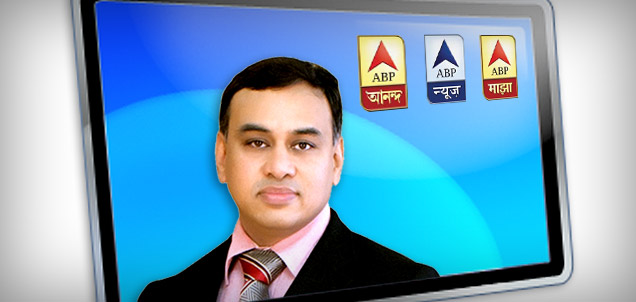
    As the clock strikes 12 midnight, the logo on popular Hindi, Bengali and Marathi news channels Star News, Star Ananda and Star Majha will change. In fact as the communication from the channels has been emphasizing, save the brandname, nothing else will. Following the announcement of the discontinuation of the Star brand affiliation with MCCS (Media Content and Communications Pvt Ltd), the the Ananda Bazar Patrika and Star India jv, the three 24-hour channels will be rechristened. Star News to ABP News, Star Ananda to ABP Ananda and Star Majha to ABP Majha.


    MCCS unveiled its new logos for the three channels and kicked off its communication campaign around the rebranding on May 7. The creative communication campaign was developed by Lowe Mumbai and the media buying plan was formulated by Mindshare. The aggressive communication campaign based on the theme, “Our Stars don’t change, our News does not change, only our Name changes”, was launched across media, on TV, Print, Radio, Outdoor and Internet to familiarize viewers and stakeholders about the new name and logo.


    Just hours ahead of the rebranding, MxMIndia spoke to Mr Ashok Venkatramani, CEO, MCCS on the acceptability levels of the new name, measures being undertaken to retain viewership and the road ahead for MCCS.


    What time will the change happen?

    Tonight. 12 midnight.


    Since you spoke to us the day the announcement was made to now, what are the reports that your front-facing sales and editorial forces bring you – in terms of acceptability of the name… especially for Star News to ABP News?

    So far the feedback has been positive and encouraging. If I were to divide the stakeholders into three parts – the viewers, the newsmakers and the media buyers and the trade, for the first segment which comprises viewers, the change has not happened. It’s going to happen from tomorrow. But since the time we announced, there has been no change in our ratings. We report daily news, and as long as it is the same set of people doing the same set of news in the same manner, I don’t expect much change there. The second constituent which is the newsmaker, there is absolutely no issue there because ABP is a very strong name in the newspaper and magazine industry. It’s been there for long and ABP has very strong news credentials. The third segment which is the trade and media buyers, feedback has been positive… virtually no problem with the large houses. There again, ABP is not a new name, everyone buys print so they know. So it has been positive, and it’s best manifested in the sales that have happened in the last couple of months. I am fairly confident that we will be able to pull this through comfortably.


    But the biggest component is the viewer, which is untested yet and that’s where the ratings come in.

    Frankly, unlike the entertainment media where your ratings are linked to some big property and the fate of the channel is linked to that property, in a news channel, where even before the name change there is a fair degree of clutter and poor differentiation. Over a period of time, each channel has established rating levels based on consistency of its content. And that consistency is driven by the way we report, the speed of reporting, the honesty, the faces or the anchors who come on our channel, the kind of programmes we have. Now those things don’t change, the reporting and the people are the same. To my mind, just a logo change in the corner doesn’t dramatically change impact of the news channel. And if you take the two regional channels, Ananda and Majha, they are clear market leaders, and there again nothing changes- the anchors are the same, reporting is the same, and the position of the channel in the EPG is the same.


    Any attempts to retain viewership… like contests et al? And any specific measures to retain advertisers? And for the distribution trade?

    No, we are not resorting to any short-term activity to garner quick eyeballs because our genre doesn’t subscribe to that. What we can potentially do is break big stories but there is already so much action happening. What we are doing is engaging with our trade, media buyers and distributors. We are having a series of meetings with them, small personalized interactions where we can chat and exchange views with them. It’s more of a personalized engagement with the constituents rather than any on-air activity for the viewer.


    Given that there is a change, are there any specific areas that you are changing in the new channels?

    It would be exactly the same and deliberately so. We just want to do one measure at a time, so at this point there is no change other than the name change. But as we progress into the new name and once the new name gets fully established, people start recognizing it, and then we will look at other measures like relaunching the channel, changing the look and feel etc.


    When is that likely to happen?

    Too early to say.


    Our columnists Anil Thakraney had commented that this is possibly a good occasion for changing some of the typical things that are common on Hindi channels, like over-sensationalizing etc. Are you thinking of doing that now?

    No, actually if you watch the channel, we have done that for the last one-and-a-half years now. This is a common misconception most people have because they don’t see Hindi news channels on a regular basis. This is a genre problem where we have a lingering perception. For example, I have got out of astrology for a year now, I don’t have a single programme on the channel which talks about astrology. It’s been more than a year-and-a-half since we got out of religion. Now we have not gone out on the rooftops and shouted about it but all these things we’ve already done. We have only hard-hitting news on our channel from 5pm to 10pm. And we’ve done this because we felt this is the right thing to do for a genre not because our name is changing. To my mind, in a news channel, these changes take time to notice.


    A programme like ‘Asar’ with Aamir Khan would’ve obviously started on Star News because it was a Star Plus show. Will the preferred partner status continue to exist even after June 1?

    Yes, in fact they are still our shareholders. Secondly, all such deals are purely on a commercial basis but obviously relationships were strong. In fact not many people know that Satyamev Jayate used to be a programme on Star News started by Uday Shankar when he used to be here. And we didn’t have a problem in them doing Satyamev Jayate, so the relationship continues. They continue to be our distribution partners, they continue to distribute our channels internationally.


    There is this news that Star might also exit the JV because they say it is not really worth their while to have a stake when they don’t have any say. Is that something that you have factored in?

    Actually I don’t want to comment on it because it’s a JV issue which only the JV partners can address. And I think it is best addressed by Star and ABP. But I guess any commercial investment by any investor has to be based on commercial returns. Now how an investor evaluates investment in the news business depends entirely on the investor.


    Have you done any brand studies or surveys on the acceptability levels of the new names?

    Yes, we have done research. A name change always has to be a combination of some research and some amount of strategy. One can’t entirely depend on research, it’s like naming a baby, where you look at the ‘granth sahib’ and pick up the alphabet and choose your name. So I think for us, given the fact that ABP is a serious player in the news business and they have long-term ambitions to be in news, including broadcast news, it did make sense to have a master brand which can be built going forward. So it was a combination of strategy and research.


    How active will ABP be, or will it be the same with you running the enterprise and ABP being on the board level?

    Nothing changes even on that front. Even now both the shareholders, Star and ABP continue to be the parents allowing MCCS to do its own thing. They were always available to be tapped, whenever we needed inputs. Any dealing with them is also at commercial terms. I don’t see any change in that.


    The campaign of the name change kicked off rather early, from the time you made the announcement… was it part of the original design or was it something which changed later?

    Obviously we saw it coming and we had a headstart of a month or so. A couple of months were good enough for us to churn out a campaign, so that’s how it was.


    Will see a more robust online presence of the MCCS channels now, including an English news website?

    If you look at our entire strategy, not just online, it is driven by a simple definition of who we are and what we are. We believe that we are not a television news company, we are a news content company. If we are a news content company, we should be platform-agnostic and we should be available on all platforms where a viewer might like to consume news. So we developed all these websites and developed 3G platforms, mobile downloads etc. so that we are available in all platforms. For us the allied platforms were not like profit centres, we were happy to get the revenue but at the same time we wanted to be present in all the platforms. The problem is that the online rights of Star News were international, which is why we didn’t get .in at that point of time. So we had to go with another name. Now going forward, our strategy remains the same.


    Any new channels coming up in the immediate future?

    We are working on newer options… frankly, it’s a question of the right timing. It is not related to this name change or the JV, it is an independent aspect which we in MCCS have been exploring and continue to explore. I would probably wait and watch because next six months are going to be a huge turning point. For example, if the entire digitization process goes on well as planned, it has a big impact on news channels and also our own company in terms of how we project the next five years. If the digitization process gets postponed or deferred then I will be a little more cautious. We do have plans but whether I press the button or not, I’ll probably wait and watch.


    Will it be organic or inorganic or both?

    It could be both, it’s a question of a right opportunity.


    Say, for instance, if a NewsX is available, would that be an option?

    I wouldn’t rule out anything but I would evaluate everything for the value it brings and how much it costs. If it makes business sense, why not. But it’s not as if we would be chasing any particular company or a set of channels or anything like that.

     

  • The Anchor: Chandradeep Mitra on 5 reasons why GECs rule the Indian TV industry

    By Chandradeep Mitra


    1. Historicity – General Entertainment Channels (or GECs) were the first and the main channels which started the TV culture in our country – Doordarshan (DD), then Zee, then Star. In fact, all other channel genres – news, sports, kids, music, etc. – started off as sections within main GECs before being spun off separately. However, GECs have remained the main draws, the big brothers and the bouquet-drivers in the TV business.


    2. Mainstream Entertainment Quotient – In an entertainment-crazy nation fed on Bollywood and other escapist fare, GECs provide the most broad-based mass-appeal entertainment platter (think ‘Thali’!) that aims to please most, if not all, of the TV audiences, unlike more niche options targeting smaller audience groups.


    3. Targeting Remote Controllers – Among various TV audiences, GECs have traditionally targeted the middle-class, middle-aged women the most, who form the largest and most loyal TV viewing group. Long-running soaps and popular well-tested formats ensured repeat viewing of this core audience. And the fact that most Indian households are single TV homes ensured that GECs won over other channels during primetime by targeting the folks who controlled the TV remote at those hours. The creation of the afternoon slot also resulted from targeting this audience group, further consolidating the lead of GECs.


    4. Resource Prioritization – As GECs were historically the bigger TV channels, media owners as well as advertisers put greater focus and energy on continuing their success, hence dominance. The biggest production budgets, the slickest marketing campaigns and the biggest stars (think Amitabh Bachchan, Shah Rukh Khan, Salman Khan, Aamir Khan…) all were marshaled to make GECs bigger and stronger. Success perpetuated more success.


    5. Biggest Innovations / Breakthroughs – While a number of GECs continued to play safe and repeat successful formulas (remember the Saas Bahu serials?!), the high stakes game in the GEC genre also ensured that the biggest innovations and introduction of breakthrough formats also happened on GECs (think KBC and Satyamev Jayate). This ensured that more often than not, it was a GEC that benefited from a positive discontinuity in Indian television (IPL is perhaps one exception).


    Chandradeep Mitra is CEO, PipalMajik


  • Anil Thakraney: Lack of imagination

    By Anil Thakraney


    Even a kid will tell you that there are just toooo many TV channels inIndia. Both, entertainment and news. And even as talks of a shake-out have been doing the rounds for years, more channels are waiting to start operations! Like everything else inIndia, it’s a mad house out there.


    Quite obviously, there can be place for only so many brands. The advertising pie is limited, and it cannot be shared by so many hungry mouths. And in the Indian context, a vast majority of a channel’s revenues come from advertising and not through subscriptions. In such a scenario, Imagine’s closure does not surprise me at all… in fact, I wonder what took them so long.


    As for the many other struggling channels, they are fortunate to be run by very deep pocketed suits. But those deep pockets, like Turner’s, will dry up at some point. It’s a matter of time.


    Imagine came on to the scene in 2008, when the Hindi GECs market was already divided between Star, Zee and Sony. Each had already established itself, and all three channels enjoyed viewer loyalty. To break into this extremely capital intensive and crowded house, Imagine’s only chance was to unleash kickass, totally offbeat programming. ‘Shock and awe’ ought to have been the mantra. 2008 was also the time when the nation had begun showing early signs of tiring of Ekta’s traditional saas bahu sagas, and there was a huge opportunity for Imagine to be the game changer that the market wanted.


    Alas, it was not to be. Imagine’s fictional shows were completely me-too, and most of their reality stuff was a huge disaster. ‘Swayamwar’ was perhaps the only ‘hatke’ programme, but in the GECs biz model, reality shows and movies are, at best, jam servings, laid out to entice viewers to the bread and butter fiction shows. And if the latter is a thakela and done-to-death fare, the channel is sunk. Which is exactly what happened with Imagine.


    Make no mistake about this: Imagine’s problem wasn’t funds or staying power or distribution or even talent. It was very simply this: Lack of imagination.


    * * *


    PS: This is a memo Shri David Ogilvy sent out to his employees way back in 1982.


    On how to write. It’s fantastic. You will notice that his suggestions, in this day and age of micro blogging and short attention spans, are more valid than ever before.


    Link: http://www.listsofnote.com/2012/02/how-to-write.html


  • MSM hits the ball hard for Six

    By Rishi Vora


    It’s been about two years since it was first heard that Multi Screen Media Pvt Ltd (MSM) will launch a sports channel. The wait is finally over as the channel was launched on April 7. This is MSM’s sixth channel – one of the reasons why the network chose ‘Six’ as its brand name.


    The TG for Six is skewed slightly towards the younger lot of sports fanatics and the first phase of the content plan is to  make most of the Indian Premier League’s five editions and evoke special interest among fans to watch non-cricketing sports such as mixed martial arts, basketball, badminton and football. Its main property, to begin with, is Ultimate Fighting Championship (UFC), a martial arts contest that has more than 30 events globally. The next season of IPL will be aired on Six.


    The channel will reach out to 80 million homes on DTH and analog platforms in India with a reach of 20 million in phase 1.


    Six is being promoted heavily on network channels and the on-air biggest cricketing property, IPL. Quite surprisingly, the channel has not gone for a 360-degree marketing blitzkrieg – the usual strategy adopted to support the launch. It is learnt that outdoor and radio will subsequently follow promotions on TV.


    If one looks at the sports broadcast arena as is currently placed, it makes an interesting read. Neo Sports and Ten Sports are facing a tough time sustaining business. And, of course, the fact that IPL was running on a sticky wicket as far as sponsors are concerned, tells the story – that advertisers feel there’s no point investing big monies where the returns are not very good. Plus, the recent development of Star winning the BCCI rights… something which MSM was eyeing to provide that much required impetus for the new channel, is a sure-shot big miss of opportunity.


    “We have the IPL and as we move along, we hope to acquire more rights,” said NP Singh, Network COO. He confessed that the BCCI rights was an opportunity missed, however, he also said: “It was in our long term interest to launch a sports channel. We had been talking about it, so it wouldn’t have made sense to further delay the launch just because we did not win the rights to broadcast Indian cricket.”


    According to a senior media planner who wished anonymity, the launch of Six has happened at a time where it may not be easy for the channel to make a mark. “Cricket is the only sport India loves. Besides IPL, Six doesn’t have much to offer. Also, there isn’t much left as far as rights are concerned, so the channel will really have to do well on non-cricketing sports, which is a big challenge in a country like India.”


    Ms Basabdatta Chowdhury, CEO, Platinum Media is of the opinion that though the channel might face many roadblocks, in the end it’ll be a sustainable business. “I think there is space for one more sports channel. It depends on what kind of content they bring to the channel. Football is quite popular in some sections of the country and they will look to target them. Similarly, other sports which have their specific audiences in the country. If the channel does well in targeting these niche sections, it’ll sustain. And of course, they have the IPL and the New Zealand board for cricket lovers.”


    Mr Anwesh Bose, Senior Vice President, DDB Mudra Max offers a similar view: “MSM has made very good profits this year and that would give them muscle to gain rights from other cricket boards around the world, they already have the New Zealand Cricket rights. In addition, there is football and a few other sports to look forward to. With the new channel, new vistas would open for Sony and given their past successes, they can surely make a profitable venture out of the sports channel.”


    He further added: “They still have five years of IPL left and they will make good use of it.”


    Overall, there are mixed reactions on the prospects of MSM’s new channel, Six. One major worrying factor is that there aren’t many rights left to be acquired, and those which are, are available at exorbitant prices, making sports broadcast a challenging business.


    As the Network’s COO mentioned, every time they’ll (channel execs) step out to get the much important rights, the attempt will be to go for a six.


    Time will tell how well they hit the ball.


  • Suvarna’s new fiction show begins today

    By A Correspondent


    Star Network’s Kannada General Entertainment channel Suvarna announces the launch of their new fiction show “Amrutavarshini”


    The show is about an innocent, docile girl from a poor family who has few expectations in life; she is content with the simple things that her family life has to offer. How her life changes when she gets married into a rich family is the story forward.


    The show will go on air from March 19, Monday to Friday 9.30 PM.


    Anup Chandrashekaran, Business Head, Suvarna Channel says “All our shows are unique and have a different treatment. We at Suvarna ensure that every fiction show has a strong story plot and an engaging screenplay. This show is unique as this showcases the mother in law – daughter in law relationship with a new lens. The making of this show is exceptional and the story will undoubtedly appeal to the viewers tastes. This show is ideal for the 9:30 pm slot as this will be the immediate program after “Kannadada Kotyadhipathi” which is the biggest show on Kannada Television”


    The show is produced by the production house RG Media Stuff which has also produced one of the most successful shows of Kannada General Entertainment “Krishna Rukmini” for Suvarna.


    Ravi Garani of RG Media Stuff says, “We have ensured that the production values of the show are not compromised, and the look and feel is of national standard. I am thankful to the Suvarna team for giving me this opportunity to do this show.”


    Anil Narang, Head of Marketing & Strategy, Suvarna Channel says “This show will enhance the fiction offering of our channel. The story line will relate well to our core audience. We have ensured that the artists chosen to play the key roles in the show are the best fit to the character values they portray.”


  • Zee aims to Ditto its DTH success story


    By Rishi Vora


    It is said that one who adapts as per the changing times is the one who succeeds in the long run. Recession or no recession – it doesn’t matter. If organisations continue to focus on what the market needs, success stories will continue to emerge and growth will eventually take precedence over many a hurdles.


    Adapting to the market and launching a relevant product in India’s broadcast sector is Zee Enterprises Ltd; the company that has been credited for making early inroads in the TV entertainment space in India and making it big internationally. It has now set an example in the New Media space with the launch of Ditto TV.


    Punit Goenka

    Ditto TV is India’s first Over-The-Top TV distribution platform offering live TV and on-demand content to end consumers on mobile phones, tablets, laptops, desktops, entertainment boxes and connected TVs.  The product has been brought out in the Indian market with the help of technology partner, Siemens.  “The offering fundamentally turns appointment viewing as a concept on its head,’ said Punit Goenka, Managing Director and Chief Executive Officer, ZEEL.


    On what it means to the group Mr Goenka said: “It adds a different dimension to business model. The idea was to bring cutting-edge wireless broadband digital services to customers across the world. Over the years, we have launched many industry firsts, but this is a launch that I’m excited about; I believe that Ditto TV will transform the way content is consumed and monetised.”


    Vishal Malhotra

    “For our channel partners- namely, for content owners, distributors, retail, OEMs and service providers, Ditto TV creates unique revenue generating opportunities,” explained Vishal Malhotra, Business Head – New Media, Zee Entertainment Enterprises, on what it means to its channel partners.


    Apart from India, the platform will be available in the UK, UAE, New Zealand and Australia. And United States will follow in the priority list, by end of this quarter.

    So yes, it’s an experiment by Zee, but as experts have pointed out, it’s a risk worth taking as consumption patterns of consumers are going through a sea change with the advent of digital technologies.


    Ditto TV will offer features such as adaptive streaming, elaborative programme guide, content recommendation engine and an interface which is integral to enhance the user experience. Moreover, it allows for complete customisation in terms of cost as well as content – where users are given an option to handpick a basket of channels as per their own personal preferences.  Price points start at Rs49, where the consumer gets access to three channels of his choice.


    Yogesh Radhakrishnan, a veteran in the field of TV distribution in India, said: “There are some issues like inadequate bandwidth; broadband connectivity is a pain, but having said that OTT is a technology for the future. For it to reach to the masses, it will take some time.”


    As for the broadcasters, Ditto TV comes in as an additional platform to showcase their channels on. And just as the thought crosses the mind, as to how many broadcasters will Zee be able to get on board, the news is that already 21 channels have agreed to use this platform.


    MSM Group, TV Today Network, BBC, and Zee are a few networks that will allow their channels to be available on the platform. A few important contracts yet to be signed which includes Reliance Broadcast, Star and Times Network. The company expects to offer a complete set of 50 channels shortly.


    The sense is that it is a matter of time before the rest of the industry embraces this new platform from Zee. As informed by Mr Goenka, monetisation via advertising can only happen once it reaches out to a critical mass – at least 5 per cent of the audience which consumes TV content on a daily basis. So there is still some time for advertisers to worry about this new delivery platform. But, that doesn’t make this venture of any less significance for Zee.


    Mr Goenka pointed out that a significant investment has gone into setting up Ditto TV and that he expects his new media division to contribute about 10 per cent to the group in terms of revenue in the next five years. Needless to say that Ditto TV is the first step in the bigger game to boost the company’s digital and new media play.


    On what this means to DTH and cable operators, Mr Radhakrishnan explained: “These are very, very early days. There is no doubt that OTT is the technology of future, but for now, it is just a beginning and not a threat to other distribution channels. Also, it is unlikely to replace the existing mode of distribution channels, as new media and technology comes as a welcome ‘value addition’ to the business.”


    So whether Ditto is able to script a ditto success story that of Dish TV – Zee’s DTH offering, is something to watch out for. For now it looks like a welcome initiative – both from the consumer and the trade point of view.


  • Peter Mukerjea: Rupert & Son

    By Peter Mukerjea


    So, it’s finally happened that James, or JRM as he is known within the company, has stepped down. I’d said that he should (see Firstpost.com article) and for whatever it’s worth, I’m glad that he has.


    Enough has been written and no doubt more will be written about the rights and wrongs of the people involved in the entire phone hacking case and we will never know who will finally go to jail for the crimes that are alleged to have been committed.


    But that would be looking back and surely it’s much more fun looking forward and trying to gauge what’s about to happen next. If Rupert is true to his word, JRM will now be spending more time on international operations and on the TV business at large . Now that leads me to suggest that he should for Newscorp’s sake spend at least 75% of his time in India looking at new business opportunities that exist in the country. STAR experienced it’s highest ever growth in it’s business under JRM’s watch when he was the CEO in Asia. That’s not a coincidence, I can assure you. Conversely, STAR experienced it’s lowest growth when JRM left the Asia region and handed it over to pixies in Hong Kong who had no clue about India. For example, the lady who was given the baton by JRM had never visited India ever in her life. Strange decision, it has to be said.


    JRM, on the other hand, was a respected executive and was seen as a path-breaking scion of his father. And the fact that not everyone loved him was simply par for the course and to be expected. He was effective in reshaping STAR’s fortunes and turning a loss making company into a profitable one.


    Incidentally I continue to believe that none of the new channels that popped up in 2007/8 would have happened if Rupert had not taken his eye off Asia but he moved JRM to London to run SKY and with that opened up the gates for newcomers. Some channels failed to make the grade – 9X & Imagine for example, and others did well – Colors & 9XM for instance, but none of these should ever have been allowed to get started given the complete dominance that STAR had on the market. And all the people that went to run these channels, including myself , were almost all from STAR.


    Since then STAR has held up well, although after a wobbly start. Credit for which should be given wholly to JRM for giving autonomy to the current leadership in managing their business and most importantly cutting them loose from the Hong Kong intermediary, which was rightly cut to size.


    JRM’s big opportunity is now to push ahead with developing a range of new TV and other media products for the India market and enable it to grow speedily to create a very clear leadership position with plenty of blue sky space between the No1 and the rest. And only he can make that happen by physically being there and making the big decisions which would otherwise be lost in power point presentations between numerous layers of management.


    This would in turn spur ZEE and Sony and MTV and the rest to do the same and compete with each other and with the pace that STAR would have set for them. This will then collectively turbo-charge and accelerate the industry as a whole and taking full advantage of the economic growth that the country is experiencing. The next 10 years for the media business in India will be huge and despite the slowdown in the global economy the pace of growth will be better than almost anywhere else in the world.


    JRM once said “let’s make the best use of a crisis” or words to that effect and I think this is a crisis that has presented itself for just that opportunity. He has moved to New York from London but may be he should have a home in Mumbai too and really shake up the market. There’s tons to do with a very exciting future for a 40-year-old – like JRM, which regular or even above average executives will simply not be able to take full advantage of. They can at best take limited risk, if at all – but JRM can and he should.


    Will he or won’t he? Or will he slip in and out of the country quietly, once very few months and leave the big opportunity to the pixies once again? If he ends up doing that he will have missed a great opportunity to grow the business and also to get himself back up and be recognised as being one of the best TV executives in the world. After all, he is the son of Rupert.


    Although it started as a fortnightly column, Peter Mukerjea’s Media Mullings will now appear regularly on MxMIndia, but with no definite frequency.


  • Mediaah!: 12 media cos to watch out for in 2012 (Cont’d)

    By Pradyuman Maheshwari


    We looked at the first six in my list of media conglomerates to watch out for in 2012. Here’s the rest Here goes ((note all names in alphabetical order).:


    7. Network  18

    Network18 was an obvious choice given the amount of news it’s been making. As you read this, the deal with Eenadu would’ve possibly been announced. The Raghav Bahl-promoted media empire has taken rapid strides and established itself as the company with an eye on the big picture. Literally.


    8. Reliance ADAG

    The Reliance Anil Dhirubhai Ambani group has several interests in media and entertainment. From telecom to television channels, DTH, radio and gaming, it’s got interests in all sectors. A couple of channels are scheduled to be launched in the next month.


    9. Reliance Industries

    Elsewhere on the site, we’ve carried the news of Mukesh Ambani investing in Network 18. But RIL’s interest in the media is not what makes it to this list. It’s the 4G broadband connectivity that the group is set to unveil this year that could transform the way we access video content


    10. Star India

    The manner in which Star India has consolidated its position has made it near-invincible. Credit for most of this goes to CEO Uday Shankar and some of his predecessors. Pity that regulatory restrictions prevent the network to do much with news.


    11. Sun Network

    Any other media group would’ve been in a mess given all the controversies and pressures its promoters work with. But Kalanithi Maran’s Sun is above all it appears with the network being such a dominant player. And a profitable one too.


    12. Zee

    Last, but right in the forefront. It was an instant hit when it took off in 1992 and is one of the most influential players in Indian media even though its flagship GEC isn’t numero uno. Expect much action from the group as it celebrates its 20th year.


    Tailpiece:

    The Prime Minister released a stamp in honour of Dainik Jagran founder Puran Chandra Gupta. In the light of all that Press Council Chief Markandey Katju has said. But more on that tomorrow. Meanwhile, check the video at: http://in.jagran.yahoo.com/news/national/general/Stamp-issued-Purnachandra-Gupt_5_1_8711717.html?video=1


    Buzz me if you have a story to tell and gossip to share. Confidentiality assured. Andar ki baat will stay under. There are various ways you can reach me: pradyumanm[at]mxmindia.com, BBM @ 23050B5D, Whatsapp/Gtalk pradyumanm[at]gmail.com, @pmahesh, 98338 76278.


    Disclaimer: Although Pradyuman Maheshwari is CEO of MxMIndia other than being editor-in-chief, he chucks those hats while writing Mediaah! So, the views expressed here are entirely his own and not those of the website and the team that runs it (especially the National Sales Head!).


  • Channels show heart for Saffolalife

    By Shubhangi Mehta

    This World Heart Day, Saffolalife, an initiative from Saffola, is bringing together the largest media houses to further the cause of preventive heart care in India.  For the first time in the history of Indian television, Saffola has united the favourite stars of competitors STAR Plus, Colors & Zee TV in a brand new TVC that urges everyone to find your heart’s age through the Saffolalife “Heart Age Finder” Tool and celebrate their heart’s birthday.

    In addition, with another pioneering initiative, Saffolalife and Times of India are gifting readers in Mumbai, Delhi, Bangalore a free copy of The Times of India as a gift for their heart. This special gift has a delightful and novel way of actually experiencing a birthday celebration and watching print come wonderfully alive on one’s mobile phone.

    With the launch of the new TVC, Saffolalife is taking your heart’s birthday celebrations to the silver screen. Bringing together our favorite Pratigya & Krishna, Priyanka & Shaili Bhabhi, Anandi & Simar and many more, the TVC raises awareness about the fact that even though we celebrate the birthday of our favorite stars, we often forget the one who is the most important: one’s own heart. These stars from the rival channels Star Plus, Colors and Zee TV have united with Saffolalife on a common platform for a common concern: to highlight the importance of preventive heart care in a light and heart-warming manner.

    Commenting on the TVCs, Mr Abhinav Tripathi, Senior Creative Director, McCann Erickson Mumbai, said, “Everybody loves a surprise. So when it comes to your heart’s birthday, what better way to wish it? Which is why on World Heart Day we decided to gift it a Times Of India. Absolutely free, loaded with wonderful presents, compliments of TOI and Saffolalife.  From the first page on, every page will hold a special surprise, including an ad that literally comes to life in front of your eyes. And the rest of the gifts, well, why don’t we let your heart decide”

    Sushma Jhaveri, COO, Madison Media Infinity, said, “The key to any Impactful innovation is extending the creative idea seamlessly in media.  Saffolalife’s World Heart Day partnership with leading TV channels and The Times of India, succeed in doing this effortlessly by breaking through clutter to increase noticeability and enhancing Impact for the cause.”

    As India’s young population faces the highest risk of cardio-vascular diseases (CVDs), Saffolalife continues to work on its mission to bring down the incidence of CVDs across India. This World Heart Day, these two path-breaking initiatives by Saffolalife have united the media fraternity on the serious cause of heart health. With the aim to raise tremendous awareness on the importance of preventive heart care, Saffolalife is conveying a serious message in a manner that people will embrace and engage with.