
Screengrab from Pathan on Amazon Prime Video
 In my last column, I featured two brilliant foreign films that dealt with the subject of disability in a sensitive as well as an entertaining manner. Moreover, persons with disabilities were truly represented and their challenges highlighted in both productions for mass consumption.
Sticking to cinema, let’s circle back to India. Recently, three exciting events caught the attention of disability inclusion advocates. It’s been good news for people like me who keep pushing for better (if not equal) media access and representation.
A President Awardee, an RJ and a person with vision impairment, Divya Sharma’s interview of Karan Johar at the Cinevesture International Film Festival in Chandigarh was widely shared across social media platforms. She asked some pertinent questions on the vision of Bollywood vis-à-vis inclusion of disabled folk, normalisation and the role of cinema in shaping mindsets, insensitivity and ridicule at the expense of persons with disabilities onscreen and more. The seven-odd-minute interaction between a visually impaired girl and a leading filmmaker and influencer will hopefully open up more opportunities of constructive exchange of ideas.
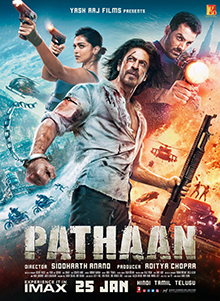 You remember the SRK starrer ‘Pathan’ that made headlines even before its release? Yes, I’m referring to Deepika Padukone’s controversial orange bikini and the Besharam Rang song. A lawyer filed a complaint in Muzzafarpur district court of Bihar against the leading actors and the objectionable song that allegedly offended the sentiments of the Hindu community.
We are familiar with the legal trajectory of that complaint as well as the political clamour in different states, seeking a ban on the film. But there was another case filed in the Delhi High Court against ‘Pathan’, which perhaps didn’t grab as much public attention.
A visually impaired student at the National Law School, Bangalore filed a petition along with three other persons with disabilities, out of whom two are visually impaired practising lawyers and one is a hearing impaired professional working as the Executive Director of the National Association for the Deaf. The complaint highlighted the lack of equal access to audio-visual entertainment in theatres and on online streaming platforms.
In response, the High Court issued an interim order directing the producer (Yash Raj Films) of Pathan to make the film accessible with audio description as well as subtitles and closed captions in Hindi before its release on the OTT platform (Amazon Prime Video). And after seven hearings, the court pronounced its final judgment on March 15, 2024, setting a new precedent for accessible cinema.
Why is this case or judgment important? And what are these accessibility features?
The Rights of Persons with Disabilities (RPWD) Act, 2016, includes a provision on media accessibility which states that the government must take measures to make electronic media accessible. In October 2019, an advisory was issued by the Ministry of Information and Broadcasting to the Central Board of Film Certification (CBFC) to persuade producers to make movies accessible. But this was hardly a mandate to ensure compliance. And so, nothing changed, up until now.
The filmmaker, producers and the media fraternity are focused on the 99% able-bodied audience, insensitive to the needs of persons with disabilities. The cost of accommodation is misconceived, seen as an additional burden on the filmmaker. Imposition of access features are also arguably perceived to interfere with an average movie-goer’s cinematic experience. These arguments are a clear reflection of a lack of empathy and sheer ignorance that have led to a systemic exclusion of the disabled community from channels of mainstream entertainment.
But with this recent judgment on Pathan, things are going to change. The judge also directed the other respondents/ stakeholders in the matter to work together and formalise standardised guidelines to ensure accessibility for all future productions. This means that the CBFC will need to include accessibility requirements in its certification process.
As for the cost of providing accessibility features, Yash Raj Films incurred an additional expense of INR 6 lakh, a tiny drop in its Rs 1,000 crore ocean of earnings!
As per Section 42 of the RPWD Act 2016, all persons with disabilities have an equal right to access information and communication technology. The government has to ensure that all content available in audio, print and electronic media are in accessible format. And that persons with disabilities have access to electronic media via audio description, sign language interpretation and close captioning.
Audio Description is a verbal depiction of key visual elements in media and live productions, involving description of the visuals on screen to enable imagination by person with vision impairment.
Subtitling provides a text alternative for the dialogues on screen, by characters, narrators, or any other vocal participants, in the language of the production.
Closed Captioning not only supplements the dialogues but also other relevant parts of the soundtrack, describing background score, phones ringing, noises, or any other audio cues.
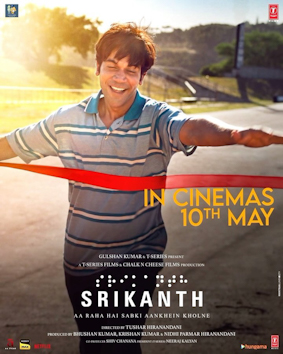 The court has ordered for these accessibility features to be included on OTT as well as theater screenings. For now, the cinema halls and producers can work with certain mobile application providers (XL Cinema, Shazacin) which offer access to an audio described track that synchronizes on the user’s smartphone as the movie plays up on the big screen.
And lastly, a movie trailer starring Rajkumar Rao as a visually impaired person flooded WhatsApp groups and LinkedIn feeds on April 9. Set to hit the cinema halls on May 10, this is a biopic of industrialist Srikanth Bolla, the first international blind student in management science at Massachusetts Institute of Technology. Srikanth endured several challenges, rejection and apathy in life, before he set up Bollant Industries with the objective of providing employment to others like him.
Whether it’s bold activism, asking for equal access and a normal portrayal, ensuring compliance through workable measures or recounting real life struggles of successful persons with disabilities, the case for inclusion is strengthening by the day.
What is preventing the media to initiate baby steps and add disability inclusion into its overall agenda?